Latest Briefings
Recent reporting, explainers, profiles, and archival context from the editorial desk.
The briefing archive brings together reporting, explainers, profiles, source reviews, and historical context. Each briefing is an editorial work: it should identify who made a claim, link to the closest available records, distinguish observation from explanation, and say when the public evidence cannot support a firm conclusion.
What a briefing covers
Briefings may examine a reported encounter, an official investigation, a hearing or legislative proposal, a public figure’s documented statements, a released image or dataset, or the history of a recurring claim. The archive includes both unresolved cases and claims for which ordinary explanations, contradictory evidence, or provenance problems are material. Inclusion is not endorsement, and the words unidentified or declassified do not establish origin.
How the archive is organized
Cards are presented by the site’s publication timestamp, with newer publications first, and the archive continues across numbered pages. That order is editorial chronology, not event chronology: an article published recently may concern a decades-old record. The date on a card is the publication date. A briefing can later be corrected or expanded, so use the updated date on the article itself when deciding which version you read. Pagination should preserve its own canonical URL; this full introduction belongs on page one, while later pages should use a short archive label rather than repeat the entire block.
Sources and uncertainty
Start with the links inside a briefing, not its headline alone. The site prefers legislation, hearing records, agency publications, archival files, court records, datasets, original media, and full on-record statements. A government file can document that an allegation was received without validating it. A witness can accurately describe an experience while the cause remains uncertain. The Editorial Policy explains the standards for attribution, headlines, corrections, automation, and conflicts.
Other ways to explore
Use the chronological timeline to move by event date, the Topic Clusters directory to follow a durable theme across years, and the Primary Sources desk to find official repositories and original records. When a single statement is driving your search, work through the claim-evaluation guide before comparing briefings. These routes narrow the question without implying that an archive card, category, or unresolved label settles it.

Betty and Barney Hill: 1961 UFO Sighting and One of the Most Famous Alleged Abduction Narratives
Explore the Betty and Barney Hill UFO sighting, from the 1961 New Hampshire encounter to hypnosis, publicity, and its lasting UFO legacy.
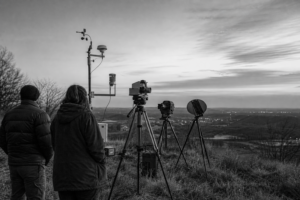
UAP Research Methods: Minimum Data, Reproducible Analysis, and Warning Signs
Learn how rigorous UAP research uses calibrated sensors, preserved data, uncertainty, and independent review to identify scientific red flags.
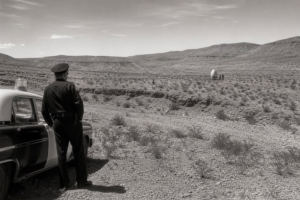
Officer Lonnie Zamora’s 1964 Socorro Sighting: Egg-Shaped Craft and Figures Near Town
Explore the Lonnie Zamora Socorro sighting, its 1964 evidence, landing traces, investigation and unresolved explanations.
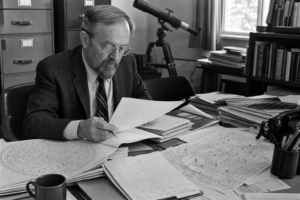
How J. Allen Hynek Coined “Close Encounters” and Shifted From Skeptic to Advocate for Systematic UFO Study in 1972
Discover how J. Allen Hynek coined close encounters in 1972, defined three categories, and called for systematic UFO research.
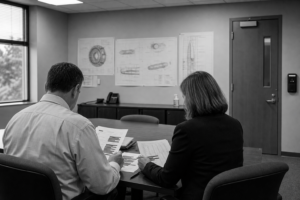
Special Access Programs, IRAD, and Defense Subcontracting: What They Can Conceal and What Oversight Still Exists
Learn how SAPs, IRAD, and subcontracting could obscure UAP reverse engineering, and where audits, contracts, and oversight still apply.
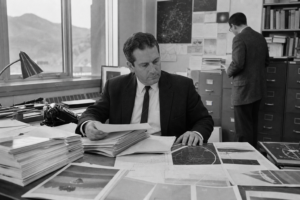
1968 Condon Committee Study Concluded Further UFO Research Unlikely to Yield Major Scientific Discoveries
Explore the 1968 Condon Committee study, its UFO findings, controversies, limits, and role in ending Project Blue Book in 1969.
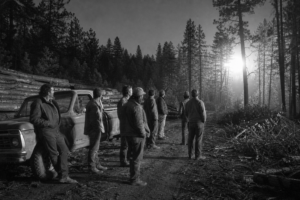
Travis Walton UFO Encounter and Abduction Claim That Sparked Widespread Public Debate in 1975
Explore the Travis Walton UFO encounter, the 1975 disappearance, witness accounts, skeptical challenges, and Fire in the Sky's cultural impact.
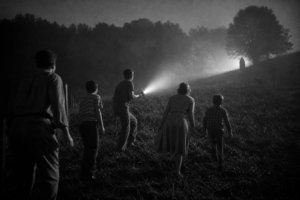
The ‘Flatwoods Monster’ (1952): How a One-Night Sighting Became an Alien Icon
Explore the Flatwoods Monster 1952 sighting, witness accounts, UFO-era headlines, competing explanations, and the legend's lasting cultural impact.
Operation Prato: Brazilian Air Force UFO Investigation in Pará State Led by Uyrangê Hollanda in 1977
Explore Operation Prato, Brazil's 1977 Pará UFO investigation, including military records, Uyrangê Hollanda, witness accounts, and unresolved questions.
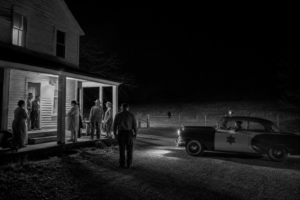
The ‘Kelly-Hopkinsville’ Encounter (1955): A Classic ‘Alien’ Case With Very Earthly Failure Modes
Explore the Kelly-Hopkinsville encounter, its witness reports, evidence limits, owl theory, and how fear and folklore shaped a UFO legend.