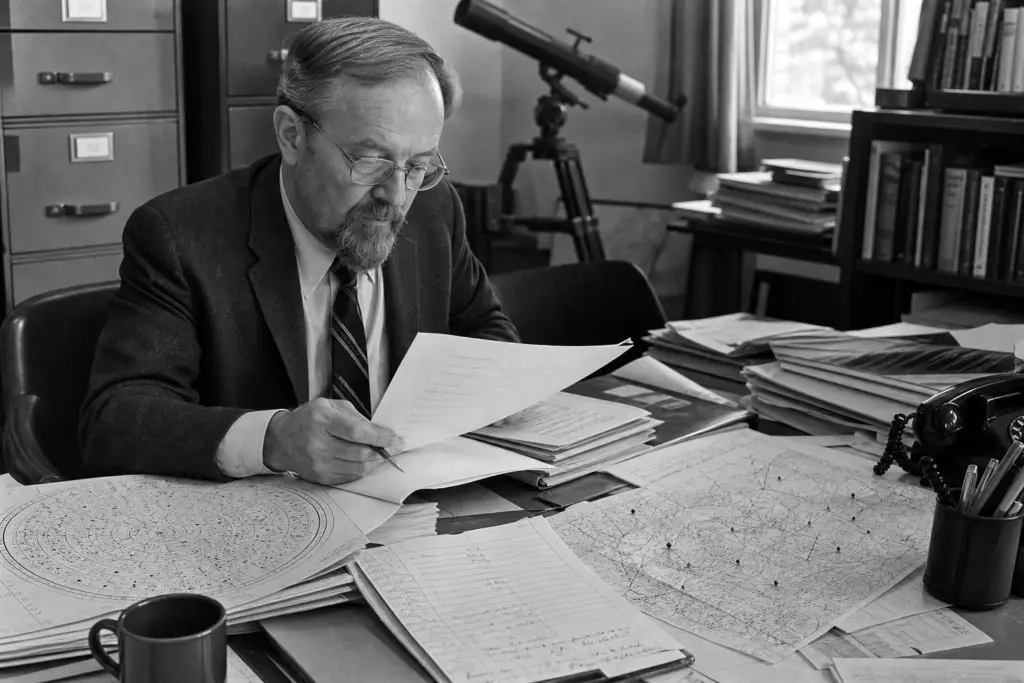
“Close encounters” is often remembered as a Hollywood phrase, but its modern UFO meaning began as an attempt to impose order on messy reports. In 1972, astronomer J. Allen Hynek published The UFO Experience: A Scientific Inquiry, setting out a three-part vocabulary for incidents reported at close range: a first-kind encounter was an observation of an unusual object; a second-kind encounter included an alleged physical effect; and a third-kind encounter included reported occupants or entities. The categories described claims, they did not establish what caused them.
That distinction is central to understanding J. Allen Hynek close encounters. Steven Spielberg later made the phrase culturally indelible, but Hynek’s purpose was investigative: separating a simple sighting from a report involving traces, interference, or alleged beings gave researchers a clearer basis for comparing evidence and judging what, if anything, could be tested.
Hynek arrived at that position through years as a consultant to the U.S. Air Force’s Project Blue Book. His early posture was skeptical of extraordinary interpretations; his later criticism focused on something narrower and more consequential, the reflex to dismiss difficult cases without adequate inquiry. The 1966 “swamp gas” controversy helped expose that tension publicly. Hynek did not claim that unexplained reports proved extraterrestrial visitation. He argued that the unresolved remainder warranted disciplined collection, analysis, and investigation.
Why “Close Encounters” Was a Research Framework, Not a Pop-Culture Catchphrase
For an investigator, a report of a distant light presents a different problem from one that allegedly leaves a ground trace or includes a claimed occupant. Hynek’s 1972 scheme treated proximity and reported consequences as variables for organizing otherwise dissimilar accounts. The point was to sort reports by the kind of observation and potential corroboration they offered, rather than flattening them into a single, vague UFO category.
That structure shifted the useful question from “Do you believe this story?” to “What was reported, what might be independently tested, and how does this case compare with others?” Classification could mark an evidentiary difference without deciding the cause. It was neither proof of extraterrestrial visitation nor a theory that every unexplained observation had a non-human origin.
Those limits matter in answering who coined close encounters in its familiar UFO sense. Hynek is widely credited with formalizing the term because he assigned it a defined investigative role rather than using it as dramatic language. Spielberg’s later film made the vocabulary ubiquitous; it did not create the research purpose behind it.
The framework also reflected a lesson Hynek drew from his extended work with Project Blue Book. His concern increasingly became institutional as well as scientific: a difficult report could be mistaken, mundane, or unresolved, but dismissal was not itself an explanation. The categories supplied a disciplined starting point for treating the unresolved remainder as material for inquiry rather than a cultural punchline.
Hynek’s Three Close-Encounter Categories, Defined
The dividing line for a Close Encounter of the First Kind was distance: Hynek used the category for an observation of an unusual object at roughly 500 feet or less. It recorded the witness’s claim of close visual proximity, where features such as apparent shape, motion, color, sound, or duration might be described in greater detail than in a far-off light report. Close range did not make an identification certain, however; it simply made the account a different investigative problem.
A Close Encounter of the Second Kind added an alleged physical effect associated with the observation. Hynek included reports of such things as vehicle or radio interference, effects on animals, ground marks, and other purported traces. The category did not treat those effects as proven or assign them a cause. Its value was practical: a stalled engine, a measurable signal disruption, photographs of marks, or promptly recorded observations could potentially be compared against conditions at the scene rather than resting solely on recollection.
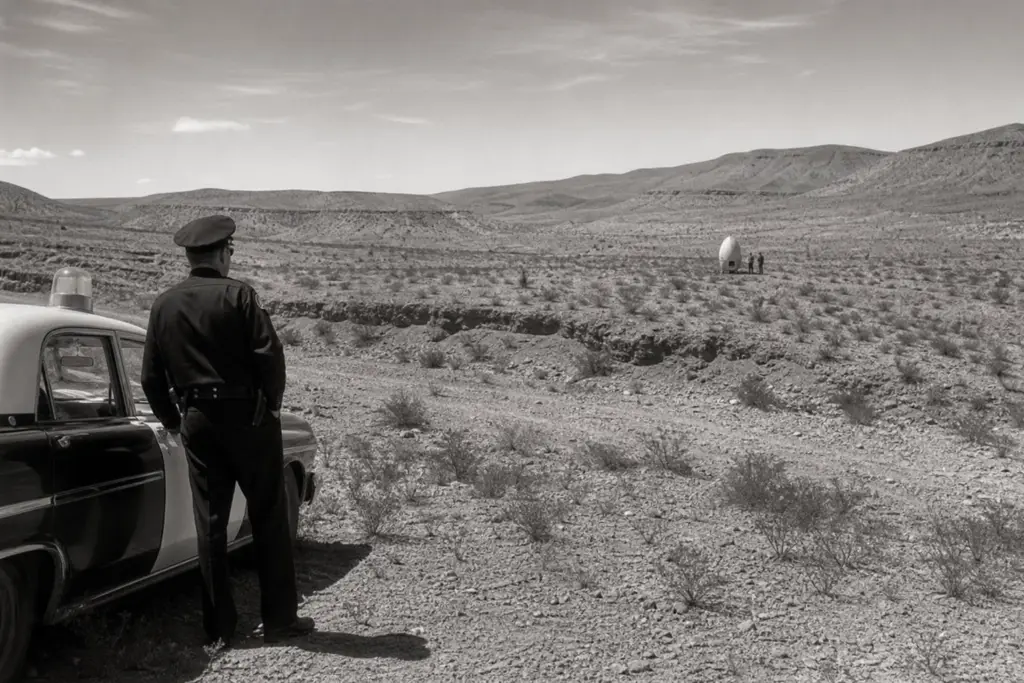
The Third Kind covered a report in which a witness described an apparent occupant or entity in connection with the object. This was the most culturally memorable label, but its formal meaning was restrained. It classified the content of a testimony; it did not certify that an entity was present, much less determine whether it was extraterrestrial, human, misperceived, or invented. Such accounts called for especially careful attention to timing, lighting, distance, witness consistency, and independent corroboration.
Taken together, the three close-encounter categories separated a close visual report, a report with alleged effects, and a report involving alleged beings. That distinction let investigators identify what sort of information a case might yield, and what it could not yield, before leaping to an explanation. Later “fourth,” “fifth,” and other kinds are often attached to Hynek’s vocabulary, but they were not part of his original three-category structure in The UFO Experience.
What Project Blue Book Taught Hynek About Unexplained Reports
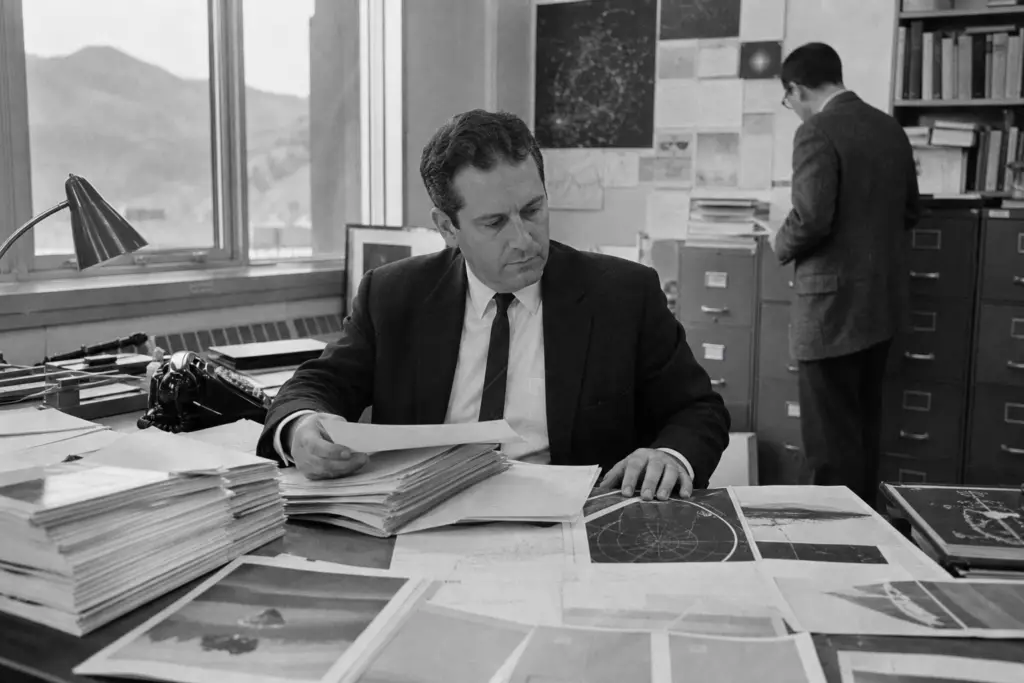
Before he built a vocabulary for sorting close reports, Hynek had spent more than two decades inside the Air Force’s changing UFO program. An astronomer at Ohio State University, he was recruited in 1948 to advise Project Sign, continued through Project Grudge, and later became the scientific consultant most closely associated with Project Blue Book. His intended function was conservative: apply astronomical knowledge to sightings, identify stars, planets, meteors, aircraft, or other familiar phenomena, and help separate poor observations from cases that merited further attention.
Hynek later recalled that he began from a strongly skeptical position. That did not mean assuming every witness was dishonest; it meant expecting that ordinary causes, imperfect perception, and incomplete reporting would account for most incidents. In practical terms, a useful explanation had to fit the reported time, location, viewing direction, weather, and observed behavior. A bright object reported near the horizon, for example, might plausibly be Venus, but only if Venus was actually in the relevant part of the sky at that time.
The accumulated case files changed his institutional judgment gradually. Many reports were thin, inconsistent, or incapable of reconstruction; those were weak material for large conclusions. Yet Hynek also encountered accounts from trained or apparently credible observers and cases whose available facts did not sit comfortably with quick identifications. He became troubled when an explanation seemed to be selected for convenience rather than tested against the particulars of the report. An unresolved classification was not evidence of an extraordinary craft. It was an honest statement that the information on hand did not justify a firm identification.
Project Blue Book’s own statistical work, including Special Report No. 14, reinforced the distinction between explained and unexplained cases by treating “unknown” as a residual category after available data had been assessed. Hynek’s later J. Allen Hynek UFO study argument was therefore methodological: collect better reports, preserve timing and environmental details, interview witnesses carefully, and distinguish absence of an explanation from proof of a preferred one. He did not present the remaining cases as a sudden solution to UFO origins. He argued that persistent residue of well-described anomalies deserved systematic scientific inquiry rather than reflexive dismissal.
The Swamp Gas Controversy and Hynek’s Public Break With Reflexive Dismissal
That concern acquired a public face in Michigan in March 1966. After reports near Dexter and Hillsdale, Hynek told reporters that marsh gas, light produced by ignited gases from decaying vegetation, might account for some of the lights witnesses had described. He presented it as a possible explanation, not a demonstrated solution for every report, but the qualification vanished beneath the memorable phrase “swamp gas.”
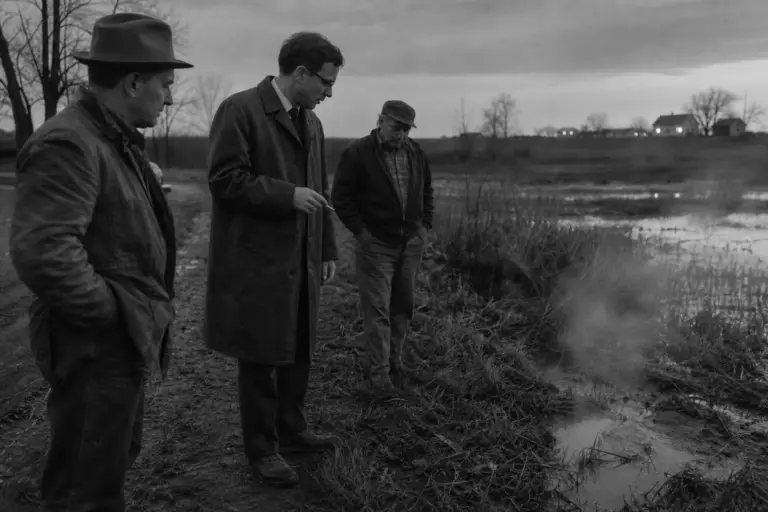
The reaction made the limits of a rapid, centralized response unmistakable. Residents and journalists heard an explanation that seemed disconnected from the reported circumstances, while critics treated it as evidence that Project Blue Book was more interested in ending a controversy than reconstructing an event. The Swamp Gas case became politically embarrassing enough to prompt congressional attention. Its significance was not that it established an extraordinary cause for the Michigan UFO sightings; it showed how little confidence an ordinary explanation inspires when investigators have not visibly established that it fits the time, terrain, weather, observations, and witness accounts.
For Hynek, the episode sharpened a distinction that would define his later public position. A plausible natural mechanism is a hypothesis; a satisfactory case investigation tests that hypothesis against particulars and records what remains uncertain. Good practice would preserve contemporaneous witness interviews, site observations, environmental conditions, photographs or traces where available, and competing explanations. A weak practice selects a convenient label before those facts are gathered. Michigan did not turn Hynek into an advocate of any particular UFO origin. It helped make him an advocate for procedures capable of separating a well-supported identification from an unresolved report without treating either result as an embarrassment.
From Blue Book to Civilian Research: What Hynek Was Actually Advocating
A useful case file begins with particulars that can later be tested, not with a verdict. Hynek’s proposed remedy was an investigative system rather than a preferred answer. The close-encounter categories supplied one part of that system: a way to group reports by the information they potentially offered. The larger task was to preserve timing, location, weather, astronomical conditions, witness accounts, photographs, and any claimed physical traces.
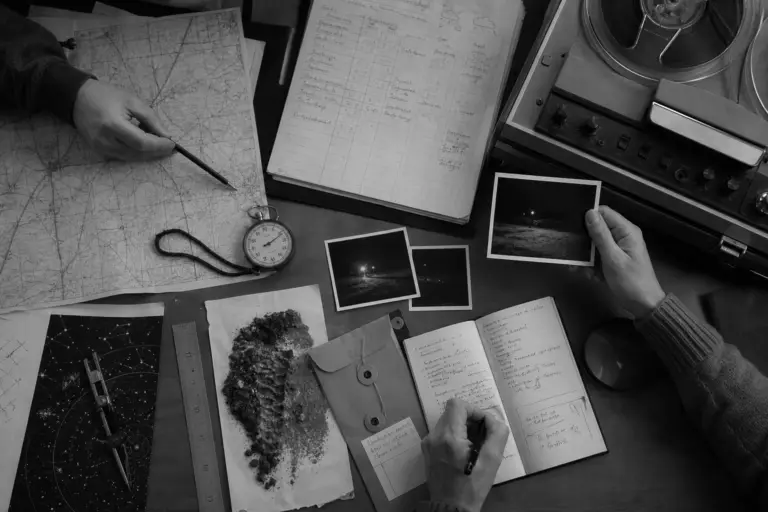
That approach changes the role of an investigator. A trained inquiry does not merely collect a striking narrative or attach a familiar explanation. It interviews witnesses separately and promptly, establishes viewing direction and duration, compares descriptions against astronomical and aircraft possibilities, visits a relevant site when physical effects are alleged, and records both corroborating and contradictory details. The aim is not to protect every account from ordinary explanation; it is to distinguish a well-supported identification from an unresolved remainder.
Hynek also wanted that work pursued in a civilian scientific setting, where difficult reports would not be shaped primarily by an Air Force need to reassure the public or close a news cycle. The Center for UFO Studies, or CUFOS, became the institutional expression of that post-Blue Book ambition: sustained collection, evaluation, and discussion of cases outside the former military program, amid debates over official UFO research policy.
The boundary of his position matters. Hynek treated the unidentified residue as a scientific anomaly: a body of reports not adequately resolved by the information then available, and therefore worthy of better study. That was not a declaration that extraterrestrial visitors had been demonstrated. His method left room for misperception, conventional phenomena, unknown natural causes, and more speculative possibilities, while insisting that no hypothesis should be promoted beyond the evidence a particular case could bear.
Hynek’s Legacy Versus Today’s UAP Disclosure Debate
That distinction remains useful because it separates the description of an event from an assertion about its origin. In contemporary discussion of UAP sightings, Hynek’s vocabulary still offers a simple reporting discipline: identify whether an account concerns a close observation, an alleged physical effect, or reported entities, then ask what independent information could test the claim. A category can organize testimony and evidence; it cannot convert testimony into proof.
The same boundary applies to modern UAP disclosure, daily UFO news, congressional testimony, and assertions of a government cover-up or alien disclosure. Such material may raise questions about records, institutional conduct, sensor data, or specific incidents, but each allegation stands or falls on its own provenance, corroboration, and openness to alternative explanation. It cannot be treated as retrospective confirmation of Hynek’s conclusions, much less as proof of extraterrestrial spacecraft or non-human intelligence.
Hynek’s lasting influence is therefore methodological rather than revelatory. He gave the public a durable language for describing unusual reports and argued that unresolved cases deserved patient, discriminating inquiry, not automatic belief, and not automatic dismissal.
Hynek’s Enduring Case for Investigating the Unexplained
A close visual sighting, a claimed ground trace, and a report of apparent occupants call for different records and different tests. Hynek’s 1972 three-part scheme separated an observation within roughly 500 feet, a report that also alleged a physical effect, and a report involving apparent entities. The distinction did not rank accounts by drama. It identified what evidence might exist: detailed visual description in one case, a trace or instrument effect in another, and witness testimony in a third.
That insistence reflected Hynek’s long work on Air Force UFO projects, culminating in Project Blue Book, as well as the public lesson of the 1966 Michigan “swamp gas” controversy. He did not replace skepticism with a single extraordinary answer. He objected when a plausible label became a finished inquiry: dates, locations, weather, astronomical conditions, witness accounts, photographs, and claimed traces had to be retained so that an explanation could be tested against the particulars.
The enduring meaning of J. Allen Hynek close encounters is therefore procedural, not revelatory. The 1972 taxonomy neither demonstrated alien craft nor resolves present-day UAP allegations. It offered a disciplined starting point for systematic scientific investigation of unresolved UAP reports: separate a witness’s allegation from independently supported facts, pursue ordinary explanations seriously, and leave a case unresolved when the record cannot support a stronger conclusion.
Frequently Asked Questions
Did J. Allen Hynek coin the term “close encounters”?
J. Allen Hynek is widely credited with formalizing “close encounters” in its modern UFO sense in his 1972 book, The UFO Experience: A Scientific Inquiry. He created it as an investigative classification system, not as proof of extraterrestrial visitation.
What were Hynek’s three types of close encounters?
A Close Encounter of the First Kind was a sighting of an unusual object at roughly 500 feet or less. The Second Kind included an alleged physical effect, such as radio interference, ground marks, or vehicle problems, while the Third Kind included reported occupants or entities.
What evidence should investigators look for in a Close Encounter of the Second Kind?
Investigators should document potentially testable effects such as ground traces, photographs, radio or vehicle interference, animal reactions, and environmental conditions at the site. Prompt witness interviews, precise timing, location, weather, and corroborating records help determine whether an alleged effect can be independently evaluated.
Why did J. Allen Hynek change his approach to UFO reports?
Hynek began as a skeptical consultant to the Air Force UFO programs beginning in 1948, expecting most reports to have ordinary explanations. After years with Project Blue Book and the 1966 Michigan “swamp gas” controversy, he argued that difficult cases should be carefully investigated instead of dismissed with explanations that did not fit the reported facts.
How is Hynek’s UFO research different from modern UAP disclosure claims?
Hynek advocated systematic collection and testing of evidence, including witness accounts, weather, astronomical conditions, photographs, and claimed physical traces. Modern UAP disclosure claims must likewise be judged individually by their provenance, corroboration, sensor data, and alternative explanations, not treated as automatic proof of alien spacecraft.