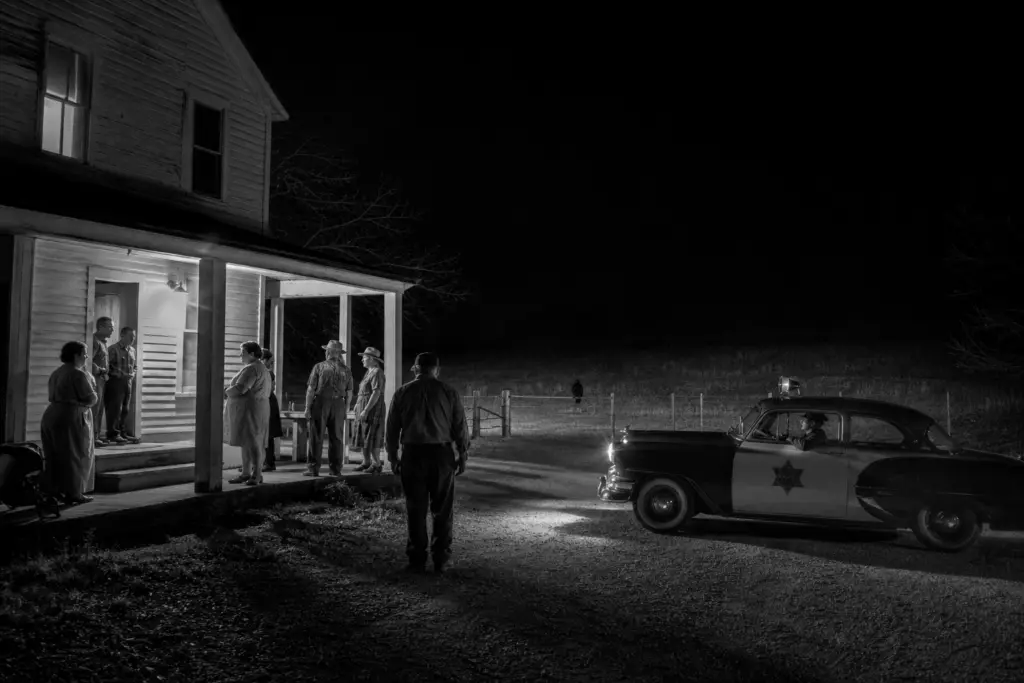
The Kelly-Hopkinsville encounter endures because its central image is so difficult to forget: a rural Kentucky household, frightened people, strange figures at the edge of the light, and authorities summoned in the middle of the night. In August 1955, reports from the area near Kelly and Hopkinsville quickly became a landmark of American UFO folklore, not because they demonstrated an extraterrestrial visit, but because the experience described by the people involved was intense, collective, and dramatic.
Those points must be kept separate. A prompt report, multiple alarmed witnesses, and a police response establish that something disruptive happened to a group of people. They do not, by themselves, identify what was outside the house or establish where it came from. Sincerity is evidence of fear and belief; it is not independent proof of the explanation attached to an ambiguous sighting.
This account follows the timeline before the legend: what was reported that night, what later retellings added or sharpened, and where the surviving record stops. It then tests ordinary failure modes, low-light animal misidentification, uncertain silhouettes, fear-driven interpretation, group reinforcement, memory change, and sensational press framing. The Great Horned Owl hypothesis will be treated as a model that fits some reported details, not as a solved forensic verdict. That distinction is why this 1955 Kentucky UFO case remains historically compelling without becoming proof of aliens.
The 1955 Night That Became an Alien-Encounter Landmark
Its later importance grew from the unusual shape of the report: this was not merely a distant light in the sky, but an alleged close-range siege involving a household, repeated appearances near a farmhouse, and a nighttime appeal to local authorities. That combination helped make the Kelly-Hopkinsville incident a template for later “alien encounter” narratives, small humanoid figures, glowing eyes, a rural setting, and witnesses convinced they were confronting something beyond ordinary experience.
The historical record begins with an August 1955 disturbance near Kelly, Kentucky, then expands through newspaper accounts, interviews, UFO literature, and decades of retelling. Each layer serves a different purpose. Early reports are strongest for establishing that frightened people sought help and described strange figures; later versions can preserve memories, but also tend to supply sharper dialogue, more exact behavior, and labels that may not have belonged to the first accounts.
Terms such as “goblins,” “little green men,” and “aliens” are therefore not interchangeable evidence. They are interpretive packaging: memorable shorthand that can turn uncertain silhouettes and alarmed testimony into a ready-made extraterrestrial story. The pages that follow will keep the reported event, the possible earthly causes, and the later folklore separate. The episode was consequential and genuinely frightening for those involved; it was not a verified extraterrestrial contact.
What the Sutton Group Reported on the Night of August 21, 1955
Near dusk, Billy Ray Taylor said he saw a bright, fast-moving light while at the farmhouse well. The group did not treat that observation as the central event at first; the alarm rose when a figure was reportedly seen approaching the house from a field. Early descriptions emphasized a small, roughly three-to-four-foot figure with an oversized round head, prominent eyes, pointed or ear-like projections, long arms, and hands that appeared clawed. Its reported color varies between early and later accounts, silvery, gray, or pale, but “green” is chiefly the language of later folklore.
The people at the house included Elmer “Lucky” Sutton and his wife Vera, Billy Ray and June Taylor, Lucky’s mother-in-law Glennie Lankford, and several children. The exact headcount and names in retellings are not wholly consistent, a useful warning against treating every later roster as a fixed contemporaneous fact. What is consistent is that a mixed household of adults and children said it saw figures outside over a period of hours.
Lucky Sutton and Taylor fired at the first figure, then reported further appearances at windows and doorways. They also described figures near trees and, in some versions, at the roofline. Those locations matter because they establish the reported viewing conditions: brief, nighttime glimpses at the edge of a lit house, interrupted by movement, fear, and gunfire, not a sustained inspection of a stationary subject.
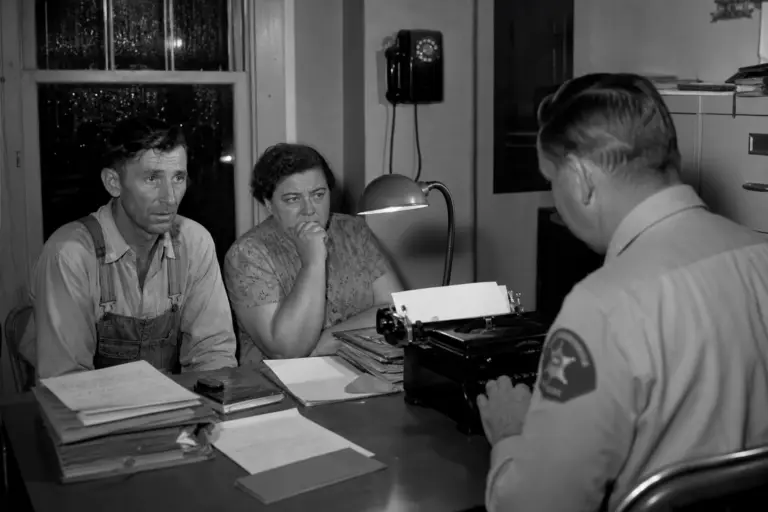
At about 11 p.m., the adults drove to Hopkinsville to seek help. Local and state police, along with other officials and reporters, went to the farm, found an agitated group and signs that shots had been fired, including shell casings and damage associated with gunfire. They did not document tracks, a body, or an unfamiliar object. After officers left, the household said the sightings resumed, and the group eventually abandoned the house for the night.
That is the durable core of the Sutton family encounter: a bright-light report, repeated claims of small figures outside a farmhouse, shots, a prompt police appeal, and no decisive physical trace. Claims that the figures were invulnerable, floated, entered the house, or behaved in precisely scripted ways require closer scrutiny because their detail is less stable across the record.
What the Record Supports, and What It Cannot Establish
Shell casings and gunfire-related damage establish an important but narrow point: people at the farmhouse fired shots during the disturbance. Several people in one household described an alarming episode soon enough to seek police assistance that night, and the responding officers encountered people who appeared frightened rather than a story assembled years afterward. This is a documented report of collective alarm, not a casual rumor. It does not, however, independently establish the group’s interpretation of what stood outside the house.
The crucial distinction is between evidence that an event was reported and evidence identifying its cause. The shot-related traces could not identify a target. No recoverable body, trackway, fragment, photograph, or unfamiliar object tied the reported figures to a nonhuman origin. A strong identifying signal would be an item that could be independently examined and reliably connected to the sightings; the surviving record instead rests chiefly on eyewitness testimony.
Those accounts arose under conditions that complicate identification: darkness beyond the farmhouse lights, brief and shifting viewing angles, movement around windows, trees, and rooflines, and the stress of a perceived nearby threat. Nighttime perception can turn partial shapes into a coherent figure, while fear directs attention toward eyes, hands, motion, and apparent proximity rather than stable features such as scale or anatomy. Shared testimony can show that several people experienced the same frightening situation; it does not show that each person separately obtained a clear view of an extraordinary creature.
The bright light near the well belongs in a separate evidentiary category. It was attributed to Billy Ray Taylor, not independently documented evidence that the light and the later creature descriptions had a common cause. Joining them automatically adds a conclusion to the timeline. Differences among later descriptions and initial witness interviews, and the added precision of some retellings, further narrow what can responsibly be claimed: the record preserves a serious, sincerely reported nocturnal disturbance, but cannot establish what the witnesses saw.
The Earthly Failure Modes: Owls, Visual Ambiguity, Fear, and Group Reinforcement
One proposed answer begins not with an exotic creature but with a nocturnal bird seen at the worst possible moment. The Great Horned Owl explanation is a partial-fit model: it asks whether features attributed to the figures could arise from an owl’s appearance and behavior in poor light, rather than insisting that every reported detail must map neatly onto one animal.
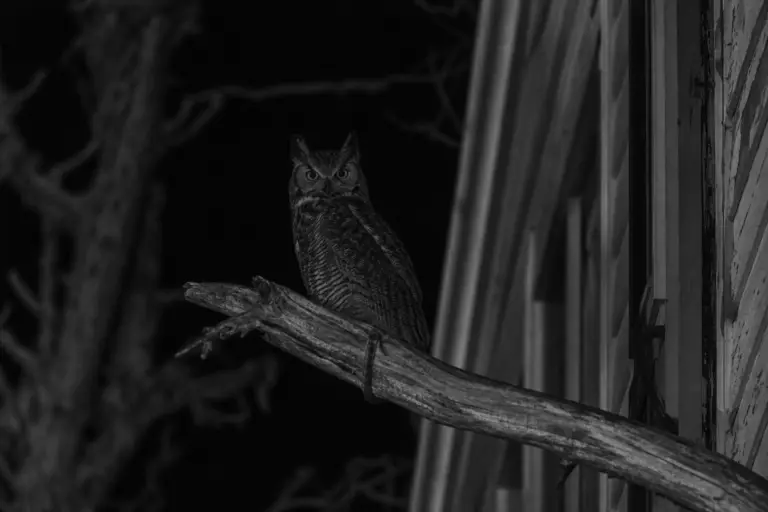
It fits several elements unusually well. An owl facing a light can present two large, bright points where its eyes reflect illumination; raised ear tufts can read as pointed ears; pale or mottled plumage can lose its texture and appear gray or silvery. Perched upright, an owl can also suggest a compact, humanlike silhouette. A bird dropping from a branch, banking away, or using its wings to regain a perch may look less like ordinary flight than like an abrupt glide or a strangely buoyant retreat. Trees, eaves, and rooflines, the places where the figures were repeatedly reported, are also the sort of elevated, broken-background locations in which a bird is hard to resolve.
The model is not a forensic solution. It reproduces the reflected eyes, ear-like projections, height ambiguity, and movement near the house more readily than it reproduces every description of hands, body shape, number of figures, or prolonged return appearances. Nor does it establish that one owl, rather than more than one animal or another ordinary stimulus, was present. Its value is narrower and important: it shows that the most memorable visual features of the Hopkinsville goblins do not require an extraordinary anatomy.
Lighting changes the test. A flashlight beam or vehicle light isolates what it strikes, while the surrounding body merges into darkness; eyeshine may seem detached from a head, and a wing, branch, or shadow can be incorporated into the apparent outline. At close range, observers trying to decide whether an approaching shape is dangerous can overestimate its size and agency. The key distinction is between a stable view, enough light and time to identify plumage, wings, feet, and a flight path, and a brief alarm view, in which only glare, motion, and a silhouette are available.
Fear can then make ambiguous episodes mutually reinforcing. Once the first shape was understood as a hostile being, each sound outside, flash at a window, or movement above the house had a ready interpretation. People gathered together may not invent an event; they can rapidly converge on the same explanation while pointing out features to one another and responding to each new sighting as confirmation. Defensive gunfire would have intensified urgency and made any startled departure seem significant. That sequence offers a plausible route from difficult animal misidentification to a shared creature narrative, while leaving some particulars of the Kelly-Hopkinsville encounter unresolved.
How Press Coverage Turned a Local Fright Into UFO Folklore
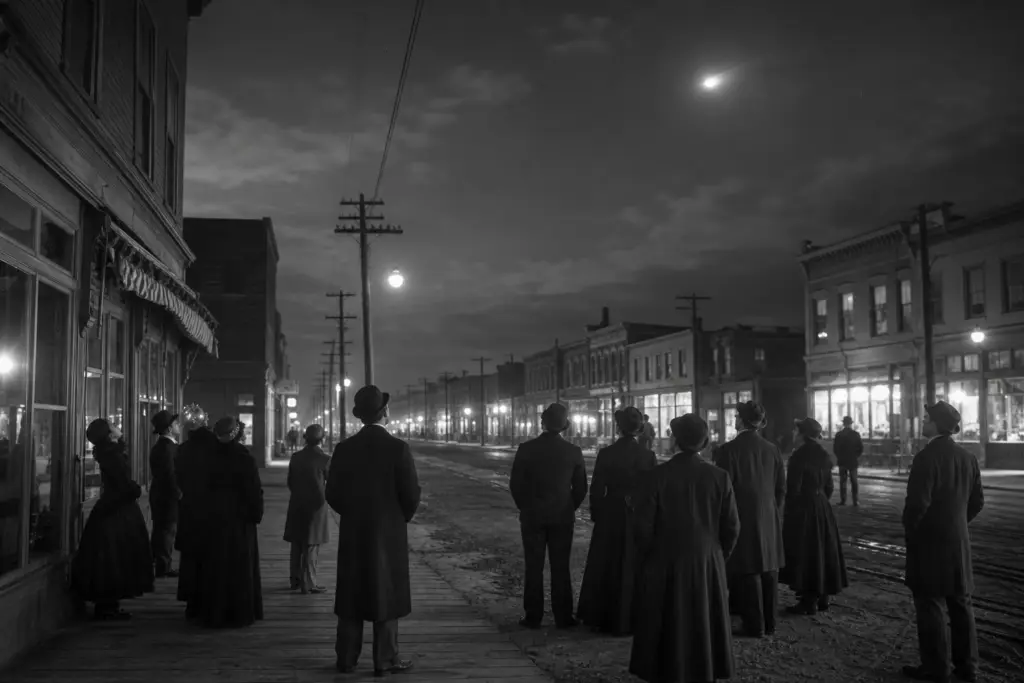
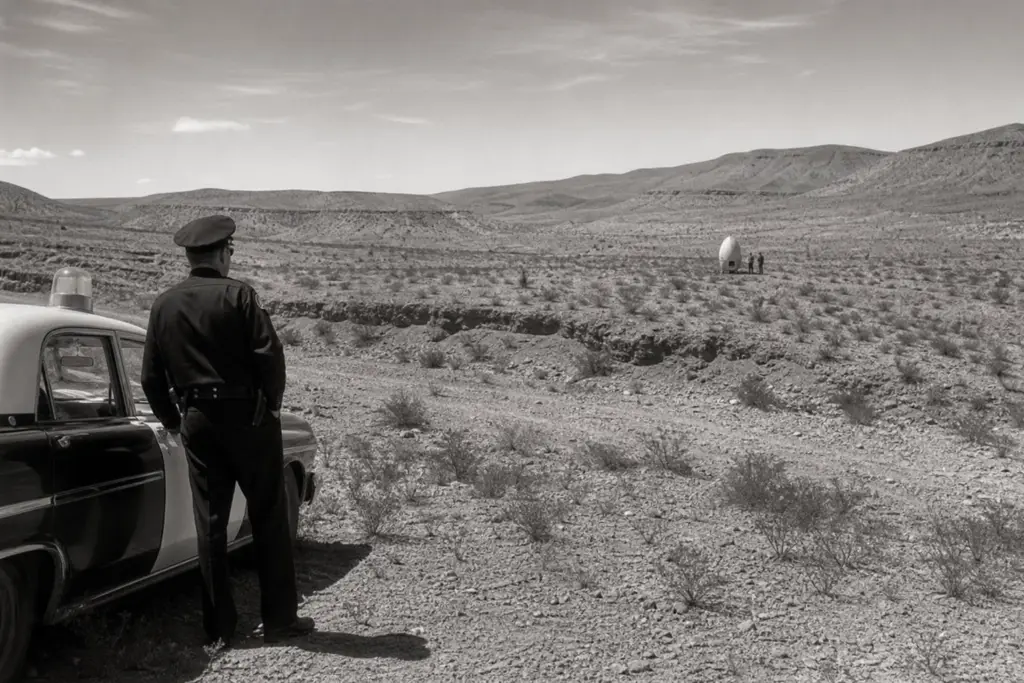
Once the story left the farmhouse, its most portable elements were also its least precise: small figures, glowing eyes, gunfire, and a frightened family. A local report can become national UFO folklore when headlines replace uncertain descriptions with a compact label. “Goblins” suggests a fairy-tale menace; “green men” supplies a color and an extraterrestrial identity; “aliens” turns a reported encounter into an asserted explanation. Each step makes the account easier to remember, illustrate, and repeat, while reducing the visibility of doubt, darkness, and conflicting detail.
That is the mechanism of media amplification in this case. Early accounts closest to the night are most useful for preserving what people said they saw and did. Later summaries often privilege the most cinematic details: uniformly green creatures, impossible movement, bullets having no effect, or a coordinated visitation. Illustrations can harden those additions into a visual memory. Once readers have seen a standard image of the Kelly green men, round-headed, bright-eyed, and unmistakably nonhuman, they may unconsciously read that image back into descriptions that were less settled.
Alcohol claims require the same discipline. Drinking is sometimes presented as a shortcut explanation for the entire episode, but it would not by itself establish what was or was not outside the house, nor would it erase the group’s documented alarm and prompt appeal to police. Conversely, the absence of a demonstrated intoxication narrative would not identify the figures. The stronger question is narrower: which observations were made by whom, under what light, at what distance, and before the story had acquired its later extraterrestrial script?
Repeated retellings also encourage selective detail. A dramatic feature survives because it supports a familiar plot; an uncertainty disappears because it slows the plot down. That process does not require a government UFO cover-up, and the available record does not demonstrate one here. It requires only memorable shorthand, striking artwork, and decades of repetition, enough to transform a local fright into one of the defining stories of American UFO folklore.
Why Kelly-Hopkinsville Still Matters to UFO History
The essential checkpoint is to keep three layers separate: people reported a frightening night; an ordinary stimulus such as an owl could account for important features; and no surviving evidence establishes one complete cause. That distinction is the case’s real historical lesson.
Low light can turn a familiar animal into an uncertain silhouette; fear can make separate movements seem coordinated; a group can settle quickly on a threatening interpretation; and press shorthand can preserve that interpretation more securely than the original uncertainty. These mechanisms do not require dishonesty, nor does any one of them reconstruct every moment at the farmhouse.
The Great Horned Owl hypothesis is strongest for reflective eyes, ear-like projections, appearances near trees or rooflines, and abrupt movement. It is weaker as a total account of the reported number, duration, and consistency of figures. “Partly explained” is therefore more accurate than either “solved” or “unexplainable.”
For later close-encounter reports and UFO or UAP claims, the useful standard is simple: distinguish observation from inference, then ask what independent evidence would turn either into proof. Contemporary disclosure debates do not transform this 1955 episode into evidence of extraterrestrials or non-human intelligence. Its cultural importance is undeniable; its evidentiary limits are equally clear.
A Frightening Night Is Not the Same as Proof of Aliens
A useful final test is to ask what the night’s strongest evidence actually proves. Several people reacted together, sought help promptly, and described a prolonged threat; those facts support the reality of the household’s alarm. They do not independently identify its cause. Testimony can show that people perceived danger without demonstrating what produced the perception, and no physical trace bridges that gap to an extraterrestrial conclusion.
Several ordinary processes could compound one another. Dim, shifting light can make eye-shine and a familiar silhouette appear luminous and humanlike; gunfire and alarm can focus attention on threat while fragmenting observation; and a shared explanation can lead later sights and sounds to be fitted into the same story. Retelling then favors the clearest, most dramatic version, especially once headlines provide an extraterrestrial label.
An owl-based account remains a plausible partial explanation, not a verdict on every reported detail. The larger lesson is not that the witnesses fabricated their fear, but that sincerity does not settle cause. This episode endures because perception, memory, and UFO folklore can turn an ambiguous night into a compelling alien narrative while evidence of alien visitation remains absent.
Frequently Asked Questions
What happened during the Kelly-Hopkinsville encounter in 1955?
On August 21, 1955, people at the Sutton farmhouse near Kelly, Kentucky, reported small figures outside their home after Billy Ray Taylor saw a bright light near the well. Adults fired shots, drove to Hopkinsville for police help around 11 p.m., and officers found frightened witnesses plus shell casings and gunfire-related damage.
What did the Hopkinsville goblins reportedly look like?
Witnesses described figures about three to four feet tall with oversized round heads, large prominent eyes, pointed ear-like projections, long arms, and claw-like hands. Early descriptions varied between silvery, gray, and pale, while the familiar green color largely came from later folklore.
Did police find physical evidence of aliens at the Sutton farmhouse?
Police documented that shots had been fired, including shell casings and damage associated with gunfire. They found no tracks, body, photograph, fragment, or unfamiliar object that identified the reported figures as extraterrestrial.
Were the Hopkinsville goblins really Great Horned Owls?
Great Horned Owls are a plausible partial explanation, not a proven solution. Their reflective eyes, raised ear tufts, pale mottled plumage, upright silhouette, and movement around trees or rooflines fit several reported features, but do not explain every claimed detail.
What should you look for when evaluating whether an alien encounter report has strong evidence?
Separate what witnesses observed from the conclusion they drew, then look for independently testable evidence such as tracks, photographs, physical material, or a recoverable object tied to the event. Brief nighttime views, shifting light, fear, group reinforcement, and later media retellings can support sincere alarm without proving an extraterrestrial cause.