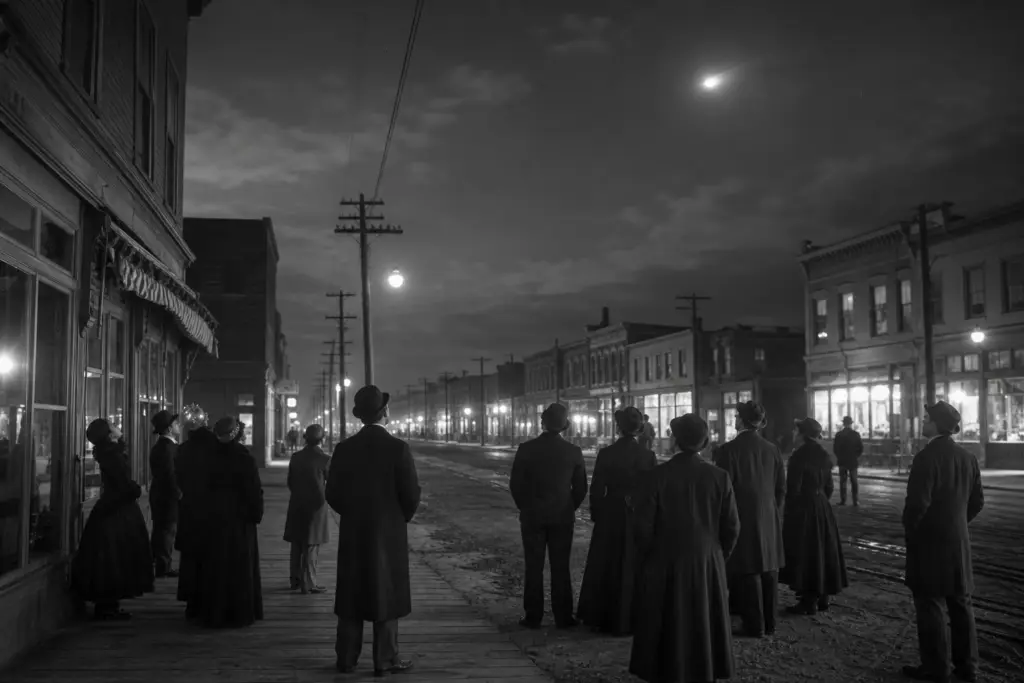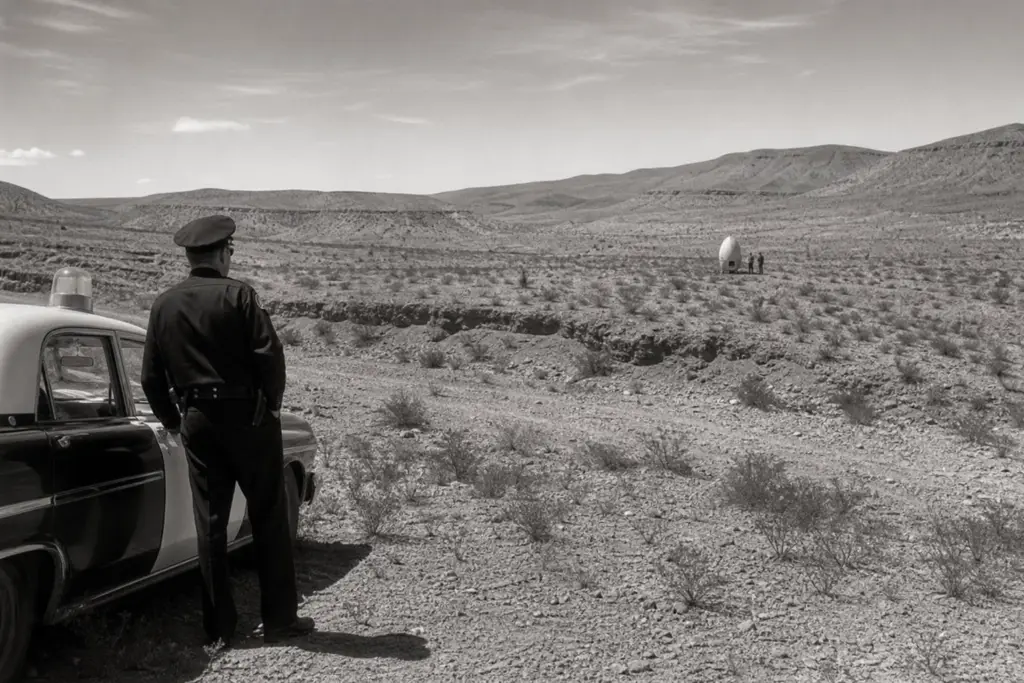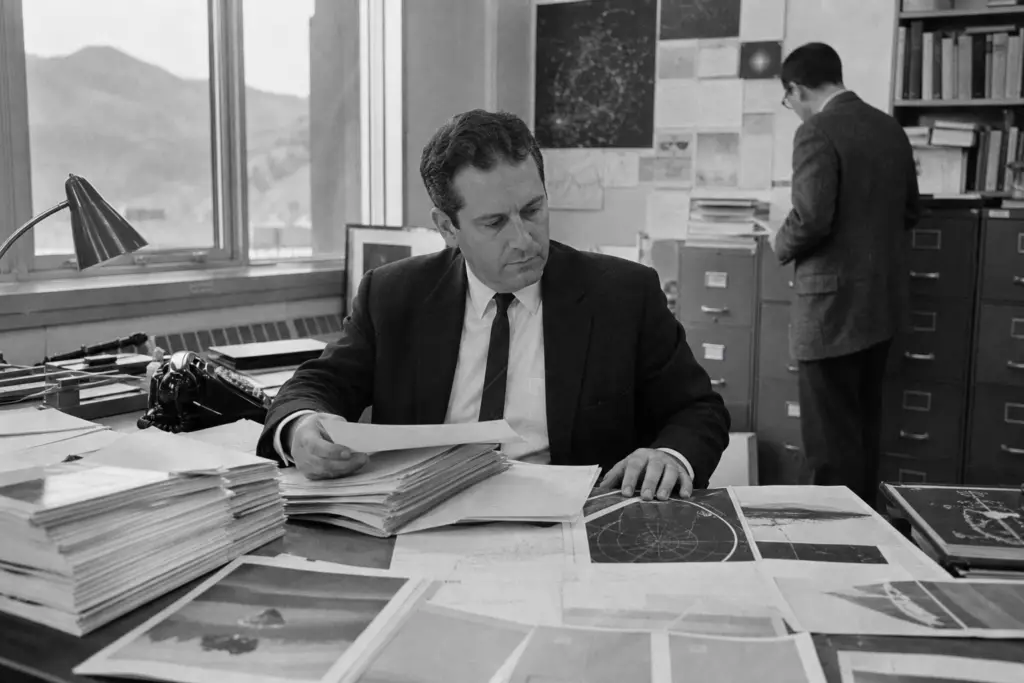

A light near the road during a September 1961 drive through rural New Hampshire seemed, in the couple’s telling, to follow their car. What began as an unsettling roadside observation on a trip home was not an immediate claim that they had been taken aboard a spacecraft. That difference matters: the event they described at the time and the much fuller story that later became famous belong to different points in the case’s history.
In the years that followed, troubling dreams, uncertainty about portions of the journey, psychiatric treatment, and hypnosis sessions in 1964 gave the account its alleged alien-abduction form. Those later recollections supplied many of the details now most associated with the Hills: captors, an examination, and time apparently lost from the night. They are personal testimony recovered under hypnosis, rather than independently verified records of an abduction.
This article follows that chronology closely: what the Hills reported in 1961, how the narrative changed, and how publicity made it a defining UFO-culture story. The aim is neither to dismiss the couple’s experience nor to treat an extraordinary interpretation as established fact, but to separate a documented report of a frightening encounter from the evidence available for its later explanations.
Why the Betty and Barney Hill Case Still Matters
The case endures because it shows how an unsettling experience can acquire new meaning over time. The September 1961 report concerns what Betty and Barney Hill said they saw while driving home through New Hampshire. The later alien-abduction narrative concerns memories, dreams, and interpretations that developed afterward. Keeping those layers separate is essential: a reported light in the sky and a later account of captors are not the same category of evidence.
This distinction also explains the story’s unusual cultural force. Betty’s recurring dreams, the couple’s psychiatric treatment, and Dr. Benjamin Simon’s hypnosis sessions in 1964 supplied a detailed narrative that was absent from their initial roadside report. Hypnosis can produce vivid, sincere recollections, but vividness does not independently establish that recalled events occurred. Later books and media retellings further organized those recollections into a familiar abduction template.
Read this way, the Betty and Barney Hill case is historically important without settling its explanation. It became a formative alien-abduction narrative because it joined a dated personal report, emotionally powerful testimony, and later public circulation, while leaving a clear evidentiary gap between the original observation and an extraordinary conclusion.
The September 1961 New Hampshire UFO Sighting
On the night of September 19, 1961, the drive south from the Montreal area toward Portsmouth, New Hampshire, placed the couple on quiet roads through the White Mountains. That route provides the episode’s clearest fixed points: a late-night return journey, the Indian Head area, and an arrival home in the early hours of September 20.
Near Indian Head, they noticed a bright light in the sky. In their accounts, it did not behave like a distant fixed star; it appeared to shift position and draw nearer as they continued driving. Betty initially considered ordinary possibilities, including an aircraft or satellite. Barney was less certain, and they stopped more than once to watch it. That progression, from a distant light to an object they believed was following their route, is the core of the 1961 New Hampshire UFO sighting.
Barney used binoculars during one of the stops. He later described a large, silent object at closer range and said he could see figures or occupants through what seemed to be windows. The precise visual details differ across later retellings, but the immediate reaction is consistent: frightened by what he thought he was seeing, he returned to the car and urged Betty to leave quickly.
They continued toward Portsmouth and reached home after midnight. At this contemporaneous stage, the Betty and Barney Hill UFO encounter was an account of an alarming aerial observation during a night drive. Their early contacts with authorities and civilian UFO investigators concerned the light and object they believed they had seen; they did not initially report being taken aboard a craft or examined. Those allegations emerged only in a later phase of the story.
From a Frightening Encounter to Missing Time and Nightmares
In the days after they reached Portsmouth, the Hills tried to reconstruct a drive that felt longer and less orderly than they expected. They noticed a period they could not readily account for between the close encounter and later points on the route, along with such details as scuffed shoes and damaged straps on binoculars. This is the origin of the case’s “missing time” language: it describes their uncertainty about elapsed time, not an interval independently timed, observed, or verified by another witness.
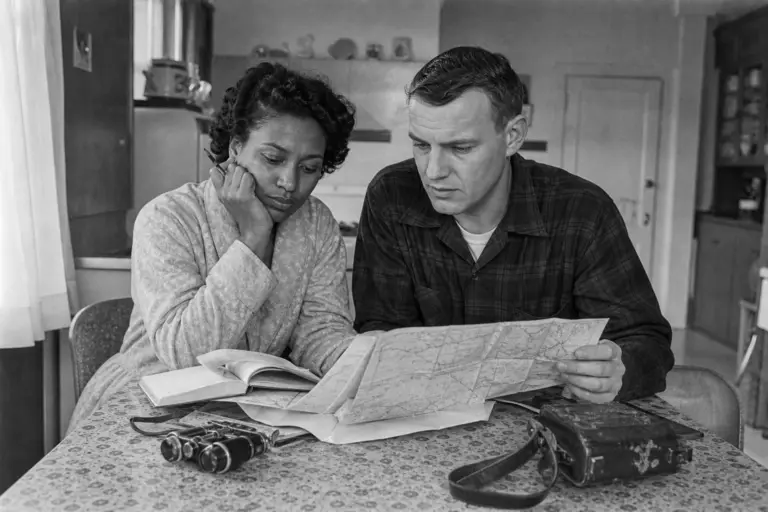
Betty’s experience then gave that uncertainty a more dramatic shape. Beginning roughly ten days after the September 1961 drive, she reported a sequence of vivid nightmares over several nights. In them, figures stopped the couple’s car, led them into a craft, and subjected them to an examination before returning them to the road. The dreams contained elements that would later become central to the Betty and Barney Hill abduction story, but Betty initially understood and described them as dreams rather than as recovered memories of a literal event.
The difference between the early material and later versions is consequential. Early contacts with civilian UFO investigators recorded the sighting, the couple’s anxiety, their difficulty accounting for part of the journey, and Betty’s dream narrative. They did not supply a contemporaneous joint account of a boarding, examination, or return. Barney did not report matching dreams, and the couple had not yet settled on abduction as the explanation for the night.
Over time, the unexplained portion of the trip, Betty’s nightmares, and the couple’s search for meaning became intertwined. That progression made the account compelling, but it also marks the evidentiary boundary readers should retain: a reported aerial encounter occurred first; the detailed alleged captivity narrative emerged later through personal recollection and interpretation.
Dr. Benjamin Simon, Hypnosis, and the Limits of Recovered Memory
By 1964, the couple’s distress had brought them to Boston psychiatrist Dr. Benjamin Simon. Simon’s purpose was therapeutic rather than investigative: Barney was experiencing significant anxiety and physical strain, and both Hills remained troubled by the episode. He used hypnosis as a clinical technique intended to help patients speak more freely about material they found difficult to recall or discuss while fully alert.
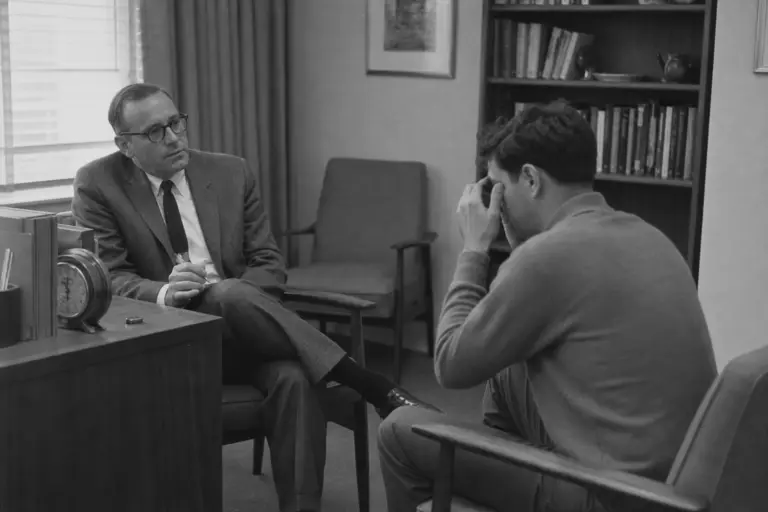
Simon conducted the hypnosis sessions with Betty and Barney separately. That separation mattered because it reduced the immediate chance that one person would simply adopt the other’s version in the room. Under hypnosis, each gave a far more elaborate account than appeared in their early reports: being stopped, taken into an enclosed space, confronted by humanoid figures, and subjected to examinations before being returned to the road. Barney’s account included intense fear and resistance; Betty’s included details that resembled elements of her earlier nightmares.
Those sessions supplied the narrative structure by which the case became known as an alleged abduction. Yet the distinction between a detailed hypnotic account and an independently verified record is essential. The treatment occurred more than two years after the drive, after the Hills had discussed the sighting, tried to account for the gap in their journey, and, in Betty’s case, experienced vivid dreams. Hypnotic regression and UFO claims therefore cannot be treated as if the sessions preserved a contemporaneous recording of the night.
Hypnosis can heighten concentration, reduce inhibition, and make a recalled scene feel unusually immediate. It may yield a fuller narrative, but fuller is not necessarily more accurate. Memory reliability depends not only on sincerity and confidence, but also on how a memory was formed, later discussed, imagined, or shaped by questions and expectations. A person may report emotionally convincing details without possessing a reliable way to distinguish direct recollection from reconstruction.
Simon himself did not present the hypnosis sessions as scientific proof that an extraterrestrial event had occurred. Their historical importance lies elsewhere: they transformed an already unsettling experience into two vivid personal narratives of detention and examination. The records are indispensable for understanding how the Hill story developed, while their method limits what they can establish about what happened on the New Hampshire road.
Investigations, Publicity, and the Zeta Reticuli Star Map
In October 1961, NICAP investigator Walter N. Webb interviewed the Hills at length and prepared a report focused on their New Hampshire sighting. That early civilian-investigator record helped preserve the couple’s account before the hypnosis sessions of 1964 supplied its later detention-and-examination narrative. NICAP gave the case a route beyond private correspondence, but it did not produce physical evidence of an abduction.
The U.S. Air Force’s official UFO review program, Project Blue Book, had a narrower role still. The U.S. Air Force file concerned the Hills’ report of an unusual aerial object during the September 1961 drive; it was not an official inquiry into being taken aboard a craft, an allegation absent from the initial report. A file on an unexplained or insufficiently resolved sighting records that an observation was reported and reviewed. It does not establish the later claims derived from dreams and hypnosis, and no Air Force or Project Blue Book finding validated an alien-abduction explanation.
Public attention accelerated after journalist John G. Fuller presented the case in Look magazine in 1965 and expanded it into The Interrupted Journey, published in 1966. Fuller arranged interviews, Simon’s treatment material, and the Hills’ recollections into a readable chronology, making the Betty and Barney Hill UFO sighting national UFO news. The 1975 television film The UFO Incident, starring Estelle Parsons and James Earl Jones, carried that version into popular culture. Such adaptations made the story memorable, while moving audiences further from the short, contemporaneous sighting report.
Betty’s alleged star map followed the same path from recollection to interpretation. She described under hypnosis a map purportedly shown to her during the encounter and later drew it; in the 1970s, amateur researcher Marjorie Fish proposed that its lines matched nearby stars, with Zeta Reticuli as a central system. Critics noted that the proposed match depended on selecting stars, orientation, and a viewpoint not specified by the drawing. The zeta reticuli star map is therefore a later astronomical reading of hypnosis-derived testimony, not an identification established in 1961 or confirmed by an official investigation.
Why the Hill Case Became Foundational in UFO History
Fuller’s 1966 book fixed a particularly influential sequence in public memory: uncertainty about part of a September 19, 1961 journey, followed by Betty’s dreams and then Dr. Benjamin Simon’s 1964 hypnosis sessions, which produced accounts of detention and medical examination. That sequence gave later alien-abduction stories a durable structure centered on ordinary civilian witnesses rather than military personnel or professional investigators.
The Hill abduction case particularly helped popularize “missing time” as a label for an interval a witness cannot satisfactorily reconstruct. In the Hills’ history, it meant uncertainty about elapsed travel time, not a period independently timed or witnessed by others. The examination motif and descriptions of captors likewise entered the public version through Betty’s dreams and the separate hypnosis-derived accounts developed in 1964, rather than through reports made soon after the sighting.
That distinction is central to the cultural impact of UFO stories: vivid detail can make a narrative influential without changing the kind of evidence behind it. Fuller’s retelling and the 1975 television film The UFO Incident brought private testimony to large audiences, helping make recovered memories, clinical procedures, and nonhuman figures familiar features of later abduction literature and media.
For readers comparing later UAP sightings, the evidentiary order remains important. The September 1961 aerial observation belongs to the earliest record; time uncertainty and nightmares followed; the detailed detention account emerged principally through later recollection and hypnosis; and popular retellings added dramatic coherence. The Betty and Barney Hill UFO sighting remains an unresolved personal report, but the alleged abduction cannot be treated as established fact.
A Lasting Story, Not a Settled Explanation
What survives most clearly is not a single, stable account but a record of how one frightening night acquired layers of meaning. The Hills reported an unusual light during their September 1961 drive; afterward came uncertainty about the journey, Betty’s dreams, treatment with Dr. Benjamin Simon, and the detailed narratives produced in 1964 hypnosis. Publicity then joined those stages into the seamless abduction story familiar to later audiences.
That sequence is also the case’s evidentiary limit. A sincere recollection can be historically important without establishing its interpretation, and hypnosis can generate vivid, emotionally compelling material without independently confirming that the remembered events occurred. The road-side observation, later worries about elapsed time, dream material, and hypnotically elicited testimony therefore deserve to be weighed as different kinds of record, not merged into one proof claim.
The Betty and Barney Hill UFO sighting endures because it gave UFO history an unusually durable narrative form and a human story of fear, memory, and uncertainty. Its influence on later alleged-abduction accounts is documented in the motifs that followed it; what happened on the New Hampshire road remains unresolved.
Frequently Asked Questions
What did Betty and Barney Hill report seeing in New Hampshire in 1961?
During their September 19, 1961 drive through New Hampshire’s White Mountains, the Hills reported seeing a bright light that appeared to shift position and follow their route. Barney later said he saw a large silent object and figures through apparent windows using binoculars.
Did Betty and Barney Hill initially report an alien abduction?
No. Their initial reports to authorities and UFO investigators described an alarming aerial object, not being taken aboard a spacecraft or examined by aliens. The detailed abduction account emerged later through dreams, recollection, and 1964 hypnosis sessions.
What role did hypnosis play in the Betty and Barney Hill case?
Boston psychiatrist Dr. Benjamin Simon hypnotized Betty and Barney separately in 1964, more than two years after the sighting. During those sessions, they gave detailed accounts of detention, humanoid figures, and examinations, but hypnosis-derived memories are not independently verified records of those events.
Did Project Blue Book investigate the Betty and Barney Hill sighting?
Project Blue Book reviewed the Hills’ report of an unusual aerial object during their September 1961 drive. It did not conduct an official investigation into an abduction claim, and it never validated an alien-abduction explanation.
What should you look for when evaluating the Betty and Barney Hill abduction story?
Separate the contemporaneous 1961 sighting report from later evidence, including uncertainty about travel time, Betty’s nightmares, and hypnosis sessions conducted in 1964. The strongest documented facts are the reported aerial observation and subsequent distress, while the captivity narrative rests on later personal testimony rather than independent physical evidence.