Special Access Programs, IRAD, and Defense Subcontracting: What They Can Conceal and What Oversight Still Exists
Learn how SAPs, IRAD, and subcontracting could obscure UAP reverse engineering, and where audits, contracts, and oversight still apply.
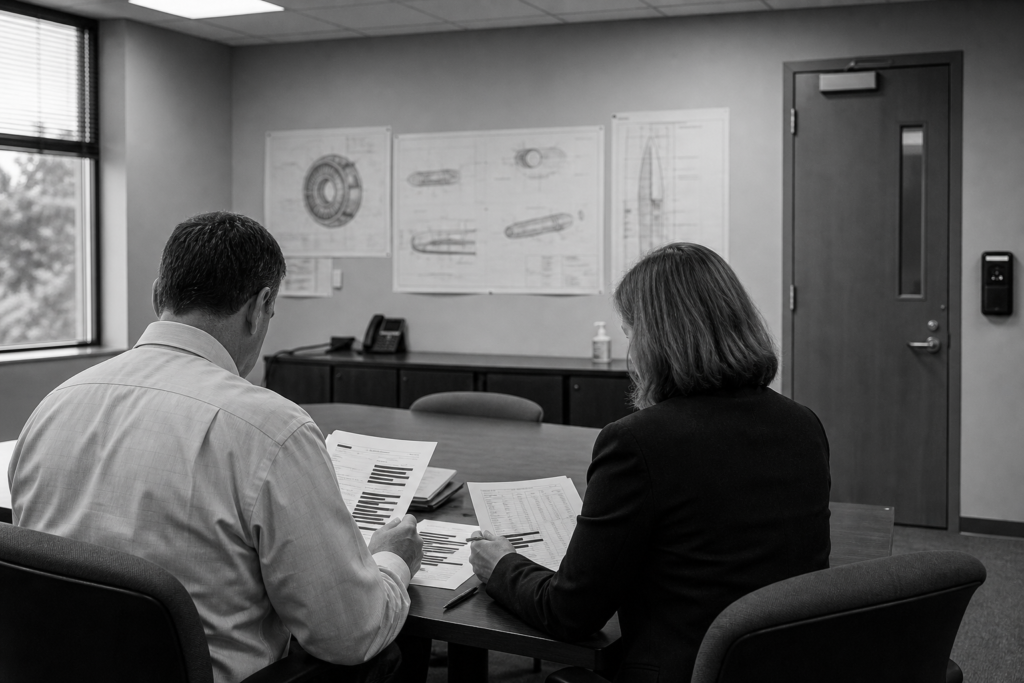
Claims of UAP reverse engineering are often framed as a simple question: could a secret government program be hidden inside the defense industry? The useful answer begins elsewhere. It asks how classified acquisition, corporate research, and controlled access actually divide information, and which people, records, and institutions remain in the chain.
A classified contract protects specified information from public release. A Special Access Program adds tighter, need-to-know controls around particularly sensitive information; it is not a synonym for every classified effort. Independent research and development, or IRAD, is work a contractor initiates with its own funds rather than work ordered under a particular government contract. Multi-tier subcontracting further separates tasks among a prime contractor, suppliers, laboratories, and specialist shops. Each arrangement can make an outside narrative difficult to trace because no single public filing need describe the full technical picture.
That is materially different from total invisibility. Sensitive work can still involve funding decisions, accounting treatment, security access, contracting relationships, audits, executive-branch review, and congressional oversight, though much of that visibility may be classified or limited to officials with a defined role.
This article uses alleged recovery or exploitation work as a test case, not proof that any such program exists. It separates testimony, reporting, and public assertions from authenticated program evidence, then asks a practical question at each layer: what could this mechanism conceal from the public, and what traces or accountability channels should it leave behind?
The Bounded Answer: Secrecy Can Limit Visibility, Not Eliminate Accountability
The decisive distinction is between capacity for concealment and evidence of a concealed program. A tightly held effort could leave the public unable to identify its purpose, participants, location, or technical results. Employees may know only a narrow task; a supplier may see a component requirement without the end use; officials outside the relevant chain may lack access to the underlying details. Those are plausible effects of compartmented national-security work, not affirmative proof of UAP reverse engineering.
Nor does limited public visibility mean that no one can follow the activity. Work of this kind would ordinarily have to pass through some combination of authorized funding, corporate management, controlled facilities, security administration, contracting or research approvals, cost records, and government oversight channels. The relevant records may be classified, distributed across organizations, or unavailable to a requester without access, but restricted access differs from the absence of records or authority.
This produces a useful evidentiary test. A secure building, a contractor with classified business, an unexplained budget line, or a witness’s secondhand account is a weak signal: each is compatible with many conventional missions. Stronger support would connect a specific program, responsible organization, authenticated records, and firsthand testimony that can be independently corroborated. A claim of a government UFO cover-up cannot bridge that gap merely by pointing to secrecy; it must show how the alleged activity fits, or improperly escapes, the real administrative and financial pathways that secrecy normally narrows rather than erases.
Classified Contracts vs. Special Access Programs: What SAPs Actually Add
A classification marking and a Special Access Program are not interchangeable. A classified defense contract can require personnel clearances, secure handling, and limits on release because the work involves classified information; it need not have the additional access architecture of a SAP. Special Access Programs add protections for information judged especially sensitive by restricting access to a defined compartment rather than to everyone with the relevant clearance.
In practice, that compartment can mean a program-specific need-to-know determination, separate access approval, a security plan governing storage and communications, work in approved secure spaces, and dedicated program security personnel who administer access and incident reporting. A cleared engineer may therefore be eligible to hold a clearance yet be excluded from the program itself. Those controls can sharply reduce what colleagues, suppliers, and even other cleared offices can learn about the work’s purpose; SAP status, however, is a security-control designation, not evidence of exotic technology, unlawful activity, or UAP reverse engineering.
The principal public-facing categories describe how openly the government identifies the program. An acknowledged SAP’s existence is publicly recognized, although its capabilities and details may remain classified. An unacknowledged SAP conceals the program’s existence from the public and generally limits attribution in ordinary channels. A waived SAP is treated as exceptionally sensitive for statutory reporting purposes, allowing more restricted notification arrangements. The practical tradeoff is less public traceability and a narrower oversight distribution, not a program freed from executive-branch control or every congressional notification requirement.
A meaningful lead would therefore be an authenticated access record, security plan, or official notification that ties a named compartment to a specific claimed activity. A secure facility, a cleared employee, or the bare assertion that a project was “SAP” is weak evidence: each is routine in conventional national-security work and cannot establish what was being studied.
IRAD: Contractor-Funded Research Is Private, but It Is Not Financially Untethered
Another route to sensitive technical work begins inside the company rather than with a government statement of work. Independent research and development (IRAD) is research a contractor initiates and funds on its own business judgment. That can make IRAD defense research far less visible publicly: the company may reveal only broad research categories, retain contractor-owned intellectual property, and decide whether any unclassified description serves its commercial interests.
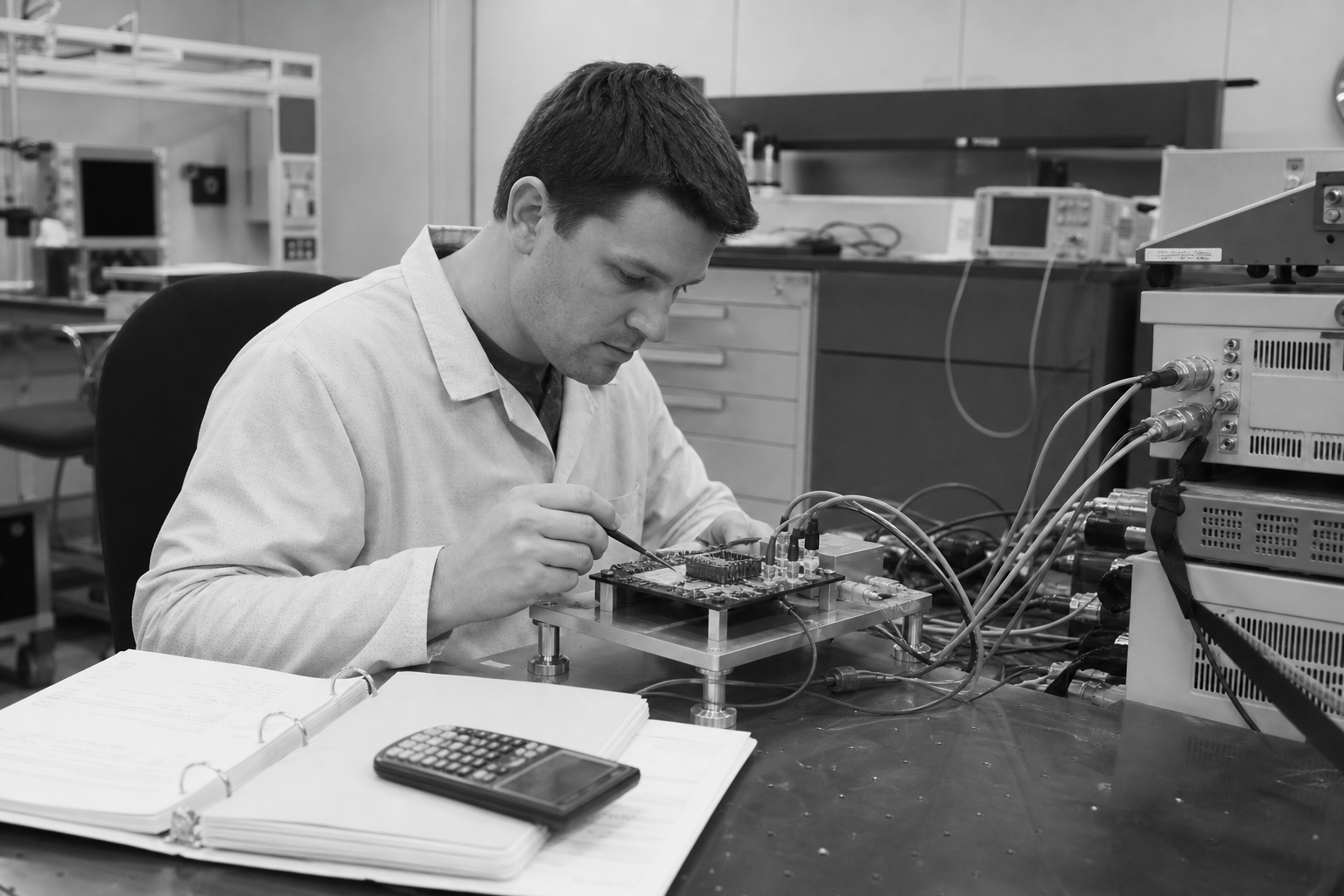
The funding distinction matters. Work paid directly under a particular government contract is government-directed contract performance. Purely company-funded IRAD is an internal investment, with the company bearing the immediate cost and risk. A separate possibility is reimbursed IRAD: allowable IRAD expenses may be accumulated in indirect-cost pools and allocated across applicable government work when prices or reimbursement are negotiated. That does not turn every internal project into a hidden government program; it means the accounting treatment and allocation method can affect whether government customers ultimately bear part of the cost.
Privacy is therefore not financial detachment. IRAD activities require project, labor, expense, and allocation records sufficient to distinguish research costs from ordinary production, marketing, or work already required by a contract. Cost-accounting controls, contracting scrutiny, and audit exposure create traces even where outsiders cannot see the technical subject. Classification can restrict who reviews a project’s substance and how records are handled, but it does not make time charges, expenditures, indirect-cost treatment, or retained records disappear.
For an alleged UAP reverse-engineering effort, a strong signal would connect an authenticated internal project record, its technical purpose, its funding treatment, and responsible officials. A company’s large R&D budget, a classified research facility, or a generic reference to “advanced technology” is weak evidence; each also fits ordinary aerospace, defense, and commercial research, and illustrates the limits of public-facing UAP funding transparency.
How Prime Contractors and Subcontractors Can Compartment Work
A layered supply chain divides knowledge by task rather than by company name. The government customer may place responsibility for an end item with a prime contractor; that firm can assign a defined subsystem to a first-tier subcontractor, which in turn buys parts, testing, machining, software, or materials from lower-tier suppliers. A supplier making a housing, coating, sensor board, or test fixture may receive requirements for its own work package without the system’s full mission or origin.

Compartmentation becomes stronger when the statement of work is narrow, technical data are released only to personnel with a need to use them, and work occurs in access-controlled spaces. Proprietary markings can also limit redistribution of designs between firms. Separate work packages let one team validate a material property while another integrates hardware and a third performs environmental testing; none necessarily sees the complete architecture. That arrangement could make an alleged UAP reverse-engineering effort difficult for an individual vendor to identify, but ordinary sensitive aerospace and defense projects use the same division of labor.
The partition is not a clean disappearance of accountability. The prime contractor remains the party answerable to the government for the contracted deliverable, even when performance is distributed. Security duties and other required contract terms can be flowed down to a subcontractor, while acceptance, schedule, configuration, and quality controls connect lower-tier work back to the program.
Each handoff also tends to create operational traces: purchase orders, invoices, shipping or custody records, inspection results, nonconformance reports, property records, and supplier-performance files. Their technical detail may be restricted, and the government may not deal directly with every lower-tier firm. But it can retain direct visibility into selected critical subcontractors. A meaningful evidentiary lead would link a particular supplier’s authenticated records to a defined technical purpose and responsible program chain; a supplier’s classified capability or unexplained customer list would not do that work on its own.
Who Still Has Visibility: Contracting, Audits, Inspectors General, and Congress
Visibility in a sensitive effort is better understood as a set of overlapping roles than as a single master list of informed people. A contracting officer may see the contractual vehicle, obligations, changes, and payment path; a program office may see the mission need and deliverables; security personnel may administer access boundaries; and financial staff may see charges, forecasts, or funding controls. None of those views necessarily supplies the complete technical narrative.
Auditors and contract-administration personnel occupy a different slice. Their concern is whether costs can be traced, allocated, supported, and accepted under the applicable arrangement, not whether every reviewer needs access to the underlying design. Inspectors general investigate within defined authority and access channels. These are meaningful accountability paths, but they are not a guarantee that every auditor, investigator, or official receives every compartmented detail.
Congressional visibility is similarly layered. Defense and intelligence committees, authorization committees, and appropriations committees perform distinct functions: authorization addresses legal authority and policy, while appropriations provides funding. A member or staffer outside the notified oversight channel may therefore have little or no program-specific knowledge. The practical consequence is that an absence of broad congressional awareness is not, by itself, evidence that no restricted activity exists, or that an activity escaped all oversight.
Even highly restricted work must ordinarily persist through some combination of funding decisions, contract administration, accounting entries, security administration, reporting channels, and executive or congressional oversight. The records may be classified, fragmented, and unavailable to the public, but permanent total concealment becomes harder as an effort grows, spends money, changes scope, produces hardware, or relies on multiple organizations. For a UAP reverse-engineering allegation, a strong lead would connect those channels to a named program and defined purpose; an assertion that “someone in government knew” remains too indeterminate to establish that connection.
What Would Actually Support a Claim, and What Would Not
The right question is not whether a clue is unusual, but what proposition it can actually prove. A classified contract can show that classified work existed; a secure facility can show controlled operations; and an IRAD budget entry can show company-directed research. None identifies the subject of that work. Likewise, an unnamed source or a single witness may provide a lead, but cannot by itself establish an alien disclosure claim or a verified crash-retrieval program.
- Direct evidence ties a named program, organization, activity, and time period together: an authenticated record with enough surrounding context to establish its origin, purpose, and completeness.
- Corroborated firsthand testimony comes from independent people who directly handled, observed, authorized, or recorded the same activity, not witnesses repeating a shared story or inference.
- Physical evidence requires a traceable chain of custody: who possessed the material, when it changed hands, where it was stored, and whether qualified examination can be independently reproduced.
- Administrative convergence links the technical claim to matching contract, funding, property, security, and subcontract records rather than treating any one fragment as decisive.
- Authorized review carries particular weight when an inspector general, cleared investigative body, or notified oversight authority can lawfully examine the underlying material and report a defined finding.
That standard is useful when reading UFO disclosure, UAP news, or contractor allegations: distinguish a document from its interpretation, testimony from corroboration, and an unexplained gap from affirmative proof. Compartmented structures can hide details, but UAP reverse engineering remains an extraordinary claim that calls for converging evidence capable of independent verification.
The Bottom Line: Plausible Secrecy Is Not Proof
A restricted program can be difficult to map from outside precisely because different controls solve different problems. Classification limits disclosure of information; Special Access Programs further restrict who may enter a defined compartment; IRAD permits a company to begin research without a program-specific government task; and subcontracting separates an end effort into smaller work packages. Together, those arrangements can leave public reporting incomplete and individual participants aware of only their assigned slice.
They do not, however, turn activity into a recordless void. Work still has practical touchpoints: money must be managed, access must be administered, tasks must be directed or evaluated, and organizations retain some combination of contractual, accounting, security, property, audit, and oversight records. Those touchpoints may be classified, distributed among institutions, or inaccessible to the public. Their limited visibility is a reason to avoid overconfident dismissal, not a substitute for evidence.
For future UAP reverse engineering claims, match the allegation to the mechanism offered to explain it. A claim of a SAP should be supported by identifiable compartment details and corroboration; a claim of contractor-funded work should connect purpose, costs, and responsible personnel; a supply-chain claim should show linked records across organizations. Treat secrecy as context, not proof, and treat the absence of public proof as an unresolved evidentiary gap rather than a final answer, while recognizing the role of UAP whistleblower-protection pathways in lawfully surfacing sensitive claims.
Sources
Frequently Asked Questions
-
What is the difference between a Special Access Program and a classified defense contract?
A classified defense contract restricts handling and release of specified classified information. A Special Access Program adds a separate compartment with program-specific need-to-know approval, controlled facilities, security plans, and dedicated access administration.
-
Can a Special Access Program hide a UAP reverse-engineering project?
A SAP can conceal a program’s purpose, participants, location, and technical results from the public and from cleared personnel without compartment access. It does not eliminate funding, security, contracting, accounting, executive-branch, or required congressional oversight channels.
-
Can defense contractors use IRAD money for classified research?
Yes. IRAD is research initiated and initially funded by the contractor rather than ordered under a specific government contract, and its technical subject can be classified. Allowable IRAD expenses may also be placed in indirect-cost pools and allocated across applicable government work, subject to accounting controls and audit exposure.
-
Can subcontractors conceal work from the Pentagon or Congress?
Subcontracting can limit what individual suppliers know because lower-tier firms may receive only narrow work packages for parts, testing, software, materials, or machining. It does not erase accountability because purchase orders, invoices, custody records, inspections, quality controls, and prime-contractor obligations link work back to the program.
-
What evidence should you look for to evaluate a UAP reverse-engineering claim?
Look for authenticated records that connect a named program, responsible organization, technical activity, funding treatment, and time period. Strong claims also require independently corroborated firsthand testimony, traceable physical evidence, and matching contract, security, property, and subcontract records.