MADAR Node 100 Detects Unspecified Object Over Mountlake Terrace, WA on 2020-02-07
Review the MADAR Node 100 Mountlake Terrace alert from February 7, 2020, its limits, evidence, and ways to verify the anomaly.
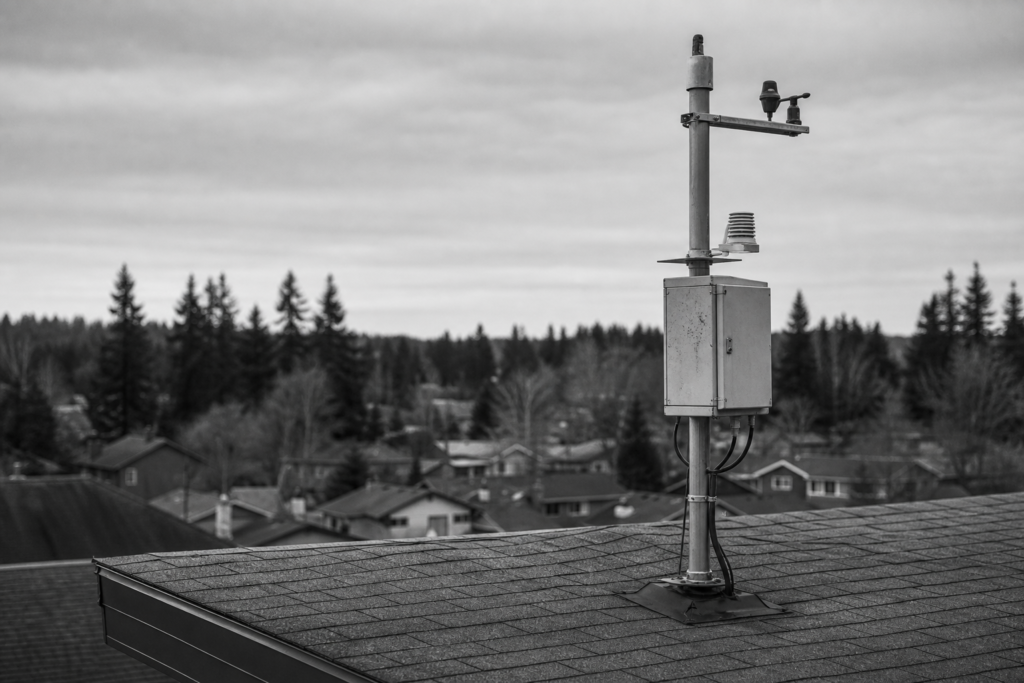
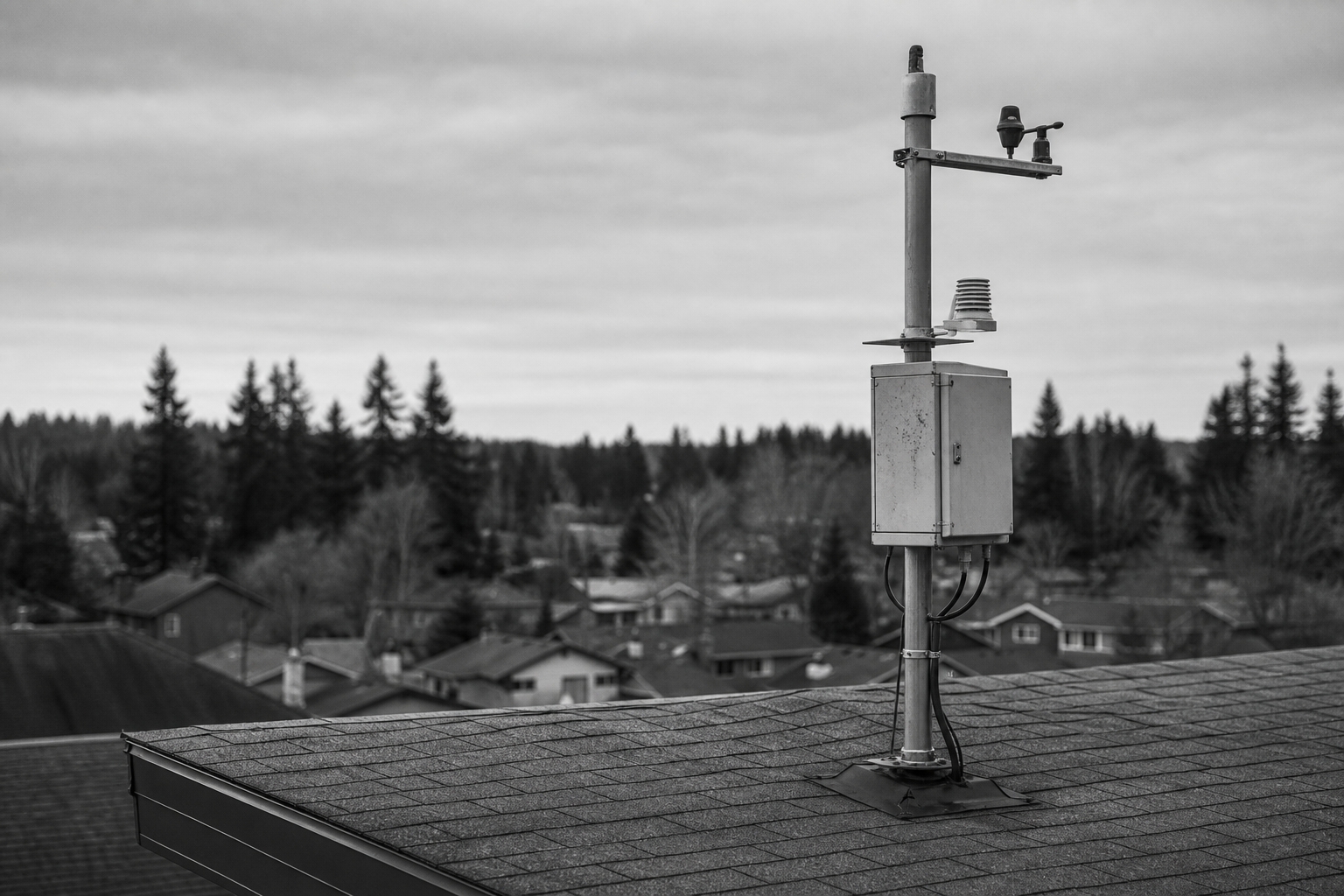
MADAR Node 100 Mountlake Terrace is best approached as a narrowly defined detection record: an alert reportedly associated with Mountlake Terrace, Washington, on February 7, 2020, not proof that a witness saw a craft, nor that any physical object was identified.
That distinction governs the entire case. A sensor detection means an instrument registered a reading that met its alert condition. An observation means a person or optical system recorded something in the environment. Identification requires enough independent information, such as a track, image, physical characteristics, or matched conventional source, to determine what produced it. Those are progressively stronger claims, and an alert alone does not move automatically from the first category to the last.
This review treats the reported MADAR alert as a record to be tested rather than a conclusion to be defended. It will separate the fields that can be established from the available event material, date, place, node designation, timestamps, and recorded values, from details that are missing or cannot be independently confirmed. It will also examine the practical limits of a sensor detection and the kinds of corroboration that would change the assessment: synchronized aviation data, local weather and electrical conditions, satellite or seismic records where relevant, and contemporaneous eyewitness or imagery evidence.
No corroborating record located would not prove a mundane cause, just as an unresolved reading would not establish an extraordinary one. The question is more disciplined: what did Node 100 reportedly register, how reliably can that registration be interpreted, and what does the surviving evidence permit readers to conclude?
MADAR Node 100 Alert: What Was Reported on February 7, 2020
The reported case is dated February 7, 2020 and tied to MADAR Node 100 in the Mountlake Terrace, Washington, area. Its surviving description is of an alert or anomalous sensor registration, not a report that an observer visually tracked an object. That limitation is decisive: the MADAR Node 100 detection cannot, on its own, identify an object, establish that anything was seen in the sky, or demonstrate that a physical craft was present.
The available case description provides three useful anchors: the calendar date, the node designation, and the associated location. It does not, in the material available for this review, provide a preserved raw node log, a precise timestamp with a stated time zone, a measurement value, an alert duration, or an original event label explaining what threshold was met. Those omissions do not invalidate the reported alert; they limit how far it can be interpreted.
A strong event record would pair the alert with time-synchronized readings and independent local evidence. A weak one consists only of a later summary linking a node, place, and date. For the MADAR detection of February 7, 2020, the responsible conclusion at this stage is correspondingly narrow: Node 100 was reportedly associated with an unspecified anomaly near Mountlake Terrace, while the cause and any object behind it remain unestablished.
What MADAR Is Designed to Detect, and What It Cannot Identify
The missing fields matter because an alert is the output of a rule, not an explanation for the change that triggered it. In a distributed monitoring arrangement such as the MADAR network, individual stations can flag readings that depart from a selected baseline or threshold; the alert preserves the fact that a condition met that rule, while interpretation depends on the underlying values, timing, calibration, and surrounding conditions.
A magnetic anomaly detector, in practical terms, registers change in the magnetic environment at the sensor’s location. That change may be brief or sustained, small or large, and may arise from any nearby or broader influence capable of affecting the measurement. A threshold-triggering anomaly is therefore a useful prompt for investigation, not a classification of its cause. For this case, no preserved Node 100 configuration, sensor specification, baseline, threshold setting, or raw measurement series is available in the material reviewed. Those absent details prevent a reader from determining precisely what variable produced the reported alert.
Even a well-preserved magnetic reading would describe conditions at the instrument, rather than directly describe an object in the sky. A single-station measurement does not supply range, altitude, shape, direction of travel, velocity, material, origin, or a visible target. It also cannot establish that an observer saw anything at all. Stronger UAP sensor data would connect synchronized readings from more than one station with an independently timed visual, radar, aviation, weather, or other local record. Without that combination, the February 7 registration remains an anomaly report whose physical source is undetermined.
The Available Record for the Mountlake Terrace Detection
The surviving record can be reduced to a short ledger rather than expanded into a narrative it does not contain. Recorded: the event is associated with the date 2020-02-07, MADAR Node 100, and Mountlake Terrace, Washington. Those fields establish the case label: a reported node-linked anomaly at a stated place and date.

| Record field | Status | What it supports |
|---|---|---|
| Date | Recorded: 2020-02-07 | Places the reported registration on a specific calendar day. |
| Station identifier | Recorded: Node 100 | Connects the report to a particular MADAR station designation. |
| Location | Recorded: Mountlake Terrace, Washington | Provides the reported geographic association, not a measured position of a target. |
| Alert or anomaly status | Recorded in the surviving description | Indicates that the event was characterized as a sensor registration. |
| Exact time stamp, raw reading, duration, and threshold | Not documented in the material available here | Prevents reconstruction of the event’s timing, magnitude, and persistence. |
Not documented: a preserved original event-log entry or archived event-page URL; a time zone or clock-synchronization record; a numerical telemetry series; alert metadata showing how or when the alert was generated; and operator comments that distinguish an instrument observation from later interpretation. No eyewitness statement, image, video, radar return, aircraft correlation, weather observation, satellite correlation, power-grid record, or seismic record is available within this case record.
Unknown: whether the alert represented a momentary excursion or a sustained condition, whether any second instrument registered a related change, and whether a contemporaneous investigator reviewed the event. These are not minor omissions. A dated station label is a good provenance signal; synchronized raw values with independent local records would be a much stronger evidentiary signal. The available ledger supports the existence of a reported alert entry, while leaving its physical cause unresolved.
Why the Alert Does Not Establish an Unidentified Craft
The crucial evidentiary step is establishing that there was an external object to identify. A sensor alert establishes only that an instrument registered a change. An observation report adds a person’s account of something perceived; it may remain unidentified because the observer cannot resolve its nature. Identification is the further conclusion that the available evidence reliably connects that observation to a particular physical object or cause.
That sequence has not been completed in this case. The material available for the February 7, 2020 entry contains no synchronized visual account describing a light, aircraft, craft, or other target. It therefore cannot reasonably be presented as a Mountlake Terrace UAP sighting, much less as an identified craft. Calling the alert an “unspecified object over Mountlake Terrace” describes an interpretation placed on the event, not a measured target position, altitude, or appearance.
A stronger case would combine several mutually testable records:
- Calibrated raw telemetry: the underlying readings, sampling rate, baseline, threshold, and clock record would show the size, duration, and timing of the anomaly.
- Synchronized observation: a contemporaneous witness, image, or video with a known time and viewing direction could connect a sensor change to something outside the station.
- Independent detection: a second separated sensor, radar data, aircraft-track data, or another instrument registering a corresponding event would reduce the risk of a local disturbance.
- Ordinary-cause testing: records capable of evaluating electrical interference, equipment behavior, environmental effects, and nearby conventional activity would test competing explanations.
Each addition changes the evidentiary weight, but none should be treated as decisive in isolation. A video without time or location can be unrelated; a single anomalous trace can reflect the sensor environment rather than an aerial target. Conversely, the absence of those records does not prove a mundane explanation. It leaves the reported MADAR alert unresolved at the level of an anomalous registration, not a confirmed UFO report or physical craft.
How Investigators Could Test the Anomaly and Rule Out Alternatives
A retrospective inquiry should begin by rebuilding a single, common timeline. The node clock should be compared with its synchronization method and any recorded offset from local Pacific time or UTC; an apparent match between two records is weak if either timestamp may be minutes off. The useful comparison set is the raw alert time, the station computer log, network-upload time, and any operator message. Agreement to the sensor’s sampling interval is a meaningful correlation; agreement only to the calendar date is not.

- Establish instrument condition. Retrieve calibration history, baseline settings, threshold changes, firmware revisions, and pre- and post-event readings. A trace that departs abruptly from an otherwise stable baseline has different diagnostic value from a sensor already drifting or repeatedly triggering.
- Test local disturbance paths. Maintenance notes, power interruptions, battery or charger behavior, network dropouts, nearby wiring, electrical equipment, and changes at the installation site can reveal whether the station environment, rather than a distant cause, plausibly affected the reading. These records can exclude specific local mechanisms only when their times can be matched.
- Compare independent environmental records. Time-matched geomagnetic data could show whether a broader magnetic fluctuation occurred, while local seismic records would be relevant only if a coincident ground-motion event is present. Official historical weather conditions can help assess lightning, wind, precipitation, and other environmental context, but weather alone does not identify the cause of a magnetic anomaly.
- Seek external correlation. Archived flight tracking, with its known coverage limits, may test whether an aircraft was nearby at the relevant time. Reports or raw traces from separated sensor nodes are more valuable: a similarly timed pattern at multiple sites may point to a regional influence, whereas an isolated trigger focuses attention on Node 100 and its immediate surroundings.
For the Washington MADAR anomaly, each comparison would narrow the field rather than automatically solve it. The absence of preserved telemetry, clock records, maintenance history, nearby-node data, or precisely time-matched aviation and weather records may leave no defensible route from the alert to a particular object. After the fact, the proper outcome can remain an insufficiently corroborated instrumental anomaly.
What the Evidence Supports, What Remains Unknown, and Why It Matters
The decisive missing item is a preserved, time-resolved sensor record: without it, the reported alert cannot be tested against the conditions at the station or against outside events.
| Category | Assessment |
|---|---|
| Documented | A report associates Node 100 and Mountlake Terrace with an anomalous registration on February 7, 2020. |
| Plausible but untested | The change could reflect an external influence, a broader environmental variation, or a local instrumental disturbance. The surviving description does not discriminate among them. |
| Unknown | The alert time, underlying values, duration, instrument condition, and an independently matched observation or measurement remain unavailable in the record reviewed here. |
The strongest conclusion is therefore limited: an anomaly was reportedly registered on the stated date, but the available material does not establish that an external object caused it. “Unresolved” means the cause cannot be assigned from the evidence at hand; it does not elevate the event to an extraordinary explanation or make it an identified, or even physically confirmed, object.
Raw logs matter because they allow independent review of amplitude, sequence, clock accuracy, and sensor behavior before and after a trigger. A dated secondary summary has some provenance value, but it is weaker than contemporaneous telemetry and separate corroboration. No such corroborating visual report, radar record, or independently time-matched sensor trace has been located here.
For UAP sightings and UFO news, that distinction prevents a localized 2020 alert from carrying conclusions its record cannot bear. The case remains insufficiently corroborated, not explained, and not evidence of a particular craft or origin.
A Responsible Way to Follow the Source Trail
The strongest next lead is not a dramatic retelling but a record that can be inspected: an original MADAR entry or web archive capture, its full timestamp and time zone, and the raw readings surrounding the alert. Those materials allow a reader to distinguish a contemporaneous instrument record from a later summary.
Independent local data are useful only when they share a reliable time reference. Weather observations, aircraft-track records, power-outage reports, geophysical data, and dated eyewitness material can test a proposed correlation; an item merely from the same day cannot. Conversely, no matching record located is an evidentiary gap, not a resolution.
For February 7, 2020, MADAR Node 100 in Mountlake Terrace, Washington, remains a reported sensor anomaly with incomplete surviving context. It is not, on the available record, a confirmed object or a UFO sighting. The responsible conclusion is simple: follow provenance, preserve raw data, and let the strength of the record, not its label, set the strength of the claim.
Frequently Asked Questions
-
What did MADAR Node 100 detect over Mountlake Terrace on February 7, 2020?
MADAR Node 100 was reportedly associated with an anomalous sensor alert in Mountlake Terrace, Washington, on February 7, 2020. The available record does not identify a physical object, aircraft, craft, or visible target.
-
What does the MADAR network measure?
MADAR stations monitor changes in the magnetic environment at the sensor location and can issue alerts when readings meet a selected threshold. A single magnetic alert does not provide an object’s altitude, range, speed, direction, shape, material, or origin.
-
Does a MADAR alert prove that a UFO or UAP was present?
No. A MADAR alert confirms only that an instrument registered a change that met its alert condition, not that a UFO, UAP, or physical craft was present.
-
Were there photos, witnesses, radar data, or flight records for the Mountlake Terrace MADAR event?
No corroborating eyewitness statement, photo, video, radar return, aircraft correlation, weather record, satellite record, power-grid record, or seismic record was available for this case. The surviving record documents only the date, Node 100 designation, Mountlake Terrace location, and reported anomaly status.
-
What evidence should investigators look for to determine what caused a MADAR anomaly?
Investigators should seek raw telemetry, sampling rate, baseline, threshold settings, calibration history, clock synchronization, and pre- and post-alert readings. Stronger correlation requires precisely time-matched data from separated sensors, aviation records, local weather and electrical conditions, radar, or documented visual evidence.