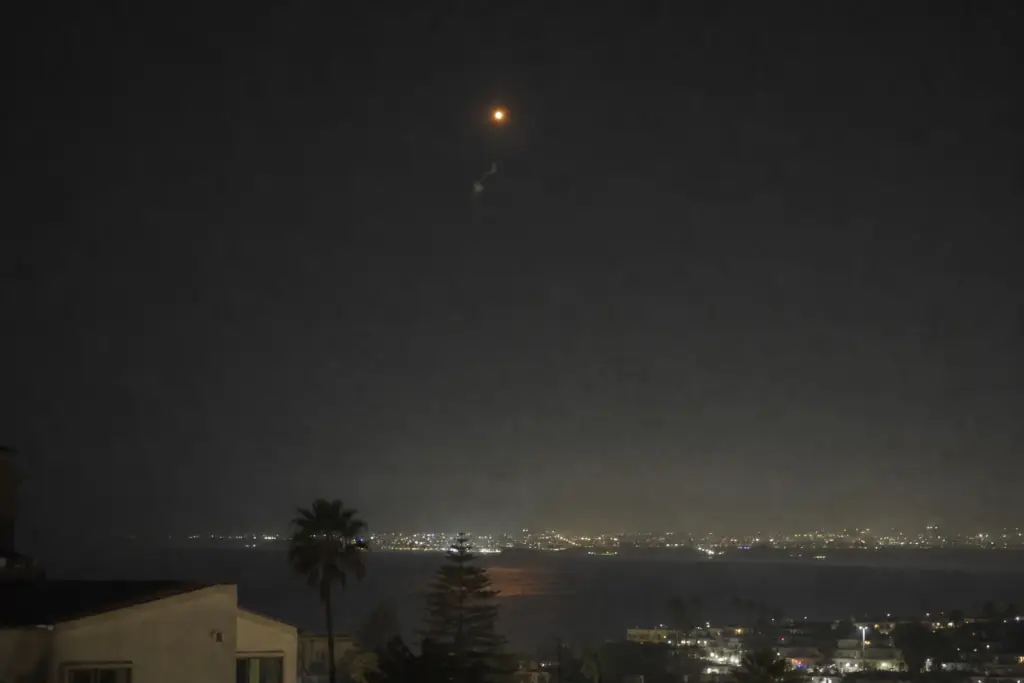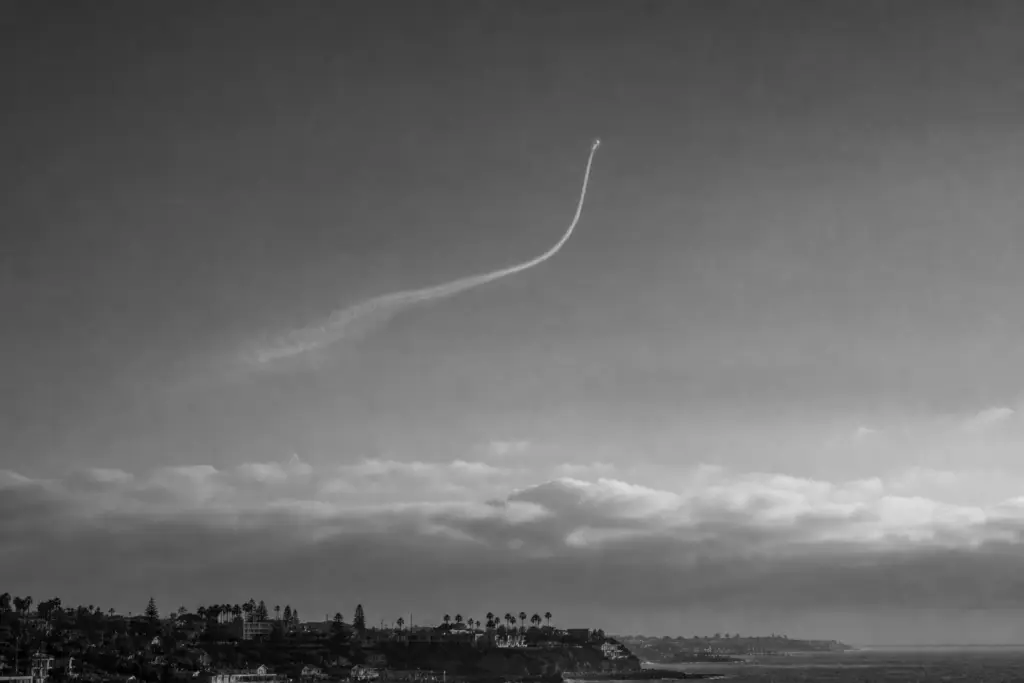

This article examines an alleged unspecified-object sighting associated with Mt. Vernon, Indiana, on January 9, 2020. The date and place identify the report under review; they do not identify the object, establish its origin, or independently confirm that an unusual event occurred. In that limited sense, the phrase Mt. Vernon IN UFO sighting January 9 2020 describes a reported observation, not a conclusion.
An “unidentified object” is a description of incomplete information: a witness may have seen something they could not recognize at the time. It is not evidence that the object was extraordinary, aircraft-free, or part of an official UAP investigation. A strong case record would preserve such particulars as the observation time, duration, direction of travel, appearance, witnesses, images, and any follow-up. A weak record may provide only a date and location label.
The analysis therefore follows a simple evidence ladder: first, distinguish the reporter’s allegation from what an accessible database entry actually records; then compare any usable details with independently checkable local context. The key question is not whether every unidentified report has a ready explanation, but whether the surviving evidence supports any identification, or supports no conclusion beyond an unspecified object sighting in Mt. Vernon.
The Available Sighting Record: What It Says and What It Omits
The record trail available for this review stops before a primary database entry can be examined. No original submission, earliest archived reproduction, database name, stable URL, archive capture date, or record identifier has been supplied for the Mt. Vernon object sighting report. That absence matters because a location-and-date label can preserve an allegation while omitting the observation details needed to assess it.
The surviving claim can therefore be stated narrowly: an unspecified object was reportedly associated with Mt. Vernon, Indiana, on January 9, 2020. It cannot presently be attributed to a named reporting system, an identified witness, or a contemporaneous public record. There is no report text available to quote or closely paraphrase, and no submission date is available to distinguish a same-day account from one entered later. Nor is there evidence here of a category field, such as light, disc, aircraft-like object, or other classification, or of later edits, corrections, deletion, or duplication.
For this Mt. Vernon object sighting report, the unavailable fields are as significant as the known date and place. The accessible material does not establish an observation time, duration, compass direction, elevation, object shape, color, brightness, sound, motion, apparent distance, or whether the object was stationary or moving. It also does not establish the observer’s vantage point, weather conditions as perceived by that observer, the presence of additional witnesses, photographs or video, or any investigator follow-up.
- Present: a location label, Mt. Vernon, Indiana, and an event date, January 9, 2020.
- Not established: the database hosting the underlying witness report, its identifier, submission timing, narrative, classification, and revision history.
- Not available for assessment: observational particulars that could be compared meaningfully with aircraft, astronomical, meteorological, or other local context.
This is a weak provenance record rather than evidence of fabrication or confirmation. It supports preserving the report as an unresolved, sparsely documented allegation; it does not support reconstructing what was seen, determining whether more than one person observed it, or treating the entry as an officially investigated case.
What Can Be Verified Independently
Independent corroboration would require a record separate from the original allegation that can be tied to the same place and observation window. Strong examples would include an account from an unconnected witness giving a compatible time and direction, a contemporaneous news item describing the event, a dispatch or incident record, or an image or video whose original file, capture time, location information, and chain of posting can be examined.
None of those materials is available in the record presented here. There is no second witness account to compare, no identified local-news coverage, no supplied law-enforcement or emergency record, and no photograph or video with usable provenance. There is likewise no observation time or direction against which flight-tracking information, satellite-pass data, weather observations, or astronomical positions could be tested. Those source limitations prevent both meaningful corroboration and a fair case-specific elimination of ordinary possibilities.
A report date would also matter: a same-day submission can preserve fresher recollection, while a later entry may still be sincere but offers less certainty about when details were recorded. Here, no submission date or underlying database record is available, so even that limited timing assessment cannot be made.
- What is supported: a claim associating an unspecified-object observation with Mt. Vernon and January 9, 2020.
- What would strengthen it: independently created, contemporaneous material that identifies a matching time and area, or media that can be traced to its original capture.
- What is not supported: that multiple people saw the same object, that authorities investigated it, or that tracking data identified, or failed to identify, anything in the sky.
A database entry, if one is eventually located, would establish that someone submitted a report to that database; it would not by itself confirm the event or object’s identity, distance, behavior, or unusual character. Repetition of the same claim on reposts or social media would not constitute independent corroboration unless those posts lead to separately documented observers or contemporaneous records. On the material available, the Mt. Vernon IN UFO sighting January 9 2020 remains a single, uncorroborated report label rather than a confirmed event.
Possible Conventional Context, If the Report Details Allow It
A conventional explanation can be tested only when the observation has enough coordinates in time and space. A reported clock time narrows the comparison window; viewing direction and apparent altitude distinguish, for example, a light low on the horizon from one overhead; movement, duration, and appearance help separate a steady point of light from a fast transient or a nearby object.
For an aircraft or helicopter, a useful match would pair a specific time, direction of travel, changing position, and, where available, aircraft tracking. A bright planet would normally require a time, compass bearing, and low or fixed apparent position; it would be a poor fit for a report describing rapid travel across the sky. Satellite-pass data can test a light moving steadily along a predictable path, while a meteor is more consistent with a brief, one-time streak. Those are distinct observational patterns, not interchangeable labels.
A drone, balloon, or atmospheric effect requires different details. Nearby drones may appear to hover, reverse, or show several lights; balloons tend to drift with the wind and can change apparent shape as distance and illumination change. Reflections, haze, cloud illumination, and other weather-related phenomena can be assessed against weather records only when an observation time and line of sight are known. Without those details, they remain possibilities rather than case-specific explanations.
- A strong proposed match would account for several reported features at once: the same time window, the same area of sky, compatible motion, and a duration that fits the candidate.
- A weak proposed match relies only on the date and location, while ignoring whether the object was stationary or moving, visible for seconds or hours, low or high, singular or multiple, bright or structured.
The available Mt. Vernon material supplies none of those discriminating features: no observation time, direction, altitude, duration, motion description, appearance, image, or original report text. It therefore cannot be responsibly compared with astronomical conditions, satellite passes, local weather, or aviation activity for January 9, 2020. Nor does the absence of such a comparison favor any particular explanation. The proper assessment is not that an aircraft, planet, meteor, drone, balloon, or weather effect has been identified, but that the record is too sparse to test any of them.
Why an Unspecified Object Is Not Automatically a UAP Case
Labels describe different stages of knowledge, and they should not be treated as interchangeable. “Unidentified object” or “UFO” can be a witness-level description: the observer did not recognize what was seen. That status does not establish unusual performance, origin, or even that the observation was recorded in enough detail to investigate.
An “unspecified” entry is narrower still. It may be a database category or a shorthand for missing descriptive fields rather than a claim that the object displayed anomalous characteristics. A useful distinction is between a report that gives an unresolved observation, such as a timed, located event with described movement that investigators cannot match, and a location-and-date label with no surviving observation narrative. Only the former provides a defined event for analysis; neither automatically establishes an official UAP case.
An official case would require a known agency or investigative body to receive and examine a particular report, assess available evidence, and record an outcome or an unresolved finding. The material available for Mt. Vernon does not identify such an agency review, investigator, case file, or finding. It therefore supports neither an official designation nor an inference that authorities treated the report as exceptional.
Public interest in UAP news can make broad terminology feel more conclusive than it is. That wider discussion does not add a time, direction, witness account, image, or investigation to this local record. For the Mt. Vernon entry, “unspecified” remains a description of what the surviving material fails to identify, not evidence of an anomalous object.
Bottom Line on the Mt. Vernon Report
A usable case file begins with an observation record: a time, viewing direction, duration, appearance, movement, or original account that can be tested. Here, the accessible material preserves only a claim associating an unspecified-object sighting with the stated place and date. It does not preserve an original database entry, witness narrative, observation time, direction, duration, image, second witness, tracking match, or investigator outcome.
That absence prevents a case-specific conventional identification because no reported features can be compared with aircraft, astronomical objects, satellites, weather, or nearby activity. It also does not amount to an unresolved observation in the stronger sense of a documented event examined without an identification. The appropriate finding is no conclusion about the object itself: neither a confirmed anomaly nor a demonstrated ordinary explanation.
For historical Indiana reports, preserve the earliest located record as a stable link and, where possible, an archived capture. Note the database name, entry identifier, access date, location wording, event date, and submission date separately. The event date marks when an observation allegedly occurred; the submission date marks when the account entered the record. A direct report page or dated archive capture is stronger than a repost lacking provenance or report text.
Before repeating a sighting claim, look for genuinely separate corroboration: contemporaneous local reporting, an independently posted witness account matching the time and direction, original media files, or records tied to the same observation window. Until such material is found, this entry should remain a sparsely documented report, not an identified object or a substantiated unidentified-object case.
What the Mt. Vernon Sighting Record Supports
The useful archival outcome is a boundary, not an identification. The material preserved for this case supports only a location-and-date association: someone connected an unspecified-object report to Mt. Vernon, Indiana, and January 9, 2020. It does not preserve enough of the underlying account to establish what was observed or whether an observation occurred as described.
- The allegation is that an object was reported in connection with that place and date.
- A primary record would establish the wording, submission history, and fields actually entered by the reporter; none is presently available for review.
- Independent context would require a usable observation window and description before weather, aviation, astronomical, or other records could be meaningfully compared.
- The missing material cannot support an extraordinary-craft claim, a conventional identification, or a formally unresolved case finding.
Unclassified is therefore the accurate archival status, not because the object displayed unexplained characteristics, but because no characteristics survive to assess. Readers seeking to test the claim further should prioritize an original database page or dated archive capture, then seek separate contemporaneous accounts or original media that match the same time, direction, and location. A recovered record may strengthen provenance, but only detailed, independently comparable information could change the assessment of the object itself.
Frequently Asked Questions
What was reported over Mt. Vernon, Indiana, on January 9, 2020?
An unspecified-object sighting was associated with Mt. Vernon, Indiana, on January 9, 2020. No original report text, witness identity, object description, observation time, or database record is available.
Was the Mt. Vernon object sighting independently verified?
No independent verification is available. The record includes no second witness account, local-news report, law-enforcement record, original photo or video, or identified investigation.
What details are needed to identify a UFO or unexplained object sighting?
Useful identification details include the exact time, duration, compass direction, altitude, appearance, brightness, motion, apparent distance, witness location, and weather conditions. Original images or video with capture time, location data, and a traceable posting history can also support an assessment.
Could aircraft, satellites, planets, or weather explain the Mt. Vernon sighting?
No case-specific explanation can be tested because the report has no observation time, direction, altitude, duration, motion description, or appearance details. Aircraft, satellites, planets, meteors, drones, balloons, and weather effects remain untested possibilities rather than confirmed explanations.
What should I look for when evaluating a historical UFO or UAP sighting report?
Look for an original database page or dated archive capture showing the database name, entry identifier, event date, submission date, location wording, and witness narrative. Give greater weight to separate contemporaneous witnesses, original media files, and records that match the same time, direction, and observation area.