San Diego Witness Report: Silent Orange Light Appeared to Stop, Turn, and Discharge Material in 2010
Examine the 2010 San Diego UFO sighting, including the orange glow, reported motion and apparent discharge, plus evidence and possible explanations.
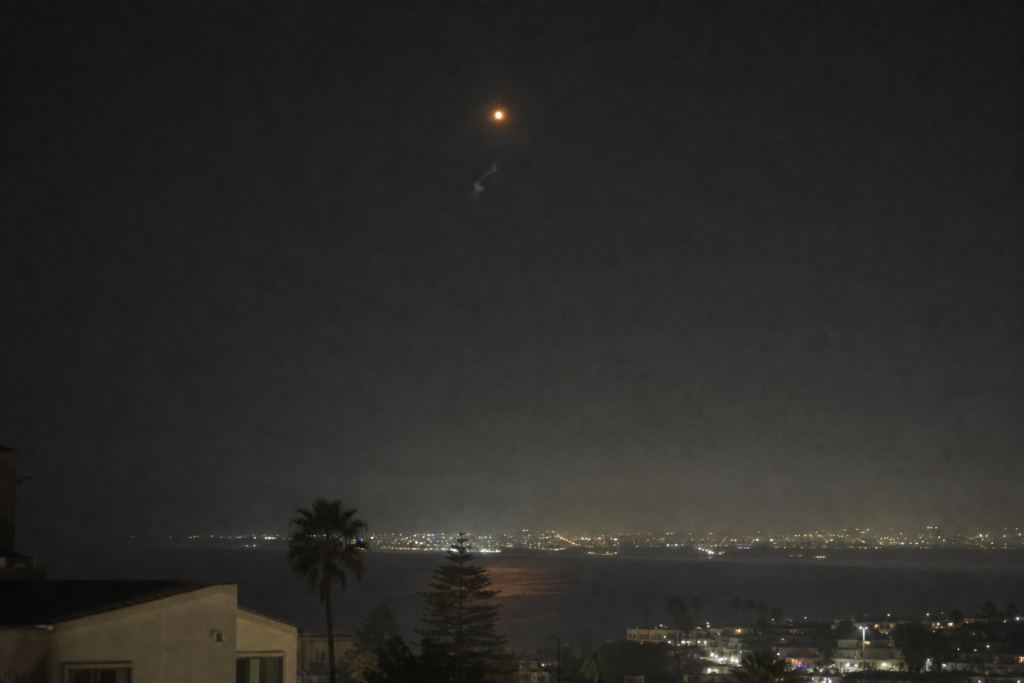
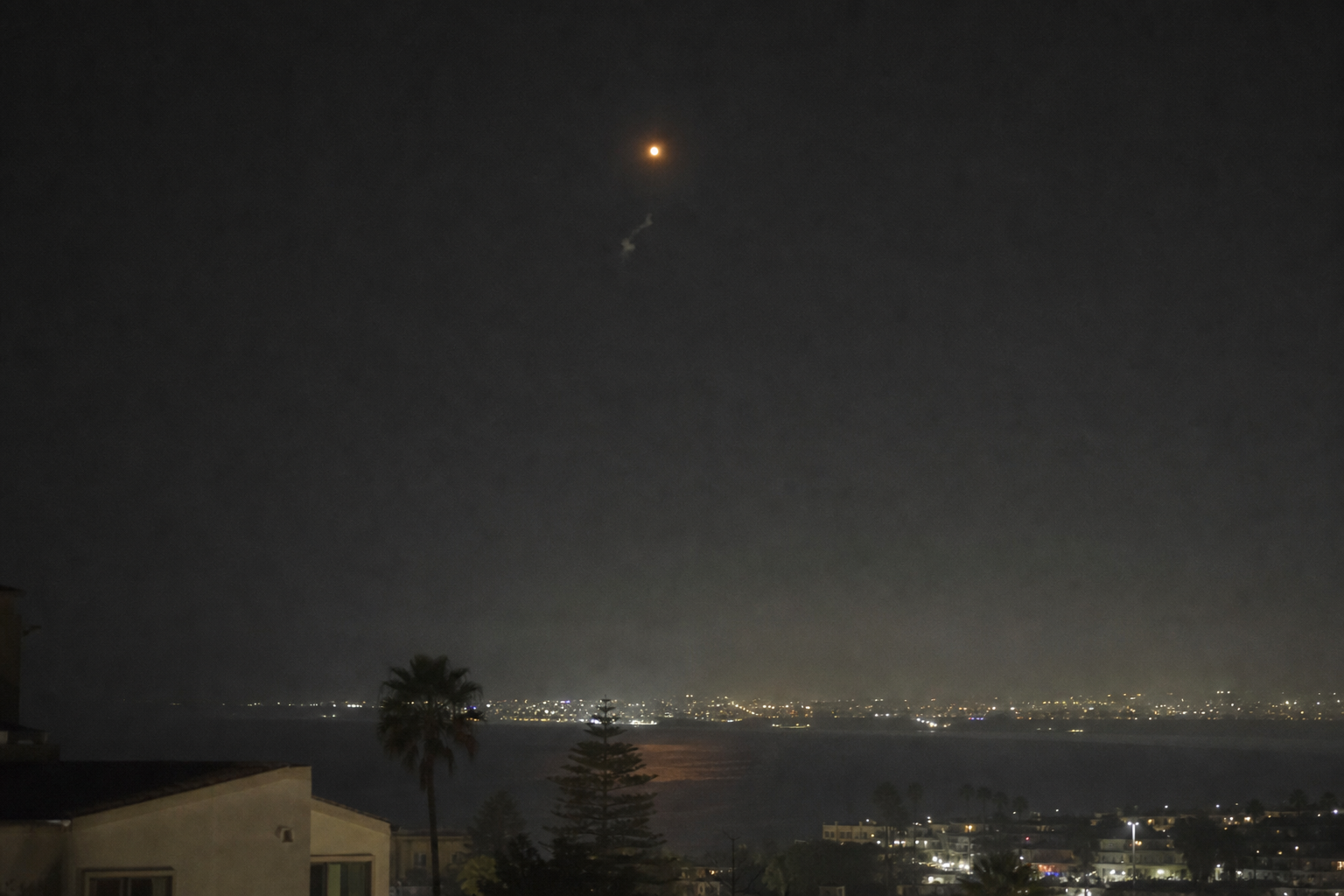
The account behind the claimed 2010 San Diego UFO sighting is striking because it combines several features that are easy to describe but difficult to establish after the fact: an orange-glowing light, no audible sound, an apparent stop, a change of direction, and what the observer interpreted as material being discharged. Those are reported observations and interpretations, not independently verified characteristics of a craft or object.
This article treats the episode as an unverified report. A light seeming to halt or reverse can reflect actual movement, but also uncertain distance, viewing angle, wind-driven drift, or changes in brightness that alter perceived motion. Likewise, an orange appearance, silence, and a trail or falling material each have more than one possible cause; none identifies an origin on its own.
The analysis therefore separates what a witness recalls seeing from what available evidence can substantiate. It weighs explanations against the full reported sequence rather than selecting one detail in isolation, and it identifies the records that would most improve the assessment: a dated original account, independent contemporaneous witnesses, photos or video with usable metadata, local weather observations, flight or launch information, and any official report. Without such corroboration, the responsible conclusion may remain limited to an unresolved observation rather than an extraordinary explanation.
What Is Claimed in the Reported 2010 San Diego Sighting?
No traceable original account currently establishes the date, time, precise observing location, duration, direction of travel, or number of witnesses. This is therefore a report with an incomplete evidentiary record, rather than a documented case file whose basic circumstances can be independently fixed.
The surviving narrative attributes four linked observations to a witness or later retelling: an orange-glowing light was seen in the sky; no sound was heard; the light appeared to stop; and it then appeared to travel in another direction. It also describes an apparent release, variously understood as a substance, falling material, or a visual trail. “Apparent” matters. A streak seen near a distant light may represent emitted material, but it may instead be illumination, haze, smoke, condensation, or a viewing effect.
These points can be retained only as the reported features of the event, not as established properties of a physical object. The available material does not demonstrate an extraterrestrial vehicle, non-human intelligence, an objectively verified reversal of motion, or a confirmed physical discharge. The following analysis separates each observation from the interpretation attached to it.
Reconstructing the Observation: Light, Silence, Motion, and the Apparent Release
The most useful reconstruction treats each phrase as a description of appearance rather than a measured property. “Orange” identifies the perceived color of the light, not its temperature, fuel, size, or construction. Without a photograph with reliable metadata, a comparison object, or a stated angular size, the account cannot show whether the glow came from a small nearby source or a larger, more distant one. Nor does the surviving description establish whether its brightness pulsed, faded, or changed during the observation.
“Silent” is similarly narrower than it first appears. It records that the observer did not hear a sound attributable to the light; it does not establish that no sound was produced. Distance, wind, intervening buildings, ordinary background noise, and the observer’s location can all separate a visible event from an audible one. The report provides no stated range, duration, or environmental detail that would allow silence to be tested as a performance characteristic.
The motion language contains two distinct claims: the light appeared stationary, then appeared to travel in a different direction. Apparent stillness is an observation of relative position against the sky, while an actual stop would require some basis for judging distance and speed. Likewise, a perceived turn may describe a real path change, but the available account does not preserve a compass direction, fixed landmarks, viewing duration, or a continuous record of the light’s track. Those missing details matter because they determine whether motion can be reconstructed rather than merely recalled.
The alleged release deserves the sharpest separation between sight and inference. A witness may accurately report something that looked like a substance, falling material, or a trailing emission. That appearance alone does not establish that a physical object discharged material: a luminous trail, illuminated haze, smoke, condensation, or glare can produce a similar visual impression at distance. No retained sample, image sequence, or independently traceable observation identifies the apparent material.
In that limited sense, the orange light UFO San Diego account preserves a sequence of perceptions, not a confirmed account of propulsion or origin. Witness testimony can faithfully capture what seemed to happen while leaving the cause unresolved; the next question is whether the reported stop and directional change can be distinguished from effects of perspective and uncertain distance.
Could the Light Really Stop and Change Direction?
A perceived stop can arise when lateral motion becomes very small from the observer’s line of sight. A distant light travelling toward or away from the viewer may continue moving while holding nearly the same position against the background sky, an instance of apparent stationary motion. The same impression can occur when the observer is walking, driving, or shifting position, because foreground references change while an uncertain, far-away light does not provide a reliable scale.
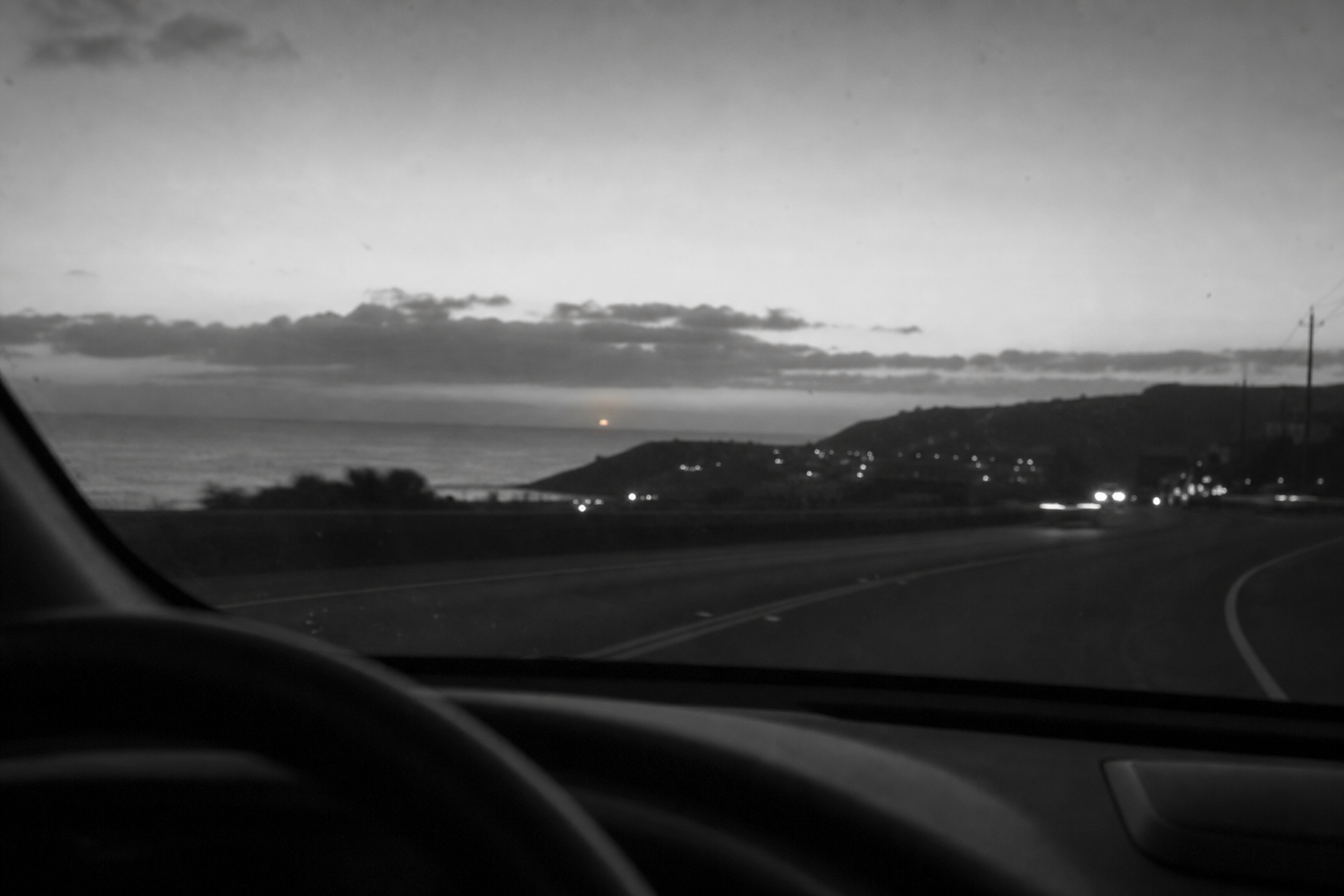
A reversal is harder to infer than it sounds. Without a known distance, the angular movement of a light cannot establish its actual speed or flight path. Wind drift could carry a light in a new direction; a turn that changes the source’s visible aspect can make it brighten on one side and fade on another; and haze, glare, or intermittent visibility can cause the eye to join separated positions into a seemingly abrupt change. These possibilities do not establish an explanation for the reported 2010 San Diego UAP sighting, but they show why an apparent stop and turn are not, by themselves, proof of a physical halt or reversal.
A stronger case for a true abrupt maneuver would require observations that constrain perspective. Independent witnesses at separated, documented locations could compare bearings and timing to determine whether the same light changed course in three-dimensional space. Calibrated video showing fixed landmarks, timestamps, camera orientation, and an uninterrupted track would be more informative than an isolated clip or recollection. Corroborating tracking data, such as a contemporaneous radar or aircraft record tied to the time and place, could further test the claimed motion. None of those materials is presently available for this report, so the maneuver remains witness-reported rather than measured.
What Could Explain the Orange Glow, Silence, and Apparent Substance?
Color and silence are weak identifiers when the source is only a point of light. Aircraft lighting can look amber or orange through haze, and a distant engine may be inaudible against traffic, wind, surf, or indoor noise. A Chinese lantern can present as a warm, apparently self-contained glow and drift with the air; a drone can carry colored LEDs and change its apparent brightness as its orientation changes. Neither possibility, however, accounts for the report unless its timing, path, and viewing conditions match the full sequence.
Atmospheric effects also complicate the claimed emission. Haze can spread a bright light into a larger orb, while a thin cloud layer, condensation, smoke, or wind-borne debris can become visible only when illuminated from the right angle. A light moving behind or through such material may seem to leave a mist, trail, or particulate cloud even if nothing was released. Conversely, an actual nearby source of smoke or debris would require a known location, scale, and sustained visual detail before it could be linked to the light.
Images can add a further layer of ambiguity. In low light, camera focus hunting, digital noise, motion blur, lens flare, and automatic exposure changes can enlarge a glow or create streaks that do not represent the shape or output of the source. A useful recording would preserve an uninterrupted view with fixed landmarks and original timing; an isolated bright frame cannot establish distance, size, silence, or a material discharge.
The available account does not provide physical residue, an independently documented sample, or unambiguous imagery of a release. The apparent substance in this San Diego orange orb sighting must therefore remain an interpretation of what was seen, not a confirmed discharged substance. Illumination, aircraft lighting, lanterns, drones, haze, and image artifacts are plausible categories to test, but the surviving description is too limited to select one confidently.
What Records Could Corroborate or Narrow Down the 2010 San Diego Report?
A case becomes materially more testable only when the reported sequence can be tied to a narrow time window and a specific viewing position. The strongest starting point would be an archived original witness post, message, photograph, or video created near the event, rather than a later summary. Useful details include the date, local time, neighborhood or coordinates, compass bearing, elevation above the horizon, duration, weather as observed, and whether the observer was stationary. An original image or video file is more useful than a repost because its timestamps, sequence, and surrounding frames may preserve context; a cropped still is a much weaker signal.

Independent accounts matter most when they match without merely repeating one another. Two observers who separately describe the same time, direction, path, and change in appearance provide a basis for comparison. Accounts that share only “orange light over San Diego” do not establish that the observers saw the same object. Local-news archives, neighborhood forums, and social-media posts from the relevant days could reveal whether other reports clustered in time and place, while also showing whether a dramatic description emerged only in later retellings.
- Weather and visibility observations can narrow the viewing conditions once a reliable date, time, and location exist. Cloud cover, haze, wind direction, and visibility affect how a light is seen and whether a trail, smoke-like patch, or illuminated cloud could have been apparent. Without that time-and-place anchor, weather records cannot be meaningfully matched to the report.
- Aviation activity is useful when a precise time window and viewing direction allow comparison with aircraft tracks, airport movements, or publicly accessible flight information. A match in general region alone would be weak; the relevant question is whether a documented flight occupied the reported line of sight and followed a compatible apparent path.
- Launch and other event records can be compared in the same way. They are not presumptive explanations for a San Diego UAP report; they become relevant only if their timing, location, direction, and visible characteristics fit the account.
- Official reporting databases or agency records may show whether a report was formally submitted, but a database entry generally records a claim rather than independently identifying its cause. A dated case file is stronger than an undated retelling, yet still requires supporting evidence.
No known public investigation, radar record, physical sample, or independently authenticated media file has been identified for this reported episode. That absence does not establish an ordinary cause, and it does not establish an unidentified aerial phenomenon of extraordinary origin. It leaves the report insufficiently documented for a firm identification. The practical priority is therefore to locate contemporaneous records that can lock down when and where the observation occurred before attempting to match it to any candidate explanation.
Bottom Line: An Unresolved Report Is Not Proof of an Extraordinary Cause
The defensible finding is narrow: this is an insufficiently documented, unresolved report. It retains the witness-reported experience of an orange light that seemed silent, appeared to pause and change direction, and may have seemed to release material. It does not establish the light’s identity, distance, speed, physical size, actual course change, sound at its source, or that any substance was discharged.
A stronger identification would require evidence that constrains those unknowns: a dated original account with a precise observing position, independent witnesses whose timelines and bearings agree, and unedited media or records that can be matched to the same time and line of sight. A single retrospective description can preserve a sincere observation, but it cannot reliably convert apparent motion or an illuminated patch into measured behavior.
UAP disclosure, broader UFO news, and claims of a government cover-up may explain why historical reports draw attention. They do not supply missing corroboration for this individual 2010 San Diego UFO sighting or determine what its observer saw.
- Separate the reported appearance from a physical conclusion.
- Seek a date, time, location, viewing direction, and duration.
- Prefer independent, contemporaneous accounts over repeated retellings.
- Compare possible explanations against the entire sequence, not one dramatic feature.
- Accept “unresolved” when the available record cannot support more.
Sources
Frequently Asked Questions
-
What was reported in the 2010 San Diego orange light sighting?
A witness or later retelling described an orange-glowing light that appeared silent, seemed to stop, changed direction, and appeared to release a substance or trail. No traceable original account establishes the date, time, exact location, duration, or number of witnesses.
-
Can a UFO appear to stop or change direction because of perspective?
Yes. A distant light moving toward or away from an observer can appear stationary, and uncertain distance makes its actual speed and flight path impossible to calculate from visual recollection alone. Haze, glare, intermittent visibility, wind drift, and changes in brightness can also create the impression of a sudden turn.
-
What could make an orange light look like it discharged a substance?
Illuminated haze, smoke, condensation, thin clouds, wind-borne debris, glare, and camera artifacts can resemble a trail or falling material near a distant light. No physical residue, retained sample, image sequence, or authenticated media confirms that material was discharged in this report.
-
Were there confirmed UAP investigations or radar records for the 2010 San Diego sighting?
No known public investigation, radar record, physical sample, or independently authenticated photo or video file has been identified for this episode. The available account remains an unresolved witness report rather than a documented case with confirmed UAP evidence.
-
What should you look for when evaluating a historic UFO sighting with little evidence?
Look for a contemporaneous original account with a date, local time, precise location, compass bearing, elevation, duration, and weather conditions. Strong corroboration includes independent witnesses, unedited media with metadata and fixed landmarks, weather records, and aviation or launch data that match the same time and line of sight.