Three Star-Like Objects Over La Jolla Cove, San Diego Observed Changing on 2000-01-01
Examine the La Jolla Cove UFO sighting reported on January 1, 2000, including sources, witness claims, possible explanations, and evidence gaps.
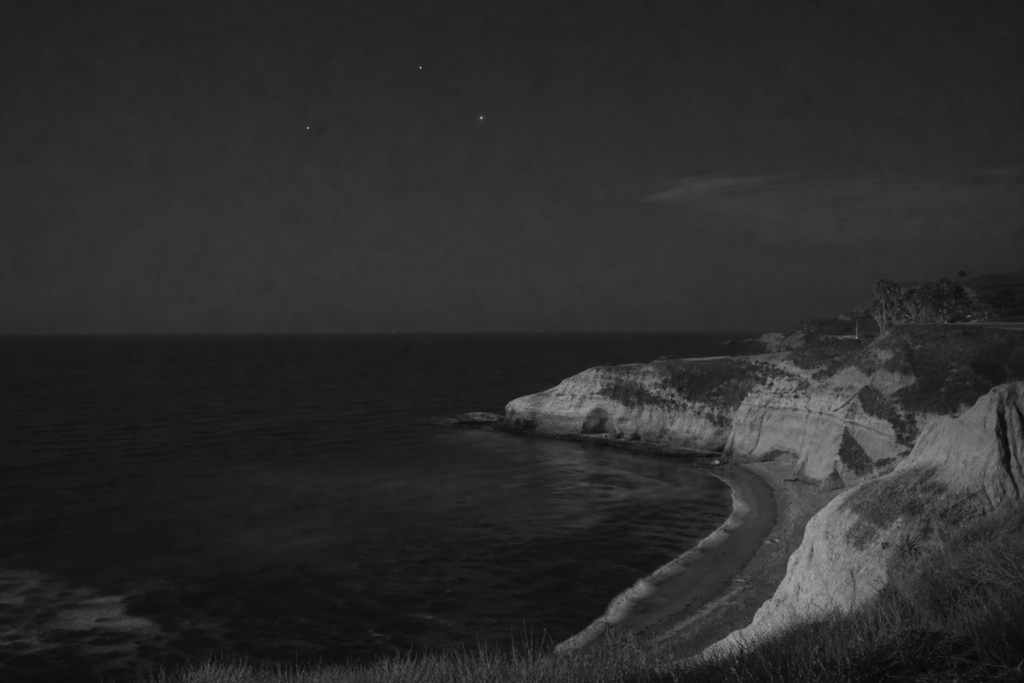
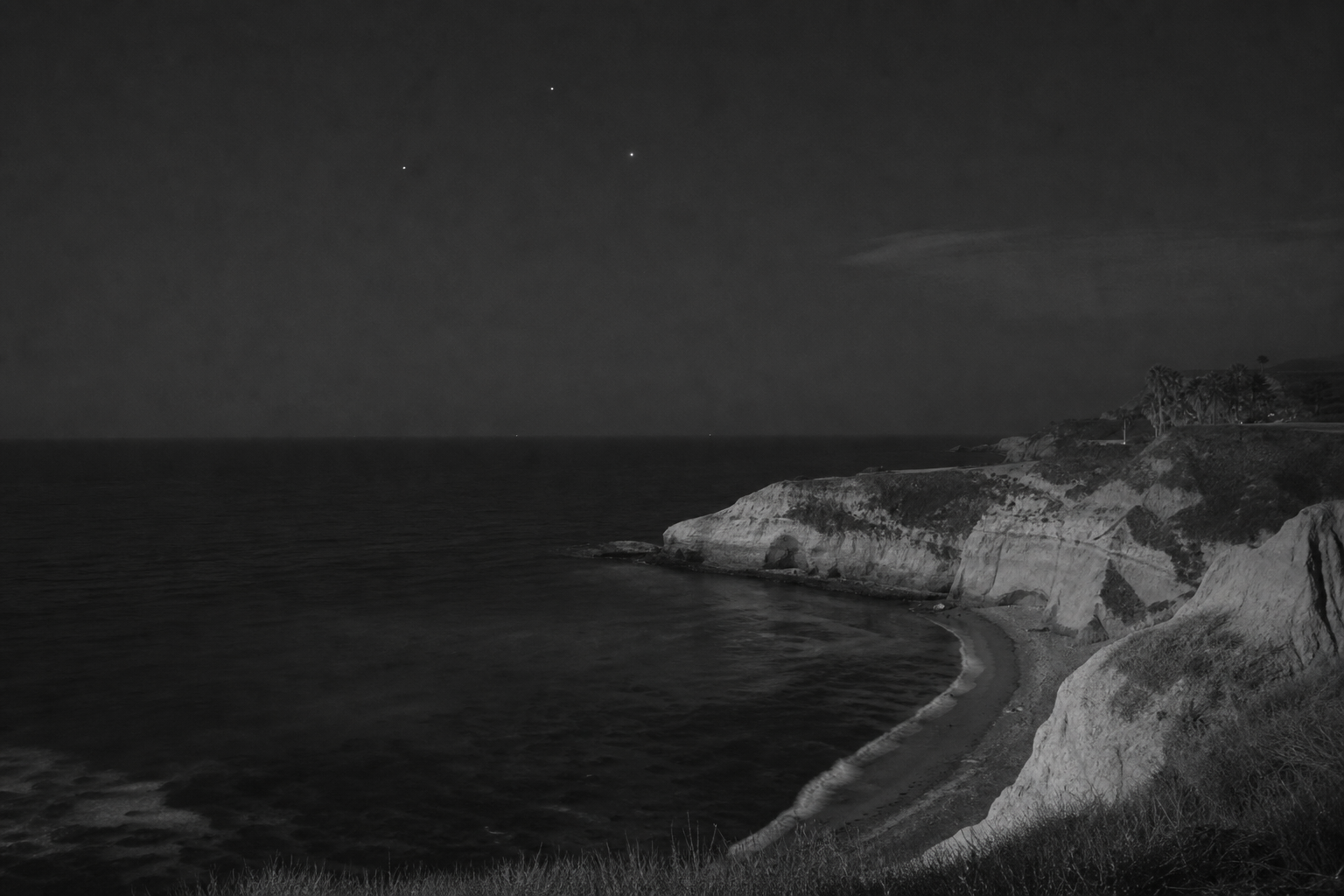
The January 1, 2000 account centered on La Jolla Cove describes an unusual but limited claim: three lights likened to stars were reportedly seen over the San Diego shoreline and appeared to change. That description is the starting point for this examination, not proof that three physical objects performed measured maneuvers, and not evidence of an extraordinary origin.
This reported La Jolla Cove UFO sighting requires an especially careful distinction between an allegation and an established event. A witness can accurately convey an impression of lights shifting, brightening, separating, or changing shape while the available record still lacks the time, viewing direction, duration, weather conditions, photographs, and independent observations needed to identify what produced that impression.
The discussion that follows first traces the earliest verifiable form of the account and separates it from later retellings. It then breaks the three-light description into testable details and considers ordinary possibilities, such as astronomical lights, aircraft, satellites, atmospheric distortion, and observer perspective, without treating plausibility as confirmation. The central conclusion will be correspondingly narrow: what the record documents as a reported observation, what it can support independently, and what remains unknown.
What Was Reportedly Seen Over La Jolla Cove on January 1, 2000?
The date attached to the claim is January 1, 2000, and the geographic reference is La Jolla Cove in San Diego. Beyond those anchors, the account available for analysis is sparse: it attributes to one or more observers the sight of three objects characterized as star-like, with an apparent change noted during the observation.
That wording matters. “Star-like” describes how the lights appeared to the witness, not a measured size, shape, brightness, or distance. Likewise, “changing” preserves an asserted visual development without specifying whether the reported change involved position, spacing, intensity, color, apparent form, or another feature. No time of night, viewing direction, duration, observer count, or stated location of the lights relative to the cove is established in the material presently available.
La Jolla Cove may therefore identify the observers’ vantage point, the portion of sky or coastline associated with the report, or both; the surviving description does not resolve that distinction. The phrase three star-like objects La Jolla is a useful shorthand for the claim, but it should not be read as evidence that three discrete craft were present above the cove.
In this San Diego UFO sighting of January 1, 2000, “observed” has a limited evidentiary meaning: someone reportedly perceived three changing, star-like lights. It does not independently establish their identity, physical location, altitude, motion, or origin. The absence of those particulars does not disprove the report; it limits what can responsibly be inferred from it.
What the Available Record Does, and Does Not, Document
The provenance trail breaks at the point where a case file would normally begin. No original witness submission, dated database record, archive capture, or contemporaneous report text has been supplied that can be independently tied to this account. The strongest responsible description is therefore an attributed report: a claim repeated in connection with La Jolla Cove and January 1, 2000, rather than an authenticated incident record.
That distinction changes how later versions should be read. An original submission preserves the witness’s own wording and may retain a filing date, identity status, and observational details. A database entry is a cataloguer’s transcription or summary; it can make a report easier to find but does not independently establish that the event occurred. A later retelling adds another layer of interpretation and may silently turn an apparent visual change into physical movement. No identifiable witness name, pseudonym, submission date, or chain of republication is presently established here.
The available material also does not provide confirmed photographs, video, astronomical measurements, radar correlation, air-traffic records, statements from named officials, or a formal investigative file. Nor does it establish contemporaneous local-news coverage. These omissions are not evidence that nobody saw anything; they mean the account cannot be cross-checked against independent observations or instruments.
Source provenance is especially important for UFO witness testimony because the missing particulars determine what explanations can be tested. Astronomical lights could fit a star-like appearance, while aircraft or other moving lights could fit an apparent change; without a time, direction, duration, or description of the change, neither category can be meaningfully matched to the report. The case remains unidentified in the narrow sense that the surviving claim lacks enough documented detail for a reliable identification, not because the record demonstrates an extraordinary origin.
Reconstructing the Reported Three-Object Observation
The usable reconstruction is therefore deliberately narrow. The attributed La Jolla UFO report contains one stable descriptive element: three lights or objects characterized as star-like. It does not establish whether the count remained three throughout the viewing, whether the lights were equally bright, or whether “objects” was the witness’s original word rather than a later label.
“Star-like” describes appearance, not identity. It ordinarily means that a light was seen as a point rather than as a resolved shape with visible edges, structure, or scale. That leaves the reported spacing equally indeterminate. Three points can seem to form a line, triangle, or loose grouping, but no surviving account specifies a geometry, the distance between the lights as seen from the ground, or whether the arrangement held steady.
The claimed change is the most important but least recoverable part of the account. No verbatim description identifies whether the three lights appeared to drift, separate, converge, brighten, dim, blink, vanish, or alter formation. Nor are a start and end time, continuous tracking, viewing direction, elevation above the horizon, or intervening obstructions preserved. Those omissions mean that a statement that the star-like objects in the sky “changed” cannot responsibly be expanded into a specific maneuver.
Apparent motion means a change perceived by an observer against the sky: a point of light may seem to move relative to another light, a horizon feature, clouds, or the observer’s own shifting viewpoint. Confirmed physical movement would require enough independent information to determine that a particular object changed location, and ideally to measure that change over time. The attributed account supplies neither category of measurement.
For the same reason, three unresolved points of light do not yield a defensible altitude, distance, speed, or size. A nearby light and a remote light can present similarly small visual points. The precise reconstruction of this reported observation is thus limited to three star-like lights said to have changed in some unspecified way; formation, brightness behavior, and physical motion remain unknown.
Why Star-Like Lights Can Appear to Change
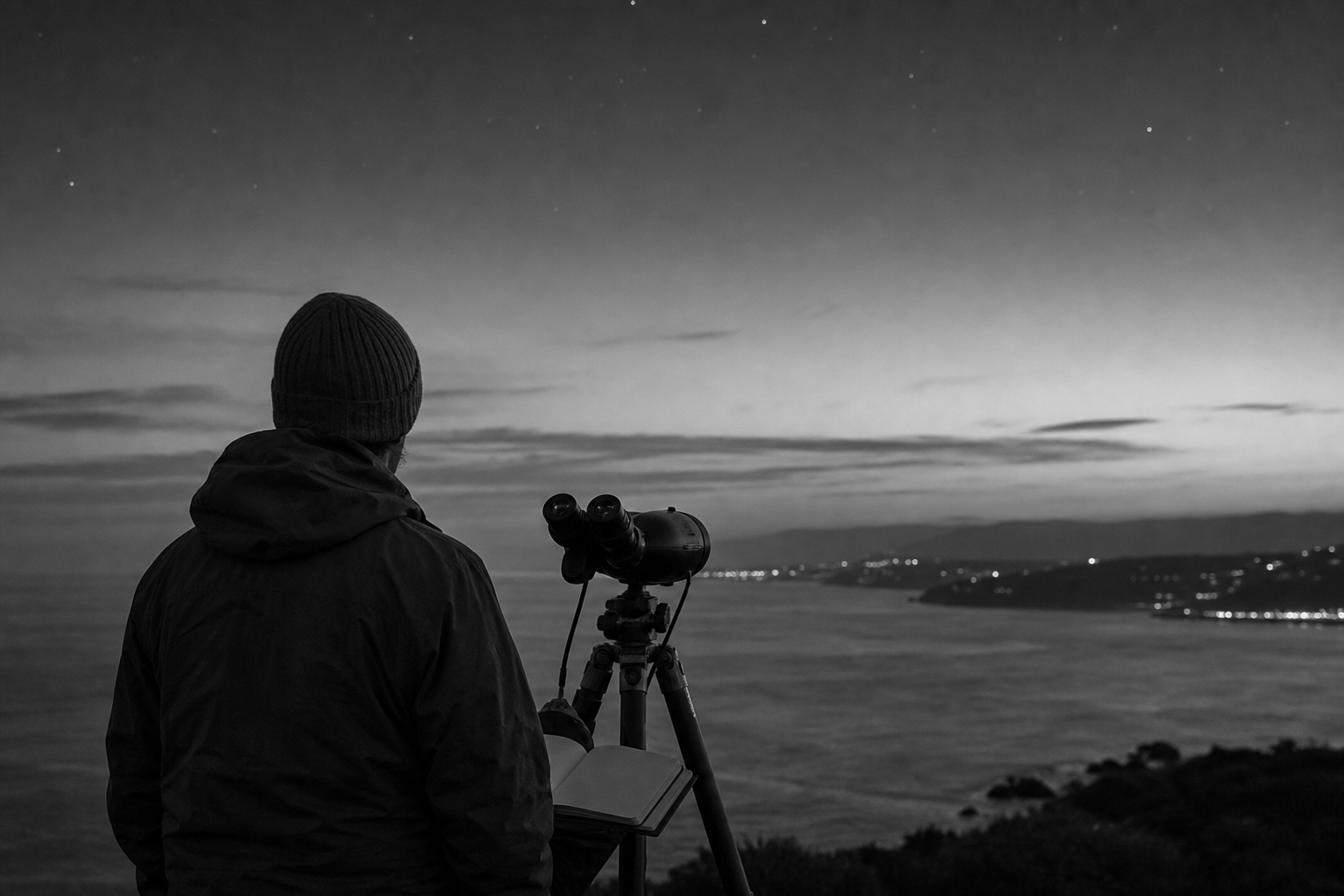
A useful analysis begins by separating lights that are fixed in the sky from lights whose visibility changes. Bright astronomical objects can appear star-like and preserve roughly the same arrangement over a short viewing period. Their apparent brightness may fluctuate near the horizon through haze, thin cloud, or turbulent air, but they would not ordinarily account for a sustained, coordinated change in spacing. Testing that possibility would require the viewing time, compass direction, elevation, and duration, along with the Moon’s condition and a sky reconstruction for the date.
Aircraft can present several point-like lights at once: landing lights, navigation lights, strobes, or lights from more than one aircraft. Changes in heading can make lights seem to brighten, disappear, separate, converge, or hold a stable-looking formation; a light aimed toward an observer is much more conspicuous than one angled away. This category becomes stronger only if the account preserves a motion pattern, timing, direction of travel, elevation, and aviation context. None of those details survives here, so aircraft remain a possibility rather than an identification.
Satellites are another candidate for an apparently moving point of light. A single pass can look steady, while changing illumination, clouds, or the observer’s view can alter its prominence; several independent objects could also be mistaken for a grouping. Exact pass predictions are time-sensitive enough that a meaningful comparison needs a start time, viewing direction, elevation, and observed track. Without them, satellite data cannot be matched to this particular three-light description.
Atmospheric and perceptual effects can alter any of these candidates. Haze can soften or extinguish a dim light; thin cloud can make it pulse; and viewing across uneven coastal horizons can obscure or reveal it. If an observer shifts position, turns, or uses changing foreground reference points, stationary lights may seem to move relative to one another. Attention can also cause a loosely spaced set of lights to be perceived as a formation, or a fading light to seem to break away.
Weather observations would help distinguish cloud, visibility, and wind-related effects, but they would not identify a light by themselves. The needed comparison is therefore specific: time, direction, elevation, duration, motion pattern, local sky conditions, and relevant flight activity. In their absence, “unexplained aerial phenomenon” is only an unresolved-observation label, not a conclusion about origin; the reported change in the La Jolla Cove UFO sighting is insufficient to confirm any one explanation.
Was the La Jolla Cove Event Ever Identified or Officially Investigated?
Identification requires more than an object label applied after the fact. A confirmed identification links the observation to a specific cause through matching particulars, for example, a recorded flight whose time, direction, and visible lighting fit the witness account, or an astronomical reconstruction that fits the viewing geometry. Nothing in the material available for this report provides that link.
A plausible explanation occupies a lower evidentiary tier. Aircraft, satellites, astronomical lights, and atmospheric effects can each account for part of the description: point-like appearance, changing brightness, or apparent movement. Yet the missing time, bearing, elevation, duration, and track prevent any of those possibilities from being tested against the reported three-light event closely enough to select one.
The most accurate classification is therefore an unresolved report with insufficient data, not a confirmed unknown object. “Unresolved” means the account has not been identified from the surviving description; it does not mean that an extraordinary explanation has been demonstrated.
The available material also contains no verifiable case number, named agency report, official finding, or identifiable investigative file connected to January 1, 2000 at La Jolla Cove. That is an evidentiary limitation, not evidence that an inquiry occurred but was withheld. An official UAP case would require a traceable agency record showing that an agency received, logged, or assessed the incident. On the record available here, calling this a San Diego UAP sighting is acceptable only as a descriptive reference to a reported aerial observation, not as a claim of official investigation or classification.
What This Historical Report Can Reliably Tell Us
The durable core of this case is modest: an attributed account links La Jolla Cove, January 1, 2000, and three star-like lights said to have changed during viewing. Those are reported descriptors, not independently measured observations. No original witness statement or contemporaneous record has been located in the material examined, so the date and place function as case labels rather than fully authenticated event details.
That limitation leaves the decisive variables unknown: the observation time, viewing direction, elevation, duration, weather, whether the lights changed brightness or position, and whether “three” described separate objects or separate visible lights. Astronomical lights and atmospheric effects could fit a star-like appearance or flickering, but cannot be tested for the reported pattern without sky geometry. Aircraft or satellites could fit apparent motion or changing visibility, but no track, timing, or movement description exists to compare.
Within historical UFO reports from San Diego, this is best treated as an unresolved case in the archival sense: the available description has not been matched to a specific cause. A stronger identification would require a traceable original account plus details capable of comparison with astronomical, weather, and flight records. Unexplained in a limited record is not the same as extraordinary, and a witness report is not the same as independently verified fact.
Where to Look for Historical San Diego Sighting Records
A productive search begins by treating any firsthand submission, dated email, form, letter, or contemporaneous post, as primary; a page repeating its wording without that original is secondary. For this La Jolla Cove UAP sighting, preserve each URL, capture date, publication date, author, database identifier, and exact wording.
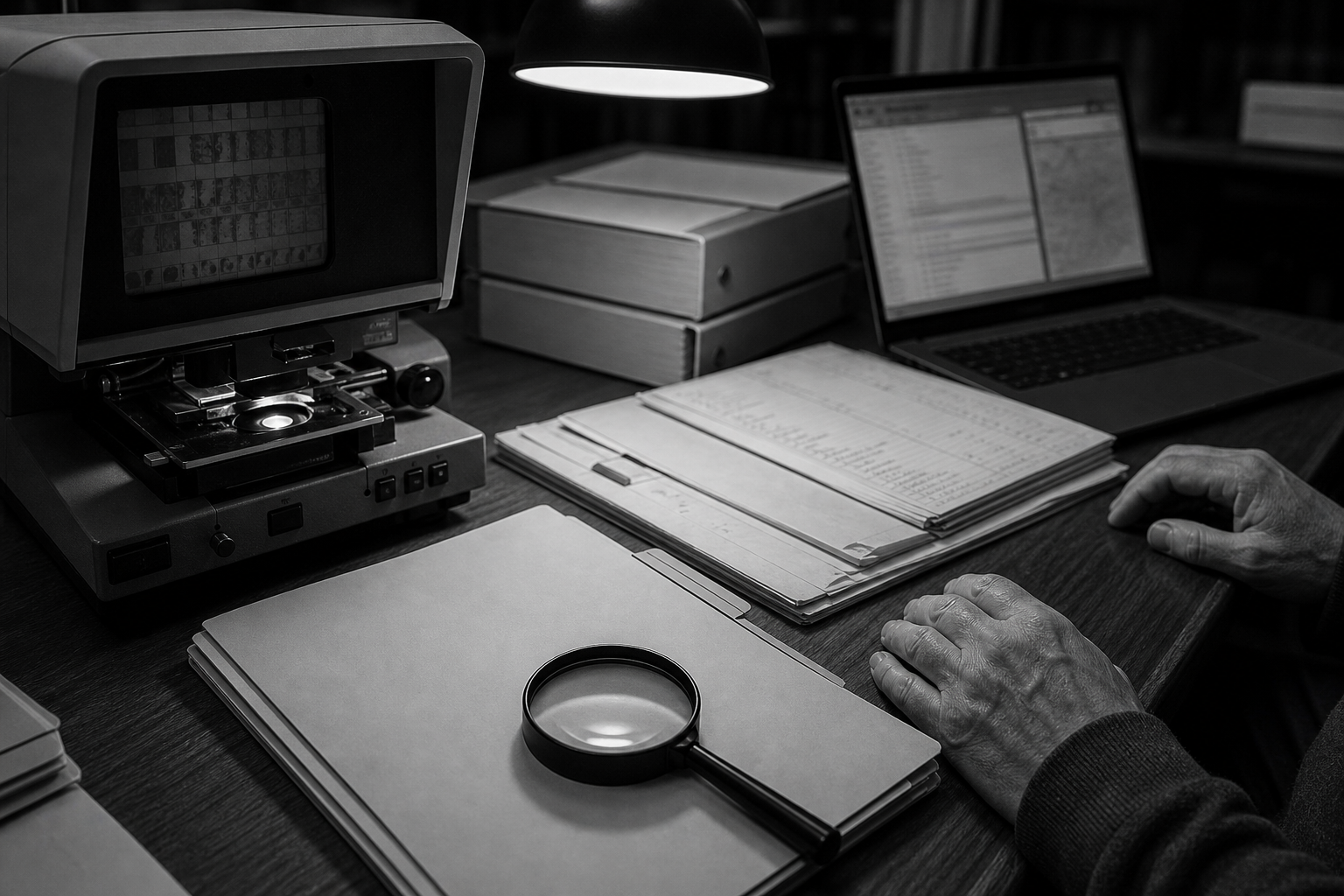
Search California historical sighting material alongside San Diego library and newspaper indexes around January 1, 2000, then compare any reported time with public weather observations, planetarium sky reconstructions, and aviation or government archival portals. Record negative results and unresolved details rather than filling gaps from copied summaries.
A Reported Observation, Not a Confirmed Identification
A decisive checkpoint is whether the claim can be tied to a traceable contemporaneous account and tested against independent records. The available material does not preserve original testimony or the timing and viewing details needed to identify the three reported star-like lights.
A documented report records that someone made an observation. A verified event goes further: its timing, viewing geometry, conditions, and relevant records permit a specific explanation to be tested against the description. An astronomical candidate could address a star-like appearance but cannot be assessed without a time and direction; aircraft could account for changing position or brightness but require flight correlation; haze, cloud, and observer motion can affect apparent change, yet require viewing-condition details.
None of those possibilities becomes a conclusion merely because it is possible. Nor does the absence of an identification establish an extraordinary cause. Missing corroboration, incomplete provenance, and no known official finding leave the La Jolla Cove UFO sighting unresolved in a narrow archival sense: the claim has not been adequately tested, rather than the objects having been shown to be unknown.
The most useful future discovery would be a traceable contemporaneous account with a precise observation time, location, direction, duration, and description of the reported change. Until then, the responsible conclusion is limited to what the record can bear.
Frequently Asked Questions
-
What was reportedly seen over La Jolla Cove on January 1, 2000?
An attributed report linked La Jolla Cove, San Diego, to three lights described as star-like that appeared to change during viewing. The record does not specify the time, viewing direction, duration, altitude, or exact type of change.
-
What did the three star-like lights reportedly change?
The available account does not say whether the lights changed position, spacing, brightness, color, shape, or visibility. It only preserves the general claim that three star-like lights changed in some unspecified way.
-
Were the three star-like objects over La Jolla ever identified?
No confirmed identification is documented. There is no traceable original witness statement, case number, flight correlation, astronomical match, radar record, photograph, video, or official finding tied to the January 1, 2000 report.
-
Could stars, aircraft, satellites, or weather make lights appear to change position?
Yes. Haze, thin clouds, atmospheric turbulence, changing observer perspective, aircraft heading changes, and satellite visibility can make point-like lights seem to brighten, fade, separate, converge, or move. Testing any explanation requires a precise time, direction, elevation, duration, and observed motion pattern.
-
What should I look for when evaluating a historical San Diego UFO sighting report?
Look for a traceable firsthand account with an observation time, exact location, viewing direction, elevation, duration, weather conditions, and a detailed description of the lights’ behavior. Compare those details with contemporaneous weather records, astronomical sky reconstructions, aviation activity, newspaper archives, and any dated database or agency records.