The Wallingford Connecticut UFO sighting of February 3, 2020 is best treated, at the outset, as a reported observation with an unresolved label, not as evidence that an extraordinary object was present. No section-specific primary record, contemporaneous news account, official response, or independently corroborating witness account has been supplied for this review. The date and place therefore identify the claimed event; they do not, by themselves, establish what was seen.
“Unidentified” has a narrow meaning here: the available information does not permit a reliable identification. It is not a finding that the object was anomalous, non-human, or connected to a concealed program. A well-supported case would preserve such testable particulars as the observation time, duration, viewing direction, apparent movement, brightness, shape, weather conditions, and any photo or video provenance. A sparse entry lacking those details can record that someone made a claim, but cannot support a reconstruction of the event.
This account therefore begins with source provenance: whether an original report can be located, when it was created, and whether later retellings add independently verifiable information. Only then can ordinary categories, such as aircraft, satellites, planets, drones, balloons, or optical effects, be compared against the reported characteristics. Where the record is silent, the conclusion will remain correspondingly limited: the Wallingford report may be unresolved, but unresolved is not proof of an extraordinary explanation.
What Is Actually Reported About the Wallingford Observation
The scope is limited to a claimed observation identified by the labels “Wallingford, Connecticut” and “February 3, 2020.” Those are event metadata: they describe where and when a report is said to belong. They are not, on their own, evidence of the object’s appearance, altitude, movement, origin, or even the precise point from which it was observed. No original witness report, archive entry containing its exact text, or dated local account has been supplied for this review.
That distinction matters because a usable witness report preserves more than a place-and-date label. Stronger evidence would identify the reporter or reporting channel, submission date, observation time, duration, viewing direction, and a description recorded close to the event. It would also distinguish a firsthand account from a database summary or later repost. Here, those provenance details are unknown: there is no available wording to quote, no stated event time, no named source attribution, and no basis to tell whether the February 3 date reflects an observation date, a filing date, or later cataloguing.
Accordingly, “unidentified object over Wallingford, Connecticut” is presently an administrative description of an unverified claim, not a confirmed category of object. It does not establish an alien craft, a military platform, or a non-human presence. Nor does the available record permit a fair comparison with ordinary possibilities such as aircraft or astronomical objects: each requires at least a time, direction, duration, and visual description to test its fit. The Wallingford Connecticut UFO sighting February 3 2020 can therefore be described only as a sparsely documented reported event until a traceable underlying record or independent corroboration emerges.
Finding the Strongest Record: Source Provenance and Missing Documentation
A defensible case file would begin with the earliest traceable record, not the most widely repeated version. An original witness submission, whether a form, email, recording, or contemporaneous personal account, has the greatest value because it can preserve when it was written, what the observer actually described, and whether later summaries altered the account. No such submission has been provided or located within the materials available for this review.

The next tier would be date-stamped local journalism or an independently recorded report from another observer. Those materials can establish that an account circulated near the claimed observation date, while separate witnesses with separately created accounts can provide corroboration. Neither contemporaneous Wallingford or Connecticut coverage nor a documented independent witness account is available here. A repeated description on several websites would not fill that gap if each version ultimately derives from one unstated report.
An archived sighting database entry can still be useful, but its evidentiary role depends on what it preserves. A listing that includes the original narrative, submission date, case number, location precision, and reporter metadata is a secondary record with a visible chain back to the report. A bare place-and-date entry is only an index label. For the Wallingford UAP sighting in February 2020, no archived sighting-database record with recoverable underlying text or metadata has been supplied.
There is likewise no photograph, video, original file metadata, air-traffic record, weather observation, police log, or public official response in the available record. Images and video are not automatically conclusive, time, location, file history, field of view, and editing history determine their usefulness, but their absence leaves no visual material to authenticate or compare against ordinary objects.
The resulting rank is therefore below a documented single-witness case: this is an unverified event label with no presently accessible primary account, corroboration, or official record. That absence may reflect lost, private, poorly indexed, or never-created material; it does not demonstrate suppression, a government investigation, or a cover-up. The productive next step is to seek a dated original account or an archived entry that preserves its provenance, rather than treating an unspecified classification as evidence of an extraordinary explanation.
Which Observation Details Can Be Checked, and Which Cannot
The practical consequence is an evidence inventory with almost no observation-level entries to test. The date and municipality are preserved as event labels, but they do not supply the conditions needed to match a sighting to a known object or phenomenon.
| Detail needed for assessment | Status | What the available record permits |
|---|---|---|
| Observation time | Absent | No hour, time zone, or usable time window is available. |
| Duration | Absent | There is no indication whether the observation lasted seconds, minutes, or longer. |
| Viewing location | Uncertain | “Wallingford” identifies a municipality, not a street, neighborhood, or viewing point. |
| Compass direction and elevation | Absent | No bearing, horizon reference, or angle above the horizon is recorded. |
| Apparent size; color or lights | Absent | No description distinguishes a point of light from a structured object, or steady illumination from flashing lights. |
| Movement and direction of travel | Absent | No reported path, change in position, or motion relative to landmarks can be evaluated. |
| Sound | Absent | There is no record of silence, engine noise, or other audible feature. |
| Weather and visibility | Uncertain | Without an observation time and a precise viewing location, weather records cannot be tied fairly to the claimed event. |
These observation details do different jobs. Time and location allow comparison with astronomical positions, flight activity, and local conditions. Direction, elevation, and apparent motion establish where an object appeared in the sky and how it changed relative to the observer. Duration, light pattern, apparent size, and sound help separate categories that can otherwise look alike at distance.
A sparse report does not make an observation more anomalous; it removes the discriminating details that could support or eliminate ordinary explanations. For example, a stationary bright point seen toward a known celestial object calls for a different comparison than a light crossing the sky on a steady course, but this record does not establish either pattern. The present result is not an extraordinary performance claim. It is an incomplete observation record whose object cannot be responsibly classified.
Testing Conventional Explanations Against the Available Record
A proposed identification earns weight only when it fits several features at once: the observation time, viewing point, direction, elevation, apparent motion, duration, brightness or light pattern, and any reported sound. A match on just one feature is weak. A light might conceivably have been an aircraft, for example, but an aircraft explanation becomes persuasive only if a track or other aviation record places it in the relevant part of the sky at the relevant time and its course, lights, speed, and audibility resemble the account.
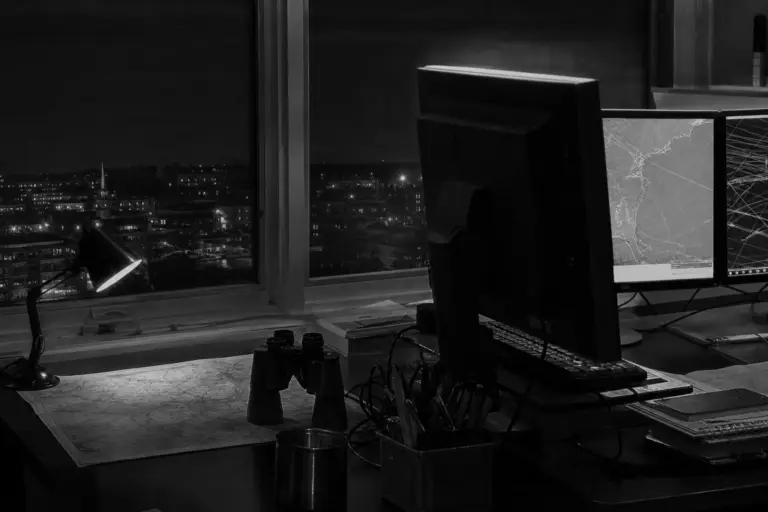
Aircraft tracking can test fixed-wing traffic and, where available, helicopters against a narrow time-and-place window; FAA records or airport information may add context for documented operations. Satellites, visible passes, and bright astronomical objects can be compared through ephemeris or sky-simulation data, but only after the observer’s direction and approximate time are known. A steady point in the same position over several minutes is a better fit for a planet or bright star than for a low aircraft; a light moving smoothly across the sky without apparent course changes may warrant a satellite comparison. Neither pattern is recorded here.
Balloons, drones, atmospheric effects, and distant ground lights require equally specific tests. A balloon can drift and change apparent shape or brightness with wind and sunlight; a drone may hover, reverse, or show compact navigation lights; haze, cloud, or temperature-related optical distortion can alter the apparent position or spread of a light; and a distant tower, vehicle, or building light can appear airborne when the horizon is obscured. Their usefulness as explanations depends on reported movement, weather, sightline, and visual character, not on their mere availability as possibilities.
For the Wallingford report, no observation time, bearing, elevation, appearance, movement, or duration is preserved in the available record. That prevents a fair comparison with flight tracks, astronomical objects, weather observations, or local light sources. Each conventional category remains a possible lead, but none can be elevated to an identification, and none can be meaningfully ruled out.
Why the Object May Remain Unidentified
“Unidentified” describes an evidentiary result: the available material does not allow a reliable assignment to a known cause. “Anomalous” is a stronger assessment. It would require credible information showing behavior or characteristics that remain inconsistent with ordinary explanations after meaningful comparison, rather than simply details that were never recorded.
That higher threshold cannot be tested here. The material reviewed contains no recoverable original account, independent witness statement, precise observation time, calibrated photograph or video, or sensor correlation. It also includes no case-specific statement from an official agency. Those omissions leave the object’s basic attributes, where it appeared in the sky, whether it moved, how long it was visible, and whether anyone else observed it, unknown.
Radar evidence can sometimes add a useful second line of evidence, but only when a time and location allow a visual report to be compared with a relevant record. A public flight-tracking display is not a universal account of everything airborne, and a blank search result is not proof that no aircraft, balloon, drone, or other ordinary source was present. Likewise, weather-radar products are not continuous visual recordings of the local sky; they cannot retrospectively establish what a witness may have seen without a closely defined observation window.
Public-record searches have the same limitation. A missing news item, aviation match, or agency file may reflect sparse reporting, incomplete indexing, unavailable data, or a report that never reached an authority. It does not establish non-human intelligence, secret technology, or an official effort to suppress information. For unresolved UAP sightings, stronger anomaly claims need converging evidence: dependable timing, separately recorded witness accounts, media with usable metadata, or sensor data that can be tied to the same event.
Evidence-Led Assessment of the February 3, 2020 Wallingford Report
The appropriate final entry is therefore not a solved sighting, nor a documented anomaly, but an unverified historical report label: an alleged observation associated with Wallingford, Connecticut, and February 3, 2020, for which the underlying observation record is not presently available.
That classification establishes only the narrowest point, that the place-and-date label has been circulated as a claimed event. It does not establish a witness’s identity, the object’s form or behavior, an exact time, a flight path, weather conditions, photographic provenance, an official investigation, or independent corroboration. Without those particulars, aircraft, astronomical objects, balloons, drones, atmospheric effects, and misidentified lights cannot be meaningfully ranked; they remain untested possibilities rather than conclusions.
This is the standard careful UFO news coverage should apply: distinguish an unresolved file from evidence of something extraordinary. Wider debates about UFO disclosure may shape public interest and terminology, but they add no case-specific evidence to this Wallingford report. Nothing in the accessible record supports an inference of non-human technology, classified activity, or concealment.
Readers who locate an original submission, a contemporaneous diary entry, dated local reporting, or independently created media can materially improve the file. Preserve the original file rather than a screenshot or repost; retain its creation time, full-resolution version, device details, and any unedited sequence. A useful witness account should separately record the viewing location, local time and time zone, direction of view, duration, apparent motion, light pattern, sound, and whether other observers were present. Independent accounts are most valuable when recorded separately before witnesses compare memories.
Until such material can be traced and assessed, the Wallingford Connecticut UFO sighting of February 3, 2020 remains an incomplete claim, not evidence sufficient to identify an object or support an extraordinary conclusion.
Frequently Asked Questions
What was seen over Wallingford, Connecticut, on February 3, 2020?
Only an unspecified object was reportedly observed in Wallingford, Connecticut, on February 3, 2020. No original witness account, description, exact time, or independently verified evidence is available to establish what it was.
Was the Wallingford object identified?
No reliable identification has been made because the available record contains no time, direction, duration, appearance, movement, or source documentation. The case is classified as an unverified historical report label, not a confirmed anomalous event.
What details are needed to investigate a UFO sighting?
Useful details include the local observation time and time zone, precise viewing location, compass direction, elevation, duration, apparent movement, light pattern, sound, and weather conditions. Original photos or video should retain full resolution, creation time, device details, and unedited file history.
How can a reported UFO sighting be checked against aircraft, weather, and astronomical records?
A narrow time window, viewing location, direction, and elevation are needed to compare a report with flight tracks, FAA information, weather observations, satellite passes, and astronomical positions. Without those details, aircraft, planets, satellites, drones, balloons, atmospheric effects, and distant lights cannot be fairly tested or ruled out.
Does an unexplained UAP sighting prove extraterrestrial activity?
No. An unidentified sighting means the available evidence cannot support a reliable identification, while an anomalous conclusion requires credible details that remain inconsistent with ordinary explanations after meaningful comparison. No evidence in the Wallingford record supports non-human technology, classified activity, or concealment.