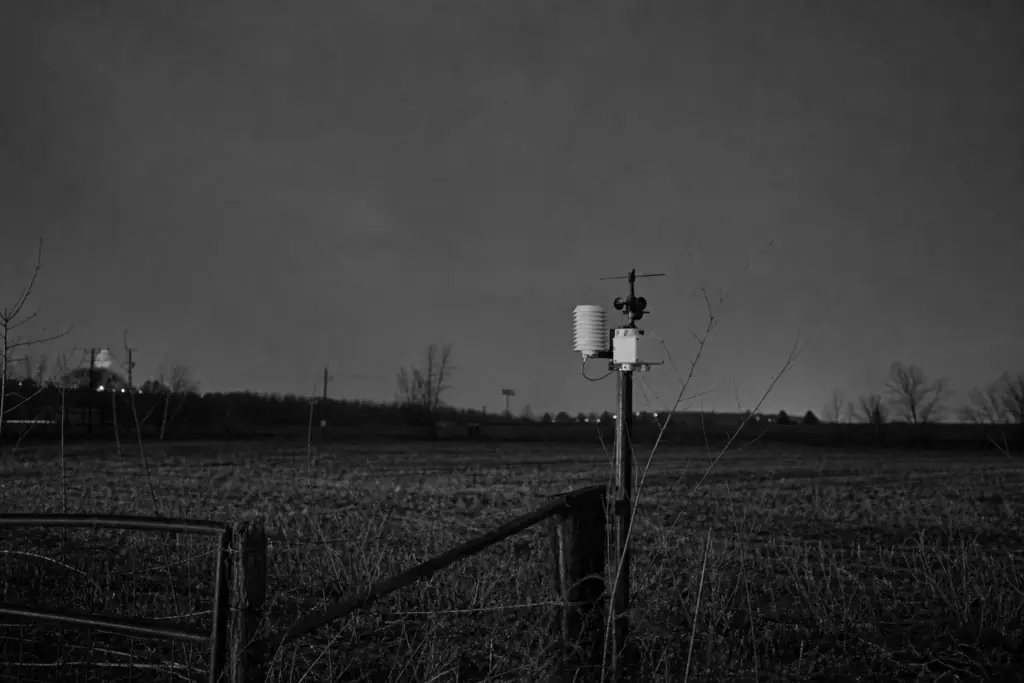
A useful first checkpoint is whether the record identifies an object or merely preserves a report tied to a place and date. For the Carroll Ohio UFO sighting reported for January 12, 2020, the available attribution to MADAR Node 089 does not establish what, if anything, was seen in the sky, or whether an instrument reading and a visual observation describe the same event.
This review begins with the record itself: the location and date label, the wording used for the event, and any timestamp, measurement, or narrative that is actually available. It then separates three different forms of evidence: a reported observation, a sensor anomaly, and independent corroboration. A witness account with a precise time and direction, for example, can be compared with weather, aircraft, and astronomical records; an unexplained sensor change may show only that the device registered an unusual condition.
That distinction matters because MADAR data can provide a lead for investigation without identifying an object by itself. The sections that follow assess what Node 089 documentation preserves, what details remain absent or unverified, and what contemporaneous material would be needed to move this Carroll report beyond an unresolved unspecified-object entry.
What Was Reported in Carroll, Ohio, on January 12, 2020
The case designation under review is an unspecified-object sighting reportedly linked to MADAR Node 089 in Carroll, Ohio, on January 12, 2020. That is the full, supportable summary at this stage: a location, a date, a node association, and a report status. It does not supply a description of an object, a named observer, a duration, a direction of travel, or a confirmed time standard.
The phrase “reported sighting” has a narrower meaning than a resolved identification. It indicates that an event was entered, labeled, or associated with the location and node; it does not establish that a physical object was independently observed, tracked, photographed, or identified. A stronger case record would preserve such details as a contemporaneous witness statement, a local-time or UTC timestamp, original sensor values, and information tying each item to the same incident.
No original Node 089 event page, archived database capture, contemporaneous log, or witness narrative has been provided with the material for this review. As a result, the wording of the underlying entry cannot yet be quoted, nor can the report be classified reliably as a visual observation, a sensor alert, a database label, or a combination of those categories. The Carroll Ohio UAP sighting remains a useful historical lead, but its listed association is not independent corroboration.
This distinction sets the appropriate baseline for the record: the January 12, 2020 Carroll entry may document that a report was made or logged, while the identity and even the precise nature of the reported event remain unestablished. The next question is therefore not what the object “was,” but what Node 089’s surviving record actually preserves.
The Source Record: What MADAR Node 089 Actually Documents
The available material stops at an index-level designation rather than reproducing the underlying event entry. It associates “MADAR Node 089,” “Carroll, Ohio,” and January 12, 2020, but does not include an original MADAR page or preserved capture. No verbatim event text or visible database fields beyond that designation are available to reproduce.
A MADAR Node 089 sighting record could take several materially different forms. A listing preserves an index label, such as a date and place. An instrument record adds a timestamped value or chart, showing what a sensor registered but not, by itself, identifying an aerial object. A witness report preserves observation details such as appearance, bearing, movement, duration, and the observer’s account. A linked case file could connect any of those materials. None of those underlying components appears in the supplied record set.
That gap prevents a confident event classification. The available material does not show whether MADAR logged a sensor anomaly, catalogued a submitted sighting, indexed an outside report, or presented a combined entry. It also supplies no local-time or UTC timestamp, measurement and unit, alert threshold, operator note, or indication of later review.
The limitation extends to supporting material. No photograph, video, sensor chart, witness narrative, contemporaneous note, separate case-report link, or archived capture of the relevant page has been provided. Their absence from this review does not establish that such items never existed; it means they cannot be weighed as evidence in this account.
For this source record, the dated node-and-location label is a retrieval clue rather than an identification signal. An original entry with an event type and timestamp would establish far more about what was logged; independently comparable supporting material could then test whether separate records describe the same occurrence. As it stands, the MADAR reference preserves an asserted association with Node 089, not the characteristics or identity of an object.
What the MADAR Network Can, and Cannot, Show
The useful distinction is between a signal, an observation, and an identification. A magnetometer reading, if one was involved in the Node 089 entry, would record a change in the magnetic conditions measured at the node; it would not supply an image, altitude, distance, direction, or physical description of a thing in the sky. An environmental sensor reading likewise describes a local measured condition, not the source responsible for it.
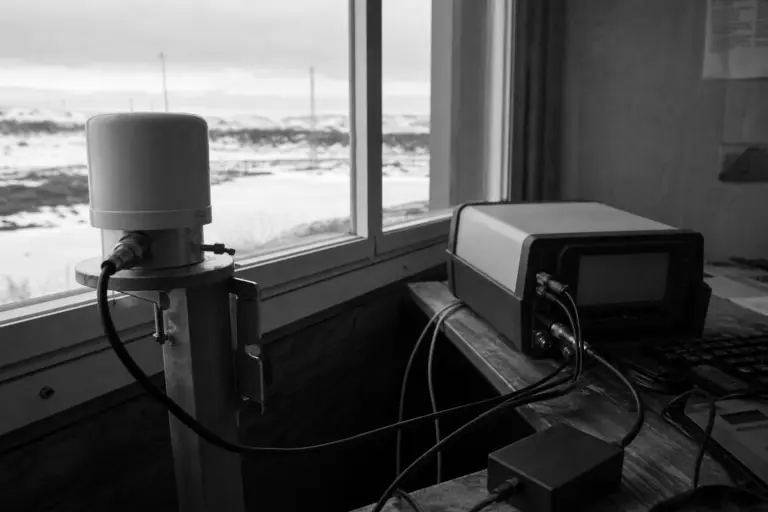
An observer report is a separate kind of evidence. It can preserve what a person believed they saw, along with details such as time, apparent motion, shape, brightness, direction, and duration. Those details may be compared with instrument data when both are timestamped and tied to the same place. But a report remains an account of an observation unless it is supported by material capable of establishing an object’s physical characteristics.
A confirmed physical object requires the strongest link in that chain: evidence that connects a measured or observed event to a particular object and rules out relevant alternatives. A node alert can be valuable lead information because it may identify a time window worth investigating. By itself, however, an alert does not show whether the trigger was aerial, nearby, instrumental, environmental, or unrelated to any reported sighting.
That limitation is especially important for the Carroll entry because the available material does not disclose a sensor value, alert condition, chart, calibration status, power record, operator review, or matching witness account. It therefore cannot show whether MADAR anomaly detection registered anything at Node 089 on January 12, 2020, much less establish a cause. The node association remains a prompt for evidence review rather than a demonstrated UAP detection.
Corroboration Check: Evidence Needed to Assess the Carroll Report
A meaningful review begins by fixing a time window. Because the available Carroll material supplies no event time or time standard, no witness account, image, flight comparison, weather observation, or astronomical match can yet be tied to the January 12, 2020 designation. Those materials are therefore unverified or unavailable for this review, rather than negative findings.
- Witness accounts: A contemporaneous statement is most useful when it records when and where the observer was looking, the object’s apparent direction, movement, brightness, duration, and any sound. Independently written accounts that agree on those particulars are stronger corroborating evidence than later recollections or reports that merely repeat the node-and-date label. No reliably matched local witness submission or Mutual UFO Network case report has been provided here.
- Photographs or video: A file can assist only if its original version, capture time, location basis, device information, and unedited provenance can be assessed. A reposted image without those links may illustrate a claim but cannot reliably establish that it depicts Carroll on the reported date. No such media has been located in the available record.
- Aviation activity: A time-bounded comparison with public flight-history data, air-traffic records, and applicable FAA records could test whether a tracked aircraft was in a relevant direction at a relevant time. It could support a conventional explanation, but it would not establish one without the missing observation details. No dated aviation comparison is available.
- Weather conditions and sky context: Archived observations could establish cloud cover, visibility, wind, precipitation, and other conditions affecting what an observer might have seen. Astronomical ephemerides could similarly place the Moon, bright planets, stars, meteor activity, or satellite passes against a specific time and viewing direction. Neither a Carroll weather record nor a time-specific astronomical comparison has been supplied.
- Local and official records: Contemporaneous news coverage, emergency-call material, police or airport reports, and an original MADAR log could show whether another party documented an event in the same interval. Their absence from the materials reviewed does not show that no such activity occurred; it leaves independent corroboration unestablished.
The practical priority is an original, timestamped record that permits these sources to be compared on the same clock and location. Until that anchor is recovered, the Carroll Ohio UFO sighting for January 12, 2020 cannot be meaningfully tested against ordinary aerial, meteorological, or astronomical possibilities.
Assessment: A Reported Unspecified Object, Not a Verified UAP
The missing time anchor is decisive: without it, the date-and-location designation cannot be matched to an observation, a sensor reading, or an independently recorded aerial event. The material reviewed supports describing an unspecified-object report associated with Node 089 and dated January 12, 2020; it does not establish that a discrete airborne object was instrumentally detected, visually observed, or independently confirmed at a known time.
- Documented in the material available: the node number, Carroll location label, date, and association with an unspecified-object report.
- Reported but not independently established: that the designation corresponds to a particular sighting or sensor event, rather than a later database classification or summary.
- Not established: the unidentified object’s appearance, position, altitude, speed, direction, duration, physical behavior, identity, or origin.
- No current corroboration: a recoverable original log, synchronized sensor data, contemporaneous witness narrative, authenticated media, or time-matched aviation, weather, and astronomical comparison.
That distinction determines the report reliability of the case. A logged entry can preserve that someone recorded or associated an event with a node; it cannot, by itself, demonstrate what caused the entry. Even a genuine anomaly or sincere observation would need additional evidence connecting it to a specific object and separating ordinary possibilities from an unresolved event.
“Unidentified” describes the present state of the evidence, not a positive finding about origin. Identification may be absent simply because the record lacks a time, description, measurements, or corroborating material suitable for comparison. The Carroll report therefore remains unresolved and unconfirmed, not a verified UAP case or evidence of non-human technology.
How to Verify or Update This Historical Sighting Record
A usable update begins with preservation rather than interpretation. Capture the original MADAR Node 089 page or log in full, retain its stable URL, make a dated screenshot or PDF, record the retrieval date, and save any available archive link. A cropped image or reposted summary is weaker because it may omit the event type, timestamp, units, revision history, or surrounding entries needed to place the record in context.

The key primary material is a time-stamped entry that identifies its clock standard. Local civil time and Coordinated Universal Time (UTC) describe the same moment differently; an unexplained offset can produce false matches or misses when comparing flights, weather observations, celestial positions, or witness accounts. Any recovered time should therefore be preserved exactly as displayed before it is converted for comparison.
- Seek the underlying node log, sensor chart, operator notes, and any contemporaneous witness statement or original image file.
- Locate date-specific archival weather observations, aviation records, astronomical data, and local-news archives only after a defensible time window is available.
- For every item, record who created it, where it was obtained, its publication or capture date, its URL or archive address, and whether it is an original or a copy.
This article should be corrected only when new material is attributable and date-specific. A recoverable log with a clear timestamp could make comparisons possible; independently authenticated media or a contemporaneous account could strengthen the event history. Unsupported retellings, later recollections without provenance, and claims that cannot be tied to January 12, 2020 should remain unverified rather than being incorporated into the Carroll Ohio UFO report.
The Carroll Record Remains an Unresolved, Evidence-Limited Report
The record’s present value is as a traceable lead, not a resolved incident. It supports retaining an unspecified-object report under the Carroll, Ohio, date-and-node association; it does not supply the evidentiary chain needed to determine whether a visual event occurred, whether a sensor event occurred, or whether either concerned the same object.
A verified UAP conclusion would require more than an unresolved label. Stronger support would connect a precisely timed original entry to independent material, such as a contemporaneous witness account, authenticated imagery, raw sensor output, and location-matched weather and aviation context. By contrast, an anomaly without its underlying measurements or an object label without a description leaves the relevant event unidentified because its record is incomplete, not because an extraordinary explanation has been established.
The Carroll Ohio UFO sighting of January 12, 2020 should therefore remain classified as uncorroborated and unresolved. Any future revision should preserve the original material intact and rest on independently attributable, timestamped evidence that can be compared against the same place and moment.
Frequently Asked Questions
What was reported at MADAR Node 089 in Carroll, Ohio, on January 12, 2020?
The available record identifies an unspecified-object report associated with MADAR Node 089 in Carroll, Ohio, dated January 12, 2020. It does not provide an object description, observer identity, event time, direction, duration, or original sensor data.
What is the MADAR network and what can its data show?
MADAR is a network that can preserve node-based sensor or report information for investigation. A magnetometer or environmental reading can show a local measured change, but it cannot by itself provide an object’s image, altitude, distance, direction, or identity.
Does a MADAR alert confirm a UFO or UAP sighting?
No. A MADAR alert may identify a time window for investigation, but it does not prove that an aerial object caused the alert or that a visual sighting and sensor anomaly were the same event.
Was the Carroll, Ohio, object identified?
No object was identified in the available Carroll record. The evidence confirms only the Node 089, Carroll, Ohio, and January 12, 2020 association, not an object’s appearance, altitude, speed, behavior, origin, or even a confirmed event time.
What should you look for to verify a historical UFO sighting report?
Look for an original, timestamped log that identifies whether it uses local time or UTC, plus raw sensor values, operator notes, witness accounts, and authenticated original media. Use the confirmed time and location to compare aviation records, weather observations, astronomical data, and local or official reports.