Flashing Light Sighting Over Las Vegas, NV on January 15, 2020: Witness Reports Sudden Disappearance and Reappearance
Examine the Las Vegas UFO sighting January 15 2020, including the flashing light's reported disappearance, possible causes, and evidence gaps.
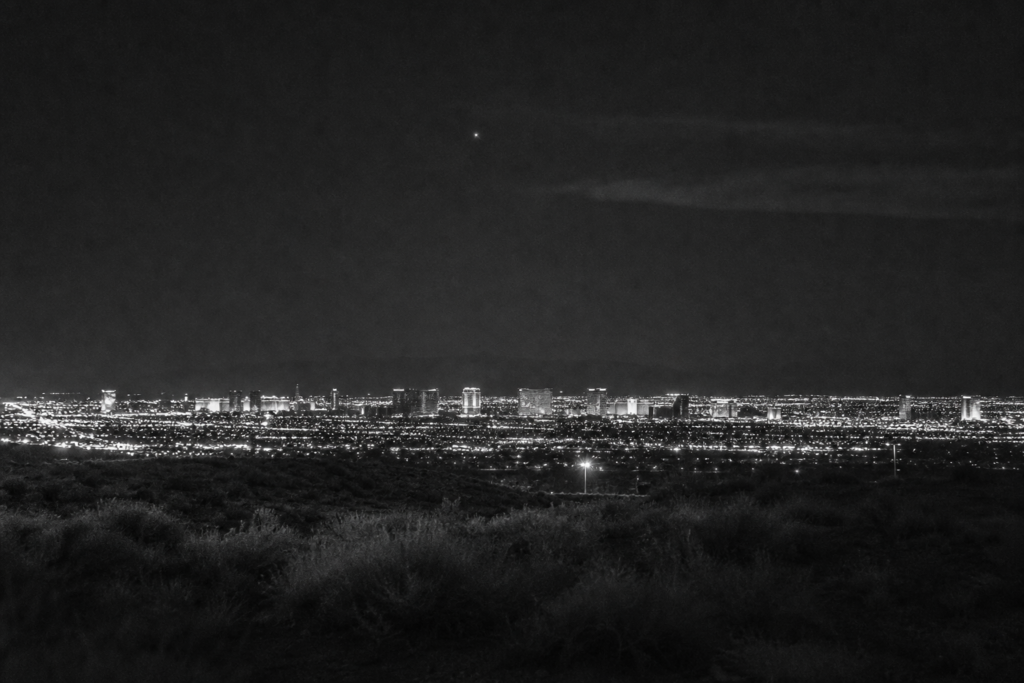
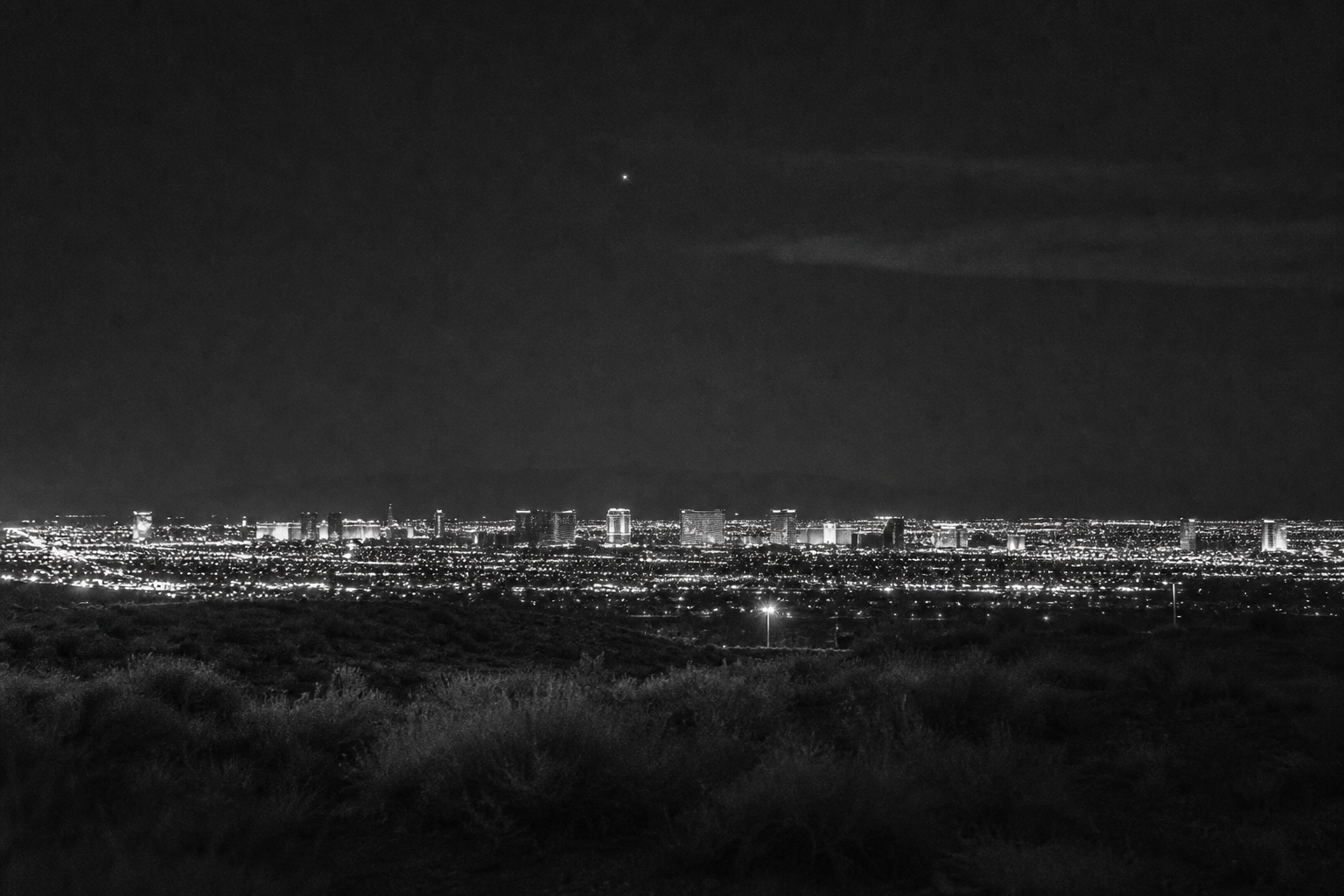
The Las Vegas UFO sighting January 15 2020 is best approached as a reported observation, not as a confirmed identification. The account describes a flashing light over Las Vegas that appeared to vanish suddenly and then reappear. That sequence is the case’s central claim; it does not, by itself, establish the light’s distance, size, speed, physical nature, or origin.
This review keeps the witness description separate from conclusions drawn after the fact. A light can seem to disappear and return when an aircraft’s lights cycle, its angle changes, a thin cloud or foreground obstruction intervenes, or a distant ordinary light becomes visible again. Celestial and atmospheric effects can also alter a viewer’s perception without resolving what was seen.
The available materials for this article do not include a traceable original submission, imagery, radar record, independent witness account, or official identification. The sections that follow therefore document the reported flashing-light sighting carefully, assess explanations that match its limited description, and state plainly where the record cannot support a firm conclusion.
A Reported Flashing-Light Sighting Over Las Vegas on January 15, 2020
The case is indexed to Las Vegas, Nevada, on January 15, 2020, and its surviving description is narrow: a witness reported seeing a flashing light and described an apparent sudden disappearance followed by a later reappearance.
That wording records an observation rather than identifying an object. “Flashing” describes the light’s visible behavior; it does not establish whether the source was airborne, astronomical, ground-based, nearby, or distant. Likewise, “disappeared” and “reappeared” describe what the witness perceived from a particular viewing position, not a demonstrated change in the source itself.
The available case material does not provide a traceable original submission, reporting-platform entry, submission date, witness name, image, video, or instrument record that would allow the account to be independently reconstructed. The useful starting point is therefore limited but clear: this was a reported flashing-light sighting over Las Vegas in January 2020, not a confirmed identification or evidence of an anomalous craft.
What the Witness Report Says, and What It Does Not Say
The account can be reduced to a three-part visual sequence: the witness first noticed a flashing light, then perceived it to disappear suddenly, and later perceived it again. Those are the report’s affirmative observations. The surviving wording does not preserve how long the light was watched before or after either apparent change, so it cannot establish a continuous track or a physical maneuver.
Equally important is the boundary between description and interpretation. “Flashing” is a reported light pattern, not a determination that the source was a particular craft or object. “Sudden” conveys the witness’s impression of the loss of visibility, while “reappeared” means the light became visible again from that observer’s perspective. Neither term supplies a measured distance, altitude, direction of travel, speed, or size. Calling the event a Las Vegas UAP sighting on January 15, 2020 may help locate the report in search records, but it does not add identifying information to the observation itself.
- Reported: a flashing light was seen over Las Vegas; it appeared to vanish and later return to view.
- Not preserved: a precise viewing position, time of observation, duration, compass direction, elevation above the horizon, color, or a detailed motion description.
- Not available in the case material: photographs, video, screenshots, a second witness account, or a traceable flight path that could be compared with the sighting.
Those omissions do not show that the witness was mistaken; they limit what the report can resolve. A strong identification would require details that distinguish one possible light source from another, for example, a timestamp and viewing direction that could be matched against a recorded route. Here, the witness report preserves the perceived disappearance-and-reappearance sequence, but not the observational context needed to determine why it occurred.
Why a Flashing Light Can Appear to Disappear and Reappear
A changing view of a single light can produce a surprisingly abrupt visual sequence. A light that is bright enough to be noticed at one moment may fall below the observer’s visibility threshold at the next, then become conspicuous again without requiring an equally abrupt change by the source.
Intermittent lighting is one possible mechanism. A repeating flash can make an aircraft-associated light seem absent between pulses, especially when only the brightest flash is visible at a long distance. Viewing angle also matters: a light directed more toward the observer can appear intense, while a small turn or change in relative position can reduce its apparent brightness. That is a change in what reaches the eye, not necessarily evidence of unusual flight behavior.
Momentary interruption of the line of sight offers another possibility. A distant light can pass behind a ridge, building edge, or other foreground feature; thin cloud, haze, and glare from surrounding city lights can similarly mask a weak light and then allow it to stand out again. At night, the boundary between visible and invisible can be especially sharp when the source is near the observer’s detection limit.
These effects can also alter apparent motion. Without a fixed reference point, a light that dims, flashes, or re-emerges through haze may seem to shift position even when its course cannot be measured. Conversely, a genuine change in direction cannot be established from a perceived disappearance alone.
The reported sequence remains worth preserving because the timing, duration, and visual character of each loss and return could help distinguish among possibilities. In this case, however, the missing viewing direction, timing, and imagery prevent that comparison. A disappearance and reappearance describes an observational event; by itself, it does not demonstrate exceptional speed, maneuverability, or an unusual capability.
Possible Explanations That Fit Some Parts of the Report
Several ordinary source categories remain plausible, but each fits only conditionally because the surviving account does not preserve the details needed to compare one candidate against another.
An aircraft could fit a light described as flashing, particularly if the observer saw a repeating light pattern rather than a continuously illuminated object. A route crossing the observer’s view could also make the light’s apparent position change between visible flashes. This explanation becomes less persuasive if the light was reported as stationary for a sustained period or if its flashes lacked any recognizable repetition, but neither point is established in the available description.
A helicopter is another aerial possibility when a light appears to hold roughly one area of sky or move slowly. Its usefulness as an explanation depends on duration, apparent motion, and whether more than one light was visible. Those distinctions matter because a lone intermittent light offers too little visual information to separate a helicopter from a more distant aircraft.
A satellite may fit a steady light that gradually fades and later becomes visible again, but it is a weaker match for a clearly repeating flash. A satellite comparison would require the observation time, viewing direction, and elevation above the horizon; none is retained here. The same missing coordinates prevent a meaningful match to archived flight activity rather than merely noting that aircraft may have been present in the region.
Distant ground-based lighting could also resemble a Las Vegas night sky sighting when viewed across terrain or through gaps between structures. A fixed source intermittently hidden by a foreground edge, haze, or changing attention may seem to vanish and return. That possibility is less consistent if the light was demonstrably high in open sky or followed a measurable path, details the report does not provide.
Atmospheric and observational effects may accompany any of these categories rather than supply a separate object-level answer. In short, aircraft, helicopter, satellite, and ground-light possibilities can account for portions of the report, but no candidate can be elevated to an identification without a time, direction, duration, or independent record tied to the observation.
Corroboration, Records, and Official Identification Status
Independent corroboration would require evidence that can be connected to the same time and area without relying on the original account alone: for example, a separately recorded witness report, time-stamped and locatable imagery, or a flight or radar record that matches the reported direction and interval. The materials available for this review contain none of those items. They also contain no original media that can be authenticated and placed at the January 15, 2020 observation.
That absence has a narrow meaning. It does not show that the flashing light was unusual, ordinary, or deliberately concealed; it means the report cannot be independently tested against a second record. A matching aircraft track would be a useful corroborating data point only if the witness’s location, time, and line of sight were known. Without those anchors, the presence of aircraft somewhere in the Las Vegas area would not identify this particular light.
An unidentified aerial phenomenon can describe an observation for which no explanation has been assigned, but that label should not blur the distinction between a reported observation and a confirmed, investigated incident. A report may remain unidentified after a documented investigation considers usable evidence and cannot resolve it. It may instead be unevaluable because essential information, such as a precise time, direction, duration, or media file, is missing. A resolved case is different again: investigators link the observation to a specific, evidence-supported source. For this UFO sighting in Las Vegas, Nevada, in 2020, the available record fits the second category: insufficiently documented for a formal identification or a meaningful official resolution. No agency response, radar record, or official case finding is available here to imply otherwise.
What Evidence Would Be Needed to Verify the Sighting More Reliably
A stronger observation report begins with coordinates that make later comparison possible: a timestamp to the minute and time zone; the observer’s viewing location; compass direction; estimated height above the horizon; and the length of each visible, absent, and reappearing interval. A note such as “west, about two finger-widths above the horizon, visible for 90 seconds” is far more testable than “over Las Vegas.”
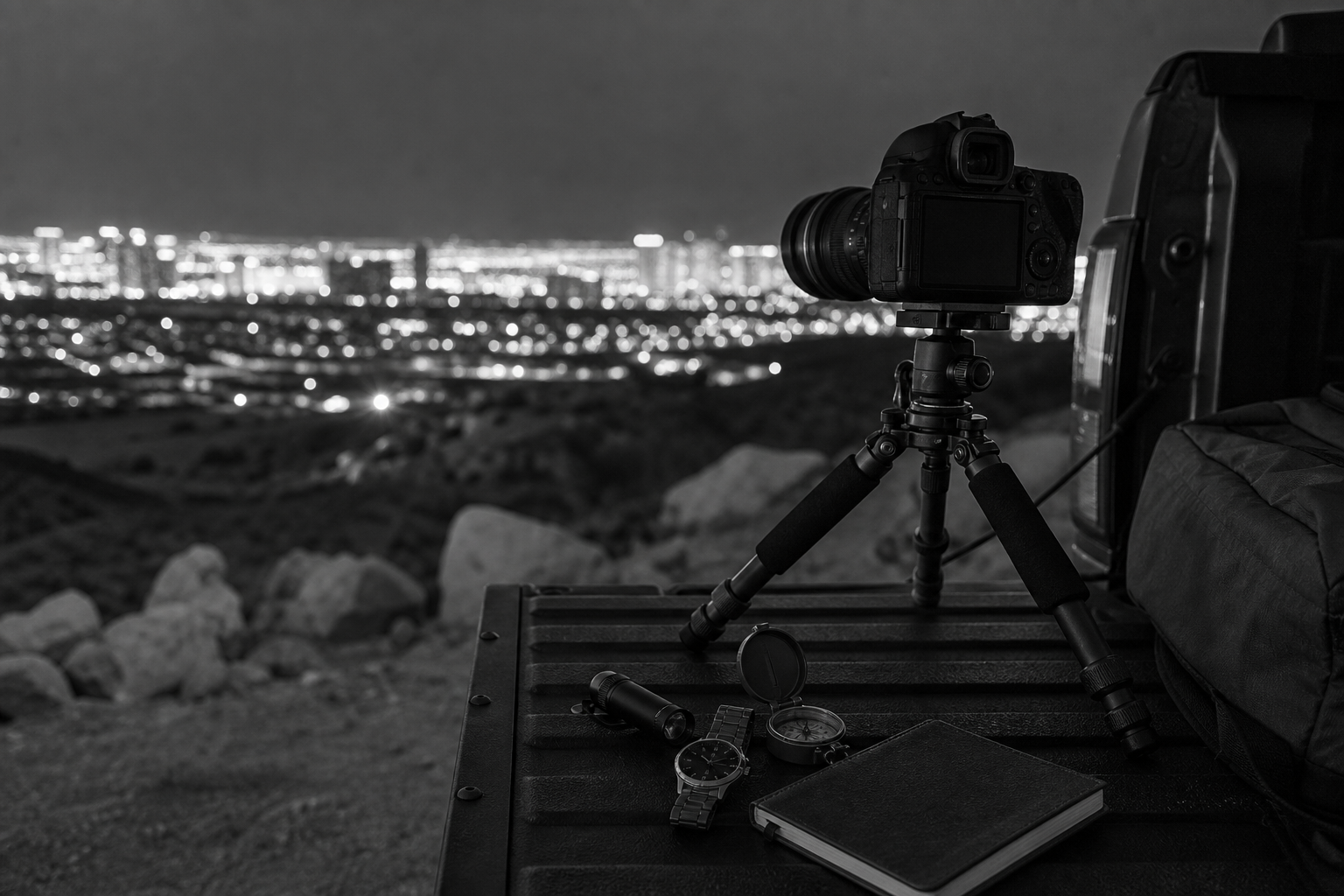
- Preserve the original, unedited photo or video file, rather than a repost or screen recording. The original may retain capture time, device information, and successive frames; a compressed clip can still illustrate what was seen but is weaker for measurement.
- Seek separate accounts from observers at different locations. Independent witnesses who record matching time, direction, and light behavior provide stronger corroborating evidence than multiple retellings derived from one post.
- Compare the stated interval and line of sight with local weather observations, available flight tracks, and satellite-passage tools. Each comparison tests a different candidate source: clouds and haze affect visibility, aircraft records test airborne traffic, and satellite checks test predicted sky positions.
These materials could make a UAP sighting in Las Vegas, Nevada, on January 15, more reliably assessable, but they would not automatically identify the light. A matching record must fit the time, location, direction, and observed behavior together; a general match in the same city or night is only a lead, not a resolution.
Assessment: A Documented Report, but Not a Confirmed Explanation
The most defensible classification is a documented but unresolved witness report. Its fixed elements are limited to the reported place and date, Las Vegas on January 15, 2020, and the observed sequence of a flashing light apparently disappearing and reappearing. The record does not preserve the independent evidence needed to determine what produced that sequence.
“Unidentified” describes that evidentiary outcome, not an extraordinary cause. A single light-only account cannot establish an object’s range, size, speed, intent, or origin, and it does not support claims of an alien, non-human, military, or otherwise anomalous source. Ordinary lighting, line-of-sight, and atmospheric possibilities remain untested rather than ruled out.
For that reason, the Las Vegas UFO sighting of January 15, 2020 belongs in the case file as an unresolved observation, not as confirmation of what the light was.
What Can, and Cannot, Be Concluded From the Las Vegas Report
The appropriate conclusion is bounded by the quality of the record, not by how striking the experience may have seemed. The witness report preserves a meaningful observation: a flashing light was seen, seemed to disappear, and was then seen again. That experience deserves to be recorded accurately rather than dismissed simply because it has not been identified.
What the account cannot establish is a particular object, route, distance, speed, or cause. A repeating aircraft light, a changing viewing angle, a brief obstruction, variable visibility, or another ordinary light source could produce portions of the reported sequence. None can be selected over the others from the surviving details, and neither can an unconventional explanation be inferred from the light alone.
The practical dividing line is corroborating evidence. A precisely timed, independently recorded observation that also matches the viewing position and direction would strengthen a proposed identification; a vague match elsewhere in Las Vegas would not. Until such evidence is available, this Las Vegas UFO sighting of January 15, 2020 remains a respectfully preserved but unresolved witness account, not proof of a confirmed object or explanation.
Frequently Asked Questions
-
What was seen over Las Vegas on January 15, 2020?
A witness reported a flashing light over Las Vegas that appeared to disappear suddenly and later reappear. The record does not establish the light’s distance, size, speed, direction, altitude, or origin.
-
Why can a flashing light appear to disappear and reappear in the night sky?
An aircraft’s repeating lights, a change in viewing angle, thin clouds, haze, glare, or a foreground obstruction can make a light drop below visibility and become noticeable again. This sequence does not by itself demonstrate unusual speed or maneuvering.
-
Was the January 15, 2020 Las Vegas UFO sighting officially identified?
No official identification, agency response, radar record, or formal case finding is available for the sighting. The surviving materials contain no traceable original submission, image, video, independent witness account, or instrument data.
-
Could an aircraft, satellite, or ground light explain the Las Vegas flashing light?
Aircraft and helicopters can produce flashing or intermittent lights, while satellites can gradually fade and return to visibility. Distant ground lights, clouds, haze, and foreground obstructions can also create the appearance of a light vanishing and returning.
-
What evidence should you collect to verify a UFO sighting in Las Vegas?
Record the time to the minute and time zone, viewing location, compass direction, height above the horizon, and duration of each visible or absent interval. Preserve original unedited photos or video, seek independent witnesses, and compare the details with weather, flight-track, and satellite-passage records.