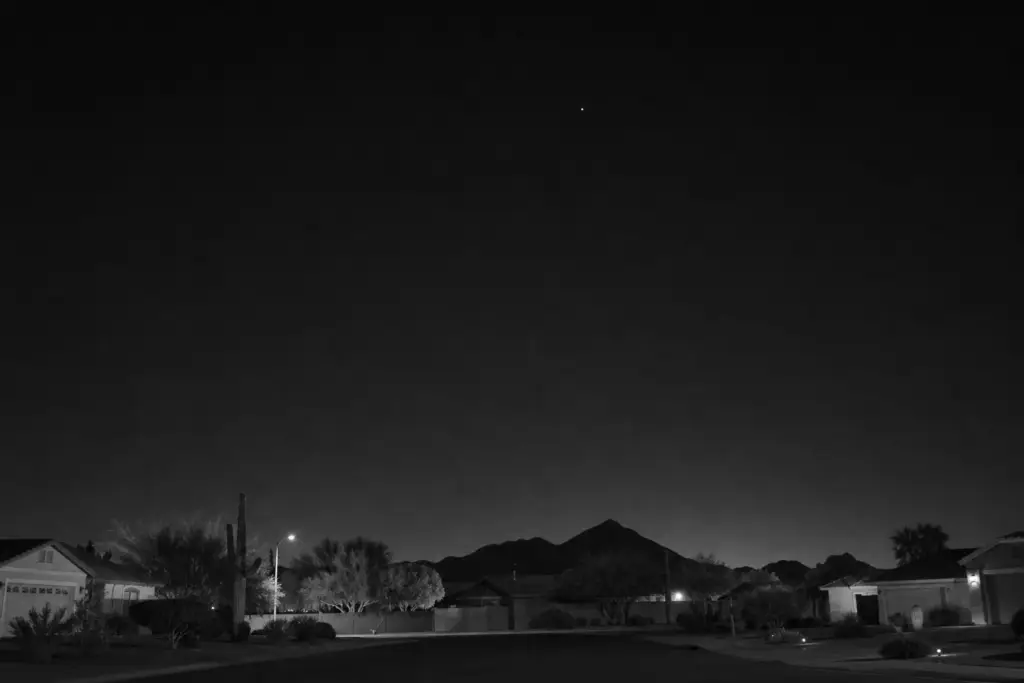
A report placing an apparently hovering light over Mesa, Arizona, on January 30, 2020 is intriguing precisely because the description is so easy to overread. A witness can accurately describe what appeared in the sky, a bright point that seemed fixed in place, for example, without establishing what produced it, how far away it was, or whether it was an aircraft, astronomical object, drone, or something else.
This review treats the Mesa Arizona UFO sighting January 30 2020 as a historical report, not a confirmed identification. “UFO” here means an object or light not identified by the observer at the time; it does not itself establish an extraordinary origin. The claimed activity on multiple nights also requires separate scrutiny: similar-looking accounts are not independent corroboration unless they can be tied to distinct dates, observers, locations, and descriptions.
The sections that follow reconstruct the available account for January 30, compare the evidence for repeat-night sightings, and examine why a hovering light over Mesa can be difficult to judge from a ground-level observation. They also distinguish strong records, original, dated witness material and contemporaneous operational or sky-condition data, from weaker retellings, reposts, and unsupported conclusions. Where accessible evidence does not establish a detail, this article will leave that limitation visible rather than fill it with speculation.
What Was Reported Over Mesa on January 30, 2020
The available material does not provide an attributable, date-stamped original witness submission that can be tied securely to Mesa on January 30, 2020. Nor does it preserve verified wording describing the light’s color, direction, duration, height, or motion. The event can therefore be summarized only at the level supported by the surviving claim: a light was reportedly seen appearing to hover over or near the Mesa area that night.
That distinction matters. A named, contemporaneous report with a submission date and a stated viewing location would document that an observer made a particular observation; it would not, by itself, identify the light. A later retelling, an undated database listing, or a post that shifts between Mesa, a nearby community, and the broader East Valley is weaker because it cannot reliably establish when or where the observation occurred. This reflects the difference between sighting reports and independently verified incident details.
For this Mesa Arizona UFO report in January 2020, the present record does not independently document a craft, radar track, official response, image metadata, or separate witnesses describing the same event. It also does not yet establish whether references to “multiple nights” represent distinct reports or repetition of one account. The January 30 description should consequently be read as unverified witness testimony, not as confirmation that unexplained lights in the sky were observed over Mesa.
Reconstructing the January 30 Observation
A defensible timeline has to preserve the gaps rather than convert them into detail. For January 30, 2020, the surviving claim supplies only the date, the Mesa-area association, and the broad description of a light that appeared to hover. It does not provide a recoverable observation time or time window, a street-level or landmark-based viewing point, a compass direction, or an elevation above the horizon.
- Date: January 30, 2020 is the central date attached to the report.
- Location: “Mesa” or the surrounding area is the available geographic description; no precise observation point is preserved.
- Appearance: The light is characterized as apparently hovering. No source-backed description establishes its color, intensity, shape, size, or whether it flashed or changed brightness.
- Behavior: “Hovering” records an apparent lack of movement from the observer’s perspective. It does not establish altitude, distance, or true stationary flight.
- End of observation: No retained account describes a departure, sudden disappearance, gradual fading, obstruction, or the length of time the light was watched.
Those are not minor omissions. A report that fixes a light to, for example, the western sky above a known horizon at 8:15 p.m. can be compared with aircraft activity, celestial positions, and local events. A report without time, direction, duration, or original media cannot support that kind of comparison. It remains possible to describe the Mesa Arizona hovering light in 2020 as an observation claim, but not to reconstruct a flight path or identification.
No independently attributable second witness account presently repeats the January 30 details. References to a hovering light therefore trace back to a single unverified narrative rather than corroborating descriptions that match on location, time, appearance, and motion. The separate question of whether genuinely distinct observations occurred on other nights requires its own record-by-record review.
Was the Light Reported on Multiple Nights?
The decisive test is not whether later retellings use the same “multiple nights” language, but whether they preserve separate observations. A repeat-night record would need at least two accounts tied to different calendar dates, rather than one January 30 claim reproduced in summaries, social posts, or database-style listings.
For each additional night, a useful comparison would retain the observation date as distinct from the submission or archive date, plus a sufficiently specific Mesa-area viewing location, time window, direction, and description. Compatible details could suggest that witnesses saw the same type of light or a recurring activity; differing details could instead indicate unrelated observations. Even close resemblance would not establish that one object returned without evidence linking the sightings.
- Strong repeat-night signal: independently written, date-stamped accounts describing a light from comparable locations at similar times, with enough directional and behavioral detail to compare.
- Weak signal: a later post recalling that a light had appeared “for several nights,” without naming those nights or preserving the original observation details.
- Not independent corroboration: reposts, articles, or comments that repeat the January 30 narrative but add no separately attributable witness or date.
The available record does not document an additional, independently attributable observation night before or after January 30, 2020. It therefore supports only a claim that a hovering light over Mesa, Arizona was reportedly associated with multiple nights, not a verified sequence of repeat sightings or continuity of a single object.
Why an Apparently Hovering Light Can Be Difficult to Identify
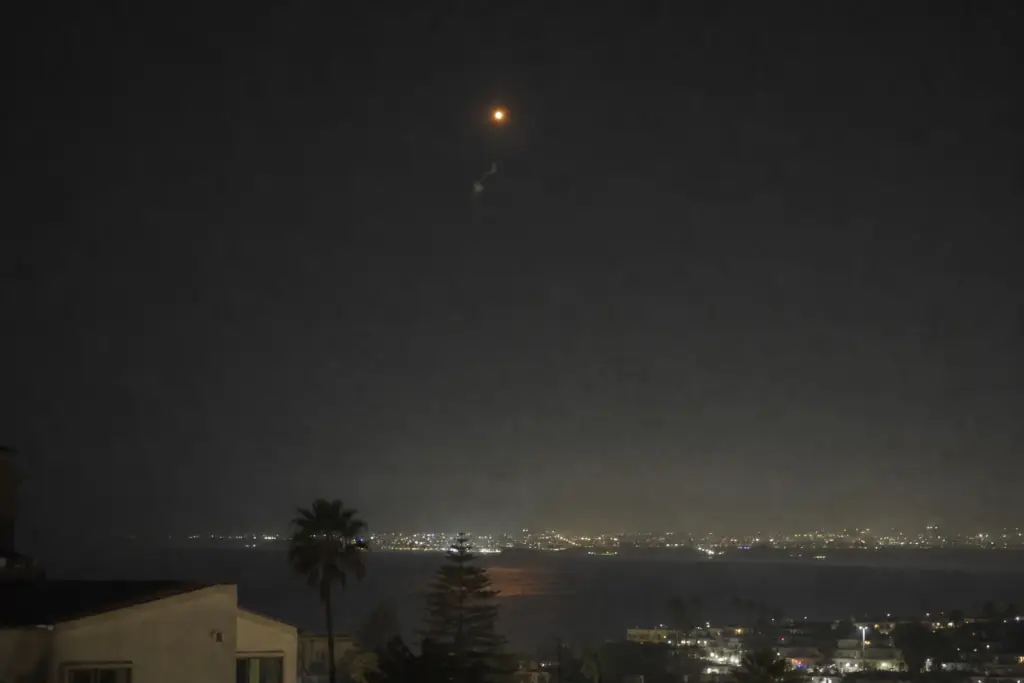
A fixed-looking point in a dark sky does not by itself reveal a fixed position. Without a foreground roofline, mountain edge, utility pole, or other stable reference, a viewer cannot reliably judge whether a light is holding station, moving directly toward or away from the observer, or drifting slowly across the field of view. Distance is the missing variable: the same apparent brightness and size can be produced by a nearby small light or a much more distant one.
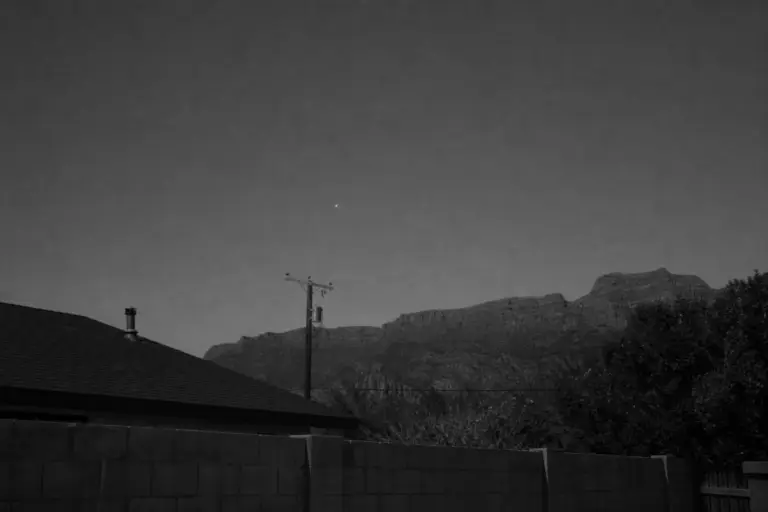
Camera footage can preserve that ambiguity rather than settle it. Handheld movement, autofocus shifts, digital zoom, and electronic stabilization can make a point source wobble, pulse, or remain centered in frame even as the camera moves. A steady tripod view with fixed landmarks is stronger for assessing position; an isolated, zoomed light against a featureless sky is a weak measure of altitude, speed, or size. Wind matters as well: it can carry a balloon, drone, or airborne light while leaving its motion too gradual to register clearly from one viewpoint.
Ordinary categories should be tested against details, not assigned by label. An astronomical object would be expected to remain in a predictable sky position over a short observation, while aircraft traffic may show directional travel or navigation-style blinking. A drone or balloon can move with wind and may carry lights, but its relevance depends on reported sound, changing position, and viewing distance. None of those comparisons can be applied confidently here, because the January 30 account lacks preserved direction, duration, color, blinking pattern, sound, and imagery. The report supports apparent hovering as an observation claim, not verified stationary position or an identification.
What Public Records and Reporting Sources Can Verify
The strength of any reconstruction depends on what a record can actually establish. An original witness account is the best starting point because it can preserve the observer’s own date, location, time, viewing direction, and description. Its limit is equally important: even a detailed account establishes that someone reported an observation, not the distance, physical position, or identity of the light.
A NUFORC report or MUFON report can preserve a submitted claim and, when an archived copy retains both an event date and a submission date, show that the claim existed by a particular time. It is not independent corroboration when later websites merely reproduce the same entry. Nor does a database classification identify the object; it records how the report was filed or described. No accessible, attributable database entry with preserved original wording has been supplied here for the Mesa-area Arizona report.
Independent local television, newspaper, or official-agency coverage published near January 30, 2020 would carry more weight if it named separate witnesses, retained footage, or reported a specific response. A repost without those elements adds circulation, not confirmation. Likewise, dated original photos or video can assist only when their unedited files preserve capture time, location information, and a view that can be tied to stable landmarks.
Flight-tracking material, airport information, and FAA records address a narrower question: whether a known aircraft operation may align with a specified time and direction. They cannot be meaningfully compared to this account without those observation details, and a missing public track would not prove that no airborne object was present. Weather observations can establish measured conditions at a reporting station, such as cloud cover or wind, but only for a defined time window and not necessarily at the witness’s exact location.
For the claimed multiple nights, the same reporting and verification hierarchy applies separately to each date. At present, the record supports an unverified Mesa-area report associated with January 30, not independently documented repeat observations or a verified identification.
What Can, and Cannot, Be Concluded From the Mesa Reports
The appropriate finding is narrower than either a confirmed identification or a dismissal. The material reviewed preserves a claim associating an apparently hovering light with the Mesa area on January 30, 2020. That supports treating the account as a reported observation; it does not establish the physical properties of an object in the sky.
| Conclusion | Assessment |
|---|---|
| A light was reportedly observed near Mesa on January 30. | Supported only at the level of an unverified historical claim. |
| The light hovered at a known altitude or distance. | Not established: no retained time, viewing point, direction, reference landmarks, or measurement permits those calculations. |
| It was the same light on multiple nights. | Not established: the record lacks separately attributable, date-specific accounts that can be compared. |
| It was an aircraft, drone, astronomical object, or other known source. | Not identified from the surviving description. |
“Unidentified in the available record” is a statement about missing discriminating information, not a statement that the light was unexplainable. A conventional explanation cannot be fairly selected without the details needed to test it, but the absence of an immediate match also does not support non-human intelligence, a government program, or a cover-up; this distinction also applies to unresolved UAP cases.
For historical UFO sightings, independence is the key checkpoint. Several reposts of one account remain one account; separate witnesses whose original records align on date, location, time, direction, and behavior would materially strengthen the observation claim. This Mesa report does not presently reach that threshold. Its most defensible status is an unverified report centered on January 30, with an unsubstantiated multiple-nights characterization and no confirmed identity.
How to Read Historical Sighting Reports Responsibly
Good historical analysis begins by preserving the observation before interpretation changes it. Keep the original photo or video file rather than only a cropped image, screenshot, or social-media upload; the original may retain creation time, device details, and a fuller field of view. Write down the time, precise viewing location, compass direction, elevation above the horizon, duration, weather, and any stable landmarks used as reference points.
- Separate record from retelling: a dated first-person account is stronger than a repost, narration, or compilation. Matching wording, identical clips, or one account quoted without new witness detail usually indicates a derivative claim rather than corroboration.
- Compare independent observations: useful matches include the same narrow time window, location, direction, appearance, and movement. A shared city name or broad description of a bright light is not enough to establish that two people saw the same thing.
- Test context against the details: sky positions, visible celestial objects, aviation activity, and local conditions can suggest questions to investigate, but they cannot identify a light when the original observation lacks time, direction, and descriptive specifics.
- Keep the conclusion proportional: an account can remain unidentified in surviving records without becoming proof of any particular explanation.
Applied to the Mesa report, this standard leaves a limited result: an unverified claim of an apparently hovering light associated with January 30, 2020. The available material does not independently substantiate the multiple-nights description, continuity of one object, or its identity.
A Reported Light, Not a Confirmed Identification
What survives is a thin historical record rather than a basis for a physical identification. The January 30, 2020 Mesa claim preserves an apparent hovering light as the reported observation, but not the information needed to determine its position, distance, path, or source. A light that appears motionless from one viewing point may be distant, moving along the observer’s line of sight, or judged against too few fixed references to reveal gradual movement.
The “multiple nights” wording should likewise be read as part of the claim, not as independently established repetition: no separate, attributable accounts presently supply the date-specific details needed to connect additional nights to the January 30 observation. Reposts or similar descriptions do not fill that gap. For the Mesa Arizona UFO sighting January 30 2020, the measured conclusion is therefore a reported light with an unverified identity and unverified repeat-night history, not proof of a craft, a hoax, or an extraordinary explanation. Original, time-stamped media and independent witness records could strengthen a future review; until then, the missing evidence should remain visible in any retelling.
Frequently Asked Questions
What was reported over Mesa, Arizona on January 30, 2020?
An unverified report associated a light that appeared to hover with the Mesa area on January 30, 2020. No preserved original account establishes its color, size, direction, duration, altitude, or exact viewing location.
Was the hovering light over Mesa seen on more than one night?
Multiple-night sightings were claimed, but the available record does not contain independently attributable, date-specific accounts for additional nights. Reposts and later retellings of the January 30 claim do not count as separate corroboration.
Could the Mesa hovering light have been a star, planet, aircraft, drone, or balloon?
Any of those ordinary possibilities could not be tested reliably because the report lacks a time, compass direction, duration, blinking pattern, sound description, and imagery. Apparent hovering from the ground does not prove an object was stationary, since distance and reference landmarks were unknown.
Are there official records or verified evidence for the Mesa Arizona UFO sighting?
No accessible attributable database entry, radar track, official response, image metadata, or independently matching witness account has been preserved for the January 30 report. Flight, FAA, weather, and airport records would require a specific observation time and direction for a meaningful comparison.
What should you look for when evaluating a hovering-light UFO report?
Look for original date-stamped witness accounts that include a precise location, time window, compass direction, duration, weather, appearance, movement, and stable landmarks. Strong corroboration requires separate witnesses whose accounts independently match on date, location, time, direction, and behavior.