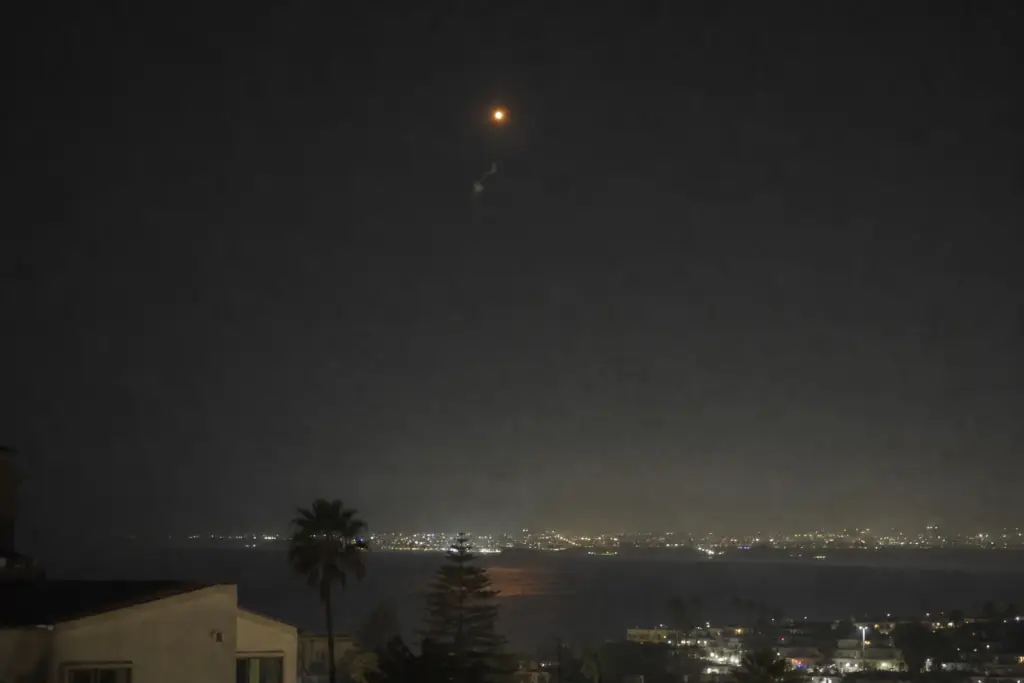

The reported green cylinder-shaped light Columbus Ohio February 17 2020 account is striking because it combines an unusual color, an apparently defined form, and rapid movement across the sky. Those details describe how the sight appeared to a witness; they do not, by themselves, establish a physical cylinder, its distance or size, or its origin. A bright moving light can look green through atmospheric conditions, while glare, viewing angle, and motion can make a point or streak appear elongated.
This article treats the observation as a reported UAP, or UFO, sighting, not as a confirmed event with an identified object. It examines the available description for its specific claims, looks for the kind of corroboration that would strengthen a case, such as a contemporaneous record, original media, an exact time, or independent witnesses, and weighs ordinary possibilities including a meteor, aircraft lighting, re-entering debris, and optical effects. Where those records are absent or cannot resolve the reported characteristics, the appropriate conclusion is not extraterrestrial certainty, but an unresolved report with limited evidentiary value.
What Was Reported in Columbus on February 17, 2020
The first case-file checkpoint is the date and place attached to the description: Columbus, Ohio, February 17, 2020. The observation is witness-reported as a green light that appeared cylinder-shaped and moved, or “shot,” through the sky. These are appearance and motion words, not measurements. They do not establish the object’s altitude, direction of travel, duration, size, distance from the observer, or whether the apparent cylinder was a solid body, a luminous trail, or a visual effect.
No dated original witness submission, contemporaneous public post, official incident file, photograph, video, or independently matched second-witness account has been supplied for this assessment. That absence matters because a report published after the observation date is not itself proof that the event was recorded that night. It also leaves “Columbus” unresolved as a precise observing location: it may mean the city proper or the broader metropolitan area.
For case-file purposes, this is therefore a reported Columbus Ohio UFO sighting from February 17, 2020, rather than a documented identification. “UFO” and “UAP” describe an object or phenomenon not identified at the reporting stage. Neither label indicates an alien, non-human, military, or government origin.
The useful distinction is straightforward: “green,” “cylinder-shaped,” and “shooting” preserve the witness characterization; an explanation for those impressions requires separate supporting evidence. The available description supports an unresolved observation report, not a conclusion about the object behind it.
The Documented Description: What the Report Says and What It Does Not Say
The usable description has three elements: the illumination appeared green, its visible form was characterized as cylinder-shaped, and its motion was described as shooting across the sky. “Green” identifies a perceived color, not a measured wavelength. “Cylinder-shaped” records an impression of form, not a confirmed solid outline. “Shooting” conveys apparent rapid travel, but supplies neither a speed nor a trajectory.
At night, an apparent shape can be produced by the light rather than by the object’s physical structure. A bright point viewed through glare may bloom into an elongated form; a moving light can leave a momentary visual streak; and an object seen at an oblique angle can look unlike its actual profile. The account does not establish whether the observer saw a defined body, a sequence of lights, a luminous trail, or a single bright point.
Several observational details that would discriminate among possible explanations remain absent or unverified. No precise observation time, duration, compass direction, elevation above the horizon, or exact Columbus-area location is available. Nor is there a recorded weather description, report of sound, angular or size estimate, or indication of changes in color, brightness, or motion. Those omissions prevent a meaningful reconstruction of the object’s path or distance.
- No original photo or video file is available to assess framing, exposure, timestamps, or metadata.
- No independent witness account has been identified that describes the same green light from a separate location.
- No contemporaneous record preserves a fuller verbatim witness report beyond the brief characterization.
For that reason, “green light shooting across sky Columbus Ohio” remains a useful description of the reported appearance, not a basis for inferring dimensions, altitude, construction, or origin. The missing observational particulars do not disprove the witness report; they limit how far an assessment can responsibly go.
How the Sighting Can Be Assessed Without Overclaiming
An assessment should test each proposed explanation against the same observable features rather than treating one vivid descriptor as decisive. The report’s wording supports an apparent green light and rapid apparent motion, but does not indicate whether the path was continuous, whether it began or ended abruptly, or whether a trail persisted after the light passed.
| Observation to compare | Why it matters | Value in this case |
|---|---|---|
| Color and apparent form | These may reflect illumination, glare, viewing angle, or a luminous trail rather than material or construction. | Green and cylinder-shaped are reported impressions, not diagnostic measurements. |
| Speed, duration, and trajectory | A timed, continuous track can distinguish a brief streak from a light that crosses the sky more slowly. | “Shooting” conveys rapid apparent movement, but no duration, timing, or track is preserved. |
| Direction of travel and elevation | Compass direction and height above the horizon allow comparison with other reports and known sky activity. | Neither is available. |
| Sound, fragmentation, and persistence | Reported noise, breakup, or a lingering trail would materially narrow the possibilities. | The account records none of these features. |
A single observer can reliably establish that an unusual light was seen from that observer’s position. It generally cannot, without reference points or independent records, establish distance, size, true velocity, altitude, or physical shape. Those unknowns can make very different causes appear similar, particularly against a dark sky.
The appropriate classification remains unresolved: the description is suitable for comparison with ordinary aerial and astronomical possibilities, but not sufficient to select one. That restraint reflects the distinction between strangeness and credibility and applies equally to UAP sightings and UFO sightings; “unidentified” describes the present evidence, not an extraordinary origin.
Plausible Explanations for a Green Light Moving Across the Sky
A rapid, bright passage is most readily compared with a meteor or fireball: a small natural object entering the atmosphere and producing a luminous track. That possibility would be strengthened by a very brief, continuous path, abrupt appearance and disappearance, or reports from observers along a wider area. A green hue and an elongated appearance could fit a luminous streak, but the surviving Columbus description does not preserve duration, direction, a trail, or matching reports, so it cannot identify a meteor.
Re-entering space debris is a different atmospheric event. It would more often be a slower, longer-lasting transit, potentially showing several fragments or repeated brightening rather than one compact fast light. Those distinctions cannot be applied here because no observation time, track, breakup description, or corroborating re-entry record accompanies the report.
An aircraft seen at distance or from an unusual angle can present one bright light while its structure is invisible. Motion that seems rapid may result from perspective, and glare can elongate a light into an apparent cylinder. A steady course, intermittent flashes, audible engine noise, or a longer viewing period would favor this explanation; none is recorded. A drone is similarly possible only if the light remained comparatively local, maneuvered, hovered, or changed direction, features not included in the account.
Satellite-related observations are generally a weaker fit for wording such as “shooting” unless the reported motion was actually a sustained, smooth crossing. A satellite usually appears as a point of light without obvious blinking or sharp turns; a brief flare can alter its apparent brightness. Without a precise time and viewing direction, no orbital comparison can meaningfully connect the Columbus report to a particular object.
Finally, optical and perceptual effects can change both color and apparent shape. Glare, focus, haze, motion of the observer’s eyes, and the absence of nearby scale references may turn a point source or short streak into a greenish elongated form. This does not dismiss the observation; it explains why the answer to what could a green cylinder-shaped light moving across the sky be remains conditional. The available record does not contain the discriminating details needed to rank one explanation as confirmed.
How to Verify the Columbus Report and Look for Corroboration
Verification begins with the earliest obtainable version of the witness account. Preserve its original URL, a dated archive capture, the posting date, author or account information if public, and any edits or reposts. A strong record fixes a specific observation window, viewing location, direction of travel, elevation, duration, and whether the light left a trail; a later paraphrase that retains only “green” and “cylinder-shaped” is much weaker evidence.

The next task is to compare that time window against independent records that could describe the same sky. Weather observations from the nearest National Weather Service or airport station can establish whether cloud cover, haze, precipitation, or visibility might have affected the view. Meteor and fireball-report databases are useful when they contain reports from multiple locations on a matching path and time. Astronomical records can test whether a bright planet, satellite pass, or other predictable object occupied the reported direction. Local-news archives and contemporaneous public posts matter most when they independently preserve similar timing, color, and movement rather than merely repeat the original claim.
Aviation comparisons require the same precision. FAA records may be relevant to aircraft activity, while airport or historical flight-tracking material may help compare routes, altitude, and timing where those data are available. A plausible aircraft match needs more than a plane somewhere near Columbus: it should fit the witness’s location and stated path. Conversely, no match does not establish an extraordinary object, because the report lacks a usable time and direction.
For readers asking how a reported UFO sighting in Ohio can be verified, the essential distinction is between an activity record and an investigation record. FAA material could bear on aviation; it would not by itself show that an agency investigated a UAP. Are there official records for the Columbus Ohio UAP sighting? None have been provided here. That status should change only with a verifiable agency document, case number, or public file tied to this event.
Assessment: Unidentified Does Not Mean Extraterrestrial
The evidentiary line in this case ends well before identification. If the underlying account is authentic, it supports only that a person reported seeing a green, apparently cylinder-shaped light move across the Columbus sky on February 17, 2020. It does not establish that the light was a solid craft, that its apparent shape reflected its physical form, or that its motion was measured rather than perceived.
A meteor or fireball, re-entering debris, a distant aircraft light, and optical effects remain possible categories because the surviving description lacks the details needed to separate them: a precise time, direction, duration, trajectory, image provenance, and independent matching observations. A possible explanation is not a confirmed identification; it is simply a candidate that has not been eliminated.
No reliable corroborating witness record, original media, official case file, or verifiable investigation record has been provided for this assessment. Accordingly, this reported Columbus Ohio UFO sighting cannot support claims of a confirmed craft, non-human intelligence, alien disclosure, a government cover-up, or a verified agency inquiry.
The narrowest defensible classification is unresolved, meaning the available information is too limited to distinguish among ordinary explanations, not that an extraordinary explanation has been demonstrated.
What Would Make a Future Report More Useful
A useful future report should create a timeline rather than rely on a memorable description. Record the exact time and observing location; compass direction of travel; estimated elevation; duration; changes in brightness, color, blinking, fragmentation, or trail; weather; and any sound. Name independent witnesses and ask each to write an account separately.
Keep original photo and video files, including their metadata, instead of relying on screenshots, compressed uploads, or reposts. A strong record can be compared with astronomical, aviation, and weather information; a weak record may remain unresolved simply because those comparisons cannot be made. Better reporting tests ordinary explanations fairly while preserving genuinely unexplained observations accurately.
A Careful Reading of the Columbus Sighting
The decisive missing checkpoint is a time-and-direction record that can be compared with an independent observation. Without it, the Columbus account cannot be reconstructed beyond a reported green light moving quickly across the sky on February 17, 2020. Its duration, trajectory, weather conditions, original media, and independently matching witness accounts are likewise unavailable or unverified.
A meteor or fireball remains the closest conventional comparison for a brief, fast-moving light; re-entering debris, distant aircraft lighting, and optical effects remain alternatives. They predict different observations: a meteor can leave a short luminous track, debris can persist longer or fragment, aircraft can show repeating navigation-light patterns, and glare or eye motion can alter perceived color and form. The surviving description contains too little detail to choose among them.
The evidence-based takeaway is narrow: the green cylinder-shaped light reported in Columbus, Ohio, on February 17, 2020, is unresolved because it is insufficiently identified. “Unidentified” marks an evidentiary limit, not an extraterrestrial origin, a solid cylindrical craft, or a government connection. A contemporaneous account with complete observation details and independent corroboration could materially change that assessment; without it, restraint remains the accurate conclusion.
Frequently Asked Questions
Was there a UFO sighting in Columbus, Ohio, on February 17, 2020?
A witness-reported sighting described a green, apparently cylinder-shaped light shooting across the Columbus-area sky on February 17, 2020. No original witness submission, photo, video, official case file, or independently matched second-witness account has been provided.
What could a green cylinder-shaped light moving across the sky be?
Possible explanations include a meteor or fireball, re-entering space debris, a distant aircraft light, or an optical effect such as glare, haze, or eye motion. The reported green color and cylinder-like shape are visual impressions, not measurements of the object’s physical material or form.
Could a green light shooting across the sky be a meteor or fireball?
Yes. A meteor or fireball can appear as a bright, brief, fast-moving luminous track, and a green hue can fit that type of event. Confirmation would require details such as the exact time, direction, duration, trail behavior, and matching reports from other locations.
What details should you record to verify a reported UFO sighting in Ohio?
Record the exact time, observing location, compass direction, elevation above the horizon, duration, weather, sound, and any changes in brightness, color, blinking, fragmentation, or trail. Keep original photo and video files with metadata and obtain separate accounts from independent witnesses.
How can you tell whether a fast green sky light was a meteor, debris, or an aircraft?
A meteor is more consistent with a very brief continuous streak and abrupt disappearance, while re-entering debris is often slower, longer lasting, and may fragment or brighten repeatedly. Aircraft are more likely to show a steady course, intermittent navigation-light flashes, engine noise, or a longer viewing period.