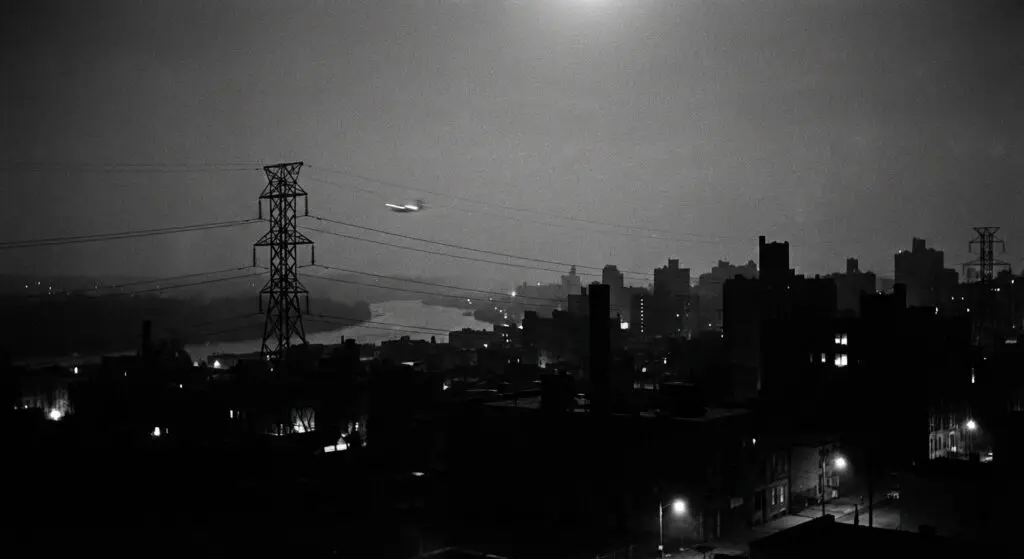
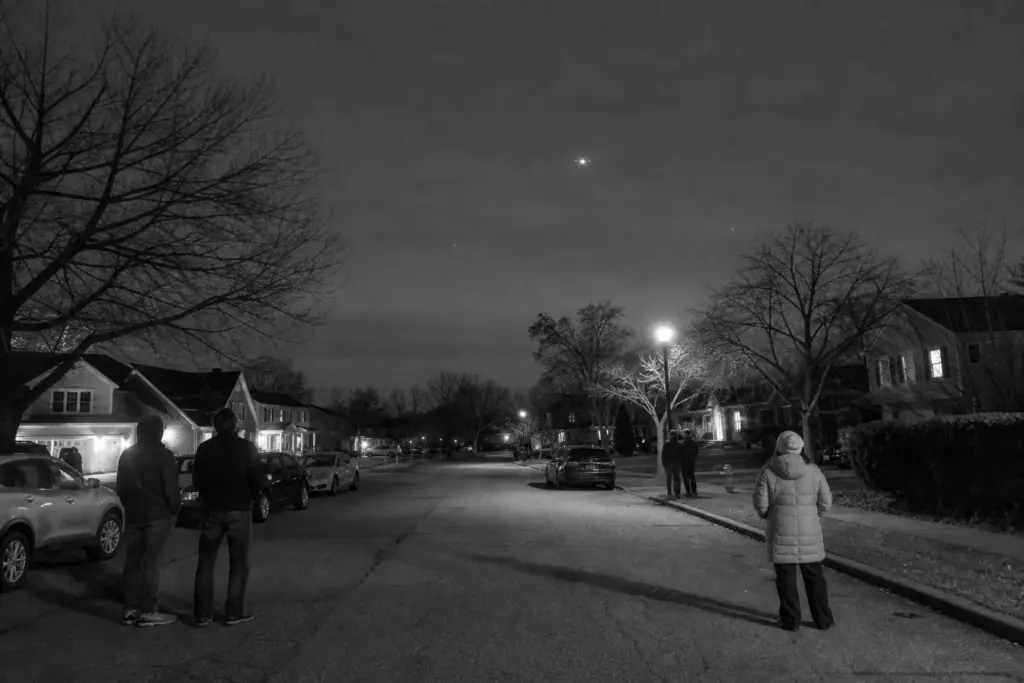
In December 2024, repeated reports of lights and apparent aircraft over New Jersey produced a wave of public concern, spreading from evening sightings to video clips, local alerts and online speculation. The immediate question was not whether every observer had seen the same object, but whether the volume of reports pointed to an unlawful, foreign or dangerous operation.
This examination of the New Jersey drones 2024 episode follows the public conclusions issued by DHS, the FBI, the FAA and other federal partners, rather than treating every reported object as a confirmed drone. In their late-2024 assessments, officials said they had found no evidence of a foreign nexus and had identified no threat to national security or public safety. Those are specific investigative findings: they address whether available information established foreign involvement or a threat, not whether investigators could publicly identify every light, aircraft or reported device.
That distinction matters because a sighting is an observation, while a verified identification connects an observation to a particular aircraft, lawful drone operation or another known object. A report left unresolved for lack of usable detail is not, by itself, evidence of a hostile craft or an extraordinary UAP event. This article separates public concern from what the federal review actually established, and from what it did not claim to prove.
What DHS, the FBI and FAA Concluded About the Reports
On December 16, 2024, the Department of Homeland Security, FBI, FAA and Department of Defense issued a joint statement saying they had “no evidence at this time” that the reported sightings posed a national-security or public-safety threat or had a foreign nexus. That wording defined the federal conclusion about the late-2024 reporting surge, including the intense December attention in New Jersey: investigators had not substantiated either a foreign connection or a dangerous operation.
The scope of the conclusion is important. “No evidence at this time” is an assessment based on the information reviewed by the agencies, not a claim that foreign involvement was impossible in the abstract. Likewise, saying no threat had been identified does not mean officials publicly matched every report to a particular aircraft, operator or flight. It means the reported activity, taken as a whole, had not produced evidence of the specific national-security or public-safety danger that residents and officials feared.
The joint statement also did not label every reported object a drone. That distinction prevents a common error in coverage of the FBI New Jersey drones statement: a report can remain unresolved because its video, location, time or description is too limited for a firm identification. An unresolved observation is not, by itself, evidence of a hostile craft, a foreign operation or an extraordinary UAP event. The agencies’ finding addressed the threat assessment; it was not a blanket declaration that every individual sighting had been solved.
How the Federal Interagency Response Assessed the Sightings
The response functioned as a triage effort, not as a separate forensic investigation of every video clip or social-media post. The practical task was to compare the strongest reports, those with a time, location, direction of travel, photographs or a credible witness, with available aviation information and leads that could indicate unlawful activity.
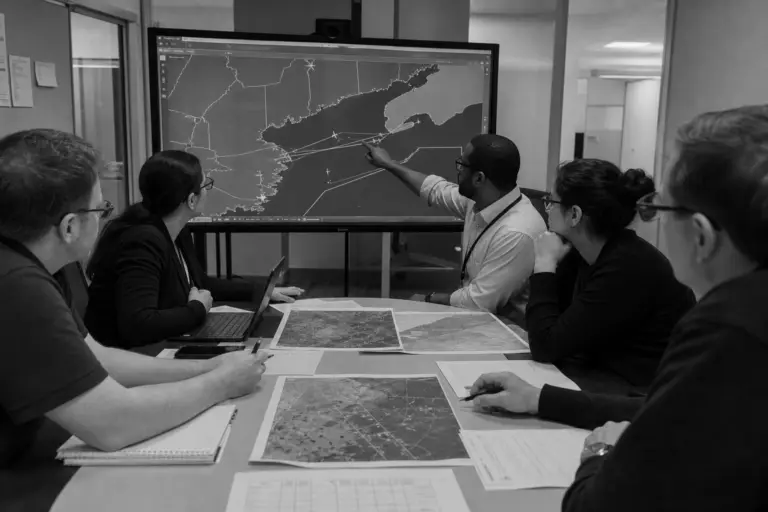
Agency roles were complementary. The Department of Homeland Security could coordinate the broader security picture, including whether reports suggested a risk to critical infrastructure or a cross-border concern. The Federal Bureau of Investigation could evaluate credible investigative leads pointing to a person, operator or possible criminal conduct. State and local police supplied incident reports and on-the-ground observations, helping distinguish a repeatable pattern from multiple accounts of a light or aircraft seen from different places.
The FAA’s role was especially important to classification. Its airspace and flight information can help test whether a reported object was more consistent with ordinary manned aviation, known aviation activity, or an event warranting further scrutiny. A report with a precise time and direction can be compared meaningfully; a distant nighttime image without those details is a much weaker basis for identifying either an aircraft or an unlawful drone.
Where reports implicated coastal or maritime areas, the Coast Guard could be relevant to the operating picture. Defense authorities were also part of the federal response, but their participation did not mean the sightings had been determined to involve a military or foreign craft. The point of the New Jersey drone investigation was to identify credible indicators of an actual security, airspace or law-enforcement problem, not to treat every uncorroborated observation as proof of one.
What Officials Said Was Behind Many Reported Objects
The federal description of the reporting wave was deliberately broader than a single explanation. Officials said many of the objects being reported were consistent with lawful commercial and recreational drone operations, alongside ordinary manned aircraft and helicopters. Those are different categories: a small uncrewed aircraft can appear as a moving light at night, while a conventional airplane or helicopter may be visible from much farther away and can seem to hover, change course or travel unusually slowly when viewed without a clear distance reference.
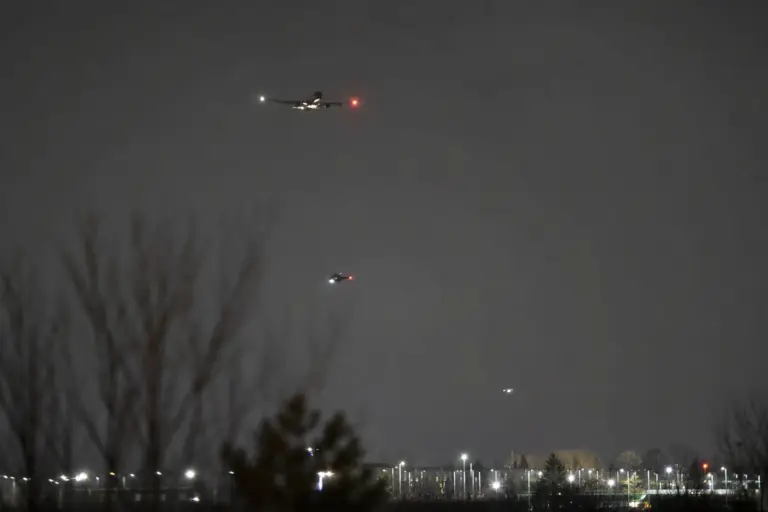
Aircraft operating near airports were another important part of that picture. Landing and departing planes can display bright navigation and landing lights, and their apparent size, speed and direction can be difficult to judge from the ground after dark. A reported “drone” was therefore not automatically a verified drone; it could be an aircraft whose lights and motion looked unfamiliar from the observer’s position.
Officials also identified celestial objects and other visual misidentifications among the ordinary explanations for at least some reports. A bright planet, star or distant light can appear stationary or move only because the viewer is moving, while camera zoom, autofocus and digital compression can further distort its shape in a short video. That does not mean an observer acted irrationally. It means nighttime observations often lack the reference points needed for a reliable identification.
The practical takeaway from the 2024 New Jersey drone sightings is narrower than “every report was explained.” Federal authorities described categories that accounted for many observations, including lawful drone operations and conventional aviation, but they did not publish a case-by-case identification for every call, image or clip. An unresolved report reflects insufficient public information for a firm label; by itself, it does not establish an extraordinary craft or a hostile operation.
What “No Foreign Nexus” and “No Identified Threat” Actually Mean
Those findings describe the result of an assessment, not a guarantee about every conceivable explanation. A “foreign nexus” would be evidence linking the activity to a foreign government, foreign intelligence service, overseas operator or other foreign-directed effort. Federal investigators said they had not developed that evidence. That is materially different from claiming foreign involvement was impossible in the abstract; it means the reports and leads examined did not substantiate that conclusion.
“No identified threat” is likewise a judgment about the activity assessed, not a declaration that any aircraft or uncrewed system can never create risk. The December 16 joint statement said officials had no evidence at that time of a national-security or public-safety threat. In practical terms, investigators had not identified an operation targeting people, critical infrastructure, military facilities or restricted airspace, nor evidence that the reporting wave itself represented a hostile campaign by a foreign adversary.
Three conclusions should not be collapsed into one. A report may be explained when available facts match it to a known aircraft, lawful operation or visual misidentification. It may remain unresolved when the time, location, imagery or witness detail is too thin for a confident label. And it may be assessed as not a threat when the evidence does not show harmful or hostile activity. The middle category is incomplete information, not affirmative evidence of an extraordinary craft, foreign operation or public safety threat.
That distinction also leaves room for ordinary aviation enforcement or safety concerns to be addressed case by case if credible evidence emerges. It does not turn every nighttime observation into such a case. For the New Jersey drones 2024 episode, the public federal conclusion was deliberately limited: no substantiated foreign connection and no identified national-security or public-safety threat from the activity under review.
Why So Many New Jersey Sightings Were Reported in December 2024
The uneven quality of incoming observations helps explain why a reporting surge requires sorting rather than a single, sweeping explanation. Repeated lights seen after dark can prompt multiple people in nearby places to report what may be separate aircraft, ordinary aerial activity or the same distant object viewed from different angles. The number of reports therefore measures public attention as well as the number of objects actually present.
Evening conditions make visual estimates especially fragile. Without a reliable reference point, an observer may have difficulty judging whether a light is nearby or far away, low or high, small or large. A conventional aircraft at a considerable distance can appear nearly stationary; a light moving toward or away from the viewer can seem slower than it is. Video can preserve a useful time and direction, but a short clip without location, orientation or a fixed landmark often cannot establish altitude, range or object type on its own.
Local alerts, news coverage and neighborhood discussion can also change what people notice. Once residents are watching the sky and sharing clips, an otherwise routine light or flight can attract scrutiny that it might not have received days earlier. Social-media reposting adds another complication: a recording may circulate without its original time, place or context, turning one observation into an apparently broader pattern.
That does not make witnesses unreliable or their concern unserious. It means each sighting report needs its own evidentiary weight. A report with a precise time, location, direction and corroborating imagery is a stronger lead than a reposted clip or a description lacking a reference point. Careful triage separates those signals without assuming that high volume proves either a common origin or an extraordinary explanation.
Why the Episode Was Not a Confirmed UAP or Non-Human Intelligence Event
The decisive checkpoint is whether a report contains evidence that identifies an object or demonstrates anomalous performance. An unexplained observation is a limit on the available evidence, not evidence of an extraordinary craft. The December 16, 2024 joint statement reported no evidence at that time of a foreign nexus and no identified threat. It did not characterize the New Jersey reports as confirmed UAP events, let alone evidence of non-human intelligence.
“Unresolved” describes an evidentiary limit: an account may not contain enough reliable information to identify a particular object definitively. It is not a positive finding that the object displayed anomalous technology. An aircraft traceable to a known flight, a documented lawful drone operation, or a celestial object is an identification; a brief clip with no dependable time, place, scale, or direction may remain unidentified. Those outcomes differ sharply. The latter preserves uncertainty about that individual claim, but it does not establish an extraterrestrial craft, a secret advanced system, alien disclosure, or a government UFO cover-up.
That distinction is especially important in UFO news, where a large number of reports can be presented as though it were a large body of confirmed evidence. The public record supports a narrower conclusion: authorities described ordinary aviation, lawful drone activity, and visual misidentifications as explanations for many reports, while public reporting did not conclusively resolve every individual claim. “Not fully explained” cannot be converted into “anomalous.” Responsible UAP disclosure coverage keeps those categories separate and does not fill evidentiary gaps with extraordinary claims.
The Evidence-Based Takeaway From the New Jersey Reports
The most defensible way to read the episode is as a high-volume reporting event whose individual observations carried very different evidentiary weight. A sighting tied to a known flight path or lawful local operation can be classified with confidence; a distant nighttime light recorded without a reliable location, timestamp, scale or trajectory may not be. The second category leaves an individual question open, but it does not transform that report into evidence of a coordinated operation.
Federal agencies identified a mix of ordinary explanations across the reporting wave: lawful commercial and recreational unmanned aircraft, manned airplanes, helicopters, celestial objects and other visual misidentifications. Those categories matter because a reported “drone” was often an observer’s description rather than a confirmed identification. They also explain why a large count of calls, posts and clips cannot by itself establish either the number of objects involved or a common operator.
The December 16, 2024 joint statement by DHS, the FBI, FAA and Department of Defense remains the key public finding: investigators reported no evidence at that time of a foreign nexus and no identified national-security or public-safety threat. That was not a claim that every report had been fully solved, nor proof that no future lead could ever emerge. It was an assessment of the evidence then available. The New Jersey reports generated genuine concern, but the public record did not substantiate a foreign operation, a confirmed threat or an extraordinary UAP claim.
Frequently Asked Questions
Did investigators find evidence that the New Jersey drones were controlled by a foreign government?
No. Federal investigators said the reports and leads they reviewed did not substantiate a connection to a foreign government, foreign intelligence service, overseas operator or other foreign-directed effort.
What did federal officials identify in the New Jersey drone sighting reports?
Officials said many reports were consistent with lawful commercial and recreational drones, ordinary airplanes, helicopters, celestial objects and other visual misidentifications. A reported drone was not automatically confirmed to be an uncrewed aircraft.
What details should you look for when reporting a possible drone sighting?
Include a precise time, location, direction of travel, photographs or video, and fixed landmarks for scale and orientation. These details allow authorities to compare the observation with aviation and flight information, unlike a short nighttime clip without location or timing.
Does an unresolved New Jersey drone sighting mean it was a UFO or UAP?
No. An unresolved sighting means there was not enough reliable information, such as a usable time, location, scale or trajectory, to identify the object confidently. It is not evidence of anomalous technology, non-human intelligence, a hostile operation or a foreign craft.