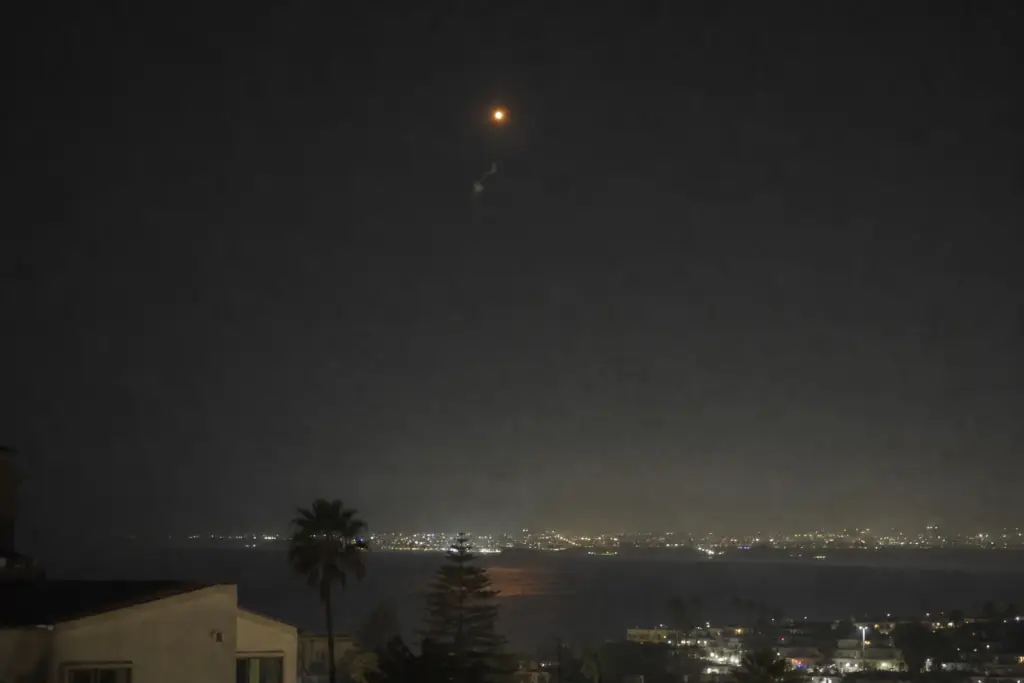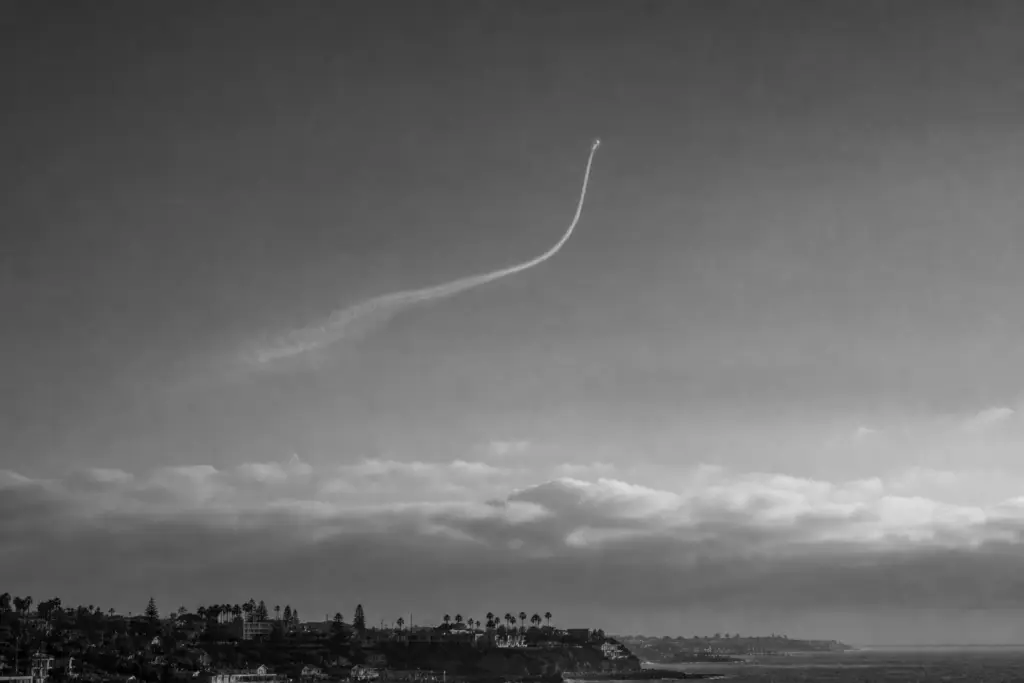
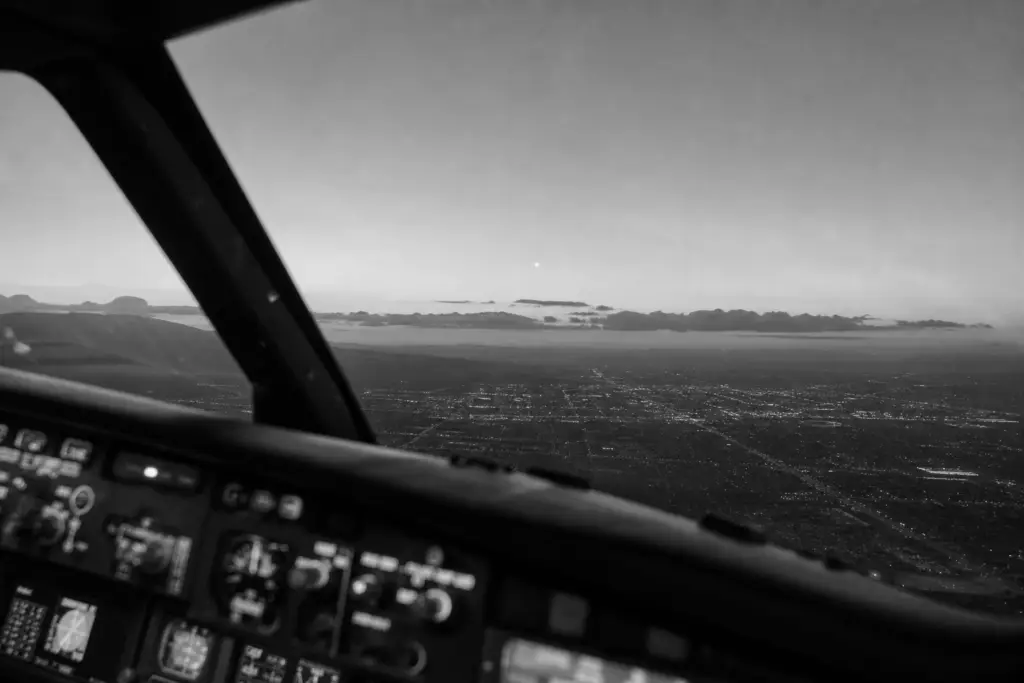
The crucial starting point is the gap between a circular-looking image and an identified object. A commercial pilot reportedly filmed the sighting associated with Las Vegas on February 17, 2020, which makes the account compelling, but neither a pilot’s role nor video alone establishes that an extraordinary craft was present. “Unidentified” describes the present status of an observation; it does not establish origin, performance capability, or a reliable distance estimate.
This review separates three questions that are often blurred together: what the pilot reportedly observed, what the publicly available footage actually depicts, and what independent records can corroborate. A circular image can reflect an object’s physical outline, but it can also arise from focus, glare, window reflections, digital zoom, compression, or an unresolved distant light. Those alternatives leave different clues in motion, perspective, and the full recording, not merely a short excerpt.
The sections that follow reconstruct the claimed timeline and footage provenance, then examine the available aviation context, potential corroboration, and competing explanations. The appropriate outcome may be an unresolved report; that is a narrower and more defensible conclusion than treating a striking video as identification.
What Is Claimed About the February 17, 2020 Las Vegas Sighting
The central claim is narrow: a commercial pilot allegedly saw and recorded a circular-looking object in the Las Vegas area on February 17, 2020. That describes a reported observation, not an established flight event. The date, location, pilot’s role, object’s apparent form, and existence of video all need to be traced to an identifiable original account rather than assumed from later headlines or reposts.
A crucial distinction is between the alleged observation date and the date footage first appeared publicly. A video uploaded days, months, or years later may preserve an account of an earlier event, but its upload date does not independently place the recording in a particular airspace or on a particular day. Likewise, a claim that the observer was a commercial pilot is meaningful only if the available material identifies the person and connects that role to the reported flight.
No direct pilot statement, original full-resolution file, or earliest verifiable publication is supplied in the present record. That leaves the exact wording of the claimed observation, the clip’s completeness, and its provenance unconfirmed. For this commercial pilot UFO sighting in Las Vegas, the responsible starting point is therefore to preserve the allegation as reported while withholding identification. A round image in a short video may reflect a round object, but it may also be an optical or recording effect; the image alone cannot decide between those possibilities.
Reconstructing the Reported Timeline: Date, Airspace, and Viewing Conditions
The usable chronology stops almost as soon as it begins. February 17, 2020 is the reported observation date attached to this Las Vegas UAP sighting, but the material available for this review does not independently tie a recording timestamp, named observer, or aircraft movement record to that date.
“Las Vegas area” is likewise the fullest defensible location description. It does not establish whether the alleged observation occurred over the city, on an arrival or departure corridor, near an airport, or at a known distance from the Strip. No supported account identifies a direction of observation, such as north, west, ahead of the aircraft, or off a particular side window.
- Duration: unknown. A clip’s running time would show only how long the camera recorded, not necessarily how long the observer had the object in view.
- Flight phase: unknown. Cruise, climb, descent, approach, and ground observation create different sightlines and relative-motion cues, but none can be assigned here without a flight identity and time.
- Viewing conditions: unknown. The public record supplied for this account does not establish daylight or darkness, cloud cover, visibility, window condition, camera model, zoom level, or whether the image was filmed through cockpit glass.
A verified flight path would require an aircraft identification linked to the witness and a sufficiently precise time; neither is presently available. The timeline can therefore preserve only the reported date and broad Las Vegas association. Everything needed to place the object in airspace, position, heading, altitude, distance, and observing direction, remains unconfirmed.
What the Commercial Pilot Reportedly Observed, and What Can Be Verified
The witness account cannot presently be separated from the later label attached to it. No named pilot has provided a direct, attributable public statement in the material reviewed, so there is no reliable first-person wording describing the object’s color, precise form, apparent motion, estimated distance, altitude, or total viewing time. “Circular” should therefore be treated as a description of the reported visual impression, not a measured physical shape.
That distinction matters because an observer can accurately report what appeared in view while still lacking the information needed to identify it. A disk-like outline may reflect a truly round object, but it can also result from viewing angle, glare, focus, digital zoom, window reflections, or a small distant light rendered by a phone camera. Likewise, apparent hovering or rapid movement cannot establish actual motion without a fixed reference, known camera movement, and some basis for estimating range.
The “commercial pilot” characterization is relevant only in a limited sense. Aviation experience may help an observer recognize ordinary aircraft lighting, traffic patterns, and weather conditions, making the witness testimony worth examining closely. It does not supply missing details about this particular observation, however, and it does not turn an ambiguous visual record into an identification. Publicly verifiable employment, licensing, aircraft assignment, and contemporaneous remarks have not been established here.
For this reported Las Vegas UFO sighting February 17 2020, the defensible evidentiary status is therefore narrow: an alleged pilot observation and recording of a circular-looking object, with the witness’s specific observations and professional context unconfirmed. The account remains a claim to assess alongside the footage, rather than independent proof of what was seen.
The Footage: Provenance, Circular Appearance, and What Video Can Show
The first evidentiary checkpoint is a traceable file: its earliest known upload, complete running time, and original camera data. No original camera file, identifiable earliest upload, confirmed full-length recording, or retained video metadata, such as creation time, device model, lens setting, location data, and edit history, has been established for this case. Nor is there a public, unbroken sequence whose beginning and end can be tied to the reported event. Reposted excerpts may demonstrate circulation of a clip, but cannot by themselves establish when, where, or by whom it was recorded.
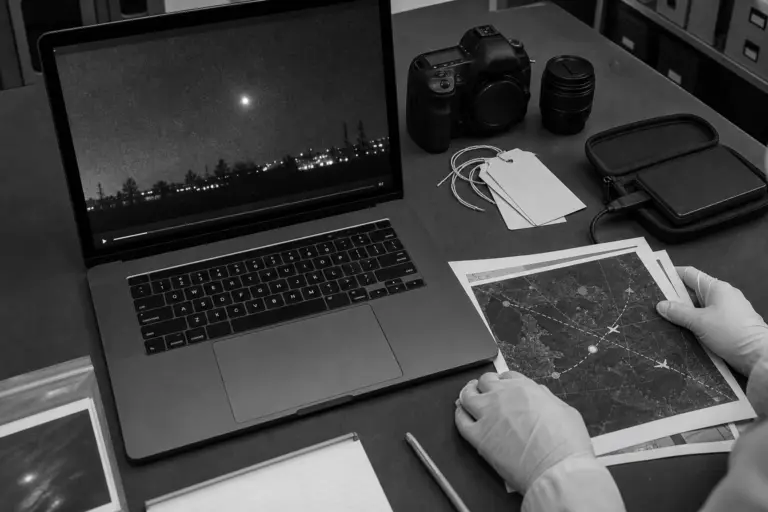
That missing provenance changes how a pilot UFO video should be read. An original file permits inspection of native resolution, frame sequence, encoded timestamps, and signs of cropping or recompression. A social-media copy may have been trimmed, stabilized, enlarged, filtered, or repeatedly recompressed; each operation can remove context or alter the visibility and edge detail of a small bright subject. Without both versions, it is not possible to determine whether an apparent change in shape or motion belongs to the object, the camera, or the upload process.
A circular-looking image is especially weak evidence of physical geometry. A distant point light that is out of focus can bloom into a disk; exposure can enlarge its bright area; and digital zoom magnifies pixels rather than recovering detail. Compression can smooth or block edges, while hand movement and motion blur can make a fixed or slowly moving source appear to shift. Filming through an aircraft window adds further possibilities: cabin-light reflections, glare, scratches, and layered reflections can create or reshape a luminous feature.
None of those mechanisms identifies the reported circular UFO sighting in Las Vegas as an ordinary object. They establish a narrower point: the visual record does not determine shape, size, range, altitude, speed, or origin. Until a traceable original file and complete sequence emerge, the footage is best treated as an unverified image record of an unidentified visual appearance, not a measurement of a physical craft.
Radar, Air Traffic Control, FAA Records, and Other Corroboration
Independent corroboration would require records that can be anchored to a particular aircraft and time, rather than to the later circulation of a clip. A strong aviation record would pair the observer’s flight identification and approximate position with contemporaneous air traffic control communications, a preserved radar or ADS-B track, and a report from another aircraft or ground observer viewing the same sector.
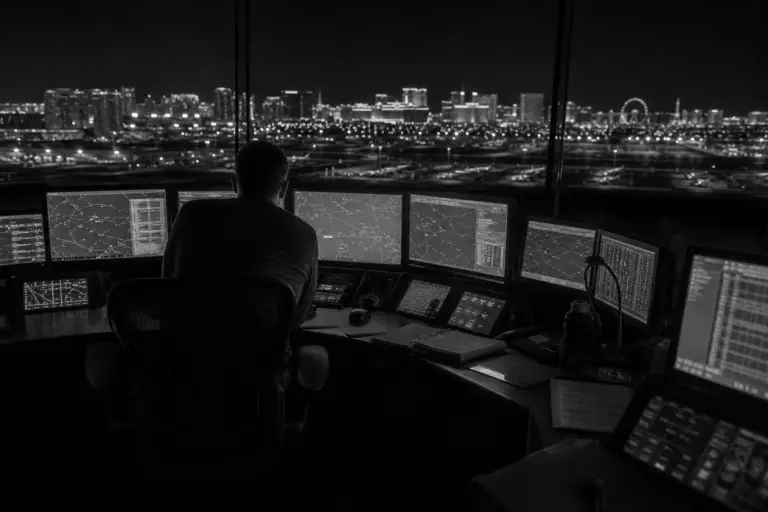
No such linked record is available in the material reviewed. There is no public ATC audio clip or transcript tied to an identified flight, no radar dataset with documented coverage and timing that can be matched to the alleged observation, and no attributable FAA reporting record for this event. There is also no public airline statement identifying a crew, aircraft, or operational report connected to the claim.
Those categories answer different questions. Controller communications could show whether a crew reported traffic or an unusual light in real time; a track record could place known cooperative aircraft near the reported line of sight; and an airline safety report could preserve the crew’s own timing and description. A nearby pilot’s independently dated report would be particularly useful because it could test whether the appearance was shared across separate viewpoints.
The absence of publicly located radar corroboration or air traffic control records does not demonstrate that nothing was present. It means only that the public case lacks a time-and-aircraft-linked record capable of independently testing the report. Without those anchors, FAA reporting, airline records, and additional witnesses remain unconfirmed rather than negative findings.
Plausible Explanations, and the Tests Each Must Meet
Each proposed explanation makes a different prediction about what a complete, time-linked recording should show. A distant aircraft would be tested against a stable or trackable line of sight, navigation-light flashes, and nearby traffic data; apparent motion alone is weak when the filming aircraft and camera are both moving.
A balloon should drift with the wind and retain a broadly consistent sunlit appearance, while a drone would require a plausible operating distance, changing angular position, and, if close enough, detail beyond a featureless disc. Neither can be fairly assessed here because the observation time, viewpoint, weather conditions, and unedited frame sequence are not established.
An astronomical object would need to occupy the reported direction at the claimed time and behave like a fixed background source as the camera moves. A point light pushed out of focus can become a soft circle, particularly when autofocus hunts through an aircraft window; digital zoom can enlarge that blur without adding identifying detail. Frame-by-frame behavior matters more than a single enlarged still.
Reflections deserve equally specific tests. Reflected cabin lights and other aircraft window reflections can remain visually close to the window frame, shift with camera angle, or recur when the lens is aimed at similar interior geometry. A genuine external target should instead preserve a consistent relation to distant terrain, clouds, or stars as the viewing angle changes. Without those reference features, neither outcome is demonstrated.
Digital imaging artifacts, including compression blocks, sharpening halos, and sensor flare, would be evaluated by comparing the original file with uploads and by looking for changes tied to zoom, exposure, or focus. The available material is too limited to rank these hypotheses confidently; it supports competing tests, not a declared identification.
Bottom Line: An Unidentified Report Is Not an Alien Identification
A useful final checkpoint is whether the claim can be tied to a particular person, aircraft, time, and original recording. It cannot presently be tied to those anchors, so the most precise classification is an uncorroborated UAP report rather than a verified aerial event.
- Supported by the available case record: the report has circulated with a date, general location, a commercial-pilot description, and a claimed video component.
- Reported but unverified: the observer’s identity and airline role, the flight involved, the exact time and position, the object’s distance or behavior, and whether the circulated imagery is a complete, original recording from the stated event.
- Unknown: whether any independent observer, ATC communication, radar or ADS-B data, airline record, or official report can be matched to the claim.
Material that could change the assessment is specific: an original file with intact metadata and an unedited sequence; a direct, attributable witness account; and time-matched flight, ATC, radar, weather, or second-witness material. Those records would not automatically identify an object, but they could test its position, motion, and ordinary explanations.
Absent those anchors, the Las Vegas UFO sighting February 17 2020 remains unidentified only in the limited sense that the public record cannot determine what was seen. That does not demonstrate non-human intelligence or alien disclosure, or a government UFO cover-up; it describes an evidentiary gap, not an extraordinary conclusion.
What the Evidence Supports About the Las Vegas Report
The decisive issue is not whether the image looks unusual, but whether its origin and geometry can be independently reconstructed. Here, the reported date and Las Vegas association preserve a lead for investigation, while the anonymous pilot attribution and circulating visual claim provide only limited observational material.
A strong case file would let separate records converge: the original video would establish capture conditions; a named witness could describe the view; and flight, air-traffic, radar, weather, or second-witness material could test where an object was and how it moved. None of those elements substitutes for another. A pilot account may be sincere, and a clip may be genuine, yet neither alone supplies distance, scale, speed, or identity.
The public record therefore supports neither a conventional identification nor an extraordinary one. It does not establish that the apparent disc was a physical craft at a known location, much less that it displayed advanced performance. The absence of accessible corroboration is also not evidence that records were concealed or that no object existed; it leaves the claim untested.
The appropriate final status is unidentified and uncorroborated: an unresolved report with insufficient provenance and independent data to determine what produced the circular-looking image. That is a legitimate evidentiary outcome, but it is not evidence of an alien, non-human, or otherwise extraordinary origin.
Frequently Asked Questions
What did the commercial pilot reportedly see over Las Vegas on February 17, 2020?
The claim involves a commercial pilot who allegedly saw and filmed a circular-looking object in the Las Vegas area on February 17, 2020. The pilot’s identity, flight, exact location, viewing direction, altitude, and description of the object’s behavior remain unverified.
Is there authentic video of the Las Vegas pilot UFO sighting?
Circulating footage is claimed to show the sighting, but no original camera file, complete unedited recording, earliest verified upload, or intact metadata has been publicly established. Without creation time, device details, location data, and edit history, the video cannot be authenticated to the reported event.
Was the February 2020 Las Vegas UFO seen on radar or reported to air traffic control?
No public radar, ADS-B, ATC audio, ATC transcript, FAA report, airline statement, or second-witness account has been linked to an identified flight and time for this event. The lack of publicly located records does not prove nothing was present, but it leaves the report uncorroborated.
Could the circular UFO in the Las Vegas video be a camera or aircraft-window artifact?
Yes. A distant out-of-focus light can appear as a disk, while digital zoom, compression, glare, motion blur, cabin-light reflections, scratches, and layered aircraft-window reflections can alter a small bright image. The available footage lacks the original file and reference details needed to distinguish these effects from a physical object.
What evidence should you look for before treating the Las Vegas pilot UFO sighting as a verified event?
Look for an original full-resolution video with intact metadata, an attributable pilot statement, an identified aircraft and time, plus matching ATC, radar, ADS-B, weather, or independent witness records. Without those time-linked records, the February 17, 2020 Las Vegas case is best classified as unidentified and uncorroborated, not evidence of an extraterrestrial craft.