In 1977, a concentration of reports around Colares and other communities in Pará drew the Brazilian Air Force into an investigation that became known as Operation Prato, “Operation Saucer.” The historical fact of that response matters: military personnel were assigned to collect observations, interview residents, and produce an operational record. It does not, by itself, identify the lights and objects people reported seeing.
This account separates the evidence into its proper layers. Local testimony preserves what residents described, including recurring aerial lights and alleged effects; patrol notes, reports, sketches, and photographs show what investigators recorded and attempted to document; neither category automatically establishes a cause. Photographs demonstrate that images were made, for example, not that an object’s origin was independently determined.
Captain Uyrangê Hollanda, the officer most closely associated with the field mission, is central to both layers. His operational role can be assessed through the surviving record, while his later interviews must be read as retrospective testimony rather than as contemporaneous findings. Operation Prato therefore demonstrates an official response to reports regarded as serious. It remains an unresolved case, not proof of extraterrestrial or non-human intelligence.
Operation Prato: What Brazil Investigated in Pará in 1977
Its name is a useful first checkpoint: Operação Prato, commonly rendered in English as “Operation Saucer,” denotes an operation, not an explanation. In Pará during 1977, it addressed recurring reports of unusual nocturnal lights, apparent aerial objects, and alleged bodily effects among residents. The practical purpose was investigative: personnel gathered accounts, observed reported phenomena, and assembled material for assessment within a military chain of command.
That purpose sets limits on the label “Brazilian Air Force UFO investigation.” Deployments, field notes, interviews, photographs, sketches, and reports can establish that officials treated the reports as serious enough to investigate. Testimony establishes what particular people said they saw or experienced, including where accounts converged or differed. Neither kind of record independently determines what caused an observation.
Interpretations require a higher evidentiary threshold. A photograph can show that investigators photographed something; without reliable context and independent analysis, it cannot identify an object as extraterrestrial. Likewise, a later recollection may preserve an important perspective without becoming a contemporaneous finding. The surviving record makes the 1977 Pará investigation historically significant, but it does not establish extraterrestrial visitation.
Why the Reports in Colares and Nearby Communities Drew Military Attention
Colares is an island community in Pará’s Baía do Marajó region, reached across the waters east of Belém and connected socially and economically to nearby riverside settlements. That geography matters because the 1977 reports were not confined to one isolated witness or a single night. Accounts circulated among residents of Colares and neighboring communities, creating a regional episode whose effects were felt in homes, streets, fishing areas, and local public life.
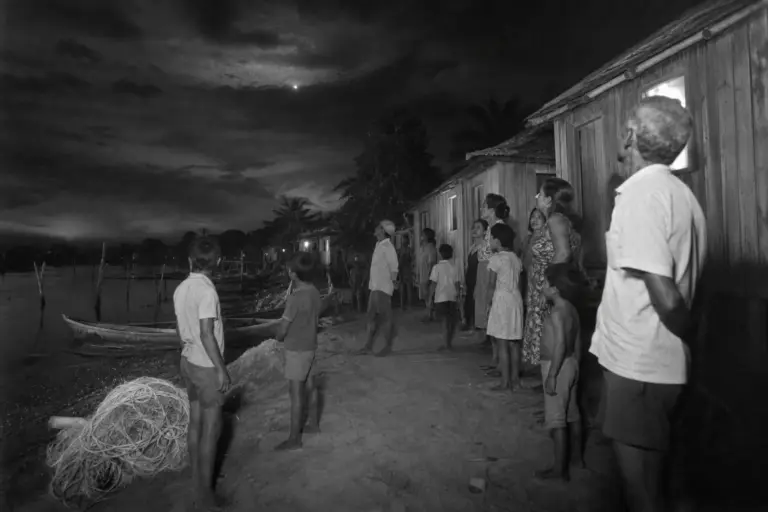
Residents described lights seen after dark, sometimes distant, sometimes apparently low or moving near inhabited areas. In local usage, the label Chupa-Chupa came to group together reports that witnesses associated with beams of light, frightening encounters, and, in some accounts, bodily weakness or small marks. It was a popular name for a reported phenomenon, not a diagnosis or an identified device. The same distinction applies to the often-used phrase “Colares UFO incident”: it describes a cluster of claims and observations, not a settled explanation for them.
What raised the stakes was the social pattern around the reports. Fear led some residents to alter nighttime routines, while local officials received complaints and press coverage amplified the sense that the events required a response. Reports of people seeking medical attention gave the episode an additional practical dimension, but such reports can document concern and reported symptoms rather than establish what produced them. For authorities, the immediate question was therefore broader than whether an unfamiliar light had been seen: a sustained wave of public alarm, repeated testimony, and alleged health effects had become a local administrative problem.
That setting helps explain why the subsequent military presence was directed toward gathering observations and accounts on the ground. The intensity of community testimony was evidence of a real social event in Brazil; identifying the physical cause of every reported light or injury was a separate evidentiary task.
The Brazilian Air Force Response and Captain Uyrangê Hollanda’s Role
The key organizational checkpoint is I COMAR, the First Regional Air Command, based in Belém, which handled the Pará deployment rather than a stand-alone “UFO unit.” In late 1977, personnel were sent to Colares and nearby localities to convert recurring reports into dated field observations, witness accounts, sketches, photographs, and written reports for the command chain.
Captain Uyrangê Hollanda was an I COMAR officer associated with the operation’s intelligence work and field activity. He is therefore the best-known individual participant in Operation Prato, but that does not show that he originated every decision, commanded every patrol, or expressed the final position of the entire Força Aérea Brasileira (FAB). The useful distinction is between a field officer’s recorded duties, participating in observation and reporting, and the wider authority exercised through the regional command.
On the ground, the work was practical. Personnel conducted nighttime patrols and maintained observation posts where residents expected lights to reappear; they also interviewed people after reported encounters and recorded details such as time, direction, apparent movement, weather, and location. An observation post was intended to obtain a contemporaneous military observation. An interview preserved what a witness recalled. The former can establish that investigators were present at a particular place and time; the latter can document the content and recurrence of testimony without independently identifying what caused an experience.
The resulting material included written accounts, field notes, maps or location sketches, and photographs. Together, those categories demonstrate an organized response to reports from Pará, not a proven identification of the lights or objects described. Hollanda’s later public recollections remain important retrospective testimony about the mission, but the dated operational record is the firmer basis for defining his 1977 role and the limits of what the investigation established.
What the Operation Prato Records Actually Document
The surviving file is most useful when read as a set of records with different evidentiary jobs, rather than as a single dossier that either proves or disproves an extraordinary explanation. A dated report signed or attributable to a named office can establish that an observation, interview, patrol, or administrative action was recorded at that point in the chain of command. It does not settle whether the observer’s interpretation of a light, object, or physical effect was correct.
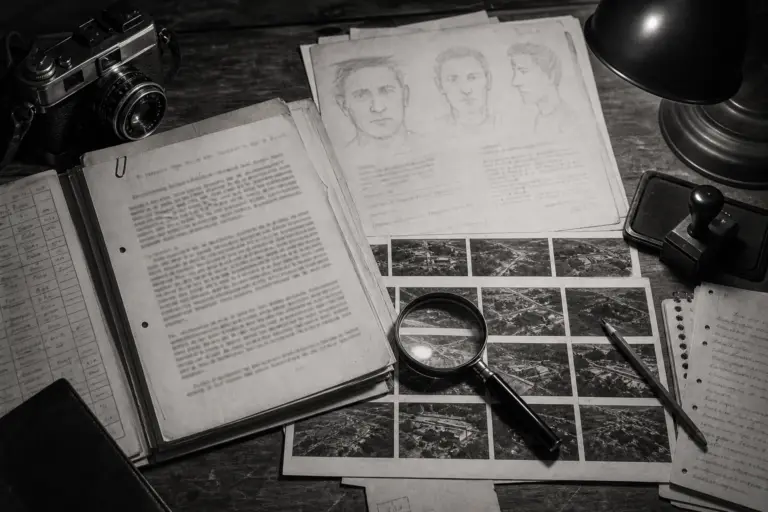
Field notes and logs are strongest when they preserve a date, time, place, weather or viewing conditions, the observer’s name, and a clear indication of whether the writer saw an event personally or repeated someone else’s account. Witness statements preserve testimony: they can show recurring descriptions, identify where reports clustered, and distinguish contemporaneous accounts from later memories. They cannot by themselves identify the source of a reported phenomenon or establish causation for an alleged effect.
Sketches and maps can clarify a witness’s claimed direction, trajectory, shape, or relative position. Their value is descriptive, not diagnostic; a drawing records how an experience was represented, not a measured reconstruction of distance, size, speed, or origin. The same distinction applies to photographs. An image may demonstrate that personnel photographed something under particular claimed circumstances, but identification requires its original negative or file, exposure information, custody history, and independent technical analysis.
For Brazilian military UFO documents associated with Operation Prato, provenance therefore matters as much as dramatic content. A catalogue reference, archival stamp, pagination, author, and date help place an item within an institutional record. A detached scan, transcription, translated excerpt, or image circulating without its original context is weaker: it may be genuine, incomplete, misdated, or disconnected from the report it supposedly illustrates.
Gaps should remain visible. Missing attachments, uncertain authorship, absent originals, and retrospective captions limit what can be inferred from surviving Brazilian UFO files. The record supports a serious documentary history of reported events and military collection; it does not convert every report, sketch, or photograph into proof of an identified, or non-human, object.
Findings, Hollanda’s Later Statements, and What Remains Unresolved
The most consequential claims attached to Uyrangê Hollanda and Operation Prato come from retrospective testimony rather than from the operational papers. In interviews published in 1997 by Revista UFO, after he had left active service, Hollanda described encounters and knowledge that went beyond routine sightings of lights, including an asserted close observation of non-human beings. Those statements are historically important because they came from the officer publicly associated with the field work; they are not contemporaneous findings recorded in the surviving mission material.
That distinction changes the weight of the evidence. A later interview can preserve Hollanda’s recollection, interpretation, and willingness to speak publicly at a particular moment. It cannot independently establish the date, location, physical identity, or institutional handling of an alleged encounter. The available operational record documents collection activity and reported phenomena, but it does not provide a matching contemporaneous report that conclusively corroborates the later extraordinary claims.
Nor is there a documented Brazilian Air Force final assessment in the surviving file that identifies the reported lights as extraterrestrial craft or non-human intelligence. The responsible conclusion is narrower: personnel encountered a sustained body of reports that they considered serious enough to observe and record, while the identity of particular lights or objects remained unsettled. A government investigation is evidence of an official response, not proof that its most dramatic interpretation was accepted.
Several questions therefore remain open. Individual observations varied in distance, duration, lighting, and whether they were firsthand or relayed through a community already alarmed by the episode. Missing attachments and uncertain completeness make it impossible to know whether every observation, photograph, or later internal assessment survives. Those gaps can justify continued historical research, but they do not establish a government UFO cover-up. For modern readers drawn to UFO disclosure debates, Operation Prato is strongest as a documented case of military inquiry and unresolved testimony, not a file that settles what was seen over Pará.
Why Operation Prato Still Matters, and How to Research It Responsibly
Its lasting value lies in the discipline the case demands. Operation Prato belongs in the history of governmental responses to anomalous reports because it joins a large local wave of testimony to an organized military collection effort and a body of surviving material, without supplying a final identification for every reported event. That is a more useful historical category than either dismissal or certainty.
It should also be kept in its own setting. Present-day UFO news and UAP news often center on U.S. agencies, contemporary terminology, and current policy disputes; they do not alter the meaning of a 1977 inquiry in Pará. “Operation Saucer Brazil” is a helpful search label, but it can obscure the essential task: distinguish records made during the episode from interpretations added later.
- Start with official archival reproductions. A file image, scan, or catalogue entry preserves the document’s wording, date, formatting, and chain-of-custody clues. Prefer versions that identify the holding institution, collection, and page sequence; an isolated quotation or cropped image cannot supply that context.
- Then compare contemporaneous reporting and local documents. Material published close to the events can show how reports circulated and what officials or residents said at the time. It remains reporting, however, rather than an independent identification of a light or object.
- Use attributable later interviews carefully. Record the interviewer, publication date, language, and whether audio, video, or a full transcript survives. Such interviews preserve testimony; they do not turn recollection into an operational finding.
- Treat secondary retellings as leads, not endpoints. Their practical use is to point back to a page, photograph, witness, or named document that can be examined directly.
That hierarchy keeps unresolved questions open while preventing the archive from carrying more than it can bear.
What Operation Prato Can, and Cannot, Tell Us
The strongest conclusion is deliberately limited. The 1977 Pará episode was serious enough to produce an organized Brazilian Air Force response, contemporaneous records, photographs, and a durable body of witness testimony. Together, those materials establish a historical event of reporting, observation, and investigation; they do not independently establish the nature or origin of every light, object, or alleged effect described.
Each kind of material answers a different question. An official report can show what personnel recorded or did at a particular time. A witness account can preserve an observer’s experience and the local impact of that experience. A photograph can demonstrate that an image was made, but its identifying value depends on provenance, date, sequence, viewing conditions, and whether the original is available for analysis. Later public statements by Uyrangê Hollanda add important testimony, yet they carry the limits of recollection and cannot retroactively become contemporaneous institutional findings.
Operation Prato therefore resists both easy dismissal and extraordinary certainty. It demonstrates that authorities treated sustained reports from Colares and surrounding Pará communities as a matter requiring field inquiry. The surviving record leaves some observations unidentified, but no documented final finding proves extraterrestrial craft or non-human intelligence. Reading the case at that evidentiary level respects the witnesses, the investigators, and the difference between an unresolved report and a demonstrated cause.
Frequently Asked Questions
What was Operation Prato in Brazil?
Operation Prato, or Operation Saucer, was a 1977 Brazilian Air Force investigation into recurring reports of unusual lights, aerial objects, and alleged bodily effects in Colares and nearby communities in Pará. I COMAR, the First Regional Air Command based in Belém, sent personnel to gather observations, interviews, photographs, sketches, and reports.
Why did the Brazilian Air Force investigate UFO reports in Pará in 1977?
The Air Force responded because reports spread across Colares and neighboring settlements, creating sustained public fear, complaints to local officials, press attention, and reports of people seeking medical care. The investigation addressed a local administrative and public-safety concern, not a confirmed extraterrestrial event.
Who was Uyrangê Hollanda in Operation Prato?
Captain Uyrangê Hollanda was an I COMAR officer associated with Operation Prato’s intelligence work and field activity in Pará. He participated in observation and reporting, but his later 1997 Revista UFO interviews are retrospective testimony rather than contemporaneous military findings.
What do Operation Prato photographs and field records actually prove?
Dated field notes, patrol logs, interviews, maps, sketches, and photographs show that military personnel collected and documented reports during the 1977 operation. A photograph can establish that an image was made, but identifying an object requires original files or negatives, exposure details, custody history, and independent technical analysis.
How can readers evaluate Brazilian Air Force Operation Prato documents?
Prioritize official archival reproductions that include the holding institution, catalogue reference, date, author, pagination, formatting, and page sequence. Treat detached scans, cropped images, translations, and later retellings as weaker evidence unless they can be connected to an original document and its provenance.