In November 1975, a logging crew’s report of a strange light near Turkey Springs, Arizona, became the starting point for one of America’s most debated UFO stories. Travis Walton disappeared after the reported encounter and returned roughly five days later with an account he identified as an abduction. The Travis Walton UFO encounter therefore contains two very different kinds of claims: a missing-person episode that prompted an immediate investigation, and an extraordinary explanation that has never been independently established.
That distinction explains both the case’s appeal and its durability. Supporters point to the number of crew members, the pressure they faced when Walton vanished, and their long-standing agreement on the basic event. Critics point to limits in the physical evidence, possible misidentification or fabrication, changing recollections, and the inability of polygraph results to demonstrate either truthfulness or extraterrestrial contact. This account follows the timeline from the crew’s first report through Walton’s return, separates contemporaneous records from later testimony and hypnosis-related memories, and considers how books and Fire in the Sky turned a local 1975 Arizona UFO case into a lasting cultural controversy.
Why the Travis Walton Case Became a National UFO Controversy
A missing-person report turned the episode into more than a disputed sighting. On November 5, 1975, the logging crew told Apache County authorities that Travis Walton had vanished after the incident they described; the resulting search and inquiry had to address both his absence and the men’s unusual explanation. Their report of a bright object was witness testimony to be assessed, not a finding that the object was extraterrestrial.
Public interest grew from the collision of those two tracks: a real absence that required police attention and a claimed abduction that offered an extraordinary cause. Walton’s later account, the crew’s repeated descriptions, disputed polygraph examinations, and questions about gaps or changes in recollection gave believers material they regarded as corroborative while giving critics reasons for caution. The Travis Walton UFO case thus became a national controversy not because investigators established alien contact, but because a documented investigation left behind witness testimony that remained vivid, consequential, and unresolved.
What the Logging Crew Said Happened Near Turkey Springs
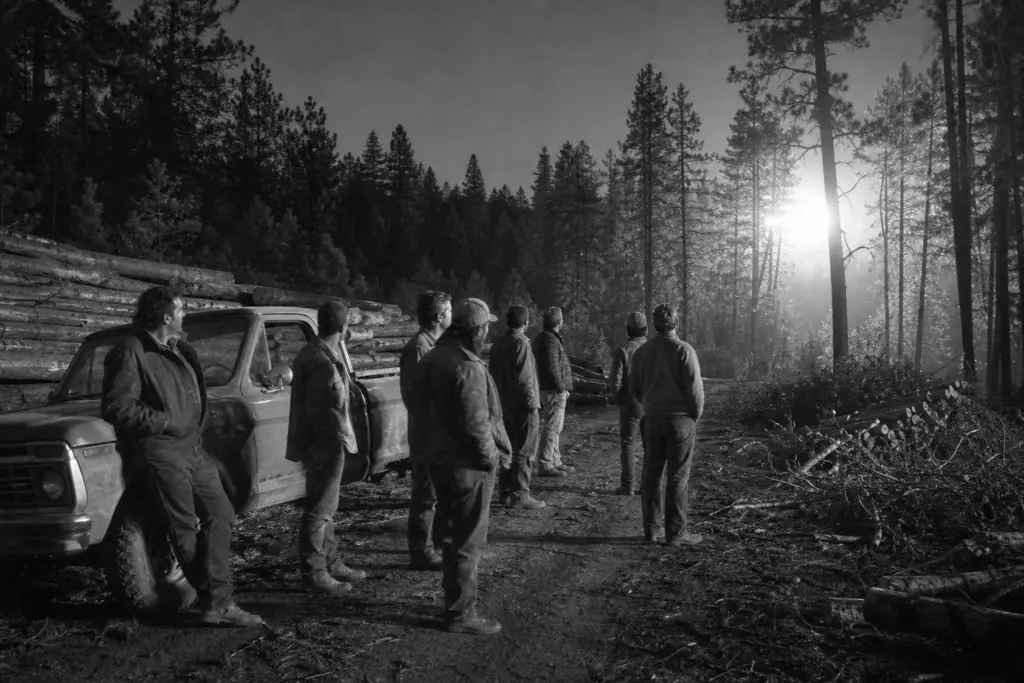
On the drive out of the forest that evening, Mike Rogers was at the wheel of the crew’s pickup, with Travis Walton, Dwayne Smith, Allen Dalis, Ken Peterson, Steve Pierce, and John Goulette aboard. The men later placed the sighting near Turkey Springs, in the wooded country south of the Snowflake area. Their shared account was that they noticed an intensely bright, apparently hovering object off the road after finishing a day of logging.
In the crew’s retelling of the 1975 Travis Walton incident, Rogers stopped the truck so they could look. Walton then got out and moved toward the light while the others remained in or near the vehicle. Descriptions of the object’s exact shape, distance, and color have varied across interviews and later retellings, but the basic claim, that an unusual illuminated object was present near the road, remained central to each man’s account.
The most consequential part of the narrative is also the least independently testable. The crew said a beam, flash, or burst of light struck Walton as he approached, throwing or knocking him backward. Frightened that he had been badly hurt or killed, the men said Rogers drove away from the location. That flight is important to the chronology: it was not presented as a measured investigation of the scene, but as an immediate reaction to an event the witnesses said they could not understand.
They also said they turned back after a short distance. By then, Walton was gone. The distinction matters: the men’s testimony establishes what they reported seeing and doing, not what the light was or what happened to Walton after he disappeared from their view. Their initial account supplied the dramatic sequence that investigators, and later the public, had to assess.
The Five-Day Disappearance and the Search for Walton
The report created an immediate investigative dilemma. Travis Walton was absent, the men who had last seen him offered an account with no ordinary explanation, and their decision to drive away before returning gave officers reason to treat them as potential witnesses and potential suspects. The Apache County Sheriff’s Office took statements from the crew and focused first on the practical missing-person questions: where Walton had last been seen, whether the men’s timelines aligned, and whether the forest scene offered evidence of an injury or crime.
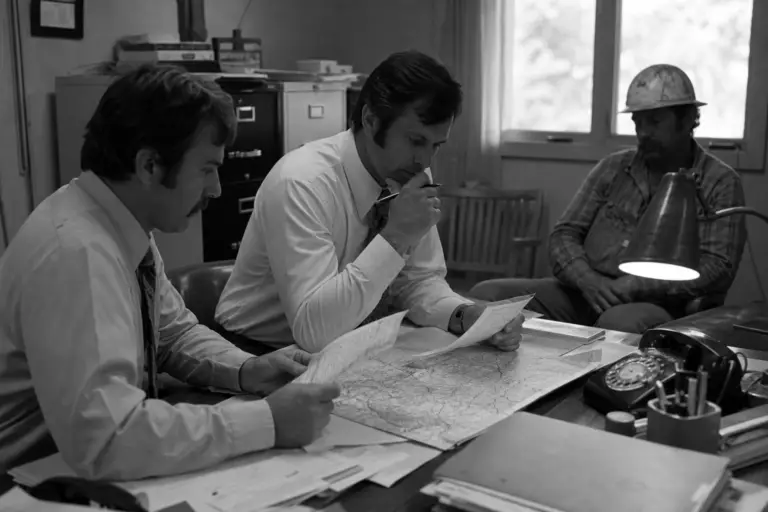
Search efforts concentrated on the Turkey Springs area while Walton remained missing. The documented fact was the absence itself: he did not come home with the crew on November 5 and was not located during the ensuing days. It did not establish where he had gone, whether he had been harmed, or whether the reported light had any connection to his disappearance. That gap left investigators with a conventional possibility, an accident, assault, or concealment, alongside a story they could record but could not independently test.
Public suspicion fell heavily on Rogers and the other loggers. A group reporting that a companion vanished after an encounter with a bright object could appear either frightened and candid or rehearsed and self-protective; police had to distinguish between those possibilities through separate interviews and the search, rather than accept the explanation at face value.
Walton’s return roughly five days later changed the case’s public direction. It ended the immediate missing-person emergency, but it did not resolve the central evidentiary question: his reappearance confirmed that he had been gone, not what occurred during the five-day disappearance.
Walton’s Return and His Claimed Abduction Experience
Walton’s reappearance shifted attention from the search to his own condition and explanation. He said he emerged near Heber, Arizona, disoriented, exhausted, and unable at first to give a full account of the intervening days. That immediate confusion is relevant as reported experience, but it does not itself identify a cause for his absence.
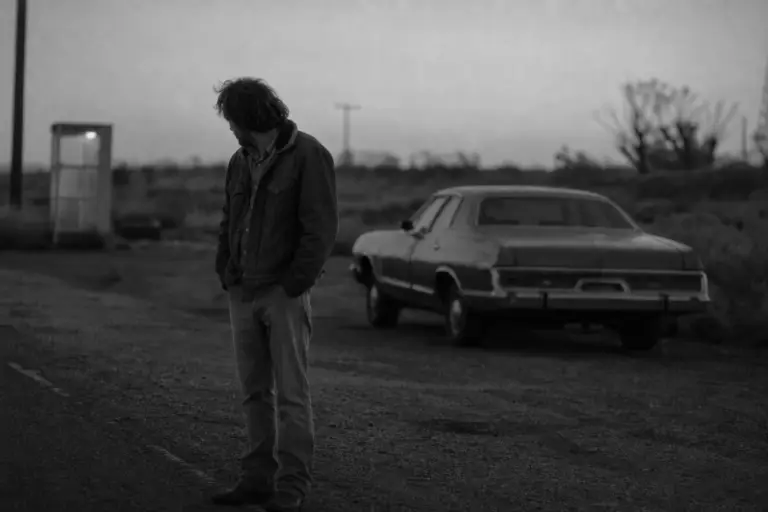
In his later accounts, Walton said he remembered regaining consciousness inside an unfamiliar enclosed space, seeing beings he interpreted as nonhuman, and escaping or being released before finding help. These are the core of the Travis Walton abduction claim. They are firsthand testimony about what Walton believed happened, not independently established evidence that a craft or nonhuman beings were present.
A useful distinction is between the short, contemporaneous account, his return, distress, and incomplete memory, and the more elaborate narrative published and repeated in subsequent interviews. Similar evidentiary issues appear in the Betty and Barney Hill abduction account. Later versions supplied visual details, sequences of events, and interpretations that could not be tested against a physical record from the period of disappearance.
Hypnosis contributed to some recollections associated with the case. It is intended to help a person retrieve memories, but it can also increase confidence in memories that are incomplete, altered, or shaped by suggestion. For that reason, hypnosis-derived material may explain how Walton’s narrative developed, yet it cannot independently confirm the claimed experience. Like other alien abduction reports, the account remains strongest as a record of testimony and weakest where external corroboration would be needed.
Why Supporters Consider the Case Compelling
The case’s persuasive force for supporters lies less in any single dramatic detail than in the way several elements appeared to reinforce one another. The six other men in the pickup continued to describe the same basic sequence: a bright object near the road, Walton leaving the vehicle, a sudden flash or beam, and the group’s return to find him gone. That overlap can support the conclusion that the witnesses preserved a shared core account under attention and pressure. It cannot, however, establish whether the object was unusual, misidentified, or extraterrestrial.
Supporters also stress that the crew did not present its story in a vacuum. Walton’s absence triggered real concern, questioning, and a search, while the men who last saw him faced suspicion rather than an immediate reward for an extraordinary explanation. His eventual return resolved the immediate question of whether he was missing, and it gave proponents a concrete event around which to assess the testimony. The missing-person episode supports the reality of an investigation and a period of absence; it does not determine what caused that absence.
Polygraph examinations became another prominent part of the public case. A polygraph records physiological responses while an examiner asks questions; it may be offered as an indicator of stress or apparent deception, not as a direct test of whether a statement is true. Supporters have treated favorable results from the Travis Walton polygraph test and the 1975 UFO abduction claim and examinations involving crew members as evidence that the participants believed what they reported. The practical limitation is crucial: question wording, testing conditions, examiner judgment, and a subject’s state of mind can affect results. Even consistent witness testimony and favorable polygraph findings cannot independently demonstrate alien contact.
Skeptical Explanations, Contradictions, and Limits of the Evidence
A skeptical analysis begins by separating a shared account from independent corroboration. If several people experience, discuss, and repeatedly defend the same unusual episode, agreement on its central narrative may reflect a sincerely held common memory, deliberate coordination, or some combination of perception and later reinforcement. Variations in peripheral details, such as sequence, duration, distance, or what an observed light seemed to do, matter because they can show where recollection is least stable, even when witnesses retain the same broad story.
A hoax remains a possible explanation, not an established finding. Skeptics note that a group account can be difficult to test when the decisive event occurred out of public view and no outside observer recorded it. Misidentification is another possibility: a bright light, an unfamiliar aircraft, a celestial object, or a natural phenomenon could be interpreted differently under dark, stressful conditions. Neither possibility reconstructs Walton’s absence on its own, but neither does the lack of a complete mundane reconstruction establish an extraterrestrial cause.
Questions about incentive require the same restraint. Later opportunities for books, interviews, lectures, and screen attention created potential financial and publicity value, but later visibility does not demonstrate that the original report was invented for profit. The useful distinction is between evidence of an opportunity and evidence of motive or fabrication; the former is clear in many famous UFO sightings, while the latter requires more than suspicion.
The evidentiary gap is physical as well as testimonial. An extraordinary interpretation would require material, medical, photographic, or forensic evidence that can be reliably connected to the event and that excludes ordinary causes. Personal distress, missing time, and unusual memories may be meaningful to the person reporting them, but they do not identify an external agent. Retellings over decades, and recollections developed through hypnosis, also make it harder to isolate what was remembered immediately from what was later elaborated, particularly when evaluating recurring abduction-story patterns.
Claims of a government UFO cover-up add no explanatory support unless records demonstrate suppression or intervention. The unresolved character of the Travis Walton UFO encounter is therefore not a choice between certainty and disbelief: it is a record containing a real reported disappearance and enduring testimony, but insufficient independent evidence to determine why it happened.
Fire in the Sky, Public Debate, and What the Case Can, and Cannot, Tell Us Today
Publication and adaptation carried the story far beyond Arizona. Walton’s book presented his own extended version of the experience, while the 1993 film Fire in the Sky turned the case into a widely recognized cultural reference point for later abduction narratives.
The film should not be read as a factual record of the Fire in the Sky true story. Its notorious abduction sequence depicts a violent, grotesque ordeal that differs substantially from Walton’s published account. That change served cinematic horror, not historical reconstruction; it also means viewers may remember scenes that neither the crew’s original report nor Walton’s narrative described.
Modern UFO disclosure and UAP-reporting efforts address how governments collect, assess, and release reports of unidentified phenomena. They have not authenticated the 1975 event or established an extraterrestrial explanation. The case remains influential because its disappearance, return, and testimony generated enduring questions, not because later disclosure debates resolved them.
Why the Travis Walton Case Still Defies a Simple Verdict
Its lasting force comes from an unusual combination of seriousness and uncertainty. The disappearance generated the kind of immediate concern that makes the episode more than a campfire story, while the crew’s sustained agreement and Walton’s repeated personal account give supporters a narrative that has not simply faded with time.
But corroboration has limits. Evidence that a person was missing, returned distressed, or was last seen by several coworkers does not independently establish the cause of the absence. The central extraterrestrial claim depends on testimony: what the crew believed it saw and what Walton later said happened beyond the others’ view. Polygraph results may shape public impressions of apparent sincerity, but they do not identify an object, recover missing time, or demonstrate alien contact.
That distinction is the useful way to judge the Travis Walton UFO encounter. A strong historical reading recognizes a consequential 1975 Arizona missing-person episode, enduring witnesses, and a story with enormous cultural reach. A weaker reading turns those elements into UFO abduction evidence without resolving the missing physical trace, changing recollections, or plausible non-extraterrestrial explanations. The case remains compelling precisely because its documented frame is real and its ultimate explanation remains unverified.
Frequently Asked Questions
What happened to Travis Walton in 1975?
On November 5, 1975, Walton’s logging crew reported seeing a bright hovering object near Turkey Springs, Arizona. They said Walton approached it, was struck by a flash or beam of light, and disappeared when they returned to the scene.
How long was Travis Walton missing?
Travis Walton was missing for roughly five days after the reported November 5, 1975 encounter. He reappeared near Heber, Arizona, exhausted and disoriented, ending the missing-person search.
Did the Travis Walton logging crew pass polygraph tests?
Walton and several crew members received polygraph results supporters described as favorable. Polygraphs measure physiological responses and cannot prove that a witness is truthful or that extraterrestrial contact occurred.
Was the Travis Walton UFO encounter ever proven?
No, the encounter was never independently proven to involve a UFO or alien abduction. The documented evidence confirms a missing-person investigation and Walton’s return, but the central explanation relies on witness testimony rather than physical, medical, forensic, or photographic proof.
How accurate is Fire in the Sky compared with the Travis Walton story?
The 1993 film Fire in the Sky is not an accurate factual reconstruction of Walton’s account. Its violent and grotesque abduction sequence differs substantially from Walton’s published description and was created for cinematic horror.