UAP Research Methods: Minimum Data, Reproducible Analysis, and Warning Signs
Learn how rigorous UAP research uses calibrated sensors, preserved data, uncertainty, and independent review to identify scientific red flags.
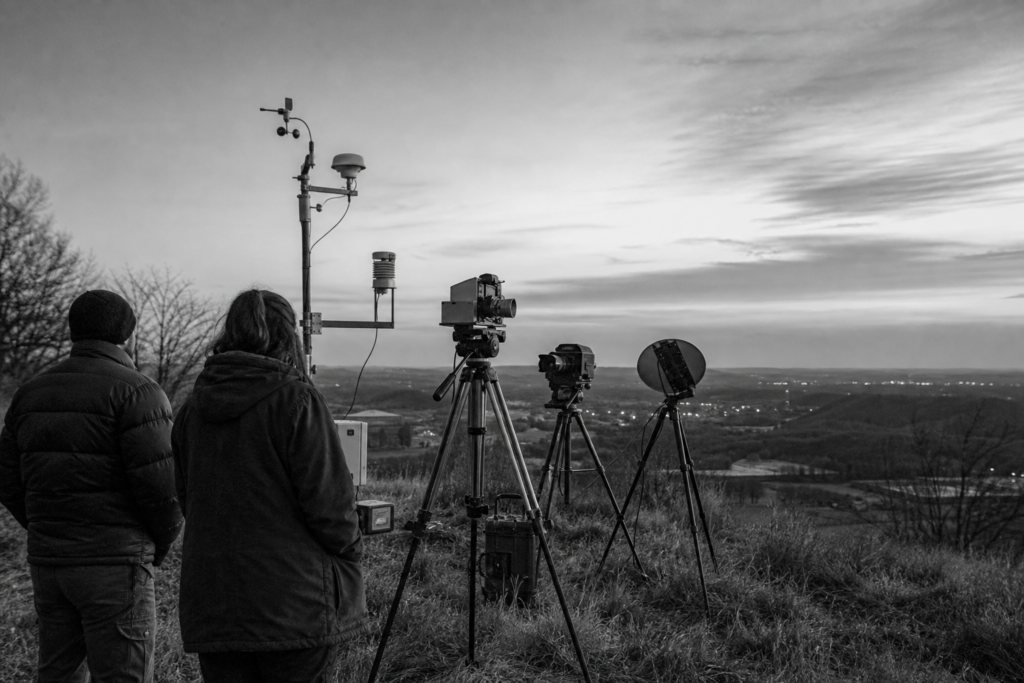
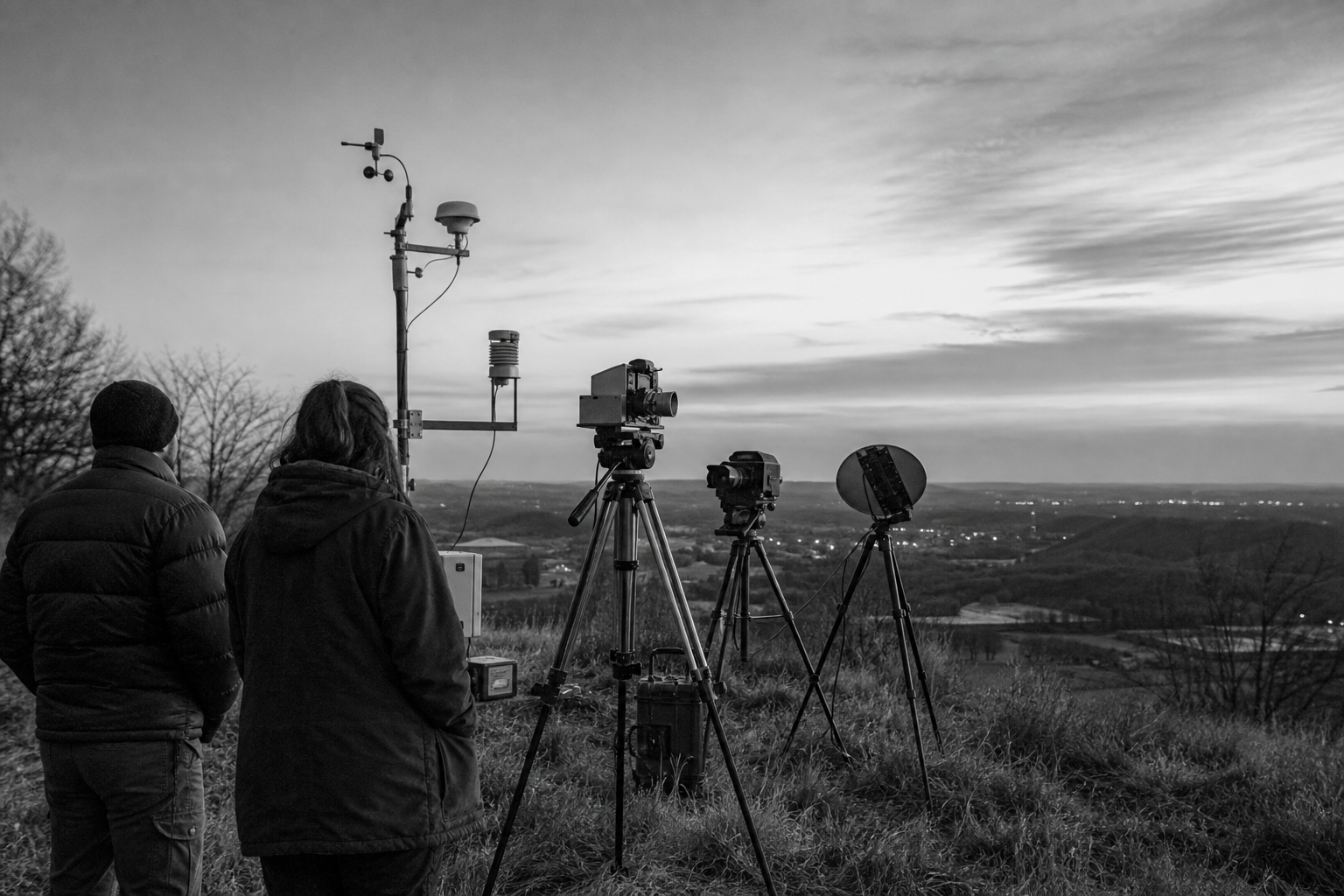
People can report something they genuinely cannot identify without that report establishing what the object was. A report records an observation; an unexplained observation is one that lacks enough reliable context for classification; a scientific anomaly is a measurement that remains inconsistent with tested explanations after error analysis. Evidence for non-human intelligence would require a further, far stronger inferential step. Those categories must not be collapsed.
That is the practical purpose of rigorous UAP research: not to police belief or dismiss witnesses, but to determine what the available evidence can actually bear. A dramatic video with no reliable time, location, range, or sensor settings may be compelling footage, yet it cannot support precise claims about speed, size, or maneuver. A synchronized record from calibrated sensors, paired with weather and flight context, can.
This article sets out the standard. It examines how a credible program defines testable questions; captures calibrated, time-aligned observations; preserves original files and their provenance; tests ordinary explanations; reports uncertainty rather than filling gaps with certainty; and permits qualified independent scrutiny. Each safeguard changes the strength of the conclusion. Its weak counterpart is equally revealing: curated clips without underlying data, conclusions announced before hypotheses are tested, missing metadata, or oversight that cannot inspect the evidence are red flags, not proof of a particular cause, but signs that the work is not operating as science.
UAP Research Starts With Measurement, Not Belief
The first discipline is to separate what an instrument recorded from the story a viewer may attach to it. Apparent acceleration can result from changing camera zoom, platform motion, uncertain distance, or a shifting line of sight. A light can be an aircraft, balloon, astronomical object, weather-related phenomenon, or sensor artifact before it is anything more exotic. Those possibilities are not dismissals; they are competing explanations with different observable predictions.
Scientific UAP research therefore treats each case as an inference problem. An identified event is one whose available records support a specific explanation. An unresolved event is one for which those records cannot support a confident identification. A genuinely anomalous result would require more: measurements that remain inconsistent with plausible explanations after the data quality, geometry, and errors have been tested. Neither official attention nor an unresolved label supplies that extra step, and neither establishes non-human intelligence.
- Strong signal: calibrated observations, retained original data and metadata, explicit comparison of alternatives, stated uncertainty, and reviewers able to inspect the underlying record. Each element limits a different route to false certainty.
- Red flag: a program that promotes dramatic clips or witness conclusions while withholding timing, location, sensor settings, competing analyses, or a way for qualified outsiders to challenge its work.
The relevant question is not whether a case feels extraordinary. It is whether the measurement record can survive attempts to explain it more ordinarily, and show, in quantitative terms, what remains unknown.
A Real Program Would Ask Testable Questions Before Reviewing the Most Dramatic Cases
A program earns its conclusions before it sees its headline case. It should begin with narrow questions such as: Can the system reliably detect a target under specified conditions? How often does its classification process correctly distinguish aircraft, balloons, celestial objects, weather effects, and sensor artifacts? After those explanations are tested, how many observations remain unresolved?
That requires operational definitions: a “detection” might mean a signal exceeding a preset threshold; a “correct classification” means agreement with independently established ground truth; an “unresolved” case means the available record fails to meet defined criteria for any candidate explanation. Those definitions prevent a program from quietly treating missing information as positive evidence.
Credible UAP research methods also preregister the analysis plan: the hypotheses, exclusion rules, confidence thresholds, and success criteria are written before investigators know which cases will look most compelling. A useful null hypothesis is that an apparent anomaly arises from misidentification, sensor error, atmospheric propagation, perspective, or conventional, including potentially restricted, technology. The task is not to assume the null is true, but to specify what measurement would distinguish it from alternatives.
- Strong signal: published false-positive tolerances, blind or independent classification tests, and a stated rule for when a residual merits deeper study rather than a stronger conclusion.
- Red flag: hypotheses and standards that change after a dramatic video appears, especially when every unresolved detail is counted in favor of one preferred explanation.
An unidentified observation supports only an identification claim: the record is presently insufficient. Claims about origin, intent, or non-human intelligence demand discriminating evidence that competing terrestrial explanations would not predict. “Unresolved” is a research priority, not a shortcut to that conclusion.
Credible UAP Investigation Requires Synchronized, Calibrated Multi-Sensor Data
A single dramatic clip can establish that a camera recorded changing pixels; by itself, it rarely establishes an object’s distance, size, speed, or path. A credible collection station therefore treats video as one measurement channel, not the verdict. Optical imagery supplies apparent shape, brightness, bearing, and angular change. Infrared sensing adds information about emitted or reflected thermal energy, while radar or other radio-frequency measurements can independently constrain position and range when they are available and appropriate.
Those channels must share an accurate clock and a known observer position. Time alignment lets analysts ask whether an infrared feature, radar return, and optical target occupied the same line of sight at the same instant. Range plus angle converts apparent motion into a physical trajectory; without range, a nearby slow object and a distant fast object can produce similar image motion. Platform position, orientation, zoom, field of view, detection limits, and sensor calibration history are equally necessary to separate target movement from camera shake, tracking behavior, or observer motion.
Context instruments answer different elimination questions. Local weather and wind help model clouds, balloons, and atmospheric distortion; astronomical ephemerides test whether a bright point coincided with a planet, star, or other known celestial source; nearby flight data can identify conventional traffic. An apparent UAP transmedium event needs independently corroborated position, timing, and environmental measurements on both sides of the claimed air-water transition, not a visual impression of disappearance or reappearance.
- Strong signal: synchronized multisensor data with recorded specifications, calibration results, uncertainty bounds, and clear agreement, or documented disagreement, between channels.
- Red flag: a program promotes a cropped video as proof of extreme maneuvering while withholding range, viewing geometry, clock accuracy, environmental conditions, and the instrument limits needed to interpret it.
The Evidence Must Be Preserved, Contextualized, and Compared With Ground Truth
A usable case begins with the first file created by the instrument, not a repost, screen recording, or edited clip. The case file should retain the original data, metadata export, sensor settings, collection log, observer and platform information, and a chain of custody showing who received, copied, or accessed each item. Cryptographic hashes can show whether a retained file has changed; any conversion, stabilization, cropping, enhancement, or redaction should be logged as a separate, reproducible transformation rather than silently replacing the original.
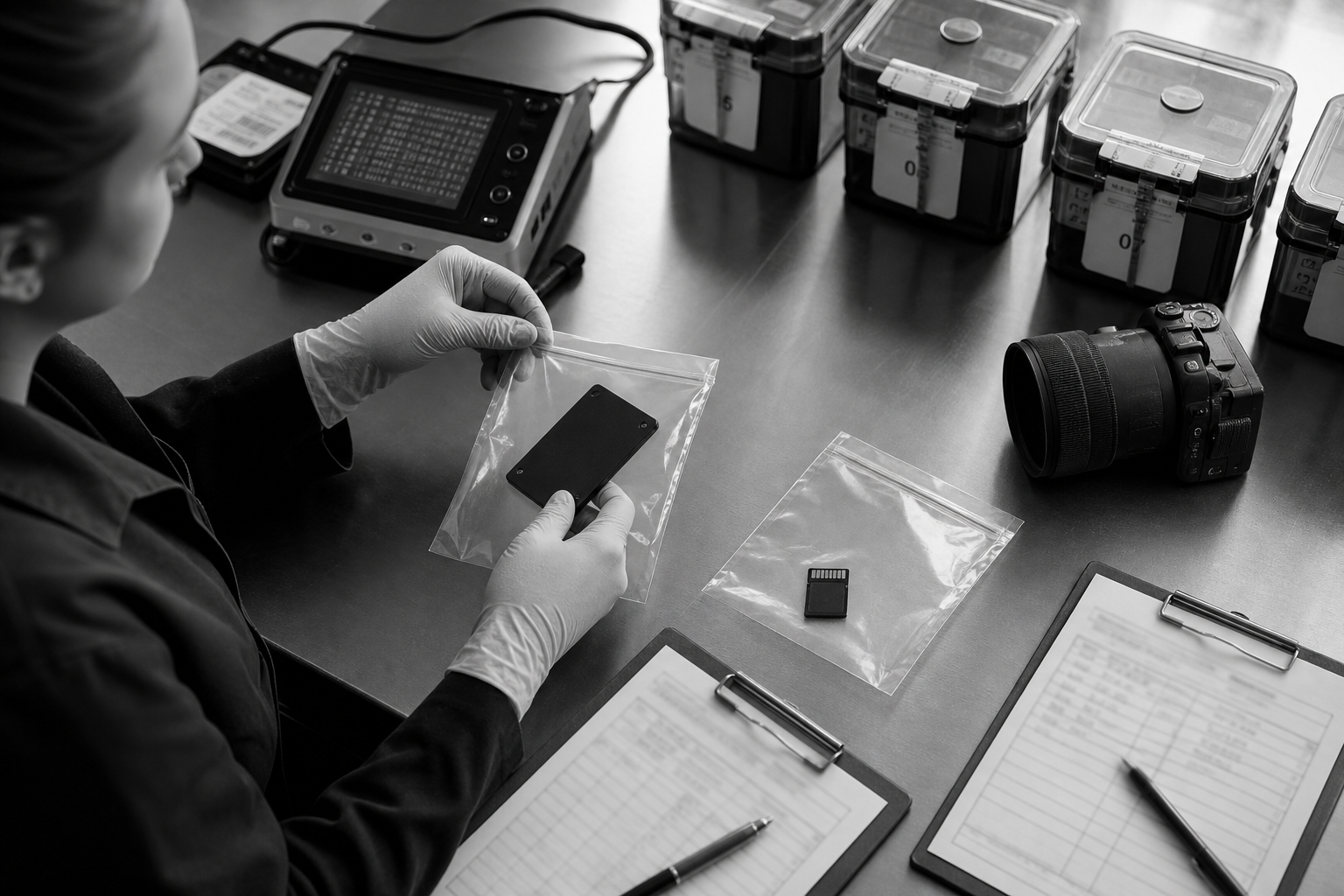
This record changes what analysts can test. A video without reliable location, time, range, provenance, and surrounding sensor context may still be worth preserving, but it is weak material for claims about speed, size, or behavior. Authenticating a video is not the same as establishing what it depicts. Missing provenance is not evidence of concealment; it is a stated limitation that should lower the case’s priority until independent context can be recovered. A standardized file should record absences as carefully as positive observations.
Case triage should favor records that can discriminate among explanations: intact originals, synchronized channels, and relevant flight, maritime, weather, satellite, and launch records. It should also build ground-truth controls, events whose identity is independently known. Routine aircraft, balloons, birds, satellites, and camera artifacts become benchmark examples for measuring where a system or analyst misclassifies ordinary targets.
- Strong signal: blind tests against known-object cases, with error rates reported before investigators elevate a residual case as anomalous.
- Red flag: selecting the most dramatic clips while discarding originals, edits history, negative matches, and the ordinary cases needed to reveal false positives.
Analysis Should Eliminate Ordinary Explanations First, and Publish Its Uncertainty
Analysis begins by rebuilding the event as a geometry problem: where the sensor was, where it pointed, how its platform moved, and how the line of sight changed over time. That reconstruction can distinguish a nearby slow object from a distant fast one, and can reveal parallax, apparent motion caused by the observer’s own movement. Analysts should then test whether focus changes, glare, digital compression, image stabilization, tracking error, atmospheric distortion, or sensor saturation can reproduce the reported feature.
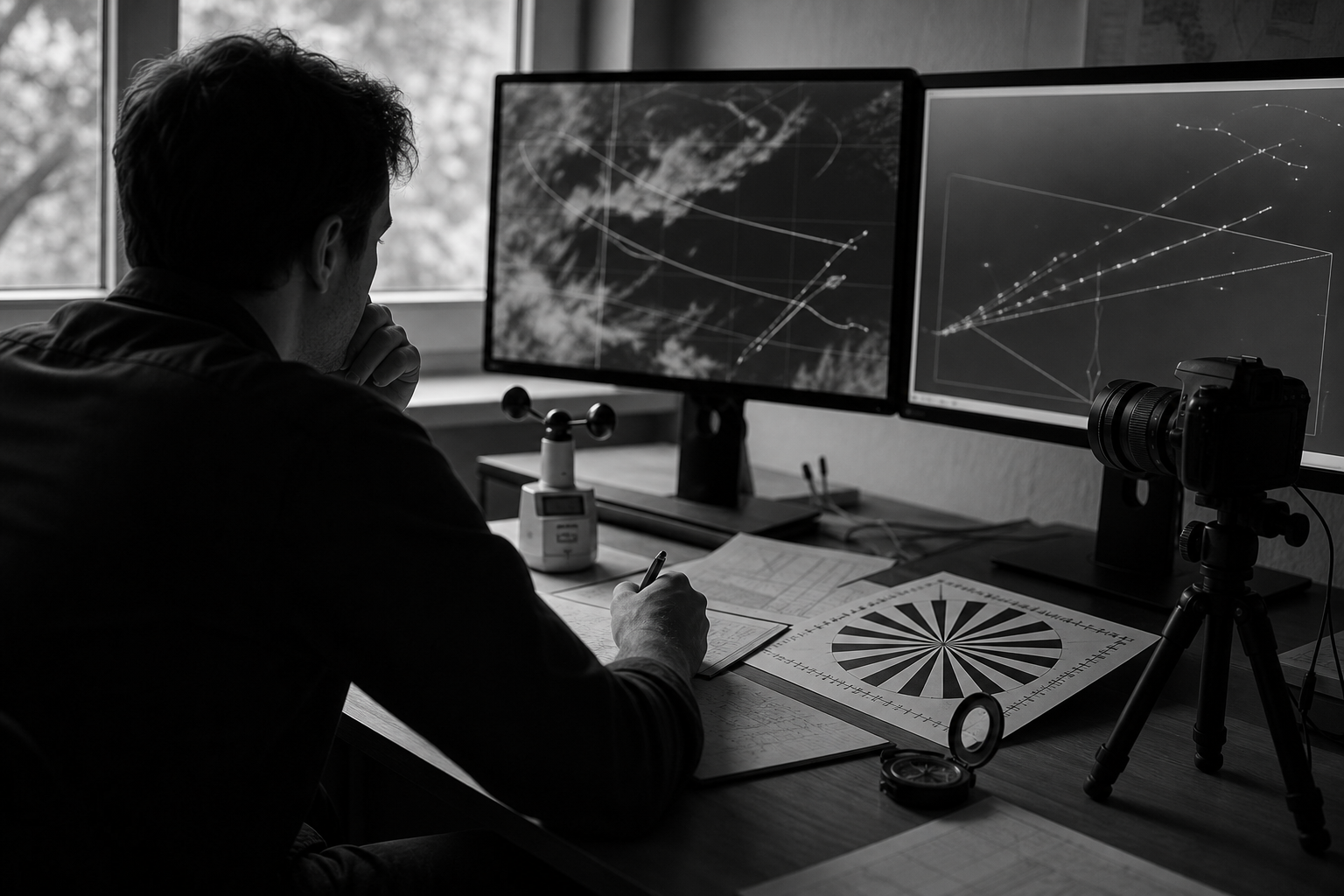
Each plausible explanation should make predictions that can be compared against the full record. A balloon model can be tested against wind and trajectory; an aircraft model against timing, bearings, lights, and flight records; an artifact model against raw-frame behavior and known camera responses. The result should include an error budget: stated uncertainty bounds for position, range, velocity, acceleration, and estimated size. If range is poorly constrained, a dramatic speed estimate may collapse into a wide interval. A responsible report says so plainly, separating what the data measure from what they merely suggest.
- Strong signal: analysts try to disprove their favored interpretation, use blinded comparisons with known cases where feasible, release original data and documented code for independent replication, and revise conclusions after substantive peer critique.
- Red flag: a program presents a single calculated speed or size without assumptions and uncertainty bounds, treats an unresolved mismatch as proof of exotic origin, or blocks capable outsiders from rerunning the analysis.
A genuinely anomalous result is therefore narrow: a calibrated, well-provenanced observation that remains inconsistent with the tested explanations within stated uncertainty. It is not a declaration of alien technology, and it does not resolve every unknown in the case. Its scientific value is precisely that it identifies a residual discrepancy clearly enough for further measurement to challenge, reproduce, or overturn it, rather than merely adding to the category of unresolved UAP cases.
Transparency Has to Be Structured: Governance, Security, and Qualified Independent Review
Governance determines whether difficult results can be challenged without being buried, spun, or selectively released. A credible program should publish a methods charter that fixes its case definitions, analytic authority, retention periods, release rules, and correction process. It should also require conflict-of-interest disclosures: investigators, contractors, and advisers must identify financial, institutional, or advocacy commitments that could shape case selection or interpretation.
An external scientific advisory group should review protocols, audits, and major conclusions without controlling day-to-day operations. Audit trails should record who accessed a file, changed an analysis, approved a redaction, or altered a conclusion. Protected reporting channels matter for the same reason: personnel need a way to report mishandled evidence, pressure, or procedural failures to an independent office without retaliation.
Classification creates a real constraint, not an exemption from evidentiary standards. Public release may need to withhold sensor capabilities, collection locations, or operational details. But anonymous testimony or an inaccessible classified record cannot become scientific evidence merely because outsiders cannot inspect it. The workable middle ground is a redacted metadata release and reproducible summary: disclose timing precision, sensor type, calibration status, processing steps, uncertainty bounds, and the tests performed while removing sensitive parameters.
- Strong signal: qualified reviewers can examine restricted originals and methods through secure access arrangements, while a documented declassification-review path considers what can later be released.
- Red flag: officials invoke secrecy to demand acceptance of conclusions, provide no auditable account of the analysis, or let insiders choose which dramatic fragments reach the public.
What Would Be a Red Flag in a Purported UAP Science Program?
The fastest credibility test is whether a program makes its failures as visible as its headline cases. These paired UAP investigation standards separate a research record from a publicity stream:
- Strong: releases originals, metadata, calibration records, and the full timeline. Red flag: releases only a striking excerpt, leaving distance, sensor settings, and provenance unavailable.
- Strong: defines “detection,” “unresolved,” and its decision thresholds before analysis. Red flag: changes definitions or success criteria after a favored case appears.
- Strong: reports ordinary identifications, inconclusive cases, and null results. Red flag: treats a lack of resolution as proof, or calls a video evidence of extreme speed without measured range and motion.
- Strong: permits qualified independent challenge. Red flag: asks the public to accept conclusions on authority, secrecy, or a government UFO cover-up allegation alone.
Rigorous UAP research can improve identification and isolate observations that remain genuinely unresolved. It cannot promise UFO disclosure, establish non-human intelligence from ambiguity, or guarantee an answer to every report.
The Standard Is Better Evidence, Not Bigger Claims
The decisive outcome is not a more compelling story; it is a smaller, better-defined zone of uncertainty. Calibrated, time-aligned measurements constrain what could have happened. Original files, metadata, and a recorded chain of custody preserve the ability to test those constraints. Competing explanations and explicit error bounds show whether an apparent anomaly survives analysis rather than merely outlasting attention.
Independent scrutiny is the further test. Qualified reviewers need enough access to reproduce the processing, challenge assumptions, and identify where a conclusion depends on unavailable information. Governance safeguards make that challenge durable: they separate evidence assessment from institutional incentives and provide a route to correct the public record when an identification changes.
A report is an account of an observation. An unresolved observation means the available record cannot yet support a classification. A scientific anomaly is the much narrower result that remains after calibrated measurement, provenance review, and tested alternatives fail within stated limits. None of those categories, on its own, is evidence of non-human intelligence.
Judge any proposed UAP research program by a practical question: can its methods reliably reduce uncertainty, including by producing ordinary identifications and null results, and can qualified outsiders scrutinize that work? If the answer depends instead on dramatic footage, inaccessible evidence, or certainty beyond the measurements, it is marketing mystery rather than building knowledge.
Sources
Frequently Asked Questions
-
What evidence would show that a UAP is genuinely anomalous?
A genuinely anomalous UAP requires calibrated, well-provenanced measurements that remain inconsistent with plausible explanations after geometry, sensor errors, and uncertainty bounds are tested. An unresolved observation only means the available record cannot support a confident identification.
-
Why are videos alone usually insufficient evidence for UAP claims?
A video can show changing pixels, but it usually cannot establish distance, size, speed, or trajectory without range and viewing geometry. Camera zoom, platform motion, line-of-sight changes, compression, glare, and tracking errors can all create apparent extreme movement.
-
What instruments and data are needed for credible UAP research?
Credible research uses time-synchronized optical, infrared, and when appropriate radar or radio-frequency data, along with known observer position and orientation. It also needs sensor calibration history, clock accuracy, field of view, weather and wind records, astronomical ephemerides, and nearby flight data.
-
How should a scientific UAP program handle classified sensor data?
Sensitive capabilities and collection locations can be redacted, but the program should release reproducible summaries showing sensor type, timing precision, calibration status, processing steps, uncertainty bounds, and tests performed. Qualified independent reviewers should be able to inspect restricted originals and methods through secure access arrangements.
-
What are the biggest red flags in a UFO or UAP investigation?
Major red flags include releasing only dramatic clips while withholding originals, metadata, range, sensor settings, and provenance. Other warning signs are changing standards after a favored case appears, treating unresolved cases as proof of exotic origin, and demanding acceptance based on secrecy or authority rather than auditable analysis.