Biden Signs AARO Into Law: FY2022 NDAA Creates Permanent UAP Office
Learn how the FY2022 NDAA created the foundation for AARO UAP oversight, including Section 1683, its timeline, powers and limits.


The headline is useful shorthand, but the timeline matters. President Joe Biden signed the Fiscal Year 2022 National Defense Authorization Act on December 27, 2021. Its Section 1683 required a continuing Defense Department-led office for unidentified aerospace-undersea phenomena; the name All-domain Anomaly Resolution Office, or AARO, came through the Pentagon’s later organizational transition.
That distinction does not diminish the law’s importance. Earlier efforts, including the UAP Task Force and the Airborne Object Identification and Management Synchronization Group, were executive-branch arrangements. Section 1683 put an office requirement, defined functions, interagency coordination, and reporting obligations into statute. “Permanent” therefore means a continuing congressional mandate rather than an agency program that exists solely at an administration’s discretion, not an irreversible guarantee that Congress cannot later amend or repeal.
This article separates what Congress required from what the Pentagon subsequently called and organized as AARO UAP oversight. It follows the statutory language, the transition timeline, and the office’s intended work of collecting reports, coordinating analysis, and assessing incidents. It also draws a firm boundary around what the FY2022 NDAA did not do: creating an office did not establish alien visitation, non-human intelligence, crash-retrieval programs, or reverse-engineering claims.
What Biden Signed, and What the Headline Shorthand Gets Right
The bill number is the clearest checkpoint: H.R. 4350 became Public Law 117-81 when President Biden signed it on December 27, 2021. Section 1683’s enacted language did not use All-domain Anomaly Resolution Office. That matters because Congress established the required function before the Defense Department applied the AARO name and refined the organization around it.
In practical terms, the law required a continuing office to bring together reports and analysis involving objects or phenomena observed across aerospace and undersea domains. Its assignment was administrative and analytical: synchronize activity across relevant federal agencies, establish procedures for reporting and sharing information, assess incidents, and provide Congress with recurring reports. A standing office with specified duties differs from an ad hoc task force formed within the executive branch for a limited purpose.
That is what the headline gets right. The statute supplied the legal footing for the federal UAP effort that later operated as AARO. It did not enact an alien-disclosure measure or make findings about the origin of any reported object or event. Public Law 117-81 created an oversight and information-management structure, not confirmation of extraterrestrial visitation or any alleged secret program.
Section 1683: The UAP Office Congress Actually Required
Section 1683 did more than direct the Pentagon to keep looking at unusual reports. It located the required office within the Office of the Under Secretary of Defense for Intelligence and Security, tying the work to a senior Defense Department intelligence structure rather than leaving it as a stand-alone, temporary inquiry.
The provision also required shared leadership: the office was to be jointly led by the Under Secretary of Defense for Intelligence and Security and a senior Defense official designated by the Deputy Secretary of Defense. That arrangement joined intelligence analysis to Department-wide operational authority. In practical terms, the FY2022 NDAA UAP office was meant to connect the people who evaluate information with the officials able to coordinate action across military components and other federal participants.
Its statutory mission was to synchronize efforts involving “unidentified aerospace-undersea phenomena.” Synchronization is the central concept: a report, sensor record, intelligence assessment, or technical finding was not supposed to remain isolated within one service or agency. Section 1683 directed the office to establish procedures for identifying and classifying such phenomena, conducting scientific and technical characterization, assessing and mitigating associated threats, and coordinating reporting and information sharing.
Those duties are distinct. Identification asks what was observed; classification organizes the report and its sensitivity; scientific and technical characterization examines measurable features, such as performance or sensor data; and mitigation addresses any resulting risk to operations, personnel, or national security. Reporting and coordination then make the results available for departmental and congressional oversight rather than treating each incident as a disconnected case.
That is the institutional design behind the Pentagon UAP office that later became associated with AARO UAP work. Section 1683 required a continuing function with defined responsibilities and senior-level accountability, not a statutory conclusion about what any particular phenomenon was.
Why the FY2022 NDAA Marked a Durable Institutional Shift
Regular reporting changed the character of the work. Section 1683 required annual reports to the armed-services, intelligence, and appropriations committees, plus classified briefings when requested. That gave Congress recurring checkpoints: lawmakers could examine how reports were being collected, whether agencies were sharing relevant information, what analytic gaps remained, and whether the office was carrying out its assigned mission.
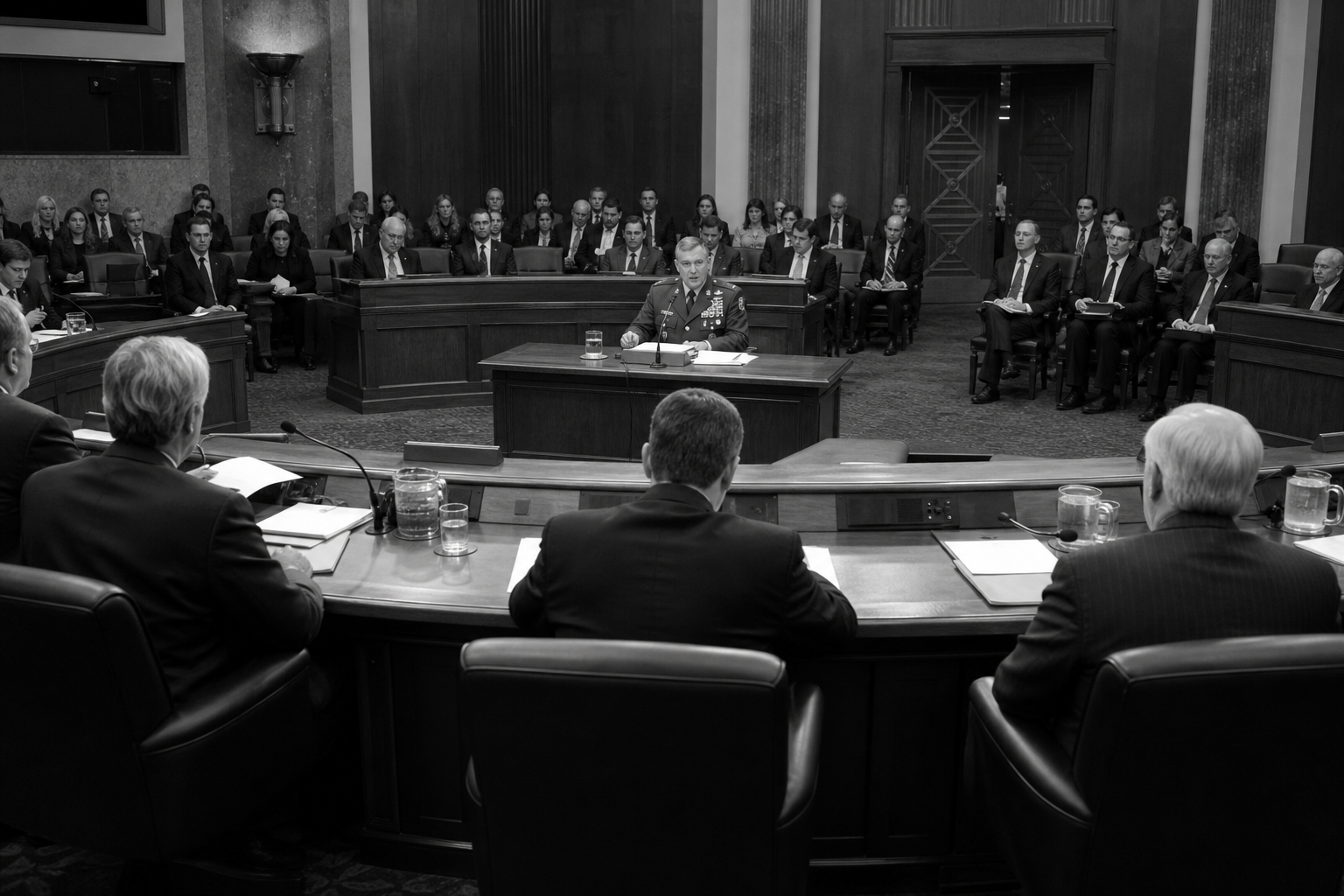
This is the practical difference between a temporary investigative group and a standing oversight framework. A task force can be created, redirected, or allowed to lapse within the executive branch. A congressionally required office has an assigned place in statute, specified work to perform, and continuing obligations to inform the committees that authorize and fund national-security activity.
Section 1683 also reached beyond a single Pentagon component. Its coordination requirement contemplated participation by relevant federal departments and agencies, including the intelligence community. That matters because a UAP report may involve operational safety, intelligence collection, technical assessment, or classified sensor data held by different organizations. The statutory model sought to make those separate holdings part of a coordinated government process rather than parallel, disconnected inquiries.
“Permanent,” then, is best understood as institutional continuity, not legal invulnerability. The FY2022 NDAA built an enduring function with reporting and congressional oversight duties; it did not make one particular office chart or name impossible to change. Congress may later amend a mandate, reorganize responsibilities, alter funding, or repeal a program. The durable shift was that UAP work acquired a statutory home and recurring accountability mechanism, not that the law settled extraordinary claims or guaranteed any specific organizational form forever.
From UAP Task Force to AOIMSG to AARO: The Timeline That Prevents Confusion
The sequence began with the Unidentified Aerial Phenomena Task Force, or UAPTF, an earlier Defense Department effort focused on collecting and analyzing military reports of unexplained aerial encounters. Its narrower, task-force form is important: it provided a focal point for investigation, but it was not the congressionally prescribed office later required by Section 1683.
On November 23, 2021, the Defense Department announced the Airborne Object Identification and Management Synchronization Group (AOIMSG). That announcement came before President Biden signed the FY2022 NDAA and before the department had implemented the statute’s new office requirement. AOIMSG was intended to synchronize identification and management of objects in special-use airspace, bringing together defense and intelligence activity. It was therefore an administrative transition step, not the final statutory structure and not yet AARO.
The next change followed the law’s broader aerospace-undersea mandate. In a July 2022 memorandum, the Deputy Secretary of Defense established the All-domain Anomaly Resolution Office and directed it to carry out the expanded mission. “All-domain” signaled a material difference from an aerial-only emphasis: the office was organized to address anomalous activity across space, air, sea, and undersea environments, while coordinating reporting and analysis across the Department of Defense and the intelligence community.
The practical reading of the timeline is straightforward. The UAPTF was the earlier investigative effort; AOIMSG was the announced interim synchronization group; and DoD later established AARO to perform the expanded function Congress had required. The FY2022 NDAA did not use the exact name All-domain Anomaly Resolution Office. Saying AARO was established by NDAA is useful shorthand only if it preserves that distinction: Congress required the continuing office and its mission, while the Pentagon selected the AARO name and organizational form during implementation.
How AARO Fits the Law’s UAP Oversight Framework
A reported anomaly becomes useful to government only when it can be compared with other information. The office’s practical job is therefore to receive reports from military and intelligence channels, bring related sensor and operational data into a common analytic process, and reduce the risk that separate organizations treat the same incident as unrelated events.
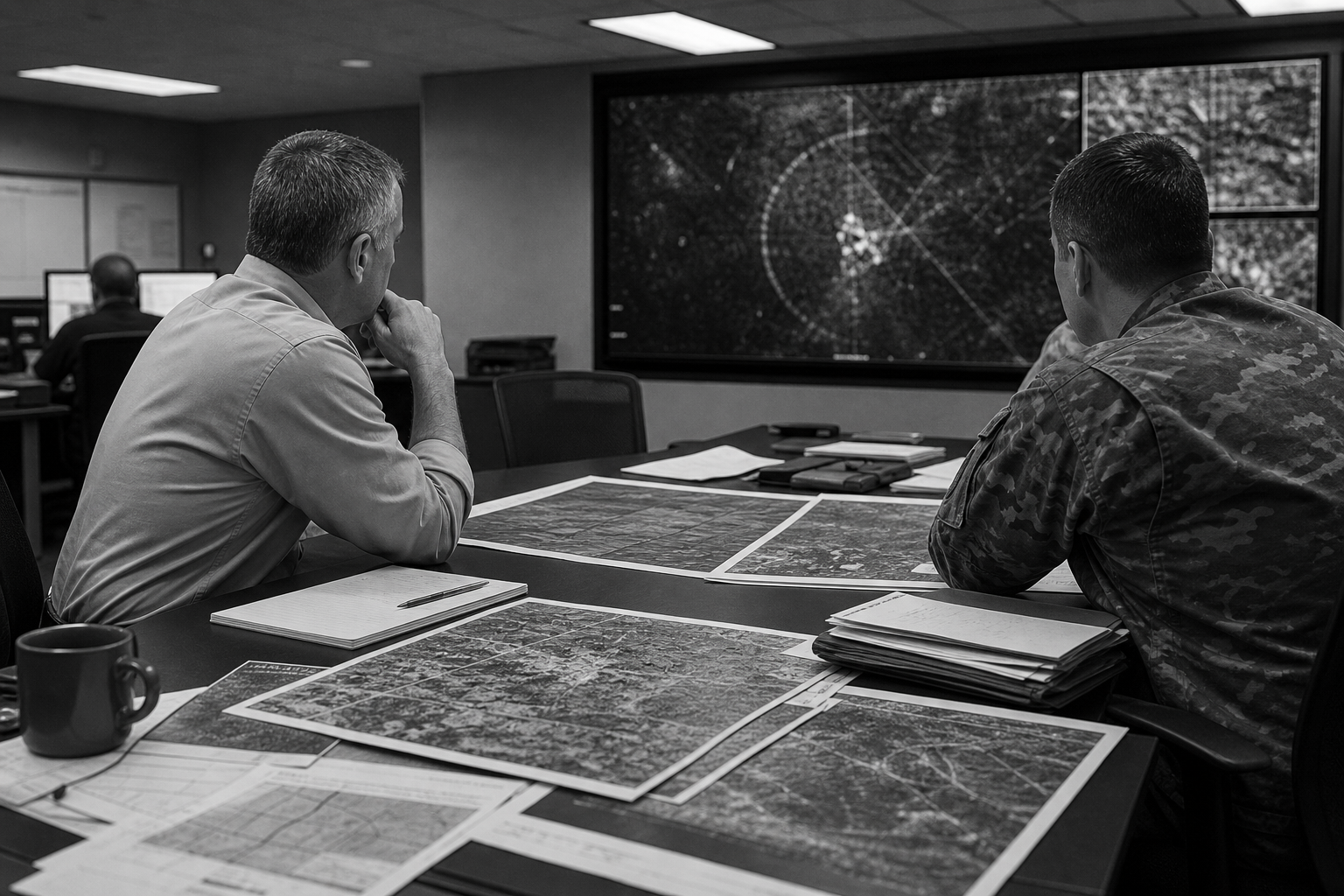
That process has several distinct functions. Identification asks whether an observation can be matched to a known aircraft, balloon, drone, natural phenomenon, sensor effect, or other conventional explanation. Characterization records what can reliably be said about the event, its location, movement, signatures, and available data, when identification remains incomplete. Mitigation concerns the operational consequence: whether an object or phenomenon could create an aviation-safety hazard, interfere with training or collection, or indicate a foreign intelligence or national-security concern. An unresolved report is thus an input for assessment, not proof of an extraordinary origin.
The office also serves as a coordinating hub. It connects intelligence analysis with operational reporting, helps align collection and analytic priorities across Defense Department and intelligence-community organizations, and turns the resulting picture into the reports and briefings Congress required. A strong record is one that preserves the underlying observations, identifies gaps or competing explanations, and shows what follow-up occurred; a weak record is merely a label without supporting data or an account of the assessment.
The FY2022 statute used the narrower phrase “unidentified aerospace-undersea phenomena.” The later AARO UAP structure adopted an all-domain approach, reflecting policy and statutory refinement toward anomalies reported across air, sea, undersea, space, and other relevant operating environments. That later vocabulary broadened the office’s working frame; it should not be read back into the original law as though Congress had used the same terminology in 2021.
What the FY2022 NDAA Did Not Say About Aliens or Secret Programs
Unidentified is a reporting status, not a conclusion about origin. Creating an office to analyze such reports did not confirm alien spacecraft, non-human intelligence, crash-retrieval programs, reverse-engineering efforts, or a government UFO cover-up. Those claims require independent evidence; they do not follow from an institutional decision to collect information more consistently.
The narrower rationale is operational. An object, signature, or event that cannot immediately be explained may still matter because it could affect flight safety, reveal a surveillance effort, expose a sensor limitation, disrupt military activity, or present a defense concern. The pre-FY2022 reporting context likewise emphasized national-security concerns without establishing extraordinary explanations. A balloon, drone, foreign platform, atmospheric effect, or incomplete sensor record can all initially remain unidentified. The meaningful distinction is between unresolved, insufficient information for a reliable identification, and extraordinary, which would require affirmative supporting evidence.
For readers assessing claims of alien disclosure, the relevant takeaway is simple: a UAP office creates a process for reporting, analysis, and oversight. It does not convert every unexplained case into proof of a secret program or an extraterrestrial explanation.
Later NDAA Changes and the Lasting Significance of the FY2022 Law
The first later change is a useful checkpoint: the FY2023 NDAA replaced the earlier statutory terminology with “unidentified anomalous phenomena,” extending the mandate’s all-domain framing and adding coordination and reporting provisions. Those refinements changed the office’s later operating framework; they were not language enacted in Public Law 117-81.
The FY2024 NDAA added a separate historical dimension through the UAP Records Collection. It directed agencies to identify and transfer qualifying records to the National Archives and assigned AARO roles in records review and a historical report. Preservation and retrospective review therefore belong to later legislation, not to the December 2021 law.
The timeline remains decisive: Biden signed the FY2022 NDAA on December 27, 2021; DoD established AARO in July 2022; later NDAAs revised terminology, authorities, reporting, and records work. Section 1683 began the continuing federal responsibility, while AARO gave it its recognizable modern form.
The FY2022 NDAA Put UAP Oversight on a Lasting Legal Footing
A legal mandate changes the baseline: UAP work is no longer dependent solely on an ad hoc task force or a particular Pentagon initiative. The FY2022 NDAA required an office with continuing responsibilities to gather information, coordinate relevant departments and agencies, analyze incidents, and report its work through established oversight channels.
That requirement is the durable achievement. The UAP Task Force, AOIMSG, and AARO were distinct organizational stages, not interchangeable statutory names. AARO became the Defense Department’s recognizable operating form for the mission Congress had placed on a continuing footing; it was not the name written into the original provision.
“Permanent” should therefore mean an ongoing legal and management responsibility rather than an unchangeable office chart. Congress can revise duties, terminology, and structure, but the model established here makes UAP oversight answerable to senior defense leadership and recurring congressional scrutiny. It also establishes no conclusion about any incident’s origin: collection and analysis are mechanisms for resolving uncertainty, not proof of alien visitation, non-human intelligence, crash retrievals, or reverse-engineering programs.
Frequently Asked Questions
-
Did Biden create AARO with the FY2022 NDAA?
President Biden signed the FY2022 NDAA, Public Law 117-81, on December 27, 2021. Section 1683 required a continuing Defense Department office for unidentified aerospace-undersea phenomena, but the law did not use the name All-domain Anomaly Resolution Office.
-
What section of the FY2022 NDAA created the Pentagon UAP office?
Section 1683 of the FY2022 NDAA required the continuing Pentagon-led office. It placed the office within the Office of the Under Secretary of Defense for Intelligence and Security and required coordination, analysis, reporting procedures, and annual reports to Congress.
-
When was AARO officially established?
The Defense Department officially established AARO in July 2022 through a Deputy Secretary of Defense memorandum. This followed the December 27, 2021 enactment of the FY2022 NDAA requirement for a continuing UAP office.
-
Is AARO a permanent government office?
AARO’s underlying mission has a continuing statutory mandate, meaning it is not solely an ad hoc executive-branch task force. Congress can still amend, reorganize, defund, or repeal the office’s legal authorities and responsibilities.
-
What should you look for when evaluating claims that the FY2022 NDAA confirmed alien UFOs?
Look for affirmative evidence beyond the existence of the office, such as verified data supporting a specific extraordinary claim. The FY2022 NDAA created reporting, analysis, coordination, and oversight procedures, but it did not confirm alien spacecraft, non-human intelligence, crash-retrieval programs, or reverse-engineering efforts.