What Is the UAP Records Review Board?
Learn what the UAP Records Review Board proposed, how it could handle UAP records disclosure, and how it differs from AARO and the National Archives.


As of August 5, 2026, no federal panel is operating to decide whether agencies must release UAP-related files. The proposed mechanism was designed to review government-held records and assess whether agencies could continue withholding them. That distinction matters: it would address access to documents, not investigate sightings or establish that any particular UAP claim is true.
The proposal emerged through the UAP Disclosure Act framework, which envisioned a formal process for identifying relevant records, placing them in a central collection, and scrutinizing requests to postpone public release when national-security or other protected interests were at stake. In practical terms, the board would have been a referee for disclosure disputes rather than another intelligence or scientific office.
This article separates that proposed role from the institutions readers may otherwise conflate: AARO analyzes and coordinates UAP matters within the Defense Department, while the National Archives preserves and provides access to federal records. Congress, meanwhile, exercises oversight through legislation and hearings. The sections ahead explain the proposal’s legislative origins, intended powers, disclosure limits, and why a review system for records should not be mistaken for proof of the claims contained in them.
What Is the UAP Records Review Board?
The operative question was whether an agency could make a specific case for keeping a particular UAP record, or part of it, from the public after its transfer to the proposed UAP Records Collection. The UAP Records Review Board appeared in the proposed UAP Disclosure Act framework as an independent body for that dispute, not as an office that was automatically created merely because legislative text described it. As of August 5, 2026, it is not an active, staffed federal agency.
Its intended job was narrow but consequential. An agency seeking postponed disclosure would submit its justification under the proposal’s disclosure standards, and the board would assess whether the asserted need to withhold material outweighed the presumption of release. A tailored postponement could protect a defined national-security or other protected interest; a blanket request to keep an entire file secret would receive independent scrutiny. That review would concern access to records, not whether a document’s assertions are accurate.
In practical terms, the proposed process addressed three concrete questions: whether a government-held file belonged in the collection, whether a portion could remain redacted or withheld, and when delayed material should return for reconsideration. It was not designed to authenticate sightings, resolve disputed testimony, or establish that any UFO disclosure claim is true.
The distinction matters because proposed review-board language was stripped from the enacted FY2024 NDAA, even though statutory architecture can set out appointments, procedures, and authority without producing a functioning institution. The board’s significance lies in the UAP disclosure model it would have created: an external review channel for agency secrecy decisions rather than a new investigative or scientific bureau.
Where the Proposed Board Came From
Senators Chuck Schumer and Mike Rounds advanced the UAP Disclosure Act framework during Senate work on the annual National Defense Authorization Act. Its design paired centralized archival handling with a disclosure-first rule: agencies would identify eligible material for a dedicated UAP collection at the National Archives and make a defined case when they sought to postpone public access.
Centralization would have changed the practical route to records. Instead of leaving relevant files dispersed across agencies and programs, the proposal called for their identification, transfer, and review within one archival framework. The independent process was intended to test requests to withhold a particular record or portion of one when release could damage a protected interest, including national security. Postponement meant a stated, reviewable delay, not automatic permanent secrecy.
The Schumer UAP Disclosure Act thus separated institutional roles. The National Archives would serve as custodian and public-access venue for the records; the proposed board would assess disputed withholding decisions. Neither role would treat the release of a document as proof that the events, conclusions, or assertions recorded in it were accurate.
The key legislative distinction is between text introduced in the Senate and text enacted after negotiations. A proposal can describe a collection, review standards, appointments, and a board in detail without creating any of them. The NDAA UAP provisions ultimately enacted did not retain the full independent review-board structure, so the proposed mechanism never became an operating federal institution.
How the Proposed Review Board Would Be Structured
Nine presidential appointees, each requiring Senate confirmation, were the proposal’s central institutional checkpoint. The UAP Review Board would have been an independent review board, meaning the agencies that created or controlled records would not select the panel that assessed their requests for continued withholding. Executive selection and public confirmation would have introduced scrutiny beyond the affected department.
The bill described members as citizens with professional stature and the capacity for independent judgment. It called for relevant expertise across history, archives, government, law, foreign service, intelligence, and science and technology, reflecting that a disclosure dispute could involve preservation, public access, legal standards, and claimed national-security harm. An archivist could bring records-access expertise, while intelligence and legal members could assess the stated basis for a delay.
Eligibility and ethics restrictions were intended to protect that independence. The proposed UAP records disclosure board would have excluded members with personal, financial, or other interests that conflicted with their duties, while fixed terms were designed to limit direct agency control over individual decisions. The practical difference was that a department seeking postponement would have had to defend its position before an outside panel rather than remain the sole judge of its own secrecy claim.
Those governance rules did not create a real-world roster. Provisions for nominations, confirmation, terms, qualifications, compensation, and conflicts do not show that anyone was nominated, confirmed, funded, or placed into office, and no operating board resulted from the proposal.
What Records It Could Review and How Disclosure Would Work
A transfer request would begin with the record itself: an agency holding potentially relevant administrative, intelligence, scientific, military, or investigatory material would identify it for placement in a centralized archive at the National Archives. Bringing files together as a defined body of material would make them easier to locate than an agency-by-agency search.
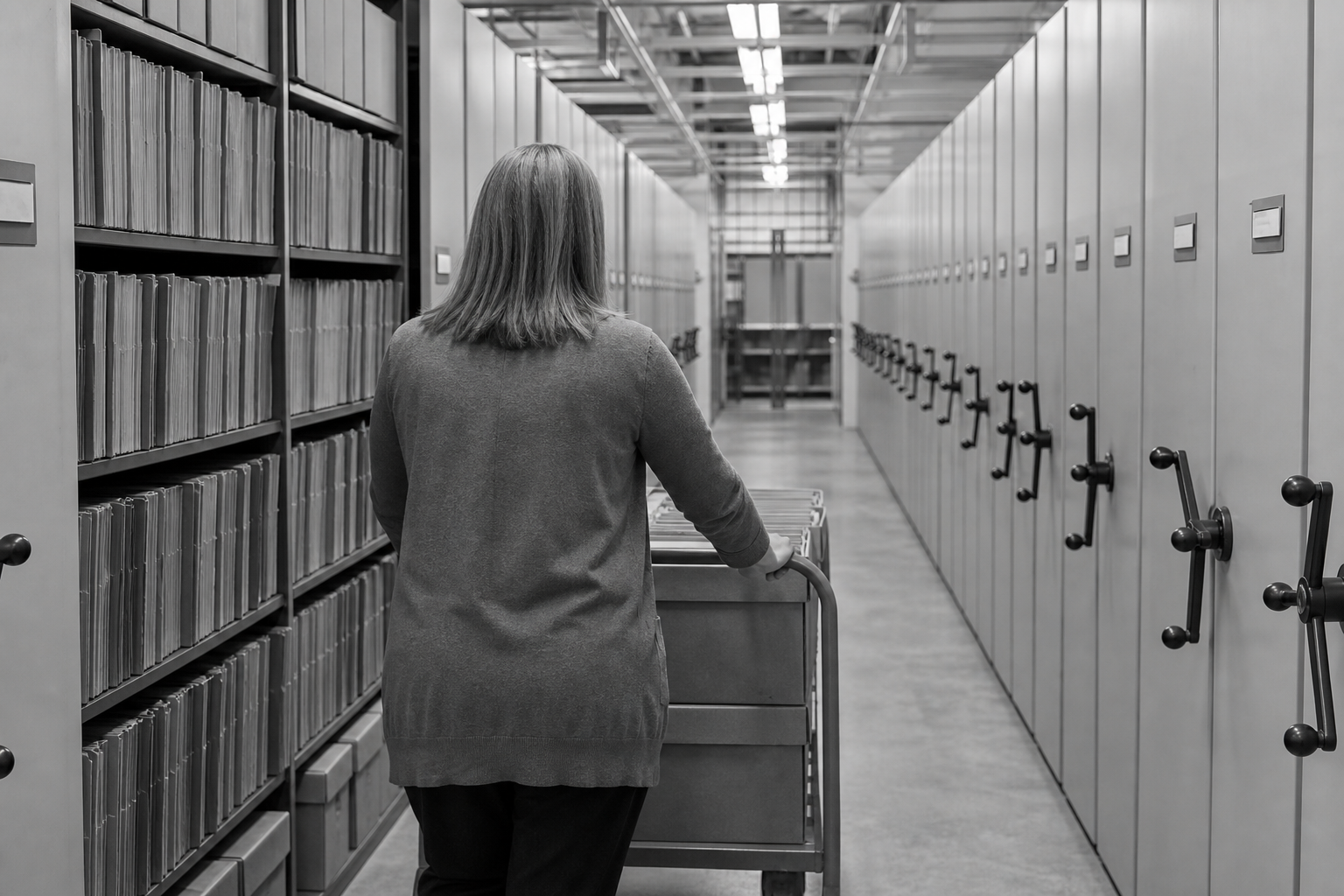
Transfer would not mean an unprocessed dump of files. The proposed framework contemplated organizing, reviewing, and preparing records for public access, including digitization where practicable. A public copy could therefore contain released pages, redacted portions, descriptive information, and a stated postponement status. Inclusion would establish archival custody and a disclosure track; it would not guarantee that every page appeared online immediately.
An agency seeking to delay release would have needed to identify the specific harm it believed disclosure would cause. The proposed standards recognized national-defense or foreign-relations harm, protection of intelligence sources and methods, personal privacy, law-enforcement concerns, and other interests protected by law. Shielding an undercover source, for example, is a different rationale from withholding private medical information; neither should rest on a blanket “classified” label.
Controlled disclosure could consequently mean releasing a record in part, postponing only sensitive passages, or delaying an entire document when narrower redaction would not prevent the asserted harm. The tradeoff was maximum public disclosure against protection of genuinely sensitive interests. Review of classified records would test whether continued secrecy was justified; it would not itself declassify every document or make a released file proof of any UAP claim.
Could the Board Force Release of Classified UFO Records?
A presidential decision would have been the proposed system’s final checkpoint. As of August 5, 2026, no operating federal body can order an agency to release a classified UAP file. The proposed text would have allowed the board to scrutinize an agency’s request for postponement of disclosure rather than treat a classification marking as conclusive.

The agency would have carried the burden: it would need to show, by clear and convincing evidence, that release would cause an identifiable statutory harm and that the harm outweighed the public interest in disclosure. The board could direct disclosure, including partial release where redactions protected the sensitive element, or allow a limited delay when that test was met. That is stronger than an advisory recommendation, but it is not an automatic declassification switch.
An agency dissatisfied with a board decision could appeal to the President. The proposal reserved a final override through presidential certification: continued postponement would require a written determination that disclosure was necessary to prevent the specified harm and that withholding outweighed disclosure. The President could also require release despite a postponement decision.
Those powers would govern government records and the reasons for withholding them, not compel an agency to authenticate allegations about crash retrievals, non-human intelligence, or a government UFO cover-up. A released document could establish what an office recorded, assessed, or withheld; it would not, by itself, prove that every allegation described in it is true.
How It Would Differ From AARO, the National Archives, and Earlier UAP Programs
The practical distinction is the question each institution is built to answer: What was reported or observed? Where is the record? Who may keep it from public view? Those are different jobs, even when they involve the same UAP-related document.
- AARO: The All-domain Anomaly Resolution Office is the Defense Department’s permanent UAP-focused office. Its work centers on receiving and coordinating reports, analyzing cases and data, and working across relevant Defense Department and intelligence components. In that sense, AARO is the Pentagon UFO office: it addresses an operational and analytic problem. A proposed review board would instead assess whether an agency had met the standard to postpone disclosure of a government record.
- National Archives and Records Administration: NARA preserves federal records and makes releasable material available to the public. A UAP Records Collection would have placed relevant records in an archival setting, improving their organization and access. That custodial role does not make the National Archives an investigative UAP office or give it the proposed board’s independent role in deciding disputes over continued withholding.
- Congressional committees: Committees can hold hearings, request information, legislate, and oversee executive agencies. Their oversight is episodic and political by design. A standing disclosure board would have been a separate decision-making mechanism with a defined records-review function, rather than a committee inquiry or hearing.
Earlier programs also had narrower, different missions. The Defense Department’s former UAP Task Force concentrated on standardizing collection and reporting before AARO assumed a broader coordinating role. Project Blue Book was an Air Force investigation program that ended decades ago. Neither was designed as an independent, continuing forum for testing agency requests to delay public release of records.
The useful signal is institutional, not rhetorical: an AARO assessment concerns analysis; an archival finding concerns custody and access; a committee action concerns oversight; and the proposed UAP Records Review Board concerned disclosure decisions about records already held by government agencies.
Why the Proposal Matters, and What to Watch Next
The value of this design would be procedural: it could require a reasoned, reviewable case for keeping eligible material out of public view instead of leaving prolonged withholding solely within the originating agency. That could make disclosure decisions more consistent, create a clearer record of accountability, and give the public a more intelligible path to released files. It would not, by itself, predict dramatic findings; records disclosure establishes what the government documented and decided, not whether every underlying UAP claim is true.
As of August 5, 2026, the UAP Records Review Board is not an operating federal body. The practical signals to watch are formal actions, not personality-driven UFO news or speculative UAP news:
- Enacted NDAA text: look for statutory language that actually creates a board, defines its powers, and provides an effective date.
- Congress.gov status: distinguish introduced bills and amendments from measures passed by both chambers and signed into law.
- Presidential actions: watch for a signing statement, executive action, nominations, or appointment announcements.
- National Archives notices: a collection notice, access rules, or release schedule would show implementation moving beyond legislation.
The decisive reminder is simple: the proposed UAP Records Review Board matters as an architecture for UAP disclosure, but it exists only if Congress and the executive branch put that architecture into operation.
The Bottom Line on the Proposed UAP Review Board
For readers assessing claims about “disclosure,” the meaningful test is institutional: a records-review panel would evaluate requests to withhold or postpone documents, whereas an investigative office would collect reports and analyze incidents. Archival custody is different again: it preserves and organizes material for access. None of those functions, standing alone, proves the accuracy of what a record alleges.
On August 5, 2026, the UAP Records Review Board remains a proposed mechanism rather than an operating federal body. Its contemplated authority was limited to the disclosure process: agencies would make the case for continued postponement, and presidential authority would remain the final control point for decisions involving protected interests. It would not independently investigate sightings, authenticate extraordinary assertions, or override the President.
The practical distinction is therefore clear. AARO addresses UAP-related analysis within the Defense Department; the National Archives would hold and make available records placed in a collection; Congress can create or revise the governing framework; and the proposed UAP Records Review Board would supply outside review of withholding decisions. Its future depends on enacted legislation, implementation funding and appointments, and public evidence that a records collection and release process have actually begun.
Frequently Asked Questions
-
What is the UAP Records Review Board?
The UAP Records Review Board was a proposed independent panel that would review agency requests to postpone public release of UAP-related government records. It was designed to decide disclosure disputes, not investigate sightings or verify UAP claims.
-
Is the UAP Records Review Board currently active?
No. The independent review-board provisions were stripped from the enacted FY2024 National Defense Authorization Act, and no staffed federal UAP Records Review Board is operating.
-
What would the UAP Records Review Board do?
It would assess whether a government record belonged in a centralized UAP Records Collection, whether specific portions could remain withheld or redacted, and when delayed material should be reconsidered for release. Agencies would need to justify postponement based on identifiable protected interests such as national security, intelligence sources, privacy, or law enforcement.
-
Would the proposed UAP Records Review Board be able to release classified UFO records?
The proposed board could direct full or partial disclosure if an agency failed to show by clear and convincing evidence that release would cause identifiable statutory harm outweighing the public interest. An agency could appeal to the President, who would retain final authority to continue postponement or require release.
-
How would the UAP Records Review Board differ from AARO and what should I look for to know if it is created?
AARO analyzes UAP reports and data within the Defense Department, while the proposed board would review agency secrecy decisions about records and the National Archives would preserve the collection. Look for enacted NDAA language creating the board, implementation funding, presidential nominations or appointments, and National Archives notices establishing a UAP records collection and release process.