What Is AARO and What Does It Actually Do?
What is AARO? Learn how the Pentagon’s AARO UAP office investigates reports, reviews history, and what it can and cannot disclose.
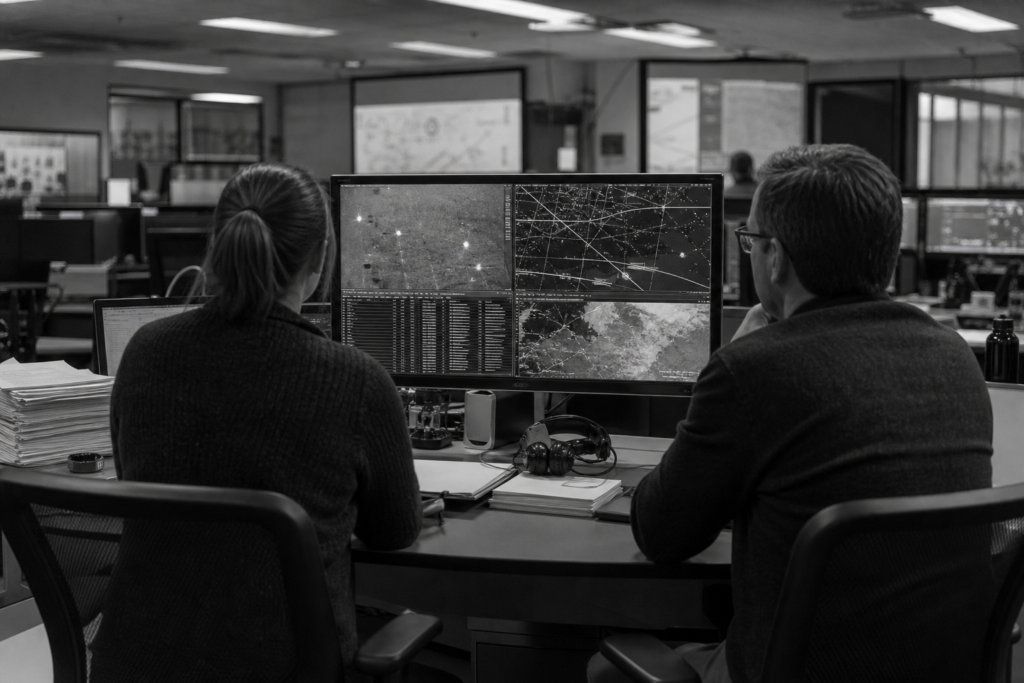
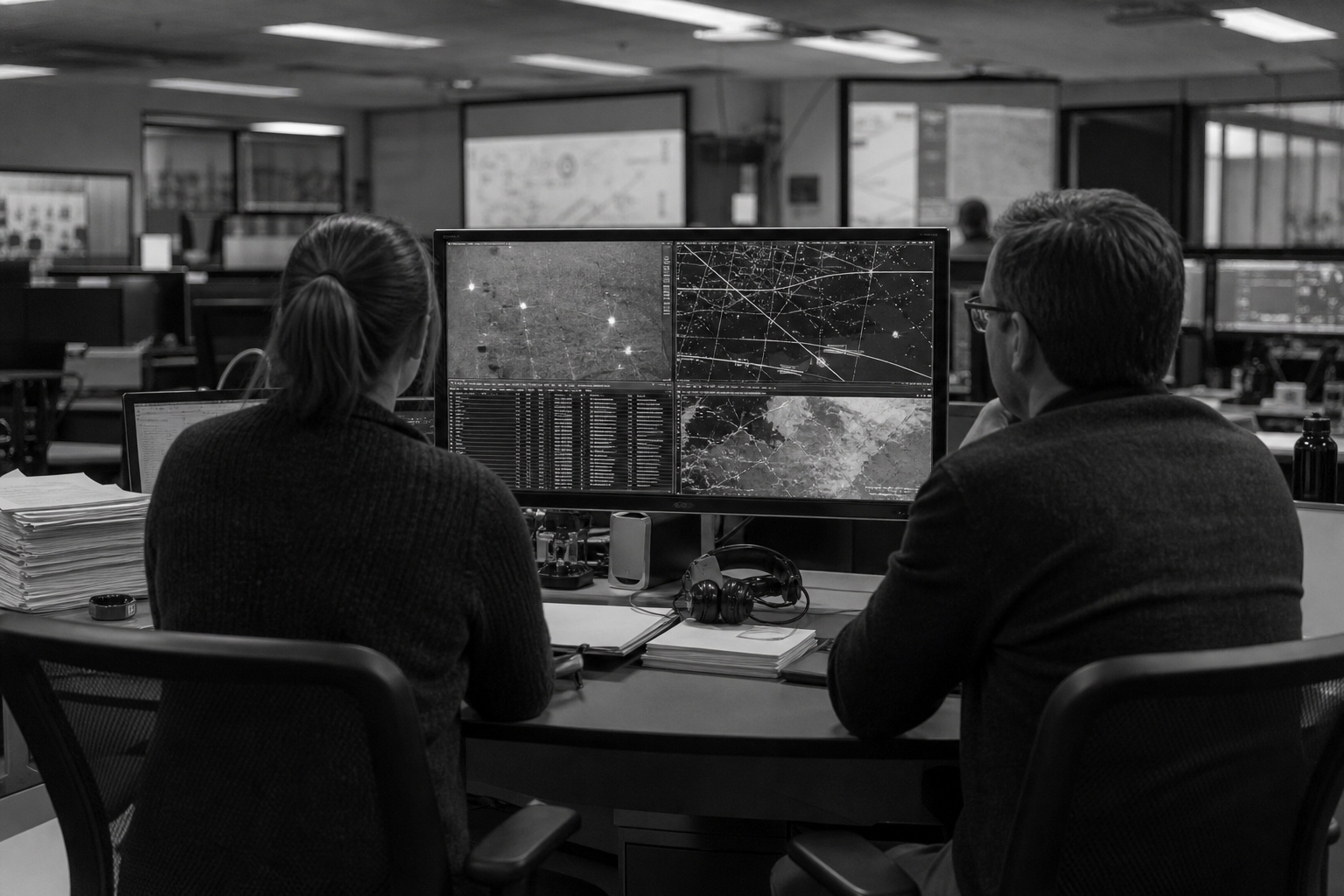
AARO UAP coverage can make one office sound like the switchboard for every UFO claim, classified file, and disclosure demand. It is not. The All-domain Anomaly Resolution Office is the Pentagon’s centralized office for examining and coordinating work on unidentified anomalous phenomena, but investigation is not the same as proving an extraordinary explanation, or releasing every record connected to a case.
That distinction matters. AARO can assess reports and evidence, identify patterns relevant to safety or national security, and publish selected findings. It does not independently control all UAP records, unilaterally declassify material held by other agencies, or deliver final scientific proof of non-human intelligence. An unresolved case means the available information did not support a confident identification; it does not, by itself, establish what the object was.
This article separates mandate from mythology: why AARO was created after the UAP Task Force, where it fits alongside the Department of Defense, the intelligence community, Congress, and the National Archives, and how its reporting, analysis, historical review, and public communications work. It also explains why AARO matters to UFO disclosure while remaining only one part of a much larger oversight and records system.
AARO, in Plain English: The Pentagon’s UAP Office, With Important Limits
A useful checkpoint is whether a claim concerns AARO’s coordinating work or a power held elsewhere in government. The office brings together the handling of reports, analysis of available information, formal reporting, and review of relevant historical claims involving unidentified anomalous phenomena. Its “all-domain” remit means the inquiry is not confined to objects seen in the sky; it can encompass observations across environments when they raise defense or intelligence questions.
“Pentagon UFO office” is therefore convenient shorthand, but an incomplete one. AARO can help turn a report and supporting data into an assessed case, identify when evidence is insufficient, and communicate findings through authorized channels. It is not an independent body that can compel every agency to provide records, declassify material on its own, or turn an unresolved observation into proof of non-human intelligence. For readers following AARO UAP news, the practical test is to separate its ability to investigate and report from the distinct authorities governing classification, records custody, scientific validation, and congressional oversight.
Why AARO Was Created and Where It Sits in Government
The immediate predecessor was the Navy-led Unidentified Aerial Phenomena Task Force, or UAPTF, created in 2020 to improve the collection and analysis of military reports. Congress concluded that a temporary task force was not enough: the FY2022 National Defense Authorization Act directed the Department of Defense to establish a more durable office with defined responsibilities, cross-government coordination, and recurring reporting to lawmakers.
The Deputy Secretary of Defense formally established the All-domain Anomaly Resolution Office in July 2022. It is an Office of the Secretary of Defense organization; subsequent organizational changes placed its director under the Deputy Secretary’s oversight. That location matters because it gives AARO a Department-wide coordinating role rather than confining it to a single military service. It also reflects the subject’s dual character: reports may raise operational safety questions for the armed forces and intelligence questions about foreign technology or collection gaps.
ODNI is a partner, not AARO’s parent agency. The Director of National Intelligence and the Secretary of Defense have joint statutory reporting duties on unidentified anomalous phenomena, linking defense-held information with intelligence-community equities. Coordination does not create universal custody. AARO may request, receive, analyze, and route relevant material, but military components, intelligence agencies, and civilian bodies retain their own records systems, classification authorities, and release processes. A referral to AARO therefore differs from transferring every underlying file into one office’s control.
What AARO Is Actually Authorized to Examine
A report need not begin in the sky to fall within an all-domain anomaly inquiry. The relevant categories are airborne objects, spaceborne objects, maritime objects, and transmedium objects, observations that appear to move between air, water, or space. The point of separating those categories is practical: each can involve different sensors, operating environments, and potential explanations.
“Unidentified” describes the state of the available evidence at the time of assessment. It means the information collected has not yet supported a confident identification; it does not, by itself, establish an object’s origin, technology, or intent. A distant visual observation without usable sensor data is therefore a weaker basis for resolution than a case with time-synchronized imagery, radar information, location data, and corroborating context.
The office’s remit also connects anomalous reports to flight safety and national-security concerns. An object near military aircraft may create an immediate operational hazard even if it later proves ordinary; an unexplained signature can also expose a sensor limitation or raise questions about foreign collection or surveillance. Those are distinct issues from determining whether a case has an extraordinary explanation.
What does AARO do at this boundary? It helps synchronize reporting, information-sharing, and analysis among the government components that hold relevant observations or expertise. That coordinating role is broad, but it should not be mistaken for automatic access to every compartmented program, raw dataset, or classified record. “All-domain” describes the kinds of observations in scope, not unrestricted control over every system that may contain related information.
How AARO Works in Practice: Reports, Sensor Data, Analysis, and Case Resolution
A useful case starts with more than an image: it preserves when and where the observation occurred, which platform recorded it, and what else was operating nearby. The reporting mechanism for military or government personnel is therefore tied to their service or agency channels, where operational context and associated records can be retained alongside the initial account.
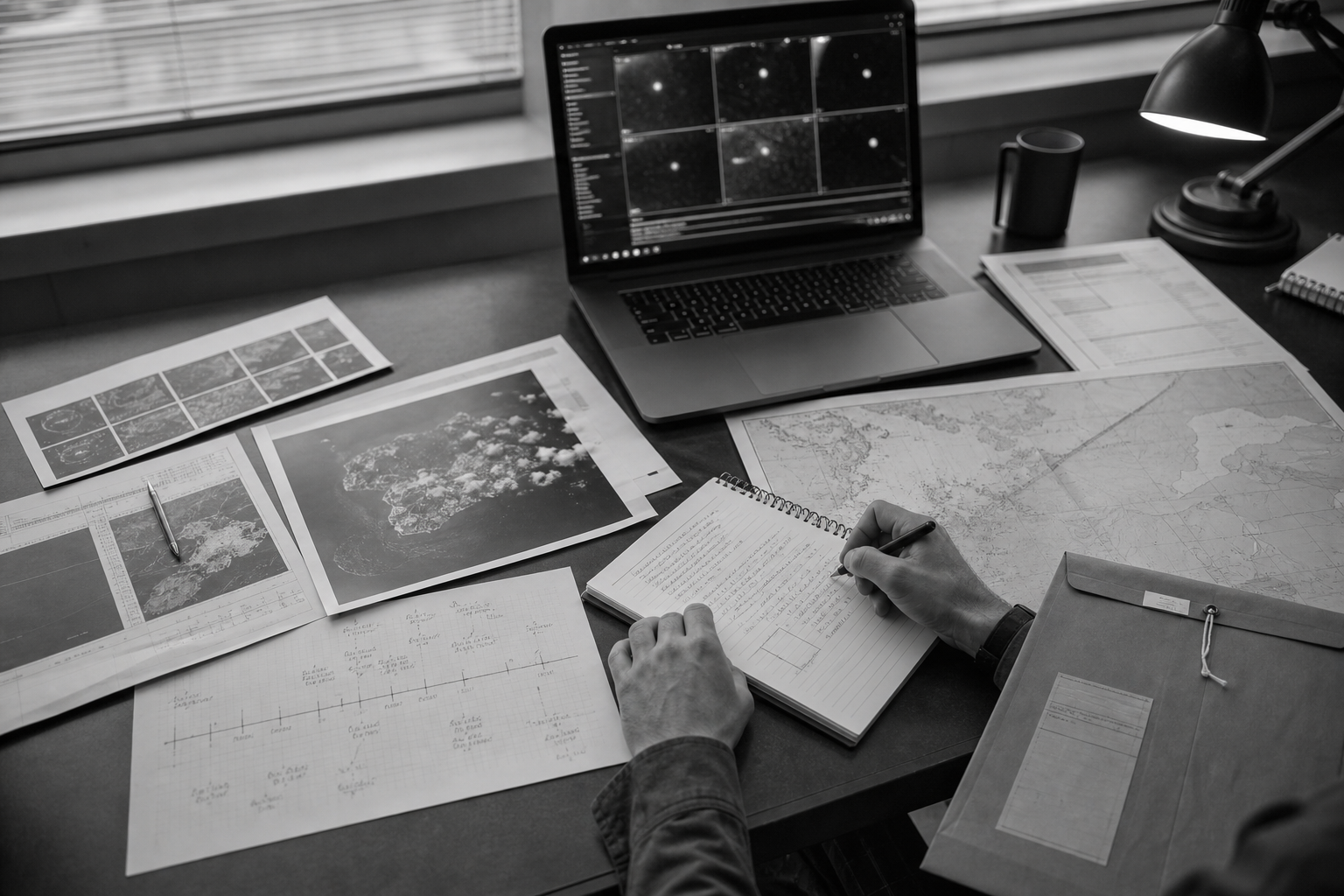
Analysts can then compare sensor data, such as imagery, radar tracks, telemetry, or aircraft-system readings, with contextual information including weather, flight activity, known launches, and possible sensor artifacts. A strong lead is one that can be time-matched across independent sources; a weak lead may be a brief visual observation with no location, timestamp, or corroborating record. The outcome may be an identification, a provisional assessment, a finding that the evidence is insufficient, or a referral to the component best placed to address a flight-safety, counterintelligence, or technical issue.
That workflow explains why case resolution is not a count of spectacular sightings. An unresolved file can mean that the available material cannot support a confident conclusion, not that it demonstrates an exotic explanation. It can also expose a collection problem: a sensor may have captured too little detail, records may not align in time, or a relevant dataset may be unavailable to the analysts reviewing the report.
AARO does not function as a field-investigation service for every public UFO report. Civilian databases can preserve useful witness accounts, but they ordinarily do not include the controlled operational data, chain of custody, or security context available through government channels. Even when AARO can assess government-held material, public release may be limited by the need to protect sources, collection methods, and classified capabilities; a public summary may therefore show less than the underlying case file.
AARO’s Historical Review, and What Its Findings Do and Do Not Settle
Some of the most consequential claims do not concern a new sighting at all; they concern whether the United States has long possessed recovered craft or operated secret programs outside ordinary oversight. Congress directed AARO to conduct a historical record review of those claims, examining government records, interviews, and reported links to alleged UAP programs and crash-retrieval activity.

AARO’s March 2024 historical report on alleged hidden programs and extraterrestrial evidence described its review as reaching back to 1945 and concluded that the material it examined provided no verified evidence that any U.S. government investigation had confirmed extraterrestrial technology. It also reported finding no evidence that the government or private industry had possessed or reverse-engineered technology of extraterrestrial origin. That is a conclusion about the evidence AARO located and assessed, not a scientific finding that non-human intelligence is impossible, nor a ruling on every report ever made.
The distinction matters when weighing allegations of a government UFO cover-up. For example, witnesses have made public allegations of concealed crash-retrieval and reverse-engineering programs; such testimony can justify scrutiny, record searches, and congressional oversight. But an allegation, even a detailed or sworn one, does not by itself establish that the alleged program or material exists. Corroboration would require independently testable records, physical evidence with a documented chain of custody, or witnesses and documents that substantiate the same specific claim.
Critics may reasonably dispute whether AARO had sufficient access to compartmented records, whether its interviews were comprehensive, or whether its methods could detect deliberately hidden activity. Those are challenges to the review’s scope and completeness. They are different from affirmative proof that a hidden program exists. The practical reading is narrower: AARO’s published finding does not settle every historical dispute, but neither do unresolved questions convert extraordinary claims into established facts.
What AARO Can Publish, What It Cannot Declassify, and Who Handles UAP Records
Publication and declassification are different acts. AARO can make selected reports, resolved-case summaries, approved imagery, and newsroom updates public, but a public release does not give the office unilateral power to disclose every underlying file.
For readers, the useful distinction is between an AARO product and a complete case record. Its public website is the appropriate place to look for official reports, imagery releases, case-resolution material, and announcements. A short video or a written resolution may omit sensor settings, locations, collection methods, or related intelligence because releasing those details could expose capabilities or operations.
Classified information is ordinarily reviewed through executive-branch processes involving the agency that originated or controls it. That originator is positioned to judge whether disclosure would reveal protected sources, methods, military capabilities, or other sensitive equities. AARO may analyze or summarize such material within authorized channels; it cannot simply override those controls in the name of UFO disclosure.
Congress provides a separate accountability path through authorizations, reporting requirements, hearings, and oversight of executive agencies. The UAP Records Collection at the National Archives is likewise a separate records function: it is a repository for records covered by applicable law, not an AARO-controlled publishing page. Those channels can expand public access over time, but an incomplete public file is not, by itself, proof of either concealment or an extraordinary explanation.
The Bottom Line: AARO Is a UAP Analysis Office, Not a One-Stop Disclosure Authority
A disciplined reading of future UFO news begins by separating the claim from the institution being invoked. The practical meaning of AARO is an analytic and coordinating role: a report that AARO is reviewing an incident is not a finding that the incident is extraordinary, and an unresolved file is not automatic evidence of extraterrestrial activity.
- Does the claim fall within AARO’s work of receiving, assessing, coordinating, or reporting on anomalous cases?
- Is the supporting material public, independently corroborated, and specific enough to assess, or is it an assertion without underlying evidence?
- Which agency holds the relevant records or sensor data? That question matters because AARO may analyze information without controlling its release.
- Is the dispute about investigation, congressional oversight, declassification, or archival access? Each route has a different decision-maker and a different public outcome.
That framework leaves room for a legitimate policy debate about transparency, access, and whether public explanations are sufficiently complete. It also prevents uncertainty from doing more work than it can bear: an unanswered question may justify further inquiry, but it does not by itself establish what the answer must be.
Understanding AARO Means Separating Its Mandate From the Mythology
The most reliable signal in any future announcement is not how dramatic its label sounds, but whether its reasoning can be traced. A case update should identify the material considered, such as sensor records, witness accounts, environmental context, or historical files, and distinguish an evidence gap from a positive finding. “Unresolved” means the available record did not support a confident identification; it does not establish an extraordinary origin.
AARO’s value lies in making disparate reports and information subject to a more consistent analytic process. Its conclusions remain bounded by the evidence it received, the access available to the review, and the authority of other institutions. An assessment can inform public understanding without settling every scientific question, adjudicating every allegation, or compelling release of every classified record.
- What was reviewed? A specific account of data and context is stronger than a conclusion presented without a visible evidentiary basis.
- What did the review actually conclude? Separate a resolved explanation, an unresolved case, and a finding that the available evidence is insufficient.
- Who controls the next decision? AARO may analyze a matter, while an originating agency controls classification review, a records custodian manages holdings, and Congress exercises oversight.
That division of roles is the practical antidote to mythology: treat AARO UAP announcements as analytic products with defined scope, not as automatic proof, disproof, or full UFO disclosure.
Sources
Frequently Asked Questions
-
What does AARO stand for and what does it do?
AARO stands for the All-domain Anomaly Resolution Office. Established by the Department of Defense in July 2022, it coordinates the reporting, analysis, and assessment of unidentified anomalous phenomena that may affect flight safety or national security.
-
Is AARO the Pentagon’s UFO office?
AARO is commonly called the Pentagon’s UFO office, but that label is incomplete. It examines unidentified anomalous phenomena across air, space, maritime, and transmedium environments, while coordinating with military, intelligence, and civilian agencies.
-
Does AARO investigate alien or non-human intelligence claims?
AARO can review claims involving alleged non-human technology, crash retrievals, and reverse-engineering programs, but an unresolved case is not proof of an extraordinary origin. Its March 2024 historical review found no verified evidence that the U.S. government or private industry possessed or reverse-engineered extraterrestrial technology.
-
Can AARO declassify UAP evidence or release all government UFO records?
No. AARO can publish approved reports, imagery, case summaries, and announcements, but it cannot independently declassify records controlled by other agencies. Originating agencies retain authority over classification reviews, while the National Archives manages the separate UAP Records Collection.
-
What should I look for when evaluating an AARO UAP case update?
Look for the evidence reviewed, including time-synchronized imagery, radar tracks, telemetry, witness accounts, weather, and flight activity. Distinguish a resolved explanation from an unresolved case, because unresolved means the available evidence was insufficient for confident identification, not that the object was extraterrestrial.