What AARO Actually Found in Its Historical Review
Learn what AARO's historical review found about alleged crash retrievals, secret programs, non-human technology, and the limits of its evidence.
That question moved to the center of the UAP debate after the All-domain Anomaly Resolution Office released Historical Record Report, Volume I in March 2024. The report was an official review of historical U.S. government records and allegations involving purported UAP programs, not a finding that every unexplained sighting has been solved.
AARO’s bottom line was narrow but consequential: it said it found no verifiable evidence that the U.S. government or private industry possessed and reverse-engineered extraterrestrial or non-human technology. The AARO historical review also addressed allegations of concealed crash-retrieval efforts, reported non-human material, and secret programs said to have been withheld from Congress.
Those are AARO’s documented conclusions, not proof that no witness was mistaken, no record remains unavailable, or no historical event merits further inquiry. The useful distinction is between an allegation and corroborated evidence: this article examines the records, programs, interviews, and bureaucratic explanations AARO used to reach its findings, as well as the limits of a historical-record review amid continuing public and congressional scrutiny.
What AARO’s Historical Review Was Designed to Examine
Its unit of analysis was the alleged program, not the individual sighting. AARO’s March 2024 historical review examined claims that U.S. agencies or contractors had run hidden UAP efforts, recovered unusual technology, attempted to exploit it, or concealed such activity from oversight.
That focus matters because a historical-program allegation can be tested against archives, budget and contract trails, program histories, security records, interviews, and the provenance of the lead itself. A report of an object in the sky raises a different question: what was observed in a particular event? AARO’s recurring UAP case reporting addresses such incidents; this Pentagon UFO historical review instead asked whether the institutional claims behind long-running stories could be corroborated.
The review therefore did not purport to adjudicate every public statement, resolve every unexplained observation, or establish that all relevant records have always been available. It presented AARO’s assessment of the material it obtained and evaluated. That boundary is essential: a lead can remain unverified without being disproved, while an allegation supported only by repetition is not the same as a documented government program.
AARO’s Bottom Line: No Verifiable Evidence of a Hidden UAP Technology Program
AARO framed its conclusion around corroboration, not speculation. In its March 2024 historical report, the office said it found no verifiable evidence that the U.S. government or private companies possessed extraterrestrial or “off-world” technology, successfully reverse-engineered it, or operated a hidden program to exploit it.

That conclusion also addressed the allegation of a government UFO cover-up. AARO reported finding no evidence that such a program had been improperly withheld from Congress. The important distinction is between a claim that a compartmented activity existed and evidence that can establish its purpose, authority, material holdings, funding, and oversight trail. AARO said the material it reviewed did not corroborate a program meeting that description.
What AARO found was therefore not a blanket judgment on every person who has reported unusual material, unusual sightings, or secondhand knowledge of purported retrieval efforts. “No verifiable evidence” means the office did not reach confirmation on the available record; it does not mean that every account was fabricated, that every witness was knowingly wrong, or that every unexplained incident received an explanation. The AARO UAP report made a narrower institutional finding: the alleged hidden technology enterprise was not substantiated by the evidence AARO said it could validate.
What It Said About Crash Retrievals and Reverse Engineering
Possession and exploitation are distinct checkpoints in a crash-retrieval allegation. AARO said its historical review did not identify records or corroboration sufficient to show that a U.S. government investigation had confirmed recovery of extraterrestrial or “off-world” craft. That is narrower than declaring every reported recovery impossible; it describes what the office could establish from the historical material it reviewed.
UAP reverse engineering is a separate proposition. It requires more than holding unusual material: a government unit or contractor would have to analyze it and successfully reproduce, adapt, or exploit non-human technology. AARO reported no evidence that U.S. companies had successfully reverse-engineered technology of non-human origin. The distinction matters because an account of an alleged retrieval does not, by itself, demonstrate an exploitation program or a technological result.
AARO also offered historical context for why some program narratives may have acquired a UAP interpretation. Highly classified aerospace development can involve compartmented work, unfamiliar prototypes, and limited knowledge even within government. Intelligence collection and foreign-material exploitation can likewise involve recovering, testing, and assessing adversary equipment. AARO’s interpretation was that activities of those kinds may have been misunderstood at the time or retold later as a UAP crash-retrieval program.
That explanation was not presented as a universal solution to every allegation. Rather, the AARO historical review treated documented sensitive programs and foreign-technology efforts as plausible origins for some recurring stories while finding no validated documentary trail from those activities to recovered non-human craft or successful reverse engineering.
Why Some Alleged Secret Program Stories Persisted
Names, clearances, and fragments of genuine paperwork can make an allegation appear more settled than the underlying record. AARO’s approach was to separate a program’s existence from its authorized purpose, operational status, and any evidence that it handled unusual material. A classified label can restrict who knows about an activity; it does not establish that the activity concerned non-human technology.
Kona Blue illustrates the distinction. AARO described it as a proposed Department of Homeland Security special access program, not an approved and operating UAP recovery effort. The proposal contemplated examining reported advanced aerospace technology and possible associated material, but AARO reported that Kona Blue was never approved, funded, or brought into operation. In practical terms, a proposal shows that officials considered creating a compartmented activity; it is not evidence that the proposed mission occurred or that it possessed recovered craft.
AARO applied similar distinctions to AAWSAP and AATIP. It described AAWSAP as a Defense Intelligence Agency contract research effort and treated AATIP as a later, narrower effort associated with UAP-related inquiries rather than a confirmed hidden exploitation program. Their existence helps explain why program names recur in oral accounts, but neither name alone supplies the missing chain from an office or contract to recovered technology.
The report also noted that stories can accumulate through compartmented activities, misunderstood terminology, and secondhand retellings. A person may accurately recall a restricted project, a proposal, or an account from another official while still lacking direct knowledge of its purpose or results. For the AARO historical review, the stronger signal was not an evocative program name but archival records showing authorization, funding, operations, material custody, and corroborated outcomes.
Did the Review Find Non-Human Technology or Biologics?
The biological allegation requires a different kind of proof from a program name, a classified compartment, or a reported sighting. AARO reported that the historical material it assessed did not substantiate U.S. possession of extraterrestrial or other non-human technology, and it identified no support for claims of recovered non-human biologics. That was an assessment of the record before the office, not a claim to have disproved the existence of non-human intelligence.
For an allegation involving physical material, the decisive issue is traceability. A persuasive case would connect an identified object or specimen to a documented recovery, show who controlled it at each stage, preserve contemporaneous collection and custody records, and include independently reviewable technical or laboratory results. Those elements serve different purposes: custody records establish provenance, while analysis can address what the material is. A claimed biological sample without that chain cannot establish where it originated or whether it is the specimen described.
Oral testimony can still supply names, locations, dates, and investigative leads. But even detailed testimony is not the same as a recoverable record, a physical item with known provenance, or corroboration across independent witnesses and documents. On that threshold, the AARO historical review did not identify the evidentiary basis needed to support alien-disclosure claims centered on recovered technology or non-human biologics.
How the Report Relates to Whistleblower Claims and Congressional Scrutiny
Congressional scrutiny gives allegations a public forum and can direct investigators toward specific leads, but testimony and a historical-record finding perform different functions. David Grusch’s public statements made claims of concealed crash-retrieval and reverse-engineering activity a prominent part of the modern UAP debate; the AARO historical review did not validate those claimed programs.
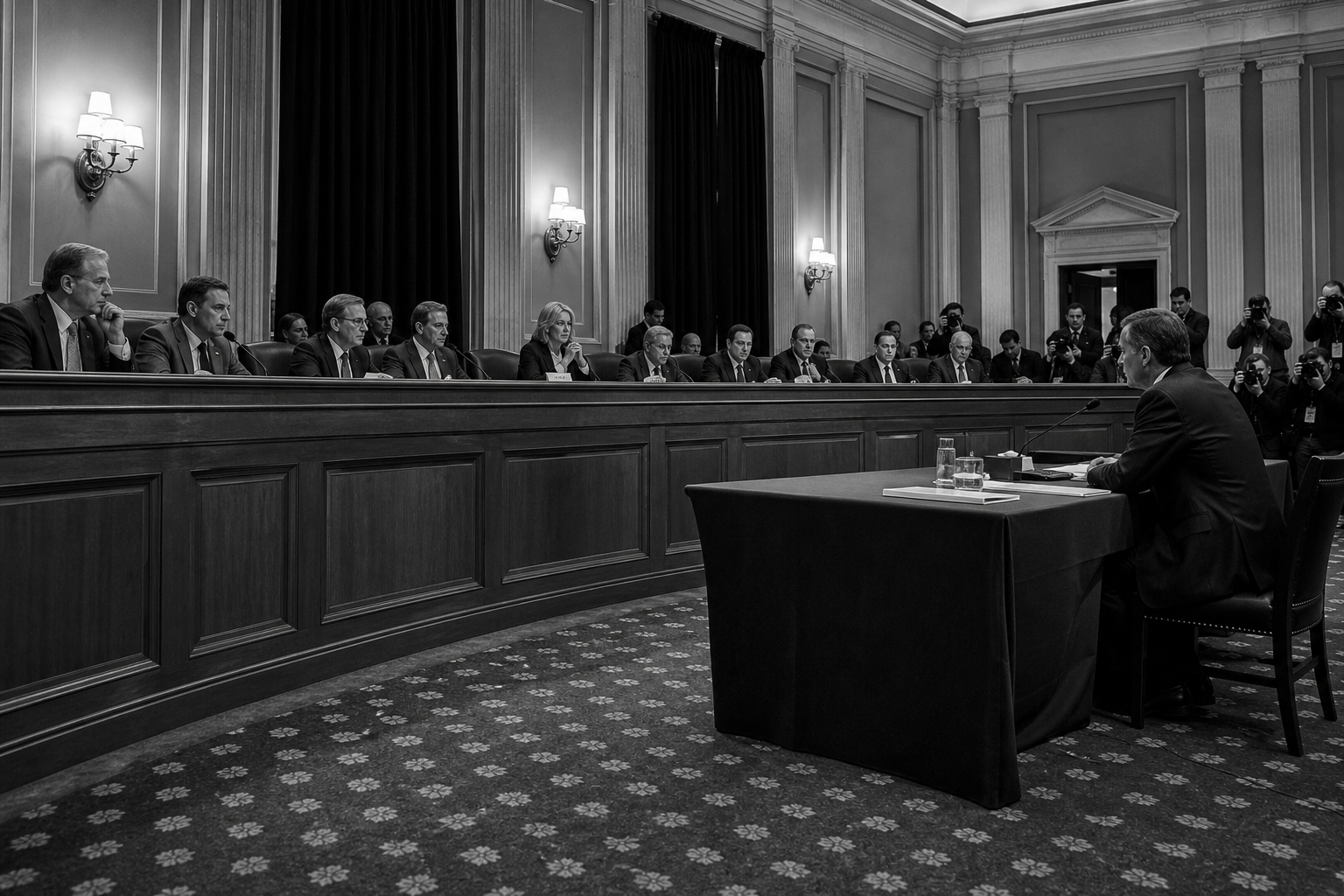
That does not make the report a point-by-point ruling on every assertion made by a UFO whistleblower. Public testimony can describe firsthand knowledge, secondhand accounts, names, locations, or purported records. Classified testimony may add detail unavailable in an open hearing. Neither form, however, automatically supplies the independent records, traceable material, or corroborated program history needed to establish that an alleged enterprise existed and did what is claimed.
The practical distinction is between an allegation that creates an investigative lead and evidence that substantiates it. AARO assessed the historical claims it could investigate through records, interviews, and other corroboration, and reported no verified basis for the central assertions of a concealed non-human technology program. Congressional interest in UAP disclosure can continue alongside that conclusion: further testimony may generate new leads, but it does not itself overturn or confirm the review’s documented findings or the separate whistleblower complaint and oversight process.
The Limits of the Historical Review, and the Right Way to Read It
A historical inquiry is only as complete as the material it can obtain and test. The AARO historical review drew on accessible records, interviews, and cooperation from relevant organizations, then applied a corroboration standard to determine whether a claimed program or material trail could be established. Classification can limit public visibility without proving an allegation either way; the decisive question is whether investigators can connect records, people, activities, and, where alleged, physical evidence into a verifiable account.
That scope differs from AARO’s annual reporting on contemporary UAP sightings. Annual reports describe incoming cases, dispositions, and resolution trends in operational reporting; they do not function as a retrospective adjudication of every asserted historical crash-retrieval, reverse-engineering, or concealment program. An unresolved sighting is therefore not evidence of a hidden technology enterprise, just as a historical-program finding does not explain every unusual observation.
The right reading is consequently narrow and precise: after reviewing the historical material available to it, AARO reported no verified evidence for the alleged concealed non-human technology enterprise. That finding is not a universal test of every account or a guarantee that no additional record or testimony could emerge. The continuing public debate turns on whether new, independently corroborable material could materially change that evidentiary picture.
What AARO’s Historical Review Actually Establishes
The report’s lasting value is explanatory rather than dispositive. AARO matched several recurring narratives to documented realities, such as sensitive aerospace activity, foreign-material exploitation, proposed programs, and renamed or misunderstood offices, without finding the evidentiary chain needed to establish recovered non-human craft, non-human biologics, or a concealed reverse-engineering program.
That distinction sets a useful threshold for readers. A real classified project, a witness’s sincere account, or an unresolved UAP incident can justify further inquiry; none alone demonstrates that the government possessed extraterrestrial technology. AARO’s conclusion rested on the absence of verifiable, connected support across the historical records, interviews, and institutional access available to its investigators.
So the AARO historical review establishes what the office could substantiate from its review, and why it rejected particular program and retrieval claims, not an absolute proof that every disputed account is false or that no new evidence can emerge. The practical question for future allegations is whether they produce independently corroborable records, traceable material, or firsthand testimony that can be tested against the historical record. Until then, the report remains an official negative finding on the central concealment claim, while the wider evidentiary debate remains open to genuinely verifiable new information.
Sources
Frequently Asked Questions
-
What did AARO’s March 2024 historical review conclude about UFO crash-retrieval programs?
AARO found no verifiable evidence that the U.S. government or private industry possessed recovered extraterrestrial or non-human craft. It also found no corroborated records showing a hidden program that recovered and exploited off-world technology.
-
What did AARO say about reverse-engineering alleged alien technology?
AARO found no evidence that U.S. companies successfully reverse-engineered technology of non-human origin. It distinguished alleged possession of unusual material from the separate claim that a government or contractor analyzed, reproduced, adapted, or exploited it.
-
What did AARO say about David Grusch’s crash-retrieval claims and a government UFO cover-up?
AARO’s historical review did not validate the alleged concealed crash-retrieval or reverse-engineering programs associated with Grusch’s public claims. It also reported no evidence that a hidden non-human technology program had been improperly withheld from Congress.
-
What evidence should you look for when evaluating a claimed UAP crash retrieval or non-human material?
Look for documented recovery records, a continuous chain of custody, identified personnel and program authorization, funding and operational records, and independently reviewable laboratory results. An unresolved sighting, classified program name, or secondhand testimony alone does not establish possession of non-human technology.