Unspecified Object Sighting Reported in Cambridge, Ohio on January 1, 2020
Review the Cambridge Ohio UFO sighting January 1 2020, what the report documents, possible explanations, and key unanswered questions.
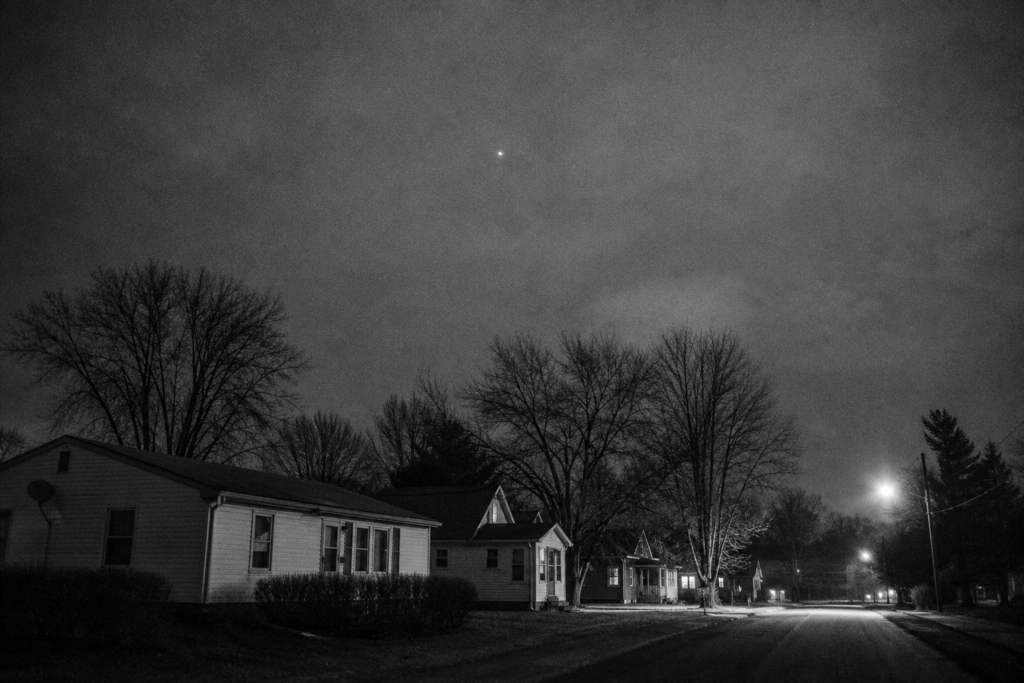
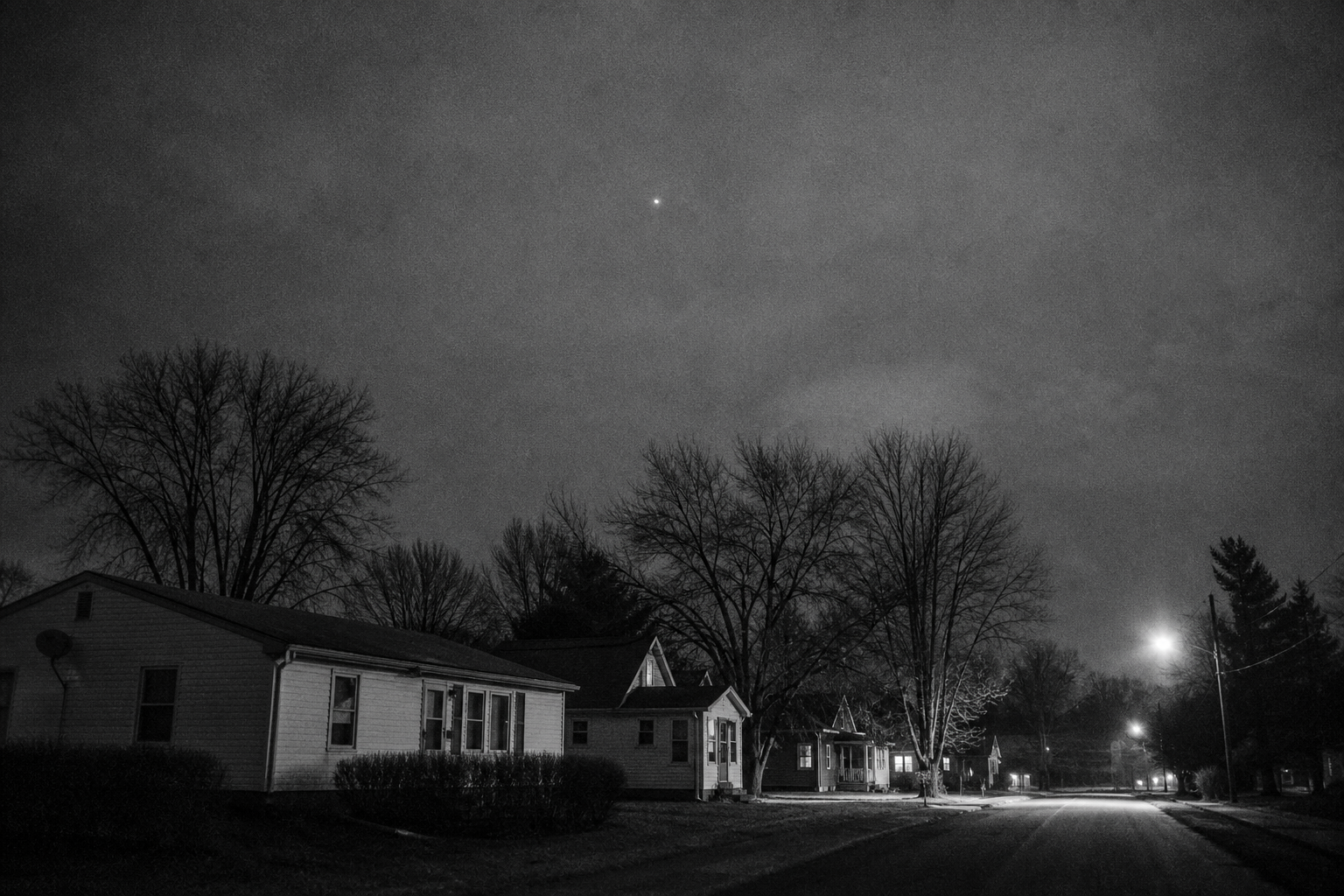
The Cambridge Ohio UFO sighting January 1 2020 is best treated as a reported observation, not as confirmation that an extraordinary craft was present. The available premise is narrow: an unspecified object was reportedly seen in or near Cambridge on that date. “UFO” is a descriptive label for something not identified by the observer or record; it does not establish an extraterrestrial, military, or otherwise anomalous origin.
This review follows the evidence in layers. First, it identifies the closest available original record and separates the witness’s reported date, place, appearance, movement, and duration from details that may have been added when the entry was filed or indexed. Next, it considers whether independently usable context, such as weather, sky conditions, aviation activity, or contemporaneous local reporting, can support, narrow, or complicate the account.
A useful distinction governs the entire inquiry: a sighting can be real as a report even when the object’s identity remains unresolved. Strong corroboration would require independently attributable material that matches the claimed time and place; a bare database entry records an allegation, not physical evidence. Where the record lacks precise timing, direction, imagery, additional witnesses, or official findings, those gaps will be identified rather than filled with speculation.
What Is Known About the Report at a Glance
The record presently available for review supports only a narrow starting point: someone associated an unspecified object sighting with Cambridge, Ohio, and January 1, 2020. That association preserves a reported observation and location-date claim; it does not, by itself, establish what was seen, who saw it, or whether any independent party observed the same thing.
For this report, dates must be kept in separate fields rather than treated as interchangeable. The observation date is the date attributed to the event itself: January 1, 2020. A filing or publication date would show when an account was submitted to, or displayed by, a reporting outlet. An indexing date would instead mark when a database or search system added, updated, or catalogued the entry. Only the first date places the claimed sighting in time; the latter two describe the record’s history.
The earliest traceable report, its submitter, and the relationship between any displayed dates have not yet been established in the material available here. That gap matters: a database listing can preserve an allegation long after the event without supplying witness identity, precise location, time, imagery, or corroboration. The next review therefore treats each detail as either a reported claim, independently checkable context, or an unresolved absence.
What the Available Source Record Actually Claims
The usable record is limited to a location-and-date association, so its contents can be stated more precisely as a field-by-field ledger rather than reconstructed into a narrative. No traceable original report text, screenshot, archive capture, named reporting database entry, local-news account, or official incident record is included in the material available for this review.
| Field | What the available record supports |
|---|---|
| Reported date | January 1, 2020 is associated with the claimed observation. |
| Location | Cambridge, Ohio is the stated locality. No street address, landmark, viewing position, or indication of whether the event was inside city limits is available. |
| Time | Absent. The record does not supply an approximate or exact time of day. |
| Direction and elevation | Absent. There is no reported compass bearing, travel path, height, or angle above the horizon. |
| Duration | Absent. The available material gives no observation length. |
| Appearance and motion | The object is unspecified. No color, shape, lights, size comparison, brightness, speed, maneuver, or departure behavior is preserved. |
| Sound and witness count | Both are absent. The material does not indicate whether any sound was heard or whether one person or more than one person reported the observation. |
| Media, follow-up, and investigation | No photograph, video, audio, interview, follow-up account, official inquiry, radar record, or other corroborating item is identified in the available record. |
This is consequently not an original report in the fuller evidentiary sense: it does not preserve a witness narrative that can be quoted or closely compared with independent records. “UFO report Cambridge Ohio 2020” is therefore a useful search label, but it should not be mistaken for confirmation that an independently established incident occurred or a finding about its origin. The only retained claim is that an unspecified sighting was associated with Cambridge and January 1, 2020; every descriptive field needed to test an explanation remains blank.
Separating the Sighting Date From Filing, Publication, and Indexing Dates
Dates perform different evidentiary jobs, and collapsing them into one can create a misleading chronology. In this case, January 1, 2020 can be retained only as the reported observation date: it is the date attached to the Cambridge claim, not a demonstrated date of occurrence. No submission timestamp identifies when a witness or intermediary first filed the account; no publication date shows when it first became publicly visible; and no revision or indexing date establishes when a searchable database added or altered the entry.
| Date field | What it would establish | Status here |
|---|---|---|
| Observation date | The day the event was reportedly seen | Associated with January 1, 2020 |
| Submission date | When the account was filed | Not available |
| Publication or indexing date | When an entry became visible or searchable | Not available |
| Update date | When a record was edited or migrated | Not available |
The date and location are likewise too broad for a reliable sky reconstruction. Cambridge, Ohio is the only preserved locality; the record does not identify an observer position, a nearby road or landmark, or whether the view was from within city limits. It also supplies no time, whether exact or approximate, and no time-zone notation. A useful cross-check would need at least a viewing position, local time, direction, elevation, and duration. Without those fields, the January 1 2020 UFO sighting in Cambridge Ohio cannot be matched responsibly to a particular object, route, or celestial position.
What Can Be Independently Checked
Independent checking works best when a record can be aligned on both time and geometry. Here, the missing time, viewing direction, apparent height, movement, and duration prevent that alignment, but several evidence categories would still serve different, limited purposes.
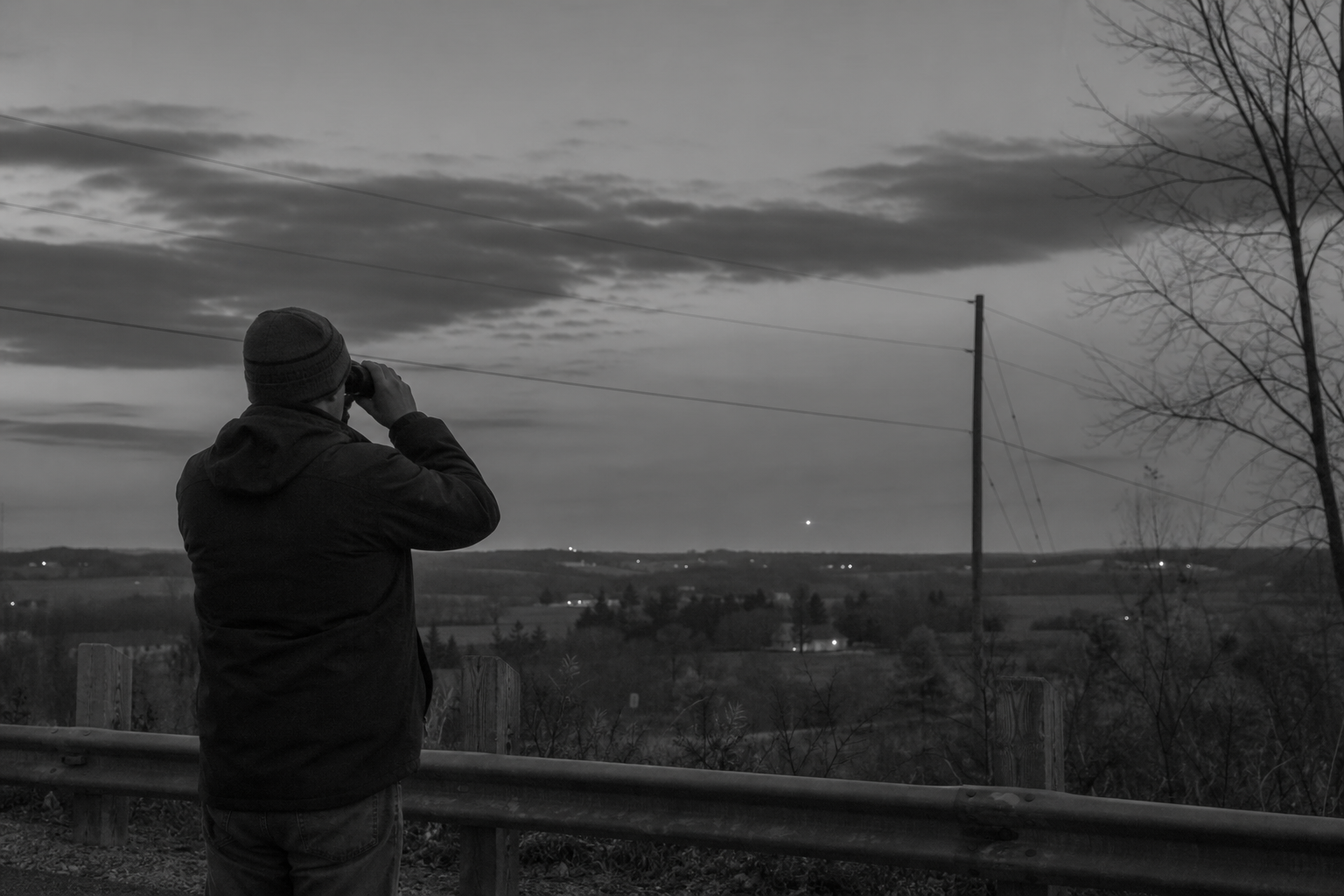
- Weather observations can describe conditions near Cambridge during a defined interval: cloud cover, visibility, precipitation, wind, and temperature. Those details may show whether a clear or obscured sky was plausible, or whether wind could be relevant to a drifting object. A daily summary is weaker than an hourly observation, however, and neither identifies an object without a reported viewing time and direction.
- Astronomical reconstructions can place the Moon, bright planets, stars, satellites, and known meteor activity in the sky for a particular location and time. Their strongest use is a close match, for example, a bright object reported low in the same direction as a visible planet. With no time or bearing, an ephemeris can provide only a list of possibilities, not an identification.
- Aviation records may show aircraft whose recorded routes passed near the area during a narrow time window. A matching track would be contextual evidence rather than proof, because a track does not show what an observer perceived from the ground. Conversely, no match in a public flight-tracking service would be inconclusive: the search would depend on the missing time and on what data that service retained and displayed.
- Contemporaneous local material could include news coverage, publicly released dispatch information, photographs, or reports filed independently of the existing location-date association. The useful distinction is independence: multiple entries copied from one original claim do not become multiple witnesses. Separately dated accounts with compatible times, locations, and descriptions would be more meaningful.
- Independent witnesses could corroborate that something was observed, particularly if their accounts were recorded before they influenced one another. They still would not automatically establish an object’s altitude, distance, or identity; those conclusions require details that permit comparison with external records.
No such matched weather record, sky reconstruction, flight record, local account, or independent witness statement is preserved in the material reviewed for this Cambridge report. That is a limit on corroboration, not evidence that no aircraft, celestial object, atmospheric effect, or other conventional explanation was present. It also does not support claims of radar confirmation, an official investigation, imagery, or multiple observers.
The practical result is a bounded evidence ledger: environmental and traffic records could potentially contextualize a precisely described event, while this entry does not provide the fields needed to connect it responsibly to any one of them. The remaining question is therefore not which explanation is most dramatic, but which ordinary possibilities can actually fit the absent observational details.
Possible Conventional Explanations, and Why the Record May Still Be Unresolved
Each proposed explanation has a recognizable observational pattern, but none can be compared responsibly to this entry because the record preserves no appearance or motion description.
- Aircraft would be a plausible comparison if the observer described navigation lights, a steady route, audible engines, or a sequence of lights. A flight moving away can appear stationary or unusually slow; without a time, direction, or duration, no route-to-sighting comparison is possible.
- Satellites and bright planets are relevant when a light is steady, distant-looking, and seen in a known part of the sky. A satellite normally appears to cross the sky smoothly, while a planet remains fixed relative to nearby stars. The Cambridge entry supplies neither behavior nor sky position.
- Meteors would fit a brief streak, flash, or rapidly vanishing light. Drones and balloons would call for a closer-looking object, irregular hovering or maneuvering, or drift consistent with wind. None of those distinguishing features is retained.
- Atmospheric effects and distant ground lights can alter apparent brightness, color, position, and distance, especially when cloud, haze, terrain, or intervening structures obscure context. Those possibilities require a description of the viewing conditions that is absent here.
These are possible conventional explanations, not competing identifications. The missing time, bearing, elevation, apparent size, color, speed, sound, and duration leave no reported characteristic against which one category can perform better than another.
Likewise, an unidentified object in a public listing means only that the observer or surviving record did not provide an identification. It does not show that any agency evaluated the event or officially designated it an unidentified aerial phenomenon. The Cambridge Ohio UAP sighting January 1 2020 therefore remains unresolved in the limited sense that the available record cannot support a defensible identification, not in the stronger sense of demonstrating an anomalous object.
Bottom Line: A Local Report With Important Unanswered Questions
The decisive distinction is between a claim preserved in a local listing and an event independently reconstructed from evidence. For this Cambridge Ohio unidentified object report, the public record reviewed supports the location-date association: an unspecified sighting was connected with Cambridge and January 1, 2020. It does not support further particulars about the observer, object, timing, trajectory, appearance, duration, photographs, radar, or additional witnesses.
Independently contextualized: weather, astronomical, aviation, and local-news archives are useful record categories, but the surviving entry lacks the time and viewing geometry needed to match it responsibly to any one of them. Unknown: whether an original submission once contained those details, whether other people saw the same object, and whether any contemporaneous record was created outside the listing.
No authority investigation, official UAP classification, military involvement, or government response is documented in the public material reviewed here. That absence does not establish a particular explanation; it establishes only that the available record cannot substantiate those claims.
Researchers who want to improve the record should preserve the earliest available page capture or original submission, including its URL and access date; search dated local newspaper, broadcast, police, airport, and library archives; and seek firsthand accounts rather than reposts. A strong follow-up account should follow safe reporting guidance by recording an exact or approximate time, observing location, compass direction, elevation, duration, motion, colors or lights, weather, and names of independent witnesses. Those fields create the basis for meaningful corroboration rather than expanding a sparse entry into UFO news speculation.
What This Cambridge Report Can, and Cannot, Establish
The appropriate final classification is evidentiary, not sensational: this is an unresolved local report with a limited surviving record. Its value lies in preserving a claimed Cambridge, Ohio, location and January 1, 2020 observation date for future research. It does not provide the descriptive or independently matched information needed to identify an object.
That distinction changes how stronger claims should be treated. An unresolved entry is not proof of an anomalous object, extraterrestrial origin, radar-tracked craft, or official UAP case. Those conclusions would require additional material that can be attributed and compared: for example, a contemporaneous firsthand account with a time and direction, an original image with usable provenance, or an independent record that corresponds to the same observation.
The record also should not be forced into a conventional explanation merely because aircraft, celestial objects, weather effects, or other familiar possibilities exist. A plausible category becomes a meaningful identification only when its expected time, position, appearance, and motion can be tested against the reported observation. Those comparison points are absent here.
For readers searching the Cambridge Ohio UFO sighting of January 1, 2020, the durable conclusion is straightforward: a sighting was reported, but the available material cannot establish what was seen or why. Keeping reported facts, possible context, and unanswered gaps separate preserves the event’s history without assigning it more significance than the evidence can bear.
Frequently Asked Questions
-
What was reported over Cambridge, Ohio, on January 1, 2020?
An unspecified object sighting was associated with Cambridge, Ohio, on January 1, 2020. The available record does not identify the object, observer, exact location, or time of the observation.
-
Is there evidence confirming the Cambridge, Ohio UFO sighting?
No independent confirmation is documented. There are no identified photos, videos, radar records, official reports, follow-up interviews, or independently recorded witness accounts.
-
Was the January 1, 2020 Cambridge sighting investigated by authorities?
No authority investigation, official UAP classification, military involvement, or government response is documented in the available public material. The record is limited to a location and reported observation date.
-
What details are needed to check a UFO report against aircraft, weather, or astronomy records?
A useful comparison needs an exact or approximate local time, viewing location, compass direction, elevation, duration, appearance, and movement. The Cambridge report lacks all of these details, so it cannot be reliably matched to a flight route, weather condition, planet, satellite, or meteor.
-
Does an unidentified object report mean it was a confirmed UAP or extraterrestrial craft?
No. An unidentified object report only means the observer or surviving record did not establish an identity, and it does not confirm an anomalous, extraterrestrial, military, or officially classified UAP object.