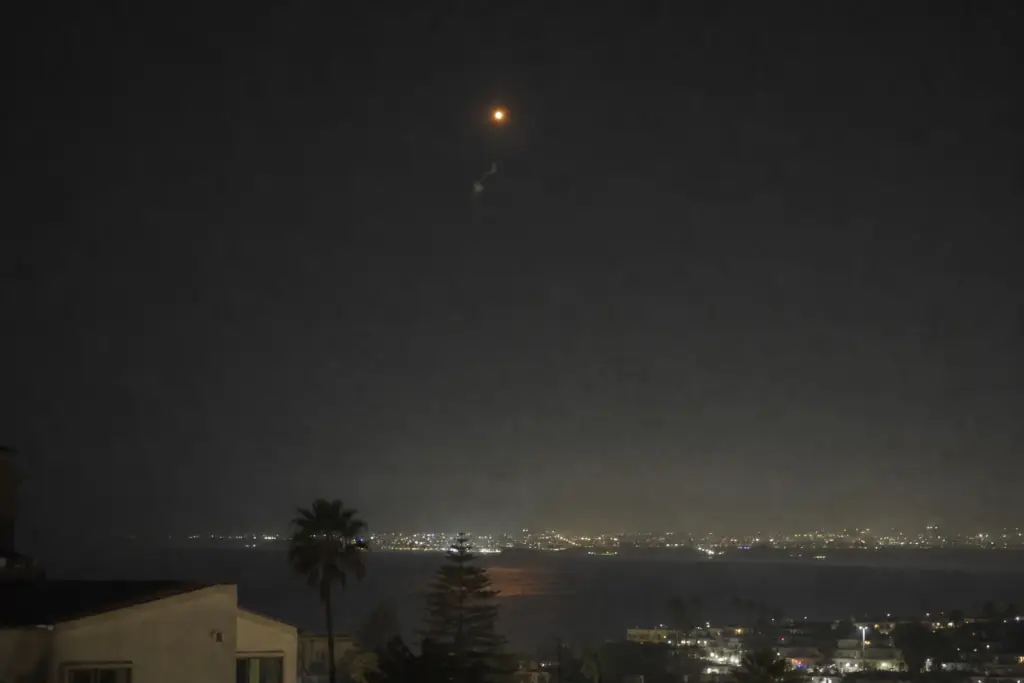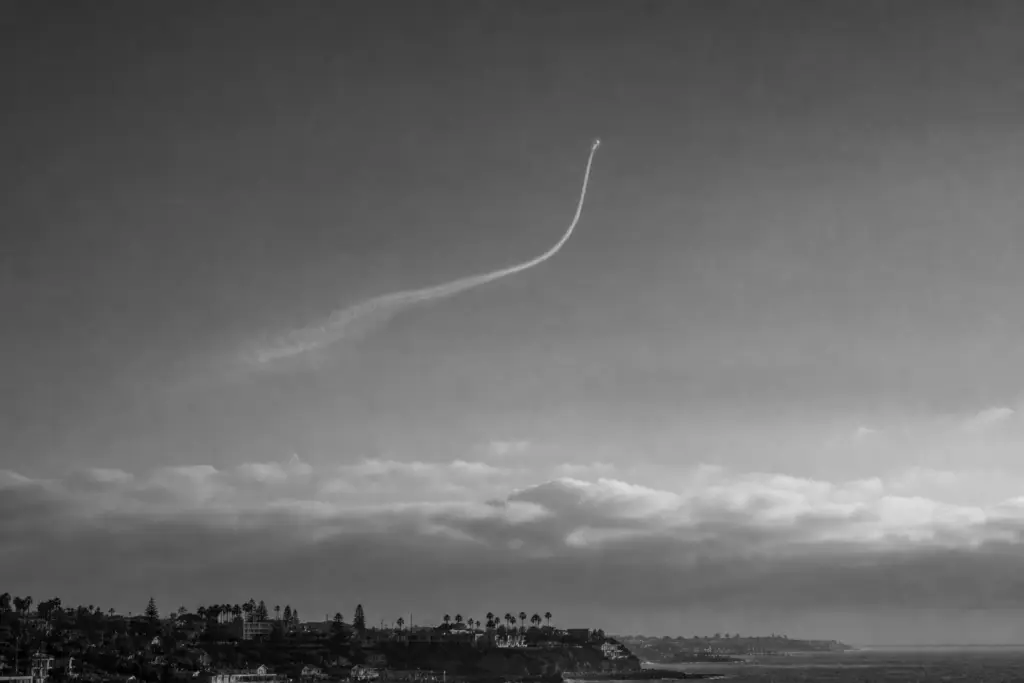
The first checkpoint is simple: a report tied to Farmington Hills, Michigan, and January 2, 2020, establishes a claimed place and observation date, not the nature of what was seen. This Farmington Hills UFO sighting is therefore considered as a local claim rather than proof of a UFO, a UAP in any official sense, or an extraterrestrial event.
The available research packet supplies no original report, witness statement, image, video, reporting-database entry, or contemporaneous local coverage that can independently substantiate the event details. That limitation is central. “Unidentified” can describe what a witness could not recognize at the time; it does not mean that investigators excluded ordinary explanations, nor does it identify an object’s origin.
This assessment separates the reported date and place from details that remain unverified, including the observation time, direction, apparent altitude, duration, appearance, motion, and any supporting media. Those particulars determine whether a later comparison can be meaningful. A precise timestamp and direction, for example, can be compared with weather, bright sky objects, and aircraft activity; without them, those categories remain context rather than an identification. The result is an evidence-first account of what the record can support, what it cannot, and what would be needed to assess the report more fully.
Farmington Hills Report: What Is Being Assessed
Three separate dates can attach to a sighting claim, and treating them as interchangeable can distort the record. The observation attributed to Farmington Hills, Michigan, is dated January 2, 2020, but no material available for this assessment establishes when anyone submitted an account or when a database, news outlet, or other publisher first made it public.
The evidentiary standard is correspondingly narrow. A documented fact requires a traceable record; a witness assertion requires the original or reliably preserved account; and an inference must follow from details that can actually be compared with external information. An unspecified-object report alone does not establish an extraterrestrial craft, non-human intelligence, a formally confirmed UAP, or government involvement. It establishes only that someone may have reported difficulty identifying something they believed they observed.
Occurrence date means when the observation reportedly happened: January 2, 2020. Report date would mean when a witness or intermediary submitted the account. Publication date would mean when a database, news outlet, or other publisher made it public. Neither a report date nor a publication date can currently be assigned from the available material, and neither should be substituted for the reported occurrence date.
For that reason, the unidentified object sighting in Farmington Hills, Michigan is assessed as a reported claim with insufficiently documented particulars, rather than as a confirmed event with an established explanation or official status.
What the Available Record Documents
The available material contains no retrievable original case record for this report: no submitted form, database-entry URL or capture, archive record, witness statement, contemporaneous news article, image, video, or official incident log. That absence fixes an important boundary for the record. There is no named repository that preserves the claim, no archive date to establish when it entered public circulation, and no complete text from which to quote the observer.

What can be carried forward is limited to the report label itself: Farmington Hills, Michigan, and January 2, 2020. The label attributes a place and an occurrence date, but it does not establish who supplied those fields, whether they were entered by a witness or a later compiler, or whether the location denotes the viewing position, the object’s apparent position, or simply the nearest city. In that limited sense, the Farmington Hills UAP sighting January 2 2020 remains a location-and-date attribution rather than an original case record.
No direct witness claim is available to distinguish from a database field or a later retelling. There is consequently no verbatim description of an object, no account of what prompted the “unidentified” label, and no basis for treating details that may appear in unsourced summaries as part of the historical record. An editorial assessment can describe the documentation as sparse; it cannot responsibly supply the missing observation narrative.
- Preserved record: none located in the material available for this assessment.
- Witness account: none available in attributable, quotable form.
- Media or metadata: none available.
- Contemporaneous corroboration: no local reporting or official record is available here.
The practical result is not that an event has been disproved. It is that the Farmington Hills Michigan UFO report cannot be reconstructed beyond its reported date and locality. Any account that adds appearance, behavior, timing, or an explanation would go beyond the surviving material rather than interpret it.
What Remains Unknown, and Why It Matters
A meaningful comparison begins with observation geometry: when the object was seen, where the observer was standing, the direction of view, its angle above the horizon, and how long it remained visible. None of those particulars is preserved for this reported Farmington Hills observation. A precise time would allow a comparison with objects occupying a particular part of the sky or aircraft passing through the area; a date alone cannot do that work.
Direction and apparent elevation matter because they distinguish an object low on a distant horizon from one high overhead. Motion and duration matter for the same reason: a steady light seen briefly, a slowly drifting object, and an object apparently holding position present different comparison questions. Without a description tied to those details, aircraft, astronomical objects, balloons, drones, and atmospheric phenomena cannot be meaningfully matched to, or excluded from, the report.
There is also no retained weather observation connected to the viewing moment. Cloud cover, visibility, wind, precipitation, and optical conditions can affect both what a person sees and how an ordinary object appears. Conditions recorded for a whole day, even if later located, would be a weak substitute for the missing time and viewing direction.
Corroborating evidence is likewise absent. Independent witnesses are more useful than repeated retellings of one account because separately recorded observations can be compared for time, position, appearance, and motion. Original photos and video metadata would potentially preserve capture time, device information, and sometimes location, while an edited image or repost without provenance offers far less evaluative value.
These omissions do not weigh for an extraordinary explanation; they prevent a reliable assessment of any explanation. The proper status of this Michigan UFO sighting in January 2020 is therefore insufficiently documented, rather than identified, disproved, or unresolved on the merits.
Contextual Checks: Weather, Sky Objects, and Aircraft
A retrospective comparison would start by placing contemporaneous station observations alongside a known viewing time. Cloud layers, visibility, precipitation, wind, and temperature can determine whether a light could be seen at all and whether haze, thin cloud, reflections, or changing cloud edges altered its apparent shape. A brief report of a low, stationary glow in the same direction as cloud cover would call for a different assessment than a sharply defined light moving across a clear sky. No time-specific weather record can be connected to this case because no viewing time or direction survives.
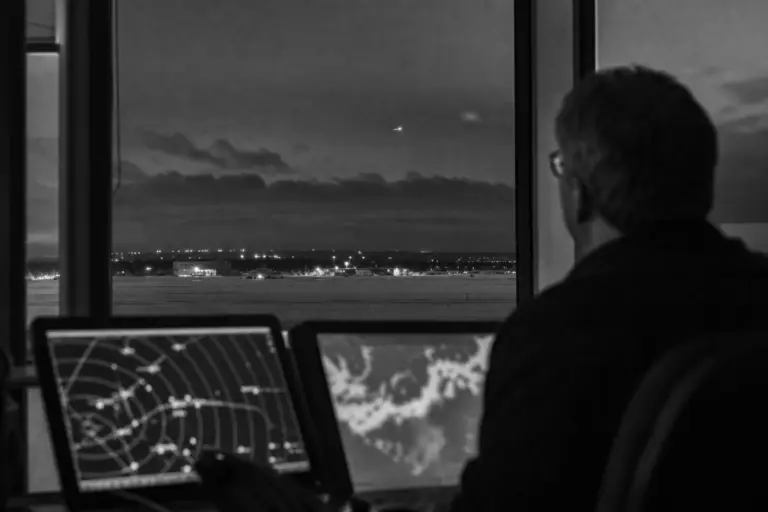
Bright astronomical objects can be tested with an ephemeris or sky chart only when the local time and line of sight are known. A planet or bright star may appear fixed relative to the horizon; a meteor would normally be brief and fast; a satellite generally crosses the sky on a continuous track. Those are behavioral comparisons, not identifications by category. The January 2 2020 UFO sighting Michigan label supplies none of the geometry or duration needed to establish a match with astronomical objects.
Aircraft analysis likewise requires more than a city and date. Flight-tracking data can potentially compare a reported bearing, altitude, and motion with a transponder-equipped flight, while airport approach and departure patterns may help interpret lights that seem to hover or turn. A track near Farmington Hills at the relevant minute would still need to resemble the reported movement and appearance; conversely, an empty public tracking record would not exclude aircraft lacking usable public position data. There is no timestamp or description here to perform either comparison.
Balloons and drones tend to be evaluated through drift or maneuvering, apparent size, lighting, and wind; optical and perceptual effects through the observer’s viewing angle, intervening glass, nearby lights, and cloud or haze. Each possibility depends on a specific reported feature that is absent from the surviving record. No verified weather, sky-object, aviation, satellite, balloon, drone, or optical match can therefore be assigned to this report.
Does an Unidentified Object Report Qualify as a UAP?
Labels such as “unidentified object,” “unresolved case,” and “UAP” operate at different evidentiary levels. A witness may be unable to identify what was seen in the moment; that describes the observer’s recognition, not the object’s origin. An unresolved case goes further: it means usable information was reviewed but did not support a reliable identification. A formally documented unidentified anomalous phenomenon report, by contrast, would preserve enough details for an agency or investigator to record and assess an observation that remained unaccounted for.
UAP terminology does not establish advanced technology, nonhuman origin, or even a physical craft. It is a descriptive label for an observation not yet characterized within the record being evaluated. The distinction matters because a report can remain without an explanation for two very different reasons: investigators may have examined substantive evidence and found no match, or the evidence may be too sparse to test any candidate explanation.
The Farmington Hills entry belongs in the second category. No original witness account, reporting-database record, investigative file, media, observation time, or descriptive details are available to show that a specific object was assessed and left unresolved. It is therefore neither identified nor plausibly explained, but insufficiently documented. Calling it one of many UAP sightings would overstate what the surviving record can support; it is more accurately a historical location-and-date claim whose underlying observation cannot presently be evaluated.
Evidence Needed to Evaluate the Sighting After the Fact
A usable retrospective file begins with the observer’s earliest notes, preserved in their original form. Those notes should separate what was directly seen, shape, color, motion, sound, duration, and changes, from later interpretation. A precise local timestamp, including time zone and whether it came from a phone, camera, written note, or recollection, creates the anchor for every comparison; it can narrow sky, weather, and traffic records, but it cannot by itself identify the object.
- Location and sightline: record the viewing position, compass direction, apparent elevation above the horizon, and any obstructing buildings, trees, or window glass. This observation geometry distinguishes, for example, a horizon light from something passing near overhead, but it does not supply distance or physical size without additional reference points.
- Original media: retain unedited photo or video files, not only screenshots, reposts, or compressed social-media copies. Photos and video metadata may preserve capture time, device details, and sometimes location; they can test a claimed timeline, but a single image without scale, focus information, or provenance rarely identifies an object on its own.
- Independent witnesses: obtain separate accounts before witnesses compare memories or view one another’s media. Corroborating evidence is strongest when observers independently agree on time, direction, and behavior; agreement alone still cannot establish what produced the observation.
- External records: pair the time and geometry with local weather observations and aviation records. Weather can clarify visibility and cloud conditions, while flight data can assess reported aircraft candidates; neither record rules out every untracked or misperceived possibility.
- Chain of custody: note who retained each file, when it was copied, and whether it was edited or transmitted. This preserves provenance and allows later reviewers to distinguish an original capture from an altered derivative.
Together, these materials describe how to verify a UFO sighting as an observation claim: they enable comparisons and expose inconsistencies, rather than proving an extraordinary conclusion. None is presently available for the Farmington Hills report.
Bottom Line: A Local Report, Not Evidence of Disclosure
The sound conclusion is narrow: the Farmington Hills entry preserves a claimed locality and date, but no available underlying record permits a finding about what, if anything, was observed. It does not support identification, an unresolved-anomaly finding, extraterrestrial claims, or an official investigation.
UFO disclosure, UAP disclosure, AARO UAP reporting, and broader UFO news address separate reports, policies, or public claims; none supplies a witness account, timestamp, original media, or independently testable observation for this case. Confidence could improve only if a contemporaneous report or unedited evidence emerged with enough time-and-location detail to compare against local conditions and known activity. Until then, this remains a sparsely documented local report, not evidence of disclosure.
Frequently Asked Questions
Was there a UFO sighting in Farmington Hills, Michigan, on January 2, 2020?
A report label links an unspecified object sighting to Farmington Hills, Michigan, on January 2, 2020. No original witness report, database record, image, video, or official incident log is available to verify what was observed.
What did the Farmington Hills unspecified object report describe?
No description of the object’s shape, color, motion, sound, altitude, duration, or direction has been preserved. The available record establishes only the reported location and occurrence date.
Was the January 2, 2020 Farmington Hills sighting officially investigated?
No official investigative file, agency record, police log, or contemporaneous local news coverage is available for the sighting. The case cannot be classified as an officially investigated or formally unresolved UAP event.
What information is needed to identify an unknown object sighting?
Useful identification evidence includes a precise local timestamp, viewing location, compass direction, apparent elevation, duration, motion description, and unedited original media. These details can be compared with weather observations, astronomical objects, aircraft activity, balloons, drones, and optical conditions.
Does an unresolved UFO report mean the object was extraterrestrial?
No. An unidentified report means the observer could not recognize something at the time, while an unresolved case requires usable evidence that was reviewed without reaching a reliable identification. This Farmington Hills report is insufficiently documented, not evidence of extraterrestrial activity or official UAP disclosure.