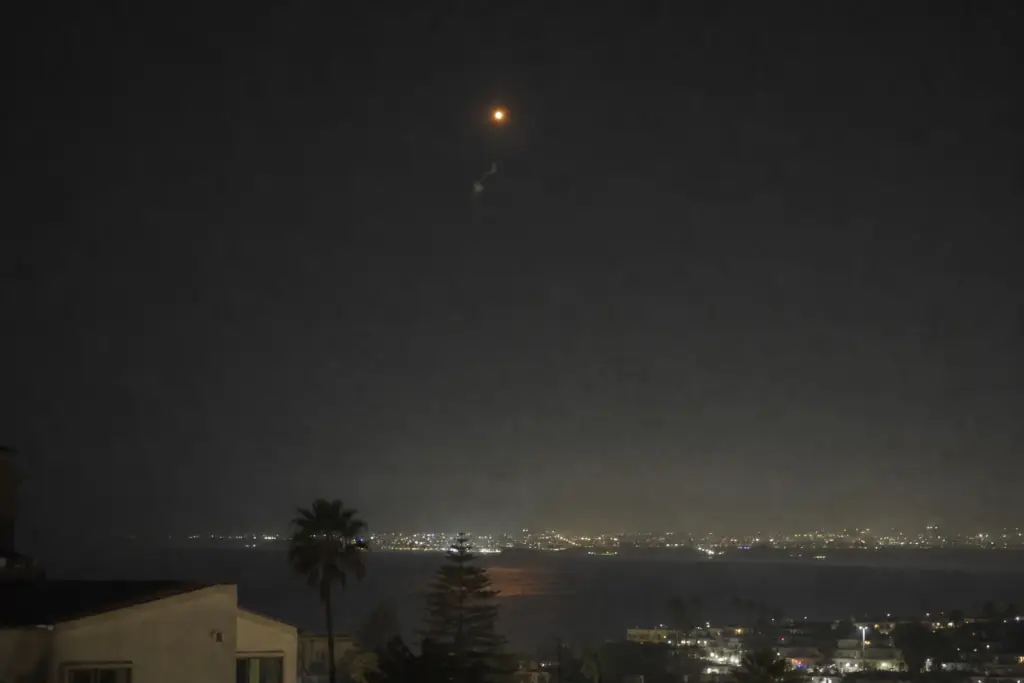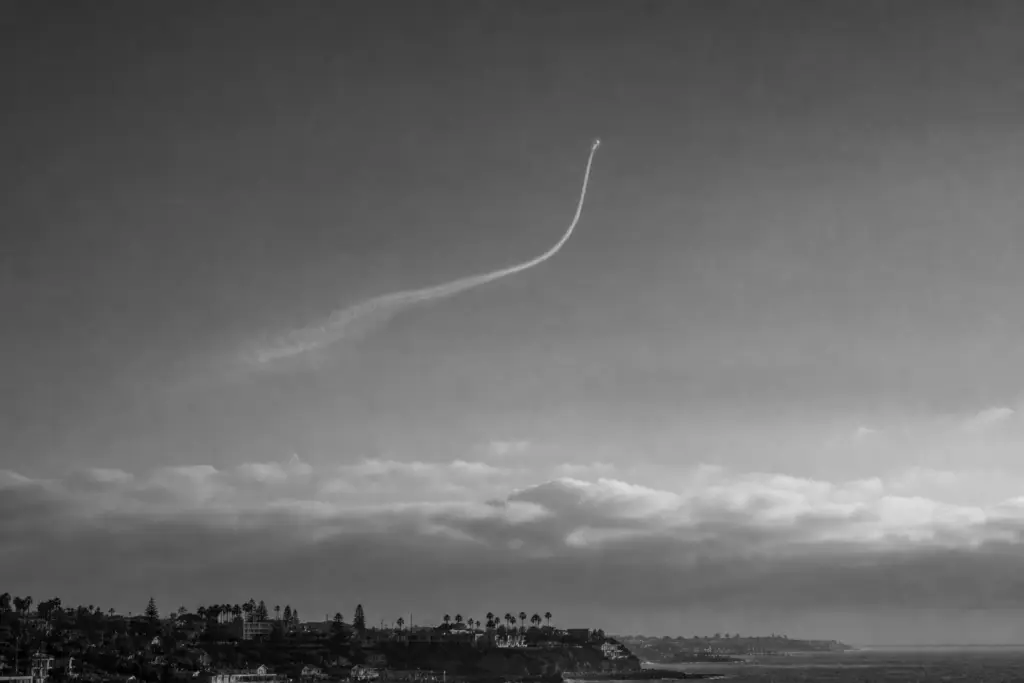
This examination begins with a claimed observation in Jonesboro, Arkansas, dated January 6, 2020, not with a confirmed identification of an aircraft, spacecraft, or other object. The label “UFO” is often used as shorthand for an unfamiliar sight in the sky; in evidentiary terms, it describes an observer’s unresolved impression, not the nature or origin of what was seen. For that reason, the Jonesboro Arkansas UFO sighting January 6 2020 should be read first as a report of an observation.
The available brief does not include an originating case file, witness statement, precise time, viewing direction, duration, observer count, photographs, video metadata, or independent follow-up. Those omissions matter: a dated local claim can establish that someone reported a sighting, while a record with time-and-place detail can be compared against ordinary possibilities such as aircraft, satellites, astronomical objects, weather effects, or drones. This article separates those two evidentiary levels, traces the available record where possible, and avoids converting an unspecified-object report into a conclusion it cannot support.
What Was Reported in Jonesboro on January 6, 2020
The case description preserves one specific claim: an unspecified object was reportedly observed in or near Jonesboro, Arkansas, on January 6, 2020. That is the asserted event date, the date assigned to the observation itself, not evidence of when a witness filed an account or when a database, archive, or publication made it available.
The materials available for this article do not include a closest original report or identifiable archival entry containing the observer’s words. As a result, there is no supportable reported time of day, street-level or landmark location, shape, color, light pattern, apparent size, direction of travel, speed, maneuvers, duration, or number of witnesses. There is likewise no quotation that can be reliably attributed to a reporter.
This distinction limits what the Jonesboro Arkansas unidentified object report can presently establish. A dated local listing is weaker than a contemporaneous case record: the latter could preserve enough detail to test an observation against known activity, while the former only preserves the broad claim that something was seen. No submission date, publication date, update date, or indexing date is available here to place the account in a documented reporting timeline. January 6, 2020 should therefore be treated solely as the reported observation date, with all other event particulars unresolved.
Source Record, Provenance, and What the Case File Actually Contains
The surviving record is limited to a Jonesboro, Arkansas, location and the asserted observation date of January 6, 2020. No named public reporting database, local-news article, archival capture, or original submission form has been located that can be linked directly to this Arkansas UFO report. The available description therefore functions as a summary-level listing rather than a recoverable case file: it retains the city and date but not a traceable chain of custody for an underlying account.

That distinction determines how much weight the entry can carry. A direct intake record is submitted by an observer or a person relaying an observer’s account and can preserve a report number, submission timestamp, narrative, edits, and case-status field. A reposted listing may reduce all of that material to a place-and-date label. For the January 6 entry, there is no identifiable submitter, named, pseudonymous, or anonymous, and no report identifier that could connect it to a repository’s internal record.
There is also no complete witness report from which to assess exact wording, internal consistency, or whether the account was written near the time of the observation. The available material does not show whether “January 6, 2020” originated with a witness, an editor, or a later indexer. It supplies no stable URL, archive reference, access date, publication history, or indication of syndication from another outlet; those details are the practical markers that separate an original account from a copied or condensed retelling.
No authenticated photograph, video file, image metadata, follow-up correspondence, investigator note, or disposition entry is available in the material reviewed for this article. The case status is consequently narrow: the record supports only an unverified public claim that an unspecified object was observed in or near Jonesboro on the stated date, not a documented investigation with traceable supporting evidence.
What Can Be Verified, and What Remains a Reported Claim
The available material supports only a narrow distinction: it records that a public claim associates an unspecified aerial observation with Jonesboro and January 6, 2020. It does not independently establish that an object was present, what an observer saw, or whether the asserted date was recorded at the time of the event. A calendar date and a real geographic place are externally checkable context; they do not authenticate the underlying observation.
Other context can be useful only if it can be tied to a time and viewing position. Sunrise and sunset tables can establish whether a claimed observation would have occurred in daylight, twilight, or darkness. Archived weather observations can describe conditions at a reporting station, such as cloud cover, visibility, wind, or precipitation. Neither kind of record confirms an unidentified aerial phenomenon by itself. Without an exact local time, the weather and light conditions cannot be matched meaningfully to this entry.
- Potentially corroborable context: the Jonesboro location, the existence of January 6, 2020, and, if a time were supplied, local sky-light and weather records.
- Uncorroborated observation details: the object’s identity, distance, altitude, physical size, speed, direction of travel, and origin. Visual descriptions cannot yield reliable measurements when distance, reference points, and duration are unknown.
- Missing independent support: no contemporaneous image or video file, metadata, radar return, flight-data match, additional witness account, or investigator finding is available in the material reviewed.
The practical result is insufficient data for either a conventional identification or an anomalous one. The report remains unresolved in the limited sense that the available description does not identify what was allegedly seen; that unresolved status is not evidence for any particular explanation.
Conventional Context: Aircraft, Satellites, Drones, Weather, and Astronomical Objects
Identification begins with a comparison that uses the same coordinates an observer used: local time, direction of view, elevation above the horizon, apparent motion, brightness, and duration. None is preserved for this entry, so no historical aircraft track, satellite prediction, weather observation, or sky chart can be responsibly matched to the alleged event.
- Aircraft: A distant aircraft may appear as a steady or flashing point, sometimes seeming stationary when it approaches head-on. Aircraft tracking becomes useful when a sighting time and bearing can be compared with an individual route; a nearby track at the appropriate altitude and direction would support that possibility, while a mismatch would weaken it. Flight-data coverage is not a complete record of every aircraft, however, so no match would not by itself exclude aviation.
- Satellites and astronomical objects: A satellite pass is ordinarily a smooth, unblinking traverse across the sky, whereas a bright planet holds a fixed position relative to the horizon over a short observation. A meteor is typically a brief streak rather than a persistent light. Ephemeris tools can test these possibilities only against a documented time, viewing direction, and duration.
- Drones and balloons: A drone can present one or more lights and may hover, turn, or change apparent brightness; a balloon may drift with the wind and appear to change shape or speed as its distance changes. Those alternatives depend especially on a description of lights, sound, movement, and the length of the observation. None can be compared meaningfully to this sparse listing.
- Atmosphere and weather: Thin cloud, haze, reflections, and changing visibility can alter the apparent color, size, or motion of a light near the horizon. Local cloud cover, wind, precipitation, and visibility observations would provide context, not an identification. Their relevance depends on knowing when and where in the sky the object was reportedly seen.
The practical distinction is between a testable candidate and a merely imaginable one. A time-stamped report describing a light moving southwest for several minutes would permit aircraft tracking and a satellite-pass comparison; an undirected, undated-in-time description permits neither. Conventional explanations remain possible in the abstract, but the available Jonesboro record does not supply grounds to rank one above another.
Best-Supported Assessment of the Jonesboro Report
The most defensible classification is an unresolved report with insufficient data, not a partly corroborated observation and not a likely conventional identification. The surviving material documents a public claim tied to Jonesboro and January 6, 2020, but no recoverable primary record permits the claim itself to be assessed for reliability, detail, or timing.
A stronger assessment would require evidence that independently converges on the same event. For example, two separately recorded witness accounts with consistent times and directions would partly corroborate an observation; a flight track or satellite pass matching those details could support a conventional identification. Neither kind of convergence is available here. There is also no basis for treating the entry as evidence of an extraordinary object.
- Exact local time: Without it, aviation records, satellite predictions, astronomical positions, and weather observations cannot be aligned to the alleged sighting.
- Specific observing location and viewing direction: “Jonesboro” does not establish where the observer stood or which part of the sky was involved, preventing a meaningful line-of-sight comparison.
- Object description and behavior: No preserved account identifies shape, color, lighting, apparent size, sound, speed, trajectory, or duration, the features needed to distinguish candidate explanations.
- Independent testimony or contemporaneous reporting: No second witness, emergency call, local report, or dated follow-up is available to show that multiple people observed the same event.
- Media and metadata: No photograph, video, original file, timestamp, or location data is available for examination.
Accordingly, the Jonesboro UAP sighting January 2020 remains unexplained only in the limited evidentiary sense: the record is too thin to identify the reported object. That conclusion preserves the distinction between an unresolved listing and a demonstrated anomaly. The report warrants accurate historical description, but not a determination about what was in the sky.
How to Evaluate or Report a Similar Arkansas Sighting
A useful record begins before the sighting fades from memory. Write down the date, exact local time and time zone, observing location, compass direction, elevation above the horizon, duration, apparent motion, color or lighting pattern, shape, sound, weather, and whether anything blocked the view. “A light moved east for two minutes” is more useful than “something strange was overhead”; it gives later comparisons a time, direction, and behavior to test.
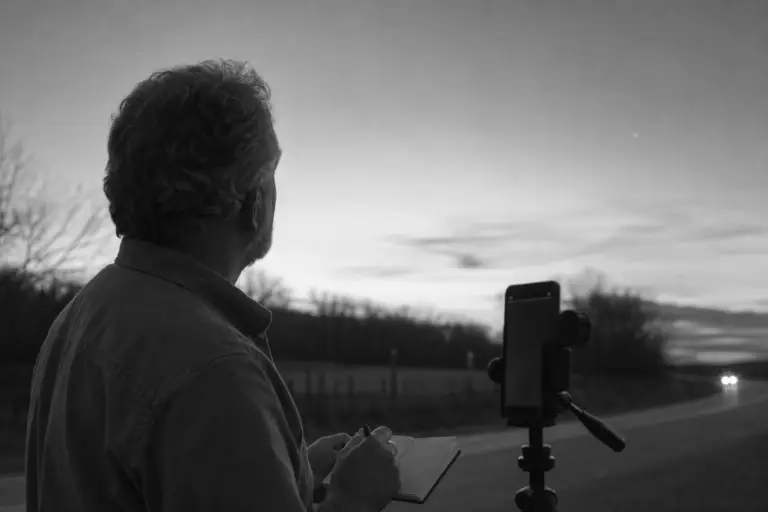
- Keep original photographs and video files intact. Save copies for sharing, but do not crop, filter, stabilize, or overwrite the originals; retain the device, camera mode, zoom level, and any available timestamp and location settings.
- Ask other observers to make separate notes before comparing accounts. Independent descriptions that agree on time and direction are stronger than a single jointly reconstructed narrative.
- Promptly compare the observation with time-sensitive conventional context: local weather observations, visible astronomical objects, satellite-pass predictions, aircraft-tracking services, and FAA records where the available data can be matched to the reported time and place. A match is meaningful only when its route or position fits the observer’s stated line of sight.
Report what was observed rather than what it must have been. Separate direct perception, such as blinking lights, a steady heading, or silence, from inference, such as an estimated altitude or speed. Note gaps plainly, including uncertainty about the time or direction.
If an object appears to threaten people, interfere with aircraft, involve a crash, fire, or suspicious activity, use local emergency channels immediately rather than a civilian sighting database. Civilian reporting forms may preserve an account for later review, but they are not a route for urgent response. For non-urgent reports, follow safe reporting guidance and choose an organization only after reviewing its current submission process, privacy terms, and whether it accepts original media and follow-up contact.
What the Jonesboro Sighting Report Establishes
The lasting value of this case is evidentiary rather than identificatory. The material reviewed preserves an assertion that an unspecified object was seen in or near Jonesboro on January 6, 2020, but it does not preserve the underlying observation well enough to establish the object’s nature, behavior, or origin.
That boundary matters. Confirming that a claim was publicly associated with a date and place is not the same as confirming the claimed event, and confirming an event would still not, by itself, identify what was seen. Here, the absent particulars, an exact time, precise observing position, viewing direction, duration, original media, and independent witness accounts, prevent a meaningful comparison with ordinary aerial or astronomical possibilities. They also leave no evidentiary basis for an extraordinary conclusion.
The appropriate final status is therefore a historically noted but unverified Arkansas UFO sighting report: unresolved because the available record cannot support an identification, not because it demonstrates an anomaly. That is a limit on the evidence, not a finding about what was in the sky.
Future reports can be substantially more useful when they preserve specific, testable observations: local time and location, direction and elevation, movement and duration, unaltered photos or video, and separately recorded accounts from other witnesses. The practical steps outlined above turn an unfamiliar sight into a record that can be compared against identifiable activity rather than left as a date-and-place listing alone.
Frequently Asked Questions
What was reported over Jonesboro, Arkansas, on January 6, 2020?
A public claim reported an unspecified object observed in or near Jonesboro, Arkansas, on January 6, 2020. No preserved record identifies the object’s shape, lights, movement, duration, or exact location.
Is there verified evidence for a UFO sighting in Jonesboro, Arkansas?
No verified supporting evidence is available. The record contains no original witness statement, exact time, photos, video metadata, radar data, second witness account, or investigator finding.
Why can’t the Jonesboro object be identified as an aircraft, satellite, drone, or astronomical object?
Identification requires details such as exact local time, viewing direction, elevation, apparent motion, brightness, and duration. Because none of those details are preserved, aircraft tracks, satellite predictions, weather records, and sky charts cannot be meaningfully compared with the report.
What details should a useful UAP sighting report include?
Record the exact local time and time zone, observing location, compass direction, elevation above the horizon, duration, movement, lights or color, shape, sound, and weather. Keep original photo and video files intact, including timestamps, location data, camera settings, and zoom level.
How should someone evaluate or report a possible UAP sighting in Arkansas?
First compare a time-stamped observation with local weather, visible astronomical objects, satellite-pass predictions, aircraft-tracking services, and FAA records. If the object poses an immediate threat, interferes with aircraft, or involves a crash, fire, or suspicious activity, contact local emergency services instead of using a civilian sighting database.