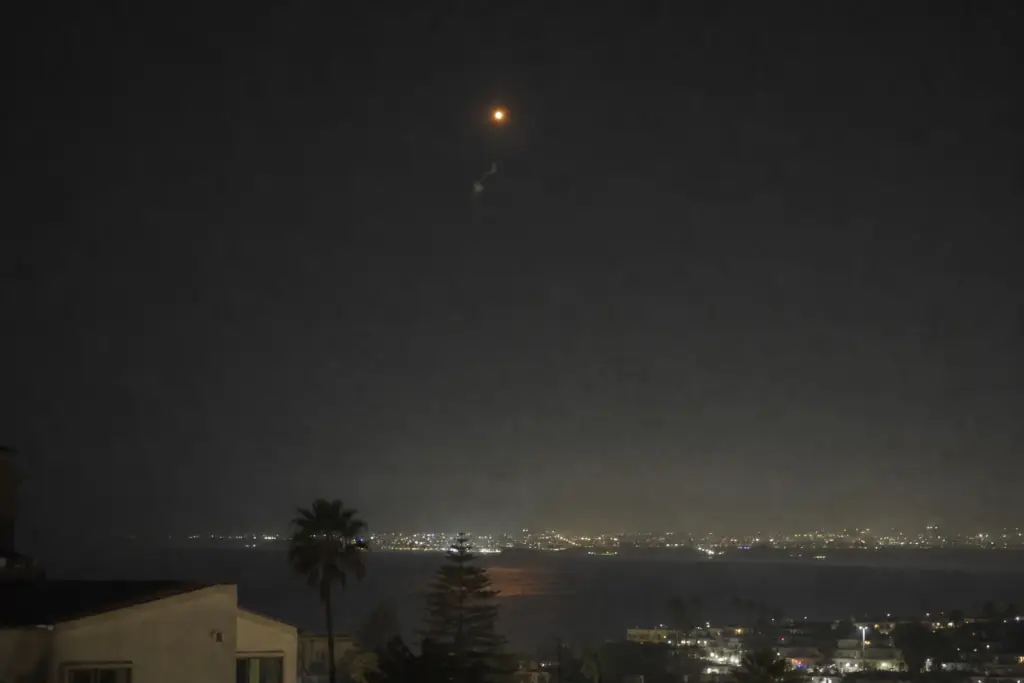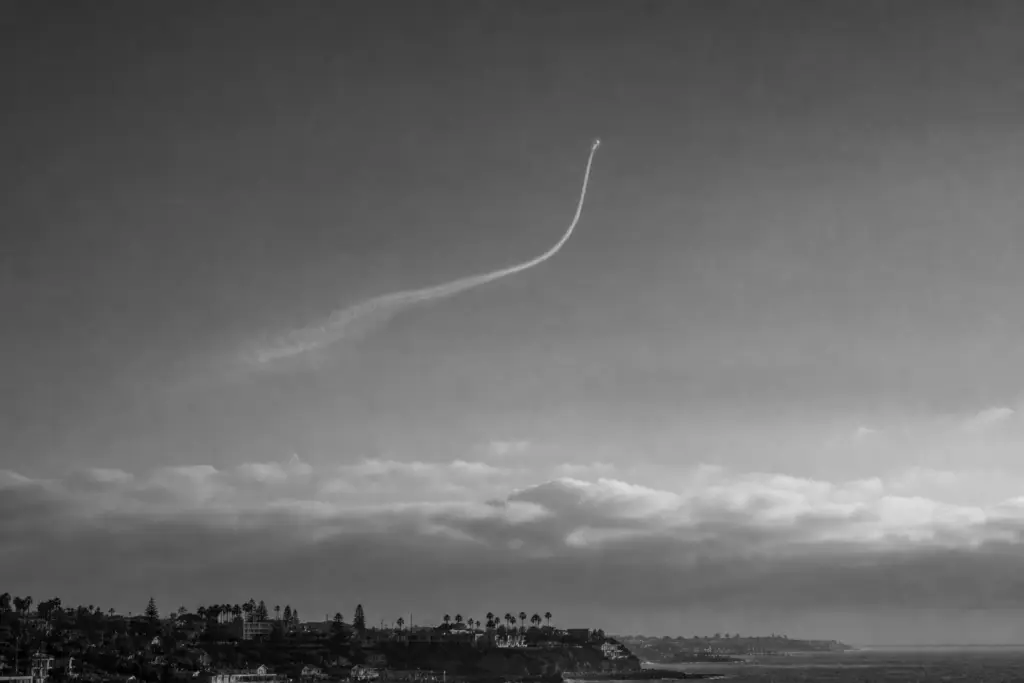
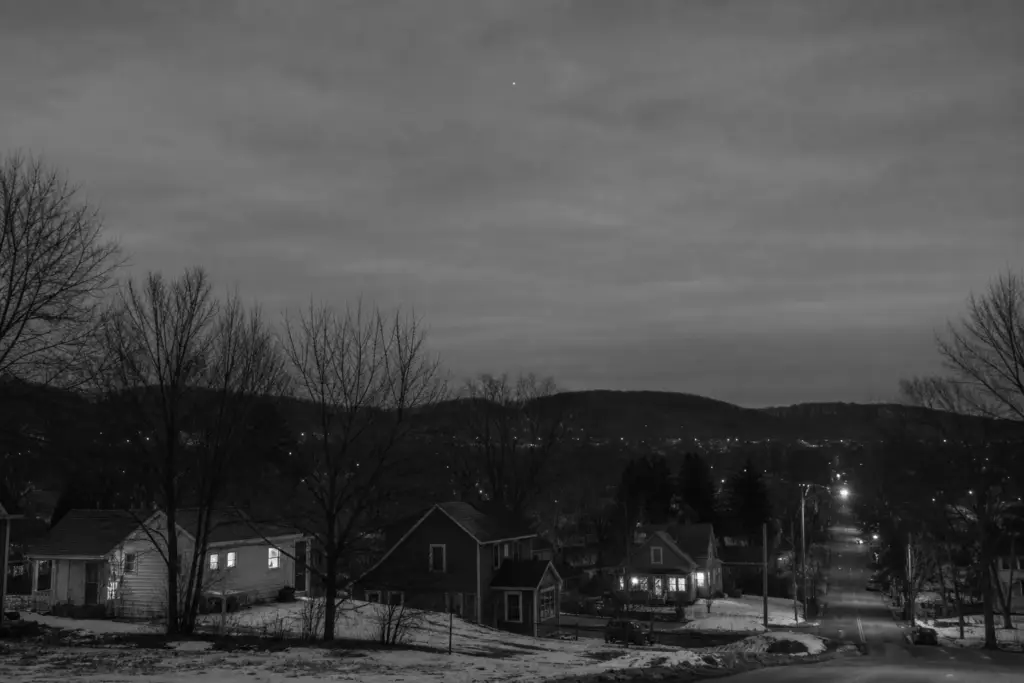
On February 12, 2020, an unspecified object was reported in Cambridge, Ohio. That is the limited starting point for this Cambridge Ohio UFO sighting: a civilian sighting claim tied to a place and date, not proof that an extraordinary object was present. An unidentified-object report preserves an observer’s unresolved impression; a verified identification needs details that can be independently compared with known activity or conditions.
The key question is what the available record can actually establish about an observation dated February 12, rather than what the word “UFO” might imply. This review treats the event date, Cambridge location, and object description as report-level information, while separating them from independently testable context. It also distinguishes the date an event reportedly occurred from a later submission, publication, or database-entry date when those dates are available.
That distinction matters because an exact time, viewing direction, duration, elevation, apparent size, photograph, and second witness can each change the range of explanations worth testing. For example, a stationary light low in the western sky and a rapidly moving light overhead call for different comparisons. The sections that follow reconstruct the entry’s stated details, identify what is missing, outline practical historical checks, and assess conventional possibilities only where the record supports them. Until then, the responsible status is reported and insufficiently documented, not confirmed.
What Was Reported in Cambridge, Ohio, on February 12, 2020?
The available case reference preserves only a minimal listing: an unspecified object observation associated with Cambridge, Ohio, and an event date of February 12, 2020. No original sighting-database entry, archive capture, repository name, report number, or report text is available in the material reviewed for this article. As a result, the listing can establish the existence of a claimed observation only at the level of its location and stated event date.
That distinction is important. An event date is the date assigned to when the observation reportedly occurred. It is not automatically the date a witness submitted the account, a database published it, an editor updated it, or an archive captured the page. None of those separate dates is available here, so there is no supported basis for measuring any delay between the reported observation and its recording.
The surviving reference also provides no documented account of what the observer saw. It does not supply a clock time, appearance or color, direction of travel or viewing, elevation, duration, number of witnesses, exact observing location, photographs, video, or narrative description. Those are not minor omissions: a report describing a stationary light at a known time can be compared differently from one describing a moving object with no time or direction. For this unspecified object sighting in Cambridge, Ohio, the responsible description is therefore limited to a reported observation dated February 12, 2020, with identification details unavailable rather than established.
What the Record Says, and What It Does Not Say
The practical divide is between metadata and observation detail. The surviving reference supplies metadata: Cambridge, Ohio, and February 12, 2020 as the reported event date. It does not preserve a witness report describing an object’s characteristics or circumstances.
- Present in the available reference: a locality, an event date, and the broad assertion that an unspecified object was observed.
- Unavailable: a street-level or otherwise exact observing location; clock time; object shape, size, color, brightness, or number; direction, speed, movement, distance, altitude, duration, sound, and weather as observed by the witness.
- Unavailable corroboration: photographs, video, radar information, named additional witnesses, contemporaneous reports, follow-up correspondence, and an investigator’s finding.
- Unavailable record history: the report submission date, publication or update date, the identity and practices of the repository, and any archived version that might retain deleted narrative or fields.
Those categories matter because they serve different purposes. A time and precise location make it possible to compare an observation with aircraft activity, astronomical objects, and local conditions. Appearance, movement, and duration help distinguish a distant steady light from an aircraft, satellite, balloon, drone, or a closer object. Independent media or multiple accounts can test whether an event was observed by more than one person. None of those comparisons can be responsibly performed from the surviving listing alone.
A short public submission can still be a legitimate historical trace: it documents that someone, at some point, associated an observation with Cambridge and that date. It does not establish the observer’s identity, the accuracy of the entry, the conditions of viewing, or what the object was. The appropriate status is therefore an unverified reported observation with insufficient detail for identification, rather than a resolved or confirmed case.
How a Local UFO Sighting Report Can Be Checked
A meaningful reconstruction begins by anchoring the observation to a usable interval and place: ideally a clock time or narrow range, the observer’s location, and the direction and elevation in which the object appeared. “Cambridge” and a calendar date alone cover too much ground. A light seen low in the western sky shortly after sunset calls for a different comparison from one moving overhead before dawn.
When those anchors exist, historical weather records from the nearest reporting station can establish conditions such as cloud cover, visibility, precipitation, wind, and whether the sky was clear enough for a distant light to be seen. They describe regional observing conditions, not necessarily the exact view from a particular street, but can rule out interpretations that require clear skies or identify circumstances in which lights may have been obscured or distorted.
The same time-and-direction test can be applied to astronomical objects using an ephemeris or planetarium record. Bright planets, stars, the Moon, and re-entering or passing satellites occupy different positions and follow different apparent paths. Flight-tracking archives, FAA records where retained, nearby-airport activity, and satellite or rocket-body archives can likewise provide candidate traffic. A good match needs more than coincidence on the date: its bearing, timing, apparent motion, duration, and brightness should fit the witness description.
Local context can also matter. Public events, sporting fixtures, construction activity, launches, or organized lighting displays may explain an unusual light at a particular place and time, while their absence does not establish that the object was anomalous.
For this report, the surviving entry supplies none of the inputs needed for those comparisons. Weather records, astronomical objects, aircraft activity, satellite passes, airport operations, and local events could be examined only against a broad date and locality, producing possibilities rather than an identification. Such research may narrow a well-described case or eliminate a poor fit; it cannot reliably solve a report with no observation window, viewing geometry, or description.
Plausible Conventional Explanations, With Important Limits
An identification can be proposed only when the reported behavior has a distinctive match. An aircraft explanation would require a time window, viewing bearing, apparent track, duration, and, ideally, corresponding flight or airport records. Navigation lights may appear stationary when an aircraft is approaching head-on, while a clearly tracked crossing light calls for a different comparison. Without a described direction or motion, neither pattern can be matched to this report.
Astronomical candidates require an equally specific geometry. A bright planet or star would need to occupy the reported part of the sky at the relevant time and remain consistent with a largely fixed position; a satellite would require a pass whose direction, speed, brightness, and duration fit the account. Balloons and drones would call for evidence of slower, wind-influenced movement or nearby activity, while a distant ground light would need to align with terrain, roads, industrial sites, or a horizon-level viewing angle.
Atmospheric effects are not a catch-all conventional explanation. Reflections, haze, cloud illumination, and scintillation can alter the apparent brightness, color, shape, or steadiness of a light, but an assessment needs weather and visibility information alongside a witness description of the sky and object. A strong candidate is one that fits several recorded features at once; a weak candidate shares only the same date or general area.
Here, the absence of a reported time, bearing, trajectory, brightness, duration, appearance, and weather observations prevents that comparison. Aircraft, celestial objects, satellites, balloons, drones, atmospheric effects, and misperceived distant lights remain categories to test if fuller evidence emerges, not identifications for this unidentified object. The appropriate status is an unresolved observation with insufficient detail, not evidence for a non-human or secret-program explanation.
UFO, UAP, and What Government Review Does Not Establish
Terminology marks the level of certainty, not the nature of the object. “UFO” traditionally means an object the observer could not identify; it does not mean an object was demonstrated to be unusual. “UAP,” for unidentified anomalous phenomena, is the contemporary U.S. government term for a reported detection or observation that remains unresolved after initial consideration. Neither label supplies missing observations, independent corroboration, or an identification.
A formally analyzed case is different from a civilian listing. It has an evidentiary trail that permits an investigator to assess such matters as the source of the report, timing, location, sensor data, witness consistency, and potential conventional matches. A report can remain unidentified simply because those inputs are absent. That outcome means insufficient information, not that every ordinary explanation has been excluded.
The Department of Defense’s All-domain Anomaly Resolution Office, commonly called AARO, has a defined government role in receiving, analyzing, and resolving qualifying UAP reports and related information. Its work should not be confused with a general validation service for every public sighting account. Public-facing UAP information and reporting processes concern information received through authorized channels; a historical entry in a civilian database is not, by itself, evidence that the office received, investigated, or endorsed the entry.
That distinction also helps place UAP news and UFO news in context. A database submission records an allegation or observation as reported by its submitter. Government review, when it occurs, is an additional process whose findings depend on the material available for analysis. Nothing in the surviving Cambridge reference indicates a formal government investigation, a government identification, or an official finding about the object.
For this case, “unidentified” is therefore best read as a descriptive status: the available record does not identify what was observed. It should not be read as confirmation of an anomalous object or as evidence of a broader disclosure event.
Bottom Line: A Documented Report, Not a Confirmed Identification
The record supports a limited historical finding: an unspecified object was reported in connection with Cambridge, Ohio, on February 12, 2020. It does not support an identification of the object, a determination of its origin, or a conclusion that the observation was anomalous.
No original report text, repository entry, submission date, witness account, image, video, or independent corroborating record was available in the material reviewed. Nor was there a checkable observation time, precise location, direction, elevation, duration, or description of movement and appearance. Those missing details prevent a meaningful comparison with aircraft activity, astronomical objects, satellite passes, weather conditions, or local events. The appropriate status is therefore unresolved because the surviving record is insufficiently detailed, not proof of an extraterrestrial explanation.
A future update could materially strengthen, or narrow, the case if it produces records that can be compared on the same time and place. The most useful sequence is:
- Original report archive: a report number, preserved entry, narrative, and submission metadata would distinguish the stated event date from the date the account was filed.
- Weather observations: a nearby station record for the relevant hour could establish visibility, cloud cover, precipitation, and wind.
- Astronomy references: an ephemeris for a known viewing direction and time could test whether a bright planet, star, or other celestial object matched the sightline.
- Aviation data: flight tracks, airport activity, and other time-stamped records could be compared with a reported path rather than merely the calendar date.
- Official records: any documented police, emergency, aviation, or government intake record would provide an independently traceable lead, though it would not itself identify the object.
Until such material appears, this Cambridge Ohio UFO sighting remains a documented claim of an observation, subject to the accuracy and completeness of the underlying listing.
Frequently Asked Questions
What was reported over Cambridge, Ohio, on February 12, 2020?
An unspecified object observation was reported in connection with Cambridge, Ohio, on February 12, 2020. The surviving reference provides only the location, event date, and broad claim of an observation.
Is there verified evidence for the Cambridge, Ohio UFO sighting?
No verified evidence is available for the sighting. There is no original report text, witness narrative, photograph, video, precise time, exact location, or independent corroboration.
What details are needed to identify a UFO or UAP sighting?
Useful identification details include a clock time, precise observing location, viewing direction, elevation, duration, apparent size, color, movement, and witness accounts. Photos, video, radar data, and additional witnesses can provide independent corroboration.
How can a UFO sighting be checked against weather, aircraft, and astronomical records?
Compare the reported time, location, direction, elevation, movement, and duration with historical weather records, flight tracks, airport activity, satellite passes, and astronomy ephemerides. A valid match must fit multiple features, such as bearing, timing, brightness, and apparent motion, rather than only the same date.
What is the difference between an unidentified UFO report and a confirmed UAP case?
An unidentified UFO report records an observer’s unresolved claim and does not establish what was seen. A confirmed or formally analyzed UAP case requires an evidentiary trail, such as reliable timing, location, source information, witness consistency, sensor data, and evaluation of conventional explanations.