UFO Disclosure in Congress: A Complete Timeline
Explore the UFO disclosure timeline in Congress, from UAP hearings and laws to records access, whistleblower claims, and verified findings.
UFO disclosure is best understood as an oversight process, not a single announcement or a government verdict on extraterrestrial claims. As public terminology shifted from “UFOs” to UAP, the central questions also became institutional: what agencies collect, assess, report, retain, and release, and what elected officials can require them to explain in public.
This timeline is “complete” in a defined sense: it follows the major publicly documented U.S. congressional milestones verified through August 5, 2026. It tracks hearings that place testimony into the public record; legislation that is proposed, amended, enacted, or omitted; reporting requirements that turn episodic attention into recurring obligations; and records-access measures intended to preserve or disclose government-held material.
The distinction between evidence categories matters. Sworn testimony records what a witness alleged under oath; a bill shows what lawmakers sought to create, not necessarily what became law; an agency report presents an official assessment; and a confirmed finding requires supporting government evidence. Congress has expanded scrutiny and public visibility, but those actions do not by themselves establish the origin of unexplained objects or validate claims about hidden programs. The chronology that follows keeps those lines clear.
What “UFO Disclosure in Congress” Means, and What This Timeline Covers
Current through August 5, 2026. The entries ahead are limited to milestones that changed the public congressional record or the government’s recurring UAP obligations: investigations brought before lawmakers, mandated reports, public and closed hearings, inspector-general and whistleblower pathways, legislative text, and the preservation or release of federal records.
“Congress” does not mean every federal action on unidentified phenomena. Department of Defense and intelligence-agency assessments appear here when a committee, statute, hearing, or reporting requirement made them part of congressional oversight. A public hearing establishes that testimony was received; a classified briefing shows that members were briefed. Neither is an official determination that an object is extraterrestrial or that non-human intelligence exists.
- Enacted means language became law and imposed, authorized, or directed a federal action.
- Proposed means legislation was introduced or advanced but did not become law; amended/stripped identifies provisions narrowed or removed during passage, while expired marks measures that ended with a Congress.
- Allegation preserves a witness’s claim without treating it as established fact. Official finding identifies a documented agency conclusion, which may still leave a case unresolved.
That status key keeps UFO disclosure distinct from confirmation: the timeline records what institutions did, what witnesses asserted, and what the public record can actually support.
1947–2016: Early Federal UFO Investigations and a Limited Congressional Role
1947–1969, Air Force investigations. Reports of unidentified flying objects prompted a succession of Air Force programs, Project Sign, Project Grudge, and, from 1952, Project Blue Book. These were executive-branch investigations designed to collect and assess reports, not a standing congressional reporting system. On December 17, 1969, the Air Force announced Blue Book’s termination; operations ended in January 1970. Its closure meant routine federal case investigation stopped, while its files remained a historical record rather than a continuing oversight channel.

1993–1995, Congress requests a Roswell records review. Representative Steven Schiff of New Mexico sought a General Accounting Office inquiry into how federal records concerning the 1947 Roswell incident had been handled. The resulting historical records review examined recordkeeping and the disposition of relevant Army Air Forces material. It represented focused congressional interest in public access and archival accountability, not a congressional finding that a government UFO cover-up had occurred.
1994 and 1997, Air Force Roswell reports. The Air Force issued The Roswell Report: Fact versus Fiction in the New Mexico Desert in 1994, attributing the recovered debris to a then-classified Project Mogul balloon operation. Its 1997 follow-up, The Roswell Report: Case Closed, addressed reported accounts of bodies by connecting them to military test dummies and other activities. Those are official agency assessments; they did not create a permanent congressional UFO disclosure framework or settle every public allegation.
For the remainder of this period, congressional engagement was intermittent and usually tied to a particular records or constituent issue. The later UAP era differs because lawmakers began requiring recurring reports, offices, briefings, and preservation measures rather than requesting a one-time historical explanation.
2017–2020: UAP Re-enters Public Debate and Congressional Oversight
December 2017, Navy encounters enter the modern public record. Reporting on the Pentagon’s Advanced Aerospace Threat Identification Program and on Navy aviators’ encounters brought military sensor footage and pilot accounts to a far wider audience. The vocabulary increasingly shifted from “UFO” to unidentified aerial phenomena, a term that foregrounded an unresolved observation rather than an asserted origin. The reporting itself was not a congressional finding, but it helped turn a previously marginal subject into an intelligence, aviation-safety, and defense-oversight concern.
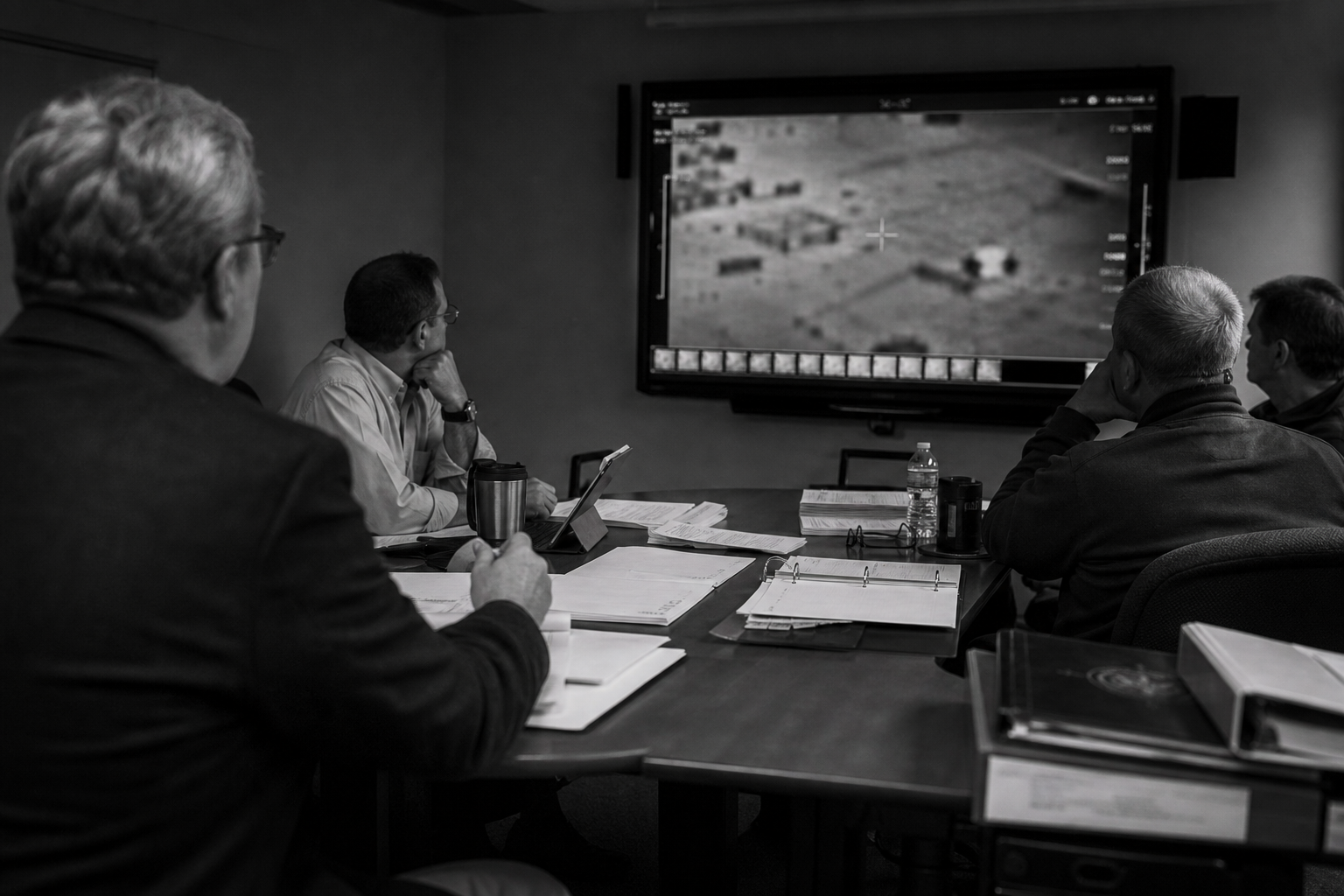
2019–2020, Senate Intelligence Committee attention moves much of the evidence into closed channels. Senators received classified briefings on reported encounters and on the Defense Department’s handling of them. A classified briefing gives lawmakers access to operational details, sensor data, and intelligence reporting that cannot be released publicly; it does not itself establish that an object’s identity or origin has been determined. The important change was institutional: Congress was no longer addressing isolated historical records questions, but seeking regular information about contemporary military incidents.
April 27, 2020, the Pentagon formally releases three Navy videos. The Department of Defense authorized release of the “FLIR,” “GIMBAL,” and “GOFAST” videos, stating that the footage did not reveal sensitive capabilities or systems and that the Navy videos were authentic. This was an authentication and classification decision: it established that the clips were genuine military recordings cleared for public release. It was not an agency finding that the recorded objects were extraterrestrial, nor did it resolve what every object depicted.
December 27, 2020, Congress requires a public assessment. The FY2021 Intelligence Authorization Act mandate directed the Director of National Intelligence, working with the Secretary of Defense, to submit an unclassified report on unidentified aerial phenomena within 180 days, with a classified annex permitted. That structure mattered for UFO disclosure: the public would receive an official baseline assessment, while sensitive sources, methods, and case details could remain in the annex. The mandate converted committee interest and classified briefings into a statutory reporting obligation, setting up the June 2021 ODNI–Defense Department preliminary assessment.
2021–2022: Congress Builds a Formal UAP Reporting and Investigation Structure
June 25, 2021, ODNI and DoD publish the first mandated preliminary assessment. The unclassified assessment examined 144 UAP reports made largely by U.S. Navy personnel between 2004 and 2021. It identified one report as a large, deflating balloon and left the rest unresolved in the public version, while noting that limited data and inconsistent reporting constrained analysis. This was an official assessment of reported incidents, not a conclusion about extraterrestrial origin, but it gave Congress a public baseline from which to demand a durable collection and analysis system.
December 27, 2021, the FY2022 National Defense Authorization Act turns reporting into a continuing obligation. The enacted law directed the Secretary of Defense and the Director of National Intelligence to establish an office to coordinate UAP efforts and required recurring, largely unclassified reports to Congress, with classified annexes where necessary. The office’s job was broader than publishing sighting accounts: it was to standardize reporting, gather intelligence and operational data, assess possible links to foreign adversaries, and coordinate across defense and intelligence organizations. Recurring reports created an oversight checkpoint; they did not require the government to reach, or announce, a particular explanation for every case.
2022, Congress adds protected reporting channels. The FY2022 framework called for procedures through which government personnel could report UAP-related information, while protecting the identity of reporting individuals. The FY2023 National Defense Authorization Act strengthened that approach by requiring a secure process for reporting and by prohibiting reprisals against personnel who make authorized reports. These provisions matter because a statutory channel preserves allegations and evidence for review by designated officials. They do not validate an individual report, establish that its underlying account is accurate, or make its contents public automatically.
December 23, 2022, the FY2023 National Defense Authorization Act establishes AARO. The law created the All-domain Anomaly Resolution Office (AARO) within the Defense Department, under joint DoD and ODNI direction. “All-domain” expands the remit beyond objects reported in the air: AARO is assigned to coordinate the detection, identification, attribution, and reporting of unidentified anomalous phenomena in air, space, maritime, and other operational environments, including objects that move between domains. DoD supplies the defense-operational structure; ODNI brings the intelligence community into collection and assessment. That institutional design is a major UAP disclosure milestone: it created a permanent reporting-and-review mechanism, rather than an official finding that anomalous reports have a nonhuman explanation.
2023: The Grusch Hearing and the UAP Disclosure Act Proposal
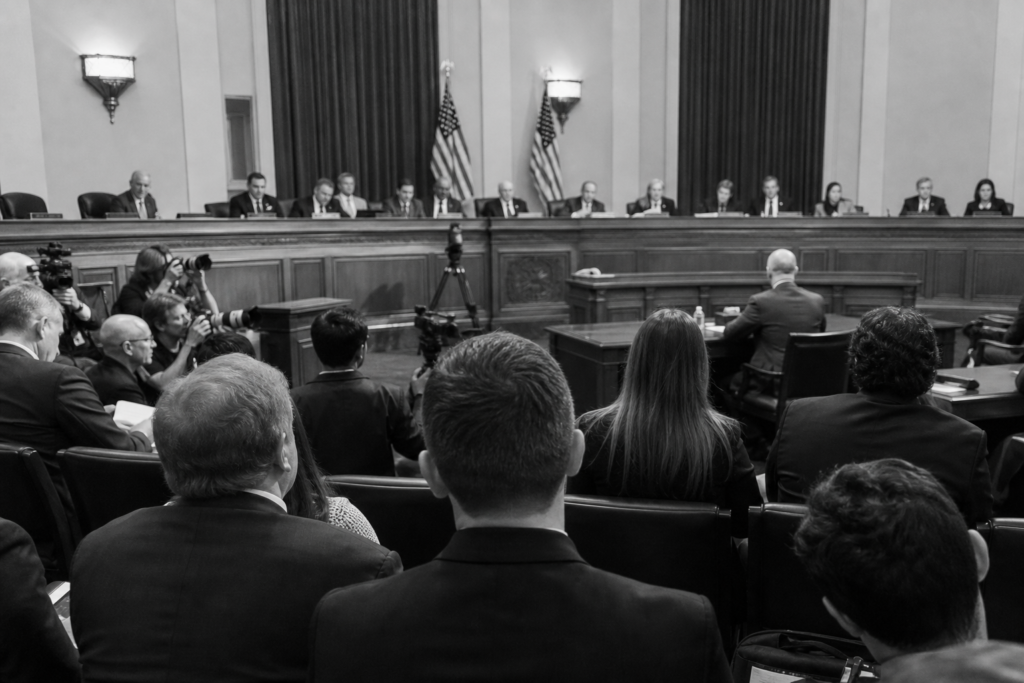
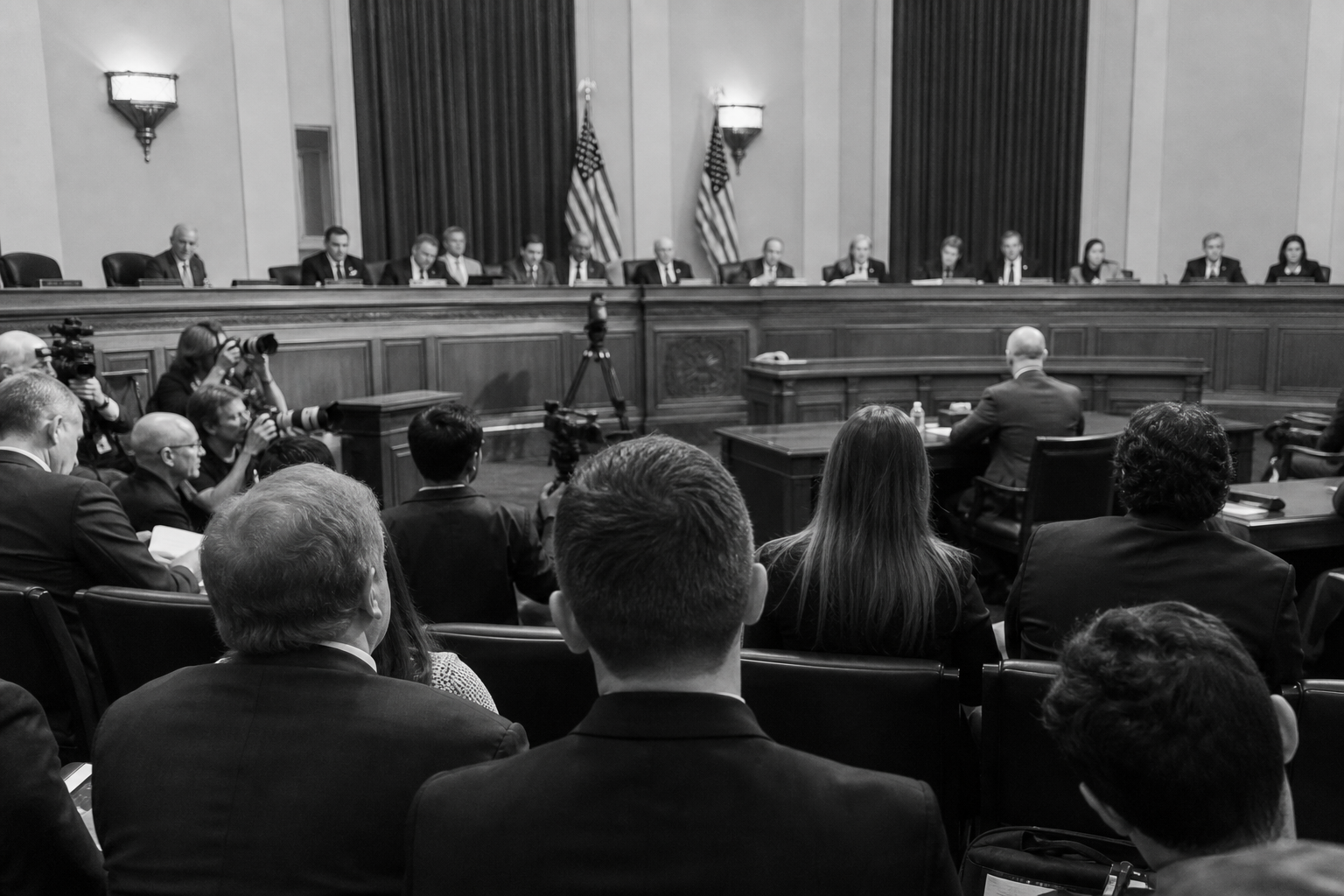
July 26, 2023, the House Oversight subcommittee brings UAP allegations into a public hearing. At a hearing of the House Oversight Committee’s National Security, the Border, and Foreign Affairs Subcommittee, former intelligence officer David Grusch appeared alongside former Navy pilots Ryan Graves and David Fravor. Grusch testified under oath that he had been told, during his UAP-related work, of a longstanding program involving recovered craft and attempts to reverse-engineer them. He also alleged that the government possessed “biologics” associated with some recoveries. Those were sworn allegations about information Grusch said he had received, not firsthand public evidence of a crash-retrieval or reverse-engineering program. The hearing itself did not independently establish the existence of such programs, recovered non-human intelligence, or an alien origin for any object.
July 2023, Senators Chuck Schumer and Mike Rounds propose the UAP Disclosure Act. The bipartisan amendment to the Senate’s FY2024 National Defense Authorization Act would have created a centralized UAP Records Collection at the National Archives. Its purpose was to gather relevant federal records under a single statutory framework rather than leaving them dispersed among agencies. The proposal also called for an independent review board to determine whether particular records could remain withheld and set a controlled-disclosure system: records would generally move toward release, but agencies could seek postponement on specified grounds such as national security or privacy.
The proposed UAP Disclosure Act went further than a records-preservation rule. It included an eminent-domain provision that would have authorized the federal government to acquire certain privately held material connected to alleged recovered technologies or biological evidence. That feature reflected the amendment’s broadest premise, that potentially significant UAP material might exist outside ordinary federal custody, and it would have created a formal route for federal control and review. A collection requirement preserves and organizes records; a review board and eminent-domain authority would have added independent release decisions and potential acquisition power.
December 2023, the final FY2024 NDAA adopts a narrower outcome. Congress enacted UAP records-collection language, directing the National Archives to establish a collection of government UAP records. But the final law omitted the proposed review board, the amendment’s controlled-disclosure architecture, and its eminent-domain provisions. The result was a meaningful archival requirement, not enactment of the full UAP Disclosure Act: Congress required preservation and centralized handling of records while leaving the proposal’s stronger disclosure and acquisition mechanisms out of the statute.
2024–Present: Records Collection, AARO Findings, and the Open Oversight Questions
March 8, 2024, AARO publishes its Historical Record Report, Volume 1. Covering the 1945–2023 period, the Defense Department office reported that it found no verifiable evidence that the U.S. government or private industry had access to extraterrestrial technology. It also found no evidence that alleged hidden reverse-engineering programs had been confirmed through its historical review. That was an agency assessment, not a resolution of every witness account or an automatic release of classified underlying material.
2024–2025, the National Archives begins implementing the FY2024 NDAA requirement. Section 1843 of Public Law 118-31 requires the Archivist to establish a UAP Records Collection and directs federal offices to identify and transfer qualifying government records. The National Archives’ UAP Records Collection page provides the public access point: released material is searchable through the National Archives Catalog, while records that have been accessioned are transferred into archival custody. The distinction matters. A record’s inclusion preserves and centralizes it; public availability still turns on whether it can be released under classification, privacy, and other applicable restrictions.
November 14, 2024, AARO issues its fiscal-year 2024 consolidated annual report. The report recorded 757 UAP reports received during the reporting period, identified 118 as resolved with ordinary explanations, and referred 21 cases for further analysis. Its figures show a reporting and triage system handling observations at scale, not a finding that unresolved cases have extraordinary origins.
Status at the August 5, 2026 cutoff. Congress has enacted an AARO structure, protected reporting channels, recurring reporting duties, and the UAP Records Collection. Public material includes AARO reports, congressional hearing records, and National Archives Catalog releases. Claims of concealed crash-retrieval programs, reverse-engineering efforts, non-human biologics, or extraterrestrial origin remain unverified in the public record. The 2023 UAP Disclosure Act’s independent review board and eminent-domain authority were omitted from the enacted FY2024 NDAA; that proposal expired with the 118th Congress rather than becoming law.
What Congress Has, and Has Not, Disclosed
The durable change is institutional. Earlier federal inquiries could end with a program closure or a one-off records request; the modern framework gives Congress recurring levers: required reports and briefings, designated investigative capacity, protected channels for personnel, public hearings, and a mechanism to collect UAP records. Each lever serves a different purpose, reporting measures whether agencies are collecting and resolving cases, hearings test officials’ and witnesses’ accounts in public, and archival rules preserve material for later review.
That expansion matters for congressional oversight because it creates a continuing record against which appropriations, compliance, and agency performance can be judged. It also sets a useful evidentiary hierarchy. Enacted requirements, published assessments, released records, and hearing transcripts document government action and what participants said. A lawmaker’s assertion or a whistleblower’s sworn account may identify allegations warranting investigation, but it does not independently prove the asserted program or explanation.
In that sense, UFO disclosure in Congress has produced substantially more process transparency without producing an official confirmation of extraordinary claims. The unresolved next phase depends on whether agencies meet their reporting and records duties, whether Congress pursues further hearings and funding conditions, and whether review produces additional releasable evidence. Until then, claims of non-human technology or origin remain unverified by the public record.
Frequently Asked Questions
-
What is AARO and what has it reported about UAP claims?
The All-domain Anomaly Resolution Office, or AARO, is the Defense Department office created by the FY2023 NDAA to coordinate reporting, identification, attribution, and analysis of anomalous phenomena across air, space, maritime, and other domains. Its March 2024 historical report found no verifiable evidence that the U.S. government or private industry possessed extraterrestrial technology or confirmed hidden reverse-engineering programs.
-
Did the UAP Disclosure Act become law?
No. Congress enacted a narrower FY2024 NDAA requirement for the National Archives to establish a UAP Records Collection, but omitted the proposed independent review board, controlled-disclosure system, and eminent-domain authority. The broader UAP Disclosure Act proposal expired with the 118th Congress.
-
What did David Grusch testify to Congress about?
At the July 26, 2023 House Oversight subcommittee hearing, David Grusch testified under oath that he had been told of a longstanding program involving recovered craft and reverse-engineering attempts. He also alleged the government possessed biologics from some recoveries, but these were allegations based on information he said he received, not publicly presented firsthand proof.
-
Where can the public find the UAP Records Collection?
The public can access released UAP records through the National Archives Catalog and the National Archives UAP Records Collection page. Section 1843 of Public Law 118-31 requires federal offices to identify and transfer qualifying government UAP records, although accessioned records may remain restricted by classification, privacy, or other legal limits.
-
What is the difference between a UAP hearing and a classified congressional briefing?
A public UAP hearing places testimony and questions into the public congressional record, but it does not independently prove a witness’s claims. A classified briefing gives members access to sensitive operational details, sensor data, and intelligence reporting that cannot be publicly released, but it also does not establish an object’s identity or extraterrestrial origin.