UAP Transparency Act 2025: H.R. 1187 Demands Declassification in 270 Days
Learn whether the UAP Transparency Act 2025, H.R. 1187, could mandate UAP record declassification in 270 days, and what exemptions apply.


The UAP Transparency Act, H.R. 1187, is presented as a proposal that could create a 270-day path toward public access to specified UAP-related government records, not as a deadline that takes effect merely because a bill has been introduced. A congressional bill becomes binding only if it completes the legislative process and is enacted; until then, its disclosure timetable is a proposed requirement rather than an enforceable command to agencies.
That distinction matters. “Declassification” is not automatically the same as public release, and a 270-day declassification deadline may turn on a particular legal trigger in the text, such as enactment or a required implementing action. The practical result would depend on which records fall within the proposal, which offices must locate and review them, and whether agencies can postpone disclosure to protect narrowly defined interests.
This article separates the headline from the operative details: H.R. 1187’s congressional status, the provision behind the timeline, the records and officials it would cover, and the exceptions and review mechanisms that could limit release. It also places the measure alongside earlier UAP-disclosure proposals without treating any bill, allegation, or unverified material as established fact.
What H.R. 1187 Is, and Whether It Has Become Law
Congress.gov lists H.R. 1187 under the official short title UAP Transparency Act, without “2025” in its title. This article uses “UAP Transparency Act 2025” simply to identify the measure by the Congress in which it was introduced.
Representative Anna Paulina Luna, Republican of Florida, introduced H.R. 1187 on February 11, 2025. The bill was referred to the House Committee on Oversight and Government Reform, the committee with jurisdiction over much of the federal records and government-accountability framework implicated by the proposal.
As of August 5, 2026, Congress.gov records H.R. 1187 as introduced legislation. It has not passed the House or Senate, has not been enacted, and has no Public Law number. Its latest recorded legislative step is its committee referral; it has not advanced through a reported committee vote, floor passage, or the separate Senate process needed to become law.
That status determines the practical meaning of the bill’s language. The proposed 270-day review and disclosure framework describes what federal officials would have to do if Congress enacted the measure in substantially that form. It does not presently impose a deadline on the National Archives, the Defense Department, intelligence agencies, or any other executive-branch office. Committee referral is a procedural assignment for consideration, not approval; enactment requires passage by both chambers in identical form and presidential signature or a veto override.
What H.R. 1187 Would Require Agencies to Review or Declassify
The operative language uses a records-based approach rather than a catalogue of famous incidents or alleged programs. Its central object is material “relating to unidentified anomalous phenomena,” a connection standard broad enough to reach a document because of its subject matter, not merely because it carries a particular UAP label.
That matters for format. A written intelligence assessment, field report, briefing slide, photograph, sensor imagery, video recording, correspondence, or analytical database entry could fall within the proposed review if it concerns UAP. The text does not treat a video or image as automatically public merely because it is visual; its status would turn on the same review and declassification process as a report or intelligence product.
The UAP declassification bill also should not be read as a proven inventory of extraordinary material. References in UAP-disclosure debates to non-human intelligence, recovered craft, reverse engineering, or biological material are not findings established by H.R. 1187. Unless a record itself falls within the bill’s UAP-related standard, the proposal does not make every document associated with those allegations a separately named release category.
- Identification and collection mean locating potentially responsive records in the custody of covered government offices. They do not, by themselves, change a record’s classification.
- Review means deciding whether information can be declassified or must remain protected under the proposal’s withholding standards. A review requirement is therefore broader than a release requirement.
- Declassification removes or reduces classification controls for information that can be released. It is distinct from transferring a record to the National Archives, which changes custody or archival handling rather than necessarily making the contents public.
- Publication is the public-facing step. A requirement to make declassified material available does not mean every responsive page appears online in full or without redactions.
The text does not expressly create a format-by-format mandate for contractor-held files, every historical military record, or all records using terms such as “UFO.” That is a meaningful limit: a broad UAP connection may capture many kinds of classified records, but the measure’s actual reach depends on its defined custodians, the records they possess or control, and the review decisions applied to particular information.
Who Would Have to Act Under the Proposal
Section 2(a) places the operational burden on the officials who control the records, rather than creating a separate UAP archive or review commission. Because H.R. 1187 remains a proposed bill rather than enacted law, none of these duties is currently binding.

- The President would trigger the process. The bill directs the President, within its proposed 270-day period, to require executive branch agencies to declassify and publicly disclose information relating to unidentified anomalous phenomena. That is a direction to organize executive action; it does not mean the President personally reviews files or that every record becomes public without a records-level decision.
- Executive branch agencies that possess responsive records would do the underlying work. They would have to identify material in their custody, conduct a declassification review, and release information that can be disclosed under the bill’s framework. The text does not separately assign tailored duties to the Department of Defense, intelligence agencies, or AARO by name.
- Agency officials exercising classification authority would make the consequential record-by-record judgments. Their role is to separate releasable information from material that qualifies for continued protection or postponement. The practical distinction is important: the proposal makes review and public disclosure the required process, while withholding standards preserve discretion over particular sensitive details.
The measure does not give the Archivist of the United States or the National Archives a distinct role in UAP-records releases, collection, custody, or publication. It does not require transfers to an Archivist, establish an independent review board, or assign inspectors general an audit or investigative task. AARO likewise receives no separately named duty to collect, review, certify, or publish records.
Its accountability architecture is therefore limited. H.R. 1187 contains no dedicated appropriation, recurring certification, report-to-Congress requirement, civil penalty, or judicial-review route for challenging an agency’s withholding decision. Its enforceable force, if enacted, would rest principally on the President’s required direction and the resulting actions of the covered executive branch agencies.
How the 270-Day UAP Declassification Deadline Would Work
The date to circle is enactment, not a presidential memorandum, agency guidance, a record’s discovery, or its referral for review. H.R. 1187 has not been enacted, so its proposed 270-day requirement is not legally binding and no statutory clock is running.
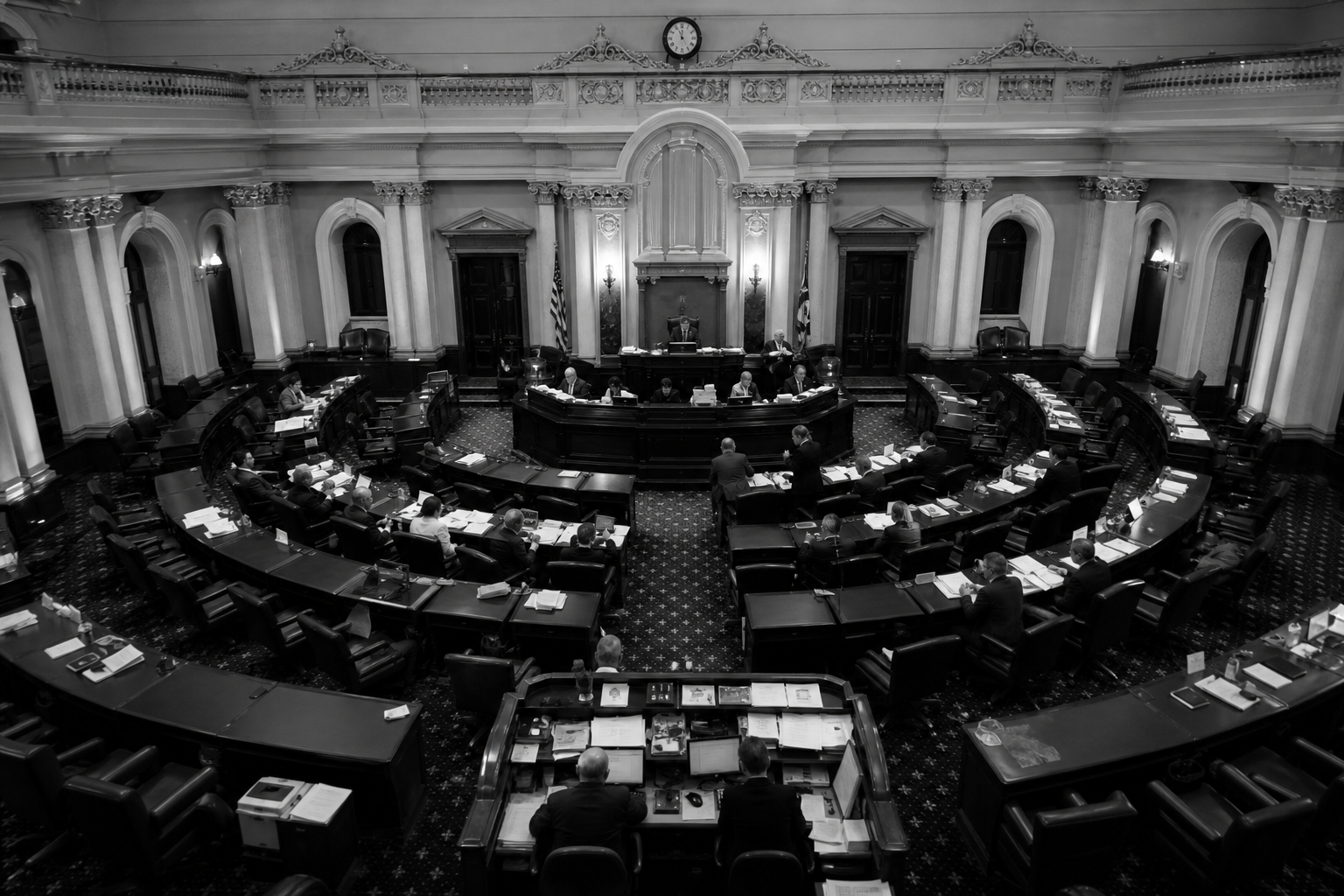
The bill’s operative sentence provides: “Not later than 270 days after the date of enactment of this Act, the President shall direct all Executive agencies to declassify and make publicly available all information relating to unidentified anomalous phenomena.” In other words, the 270 days begins on the day the measure becomes law. Day 270 is the deadline for the President to issue the direction described in the bill.
- If the bill never passes: there is no start date, no presidential duty under H.R. 1187, and no 270-day federal disclosure obligation.
- If it passes: enactment starts the count immediately; the President would have 270 days to direct executive agencies to declassify and publicly release covered information.
- After that direction: the text does not separately set a record-by-record completion date, an agency-submission deadline, an archival-transfer schedule, or a reporting deadline.
That distinction limits the headline claim. The H.R. 1187 declassification deadline would attach to presidential action, a direction to agencies, not necessarily to the completed public release of every responsive page, image, recording, or intelligence product by day 270. A directive could initiate searches, classification review, redaction decisions, and release work that continue beyond that date.
The UAP declassification bill also does not make the calendar itself proof that all underlying material would emerge in full. A deadline establishes urgency and a responsible actor; it does not, by its wording alone, resolve record-level decisions about what information can be released, withheld, or postponed. Those limits determine the practical scope of any mandatory disclosure.
The Exceptions, Postponements, and Review Rules That Could Limit Release
On its face, the bill supplies no record-level exception test. It does not enumerate a national security exemption, intelligence sources and methods, military capabilities, personal privacy, foreign-government information, or an active-investigation category. Nor does it say that an agency may withhold a covered record upon a finding of identifiable harm. The practical result is an unusually broad instruction to declassify and make information public, but without a statutory decision rule for resolving conflicts with sensitive material.
That omission matters because declassification, redaction, and public release are distinct outcomes. Declassification removes a security classification; redaction removes protected portions while leaving the remainder available; continued withholding keeps information from public release. H.R. 1187 directs the first and third steps in broad terms, but does not specify when an agency could choose a partial release instead of a full one.
The text also creates no defined postponement process. It names no official who may postpone disclosure, requires no written justification or harm finding, establishes no maximum postponement period, and provides no periodic reconsideration schedule. It likewise does not require public notices describing withheld material, reports to Congress, independent-review decisions, or an appeal route for disputed agency determinations.
Those absences do not establish that every responsive record would necessarily appear without edits if the measure passed. They do show that the bill itself does not build the usual procedural architecture for handling disputed sensitive material. A directive issued under the proposal would need to address how existing classification authority is applied, who records any withholding rationale, and whether delayed or partial releases are revisited. Without those details in the statute, the strength of public access would depend heavily on the President’s implementing direction and agencies’ subsequent review practices.
Why H.R. 1187 Matters for UAP Disclosure, and How It Differs From Earlier Proposals
The consequential difference is institutional design. If enacted in its introduced form, H.R. 1187 would place a single, time-limited presidential directive at the center of disclosure. That could make agency handling more uniform and give Congress and the public a clear benchmark: whether executive agencies acted within 270 days of enactment. Its leverage, however, would rest on presidential implementation rather than a dedicated records collection, outside review body, reporting regime, or enforcement process.
The Schumer-Rounds UAP Disclosure Act took a more elaborate approach in its proposed form: a National Archives UAP records collection, presumptive disclosure rules, a review board, and postponement standards. Major elements, including the review board and proposed federal authority over certain records, were not included in the enacted Fiscal Year 2024 National Defense Authorization Act. The enacted NDAA nevertheless required the National Archives to establish a UAP Records Collection and directed agencies to identify and transmit qualifying records. That is a collection-and-archive structure, rather than H.R. 1187’s direct 270-day instruction to declassify and publish.
Earlier NDAA-era provisions also created and assigned UAP functions within the Defense Department, including the All-domain Anomaly Resolution Office. Those provisions emphasize reporting, analysis, coordination, and congressional briefings; they do not impose H.R. 1187’s proposed public-release deadline. For readers following UFO disclosure, the practical distinction is between gathering and managing records, reviewing them through defined procedures, and ordering broad public availability on a fixed schedule.
Substantial releases could clarify what the government recorded, assessed, and withheld, but they would not independently prove claims of alien disclosure or non-human intelligence. The strongest signal of progress would be enacted text paired with concrete implementation: Congress.gov updates showing new bill text, committee action and votes, followed by any presidential direction or agency guidance that specifies how records will be located, reviewed, and released.
What H.R. 1187 Would Actually Change for UAP Transparency
The practical test is not whether the proposal uses forceful disclosure language, but whether that language becomes an operating government process. H.R. 1187 would matter only after enactment starts its 270-day clock and requires the President to direct executive agencies to declassify and publicly release UAP-related information. Until that event, it remains a legislative proposal rather than an obligation enforceable against record-holding agencies.
Even if enacted, the result would not automatically be a complete public file. The breadth of “information relating to” UAPs would determine what agencies must locate; presidential implementation would determine how they identify custodians, coordinate review, and publish material; and unresolved classification or other withholding issues would shape whether releases are complete, redacted, delayed, or disputed. The bill’s text supplies a deadline, but not a detailed postponement framework or independent review system to resolve those decisions.
The next meaningful signals are concrete: movement on Congress.gov beyond referral, passage of identical text by both chambers, enactment, and then a public presidential directive or agency release plan. Strong evidence of progress would include named responsible offices, a records inventory, release dates, and accessible document batches, not simply renewed public interest in UAP disclosure legislative efforts.
Frequently Asked Questions
-
Has H.R. 1187 become law yet?
No. As of August 5, 2026, H.R. 1187 remains introduced legislation that was referred to the House Committee on Oversight and Government Reform, with no House or Senate passage and no Public Law number.
-
Does H.R. 1187 require UAP files to be released within 270 days?
No, the 270-day deadline would require the President to direct executive agencies to declassify and make UAP-related information public within 270 days after enactment. The bill does not set a separate deadline for agencies to complete every records search, review, redaction, or release.
-
What types of records could H.R. 1187 cover?
The bill covers information relating to unidentified anomalous phenomena, which could include intelligence assessments, field reports, briefing slides, photographs, sensor imagery, videos, correspondence, and database entries. Coverage would depend on whether covered executive agencies possess or control the records and whether they concern UAPs.
-
How is H.R. 1187 different from the Schumer-Rounds UAP Disclosure Act?
H.R. 1187 would center on a presidential directive issued within 270 days of enactment, without creating a separate archive, review board, reporting system, or postponement process. The proposed Schumer-Rounds UAP Disclosure Act included a National Archives records collection, presumptive disclosure rules, a review board, and defined postponement standards.