UAP Cover-Up Claims: Documented Secrecy, Verified Records, and Unsupported Inferences
Examine UAP disclosure claims with a receipts-first guide to documented facts, sworn allegations, official findings, and unresolved questions.
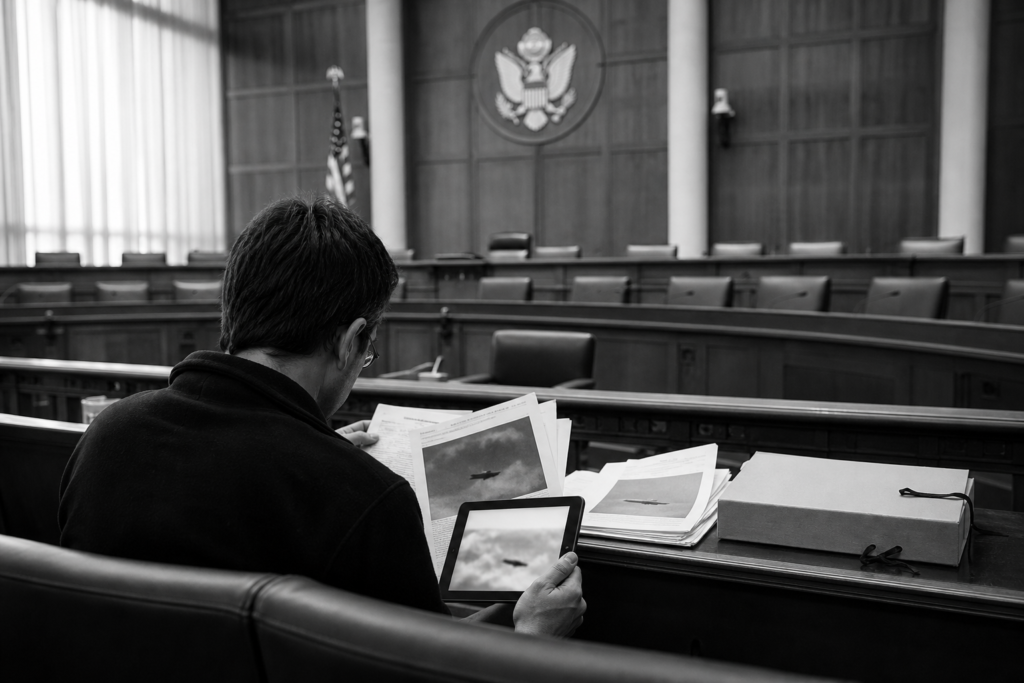
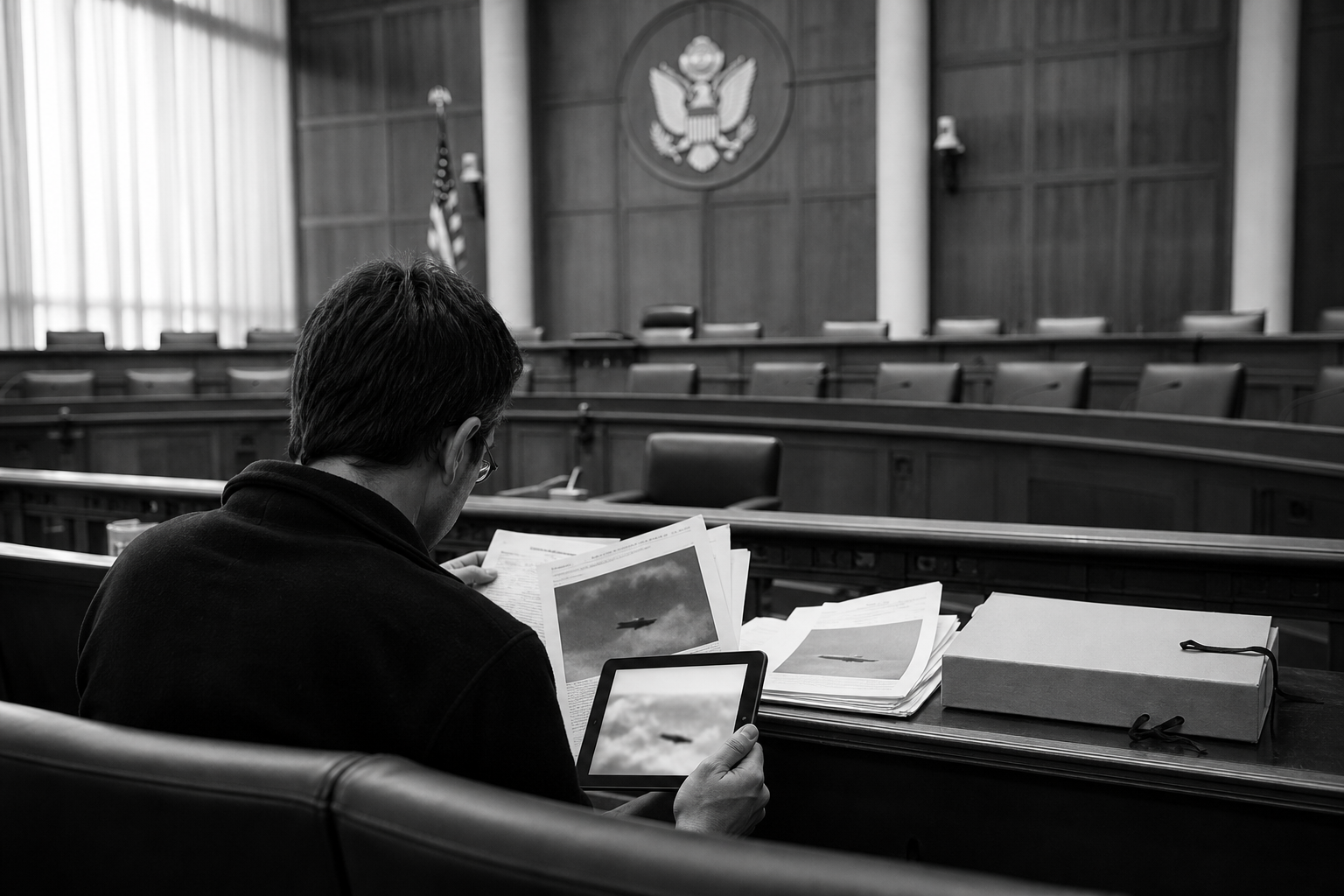
UAP disclosure attracts intense interest because it sits where national-security secrecy, extraordinary testimony, and genuine gaps in public knowledge meet. That combination invites a simple verdict, either a proven cover-up or a complete fabrication, but the available record does not justify either shortcut.
This guide uses a receipts-first standard. A publicly released report, statute, archival record, or authenticated image can establish that an agency acted, recorded an event, or adopted a policy. An official assessment establishes what that office concluded within the materials and authority it reviewed. Sworn testimony establishes that a witness made an allegation under oath; it does not, by itself, independently prove the underlying allegation. An unresolved case establishes that the public record has not supplied a satisfactory explanation, not that any particular explanation is correct.
Those distinctions matter most for UAP cover-up claims. The pages ahead examine government records, congressional oversight, official findings, legislation, and public allegations one receipt at a time. They will distinguish the enacted UAP-records provisions from the broader proposed UAP Disclosure Act, and separate evidence available for public scrutiny from assertions tied to classified material that the public cannot independently assess. Unanswered questions deserve careful sourcing, not automatic acceptance, automatic dismissal, or certainty dressed up as proof.
UAP Disclosure Claims Need an Evidence Ladder, Not a Yes-or-No Verdict
An evidence ladder prevents different kinds of material from being made to carry more weight than they can bear. At its strongest are primary records: an authenticated memorandum, a released image with provenance, a statutory provision, or an archival file. These can show that an event was reported, a program existed, or an institution made a decision. They do not, without more, establish what an ambiguous object was.
Official assessments occupy the next rung. They show the conclusion reached by a named office from the information it reviewed; that is meaningful, but it is not a public demonstration of every underlying classified fact. Sworn congressional testimony is also consequential evidence: it fixes what a witness alleged under oath. Its evidentiary force rises when the witness supplies firsthand knowledge, contemporaneous records, identifiable sources, and independently testable corroboration.
Below that are secondhand accounts and reasonable inferences. A cluster of consistent reports may justify further investigation, while secrecy surrounding a defense capability may reasonably suggest a national-security rationale. Neither turns an unresolved incident into proof of extraterrestrial or non-human origin. An unsupported conclusion skips those intervening steps, treating a claim, a gap, or a classification marking as the answer itself.
That is the standard applied to recurring UFO disclosure claims: identify the receipt, state its limited result, then separate what follows from what merely remains possible.
What the Public Record Actually Establishes About UAP
The durable baseline is institutional rather than sensational: the Defense Department and the Office of the Director of National Intelligence have established channels to collect UAP reports, analyze relevant data, and brief Congress. AARO, the Pentagon UFO office formally known as the All-domain Anomaly Resolution Office, serves as the focal point for that work. Its existence demonstrates a continuing national-security and oversight function; it does not, by itself, establish the nature of any particular object or event.
Public releases also document that some military encounters were recorded and treated as worth reviewing. A released cockpit video can establish that an aircraft’s system captured imagery at a particular time; a pilot report establishes that a person observed something; and a sensor track establishes that a system registered data. Those are different receipts. A confirmed explanation requires the further step of tying the observation and available data to an identified cause, such as a balloon, drone, aircraft, atmospheric effect, or sensor artifact, with enough information to support that attribution.
Annual ODNI and Defense Department reporting has included cases categorized as unresolved or unidentified. In that usage, the label means the available reporting did not permit a confident attribution at the time of assessment. It can reflect incomplete imagery, missing contextual data, limited sensor coverage, or an inability to match the information to a known object. It does not mean non-human intelligence has been identified, nor does it demonstrate that such an explanation was ruled in.
The practical reading rule is straightforward: treat a documented UAP sighting as evidence of a reported event, and an unresolved file as evidence of an attribution gap. The stronger conclusion requires evidence that closes that gap, not merely the fact that it remains open in public reporting.
Crash Retrieval, Reverse Engineering, and Non-Human Biologics: What Is Alleged vs Verified
The crash-retrieval claim is more specific than an unexplained sighting: it alleges that government-linked entities possess recovered craft, seek to reproduce their capabilities through reverse engineering, and in some accounts retain biological material associated with the recovery. If true, that would be the core of a government UFO cover-up allegation, not merely an unresolved observation.
David Grusch’s UFO testimony, submitted in writing and delivered under oath at a July 2023 House hearing, put those allegations before Congress in unusually direct terms. He said he had been told of a decades-long program involving recovered “intact and partially intact” craft and described being informed that biological material from some recoveries had been assessed as non-human. His public account distinguished his role as an investigator and recipient of information from personal inspection: he did not publicly claim to have handled a craft or viewed the alleged biologics himself.
That distinction determines what the testimony establishes. It is a documented, sworn assertion that Grusch received these reports, named people and locations to oversight bodies, and considered the information credible enough to pursue. It does not independently establish that a recovery program existed, that recovered material was technological, or that it came from non-human intelligence. An oath raises the stakes for a witness’s truthfulness; it does not convert reported information into publicly verified fact.
For the stronger conclusion, the public record would need receipts capable of independent testing: authenticated program records showing authority, funding, custody, and purpose; direct witnesses describing their own specific roles; and physical material with an unbroken chain of custody from recovery through laboratory examination. Independent technical analysis would then need to identify properties that ordinary terrestrial manufacture or contamination cannot explain. A photograph without provenance, a document without authentication, or repeated secondhand accounts are weaker signals because none permits that full chain of verification.
Some relevant material may remain classified, which means the public cannot independently assess it. That limitation leaves room for unresolved oversight questions, but it cannot itself supply the missing proof of crash retrieval, reverse engineering, or non-human biologics.
AARO’s Findings Are Official Assessments, Not the Final Word on Every Claim
AARO’s Historical Record Report, Volume 1 is the government’s most direct public assessment of these allegations. It reviewed the historical record surrounding claimed secret U.S. programs and concluded that it had found no verifiable evidence that the government or industry possessed extraterrestrial technology, nor evidence that information had been unlawfully withheld from Congress.
That is a significant official assessment, not a finding that every unpublicized activity has been exhaustively disproved. “No verifiable evidence” describes what AARO could substantiate through the material, access, and investigative methods available to it; it does not logically establish that no relevant fact could remain classified, undiscovered, or outside the review’s reach. The public also cannot independently evaluate material that remains classified.
The inverse leap fails as well. AARO’s conclusion may be disputed on its reasoning, its historical interpretations, or the completeness of its access, but disagreement does not supply affirmative evidence for a government UFO cover-up. A competing conclusion needs its own receipts: authenticated records, direct testimony tied to identifiable duties, or material whose custody and analysis can be independently examined.
Congressional committees and inspectors general can receive classified allegations and pursue oversight questions beyond the public record. Their involvement shows that allegations were serious enough to be submitted or examined through formal channels; it does not publicly establish the underlying crash-retrieval claims. The disciplined position is therefore narrower: treat the AARO UAP report as an important negative finding with defined scope, while reserving stronger claims for evidence that can actually bear their weight.
The UAP Disclosure Act and National Archives Records: What Became Law
An archive is a repository, not a finding. The key legal distinction is between the Schumer-Rounds UAP Disclosure Act proposal and the UAP-records language that Congress ultimately placed in the Fiscal Year 2024 National Defense Authorization Act. A bill can propose a dedicated review board, broad records authorities, and disclosure mechanisms; those proposed authorities should not be described as fully enacted when final statutory text narrows or omits them.
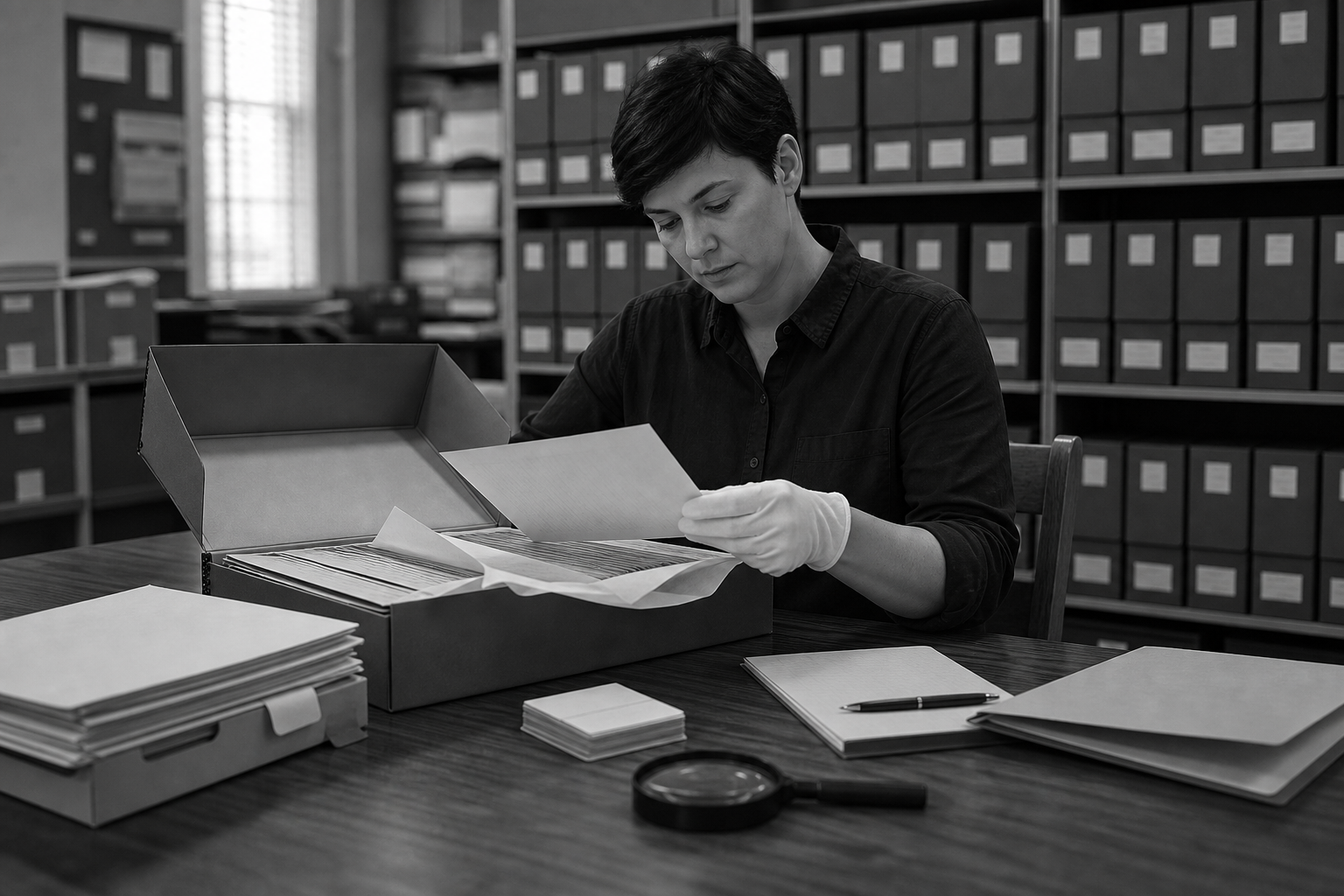
The practical function of a UAP Records Collection at the National Archives is preservation and structured access. Agencies must identify records within the law’s scope and transmit them for inclusion, creating a central collection rather than leaving potentially relevant material dispersed across offices. That is a meaningful disclosure mechanism: it can make provenance, agency custody, dates, and internal handling visible over time.
Transfer does not necessarily mean immediate public release. A record may be released, declassified in whole or part, or postponed under the statute’s disclosure framework when protected interests still apply. Redactions and postponements matter because the public cannot independently assess withheld classified content; they do not, standing alone, establish that the withheld material concerns non-human technology or any other particular allegation.
The strongest conclusion supported by an archival entry is limited but useful: a document existed, an agency treated it as responsive, and the document entered a governed release process. Its assertions still require ordinary evidentiary testing, who created it, whether the author had firsthand knowledge, what corroborates it, and whether physical evidence or contemporaneous records support it. The UAP Records Collection National Archives framework can expand the record; it cannot authenticate every claim contained in that record.
Real Secrecy and Bureaucratic Failures Do Not Automatically Prove an Alien Cover-Up
Secrecy has many ordinary institutional causes before it becomes evidence of an extraordinary one. Classified programs can protect capabilities, collection methods, foreign partnerships, procurement details, or intelligence assessments; compartmentalization limits access even among cleared personnel. Stigma can also discourage candid reporting, while incomplete retention and fragmented offices can leave a historical archive uneven. Those conditions can make official accounts appear contradictory without demonstrating that the contradiction concerns recovered non-human technology.
Past misleading public messaging and documented secrecy therefore give mistrust a rational basis, but they establish only that an agency withheld, shaped, or mishandled information in a particular context. An Inspector General complaint or determination likewise has a bounded meaning: it can show that a complaint was filed, that retaliation or process concerns warranted review, or that an oversight channel acted. It is not, by itself, a public finding that every substantive allegation within the complaint is true.
The missing bridge in UFO cover-up claims is evidence tying concealment to the specific asserted object: identifiable records naming the responsible entities and program; witnesses with direct, mutually corroborating knowledge; a traceable chain of custody for alleged material; and material that qualified independent experts can test and replicate. Classification may prevent the public from assessing some claimed evidence, but it cannot convert an inaccessible assertion into proof. A proven government UFO cover-up requires that bridge, not simply evidence that governments have kept other secrets.
A Practical Checklist for Reading UFO News and Future Disclosure Claims
When a striking claim appears, classify the headline before judging it: is it reporting an allegation, an official assessment, or a confirmed attribution? Those categories do different work. A sworn witness can establish that testimony was made; an agency finding establishes the scope and result of its review; confirmed attribution requires evidence identifying what the object was.
- Can I inspect the original record, footage, filing, or hearing transcript rather than a clipped quotation or recycled headline?
- Is the source named, and did that person directly observe, handle, or analyze the matter, or repeat what someone else said?
- Does any alleged document have a verifiable origin and an unbroken chain of custody from collection through examination?
- Is there independent corroboration from records, sensors, qualified witnesses, or testing by experts outside the original claimant’s circle?
- Were mundane, human-made, sensor, or intelligence-related explanations tested before “unidentified” became “non-human”?
Apply the same screen to UFO news, including retrospective UFO sightings 2025 coverage and new reports in 2026. Warning signs include anonymous claims without records, proposed legislation described as enacted law, and a headline that turns an unresolved case into a conclusion.
The public record warrants scrutiny: documented reporting systems, released records, sworn allegations, official assessments, and unresolved cases all merit careful attention. It does not yet warrant claims beyond the evidence available for public examination.
The Most Defensible Position Is Evidence, Not Certainty
The honest conclusion has two parts: government secrecy and official interest in anomalous reports can be real, while a coordinated concealment of non-human technology or bodies remains a separate claim requiring separate proof. Collapsing the first proposition into the second replaces an evidentiary bridge with an assumption.
That distinction preserves room for scrutiny without granting certainty where the public record cannot support it. Sworn allegations may justify investigation; unresolved discrepancies may justify further questions; classified material may leave important matters beyond public assessment. None independently establishes what was recovered, who possessed it, or whether it was non-human.
The strongest future UAP disclosure story will provide more than an emphatic account. It will connect a precise claim to primary records, direct witnesses, traceable material, and corroboration that does not depend on the original claimant. A weak signal is an assertion that cannot be independently located or tested; a strong one is evidence whose origin, handling, and findings can be examined by others.
Keep the remaining unknowns visible rather than filling them with a preferred answer. Identify who is making the claim, separate firsthand knowledge from repetition, ask what would corroborate it, and state exactly what the available evidence does, and does not, show.
Sources
Frequently Asked Questions
-
Has the U.S. government confirmed alien technology or non-human intelligence?
No. Public U.S. records confirm that agencies collect and investigate UAP reports, but they do not publicly verify possession of non-human technology, craft, or biologics.
-
What did David Grusch actually testify to under oath?
At a July 2023 House hearing, David Grusch said he had been told of a decades-long program involving recovered intact and partially intact craft and alleged non-human biologics. He did not publicly claim to have personally handled a craft or viewed the alleged biological material.
-
Does AARO say UAP crash-retrieval programs do not exist?
AARO’s 2024 Historical Record Report said it found no verifiable evidence that the U.S. government or industry possessed extraterrestrial technology, and no evidence that such information was unlawfully withheld from Congress. That is an official assessment based on the material and access AARO reviewed, not public proof that every classified claim has been exhaustively disproved.
-
Was the UAP Disclosure Act passed into law?
The broader Schumer-Rounds UAP Disclosure Act proposal was not enacted in full. The Fiscal Year 2024 National Defense Authorization Act included narrower UAP-records provisions that require agencies to identify and transfer covered records to a National Archives collection.
-
What evidence would prove a government UFO cover-up?
Strong proof would include authenticated program records showing authority, funding, custody, and purpose; direct witnesses with firsthand, corroborated knowledge; and physical material with an unbroken chain of custody. Independent experts would also need to test the material and establish properties not explained by ordinary terrestrial manufacture, contamination, or known technology.