UAP Identification Without the Snark: Planes, Balloons, Satellites, Drones, Astronomy, and Sensor Effects
Learn how to assess UAP misidentifications with practical checks for planes, balloons, Starlink, drones and camera artifacts.


An unusual light, shape, or movement can be genuinely striking, especially when it appears briefly, at a distance, or through a phone camera that offers little sense of scale. Taking that experience seriously does not require deciding what it was before the evidence can support an identification.
“UAP” is best understood as an identification status: an observation that has not yet been explained from the available information. It is not, by itself, evidence for a particular origin. A plausible explanation and a supported identification are different things. “It could be an aircraft” is a starting hypothesis; a matching time, direction, flight path, and lighting pattern makes that hypothesis much stronger.
This field guide approaches UAP misidentifications as a practical comparison exercise, not a contest of belief. Planes can look motionless when approaching head-on; balloons can catch sunlight and drift in ways that obscure their shape; a Starlink pass can form a moving line of evenly spaced lights; drones can defeat distance judgment; and cameras or other sensors can turn glare, focus changes, or digital processing into apparent motion.
Begin by preserving what the sighting actually contained: the exact time and time zone, location, viewing direction, duration, weather, sounds, and original photo or video file. A heavily zoomed, compressed clip showing a bright dot is weak evidence of speed or shape. Synchronized observations from separate locations, a continuous original recording, and a time-and-place match are stronger. Some reports will remain unresolved, not because that proves an extraordinary answer, but because the available evidence cannot distinguish among ordinary ones.
Start Here: A UAP Is an Observation, Not a Conclusion
A useful report separates observation from interpretation. “A steady white light low in the west for three minutes” records what was perceived; “a craft hovering” adds an explanation that may or may not survive comparison with other information.
Think in three stages. A hypothesis is a possible match, such as an aircraft, balloon, satellite train, drone, or camera artifact. A likely identification has several independent points of agreement: for example, the object’s direction, timing, movement, and visible lighting all fit one candidate. An unresolved report is one for which the available material cannot discriminate reliably among candidates.
Those outcomes are not judgments about the observer. A sincere person can accurately describe an unusual light while having too little distance, scale, timing, or sensor information to identify it. Likewise, an unresolved case is neither evidence of fraud nor proof of an extraterrestrial or non-human origin; it describes an evidentiary limit.
That is why careful work on UAP misidentifications begins by retaining the original account and testing explanations against it. The goal is not to explain away a sighting, but to identify what the evidence can support, and to state plainly when it cannot.
The Field Checklist: Capture Context Before Naming the Object
Start by making a contemporaneous record, before memory turns an impression into a narrative. Note the exact clock time and time zone; a precise location; the viewing direction and elevation above the horizon; duration; apparent direction and speed; cloud cover, wind, and visibility; any sound; and changes in brightness, color, shape, or motion.
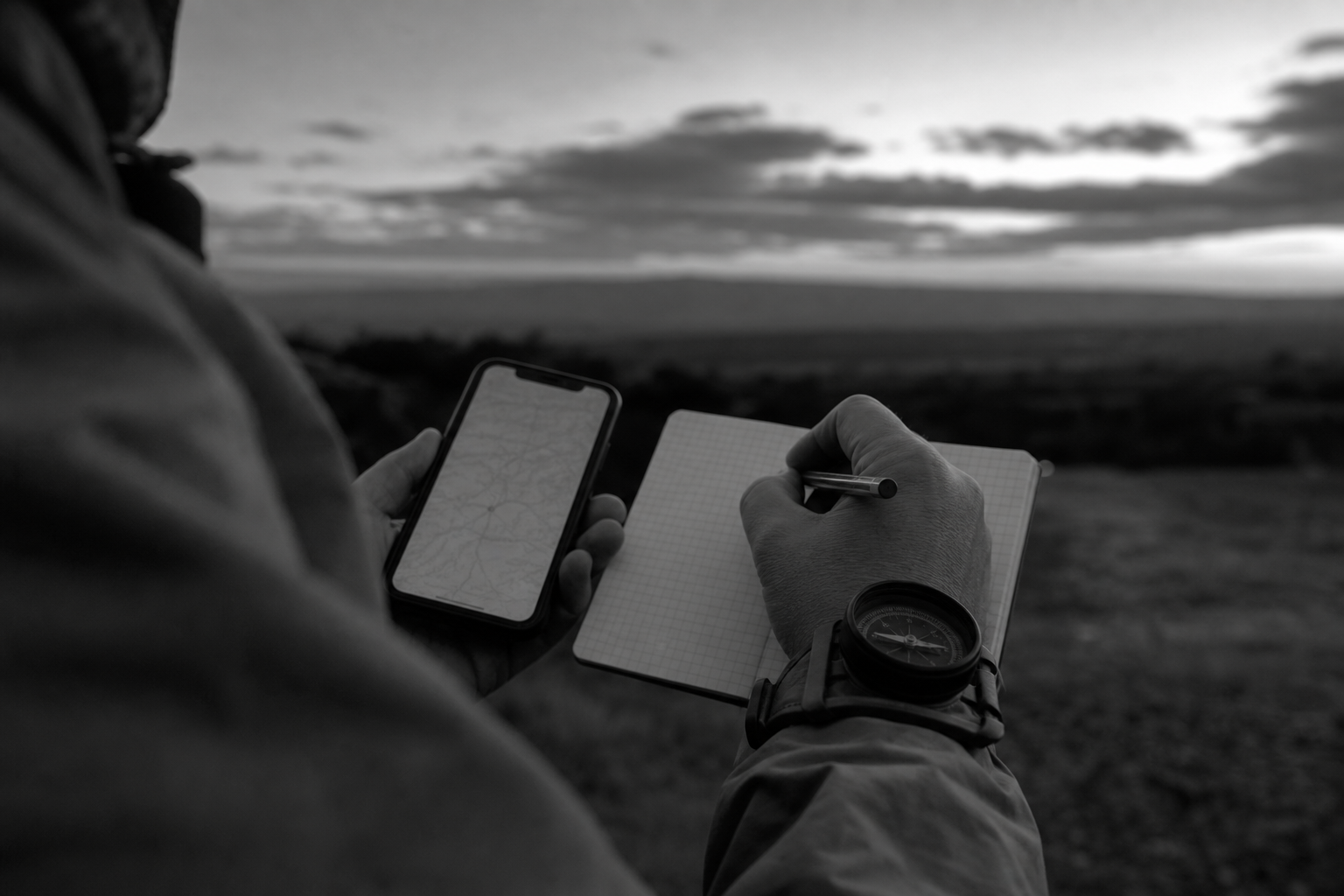
- Keep the original photo or video file, along with its metadata where available. Save the full, unedited sequence, not only the most dramatic seconds, and record whether zoom, stabilization, night mode, or another camera setting was active.
- Write down fixed reference points. “It crossed from the water tower toward the Moon” is more useful than “it went very fast,” because landmarks can help reconstruct direction and angular movement.
- Compare the observation against time-matched candidates: a flight path, satellite prediction, local weather information, and reports from witnesses at other locations. For how to identify UAP sightings, agreement on time and position matters more than a loose visual resemblance.
A public ADS-B display can be a useful comparison tool, but an absent track is missing comparison data, not a finding that no aircraft was present. The same restraint applies to satellite apps and weather maps: use the timestamp, location, and coverage shown by the tool rather than treating a near match as decisive.
A candidate becomes stronger when several details converge: it appears at the right time, occupies the right part of the sky, moves in the observed direction, behaves as described, and resembles the unedited image. A light that merely looks similar is a hypothesis; synchronized independent observations and a matched timeline provide materially stronger support.
Planes Mistaken for UFOs: Why Familiar Aircraft Can Look Unfamiliar
An aircraft approaching nearly head-on may change little in apparent position even while closing rapidly. Its motion is mostly toward the observer rather than across the background, so a bright point can seem to hover. At long range, haze can erase the fuselage and wings while intensifying the impression of a single, unusually bright object; a turn can then reveal sideways motion that was previously hidden by perspective.
Lighting can make planes mistaken for UFOs especially persuasive at night. Forward-facing landing lights can appear as a steady white glare, while navigation lights are position lights, typically red on one side and green on the other, that may become visible only as the aircraft’s angle changes. White anti-collision strobes flash briefly and can make one aircraft seem like several lights blinking in sequence. A contrail may catch sunlight after the aircraft itself is difficult to see, producing a detached-looking bright line or an oddly shaped plume.
Parallax is another trap: when an observer moves past nearby trees, buildings, or a car window, a distant aircraft can appear to slide, stop, or accelerate relative to those nearer references. A strong aircraft identification matches more than a similar-looking light: an airport approach or route fits the time and bearing, the light pattern changes plausibly, flight information corroborates the track, or a recognizable turn aligns with the report.
A generic aircraft shown somewhere nearby is weaker evidence if its direction, timing, altitude appearance, or behavior does not fit. It may make an aircraft explanation plausible, but it cannot establish that it was the observed object.
Balloons and Starlink: Slow Drifters and Ordered Lights in the Sky
A bright object that seems to loiter near sunset deserves a different comparison from a light that crosses the sky in formation. A balloon can drift with winds at its altitude, which may differ sharply from the breeze felt at ground level. Its reflective surface can catch the low Sun around dawn or dusk, flare brightly, then fade or change from a dot to an irregular shape as its angle changes. With no reliable size reference, its distance and speed are especially hard to judge; a slow drift at long range can look like controlled hovering.
A balloon hypothesis gains weight when the reported motion follows the relevant upper-level wind direction, the illumination fits the Sun’s position, and the object’s brightness or outline changes gradually rather than displaying a fixed light pattern. A bright object alone is not enough: not every reflective light is a balloon, and an apparent drift without a known bearing or duration remains a limited clue. This is why balloons initially identified as unknown airborne objects can be sincere, difficult observations rather than careless ones.
Starlink is a separate pattern: multiple satellites can appear as a sequence of evenly spaced lights traveling along a shared path. Soon after deployment, that “train” can look strikingly ordered and unfamiliar. The lights generally maintain the same overall direction and spacing while individual points gradually dim, brighten, or disappear as viewing and illumination angles change.
For Starlink mistaken for UFOs, a prediction is useful only when it matches the observer’s exact place and time, the track across the correct part of the sky, and the observed sequence, not merely a satellite pass somewhere that evening. A single isolated light or a line moving in the wrong direction leaves the identification unsupported.
Drones: Small Lights, Big Distance Errors
A small multirotor at an unknown range can defeat intuitive estimates of size, speed, and maneuvering. A nearby drone can hold position, move sideways, climb, and reverse along a short route; seen only as a light, those ordinary changes may look like abrupt acceleration or a turn without inertia. Repeated passes over the same area, sustained hovering, and a light pattern that blinks in a regular sequence are useful drone clues, but none identifies a drone on its own.
Distance is the missing measurement. Digital zoom enlarges both the subject and tiny camera movements, while hand shake, reframing, and motion blur can make a stationary or slowly moving light jump across the frame. An observer walking or filming from a moving vehicle can add another changing reference point. Compare the light with fixed features such as a roofline or utility pole, and retain the original, widest-angle video; apparent screen speed after zooming is weak evidence of real speed.
Drones mistaken for UFOs remain a hypothesis unless the timing, route, visible behavior, and independent observations align. A missing public tracker entry neither proves a drone nor rules one out. Where operational context matters, use current local aviation guidance rather than assumptions, since the applicable rules and authorized activity can differ by place and change over time.
When the Sensor Creates the Mystery: Camera and Tracking Artifacts
A recorded anomaly can arise from the way a sensor renders a real light or scene rather than from the object’s physical shape or motion. That distinction matters: a camera artifact does not mean that nothing was present; it means the image alone may not preserve the object faithfully. In low light, autofocus hunting, the camera repeatedly seeking focus, can make a point of light swell, sharpen, split, or change outline. An out-of-focus point may become bokeh, a lens-shaped blur whose apparent geometry reflects the optics more than the distant source.
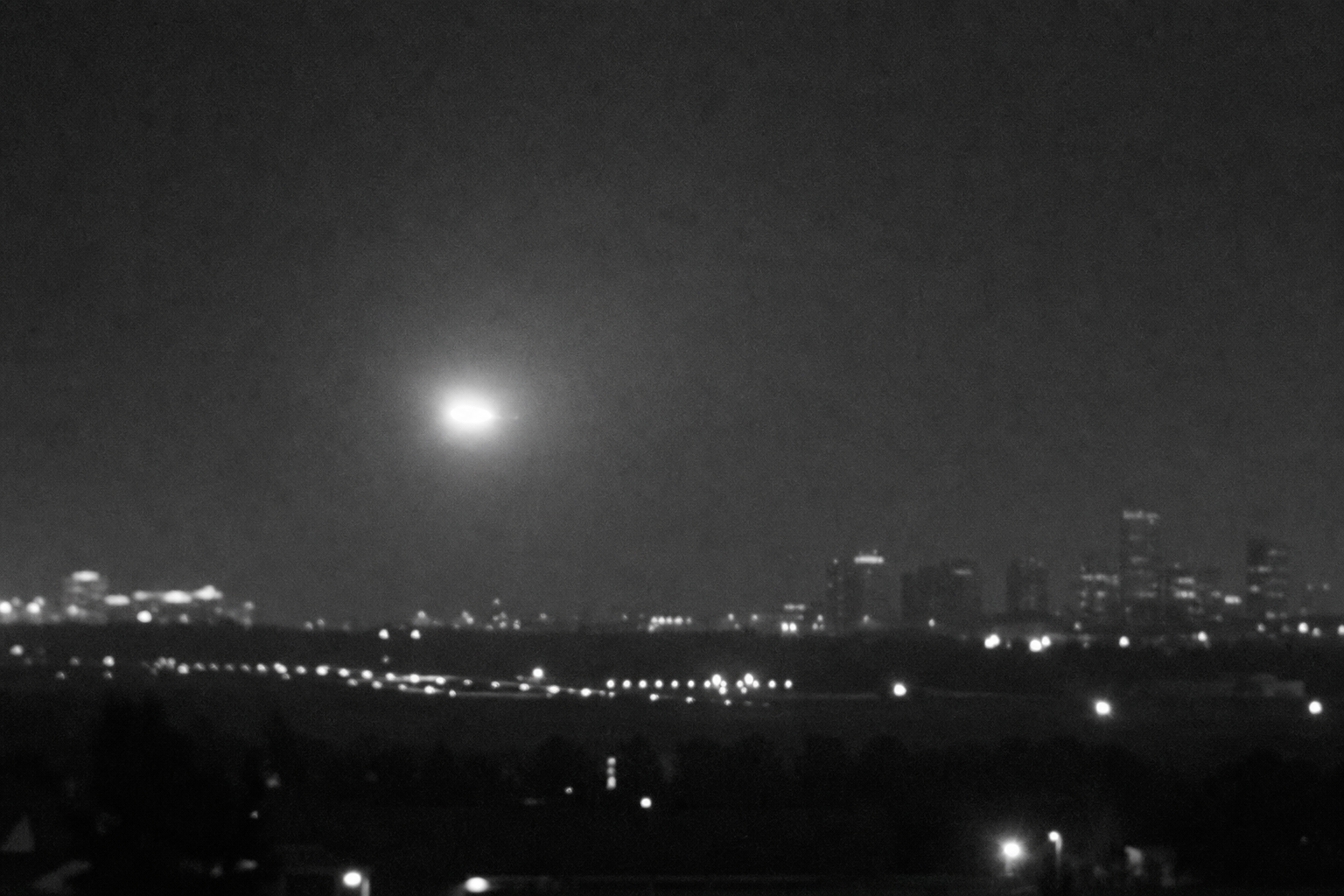
Lens flare and infrared glare can also create bright forms, streaks, or colored spots. A useful clue is whether the feature remains in a consistent position relative to the lens or shifts predictably when the camera is tilted, rather than holding its place against clouds, stars, buildings, or terrain. Ask: does the shape change at the same moment focus changes? Does apparent motion begin only when the operator pans? Does a bright source just outside the frame produce or alter the feature?
Motion blur combines the path of a light with camera movement; rolling shutter can skew or bend fast-changing parts of an image because the frame is read in sequence rather than all at once. Stabilization may crop and reposition frames to counter shake, while digital zoom enlarges pixels and any residual motion. These UAP sensor glitches are best tested frame by frame: compare the object with other lights in the same frame, especially during reframing and refocusing.
A radar track deserves similar restraint. A plotted return is a measured track, not a photograph of an object’s shape, and an isolated track rarely establishes size, appearance, or intent. Preserve the original file, metadata, device settings, and full sequence; seek a wider-angle reference and independent observations. An artifact explanation becomes stronger when its predicted behavior appears throughout that material, not merely in a cropped clip.
What “Unresolved” Actually Means, and How to Make a Report More Useful
“Unresolved” is a statement about the record, not a claim about an object’s origin. It means the available material does not discriminate well enough among competing explanations: a brief light without a reliable time, direction, scale reference, or full recording may be consistent with several possibilities, while supporting none strongly. An unexplained gap is not positive evidence for an extraordinary answer.
A useful report preserves the details that let another person test the observation later. Include:
- Time: exact date, clock time, and time zone; “around midnight” is far less useful than a timestamp that can be aligned with other records.
- Place and view: precise observing location, compass direction, elevation above the horizon, and any fixed landmarks in frame.
- Sequence: duration, changes in brightness or motion, weather and visibility, and whether the observer or camera was moving.
- Original material: unedited photo, video, audio, metadata, device settings, and the full clip before zooming, trimming, or reposting.
- Independent context: separate witness notes made before discussion, plus relevant flight, satellite, weather, or other sensor records.
Separate accounts matter because conversation can unintentionally align memories. Agreement on a specific direction, timing, or change in motion is stronger when each witness recorded it independently; a shared retelling is useful context but weaker corroboration.
Use calibrated labels: consistent with for a candidate that fits some details, likely when several independent details converge, unsupported when the proposed explanation lacks a match, and unresolved on available evidence when the record cannot decide. Public interest in UAP disclosure and UFO news is a reason to raise this evidentiary standard, not to force every unexplained report into either a conventional or non-human conclusion.
Curiosity Works Best With Context
The productive question is not “Can this be explained?” but “Which explanation best survives comparison with the record?” Perspective can make an approaching aircraft seem fixed; distance can turn a drone’s short movement into apparent extreme speed; high-altitude wind can carry a balloon differently from ground-level air; and a camera can reshape a point of light while it focuses or tracks. Those are testable possibilities, not dismissals.
Apply the same sequence each time: preserve the original observation, compare its timing and geometry with ordinary candidates, look for details that conflict with each candidate, and state the result at the level the evidence warrants. A single resemblance, a bright light, an unusual silhouette, a missing app track, has little resolving power. A candidate that matches time, direction, path, illumination, and independent observations is much stronger.
This approach makes room for uncertainty without turning it into a conclusion. An unresolved report can still contribute useful observations if its circumstances are recorded clearly enough for a later comparison, a second witness, or better data to narrow the options. That is the lasting value of careful UAP misidentifications: curiosity stays intact, while the claim remains proportional to what was actually observed.
Sources
Frequently Asked Questions
-
What are the most common UAP misidentifications?
Common UAP misidentifications include aircraft, balloons, Starlink satellite trains, drones, and camera or sensor artifacts. A UAP is an observation that has not yet been identified, not evidence of any particular origin.
-
Why can an airplane look like a stationary UFO?
An aircraft approaching nearly head-on can appear almost motionless because it is moving toward the observer rather than across the background. Landing lights may look like a steady white glare, while haze can hide the fuselage and wings.
-
How can you tell Starlink from a UFO sighting?
Starlink typically appears as multiple evenly spaced lights moving along the same path in the same direction. Confirm it by matching the observer’s exact location and time, the track across the correct part of the sky, and the observed sequence.
-
What camera effects can make a light look like a UAP?
Autofocus hunting can make a point of light swell, sharpen, split, or change shape, while out-of-focus bokeh reflects lens geometry rather than the object’s shape. Lens flare, infrared glare, motion blur, rolling shutter, stabilization, and digital zoom can also create apparent movement or distortion.
-
What information should you collect to identify a UAP sighting?
Record the exact date, clock time, time zone, location, compass direction, elevation, duration, weather, sounds, and changes in brightness or movement. Keep the original unedited photo or video with metadata and device settings, then compare it with time-matched flight, satellite, weather, and independent witness records.