David Fravor Reiterates 2004 Nimitz ‘Tic Tac’ Encounter and Sensor Corroboration in 2023 House Hearing
Explore David Fravor 2023 House hearing testimony, the Nimitz Tic Tac encounter, sensor corroboration and limits of the public record.
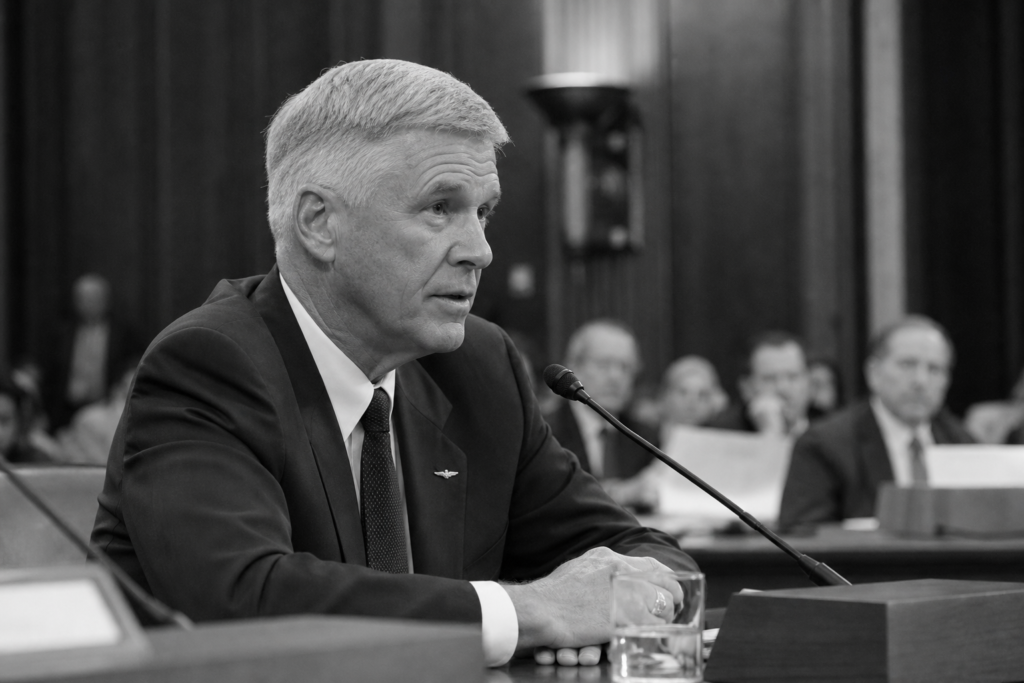
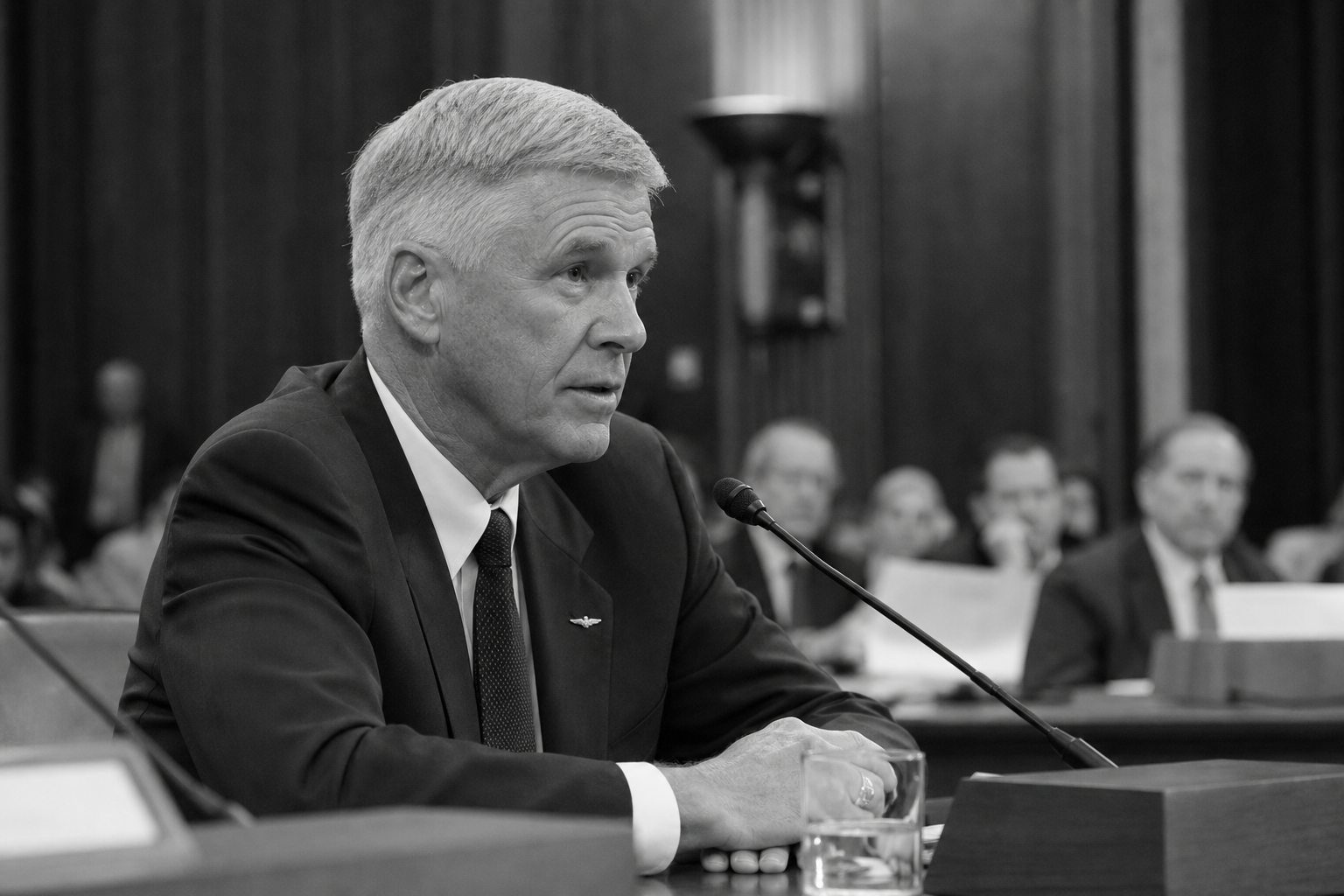
At the July 26, 2023 House Committee on Oversight and Accountability hearing, retired U.S. Navy Cmdr. David Fravor restated under oath his part of the 2004 Nimitz “Tic Tac” encounter. His appearance was significant because he was a firsthand participant in the airborne portion of the episode; it was not a congressional determination of what the object was.
This article examines what Fravor personally reiterated and keeps four often-merged categories separate. First is his visual account from an F/A-18 mission: what he described seeing above the ocean. Second is reported sensor corroboration, including accounts of radar activity associated with the USS Princeton. Those accounts can support the view that more than one person or system was involved in the wider incident, but reported tracking is not the same thing as a publicly released, complete radar dataset. Third is FLIR1, a later-public infrared video associated with the broader 2004 events; it came from a different sortie and is not a recording of Fravor’s own visual encounter.
The David Fravor 2023 House hearing therefore supplies sworn testimony and a framework for assessing a multi-witness event. It does not itself establish an origin, a vehicle type, or extraordinary physical capabilities. The public hearing record leaves important material outside view, including the underlying sensor records needed to independently test every reported detail.
What Fravor Reiterated at the 2023 House Hearing, and Why Precision Matters
Congressional testimony gives an account a formal public setting, but it does not turn every associated claim into independently established fact. In his July 2023 appearance, Fravor returned to the 2004 episode as a participant: the encounter he described from his aircraft, the observations he recalled from the mission, and the wider operational picture conveyed to him at the time.
Precision matters because the record contains different kinds of support with different evidentiary weight. A pilot’s recollection is firsthand testimony about what that pilot perceived. Accounts of USS Princeton radar contacts describe reported instrument tracking, while the FLIR1 recording is separate infrared imagery from the broader incident. Agreement among such accounts can make an episode more consequential than an isolated sighting; it does not merge them into one complete, publicly testable dataset.
This House Oversight Committee UFO hearing was oversight testimony, not a proceeding that identified the object or adjudicated claims of UFO disclosure. An unidentified observation means its origin or nature remains unresolved. It does not establish an extraterrestrial source, and reports of unusual military encounters and incomplete public records do not by themselves demonstrate a cover-up. The useful question is narrower: what Fravor personally observed, what other participants reported, and which underlying material the public can actually assess.
Fravor’s Core Account Before Congress
Fravor’s narrative began from the cockpit. He told the House panel that he was a Navy F/A-18 pilot and squadron commander when he and another aircraft were diverted from a training mission to investigate an area of disturbed water below them during the 2004 Nimitz deployment.
What followed is the firsthand portion of the David Fravor UAP hearing testimony. Fravor said he saw a white, oblong object above the disturbance, an object he compared to a Tic Tac, and described it as having no visible wings, rotors, or exhaust. As he maneuvered his aircraft down toward it, he recalled that the object reacted to his move, climbed toward him, and then departed rapidly. Those are Fravor’s remembered visual perceptions and his interpretation of the object’s apparent response, not a public measurement of its size, propulsion, or speed.
That distinction also narrows the meaning of the David Fravor Tic Tac encounter. Fravor could directly recount the water disturbance, the object’s appearance, his maneuver, and the moment it was no longer visible. He did not personally operate the shipboard radar systems, and details about earlier contacts, radar returns, and later tracking came through other personnel, briefings, and subsequent accounts. Likewise, the infrared footage publicly associated with the episode was not recorded from Fravor’s aircraft during this visual encounter.
His account is consequential because it places an experienced pilot’s sworn description at the center of the 2004 Nimitz UAP encounter. It should nevertheless be read at the scale he presented it: compelling firsthand testimony of an unresolved observation, alongside, but distinct from, separate reports of sensors and other witnesses.
The 2004 Nimitz Incident: A Short Timeline of the People and Platforms Involved
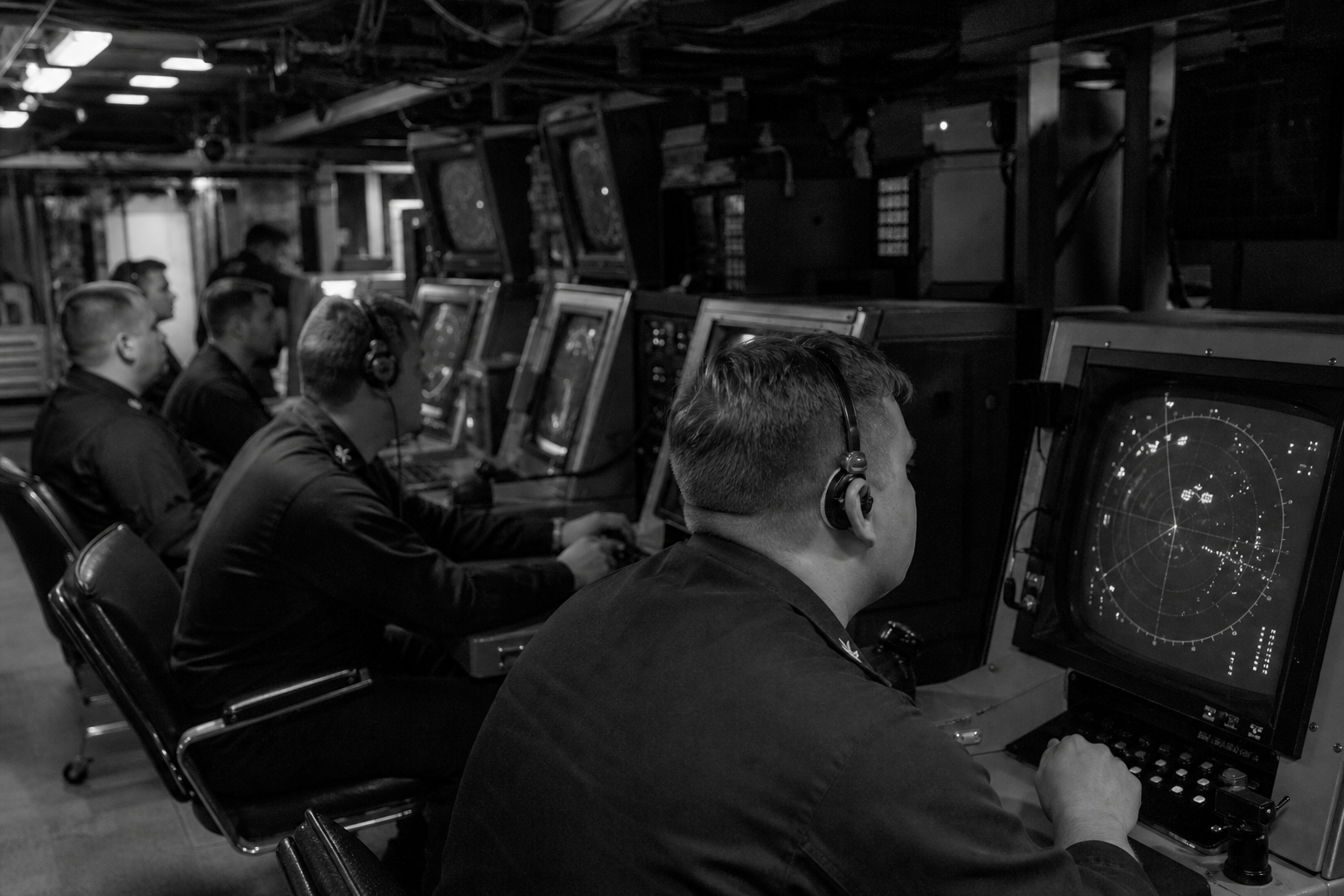
The sequence begins during the USS Nimitz Carrier Strike Group’s November 2004 training period in the Pacific. Personnel aboard the guided-missile cruiser USS Princeton later described radar contacts over several days before the airborne visual intercept. Princeton’s combat-information-center team, including radar operator Kevin Day in later public accounts, belongs to the sensor-reporting part of the record: they were not in Fravor’s cockpit, and their reported tracks are not the same evidence as a pilot’s visual observation.
Fravor’s flight came after Princeton directed aircraft from the Nimitz to investigate. He flew one F/A-18 with his wingman, Lt. Cmdr. Jim Slaight, while Lt. Cmdr. Alex Dietrich and her weapons-systems officer flew the second aircraft. Fravor and Dietrich have separately described the disturbed water and the white oblong object; their accounts provide overlapping aircrew recollections, rather than an instrument recording from the same moment.
A further flight occurred later. Navy aviator Chad Underwood, flying a different F/A-18, recorded the infrared clip commonly called FLIR1, the piece of Nimitz UAP footage later released by the Department of Defense. Its aircraft-mounted infrared sensor captured a separate attempted intercept, not Fravor’s earlier visual encounter.
That chronology is the useful checkpoint: Princeton personnel reported radar activity; Fravor, Slaight, Dietrich, and Dietrich’s backseater were involved in the visual-event flight; Underwood recorded later infrared video. Multiple roles can make an episode historically weightier because accounts intersect, but they do not turn the separate observations into one continuous, publicly available sensor record or identify the object.
What “Sensor Corroboration” Meant in Fravor’s Testimony
In this setting, corroboration has a narrower meaning than confirmation. Fravor told the House hearing that the event was not solely a pilot’s sighting, referring to radar activity reported before the intercept and to other systems involved around the Nimitz strike group. That wider picture matters because separate observations may converge on roughly the same operational episode, even when each observer saw or recorded only part of it.
The USS Princeton radar operators occupy a distinct place in that account. In later public interviews, Kevin Day and other personnel described anomalous tracks on the cruiser’s radar systems and the resulting decision to direct aircraft toward an area of interest. Their accounts can support the proposition that shipboard personnel reported unusual radar returns; they do not make Fravor a firsthand witness to the radar displays or their underlying data.
Nor do the different systems answer identical questions. Radar is used to estimate a contact’s position and movement from returned signals. An aircraft infrared or electro-optical system records heat contrast or imagery within its field of view. When time, location, and track information align, that overlap is a stronger signal than a single unsupported recollection. But without the full sensor files, including timing, settings, calibration information, geometry, and track history, public observers cannot independently calculate a contact’s precise speed, altitude, acceleration, or size from witness descriptions alone.
That is the evidentiary boundary in the David Fravor 2023 House hearing: Fravor’s statement conveyed that reported sensor activity accompanied the encounter, while the radar operators’ accounts supplied a separate operational perspective. It did not place the complete classified sensor data into the public record. Reported multi-sensor activity therefore strengthens the case for treating the episode as unresolved and worthy of examination, not as a public technical proof of a particular capability or origin.
Where the FLIR1 Video Fits, and Where It Does Not
The short FLIR1 clip belongs to the same 2004 Nimitz episode, but it is not film of Fravor’s close-range visual intercept. It was recorded on a later F/A-18 sortie by Lt. Cmdr. Chad Underwood, after Fravor’s flight had returned. Treating the footage as though it shows the exact white object Fravor described collapses two separate observations into one.
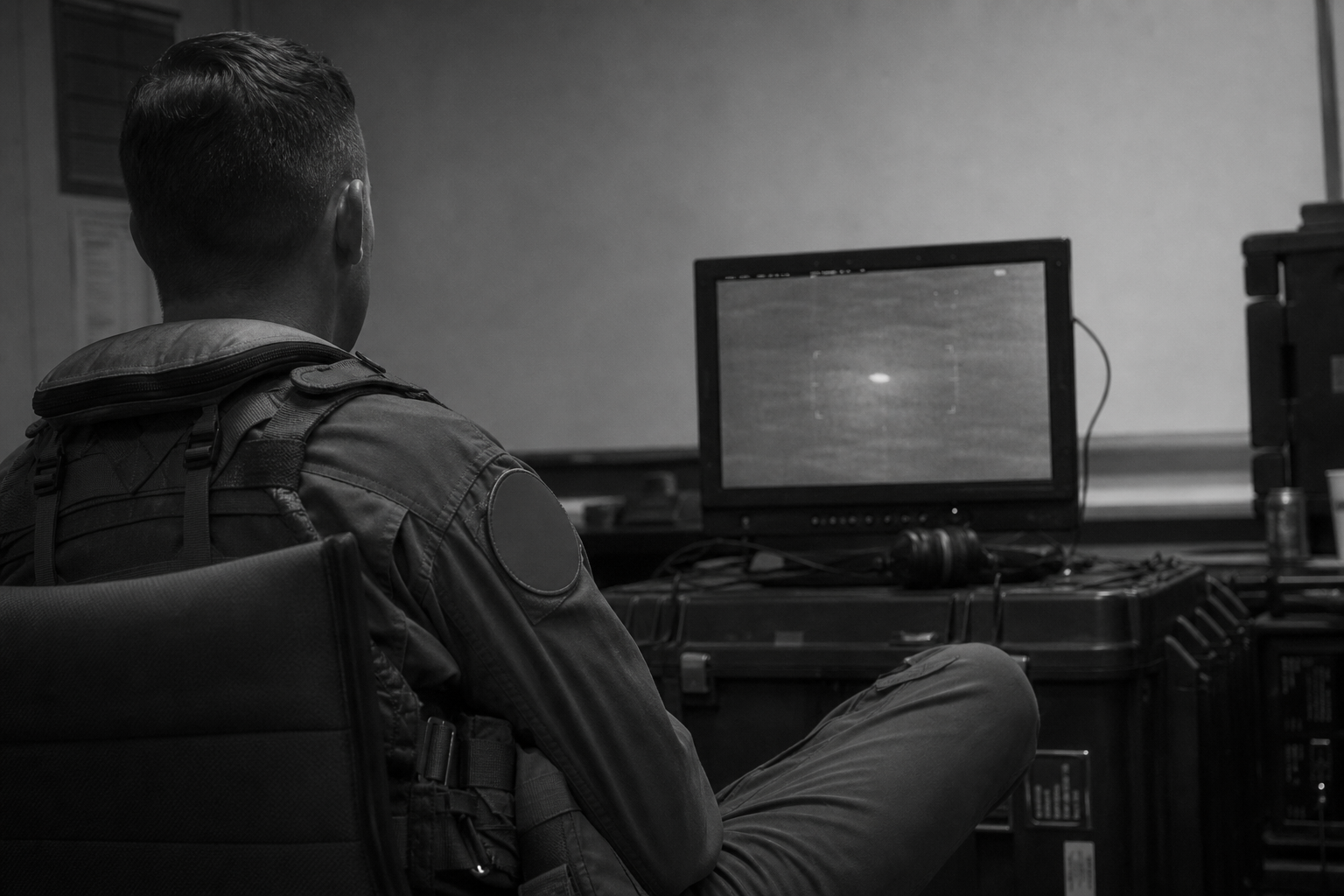
FLIR1 refers to imagery from an aircraft’s forward-looking infrared targeting system, one of the electro-optical systems that can track contrast within its field of view. In April 2020, the Department of Defense formally released FLIR1 alongside two later Navy videos, GIMBAL and GOFAST, and described all three as unclassified Navy recordings of unidentified aerial phenomena. The release authenticated the videos as government material; it did not identify the object shown in any clip.
That distinction changes what the Nimitz UAP footage can support. The video is meaningful contemporaneous context because it came from a military aircraft during the broader incident. Yet a short infrared segment and its on-screen display do not, by themselves, provide the full geometry needed to independently reconstruct range, physical size, velocity, acceleration, or identity. Those conclusions would require the associated mission data, sensor settings, aircraft position and attitude, timing, and track history, material not contained in the public FLIR1 video.
The Evidentiary Limits: What the Hearing Did Not Prove
A public hearing creates a record of what witnesses said under oath; it does not automatically place every underlying operational record into the public domain. The July 26, 2023 proceeding did not release a complete set of USS Princeton radar tracks, raw infrared files, communications logs, aircraft mission data, or classified material connected to the 2004 event. Nor did it independently authenticate each reported sensor observation. For readers, the practical distinction is between an account that describes data and the data itself: the latter permits outside analysis of timing, settings, locations, and possible errors.
Fravor offered sworn eyewitness testimony about his own flight and described the wider sensor context as he understood it. Radar operators’ later public accounts are separate witness evidence about reported tracking. The Defense Department’s release of FLIR1 established the clip as authentic government footage, but that authentication does not supply a complete chain of custody for every unpublicized Nimitz record or prove that all accounts depict one precisely reconstructed object.
The hearing’s other witnesses addressed different subject matter. Ryan Graves discussed recurring reports by naval aviators in later operating areas, while David Grusch made broader allegations about hidden UAP-related information and alleged programs. Those allegations were not evidence that Fravor’s Nimitz observation involved the same claimed activity, and lawmakers’ interest did not adjudicate them.
Accordingly, the David Fravor 2023 House hearing did not establish that the “Tic Tac” was an alien craft or non-human intelligence. It did not prove a reverse-engineering program or a government UFO cover-up in the Nimitz case. It preserved serious testimony about an unresolved event; identification and extraordinary explanations remain beyond what the public hearing record demonstrated.
Bottom Line: A Significant Unresolved Case, Not a Final Identification
That combination is why the Nimitz episode retains unusual weight in UFO news and UAP news: Fravor’s sworn account sits alongside reports from other service members and systems, rather than standing as an isolated personal recollection. The accounts concern different vantage points, an airborne visual encounter, reported shipboard radar activity, and later aircraft infrared footage, so they strengthen the case that personnel confronted an event worth examining without merging into a single, complete proof.
The appropriate conclusion is narrower than many retellings suggest. The public record supports that military personnel reported an unusual 2004 incident that remains unidentified in the material available to the public. It does not permit a definitive determination of the object’s identity, origin, or performance.
A useful standard for future claims is to separate three questions: What did a witness directly observe? What underlying sensor data, not merely descriptions of it, are public? And what material has been independently authenticated? A named eyewitness account, released footage, and raw time-stamped sensor records each answer different questions. The David Fravor 2023 House hearing remains significant precisely because it makes those distinctions necessary rather than optional.
What Fravor’s 2023 Testimony Ultimately Establishes
The most durable reading of Fravor’s July 26, 2023 testimony is evidentiary rather than explanatory. He personally supplied the account of the airborne visual encounter: the disturbance below, the white object, and its interaction with his aircraft. His references to USS Princeton tracking supplied operational context reported by other personnel, not radar data that he himself collected or that the hearing placed before the public.
The chronology also prevents a common overstatement. The FLIR1 video is a later infrared observation from another F/A-18 sortie within the wider 2004 episode; it supports the proposition that the incident involved more than one observation, but it does not record Fravor’s close visual encounter or independently establish the object’s identity.
That leaves a significant, unresolved record: multiple military witnesses and reported sensor activity make the case more substantial than an isolated sighting. Yet the public hearing did not independently validate every underlying radar claim, release the full sensor record, or determine what the object was. Fravor’s testimony preserves a serious account and a reason for continued scrutiny, not a final answer.
Frequently Asked Questions
-
What did David Fravor say he saw during the 2004 Nimitz Tic Tac encounter?
David Fravor testified that he saw disturbed water below his F/A-18 and a white, oblong object above it that he compared to a Tic Tac. He said it had no visible wings, rotors, or exhaust, appeared to react to his maneuver, and then departed rapidly.
-
What sensor evidence was associated with the 2004 Nimitz Tic Tac incident?
USS Princeton personnel later reported radar contacts over several days and directed Navy aircraft to investigate an area of interest. A later F/A-18 sortie also recorded the infrared video known as FLIR1, but complete radar tracks and raw sensor files were not released publicly.
-
Was the FLIR1 video recorded during David Fravor’s intercept?
No. FLIR1 was recorded later by Lt. Cmdr. Chad Underwood during a separate F/A-18 sortie after Fravor’s visual encounter had ended. It is infrared footage from the broader 2004 incident, not video of Fravor’s close-range intercept.
-
Did the July 26, 2023 House hearing prove the Nimitz Tic Tac was extraterrestrial?
No. The hearing preserved Fravor’s sworn eyewitness testimony and discussed reported radar activity, but it did not identify the object as extraterrestrial or establish non-human intelligence. It also did not release complete USS Princeton radar data, raw infrared files, communications logs, or mission data.
-
What should you look for when comparing eyewitness testimony with sensor corroboration in the Nimitz case?
Separate direct observations from descriptions of sensor data and from authenticated recordings. Stronger technical assessment requires raw time-stamped sensor files, calibration and settings data, aircraft position and attitude, timing, geometry, and track history, not witness accounts or a short video alone.