David Fravor Testifies to Congress in 2023 Reiterating 2004 Nimitz “Tic Tac” Encounter and Sensor Corroboration
Explore David Fravor Congress testimony 2023, the Nimitz Tic Tac encounter, sensor reports, FLIR1 footage, and what evidence does not prove.


David Fravor’s July 2023 congressional testimony put a military pilot’s firsthand account of the 2004 USS Nimitz incident into the formal public record. Appearing before the House Oversight Committee, the retired Navy commander described the encounter often called the “Tic Tac” case without claiming to know what the object was, or where it came from.
That distinction matters. Fravor could testify directly about what he and other aviators observed during the flight: an unusual white object and disturbed water below it. Other parts of the story occupy different evidentiary categories: personnel reports of USS Princeton radar tracks, aircraft infrared footage released by the Pentagon, and accounts from sailors and aviators who were not in Fravor’s cockpit. Together, those materials are commonly described as sensor corroboration: separate instruments or observers reporting related activity, rather than one witness’s impression alone.
David Fravor’s 2023 congressional testimony therefore warrants careful attention, but not a leap from reported detection to final identification. The public record can support a finding that trained personnel described an unresolved encounter; it cannot let outside readers independently test every radar return, reconstruct every flight characteristic, or inspect classified sensor data. The sections that follow separate those layers and identify precisely what the Nimitz “Tic Tac” encounter does, and does not, establish.
What David Fravor Told Congress About the 2004 Nimitz Encounter
On July 26, 2023, retired Navy Cmdr. David Fravor appeared before the House Subcommittee on National Security, the Border, and Foreign Affairs for its hearing, “Unidentified Anomalous Phenomena: Implications on National Security, Public Safety, and Government Transparency.” His role was distinct from the other two witnesses: Ryan Graves discussed UAP reports and aviation-safety concerns from other naval aviators, while David Grusch made allegations based on information he said had been provided to him.
Fravor’s account concerned an event he said he experienced personally. He told lawmakers that, as commanding officer of an F/A-18 squadron assigned to the USS Nimitz carrier group in 2004, he was sent on a training-flight diversion with other aviators and encountered the object later labeled the “Tic Tac.” His testimony placed his own observations at the center of the record rather than presenting him as a witness to a recovered craft, a classified program, or an identified origin.
That boundary is essential when reading David Fravor Congress testimony 2023. A sworn account records what Fravor reported seeing and what he believed the encounter meant at the time. It does not convert those observations into a scientific identification of the object, nor does it establish extraterrestrial or non-human involvement. The separate questions of radar tracking, infrared imagery, and reports from other personnel require their own evidentiary treatment.
Fravor’s Firsthand Account: The Visual Encounter and the ‘Tic Tac’ Description
Fravor’s recollection begins with a diversion from a training mission: he flew in one F/A-18 with his weapons systems officer, while Lieutenant Commander Alex Dietrich flew a second aircraft with her own back-seat officer. In his sworn account, the four aviators were directed toward a location over the ocean and descended to investigate what they could see below. Fravor described an area of disturbed, churning water and a darker shape beneath or near it; he did not identify that submerged feature.
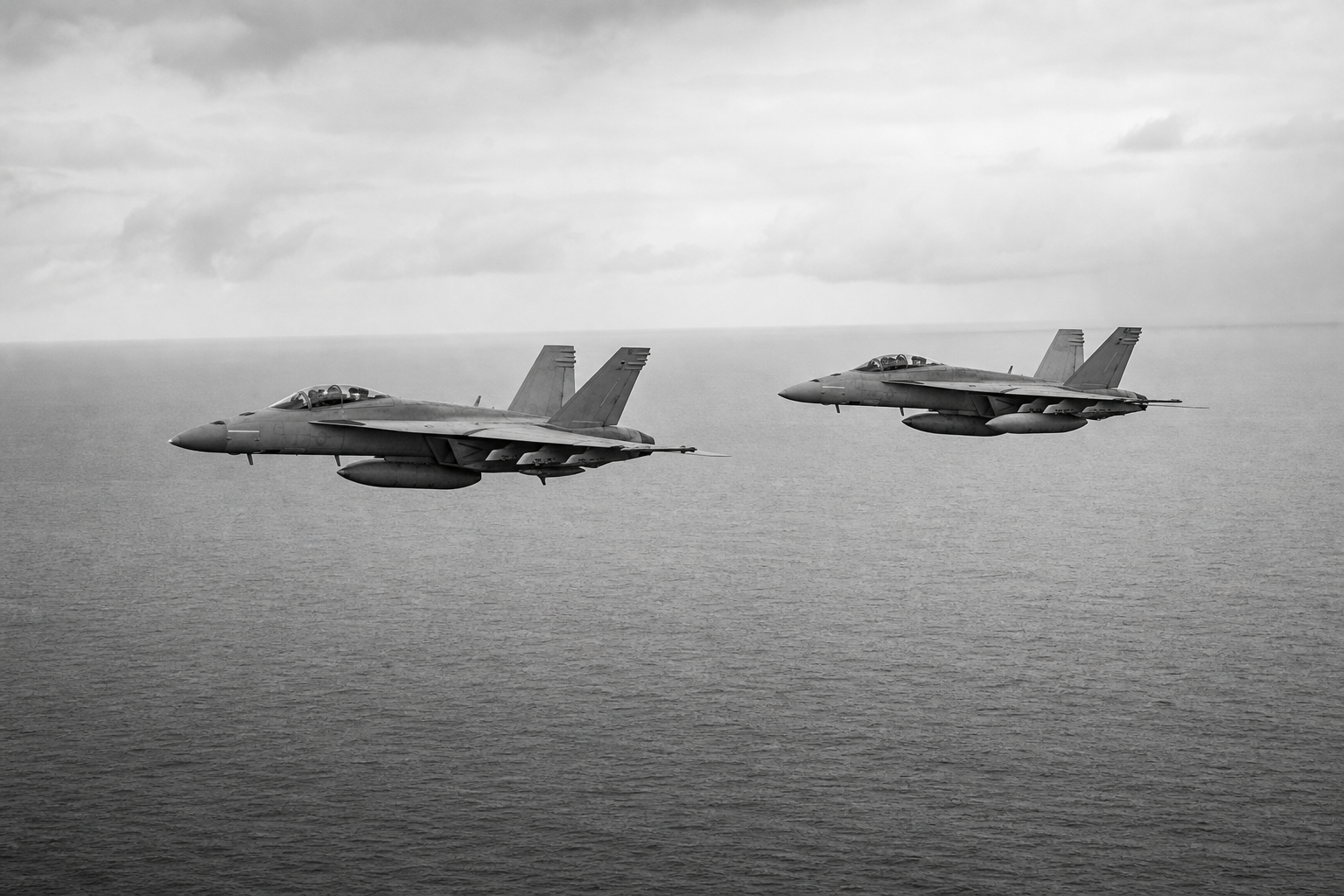
Above the disturbance, Fravor testified that he saw a white, oblong object with the appearance of a “Tic Tac”, smooth, featureless, and without visible wings, rotors, exhaust, or other conventional means of propulsion. That description is a visual characterization, not a measurement of the object’s dimensions or construction. Dietrich was present in the formation and has separately described seeing an unusual white object, but her observations should remain her own account rather than being folded into Fravor’s testimony.
In David Fravor’s 2004 Nimitz Tic Tac encounter testimony, he said he maneuvered his aircraft toward the object, making a descending turn intended to close with it. He recalled that the object reacted by moving away, then departed from his view with striking rapidity. The important evidentiary boundary is straightforward: Fravor was reporting what he saw from a moving aircraft in a brief encounter, under oath. His account supports that he perceived an unidentified white object and an abrupt departure; it does not, by visual impression alone, establish a precise speed, acceleration, technological capability, or origin.
What ‘Sensor Corroboration’ Means in the Nimitz Case
“Sensor corroboration” is not a single instrument independently proving every detail of the visual encounter. It is a layered set of reports: shipboard radar personnel described tracks; aviators described communications and visual observations; and a later F/A-18 crew recorded an infrared encounter. These accounts can reinforce the conclusion that military personnel were responding to something they could not identify, while still requiring each reported detection to be assessed on its own terms.
Personnel associated with the USS Princeton have described detecting unusual tracks using the ship’s AN/SPY-1 radar, a phased-array system used to build and maintain a picture of objects in the surrounding airspace. Radar reporting differs from a pilot’s visual impression: it produces instrument-derived tracks rather than a description of shape or surface appearance. But Fravor was neither operating that system nor interpreting its displays. In his account, the shipboard information was part of the operational picture communicated to the aviators, not firsthand radar evidence he could personally validate.
The aircraft-sensor layer is separate as well. A later F/A-18 sortie involving a pilot and a weapons systems officer used an airborne infrared sensor to record the footage commonly associated with the broader Nimitz episode. Infrared imagery registers differences in heat or radiance; it is not an ordinary daylight video and does not, by itself, disclose an object’s identity, dimensions, or complete flight path. That crew’s encounter should not be treated as a direct recording of Fravor’s earlier visual maneuver.
Communications between ships, controllers, and aircrews matter because they help place these reports within one military operation. Yet a strong evidentiary signal is not merely that several people later told similar stories; it is that their roles, systems, and timing can be distinguished. The public record does not provide outside readers with the underlying radar files, all sensor settings, or the classified data needed to independently reconstruct every track or performance claim. Sensor corroboration therefore supports reported detection and reporting, not a final identification or an extraordinary explanation.
The FLIR1 Video: What It Documents, and What It Does Not Link Directly to Fravor’s Sighting
The label matters: FLIR1 is a Navy infrared-sensor clip tied to the wider Nimitz UAP episode, not cockpit video of Fravor’s own visual engagement. It shows a distant heat-contrast target on an F/A-18’s sensor display, along with changing tracking and display information, rather than a clear exterior view that establishes the object’s shape, size, range, or identity.
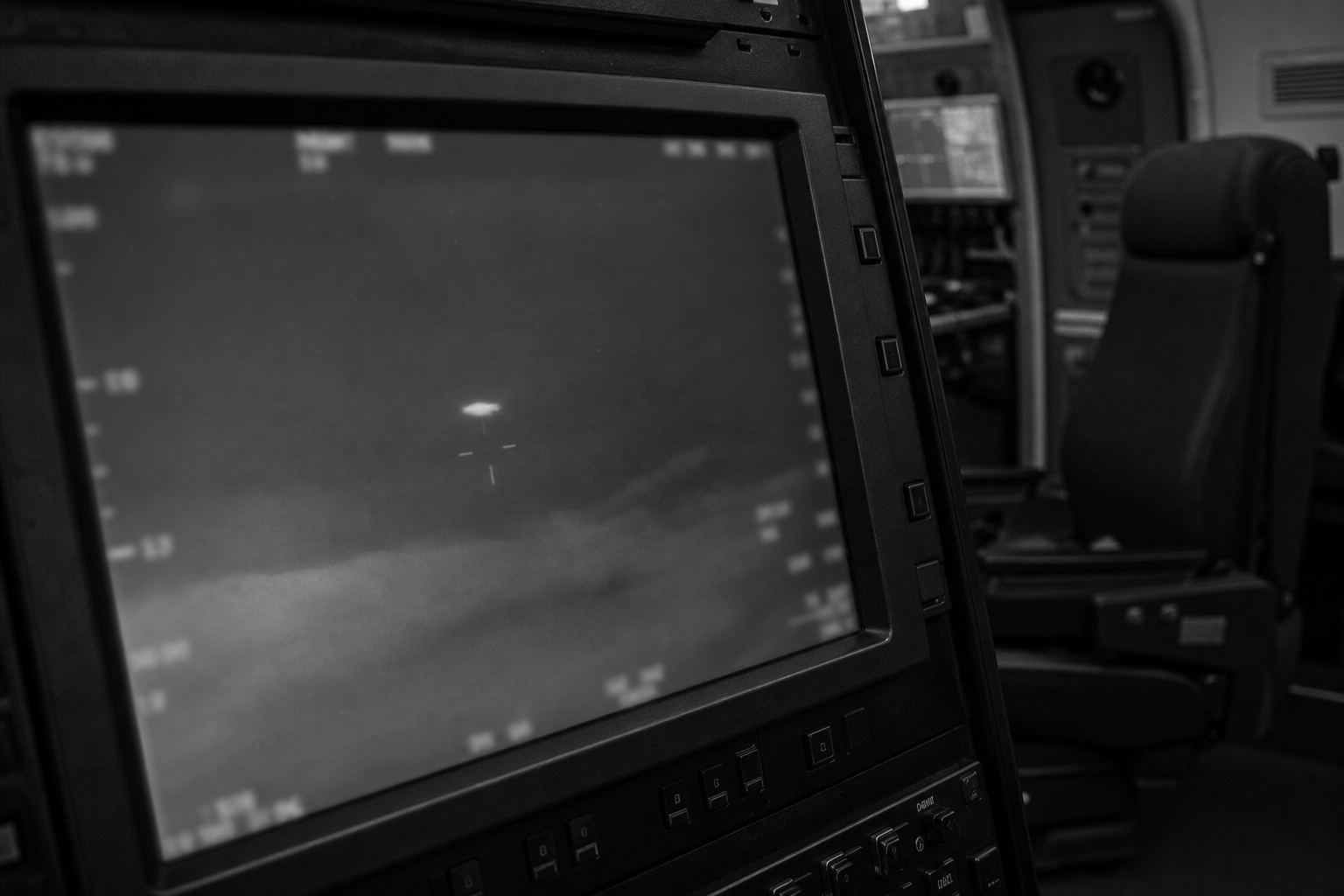
The footage entered the public Nimitz record because it was associated with a later F/A-18 sortie in the same operational setting. Its platform and crew were therefore different from Fravor’s flight, and its encounter occurred separately from the maneuver he described under oath. Calling it “the Tic Tac video” is understandable shorthand, but it can obscure the essential distinction: Fravor supplied firsthand visual testimony, while FLIR1 is a separate instrument record connected to the broader incident chronology.
The Department of Defense later authenticated and formally released the Navy videos, including the clip identified as FLIR1, as genuine military footage. That authentication establishes provenance, this was not a fabricated civilian video, but it does not identify the recorded object as extraterrestrial, establish a complete flight profile, or resolve every apparent motion visible on screen. An infrared display depends on sensor mode, aircraft movement, viewing angle, tracking behavior, and other information not fully available in the public clip. The sound evidentiary conclusion is narrower: the video preserves a real military sensor encounter associated with the Nimitz case, while it does not directly film the moment Fravor saw the object or independently settle what either crew encountered.
What the Testimony and Corroboration Support
Taken together, the record supports a more substantial conclusion than a lone, retrospective sighting report. Under oath in July 2023, David Fravor described an object he said was observed during the 2004 operation by him and the other aviators sent to investigate. His account is firsthand testimony about what his flight saw and how he recalled responding; it is not a technical identification of the object or a complete reconstruction of its performance.
The broader Nimitz record adds partially independent layers. Personnel linked to the USS Princeton described radar observations that preceded or accompanied the aircrew response, while a later F/A-18 crew produced the infrared material known as FLIR1. Those sources do not all capture the same instant or use the same method. Radar reports concern tracked returns in airspace; infrared footage records a sensor display; and pilot testimony describes visual perception from the cockpit. Their convergence is meaningful because separate people and systems were connected to an operationally related sequence, rather than because any one layer conclusively validates every detail of another.
Official Pentagon release of the Navy footage supplies an important provenance point: military personnel collected UAP-related imagery, and the released clip is authentic government material. It does not turn the video into a final identification, nor does it make the public record complete enough to independently test every reported radar track, sensor setting, distance estimate, or claimed flight characteristic. That evidentiary balance is why the case remains prominent in UAP news: it combines sworn eyewitness testimony, reported sensor activity, and officially released footage while still leaving the object’s nature, origin, and intent unresolved. It is not, by itself, proof of alien disclosure or a government UFO cover-up.
What Remains Unresolved, Including the Limits of Official UAP Assessments
The hearing was not an adjudication of the Nimitz event’s ultimate cause. Congress did not confirm that the object Fravor described was extraterrestrial, evidence of non-human intelligence, technologically impossible, or connected to a proven crash-retrieval program. Assertions made by different witnesses about other alleged programs did not convert Fravor’s firsthand account into proof of those separate claims.
Public AARO material should be read at the case level rather than treated as a universal verdict on every UAP report. An agency may identify an ordinary explanation where the available data permit one, retain a case as unresolved where the data are insufficient, or revise an assessment if additional material becomes available. “Unresolved” is a limit on identification from the record, not affirmative evidence for an exotic origin; likewise, a disputed interpretation of radar, infrared, or visual information is not proof that the underlying report was fabricated.
The practical evidentiary checkpoint is to keep four questions separate: whether witnesses gave credible accounts, whether sensors produced reports or recordings, whether official records establish the provenance of particular material, and whether the public evidence establishes an explanation. David Fravor’s 2023 congressional testimony strongly bears on the first question and helps frame the second. It does not settle the fourth. The Nimitz case is therefore significant evidence of an unresolved military encounter, not a final answer about origin, intent, or alien disclosure.
The Nimitz Testimony Is Significant Evidence, Not a Final Identification
For readers weighing the Nimitz record, the strength lies in its separation into identifiable evidentiary layers rather than in any one dramatic detail. Fravor supplied sworn, firsthand testimony about the visual encounter; other personnel described radar tracks and operational communications; and the publicly released FLIR1 footage preserves a distinct aircraft-infrared observation from the broader episode. Those layers make the event more consequential than an unsupported claim, because they place multiple military participants and systems within the same operational context.
They do not, however, collapse into a single, independently reproducible reconstruction. The FLIR1 clip is not video of Fravor’s sighting, reported USS Princeton radar information is not fully available for outside technical review, and the public record does not provide every underlying track, sensor setting, or classified dataset needed to test reported flight characteristics. A strong reading of David Fravor’s 2023 congressional testimony therefore credits the witness, preserves the distinctions among the records, and resists assigning an origin or intent that the available evidence cannot establish. Careful sourcing and continued investigation offer more value than filling those gaps with speculation.
Frequently Asked Questions
-
What did David Fravor tell Congress about the 2004 Nimitz Tic Tac encounter?
At a July 26, 2023 House hearing, retired Navy Cmdr. David Fravor testified that he and three other aviators were diverted from a training mission and saw an unusual white, oblong object over disturbed ocean water. He described it as smooth and featureless, with no visible wings, rotors, exhaust, or conventional propulsion.
-
What sensor evidence corroborated the 2004 Nimitz UAP incident?
The broader Nimitz record includes reported AN/SPY-1 radar tracks from USS Princeton personnel, operational communications, visual accounts from aviators, and infrared footage from a later F/A-18 sortie. These sources document related military reports and detections, but they do not independently establish the object’s identity, size, speed, or origin.
-
Was the FLIR1 video recorded during David Fravor’s close encounter?
No. FLIR1 was recorded during a later F/A-18 sortie involving a different crew in the broader Nimitz operational setting, not during Fravor’s earlier visual maneuver. The Pentagon authenticated and released the infrared clip, but it does not directly show the object Fravor saw.
-
What should you look for when assessing claims that the Nimitz Tic Tac was alien technology?
Separate firsthand witness testimony, radar reports, infrared footage, and official authentication from conclusions about origin or intent. Congress did not determine that the Tic Tac was alien technology, and the public record lacks the complete radar files, sensor settings, and classified data needed to independently reconstruct the encounter.