David Grusch Allegations That U.S. Hid UAP Crash Retrievals and Non-Human Biologics in 2023
Examine David Grusch UFO testimony, his 2023 UAP claims, evidence limits, Pentagon denials, and the push for congressional oversight.
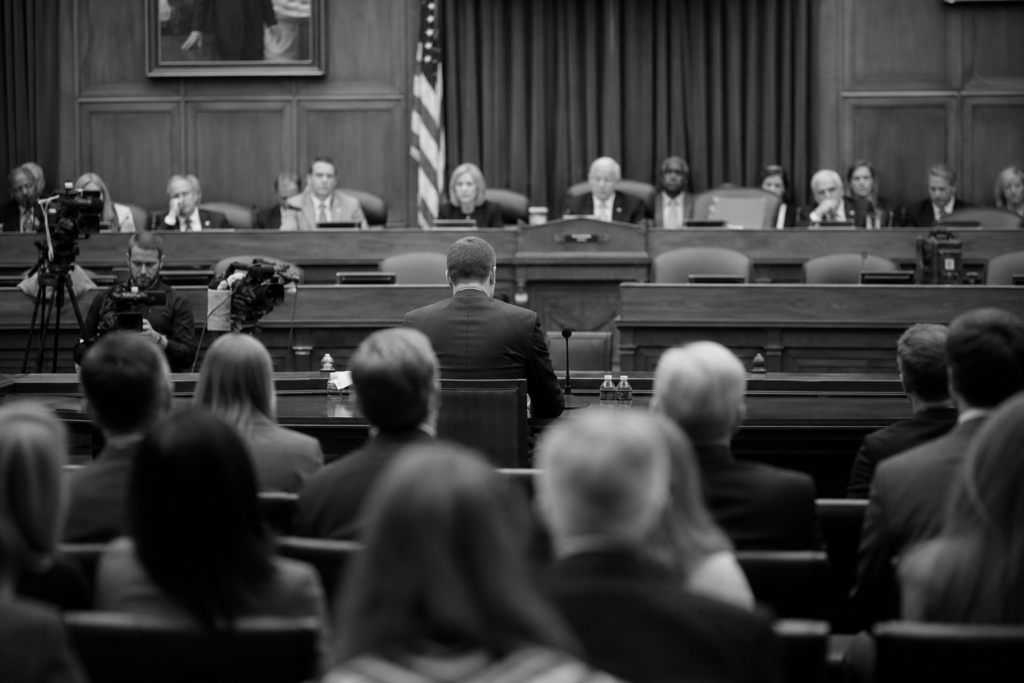
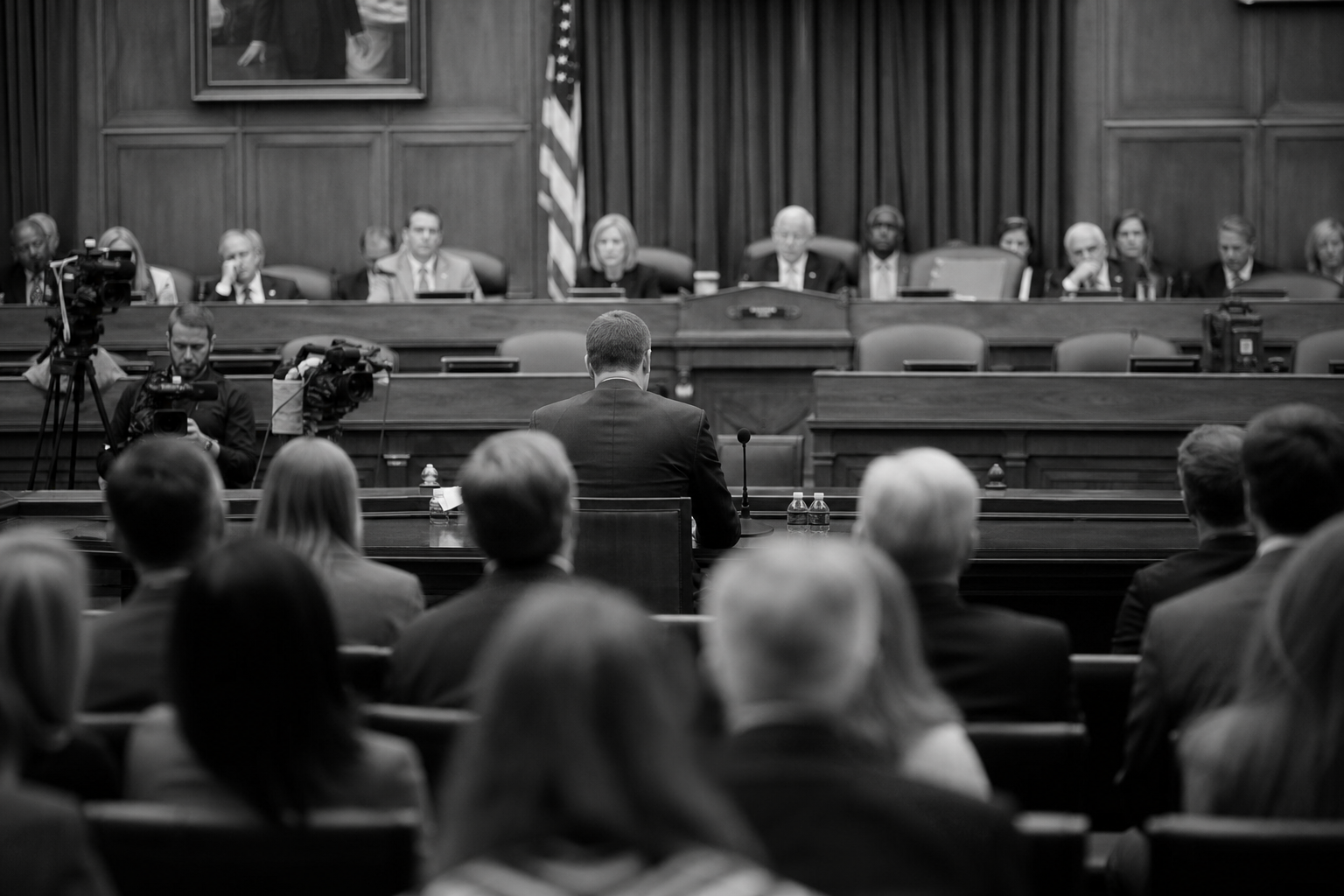
David Grusch’s UFO testimony became a defining moment in the 2023 UAP debate because it moved extraordinary claims about secrecy, recovered craft, and alleged biological material into a public congressional hearing. On July 26, Grusch told a House Oversight subcommittee that he had been informed of a long-running crash-retrieval and reverse-engineering effort concealed from proper oversight. Asked whether recovered craft had included “biologics,” he replied that sources had described “non-human” material.
That exchange was consequential, but its limits matter just as much. Grusch presented sworn allegations, not physical artifacts or laboratory findings for the public to inspect. He repeatedly characterized the central information as derived from interviews, documents, and classified reporting supplied by others; the classified material he said he provided through official channels was not publicly available for independent assessment. “Non-human biologics” was therefore his account of what witnesses told him, not public confirmation of extraterrestrial life.
This article separates those categories: Grusch’s public statements, the evidence he said existed in restricted channels, Pentagon denials and AARO’s later historical assessment, and the oversight and disclosure proposals the allegations helped intensify. The question is not whether attention proved the claims. It is what was alleged, what the public record can establish, and why Congress treated the gap between them as an oversight issue.
What David Grusch Alleged in 2023, and What He Did Not Publicly Establish
The crucial distinction is between an intelligence officer reporting allegations and a public demonstration of the alleged material. In 2023, Grusch said that current and former officials had told him that elements of the U.S. government and defense establishment operated deeply compartmentalized programs to retrieve UAP wreckage and attempt to analyze or reverse-engineer it. That account made his claims unusually significant: they concerned possible concealed programs, not merely unexplained sightings.
At the July 26 House Oversight hearing, Grusch presented those assertions under oath, but he did not testify that he had personally recovered, handled, photographed, or publicly examined a craft. His account rested on interviews, documents, and information he said had been provided to him during his government work and then reported through classified channels. Sworn testimony establishes what a witness said and accepts responsibility for saying it; it does not by itself let the public test the underlying classified evidence.
The same boundary applies to “non-human biologics.” Asked whether recovered craft had included biologics, Grusch answered that people with direct knowledge had informed him of material described that way. He did not publicly identify the material, present laboratory results, or claim firsthand possession of it. The David Grusch allegations therefore placed specific claims before Congress, while leaving the alleged physical evidence and the identities of key witnesses outside the public record.
The 2023 Timeline: Intelligence Work, Whistleblower Claims, and Congress
The sequence matters because it shows how an internal reporting dispute became a public congressional event. Before his public appearances, Grusch had worked on UAP-related matters within the intelligence system. He later said he had provided classified information, including the identities of people he regarded as relevant witnesses, to congressional oversight bodies and inspectors general.
In June 2023, reporting on the David Grusch whistleblower matter brought a separate issue into view: alleged retaliation connected to his effort to report information through authorized channels. The publicly discussed Intelligence Community Inspector General characterization of that complaint as “credible and urgent” addressed the handling of the complaint and claimed reprisals. It was not a public finding that crash-retrieval or reverse-engineering allegations were true.
July 26 was the central public date. At the House Oversight subcommittee hearing, formally titled Unidentified Anomalous Phenomena: Implications on National Security, Public Safety, and Government Transparency, Grusch appeared alongside former Navy pilots Ryan Graves and David Fravor. The hearing put his account into the congressional record while preserving a crucial division: he said more detailed material had been supplied in classified settings, whereas the public could assess only his sworn description of that material.
That division is the practical checkpoint for reading 2023 UAP news. A hearing can establish what a witness alleged, the questions members asked, and the oversight response it prompted; it cannot make restricted evidence independently available to the public.
The Crash-Retrieval and Reverse-Engineering Claims
At the hearing, the allegation had three separate layers that are often collapsed into one. First, Grusch alleged that a long-running, highly compartmentalized UAP crash-retrieval program existed in parts of the federal national-security system. Second, he said material from recovered objects had been retained for technical analysis, including attempted reverse engineering, work intended to determine how an object functions and possibly reproduce useful capabilities. Third, he alleged that information about those activities had been withheld from appropriate congressional oversight.
Those are claims about an alleged program, its purported material holdings, and its reporting structure; none automatically proves the others. A claim that an office collected unusual debris, for example, does not establish that the debris was non-human in origin or that engineers successfully derived technology from it. Likewise, an assertion that a program was improperly compartmentalized is not public confirmation that such a program existed.
Grusch’s key qualifier was sourcing. In sworn answers, he described his account as based on interviews with multiple current and former officials and on information he said he had provided through classified channels. He did not publicly display recovered material, identify a program office in open session, or offer technical test results. The David Grusch crash-retrieval claims therefore put a specific alleged government UFO cover-up before Congress, but they did not make the underlying evidence available for public inspection.
The strongest public conclusion from this portion of the testimony is narrow: Grusch alleged a concealed UAP crash-retrieval and reverse-engineering effort and said he had supplied more detailed information to authorized officials. Whether the alleged witnesses, records, and physical material substantiate that account remained outside the public hearing record.
What Grusch Meant by “Non-Human Biologics”
“Non-human biologics” was a description of reported material, not a scientific classification placed before the committee. During the July 26, 2023 hearing, Rep. Tim Burchett asked Grusch whether biologics had accompanied some alleged recoveries and whether they were human or non-human. Grusch answered, “Non-human,” adding that this was “the assessment of people with direct knowledge on the program” whom he had spoken with.
The wording matters. In the same hearing, Rep. Nancy Mace pressed Grusch on whether the United States had made contact with intelligent extraterrestrials; he answered that this was something he had not witnessed himself. Together, those exchanges mark the boundary of the David Grusch non-human biologics claim: he relayed assessments attributed to alleged firsthand participants rather than offering his own observation of a body, specimen, or laboratory examination.
No biological sample was displayed publicly. The hearing record did not include tissue-analysis results, laboratory methods, provenance or chain-of-custody records, photographs sufficient for independent evaluation, or a released scientific paper identifying the material. “Non-human” can mean that a source believed material did not come from a human; it does not, on the public record, establish that extraterrestrial beings were recovered.
That distinction is especially important in debates about alien disclosure. The testimony established that Grusch made the allegation under oath and identified the asserted basis for his wording. It did not give scientists, journalists, or the public the underlying material needed to test the claim of non-human intelligence independently.
Public Evidence Limits, Pentagon Denials, and AARO’s Contrary Findings
The hearing left the public with a clear record of Grusch’s statements but not the classified names, records, locations, or alleged materials on which parts of his account rested. He said he had provided relevant details through secure channels to appropriate oversight authorities. That arrangement may permit investigators with the necessary access to pursue leads, but it did not allow viewers to assess witness credibility, examine documents, or trace the provenance of purported recovered material. Likewise, public reporting that the Intelligence Community Inspector General treated retaliation-related concerns as credible and urgent did not publicly validate the separate crash-retrieval allegations.
The Pentagon responded directly in July 2023. Spokesperson Sue Gough said the Department of Defense had not discovered verifiable information to substantiate claims that programs involving the possession or reverse engineering of extraterrestrial materials had existed in the past or exist now. That Pentagon statement was an institutional denial of corroborated evidence for the alleged program; it was not a public release of the classified submissions Grusch said he had made.
A later, distinct development came on March 8, 2024, when the All-domain Anomaly Resolution Office released Report on the Historical Record of U.S. Government Involvement with Unidentified Anomalous Phenomena. After reviewing its historical inquiry, AARO said it found no verifiable evidence that the U.S. government or private industry had access to extraterrestrial technology. This is an official contrary finding, and it weighs against the asserted existence of a concealed extraterrestrial-materials program. Its scope, however, was AARO’s review of the historical record, not a public adjudication in which every classified lead cited by Grusch was disclosed, tested, and resolved for outside readers.
How the Allegations Shaped UAP Oversight and Disclosure Efforts
Congress’s most tangible response was an effort to create a formal disclosure process rather than to declare the allegations true. In July 2023, Senate Majority Leader Chuck Schumer and Sen. Mike Rounds proposed the UAP Disclosure Act as an amendment to the fiscal year 2024 defense authorization bill. Its central mechanism was an independent UAP Records Review Board: a body that would identify, review, and recommend release or postponement of government UAP records, rather than leaving disclosure decisions solely within the agencies holding them.

The proposal went further than a records archive. It would have authorized the federal government to use eminent domain, compulsory acquisition with compensation, to obtain alleged recovered technologies of unknown origin and biological evidence held by private parties. That provision addressed the possibility, asserted in public debate, that relevant material might sit outside ordinary federal custody. It did not establish that such material existed.
Major elements of that proposal, including the review board and eminent-domain authority, were removed before the final fiscal year 2024 National Defense Authorization Act became law. The enacted measure nevertheless required the National Archives to establish a UAP records collection, with agencies identifying and transferring qualifying records for centralized preservation and public access subject to lawful restrictions.
The resulting National Archives UAP Records Collection is therefore a records-access development in the broader UAP disclosure effort. It creates a route for locating and releasing historical government material; it is not congressional confirmation of crash-retrieval programs, reverse engineering, or “non-human biologics.”
Bottom Line: Why the 2023 Allegations Still Matter
Its lasting value is as a standard of accountability, not a public evidentiary resolution. The July 26, 2023 hearing put sworn allegations of concealed crash retrievals, reverse engineering, and reported “non-human biologics” before Congress, while Grusch made clear that much of his account came from interviews, documents, and classified reporting rather than his own observation. The public could evaluate his testimony; it could not inspect the underlying classified material.
That distinction remains essential in later UFO news and UAP news. A dated official denial, an inspector-general action concerning alleged retaliation, and a public hearing are each different kinds of information; none alone independently establishes that recovered craft or biological material exists. Likewise, later reporting or sightings should not be relabeled as evidence available in 2023 simply because they invoke the same claims.
- Start with the date: identify whether a development occurred in 2023, afterward, or is being retrospectively described.
- Identify the source: distinguish a firsthand witness, a named official record, and a person repeating another person’s account.
- Ask whether the underlying records, imagery, material, or test results are public and independently assessable.
- Look for independent corroboration of an official assertion rather than treating repetition as confirmation.
Applied consistently, that test keeps UAP sightings, including claims circulating as UFO sightings 2025 or UFO sightings 2026, in their proper evidentiary category. David Grusch’s UFO testimony mattered because it pressed Congress toward oversight, records access, and protected reporting; it did not publicly prove the extraordinary allegations it placed on the agenda.
What David Grusch’s 2023 Allegations Ultimately Established
The enduring record is fourfold. Grusch placed specific allegations before Congress under oath: that he had received accounts of concealed recovery and reverse-engineering activity, and that purported associated material had been described to him as “non-human biologics.” Those statements established the existence and seriousness of his allegations, not the existence of the alleged craft or material.
His cited supporting information remained outside public view, so readers could not independently assess the witnesses, records, chain of custody, or technical analyses he described. The Intelligence Community Inspector General’s reported handling of retaliation concerns addressed whether his protected-disclosure complaint warranted attention; it was not a public finding that crash-retrieval claims were true. The Pentagon disputed the allegations, and AARO’s historical review reported no verifiable evidence of an extraterrestrial technology program, an official conclusion that does not itself disclose every classified lead Grusch said he supplied.
What changed was the oversight agenda: congressional interest in protected reporting, UAP records, and disclosure mechanisms became more concrete. Future developments deserve a disciplined test: distinguish publicly inspectable evidence from classified assertions, separate official findings from witness allegations, and leave unresolved questions unresolved until independently testable material emerges.
Frequently Asked Questions
-
What did David Grusch say under oath about UAP crash-retrieval programs in 2023?
At the July 26, 2023 House Oversight hearing, David Grusch alleged that deeply compartmentalized U.S. programs had retrieved UAP wreckage and attempted reverse engineering. He said his account came from interviews, documents, and classified information provided by current and former officials.
-
Did David Grusch claim he personally saw alien bodies or recovered UFOs?
No. Grusch did not testify that he personally recovered, handled, photographed, or examined a craft, biological specimen, or alien body. He said he was relaying information from people he described as having direct knowledge.
-
What did David Grusch mean by non-human biologics?
Grusch said people with direct knowledge of an alleged program had described biological material associated with some recoveries as non-human. No sample, laboratory analysis, chain-of-custody record, or independently assessable scientific paper was publicly presented at the July 26, 2023 hearing.
-
What did AARO and the Pentagon say about alleged UAP crash-retrieval programs?
The Pentagon said in July 2023 that it had not found verifiable information supporting claims of programs possessing or reverse engineering extraterrestrial materials. On March 8, 2024, AARO reported that its historical review found no verifiable evidence that the U.S. government or private industry had access to extraterrestrial technology.
-
What should you look for when evaluating claims about UAP crash retrievals?
Look for publicly inspectable records, imagery, physical materials, laboratory results, documented provenance, and independent corroboration. Separate firsthand testimony from secondhand accounts, and do not treat a hearing, an official denial, or a retaliation-related inspector general finding as proof that recovered craft or biological material exists.