Commander David Fravor Details 2004 USS Nimitz ‘Tic Tac’ Encounter During Training Workups
Explore Commander David Fravor Tic Tac encounter, the 2004 Nimitz incident, corroborating evidence, and what remains unresolved.
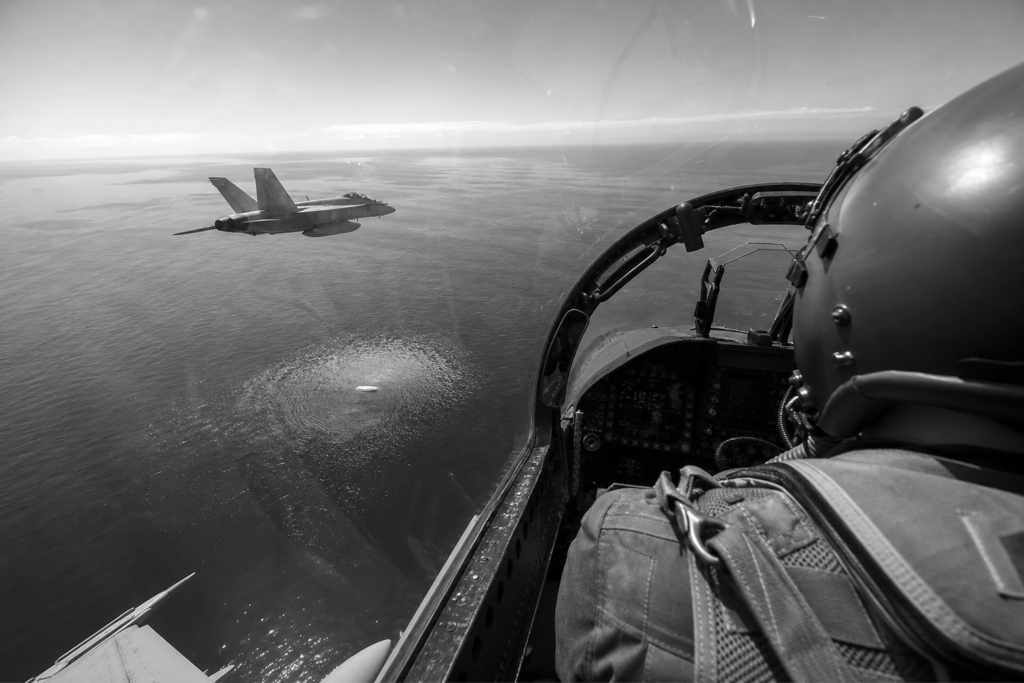
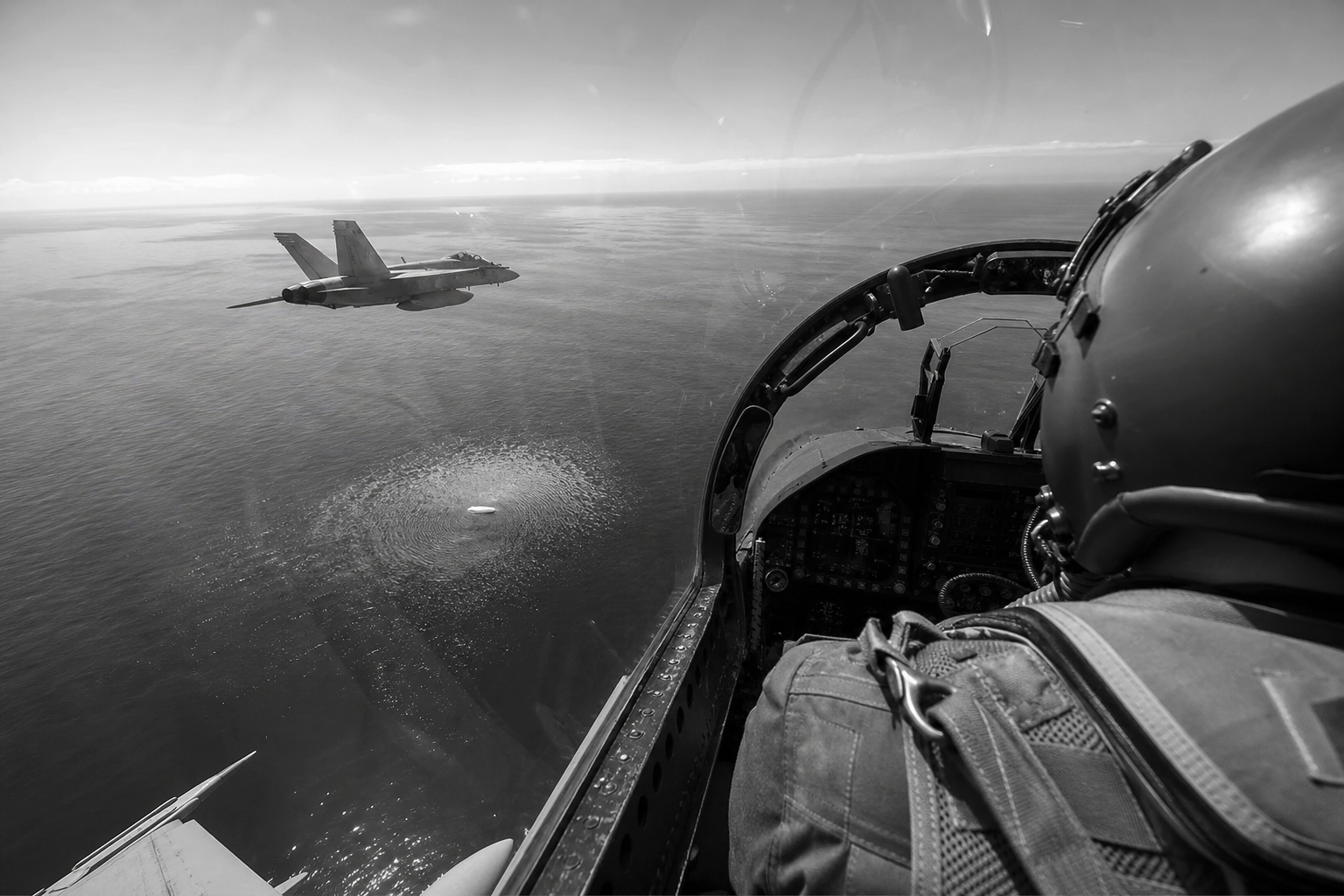
The Commander David Fravor Tic Tac encounter remains one of the most closely examined unresolved episodes in modern military aviation: a report from a Navy aviator during a defined training period, accompanied by later witness accounts and released sensor material, but without a publicly verified explanation.
In November 2004, Fravor was an F/A-18 pilot assigned to the USS Nimitz Carrier Strike Group during pre-deployment workups off Southern California. That setting matters. These were structured training operations, with aircraft crews, controllers, and shipboard systems operating within an organized military exercise, not an isolated civilian sighting.
This account follows the evidentiary boundaries of the USS Nimitz incident. Fravor’s own testimony concerns a visual intercept: what he and his crew saw after being directed to investigate. Reports from the USS Princeton describe radar activity separately, while the widely circulated FLIR1 video came from a later flight and is not footage of Fravor’s visual encounter.
The record supports a serious, still-unresolved encounter report. It does not establish the object’s identity, propulsion, origin, or intent. Keeping those distinctions clear is essential to understanding both why Fravor’s testimony carries weight and what it cannot prove.
What Commander David Fravor Has Said, and What the Encounter Does Not Establish
Fravor’s public account deserves close attention because he was not merely a distant observer: he led the flight sent to investigate and later gave sworn testimony to Congress about what he recalled seeing. His aviation background helps explain the account’s significance, not its conclusion. Training and command experience can make a witness’s description operationally informed; they cannot, by themselves, identify an object whose nature was not determined.
This reconstruction therefore keeps three questions separate. First, what Fravor personally observed from his F/A-18 during the intercept; second, what other personnel later reported through radar, communications, and sensors; and third, what explanation, if any, publicly available evidence can support. A strong account preserves those layers rather than allowing a later video or a reported radar track to become details Fravor saw with his own eyes.
Fravor has described an unusual white, oblong object and behavior he found difficult to reconcile with known aircraft performance. He has not offered his observations as independent proof of non-human intelligence, an adversary’s platform, or a confirmed concealment program. “Unidentified” is a status of the observation: it means the available information did not yield a verified identification. It is not a finding of origin, intent, or technology.
That distinction also keeps the broader UAP disclosure debate in proportion. The evidentiary value here lies in a named witness’s detailed, on-the-record account within a defined military operation. The unanswered question is not whether Fravor reported the event, but what adequately explains all of the relevant observations.
Why the Encounter Happened During USS Nimitz Pre-Deployment Workups
The setting was a training evolution, not a combat engagement. In November 2004, the USS Nimitz Carrier Strike Group was operating off Southern California during pre-deployment training workups: the intensive exercises used to test whether ships, aircraft, crews, communications, and command procedures could function together before deployment.
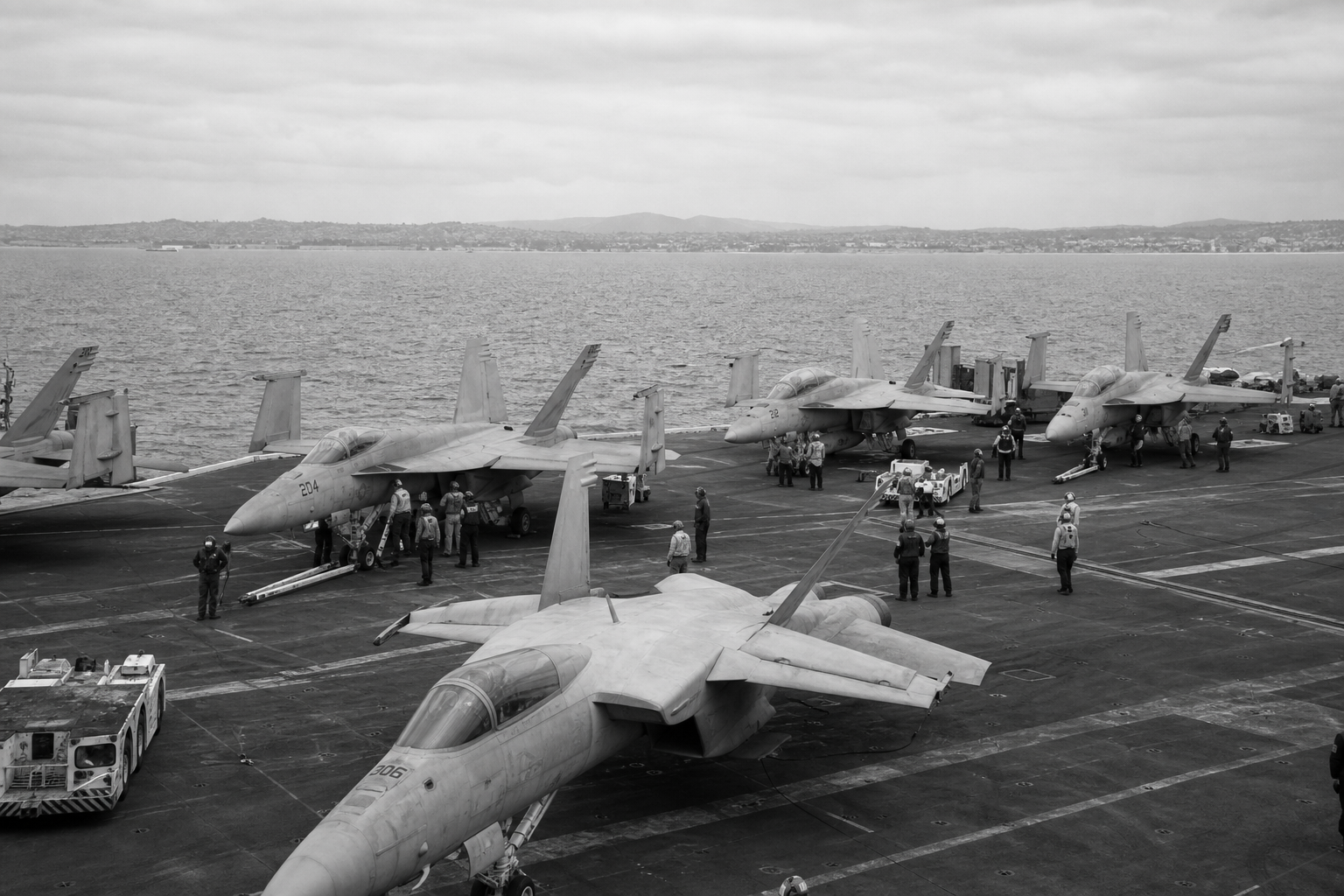
Fravor’s F/A-18 flight was participating in that wider exercise environment. A Combat Air Patrol is an airborne mission that places fighters in a designated area so they can maintain awareness, respond to tasking, and practice air-defense procedures. Its purpose in this context was readiness and coordination, rather than an indication that the strike group was under attack.
The cruiser USS Princeton served as a key radar and air-control node for the formation. Personnel there monitored the air picture, meaning the tracked contacts and information used to direct aircraft. Radar reporting and Fravor’s later visual account are distinct forms of evidence: operators could report an unusual contact or location, while the aircrew sent to that area could describe only what they personally encountered.
Fravor has said that his flight was redirected toward the area after Princeton personnel reported an unusual contact during the exercise. That redirection is operationally important. Training workups were designed to generate and manage exactly such tasks, detecting something in the operating area, assigning aircraft, and assessing what the crew could determine, without presuming in advance what the contact was.
The resulting intercept therefore began as a routine military response to an unresolved air-picture problem. It became notable because Fravor and the accompanying crew later described observations they could not identify, while the broader incident also included separate sensor-operator reporting. The chronological distinction between those strands matters when assessing what the event does, and does not, establish.
Fravor’s Firsthand Account of the Tic Tac Encounter
At the intercept area, Fravor recalled that two F/A-18F Super Hornets arrived over open water: his aircraft and a second jet that included Lt. Cmdr. Alex Dietrich. Their task was to investigate the location passed to them, not to pursue a pre-identified target. Fravor’s reconstruction begins with what he could see from his own cockpit, rather than with the radar picture that had brought the flight there.

Looking down, Fravor said he saw a patch of churning, foaming water, a whitewater disturbance, against an otherwise calm, dark-blue surface. He has described it as resembling something large just beneath the surface, while emphasizing that he saw no aircraft, ship, or other conventional source that accounted for it. Above that area, he noticed the object later nicknamed the “Tic Tac”: white, oblong, and without the wings, tail, exhaust, or other visible features he associated with an airplane.
Fravor testified to the House Oversight Committee in 2023 that the object was moving over the disturbance in an erratic manner. His account is significant for its sequence: the water anomaly drew his attention first, and the white object appeared to be operating immediately above it. That is a firsthand visual description, not a determination that the object was connected to anything below the surface.
He then maneuvered his F/A-18 toward it, descending in a circular path to close the distance. Fravor has said the Tic Tac object reacted to his movement: as he came down, it climbed and turned to face him. He described the two aircraft as effectively circling one another for a brief interval, with the object matching or responding to his changes in position. The practical point is not that this establishes a particular flight capability; it is that Fravor, a trained aviator attempting an intercept, regarded its motion as unlike the response he expected from an identifiable aircraft.
When Fravor made a more aggressive maneuver to approach it, he said, the object departed so quickly that it was simply gone from view. He did not claim in his testimony to know what powered it, who controlled it, or where it came from. His account establishes a reported visual encounter and his inability to identify the object, not an explanation for either.
Dietrich was in the accompanying F/A-18F and has separately described seeing an unusual white object and the disturbed water. Her public account provides important eyewitness context, but it should not be treated as a verbatim duplicate of Fravor’s recollection; each aviator has described the event from a different aircraft and perspective. Nor was this visual intercept the later FLIR1 recording often shown in coverage of the Nimitz incident. That separate flight and recording belong to the same broader episode, but not to Fravor’s own moment-by-moment visual encounter.
The CAP Point, the Later Flight, and the Limits of the FLIR1 Connection
Fravor has also described a striking post-intercept detail: after the object vanished, controllers reported it at the flight’s assigned combat air patrol point, or CAP point, the prearranged location to which the aircraft would normally proceed for the next phase of the training mission. In his public retellings, that position was roughly 60 miles away. The report matters because Fravor understood it as the same unknown contact appearing at a location known to the flight; it remains a reported controller-to-aircrew development, rather than a visual observation he made from the cockpit at that point.
The widely circulated FLIR1 video belongs later in the broader Nimitz episode. It was recorded by a different Navy F/A-18 crew using the aircraft’s forward-looking infrared targeting system, not by Fravor or Dietrich during their daylight visual encounter. Infrared video renders heat contrast and tracking-system information rather than an ordinary out-the-window view. Its display can show an object being tracked, along with aircraft and sensor symbology, but it does not recreate the whitewater disturbance, the close-range circling described by Fravor, or the moment he said the Tic Tac disappeared.
The Department of Defense later released and authenticated FLIR1 as Navy footage of an unidentified aerial phenomenon, establishing the video’s official provenance. That authentication does not, by itself, establish that the filmed object was definitively the one Fravor saw, nor does it identify either object. For assessing Nimitz UAP footage, the stronger approach is to preserve the sequence: Fravor’s visual account, the later sensor recording by another crew, and the reported radar picture are related evidence streams with different witnesses, instruments, timing, and evidentiary limits.
What Corroborates the Nimitz Account, and What Remains Unresolved
No single item carries the entire evidentiary weight of the USS Nimitz Tic Tac incident. Fravor’s sworn congressional testimony is firsthand evidence of what he personally saw and how he interpreted the object’s movements from his F/A-18F. Dietrich’s separate account is meaningful corroboration because she was present in the accompanying aircraft and likewise described an unusual white object and disturbed water. The accounts overlap on central features without becoming identical recollections, which is a stronger signal than a later retelling that merely repeats Fravor’s description.
A different category consists of reports from USS Princeton personnel, who have described radar contacts preceding and surrounding the aircrew intercepts. Radar reporting can establish that operators perceived tracks on their systems and can explain why aircraft were directed to investigate; it does not, in the public record, independently settle the physical nature of every track or connect every reported contact to the object Fravor saw. The reported CAP-point appearance is therefore corroborative operational context, not direct visual proof of a long-distance maneuver.
The later FLIR1 recording adds a third kind of evidence: instrument-derived footage from another crew. The Defense Department’s authentication of the released Navy UAP videos establishes that it is genuine Navy material, rather than a fabricated clip. Authenticity answers where the video came from; it does not answer what object appears in it, establish a one-to-one match with Fravor’s visual intercept, or yield a complete performance calculation from the public clip alone.
Together, these streams support the conclusion that multiple personnel reported an unusual event during the 2004 workups. They do not validate claims of extraordinary technology, extraterrestrial origin, or intent. For readers navigating later UAP sightings and UFO news, the useful checkpoint is simple: direct observation, reported radar data, recorded imagery, and explanations are related but not interchangeable forms of evidence.
Why Fravor’s Testimony Still Matters in the UAP Discussion
What matters most is how the record can be handled without collapsing its different parts into a single, overconfident story. The 2004 Nimitz episode contains a named aviator’s account, reported operational communications and radar observations, later imagery, and subsequent public testimony; each can be compared for timing, scope, and limits rather than treated as interchangeable proof. That approach preserves gaps and uncertainty while making a serious investigation possible.
That is the constructive relevance of the case to UFO disclosure. The central issue is whether institutions can retain underlying records, assess competing explanations, and communicate what is known without converting an authenticated video, a reported track, or a witness recollection into an identification. A strong review distinguishes an authentic record from an identified object, reported performance from measured performance, and an unanswered question from an affirmative claim.
Fravor’s testimony continues to matter because it is detailed, attributable, and tied to a defined military operation involving more than one category of reported evidence, as reflected in his later public congressional testimony on UAPs. It does not establish alien disclosure, a confirmed adversary platform, or a government cover-up. An unresolved case warrants disciplined investigation and clear communication; it is not an explained conclusion.
A Significant Account, Not a Settled Explanation
The proper endpoint is neither dismissal nor certainty. Fravor’s account is unusually consequential because it places a named pilot, a specific F/A-18F flight, accompanying aircrew, shipboard control activity, and a defined training operation within one reconstructable episode. That structure gives investigators more to evaluate than an isolated anecdote: the timing and sequence of observations can be compared with other recollections, reported radar activity, and the later Navy-released FLIR1 material.
But those forms of evidence answer different questions. Fravor’s testimony addresses what he visually observed and how the encounter appeared from his cockpit; other personnel’s accounts provide partial overlap; sensor reports and video preserve separate observations from elsewhere in the broader event. None converts the others into a complete technical identification. In particular, the FLIR1 recording is related to the Nimitz episode, not footage of Fravor’s own visual intercept.
That is why the case remains compelling in UAP discussion without becoming a settled explanation. The public record supports a serious report of an unidentified object encountered during the 2004 workups. It does not establish its origin, propulsion, operator, technology, or purpose. Fravor’s testimony is important precisely because it is detailed enough to warrant continued scrutiny, and bounded enough to require disciplined uncertainty.
Frequently Asked Questions
-
When and where did the USS Nimitz Tic Tac incident occur?
The incident occurred in November 2004 during USS Nimitz Carrier Strike Group pre-deployment training workups off Southern California. Commander David Fravor was flying an F/A-18 as part of a structured Navy exercise.
-
What did Commander David Fravor say he saw during the 2004 Tic Tac encounter?
Fravor described a white, oblong object with no visible wings, tail, exhaust, or other conventional aircraft features. He also saw churning whitewater below it and said the object moved erratically before rapidly disappearing from view.
-
Was David Fravor flying alone during the Nimitz UAP encounter?
No. Two F/A-18F Super Hornets arrived at the intercept area, including Fravor’s aircraft and a second jet carrying Lt. Cmdr. Alex Dietrich. Dietrich separately reported seeing an unusual white object and disturbed water.
-
Is the FLIR1 video the same event Commander Fravor witnessed?
No. FLIR1 was recorded later by a different Navy F/A-18 crew using a forward-looking infrared targeting system. The Defense Department authenticated it as Navy UAP footage, but it is not video of Fravor’s daylight visual intercept.
-
What evidence should you look for when assessing the USS Nimitz Tic Tac incident?
Separate firsthand visual testimony, USS Princeton radar reports, controller communications, and the later FLIR1 recording by their timing and source. These evidence streams corroborate an unusual reported event, but they do not identify the object’s origin, propulsion, operator, or intent.