Unauthorized Drones Reported Near Four U.S.-Used RAF Bases Beginning November 20, 2024
Track unauthorized drones near US air bases UK from 20 November 2024, including confirmed sites, official responses, and unanswered questions.
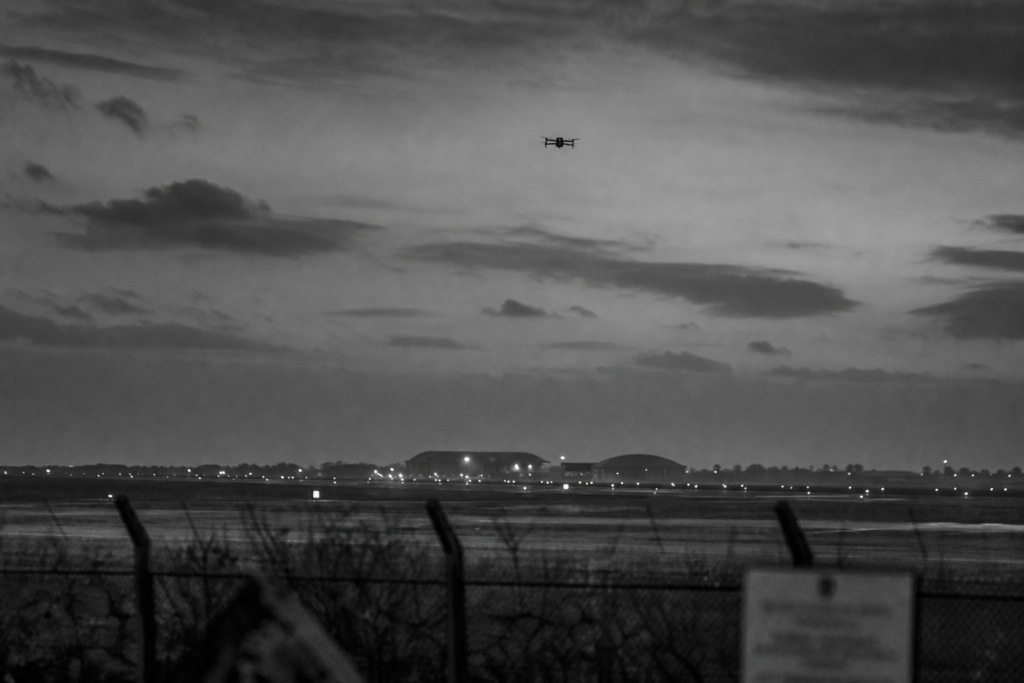
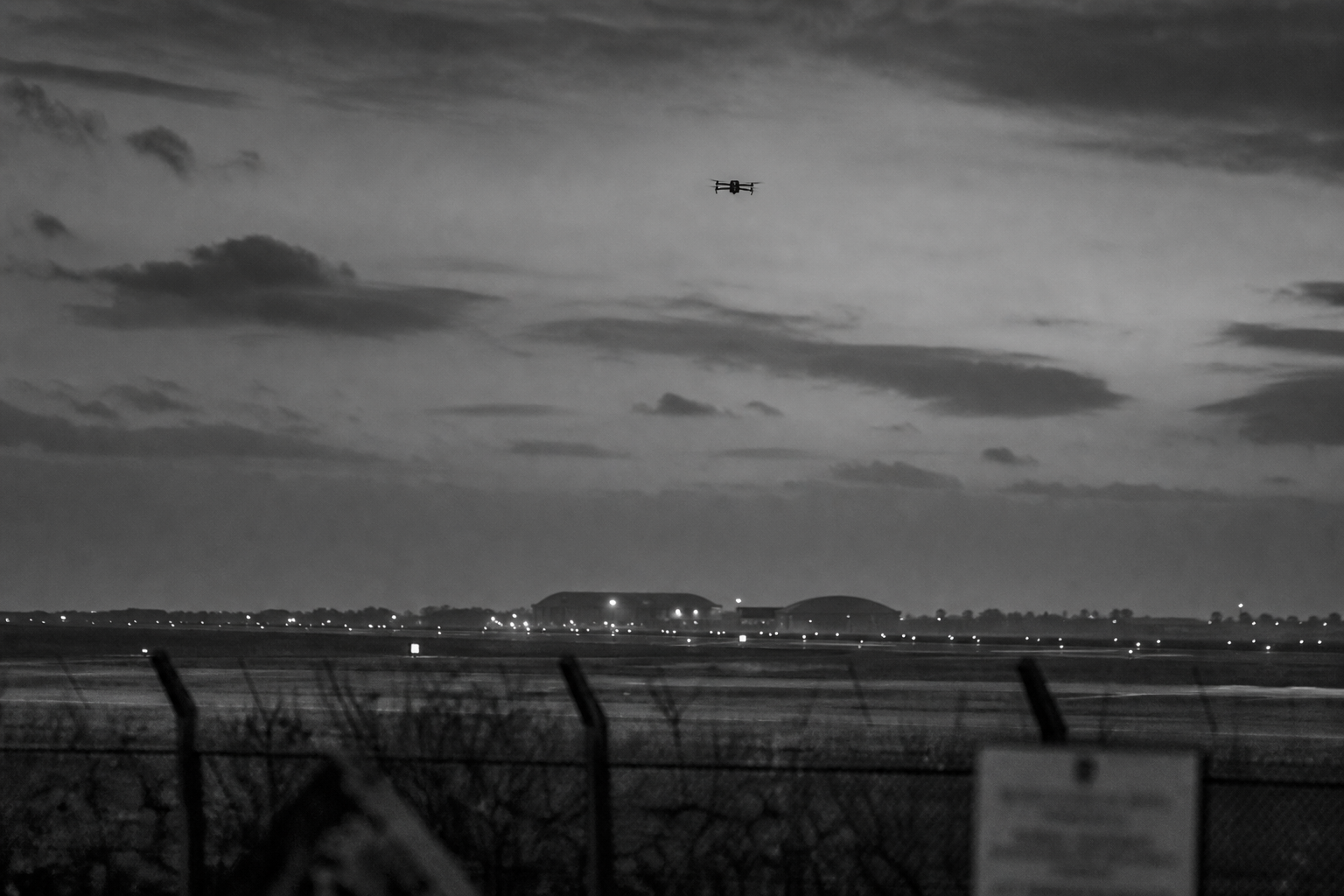
Beginning on 20 November 2024, reports of unauthorized drones near US air bases in the UK concerned four Royal Air Force stations used by American forces: RAF Lakenheath and RAF Mildenhall in Suffolk, RAF Feltwell in Norfolk, and RAF Fairford in Gloucestershire. Their proximity to military airfields made the reports a force-protection issue, but it did not establish who flew the aircraft, why they were present, or what they could do.
This account follows the November 2024 chronology across those four installations, separating public acknowledgments by US and UK authorities from details attributed to contemporaneous news reporting. It identifies when each site entered the reported sequence and addresses the publicly disclosed response by US forces, the Ministry of Defence, and local police, without inferring unreleased defensive measures or attributing the activity to an operator.
A drone near an air base can create immediate uncertainty about flight safety, surveillance, and access control; that is why reports around Lakenheath, Mildenhall, Feltwell, and Fairford drew official attention. It is not evidence by itself of hostile intent, foreign involvement, or a particular capability. Nor does an unidentified drone automatically make this a UAP incident: in this context, “unidentified” can mean that the object or its operator had not been publicly identified, not that it was anomalous or extraterrestrial.
What Was Reported Near US-Used Air Bases in the UK Beginning 20 November 2024
The first reported sightings date to 20 November 2024, and the publicly described activity continued over the following days rather than being confined to one isolated observation.
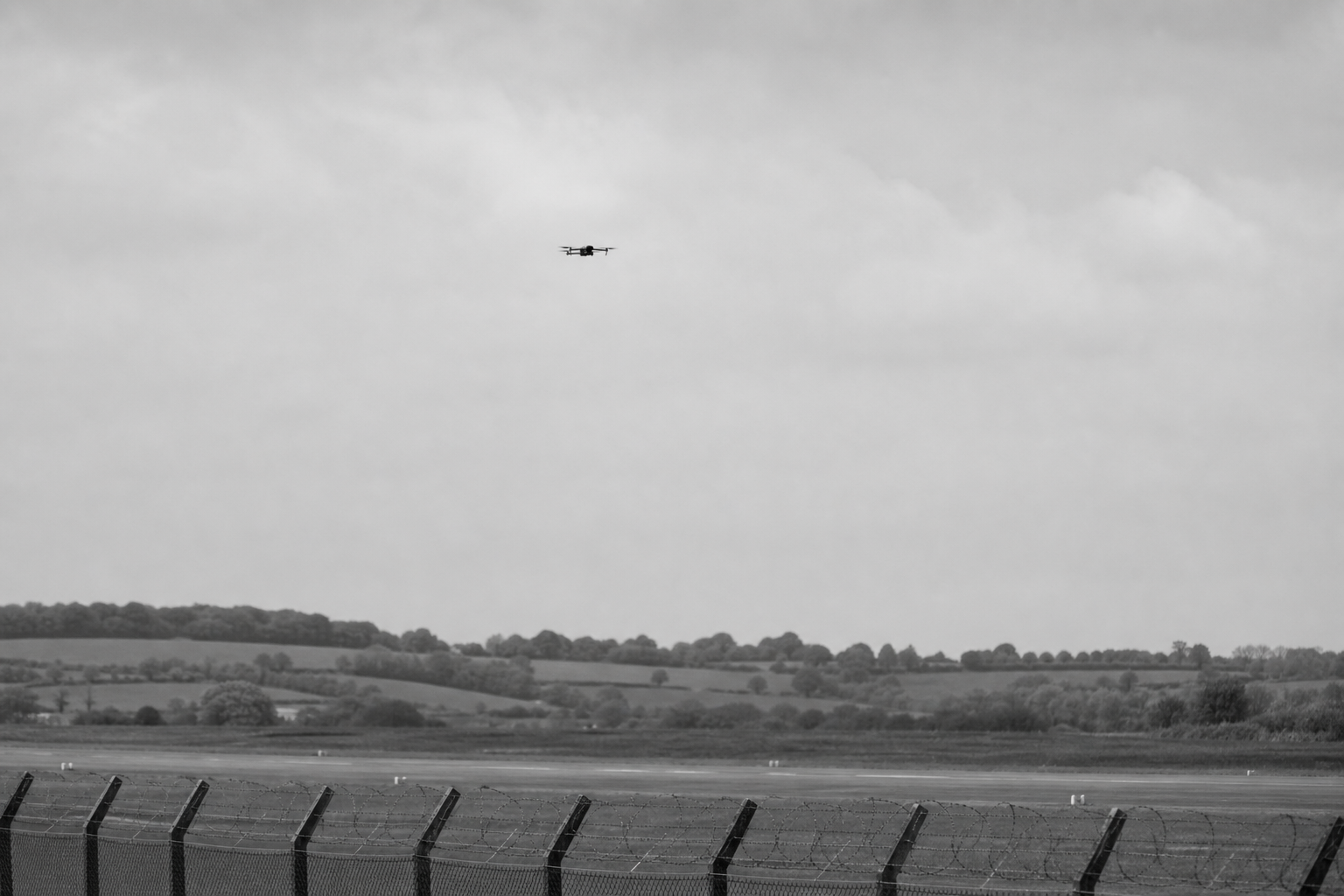
US Air Forces in Europe and Air Forces Africa publicly acknowledged small unmanned aerial systems in the vicinity of RAF Lakenheath, RAF Mildenhall and RAF Feltwell. Its statement described variation in the number, size and configuration of the aircraft observed, but did not publicly identify an operator, motive, launch point or country of origin.
Contemporaneous reporting supplied additional date-and-location detail, including reports involving RAF Fairford, while UK authorities confirmed they were aware of the incidents. This distinction matters: an official acknowledgment establishes that authorities treated drone activity as real; attributed reporting can add chronology without turning every reported detail into an independently confirmed fact.
“Near” an installation, and even the military’s public use of “in the vicinity of and over” named sites, does not establish a documented physical perimeter breach, landing, access to protected systems, or disruption of operations. The public record from 20 November onward supports a security incident involving small drones, not a proven account of who controlled them or what they intended to do.
The Four Named Installations and the November 2024 Timeline
A date-by-date reading prevents a common error: treating the four installations as though they all entered public reporting on 20 November. Contemporaneous accounts first tied that date to two Suffolk installations; RAF Feltwell and RAF Fairford appeared in later reporting.
| Date linked in contemporaneous reporting | Installation | US military connection |
|---|---|---|
| 20 November | RAF Lakenheath | Home to the US Air Force’s 48th Fighter Wing in the United Kingdom. Contemporary reports placed the initial RAF Lakenheath drone sightings on 20 November. |
| 20 November | RAF Mildenhall | A US Air Force installation hosting the 100th Air Refueling Wing. Reporting also connected RAF Mildenhall drone sightings to the first day of the sequence. |
| 21 November | RAF Feltwell | A Royal Air Force station used to support the US Air Force presence in the region. Contemporaneous coverage placed reported RAF Feltwell drone activity after the first reports at the Suffolk bases. |
| 22 November | RAF Fairford | A UK station available for US Air Force operations and supported by US personnel. It was named in reporting after the initial Suffolk-area reports, rather than as a site first linked to 20 November. |
US Air Forces in Europe–Air Forces Africa subsequently confirmed that small unmanned aerial systems had been detected “in the vicinity of and over” RAF Lakenheath, RAF Mildenhall and RAF Feltwell during the episode. Reporting separately linked RAF Fairford to the wider series. That distinction preserves the difference between the military’s named official acknowledgment and additional location detail reported by news outlets.
The practical point is chronological, not semantic. A record that starts with the Suffolk reports on 20 November and then adds Feltwell and Fairford on later dates is stronger than headline shorthand suggesting all four sites were simultaneously involved from the outset. Public accounts did not establish a single operator, common flight plan, or motive connecting every reported occurrence.
Nor did the installation list identify who controlled the aircraft, whether each sighting involved a separate drone, or why the sites were selected. Those questions remained unresolved in the public information released at the time.
What Officials Confirmed, and What Remained Unestablished
The official description was deliberately narrow: US Air Forces in Europe–Air Forces Africa said it had detected small unmanned aerial systems
in the vicinity of and over
the four installations during the multi-day episode. That confirms observed unmanned aircraft activity in relation to those sites; it does not, by itself, establish a count of drones, a continuous flight, or a common controller.
Public statements did not release technical identifiers such as manufacturer, model, registration, payload, launch location, flight path, or recovered components. “Small unmanned aerial systems” is a broad functional description for remotely operated aircraft and associated control equipment, rather than a finding that identifies a particular platform. The public wording therefore supports a conclusion about the category of object observed, not its precise capabilities.
- Officially confirmed: unmanned aircraft activity was detected around and over RAF Lakenheath, RAF Mildenhall, RAF Feltwell and RAF Fairford over several days.
- Not publicly established: the identity or number of operators; whether the reported flights were coordinated; the operators’ purpose, nationality, or point of origin; and whether any one aircraft was involved at more than one location.
- Not publicly demonstrated: a successful intrusion into protected systems, access to a facility, or another completed security breach. Observing an aircraft over or near an installation is not equivalent to publicly proving such an outcome.
Authorities also did not publicly attribute the activity to a state, organization, activist group, criminal network, or individual. That distinction is essential: an unresolved identification means the available public information did not name an operator. It is not affirmative evidence for any preferred explanation, including a foreign operation or an anomalous event.
For the same reason, the reports should be described as drone incidents with unresolved attribution, rather than as evidence of a UAP in the extraordinary sense. An object can be unidentified in public reporting simply because its operator and specifications have not been disclosed or determined.
How US, UK, and Local Authorities Responded
The publicly available account supports a restrained description of the response: authorities treated the reports as a force-protection and airspace-security matter, while withholding operational detail. Force protection means measures intended to safeguard personnel, aircraft, facilities and ongoing operations; it does not by itself indicate that an attack occurred or that a specific threat assessment was reached.
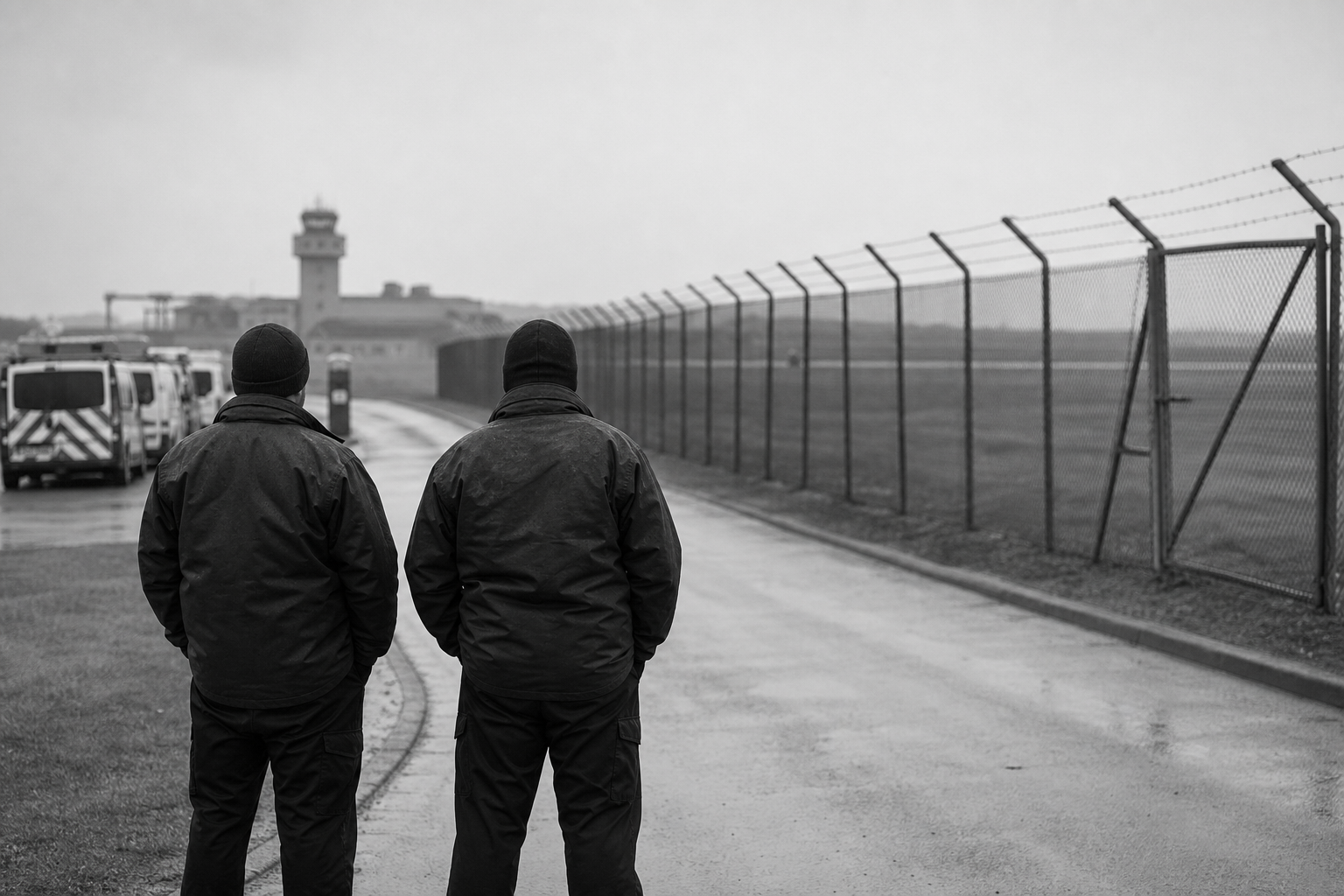
Monitoring is the most defensible level of response to describe where an aircraft has been detected but its operator and purpose remain unresolved. It can establish that activity requires attention, preserve observations for investigation, and help authorities assess whether later reports are connected. It does not establish who controlled a drone, whether it carried equipment, or whether separate sightings formed a coordinated operation.
US-operated installations in the United Kingdom necessarily function within a UK security environment, so an incident of this kind can involve coordination among US forces, the Ministry of Defence and relevant local authorities. Coordination means sharing reports and aligning responsibility for a potential aviation or public-safety matter; it should not be read as evidence that every agency deployed a particular counter-drone measure.
Counter-drone measures are tools and procedures intended to detect, track, identify or mitigate unauthorized unmanned aircraft. Public authorities often avoid describing their specific systems, locations, thresholds or tactics because those details could expose vulnerabilities. The absence of such detail is an operational-security choice, not proof that no action was taken, and unspecified precautions are not proof of escalation, a completed breach, or hostile intent.
Likewise, a police investigation, arrest, seizure or public appeal should be reported only when the responsible police force has announced it. The information addressed here does not justify adding unconfirmed enforcement outcomes to the record of unauthorized drones near US air bases in the UK.
Why Drone Reports Near Military Installations Matter
The significance of a drone report depends on the location and conduct that can actually be established. A sighting near a military installation places an aircraft in the surrounding area, but does not show that it crossed a boundary, interfered with aviation activity or observed a protected asset.
An unauthorized flight is a stronger description only where there is a basis to conclude that the operator lacked permission. A restricted-airspace infringement is narrower still: it requires evidence that the aircraft entered airspace subject to a specific restriction. Confirmed entry into a protected security perimeter is a separate physical-access claim, requiring reliable location evidence rather than an estimate of distance or a general report from nearby.
Those distinctions matter because even a small unmanned aircraft may require assessment for several reasons. Its presence can complicate safe aircraft movement; a camera or other sensor could potentially be used to collect information; and observers cannot infer a payload, capability or purpose merely from its size. Identifying the operator can turn an ambiguous sighting into an incident that can be investigated and assessed on evidence.
For that reason, the most useful public record distinguishes what was observed from what was inferred: a timestamped detection, corroborated imagery or sensor data is stronger than an uncorroborated visual report; a verified position is stronger than the word “near.” It also prevents operational-security concerns from being inflated into claims of a completed breach or hostile action without supporting facts.
Were These Reports UAP? The Evidence-Based Answer
Terminology is the point at which this story can most easily be overstated. UAP, or unidentified anomalous phenomena, is a category used when available information has not yet resolved what an observed object or event is. It is not a finding that the object used extraordinary technology. An unidentified operator, an unreleased technical assessment, or incomplete public information can leave a drone “unidentified” without making it anomalous.
That distinction matters in UAP news. A conventional small unmanned aircraft may be concerning, unauthorized, or difficult to attribute while still remaining a drone incident. A stronger UAP claim would require evidence that its observed characteristics could not be explained by known aircraft or technology after assessment. The public record on these reports contains no such finding, and it offers no basis for claims of non-human intelligence, extraterrestrial involvement, or UFO disclosure. The absence of released tactical detail is not evidence that authorities reached a concealed extraordinary conclusion.
The date-specific record is narrower and clearer: reports began on 20 November 2024, and US Air Forces in Europe–Air Forces Africa later confirmed small unmanned aerial systems in the vicinity of and over RAF Lakenheath, RAF Mildenhall, RAF Feltwell and RAF Fairford during the multi-day episode. Authorities treated the matter as a force-protection and airspace-security concern. What remained publicly unanswered was who operated the aircraft, whether the sightings involved one or multiple operators, what purpose was intended, and whether any actor could be attributed.
Sources
Frequently Asked Questions
-
Which four US-used air bases in the UK reported unauthorized drones in November 2024?
The reported sites were RAF Lakenheath and RAF Mildenhall in Suffolk, RAF Feltwell in Norfolk, and RAF Fairford in Gloucestershire. US Air Forces in Europe and Air Forces Africa publicly acknowledged small unmanned aerial systems around Lakenheath, Mildenhall, and Feltwell, while news reporting linked Fairford to the wider episode.
-
What happened at RAF Lakenheath and RAF Mildenhall on 20 November 2024?
Reports of drone activity near RAF Lakenheath and RAF Mildenhall began on 20 November 2024. The activity continued for several days, with sightings later reported at RAF Feltwell on 21 November and RAF Fairford on 22 November.
-
Were the drones near US air bases in the UK identified?
No operator, motive, launch point, country of origin, manufacturer, model, or payload was publicly identified. Authorities described the objects only as small unmanned aerial systems, which confirms the type of aircraft but not their precise capabilities or controller.
-
Did officials confirm a security breach or threat at the UK air bases?
Officials treated the sightings as a force-protection and airspace-security issue, but they did not publicly confirm a completed security breach, protected-system intrusion, or disruption of base operations. A drone reported near or over an installation does not by itself prove that it entered a protected perimeter or carried out hostile activity.
-
How can you tell whether a military-base drone sighting is a serious intrusion rather than a nearby report?
Look for verified location data showing entry into restricted airspace or a protected perimeter, plus evidence of aviation interference, surveillance, payloads, or identified operators. In the November 2024 incidents, public information confirmed drone activity around and over the named bases but did not establish those stronger intrusion findings or classify the drones as UAP.