Jim Penniston and the 1980 Rendlesham Forest Incident Near RAF Woodbridge/Bentwaters
Examine the Jim Penniston Rendlesham Forest incident, 1980 records, witness claims, later additions and possible explanations.
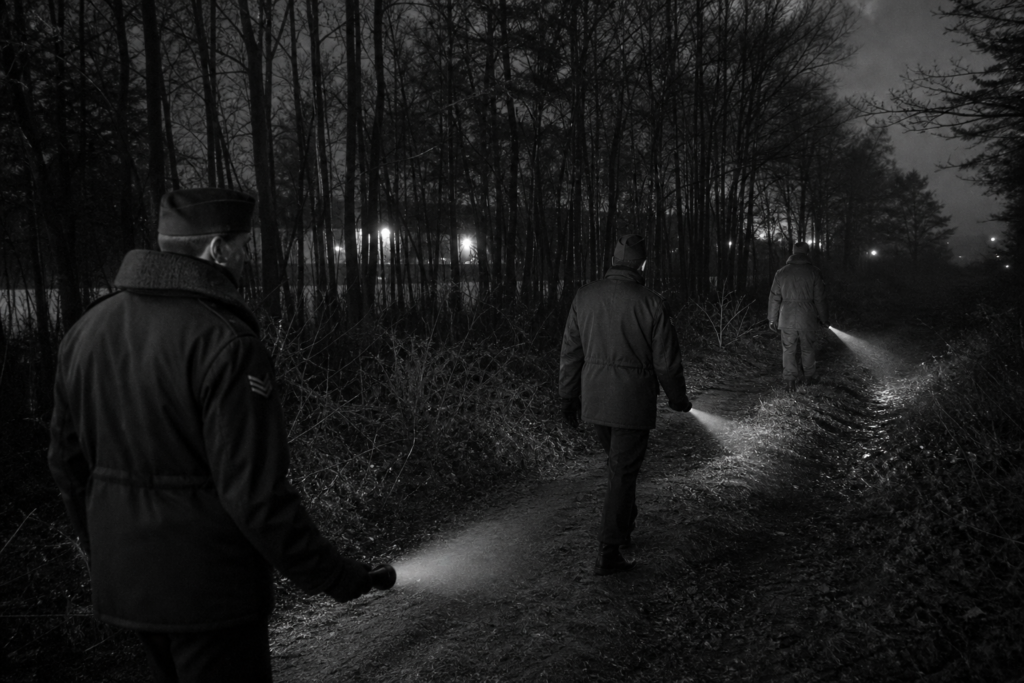
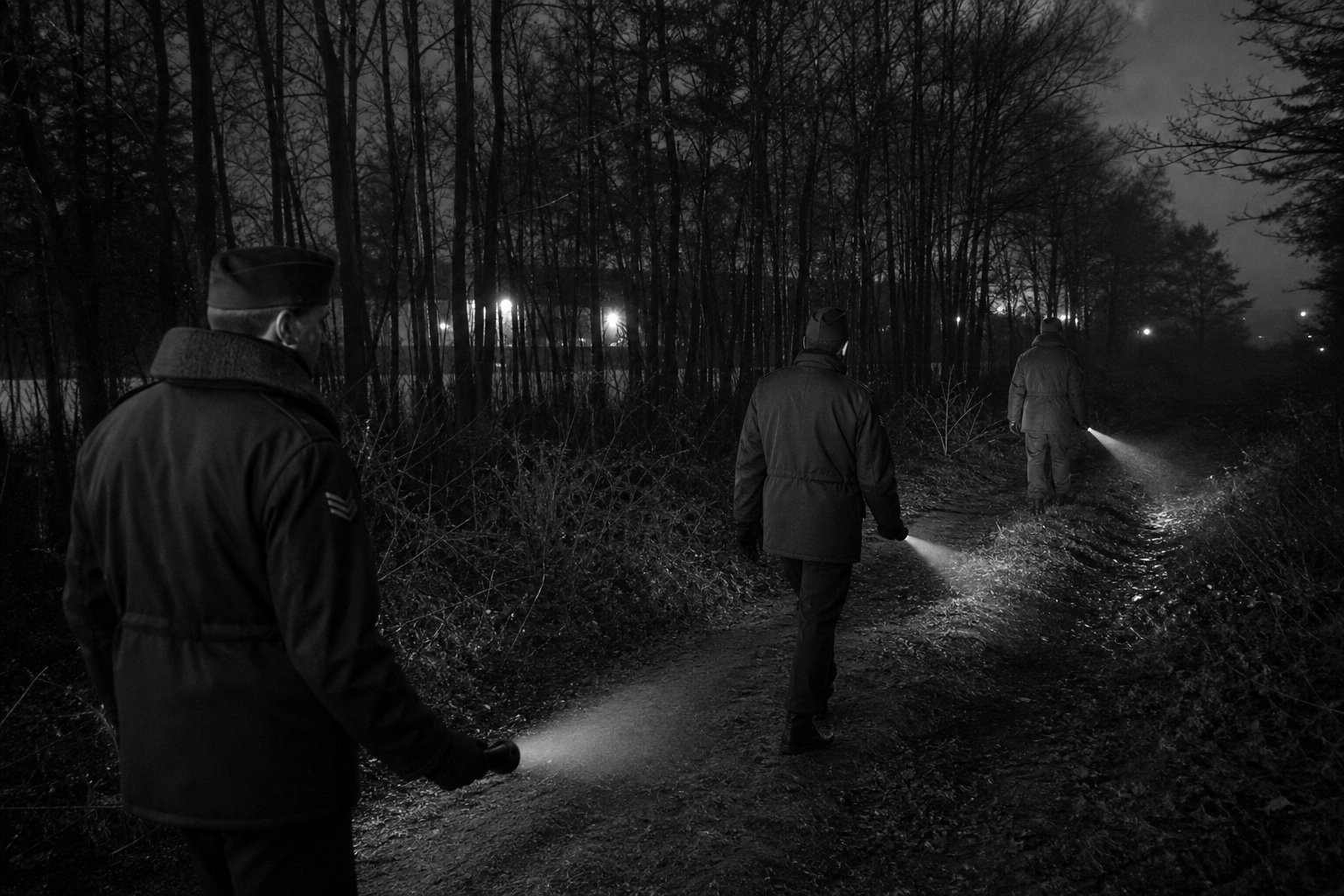
In late December 1980, security policemen reported unusual lights in or near Rendlesham Forest, the woodland beside the U.S. Air Force facilities at Woodbridge and Bentwaters in Suffolk. Jim Penniston, then a U.S. Air Force security policeman, became one of the case’s most prominent witnesses through his account of approaching an unexplained object, an account whose details have been debated ever since.
This distinction matters. A report of unusual lights and a military response are not the same thing as proof of what produced them. Some material belongs to the period itself, including official correspondence and an audio recording made during a later forest visit. Other material consists of firsthand recollections recorded years afterward, including elements Penniston introduced or expanded in later interviews. Those categories can support different conclusions and should not be treated as interchangeable.
The pages that follow reconstruct the episode without assuming an extraterrestrial answer. They weigh the surviving record against witness testimony, trace where Penniston’s narrative is firm and where it evolved, and consider conventional explanations, from distant lights to perception under difficult nighttime conditions, alongside the reasons the case has resisted easy resolution.
Jim Penniston and Rendlesham Forest: A Case That Remains Unresolved
The episode unfolded over more than one night in late December 1980, with reports and responses associated with the wooded ground between RAF Woodbridge and RAF Bentwaters rather than a single, settled event at one location. Penniston is central because his account concerns the first reported night and later became the case’s most detailed narrative of a close encounter.
This account separates four different kinds of material. Contemporaneous records show that personnel reported unusual lights and that officers took the matter seriously enough to record and communicate aspects of it. Direct testimony preserves what individual participants recall seeing or doing. Later-developed claims, including details Penniston added or emphasized years after 1980, may be important to understanding his experience, but they do not carry the same evidentiary weight as a record created at the time. Interpretations are a further category: they propose what the lights or alleged object might have been.
That framework avoids two opposite errors. The Rendlesham Forest UFO incident was not merely invented after the fact, yet neither surviving paperwork nor witness testimony establishes alien visitation, recovered technology, or a coordinated government cover-up. The unresolved question is narrower and more durable: why did trained personnel report such striking events, and how much of the later story can the contemporary record support?
RAF Woodbridge, RAF Bentwaters, and the December 1980 Timeline
Geography matters because the two installations were not interchangeable. RAF Woodbridge lay beside Rendlesham Forest, while RAF Bentwaters was several miles to the west; both were operated by the U.S. Air Force’s 81st Tactical Fighter Wing. Woodbridge security police therefore had the more immediate connection to reports from the forest edge, even though the episode is often labeled the RAF Bentwaters UFO incident because senior wing personnel at Bentwaters became involved.
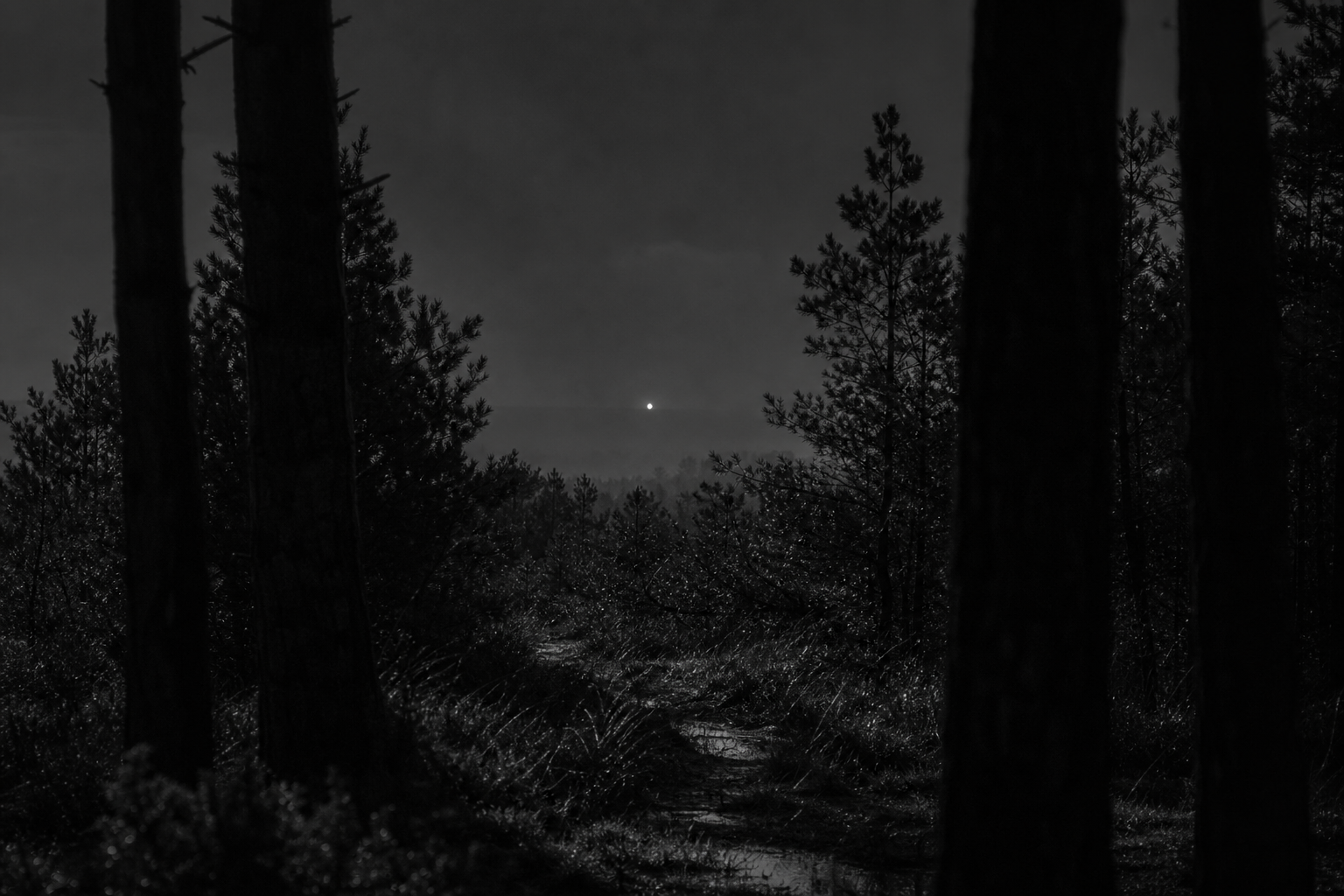
The first reported response began during the night of December 26–27, 1980, a date boundary that accounts for some variations in retellings. Woodbridge security personnel were sent beyond the base perimeter after lights were reported in the woods. Jim Penniston and John Burroughs are consistently identified in later accounts as members of that response. What the patrol saw, how far it travelled, and whether its observations amounted to a close encounter are questions that must be separated from the basic point that a security-police investigation took place.
A later episode, generally placed on the night of December 28–29, involved Lt. Col. Charles Halt, the deputy base commander at RAF Bentwaters. Halt led personnel toward the forest and made an audio recording while there. His January 1981 memorandum, headed “Unexplained Lights,” records observations of lights, reference to a prior incident, and radiation readings. It is strong evidence that officers treated the reports as worth formally reporting; it does not identify the cause of the lights.
One conventional interpretation links some distant flashing light to the Orford Ness lighthouse, while witnesses disputed that it could account for all that they reported. The timeline therefore establishes activity and concern, not a settled explanation for the RAF Woodbridge UFO incident.
Who Was Jim Penniston, and What Did He Say He Encountered?
The key checkpoint in assessing Penniston’s testimony is the gap between an early report of a triangular-looking object and the far fuller close-encounter narrative he gave years later. Assigned to security duties at RAF Woodbridge, Penniston was among the personnel dispatched when lights were reported beyond the perimeter.
In Penniston’s account, he and fellow patrolman John Burroughs entered the woods after observing unusual lights. Penniston later described approaching a small triangular object with colored lights, while Burroughs has also recalled an anomalous light or object in the forest. Their testimony is related but not interchangeable: agreement that something unusual drew the patrol into the woods does not establish agreement on every distance, shape, movement, or sequence.
Lt. Col. Charles Halt’s January 1981 memorandum preserves an early official summary of a patrolman’s report of a triangular craft-like object, described as roughly two to three meters across, with a red light above and blue lights below. That matters because it records a close-object allegation soon after the events. The memo does not name Penniston in that passage, reproduce his complete statement, identify the object, or independently establish that a landed craft was present.
The most dramatic features of the Jim Penniston Rendlesham Forest account became prominent in later interviews, affidavits, and books. Penniston later said he came close enough to inspect the object and touched its surface, describing markings and a dark, glass-like exterior. This triangular craft claim is firsthand testimony, but the surviving contemporaneous memorandum and known physical record do not demonstrate physical contact.
The early material therefore supports reports of lights and an unusual triangular-looking object, while Penniston’s later recollections provide much of the sensory detail that made his story prominent. The available record cannot determine whether those added details were accurately retained from the night, shaped by later interpretation, or the result of perception under difficult nighttime conditions.
What the Contemporary Record Actually Documents
The strongest official material concerns the later, Halt-led patrol rather than Penniston’s earlier trip into the woods. Lt. Col. Charles Halt’s memorandum, dated January 13, 1981, was a retrospective command communication written soon after the December events. It summarizes reported lights, the patrol’s movements, indentations on the ground, and radiation readings; its language records observations and reports, not a determination that a craft had landed.
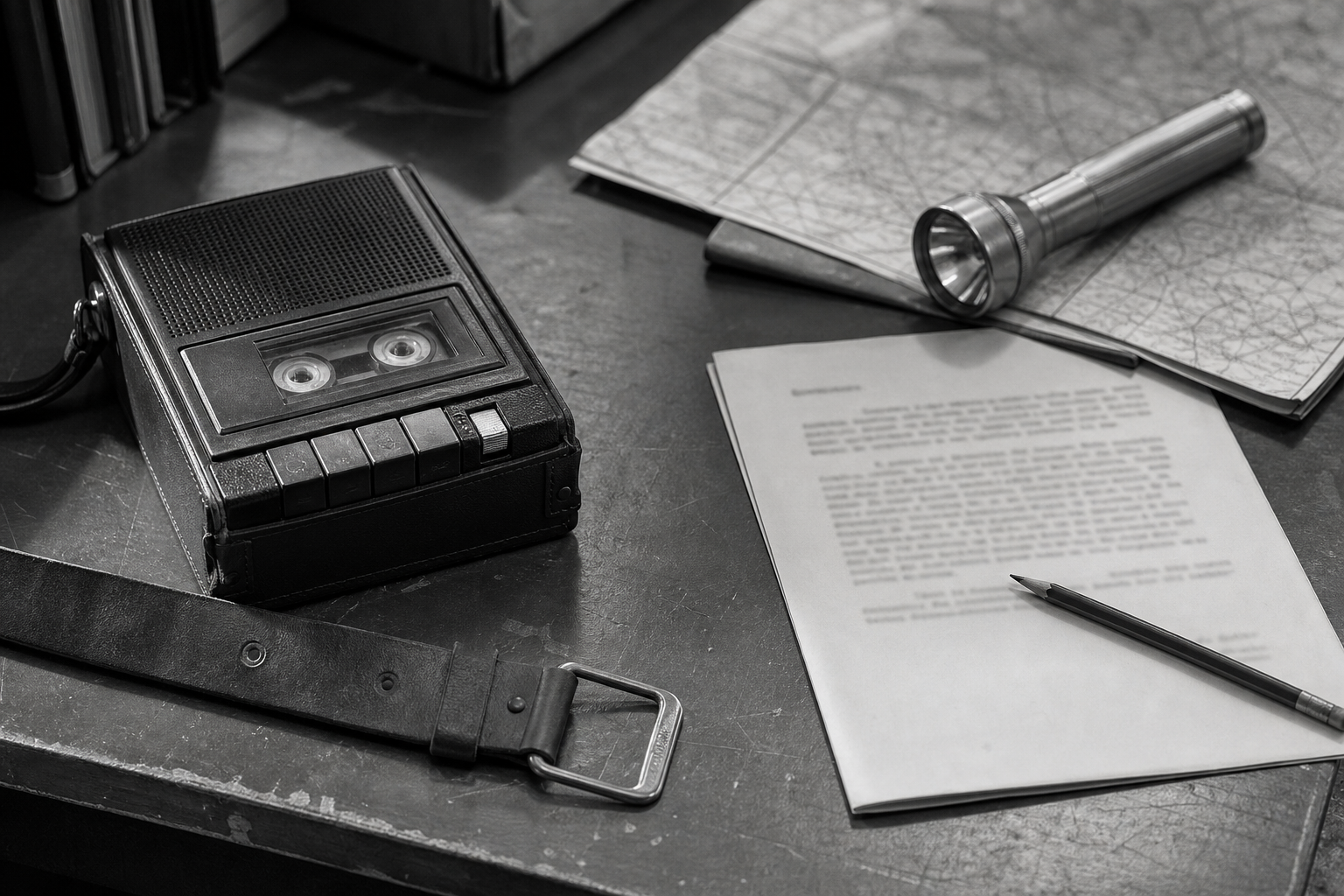
The accompanying on-site Dictabelt recording is especially useful because it preserves the developing chronology and uncertainty of the December 28–29 patrol. Halt and others can be heard describing lights at changing bearings and apparent motion, while attempting to assess what they were seeing. At one point the recording refers to a light that seemed “beacon-like,” an important detail because a regularly flashing distant light is a different category of observation from a nearby structured object. The tape documents genuine military attention and unsettled interpretation in real time, but sound alone cannot establish distance, size, identity, or origin.
The Halt memorandum also reports readings from a radiation meter around three ground depressions, with higher figures at the depressions than at a stated nearby background level. Such field readings are leads rather than self-explanatory physical proof. The surviving account does not provide a full baseline survey, calibration record, repeated controlled measurements, laboratory analysis, or a documented chain of custody for samples that could connect a reading to a particular cause. It therefore supports the narrower point that personnel recorded measurements they considered noteworthy, not that radiation established an anomalous vehicle or material.
Declassified and available military records preserve reports, an internal memorandum, and the patrol audio; they do not describe a recovered craft, recovered material, or a formal U.S. or British finding of extraterrestrial origin. That evidentiary boundary matters for the Jim Penniston Rendlesham Forest incident: Penniston’s first-night account remains a witness account, while the best contemporaneous records chiefly document the separate later response led by Halt and the uncertainty surrounding observed lights.
The Binary Code Claim and Other Details That Emerged Later
The most consequential addition to Penniston’s story was the binary code claim. In the 2010 book Left at East Gate, Penniston said that after touching the object he received a sequence of ones and zeroes mentally, wrote it down after returning from the forest, and only decades later recognized it as binary. He and others associated with the account presented conversions of those strings into short messages, dates, and geographic coordinates. That is a later personal claim, not a coded transmission preserved in the original incident file.
The distinction between early witness accounts and later recollections is chronological as well as evidentiary. The available 1980–81 materials discussed in this article, including the Halt memorandum and the recorded later patrol, do not mention binary digits, a message, coordinates, or Penniston having written down such a sequence. Nor does the binary code claim belong to the early public account that established the Rendlesham story. Its appearance roughly three decades after the event does not demonstrate that Penniston was insincere; it changes what the claim can establish. A contemporaneous note with a clear chain of custody would be evidence that a sequence existed at the time. A later witness recollection is evidence that the witness later remembered, interpreted, or reported it.
The proposed decodings add another limit. Binary can represent text only after choices are made about grouping, character encoding, ordering, and how to treat spaces or irregular strings. The resulting phrases and coordinates have not been independently tied to a 1980 document or to an object at Rendlesham. Other retrospective expansions, more elaborate markings, telepathic communication, and altered-time impressions, likewise supply much of the encounter’s extraordinary character but are absent from the contemporaneous documentation. They remain relevant to understanding Penniston’s mature narrative, while remaining unverified as events of December 1980.
Evidence, Alternative Explanations, and What Remains Open
A single explanation need not fit every observation reported over the separate December nights. The lighthouse explanation proposes that intermittent light from Orford Ness could have been seen through gaps in the trees and then misjudged for distance, height, or motion. That possibility is most relevant to distant, recurring lights; it is a weaker fit for any claim of a nearby, structured object, physical contact, or rapidly changing position. The dispute is therefore about line of sight, timing, and which reported light is being explained, not whether one proposed source automatically disposes of the entire episode.
Bright stars and other astronomical lights offer a different comparison: a fixed light can appear to shift when viewed from a moving observer’s position, through branches, haze, or uneven terrain. In a dark forest, small changes in orientation, depth perception, and contrast can make a distant point light seem closer or mobile. Those conditions can plausibly affect descriptions of lights, but they do not independently establish that all participants were observing the same object or stimulus. A meaningful assessment separates a repeatable distant bearing from an account of close-range detail.
The case remains significant because trained security personnel made multiple reports, senior officers responded, and the surviving memorandum and patrol recording preserve genuine uncertainty rather than a tidy invented narrative. Yet military experience is a reason to take testimony seriously, not a mechanism that turns testimony into physical proof. Penniston’s later-expanded account, the reported ground marks, and the differing light observations may represent connected events, misperception of conventional sources, or more than one unrelated stimulus. Gaps in records and the secrecy surrounding military operations do not by themselves demonstrate a cover-up. Proof of non-human intelligence would require independently verifiable material, measurements, or records that identify such an origin; the available evidence does not reach that threshold.
Why Rendlesham Is Still Called “Britain’s Roswell”
“Britain’s Roswell” is a media and cultural shorthand, not an evidentiary finding. The comparison endures because Rendlesham has recognizable ingredients of a lasting mystery: named military witnesses, a senior officer’s dated memorandum, an original field recording, and sharply different conclusions drawn from the same fragmentary record.
Those materials make the case stronger than a story preserved only in later recollection, but they establish different things. Halt’s memo and the Dictabelt preserve reports and a patrol’s responses; Penniston’s dated and later accounts preserve a witness’s experience, including details that became more elaborate over time. Neither category identifies the cause of the lights or proves that a craft was present.
Modern interest in UFO disclosure and UAP disclosure has returned attention to Rendlesham, yet the useful starting point remains the 1980–81 record: read the Halt memorandum alongside the audio, then distinguish those near-contemporaneous materials from later interviews and interpretations. Its durability lies in that unresolved gap, not in the Roswell debris story supplying an answer.
What Can, and Cannot, Be Concluded About Rendlesham
A useful final checkpoint is the difference between a record of reporting and a record of identification. The Charles Halt memorandum and the contemporaneous Dictabelt recording show that military personnel investigated and documented unusual observations in the forest. They do not physically identify an object or reach a finding about its origin.
Penniston’s place in the episode is equally clear, but the evidentiary weight of his account varies by detail. His role in the initial response and his report of unusual lights belong to the core witness record. His descriptions of close contact, markings, lost time, and the binary message emerged or became substantially more detailed in later retellings. That timing does not prove those details false; it means they cannot be treated as though they were independently preserved in the 1980–81 materials.
Conventional explanations can plausibly address some distant or intermittent lights, while leaving disagreements about other reported features. The Jim Penniston Rendlesham Forest incident therefore warrants careful investigation precisely because its surviving evidence supports uncertainty: a genuine sequence of military reports, not a settled extraterrestrial conclusion.
Frequently Asked Questions
-
Who is Jim Penniston and what did he report seeing in Rendlesham Forest?
Jim Penniston was a U.S. Air Force security policeman at RAF Woodbridge who responded to reported lights on the night of December 26 to 27, 1980. He later described approaching a small triangular object with colored lights, though his most detailed claims of touching it and seeing markings emerged years afterward.
-
What happened at RAF Woodbridge and RAF Bentwaters in December 1980?
Security personnel investigated unusual lights near Rendlesham Forest on December 26 to 27, followed by a later patrol led by Lt. Col. Charles Halt on December 28 to 29. Woodbridge was adjacent to the forest, while Bentwaters was several miles west, although both bases were operated by the U.S. Air Force’s 81st Tactical Fighter Wing.
-
What does the Charles Halt memo say about the Rendlesham Forest incident?
Halt’s January 13, 1981 memorandum, titled “Unexplained Lights,” records reports of lights, ground depressions, radiation-meter readings, and a prior report of a triangular craft-like object roughly two to three meters across. It documents military observations and concern but does not identify a craft or conclude that the events were extraterrestrial.
-
Are Jim Penniston’s binary code claims documented in the original 1980 records?
No. Penniston publicly associated the binary code claim with his encounter decades later, including in the 2010 book Left at East Gate, and the available 1980 to 1981 records do not mention binary digits, messages, coordinates, or a written sequence.
-
What evidence should you look for when evaluating explanations for the Rendlesham Forest UFO story?
Separate near-contemporaneous evidence, such as the Halt memo and the December 28 to 29 Dictabelt recording, from later witness recollections and interpretations. The Orford Ness lighthouse may explain some recurring distant lights, while claims of a close structured object, physical contact, or non-human origin require independently verifiable physical material, controlled measurements, or records identifying the source.