Jim Penniston: Key Witness in the 1980 Rendlesham Forest Lights Near RAF Woodbridge/Bentwaters
Explore Jim Penniston Rendlesham Forest testimony, records and disputed evidence from the 1980 lights near RAF Woodbridge and Bentwaters.
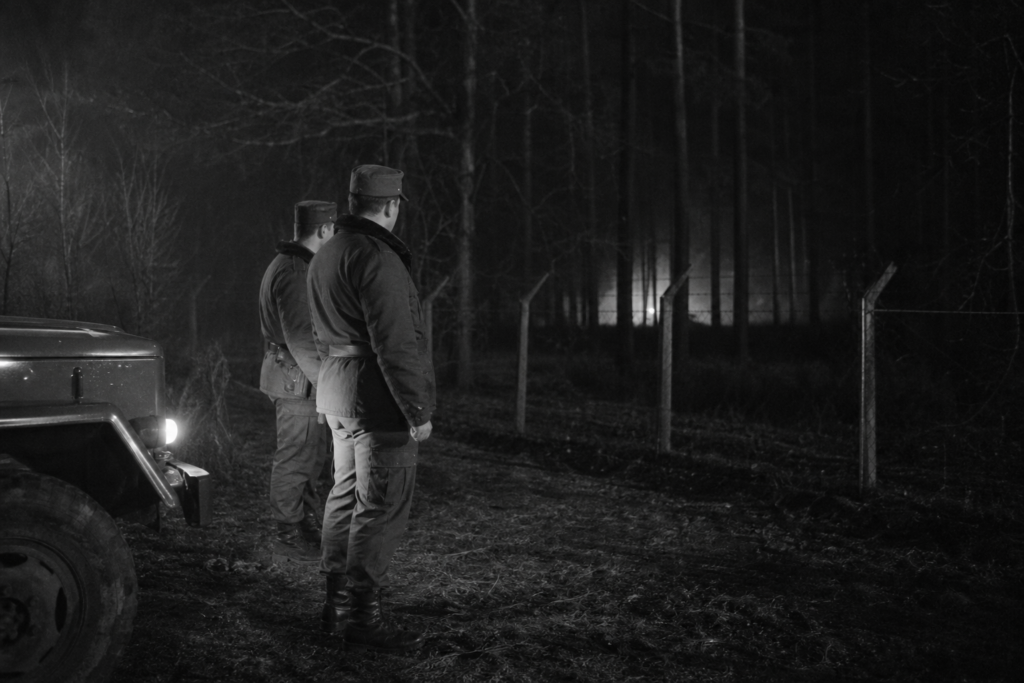
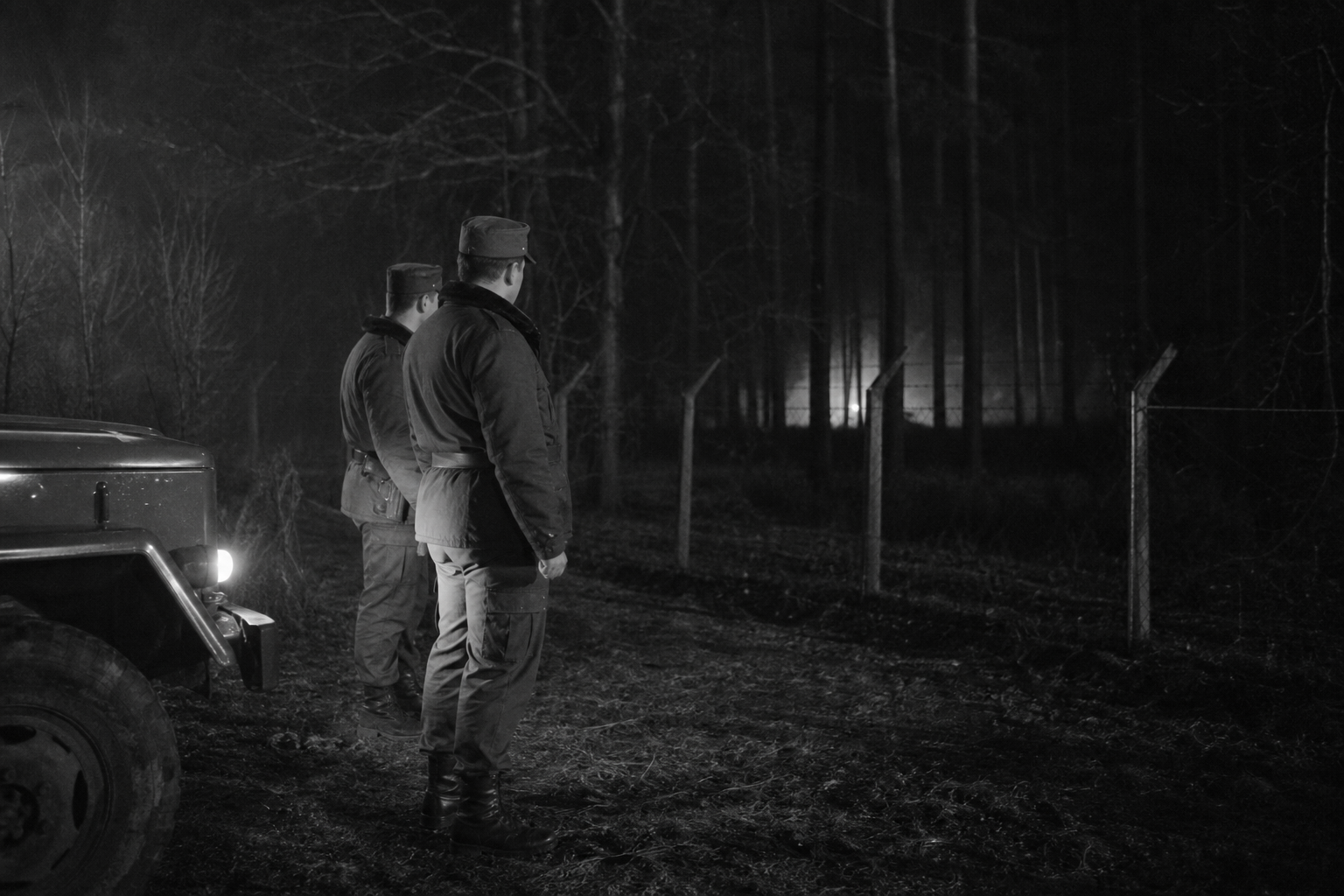
Jim Penniston is among the most closely examined witnesses connected with the December 1980 lights reported near RAF Woodbridge and RAF Bentwaters in Suffolk. A U.S. Air Force security policeman at the time, he became central to the Rendlesham Forest story because he described going into the wooded area during the early episode rather than observing distant lights solely from a base position.
That importance does not settle what occurred. The surviving record includes official correspondence and a later audio record made by deputy base commander Charles Halt, but those materials document reports and observations, not an identified craft or an extraterrestrial cause. Penniston’s own public narrative also contains layers: the initial account of unusual lights is distinct from later recollections involving close contact, markings, missing time, and binary-code material. Those later elements are disputed and lack independent confirmation.
This article follows that distinction throughout. It places Penniston in the limited December timeline, weighs the available records against later testimony, and considers proposed explanations on their ability to address particular observations, not as a forced choice between certainty and dismissal. The result is a fact-grounded account of why Jim Penniston remains pivotal to the Rendlesham Forest incident, and why key questions remain unresolved.
Jim Penniston and the Rendlesham Forest Case: What Is Established and What Is Contested
A useful checkpoint is when, and in what form, a detail first appears. During the December 1980 reports, Penniston was serving in U.S. Air Force base security while lights were reported in wooded ground near the two Suffolk installations. That duty position makes his account significant, but it does not itself identify what he encountered.
Contemporaneous material, created during or soon after the nights in question, is the firmest anchor for chronology and for the fact that personnel reported unusual lights. Firsthand testimony supplies a witness’s personal description, including details omitted from official records. Later recollections may add context, but they need separate weight when they introduce features absent from earlier accounts.
Interpretation is a further step: it assigns a cause to reported lights, impressions, or objects. Claims of direct contact, symbols, lost time, and binary-code material therefore cannot be assessed in the same way as the basic report of a forest investigation. Charles Halt’s memorandum and recorded patrol audio preserve a senior officer’s later-night observations, yet neither independently verifies every element of Penniston’s narrative. The issue is not whether to accept or reject one witness wholesale, but which details have support at each evidentiary level.
Where Penniston Fits in the December 1980 Timeline
The first chronological divide is between Penniston’s early-hours response and the later patrol commanded by Lt. Col. Charles Halt. In accounts of the initial episode, security personnel received reports of unusual lights beyond RAF Woodbridge’s East Gate, in the forested ground toward RAF Bentwaters. Penniston is associated with the group sent out to investigate, alongside security policeman John Burroughs; that is the episode at the center of his later testimony.
The date label for this response is not uniform. Penniston and later retellings commonly place it in the early morning of 26 December 1980, following reports during the night of 25 December. Halt’s January 1981 memorandum instead dates the first reported event to 27 December. This need not describe two wholly separate incidents: midnight crossings, overnight shifts, and the difference between an evening’s date and its early-morning hours can produce competing labels. It does mean that dates alone cannot merge every witness account into one uninterrupted sequence.
Halt’s involvement concerns a later, distinct investigation. His memorandum records a patrol responding to further reports on 29 December, while the surviving field recording is commonly identified with the night of 28–29 December. The memo and audio are unusually valuable near-contemporaneous records for the wider Rendlesham Forest incident chronology, but they document Halt’s party and observations, not Penniston’s claimed close-range experience during the first response.
Keeping those episodes separate clarifies the record’s limits. Penniston’s reported movement from the East Gate into the forest makes him a principal witness to the opening incident; Halt provides a senior officer’s documented account from a subsequent patrol. The shared terrain and recurring light reports connect the episodes, but neither record automatically corroborates every detail attributed to the other man.
What Jim Penniston Said He Observed
Penniston’s account begins with a report of lights in the forest rather than a fully formed claim about their cause. He has recalled seeing unusual illumination beyond the base perimeter and moving with other security personnel toward what appeared to be a lighted object or objects among the trees. That core description matters because it places him close to the episode’s reported activity, while still leaving open whether the lights represented a nearby solid object, a distant source seen through woodland, or more than one phenomenon.
In later retellings of the Jim Penniston UFO encounter, his description became far more specific. Penniston has said that he approached a small, triangular craft-like object, described its surface as smooth or glass-like, and recalled colored lights. He has also alleged that he saw unusual markings or symbols on one side. These are witness-reported visual details, not features established by photographs, recovered material, or an independent technical examination.
The strongest element of Penniston’s later narrative is his claim that he touched the object. He has associated that moment with a close-range inspection and, in some later accounts, with sensations or memory effects that became part of the broader Rendlesham story. Such claims are qualitatively different from reporting lights: a light can be observed at uncertain distance, whereas touch asserts direct physical contact. The latter therefore requires independent support that the available public record does not provide.
That distinction is essential when assessing UFO sightings and UAP sightings connected to Rendlesham Forest. Penniston’s testimony preserves a detailed personal account of what he believed he encountered, but the level of detail increases in retrospective narratives. It should be read as his evolving recollection and interpretation, not as a verified description of a craft.
The Records Around the Case: The Halt Memo, Tape, and Other Evidence
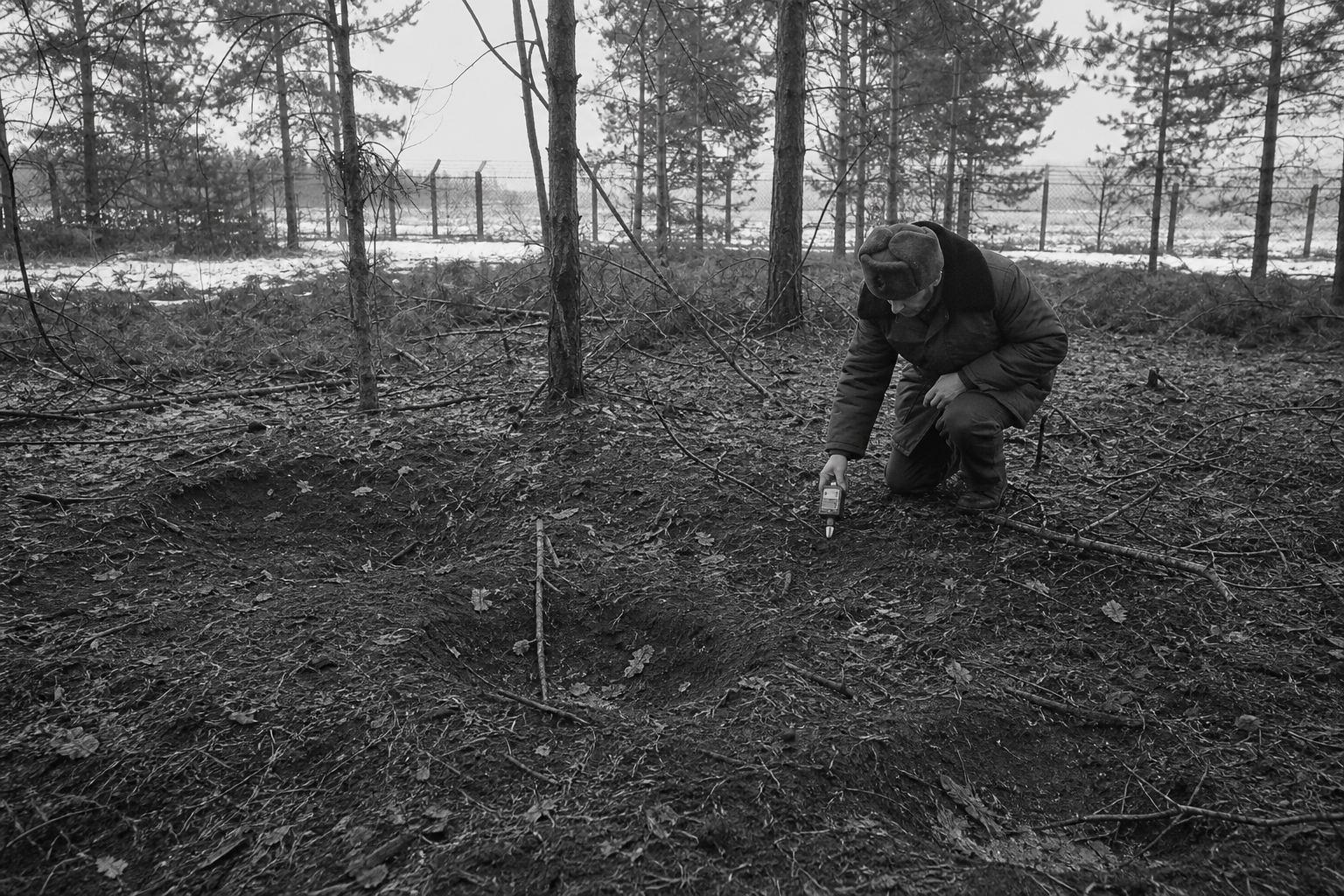
The most consequential official record is Lt. Col. Charles Halt’s memorandum of January 1981, written for the U.K. Ministry of Defence after his patrol’s later forest investigation. The Charles Halt memo records reported lights, three ground depressions, broken branches, and radiation-meter readings. It establishes that a senior U.S. Air Force officer formally reported an unusual episode; it does not independently establish that Penniston touched a craft during the earlier incident.
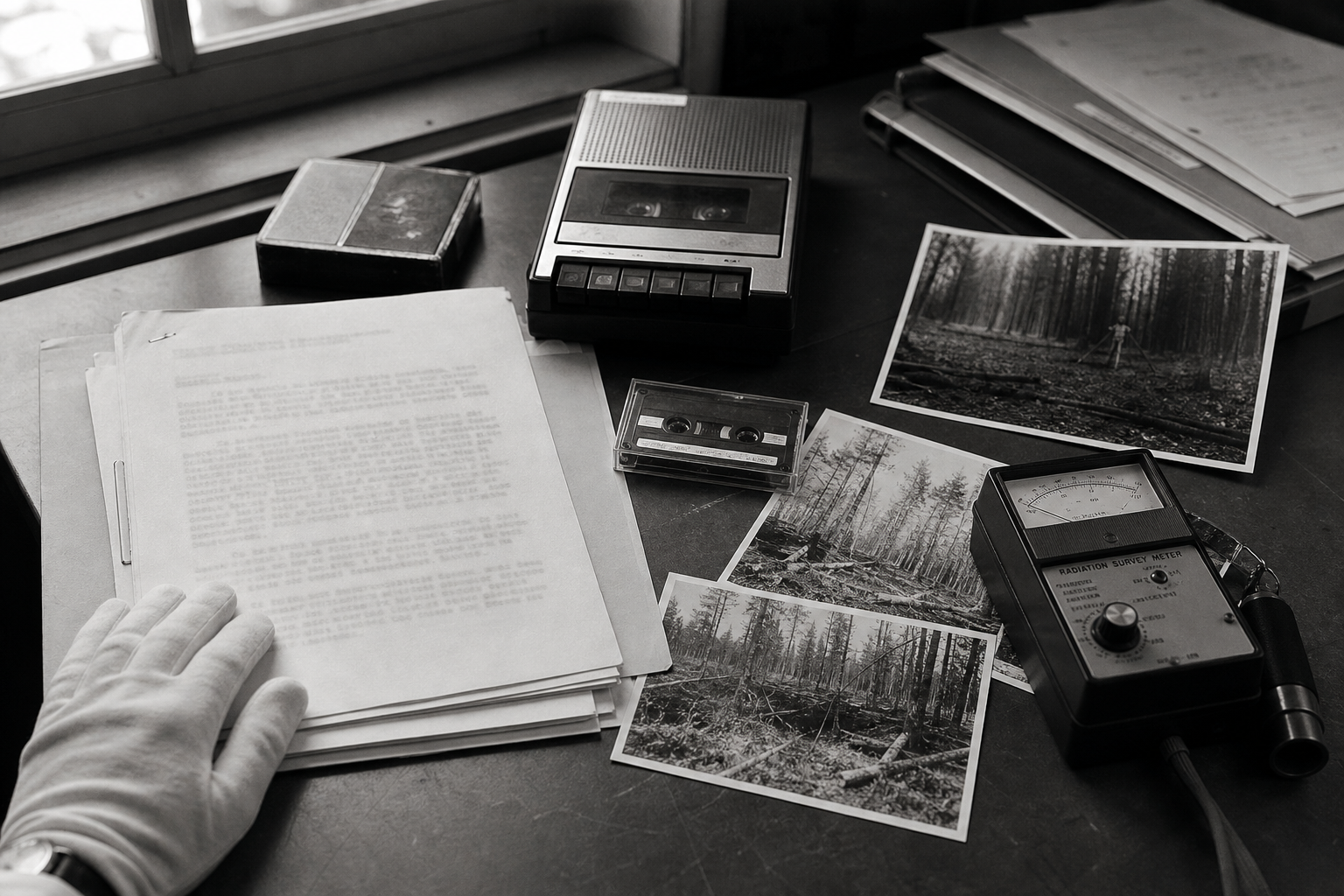
The contemporaneous Charles Halt tape is more revealing in a narrower way. Recorded during the patrol, it captures real-time reactions, changing observations, compass discussion, and radiation readings rather than a polished reconstruction written afterward. That makes it strong evidence of an active official response and of what the patrol believed it was seeing at particular moments. It remains less able to determine distance, size, or cause from the audio alone.
Physical-trace claims occupy a middle category. The reported depressions and disturbed vegetation were described, but the public record does not provide a controlled forensic examination linking them to a particular object. Similarly, reported radiation figures show that measurements were taken, not that an extraordinary source produced them; the instruments’ conditions, background comparisons, and chain of custody limit what can be inferred.
Radar is weaker still. Witnesses later referred to radar tracking, but no publicly available, contemporaneous radar record conclusively ties a target to the forest reports. Other personnel corroborate that lights were reported and investigated, while differing in what they saw and how they interpreted it. That uneven record is why the Rendlesham Forest UFO incident is documented as an event of official concern, not as proof of every later claim attached to it.
Why Penniston Remains a Central Witness
What gives Penniston unusual staying power is the convergence of role, claimed proximity, and narrative detail. He was a security policeman responding to a report beyond RAF Woodbridge’s perimeter, not a member of the public recounting a distant light years later. His claim to have moved into the forest with fellow airmen, including John Burroughs, places him near the part of the episode that remains most contested: whether the reported illumination had a nearby, structured source.
That position also makes his testimony consequential without making it self-validating. A military security assignment can suggest training in observation, reporting, and access to the initial response, while it cannot by itself establish accurate estimates of distance, shape, duration, or cause under dark, confusing conditions. The strong signal is that Penniston was connected to the early investigation; the weaker inference is that his later interpretation must therefore be correct.
Penniston’s account has also endured because it does not stand entirely alone. Other personnel described unusual lights around the Woodbridge–Bentwaters area, and Halt’s later memorandum and field recording show that the matter reached a documented command response. Together, those materials make Rendlesham more substantial as a historical episode than an isolated anecdote. They do not merge into one continuous observation, however: Penniston’s early-hours account and Halt’s later patrol remain distinct events with differing witnesses and records.
For UFO disclosure and UAP disclosure audiences, that combination is compelling: a named serviceman, a claimed close encounter, additional witness accounts, and official paperwork. It is also a useful caution about standards of proof. Cultural influence measures how strongly a case shapes books, documentaries, and public debate; evidentiary certainty measures whether independently testable material establishes an extraordinary explanation. Penniston is central on the first measure, while the second remains unresolved.
What Remains Disputed: Memory, Evidence, and Proposed Explanations
The central evidentiary divide is temporal. The early record supports that security personnel investigated reported lights in the forest; Penniston’s later public accounts add direct contact, surface symbols, missing-time impressions, and binary-code material. Those additions do not automatically make his recollection false, but their absence from the near-contemporaneous material means they cannot be independently tested in the same way as the basic response to lights.
No known physical sample, photograph, instrument record, or contemporaneous third-party account independently verifies the claimed close-contact details. The reported ground impressions and radiation readings are likewise suggestive rather than decisive: impressions can have ordinary causes, while a reading has limited value without clear calibration, background comparison, chain of custody, and repeatable measurement. Corroboration is strongest for an unusual incident being reported and investigated, weaker for a single nearby object with the specific features Penniston later described.
Proposed conventional explanations work at different levels. The lighthouse explanation identifies the rotating light at Orford Ness as a possible source for some distant, intermittent lights seen through trees; other accounts invoke stars, bright planets, vehicles, or misperceived lights under nighttime conditions. Such possibilities can address direction, periodic illumination, or shifting apparent position, but they do not by themselves reconstruct every witness’s route, timing, or later close-encounter memory. Conversely, incomplete records do not establish a government UFO cover-up or an extraordinary cause. The disciplined conclusion is narrower: parts of the testimony may admit mundane explanations, while the full set of recollections remains unresolved.
A Careful Assessment of Penniston’s Place in the Rendlesham Story
The fairest reading is neither to elevate Penniston’s account into proof nor to treat its later uncertainties as grounds for erasing his role. As a security policeman involved in the initial response near RAF Woodbridge, he is indispensable to the history of the Rendlesham Forest reports. His sustained willingness to describe the experience in detail also explains why his testimony remains central.
The evidentiary weight, however, is uneven. Official material and near-contemporaneous accounts support the narrower proposition that personnel responded to unusual lights in the forest area and that a later patrol generated a formal record. They do not independently establish every element Penniston added in subsequent public retellings, including physical contact, symbols, lost time, or binary-code information. That difference is a standard of evidence, not a judgment about his sincerity.
Rendlesham therefore remains a valuable unresolved case study: it shows how firsthand memory, official reporting, incomplete records, and competing explanations can coexist without producing a final identification. Its recurrence in UFO news and UAP news reflects that tension. Jim Penniston’s Rendlesham Forest testimony is essential to understanding the case, but it is not conclusive evidence of extraterrestrial visitation, non-human intelligence, or a government cover-up.
Frequently Asked Questions
-
Who is Jim Penniston and what did he report at Rendlesham Forest?
Jim Penniston was a U.S. Air Force security policeman assigned near RAF Woodbridge and RAF Bentwaters in December 1980. He reported entering the forest with other security personnel after unusual lights were seen beyond Woodbridge’s East Gate.
-
What did Jim Penniston say he saw near RAF Woodbridge in 1980?
Penniston’s core account described unusual lights in the forest. In later retellings, he said he approached a small triangular, craft-like object with colored lights, a smooth or glass-like surface, and unusual symbols.
-
Did Jim Penniston touch a UFO at Rendlesham Forest?
Penniston later said he touched the object during a close-range inspection. No public photograph, physical sample, instrument record, or contemporaneous third-party account independently verifies the claimed contact.
-
What is the Charles Halt memo and why does it matter?
Lt. Col. Charles Halt’s January 1981 memo documented a later patrol’s reports of lights, three ground depressions, broken branches, and radiation-meter readings. Along with the field audio recorded during the 28 to 29 December patrol, it confirms an official response but does not verify Penniston’s earlier close-contact claims.
-
What should you look for when assessing Rendlesham Forest UFO evidence?
Give the most weight to near-contemporaneous records, independently testable physical evidence, calibrated instrument readings, and corroborating accounts that match in timing and detail. The available record strongly supports that personnel investigated reported lights, but it does not independently establish a craft, extraterrestrial visitation, or a cover-up.