July 26, 2023 Congressional Hearing on UAPs: Testimony from David Grusch and Fighter Pilots Ryan Graves and David Fravor
Explore David Grusch UAP testimony and pilots' firsthand accounts from the July 26, 2023 congressional UAP hearing, including its limits.
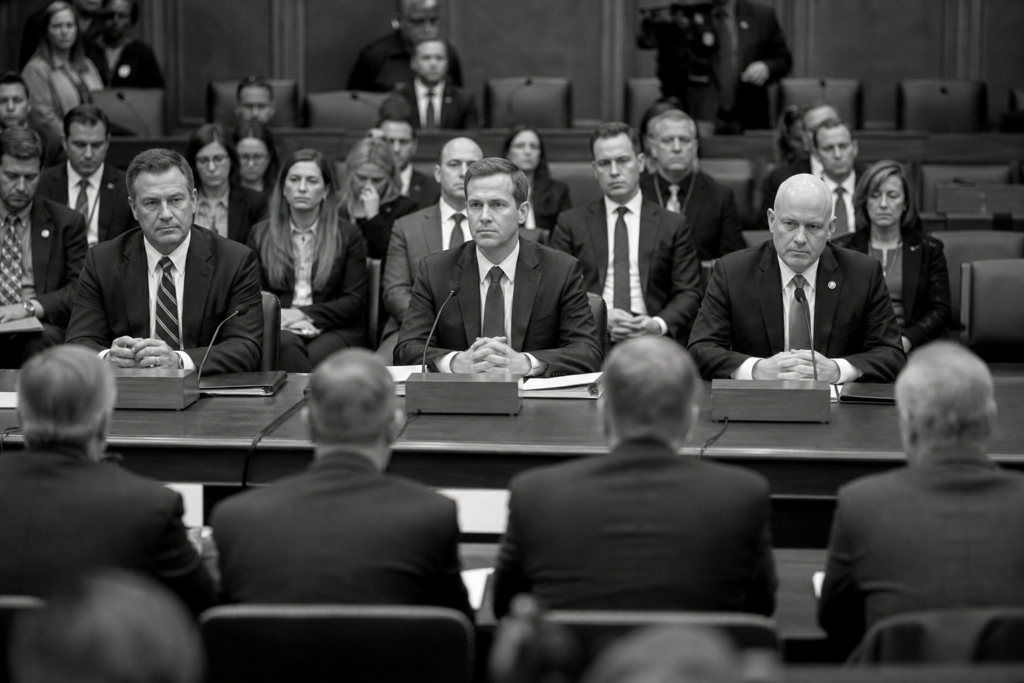
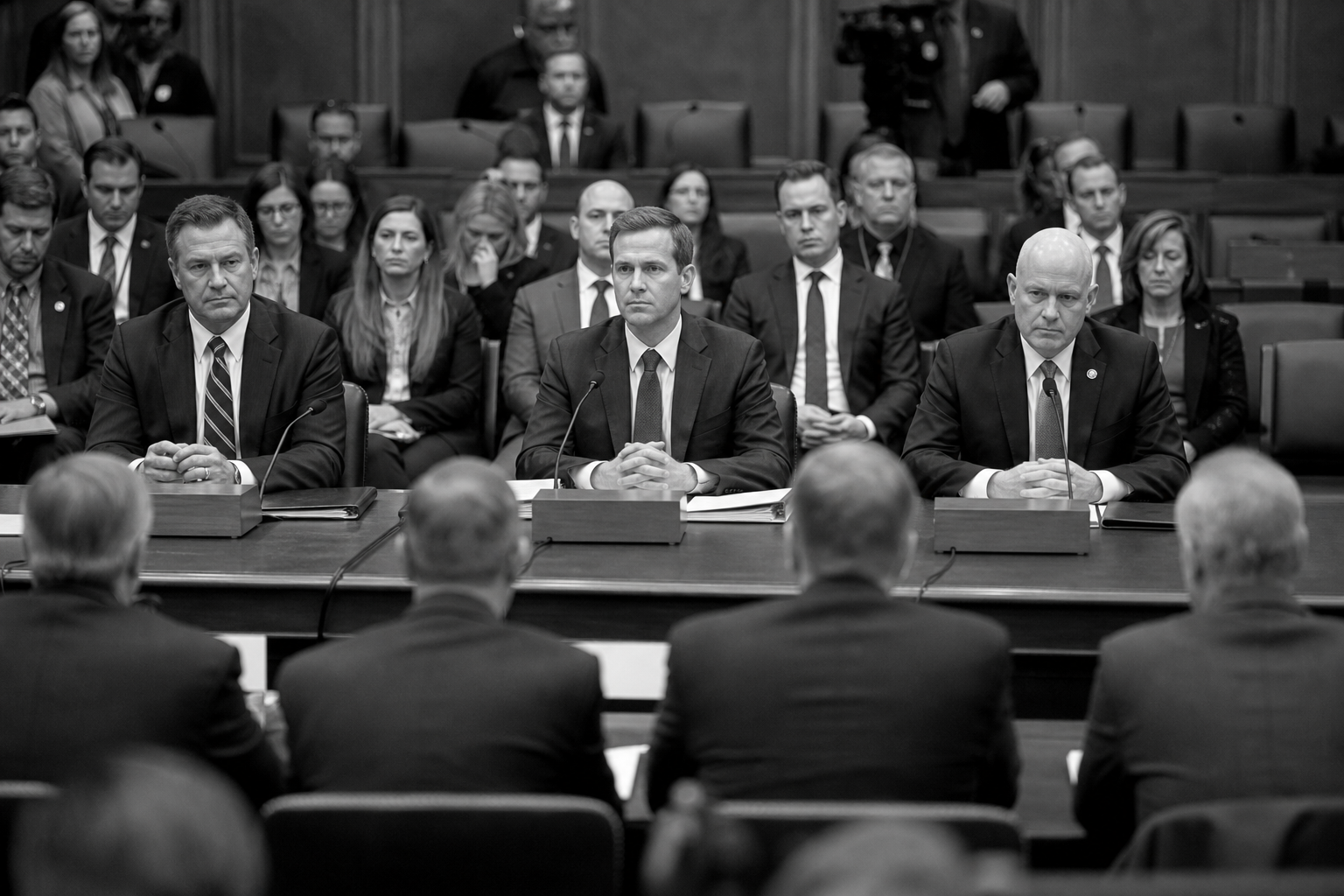
At the July 26, 2023 UAP hearing, the House Committee on Oversight and Accountability’s National Security, the Border, and Foreign Affairs Subcommittee took sworn testimony from former intelligence officer David Grusch and former Navy pilots Ryan Graves and David Fravor.
The central distinction is essential to reading the record. Graves and Fravor described aviation-related events they personally experienced or investigated through their military service. Grusch, whose appearance generated intense attention around the David Grusch UFO testimony, presented allegations he said were based largely on information supplied by current and former officials rather than on direct observation of recovered craft or beings.
The hearing’s title, Unidentified Anomalous Phenomena: Implications on National Security, Public Safety, and Government Transparency, framed UAPs as an oversight issue: whether reports are handled adequately, whether aviators can report hazards without stigma, and whether Congress has access to relevant government information. Members questioned the witnesses in an unclassified public setting, while several lines of inquiry were described as matters better addressed in a closed session.
The July 26, 2023 UAP hearing therefore created a prominent public record, but it did not publicly establish extraterrestrial life, non-human origins, or the existence of a crash-retrieval program. It put firsthand pilot accounts and uncorroborated secondhand allegations before Congress, and made the difference between those categories of evidence impossible to ignore.
The Hearing’s Scope, Witnesses, and Evidence Standards
The witnesses were paired because each illuminated a different oversight problem. Ryan Graves brought the operational perspective of a former Navy F/A-18 pilot and the founder of Americans for Safe Aerospace, an organization focused on aviation safety and UAP reporting. Retired Navy Commander David Fravor brought command experience as the former commanding officer of Strike Fighter Squadron 41. Their roles made them relevant to questions about what military aviators encounter, how those encounters are reported, and whether reporting systems adequately capture potential hazards.
David Grusch occupied a different position in the record. A former U.S. intelligence officer and former representative to the UAP Task Force, he told the House Committee on Oversight and Accountability that he had filed an Inspector General complaint. His appearance connected the pilots’ concerns about reporting and transparency to allegations that UAP-related information and programs had been withheld from appropriate congressional oversight.
Those roles also establish the standard by which the testimony should be read. A pilot’s direct observation is firsthand evidence: it can describe what the witness saw, the circumstances, and the immediate operational effect. A documented record, such as sensor data, reporting forms, or official correspondence, can independently preserve details for scrutiny. A report relayed by another person may still warrant investigation, particularly when it comes from officials with relevant access, but it is not equivalent to personal observation or publicly produced records.
The hearing placed all three forms before lawmakers without collapsing them into one category. That distinction is especially important when assessing the claims associated with Grusch alongside the aviation experiences described by Graves and Fravor.
What David Grusch Alleged, and What He Said He Knew Firsthand
Grusch’s David Grusch UAP testimony centered on information he said he had gathered while serving in intelligence roles, rather than on seeing an anomalous craft or recovered material himself. He told the subcommittee that current and former officials had informed him of a decades-long program involving the retrieval of UAP wreckage and efforts to assess or reverse-engineer it. He alleged that elements of this work had been concealed from the congressional bodies entitled to oversee them.
Asked whether the United States possessed material from a crash, Grusch answered that he had been informed of a “multi-decade UAP crash retrieval and reverse engineering program.” In an exchange about whether recovered material included biological evidence, he said he had been told that “biologics” had come with some recoveries and characterized them as “non-human.” Those were grave allegations, but his wording mattered: he presented them as reports supplied by people he considered knowledgeable, not as physical evidence produced in the hearing room or an event he personally witnessed.
That distinction became explicit when lawmakers pressed him for names, locations, and details. Grusch said he could provide information about people with direct knowledge, as well as specific program information, in a secure classified setting. He declined to identify locations or discuss sensitive particulars in open session, saying he had already given classified details and names to the Intelligence Community Inspector General and other appropriate authorities. A closed setting can allow lawmakers to receive classified testimony; it does not, by itself, make the underlying allegation publicly verifiable.
Grusch also described what he called retaliation after he raised concerns through official channels. He said he had filed a whistleblower reprisal complaint and that the Inspector General had found his complaint “credible and urgent.” The public hearing record did not establish that the reported treatment independently proved a crash-retrieval program, recovered non-human material, or a government UFO cover-up. It established that Grusch made those allegations under oath, said he had furnished more detail to oversight authorities, and maintained that the decisive information could not be aired in an unclassified forum.
For readers assessing the David Grusch UFO testimony, the strongest public conclusion is therefore limited but consequential: Congress heard a former intelligence officer allege a hidden, long-running UAP effort and withholding of information from oversight. The hearing did not publicly supply the underlying documents, named witnesses, recovered materials, or independent corroboration needed to prove those claims.
Ryan Graves’s Testimony: Repeated Sightings and Flight-Safety Concerns
Graves instead brought the committee an operational record of recurring encounters in military training airspace. He testified that, after his F/A-18 squadron received upgraded radar systems around 2014, aviators operating off the U.S. East Coast began detecting unidentified objects with unusual regularity. The reports continued over an extended period, he said, rather than describing a single exceptional event.
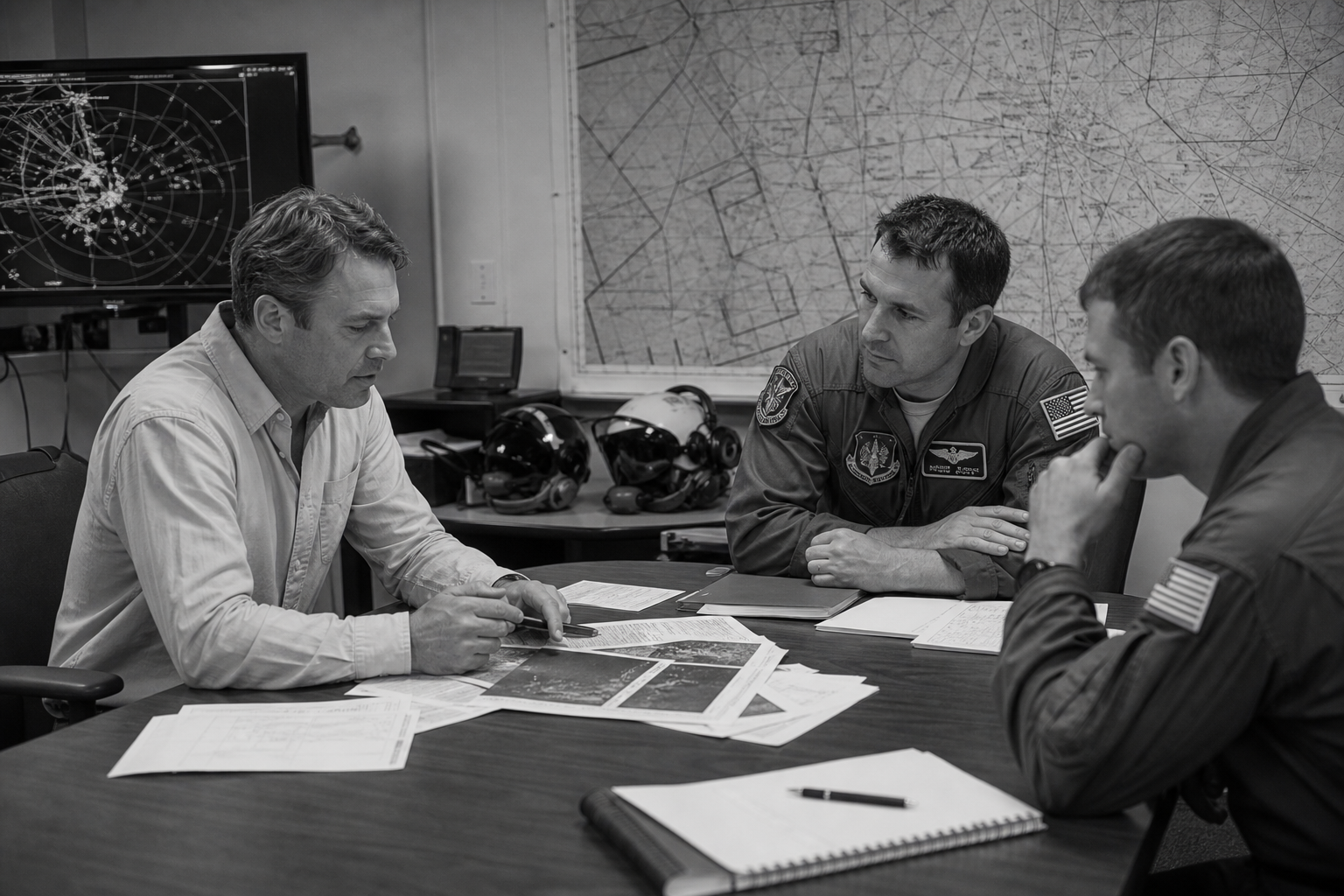
His 2023 UAP testimony distinguished direct experience from accounts relayed by fellow aviators. Graves said he had personally observed unidentified phenomena and had spoken with many Navy personnel who had encountered them. But the hearing’s most vivid shape description was not presented as his own sighting: Graves attributed it to a pilot in his squadron, who described coming close to a “dark gray or black cube inside of a clear sphere.” Graves said the encounter occurred in a training area and was serious enough that the pilot ended the mission.
The practical significance of that account was proximity, not a claimed identification. An object that cannot be identified, tracked consistently, or safely separated from an aircraft can create a flight-safety and operational problem whether its eventual explanation is ordinary, foreign, technical, or unknown. Graves did not tell lawmakers that these UAP sightings established a non-human origin; his concern was that military aviators were encountering objects without an adequate way to characterize the risk.
He urged a more reliable reporting structure, stronger collection and analysis of sensor and pilot data, and a culture in which crews could report anomalies without fear of stigma or damage to their careers. That made his testimony materially different from Grusch’s reported allegations: Graves focused on observed and reported aerial incidents, and on the institutional gaps that could leave recurring hazards insufficiently documented.
David Fravor’s Account of the USS Nimitz “Tic Tac” Encounter
Fravor’s account centered on a single, close-range episode during Navy operations with the USS Nimitz carrier strike group off the coast of California in November 2004. As the commanding officer of Strike Fighter Squadron 41, he testified that he and other aviators were directed to investigate an unusual disturbance on the ocean’s surface.
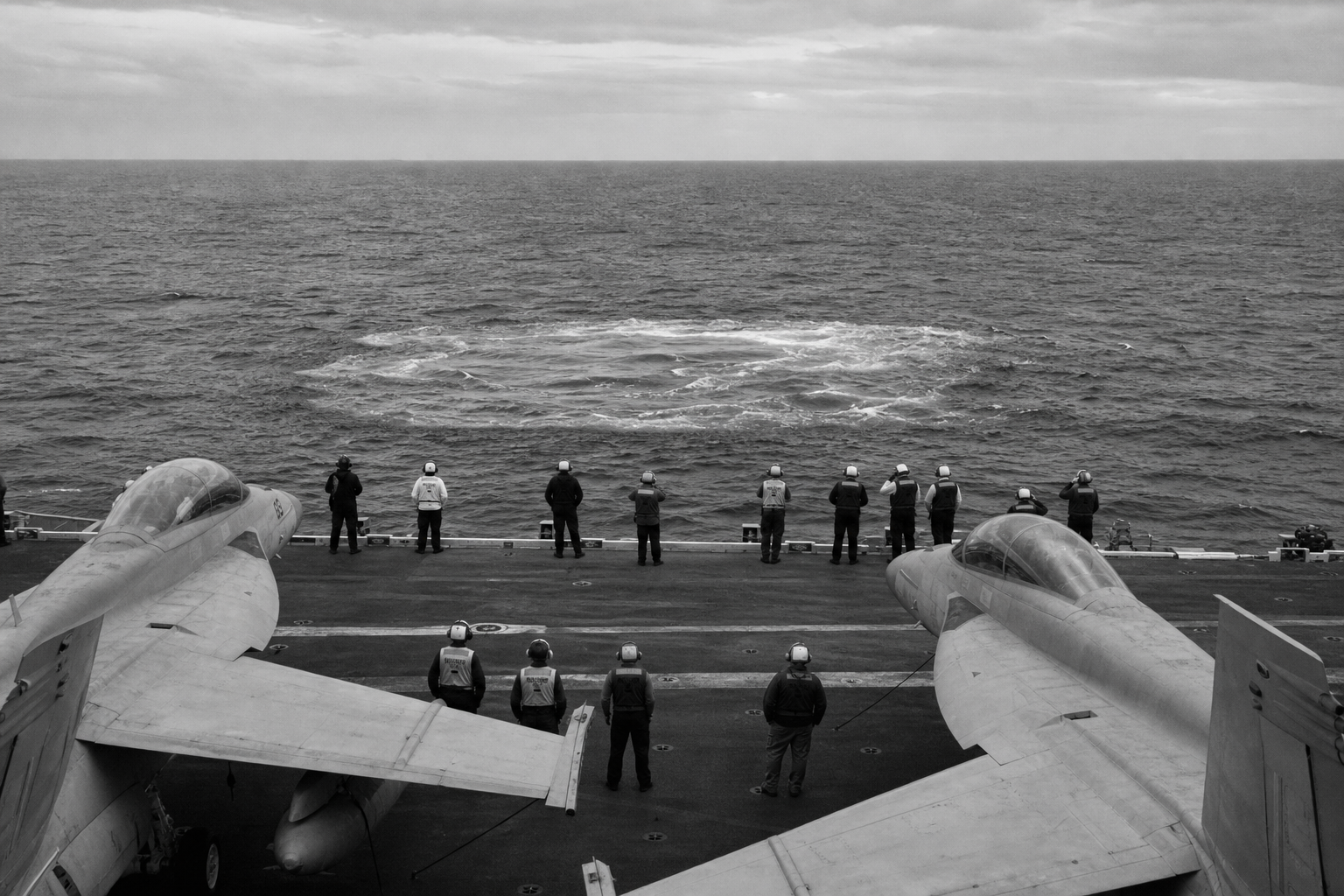
Looking down from his F/A-18, Fravor said he saw churning, foaming water and, above it, a smooth white oblong object roughly resembling a “Tic Tac.” He described no visible wings, rotors, exhaust, or other conventional means of propulsion. His description concerned what he personally observed from the cockpit, rather than an identification of what the object was.
In Fravor’s telling, the object responded as he maneuvered toward it: it rose from near the disturbed water, mirrored aspects of his turning movement, and then departed at extraordinary speed. He said it vanished from view before he could close on it. That direct visual sequence is the core of his 2004 Nimitz “Tic Tac” encounter.
Fravor also placed the sighting in a wider operational setting. He referred to radar contacts reported by personnel aboard the cruiser USS Princeton, as well as a later flight by another Navy crew that recorded infrared video associated with the episode. Those elements helped describe the broader event, but they were not all Fravor’s own observations; the hearing record distinguishes his cockpit encounter from information relayed by radar operators and other aviators.
The testimony therefore supplied lawmakers with a firsthand military account of an incident Fravor could not explain. It did not publicly establish that the unidentified object was extraterrestrial, non-human, or the product of any particular technology.
Why the Hearing Mattered to the UAP Disclosure Debate
The hearing’s importance lay in the forum it created: a public, sworn House proceeding in which lawmakers placed a former intelligence officer’s serious allegations beside two former military aviators’ accounts. Those were not interchangeable forms of evidence. Grusch described information reported to him by other officials; Graves and Fravor described aviation-related events and reporting problems rooted in their own experience. Keeping that distinction visible gave the UAP disclosure debate a more disciplined public frame than a simple argument over whether unidentified objects are “alien.”
Members’ questions and the witnesses’ recommendations converged on several practical oversight issues. One was whether Congress can effectively oversee classified UAP-related activity without demanding sensitive operational details in an open session. Another was whether personnel who bring information to inspectors general or congressional offices can do so without retaliation and with meaningful whistleblower protections. A third concerned transparent reporting: the useful standard is not unrestricted public release, but enough disclosure to show that reports are received, assessed, and routed to the officials responsible for oversight. Graves’s emphasis on routine reporting also treated unidentified objects as a potential aviation hazard, an object need not be exotic to create a serious risk if crews cannot identify or predict it.
In that sense, the session elevated both public attention and congressional scrutiny of UAP claims. It made space for allegations that could not be fully explored in an unclassified hearing while preserving a public record of pilots describing unresolved encounters. It did not, however, supply publicly verifiable proof of alien life, a crash-retrieval effort, or a government cover-up. The hearing changed the visibility and urgency of those questions; it did not resolve them.
What the July 26 Hearing Established, and What It Did Not
The clearest result was a record with three different evidentiary layers. Grusch alleged that officials had told him of concealed UAP-retrieval and reverse-engineering activity, making his testimony a demand for investigation and access to information rather than public proof of those programs. Graves described recurring reports from military training airspace and the reporting failures that can turn an unidentified presence into a flight-safety concern. Fravor supplied a direct account of the 2004 Nimitz encounter: an event he witnessed, but could not identify.
That distinction changes what the hearing can reasonably be said to have established. It established that military aviators had reported unresolved encounters; that stigma and inconsistent reporting procedures were live concerns; and that members of Congress sought fuller access to potentially relevant classified information. It also placed Grusch’s allegations on the formal House record, including his assertion that he had provided details in classified settings.
It did not establish a single explanation for the pilots’ observations, demonstrate extraterrestrial or non-human origin, or publicly corroborate Grusch’s central allegations about recovered craft and secret programs. The lasting significance of the July 26 session lies in the oversight questions it sharpened, how reports are collected, protected, evaluated, and disclosed, not in any definitive answer to what UAP are.
Frequently Asked Questions
-
What did David Grusch testify to Congress about on July 26, 2023?
David Grusch testified that current and former officials had told him about a multi-decade UAP crash-retrieval and reverse-engineering program. He also said he had been told some recoveries included “biologics” characterized as non-human, but he did not present recovered materials, documents, or firsthand observations in the public hearing.
-
What did Ryan Graves say about UAP sightings?
Ryan Graves said Navy aviators operating off the U.S. East Coast began repeatedly detecting unidentified objects after upgraded radar systems were introduced around 2014. He described UAP as a flight-safety issue and called for better reporting, sensor-data collection, and protection from reporting stigma.
-
What did David Fravor say about the Nimitz Tic Tac encounter?
David Fravor testified that during a November 2004 Navy operation off California, he saw churning water and a smooth white oblong object resembling a Tic Tac. He said the object had no visible wings, rotors, or exhaust, reacted to his maneuver, and departed at extraordinary speed.
-
Did the 2023 congressional UAP hearing prove that aliens exist or that the government has recovered alien craft?
No. The hearing recorded firsthand accounts of unresolved military aviation incidents and Grusch’s secondhand allegations, but it did not publicly produce evidence proving extraterrestrial life, non-human origins, recovered craft, or a secret crash-retrieval program. When evaluating UAP claims, look for firsthand testimony supported by publicly available sensor data, documents, physical evidence, or independently corroborated witnesses.