Rendlesham Forest (1980): The UK’s ‘Roswell’, Primary Documents vs the Legend
Examine the Rendlesham Forest incident through primary files, the Halt tape and witness accounts, separating documented facts from the UK Roswell legend.
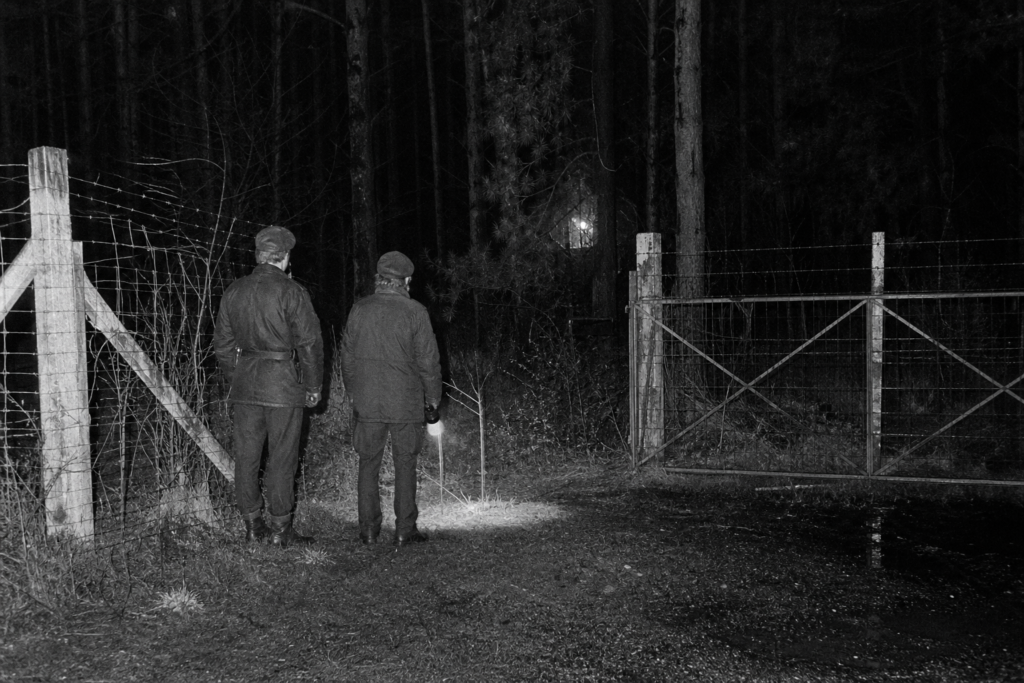
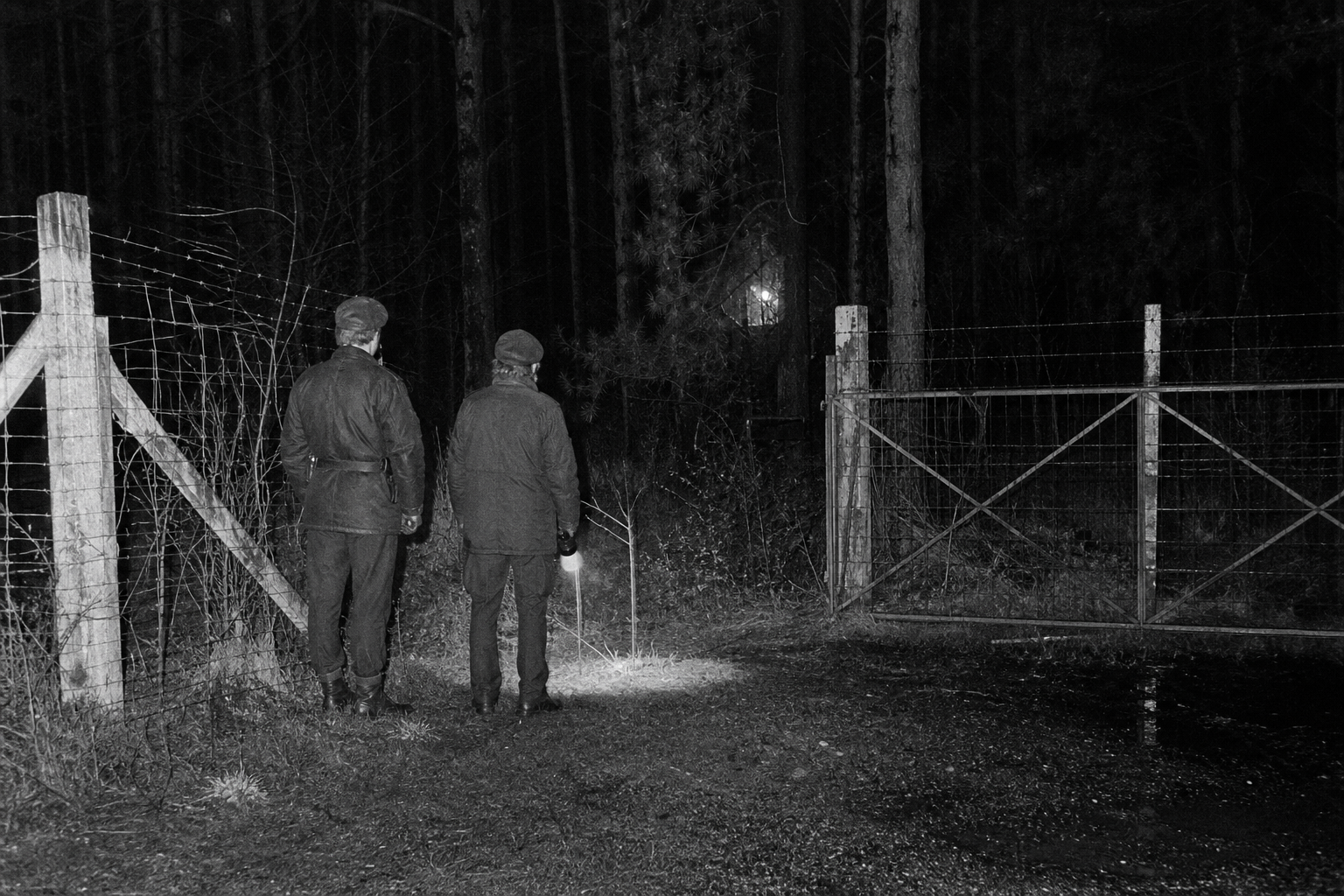
The Rendlesham Forest incident is often called Britain’s Roswell, a shorthand that captures its cultural afterlife more than it describes the evidence. The story centres on reports made during December 1980 near RAF Woodbridge and RAF Bentwaters in Suffolk: lights in and above the forest, a perceived object, patrols sent out at night, and an episode that later acquired far more elaborate versions.
This article begins where the legend is least comfortable: with the surviving record. Contemporaneous material, most notably Lieutenant Colonel Charles Halt’s January 1981 memorandum, the field audio associated with his excursion, and official correspondence, records that military personnel reported unusual observations. It does not, by itself, establish what those observations were, still less an extraterrestrial craft.
That distinction matters. A report is evidence that someone observed or believed something; it is not automatic proof of the interpretation later attached to it. The pages ahead separate the reported nights, weigh early testimony against later recollection, and test proposed explanations, including the lighthouse, against the details they can and cannot account for. The result is neither a debunking exercise nor a promise of a final answer, but a fact-led account of what the documents actually support.
Rendlesham Forest 1980: Why the ‘UK Roswell’ Label Needs Scrutiny
Reports first drew attention to the woodland beyond Woodbridge’s East Gate in late December 1980, with RAF Bentwaters, Rendlesham Forest and nearby Suffolk roads forming the setting for subsequent patrols. The later “UK Roswell” label imports associations absent from the surviving record: a recovered alien craft, a crash-retrieval operation, bodies, or a demonstrated state cover-up.
The nickname endures because the episode involves serving U.S. Air Force personnel, two military installations, nighttime lights and a reported object in the forest. Those are concrete ingredients for a powerful cultural comparison, but they do not convert reported observations into proof that a retrieval occurred or that one interpretation has been established.
The account that follows ranks material by its proximity to December 1980. Contemporaneous duty records, Lieutenant Colonel Charles Halt’s January 1981 memorandum, the audio recorded during Halt’s later forest excursion and Ministry of Defence files provide the starting point. Early witness accounts add context; later interviews, affidavits, books and documentaries require closer scrutiny when they introduce dramatic details absent from the earlier record. Rendlesham Forest 1980 is compelling precisely because these categories do not always align.
The Three Main Nights: What Was Reported, and When
The chronology is best treated as three linked but distinct episodes, with midnight crossings and later recollection responsible for much of the confusion. The first began in the early hours after Christmas Day, usually dated 26–27 December, when security personnel near RAF Woodbridge’s East Gate reported lights beyond the perimeter. Jim Penniston and John Burroughs are consistently associated with the patrol into the forest; Ed Cabansag is also named in early accounts. The surviving record establishes reports of unusual lights and a search outside the gate. It does not, by itself, preserve a contemporaneous detailed description of a solid, landed craft.
Later testimony supplies the more familiar first-night imagery: a triangular object, coloured lights, close approach, and markings. Those details may reflect genuine recollection, but they must be kept separate from what was written down at the time. The important distinction is between personnel reporting lights or an apparent object in darkness and a later, highly specific account of physical contact with a vehicle. Treating both as though they entered the record on the same night creates a false continuity.
A further set of reports is placed on the following night, 27–28 December. Witnesses recalled renewed lights in the woods and a return to the area, but the surviving contemporaneous trail is thinner and the order of individual sightings is disputed. This is the least securely reconstructed portion of the Rendlesham Forest incident: it connects the first patrol to the later command-level response, yet it should not be inflated into a single uninterrupted multi-night encounter.
The clearest separately documented excursion occurred on the night of 28 December into 29 December, when Deputy Base Commander Lieutenant Colonel Charles Halt led personnel into the forest. His January 1981 memorandum and the field recording made during the patrol record observations of lights, including a flashing light and later lights in the sky. They show that Halt and his party reported an unusual experience; they do not independently verify every detail attributed to the earlier patrols. The Rendlesham Forest incident therefore has a sequence, not one uniform event: initial gate-area reports, a less certain intervening night, and Halt’s later patrol responding to the earlier accounts.
The Core Primary Record: The Halt Memo, Tape, and Official Files
The key document is Lieutenant Colonel Charles Halt’s memorandum of 13 January 1981, headed “Unexplained Lights” and sent to the Ministry of Defence. Its prose is notably restrained. The Charles Halt memo records that he led a party to the earlier reported site, where personnel found three ground depressions in a triangular arrangement and took radiation readings. It also recounts reports of a “strange glowing object” from the earlier episode, then describes lights seen during Halt’s own patrol. The memorandum preserves observations and reported information; it does not declare that a craft landed, identify a source for the lights, or propose an extraterrestrial cause.
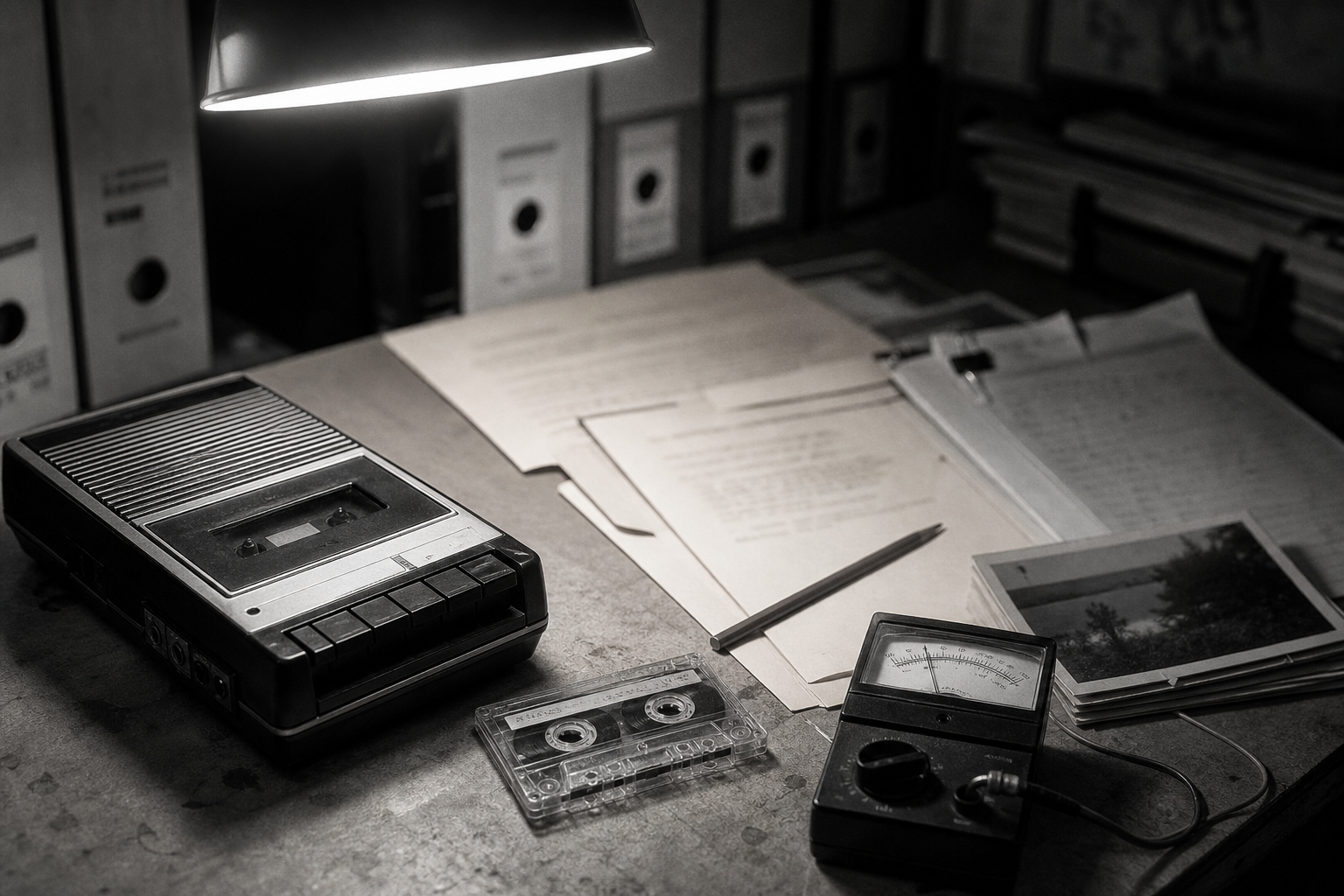
That distinction matters within the memo itself. Halt was directly involved in the later excursion, but he was relaying other men’s accounts when summarising the first report. Even the physical material is limited in what it can demonstrate: impressions in the ground and readings from a survey meter document that something was noticed and measured, not what made the marks or whether a measurement had unusual significance. The memo’s phrase “unexplained lights” is a subject line, not an official finding that the phenomenon was beyond ordinary explanation.
The contemporaneous Charles Halt audio recording is more revealing precisely because it is less polished. Voices describe a flashing red light, changing positions and apparent movement; Halt gives instructions, checks directions and seeks readings while the party tries to make sense of what it is seeing. The recording captures uncertainty in real time, including changing descriptions rather than a settled account of one clearly observed object. It is therefore strong evidence that a patrol encountered lights it found puzzling, but weak evidence for later claims that supply precise shape, occupants, communications or a confirmed landing.
Released Ministry of Defence correspondence adds an institutional layer, not a solution. The files show that the report from RAF Bentwaters reached officials and that the Ministry judged it to have no significance for national defence. That conclusion explains the limited operational response: it is an assessment of defence relevance, not a forensic determination of the lights’ identity. Taken together, these Rendlesham Forest primary documents establish a recorded military report and an unresolved set of observations; the more elaborate story rests on material outside their narrow contemporary record.
Witness Testimony: What Early Accounts Support, and What Came Later
Testimony is most useful when its date and form remain visible. A duty statement or near-event memorandum fixes what a witness was prepared to put on record at the time; a later affidavit preserves a sworn recollection but may contain details that were not recorded earlier; interviews, books and documentaries can add context while giving memory, repetition and audience expectations more room to shape the account.
Jim Penniston and John Burroughs consistently place themselves on the initial patrol beyond East Gate, and their later accounts agree that they encountered unusual lights in the woods. Their more developed descriptions, especially Penniston’s close-range triangular craft, surface symbols and subsequent claims of binary information or telepathic communication, belong to later testimony, not to the narrow contemporary record reviewed above. That does not establish bad faith; it establishes a crucial evidential boundary. Rendlesham Forest witness testimony can preserve an experience without demonstrating every element added decades later.
Halt occupies a different position. His January 1981 memorandum and the field tape make his account of the later patrol contemporaneous evidence, while his later interviews are retrospective interpretation of it. The tape does not supply the settled close encounter, named officials, missing-time episode or communications sometimes attached to the wider story. Where later narration goes beyond what Halt recorded or said into the recorder that night, the addition requires independent support.
Larry Warren’s accounts illustrate the same distinction more sharply. His later interviews and the book Left at East Gate, written with Peter Robbins, describe an elaborate event involving a close-range craft and senior personnel. Those claims are important to the legend’s development, but they are not corroborated by Halt’s memorandum or the surviving audio record, and their chronology does not simply map onto the documented patrol.
The sound method is therefore comparative rather than dismissive: retain the shared core, personnel reported lights and made forest excursions, while treating divergences over dates, locations, object detail and later extraordinary additions as unresolved testimony, not established history.
Lighthouse, Stars, and Other Explanations: What They Explain, and What They Do Not
The lighthouse hypothesis is a test of a particular kind of report: whether a distant, regularly flashing beacon, viewed through intervening trees and from changing positions, could appear as a moving or intermittently obscured light. It is strongest where an observation was distant, low on the horizon, repeatedly visible in a broadly consistent direction, and described chiefly by colour or blinking. Those conditions can make a fixed light seem to shift as a patrol changes course or branches block and reveal it.
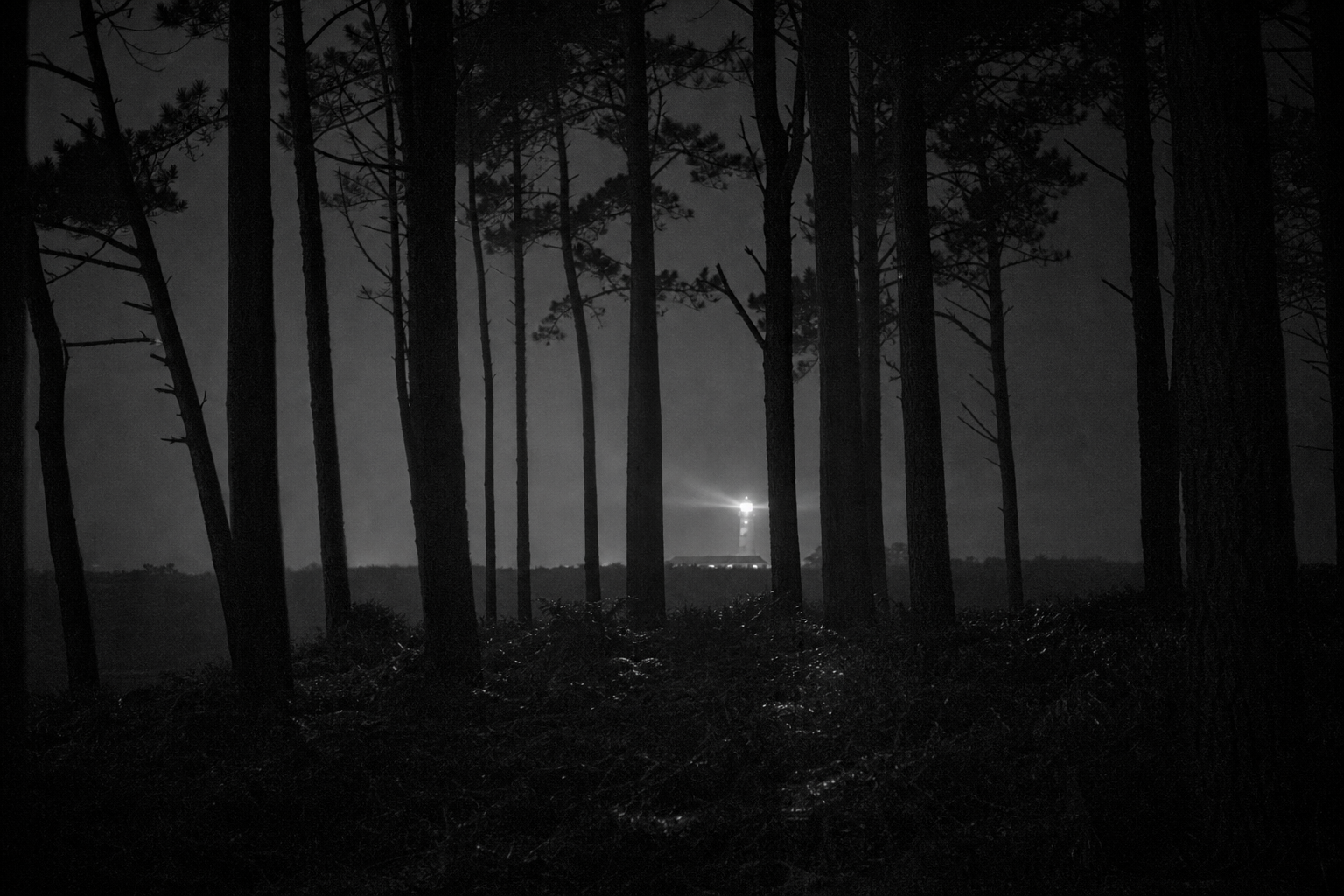
That fit is narrower than a general solution. A fixed beacon does not by itself account for every reported direction, every claimed change in distance, or a witness’s impression of a light within the woods. The patrol route, exact viewing points and timing of each observation are not preserved with enough precision to match all reports against a single line of sight. The lighthouse hypothesis therefore offers a plausible explanation for some distant-light observations, not a documentary finding that it explains the entire Rendlesham Forest UFO narrative.
Bright celestial objects present a similar issue. On the Halt recording, participants identify a light as possibly celestial at one point, while elsewhere they describe lights appearing to move or divide. Stars and planets can be misread near a wooded horizon, particularly when observers are moving, using binoculars, or comparing them with nearer lights; that mechanism does not establish that every reported light was a star.
The ground impressions and radiation readings likewise resist dramatic conclusions. Depressions in forest soil, disturbed vegetation and uneven background measurements can have ordinary causes, including animal activity and prior human traffic, but the surviving material does not provide the controlled measurements, photographs and site documentation needed to identify a cause securely. The careful conclusion is mixed: familiar lights and perception may explain part of the episode; conflicting directions, times and recollections prevent any one explanation from being demonstrated for all of it.
Did the Ministry of Defence Investigate, or Cover Up, the Case?
A finding of “no significance to national defence” is a triage judgment, not a verdict on what every observer saw. It means the UK Ministry of Defence did not identify, from the material passed to it, an apparent hostile intrusion, threat to British security, or defence matter requiring a wider operational investigation. That explains why the official response could be limited even though the reports were taken seriously enough to be recorded and forwarded.
The released file trail supports that narrower account. Halt’s 13 January 1981 memorandum was received and handled within the Ministry’s normal channels; it was not ignored or left wholly outside official recordkeeping. Routine handling, however, is different from a dedicated scientific inquiry. A substantive investigation would ordinarily leave evidence of assigned investigators, defined questions, collected physical material, interviews, or a formal analytical conclusion. The available Rendlesham material does not demonstrate such a programme.
Classification alone would not establish a government UFO cover-up: military correspondence can be restricted because it concerns personnel, bases, procedures, or allied activity, without concealing an extraterrestrial finding. Conversely, the Ministry’s limited assessment does not prove that every light had an ordinary source. Claims that additional decisive files exist need identifiable records, provenance, and a clear connection to the December 1980 reports, not inference from absence. Modern UFO disclosure debates add no independent evidence about this case; the released Rendlesham papers remain the relevant test.
What Rendlesham Proves, What It Does Not, and Why the Legend Endures
The surviving archive has an asymmetry that the legend tends to erase: it records reports and reactions more securely than it identifies their cause. The strongest material is the near-event record, duty reporting, Charles Halt’s 13 January 1981 memorandum, and the audio made during his forest patrol, followed by Ministry of Defence correspondence showing how the report was handled. Later interviews, affidavits, books and films can illuminate personal recollection, but they carry less weight when they add details absent from the earlier record.
That hierarchy supports a limited but important conclusion. U.S. personnel near RAF Woodbridge reported unusual lights, made repeated excursions beyond the perimeter, and, in Halt’s party, recorded observations that participants could not immediately identify. It does not demonstrate an alien vehicle, non-human intelligence, a crash retrieval, or a coordinated official concealment. Nor does the absence of a single conclusive ordinary explanation convert uncertainty into proof of an extraordinary one.
The “UK Roswell” label endures because the case combines a military setting, darkness, fragmentary records and vivid later testimony, conditions under which reported lights can become a landed craft, and limited official handling can become a cover-up. It remains compelling precisely as a study in how evidence, memory and retelling interact. Documented reports are not the same as a demonstrated explanation; uncertainty is not evidence for a preferred extraordinary claim.
Rendlesham’s Evidence Is Stronger Than the Myth, and Less Conclusive Than the Claims
The decisive discipline is to keep each record in its own evidentiary lane. Halt’s January 1981 memorandum preserves an officer’s formal account and reported observations; the field tape captures an unfolding patrol before a polished narrative could form; released Ministry of Defence files show institutional handling. None performs the work of the others. Together, they establish that reports were made and taken seriously, not what produced every light or impression.
Chronology changes the weight of a claim. An account tied to the East Gate patrol or Halt’s later 28–29 December excursion can be compared with records made near the time. A detail introduced years later may still be sincerely remembered, but it cannot retrospectively become a contemporaneous fact merely because it is vivid or repeated.
Conventional explanations have real explanatory force for some distant, intermittent lights, while the surviving material does not settle every observation or reconcile every witness account. That mixed result is less dramatic than a single answer, but more faithful to the record. The Rendlesham Forest incident remains compelling not as proof of an alien visitation or a proven cover-up, but as an unusually well-preserved example of how military reports, uncertainty and later storytelling can diverge.
Frequently Asked Questions
-
What happened in Rendlesham Forest in December 1980?
U.S. Air Force personnel near RAF Woodbridge reported unusual lights beyond the East Gate during 26 to 27 December 1980. Further reports followed, including Lieutenant Colonel Charles Halt’s documented forest patrol on 28 to 29 December.
-
Why is Rendlesham Forest called the UK’s Roswell?
The nickname comes from reports involving U.S. military personnel, air bases, nighttime lights and a perceived object in the forest. Unlike the Roswell legend, the surviving Rendlesham record does not establish a recovered craft, alien bodies or a crash-retrieval operation.
-
What does the Charles Halt memo actually say?
Halt’s 13 January 1981 memorandum, titled “Unexplained Lights,” records a forest patrol, three triangularly arranged ground depressions, radiation readings and lights seen by personnel. It does not identify an alien craft, confirm a landing or state that the lights had an extraterrestrial source.
-
Is there an original recording of the Rendlesham Forest incident?
Yes. A field audio recording from Halt’s 28 to 29 December forest patrol captures personnel describing flashing and apparently moving lights, checking directions and taking readings. The recording documents uncertainty during the event, not a confirmed close encounter with a physical craft.
-
How should you evaluate lighthouse and alien-craft claims about Rendlesham Forest?
Give the greatest weight to near-event records such as Halt’s January 1981 memo, the patrol audio and Ministry of Defence correspondence. A distant flashing lighthouse can plausibly explain some low, intermittent lights seen through trees, while no primary document proves an alien vehicle or a government cover-up.