Jim Penniston: Key Witness in the 1980 Rendlesham Forest Incident Near RAF Woodbridge/Bentwaters
Examine Jim Penniston Rendlesham Forest incident testimony, records, later claims, and what evidence supports about the 1980 case.
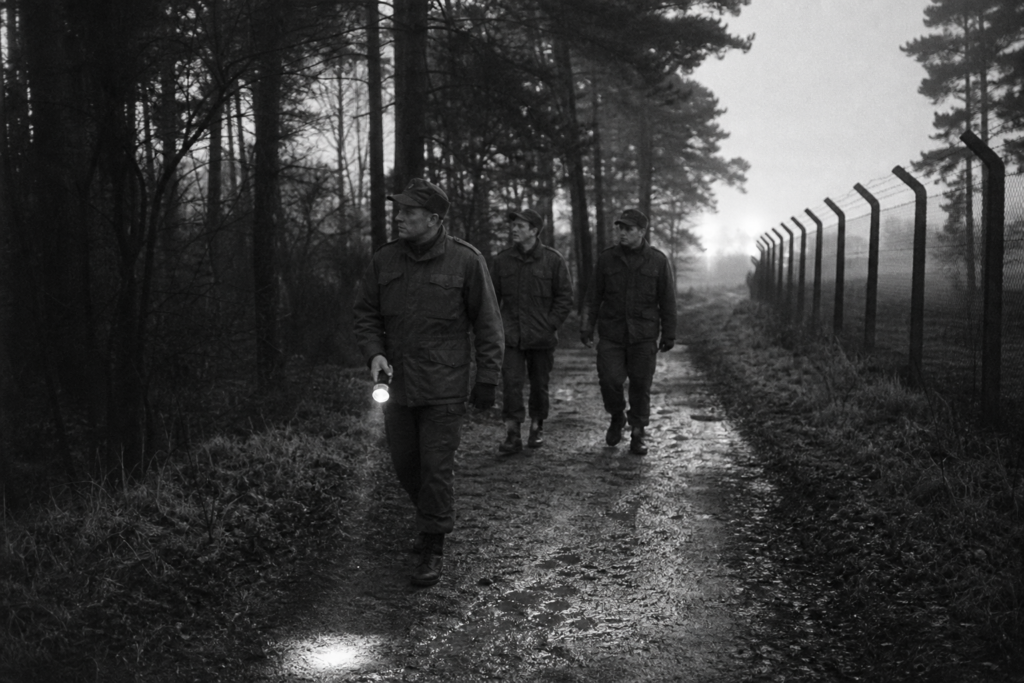
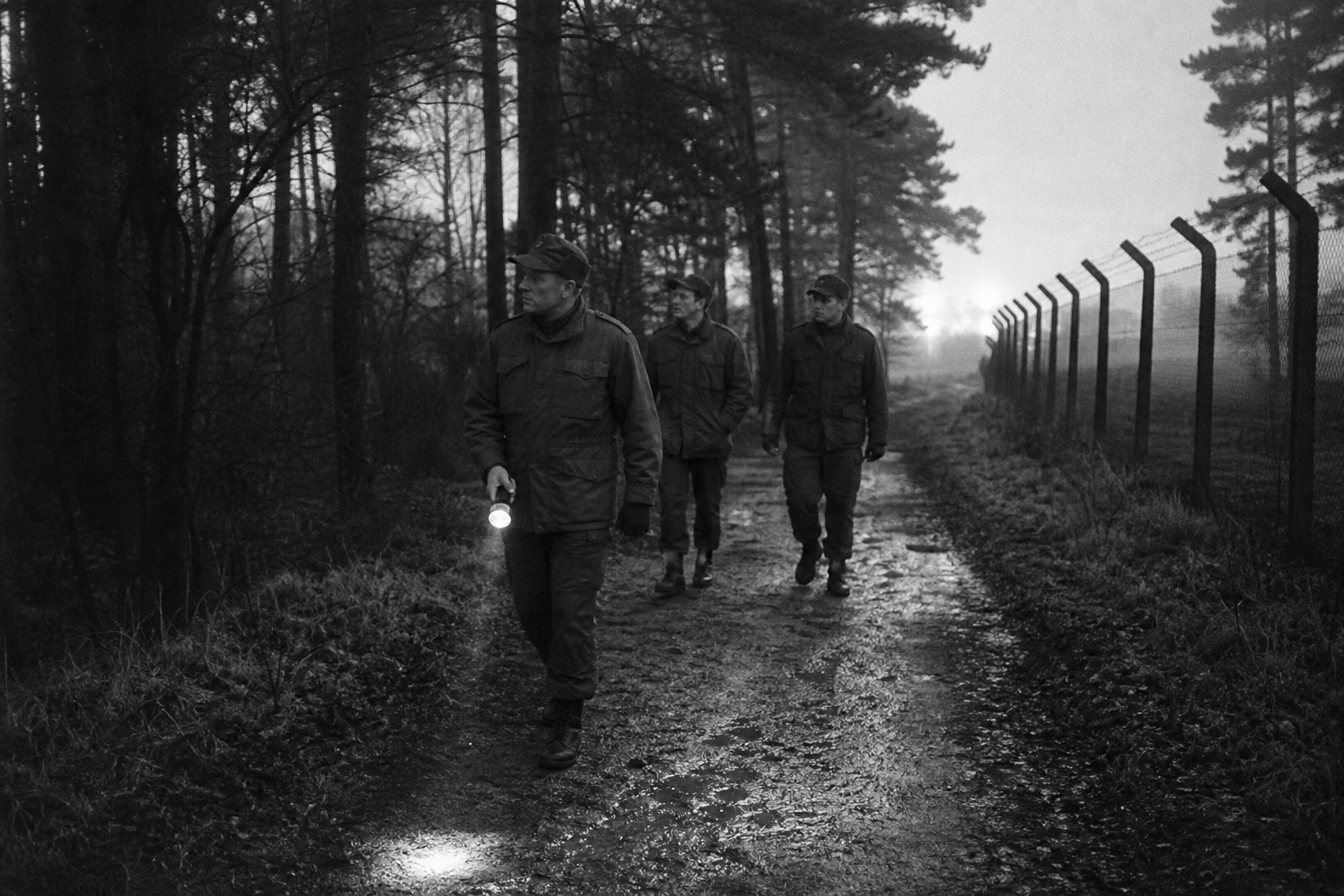
The first evidentiary checkpoint is Penniston’s role on the night in question: as a U.S. Air Force security policeman, he was among the personnel sent toward reported lights outside the RAF Woodbridge perimeter in December 1980. That proximity makes the Jim Penniston Rendlesham Forest incident account central, but it does not make every later detail equally well established.
This profile separates three layers of evidence: what Penniston has reported from personal experience; what records created near the time can independently anchor; and what entered his story in later recollections, including the much-debated binary-code claim. The distinction matters. A witness account can be sincere and significant while still containing elements that cannot be corroborated from surviving contemporary material.
Penniston’s testimony also has to be read beside that of fellow security policeman John Burroughs, who described the first-night response, and Lt. Col. Charles Halt, whose memorandum and audio record concern a later episode. Their accounts overlap on reported lights and military activity, yet they are not interchangeable narratives. The evidence is strongest where timing, roles, and documents align; it is less conclusive where memories diverge or details emerged years afterward.
Jim Penniston’s Place in the Rendlesham Forest Record
Late December 1980 places the reported activity in and around Rendlesham Forest incident, the wooded area between RAF Woodbridge and RAF Bentwaters in Suffolk, England. The two nearby installations were used by the U.S. Air Force’s 81st Tactical Fighter Wing: Woodbridge bordered the forest on its eastern side, while Bentwaters lay several miles to the west. “Rendlesham Forest incident” therefore groups reports from more than one night and location, rather than identifying one settled event. Penniston’s testimony concerns the initial reported response near Woodbridge on December 26; Lt. Col. Charles Halt’s memorandum and taped observations address the distinct December 28–29 episode.
Penniston is central because he was a United States Air Force security policeman assigned to the response after lights were reported beyond RAF Woodbridge’s East Gate. Fellow security policeman John Burroughs has likewise described entering the forest during that initial episode. Their relevance is specific: both men identify themselves as on-duty participants sent from the base perimeter, rather than later civilian investigators reconstructing events from interviews.
That claimed firsthand presence makes Penniston’s recollections important testimony, but it does not determine an explanation. His account is evidence of what he has said he saw, heard, and did during the December 1980 response; it is not official confirmation of an extraterrestrial craft, non-human intelligence, or an institutional cover-up. The firmer historical anchors are the Suffolk base setting, the separate late-December episodes, and the involvement of security personnel. The identity and origin of the reported lights or object remain disputed.
The Base Context and the First-Night Timeline
The setting was a U.S. Air Force installation complex in Suffolk: RAF Woodbridge and nearby RAF Bentwaters were associated with the 81st Tactical Fighter Wing. Security police were responsible for protecting the bases’ perimeter, controlling access, and responding when personnel reported a possible intrusion or other unusual activity beyond secured ground. That duty helps explain why a report of lights outside Woodbridge’s East Gate drew an on-the-ground response rather than being treated simply as a distant sighting.
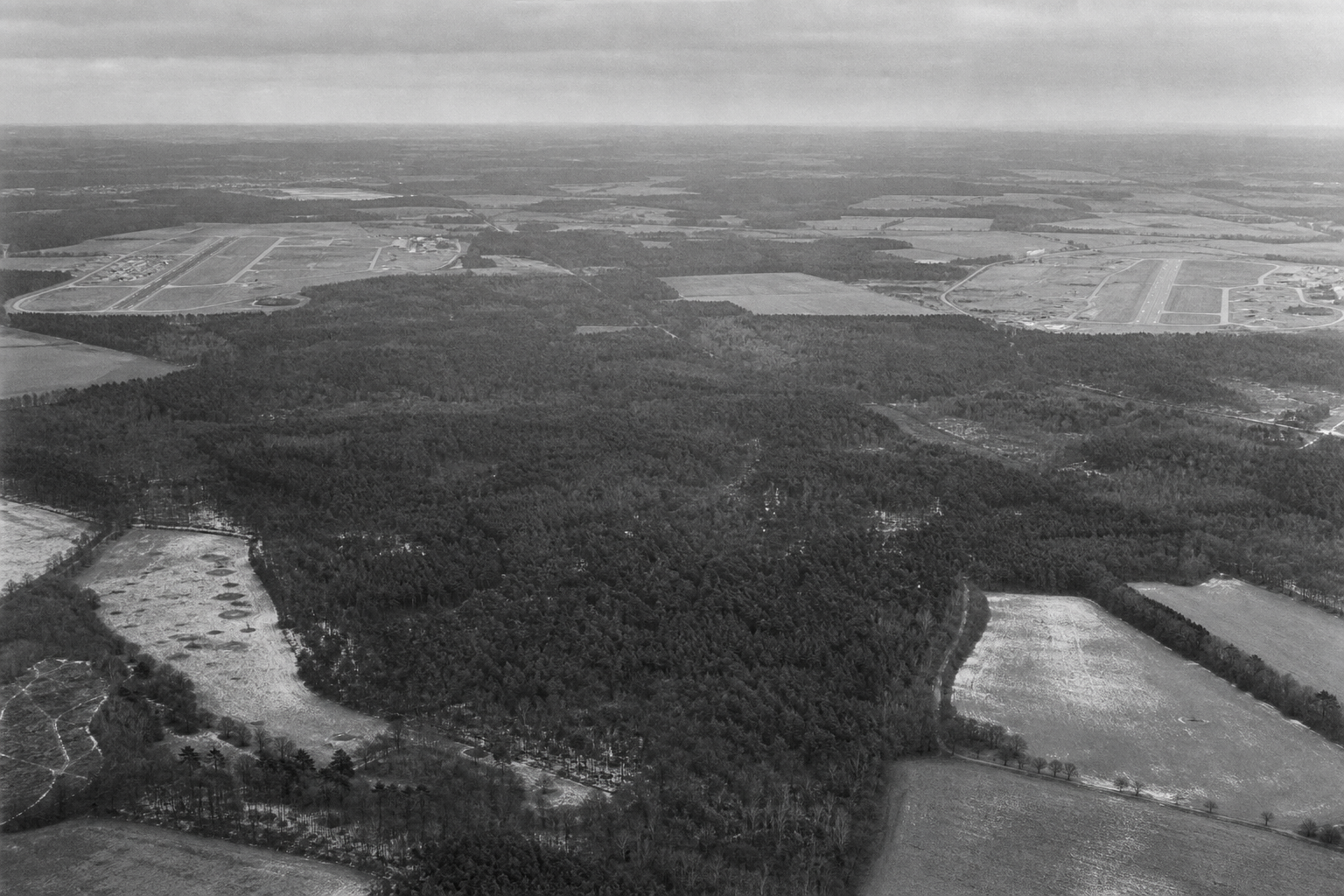
The initial episode is generally placed in the early hours of December 26, 1980. Penniston and fellow security policeman John Burroughs later described being sent toward the wooded area after unusual lights were reported near the perimeter. In their accounts, the response moved from a base-security matter, determining whether something was present outside the fence, to an encounter they regarded as unexplained.
That chronology needs careful handling. Later reconstructions differ over the precise time of the original report, who first saw what, and the order in which individuals joined the search. The broad distinction is firmer than the minute-by-minute sequence: Penniston’s account concerns the first-night activity associated with December 26, whereas Lt. Col. Charles Halt’s better-known recorded observations concern a separate, later outing on December 28. Treating those as one continuous event obscures what each witness actually claimed to have experienced.
What Penniston Reported Seeing in the Forest
In Penniston’s recollection, the response did not remain a view of distant lights. He described lights in the trees that appeared to move or change position as the patrol made its way through the forest, an element broadly consistent with the first-night accounts associated with John Burroughs. That overlap supports the limited point that the men reported pursuing an unusual visual stimulus; it does not identify what produced it.
Penniston has also said that, at closer range, he saw a solid, structured object rather than merely a light. In later descriptions of his Jim Penniston UFO encounter, he characterized it as a small craft-like form, often described as triangular, with a dark surface and illuminated areas. A “structured object” is an observational description: it conveys that a witness perceived defined shape and material boundaries. It is not, by itself, evidence of an aircraft, a vehicle, or extraterrestrial technology.
The most consequential part of Penniston’s personal account is his assertion that he approached the object and touched its exterior. He has further described markings or symbols on its surface. Those particulars make his testimony distinctive among Rendlesham Forest UFO incident witness accounts, but they require a different evidentiary weight from the shared report of lights in the woods: they are Penniston’s later, detailed recollections, not details independently established by the initial response itself.
That distinction is essential when assessing UAP sightings. Agreement between witnesses about lights and movement can show a common reported experience, while a close encounter, tactile contact, precise geometry, and surface markings demand separate support. Penniston’s account is therefore important as firsthand testimony, but the reported object remains unidentified rather than confirmed as a craft of any particular origin.
What Was Documented at the Time, and What Was Not
The most useful distinction is between a record that an unusual event was reported and a record that proves the reported object’s identity. An official memorandum can preserve dates, personnel activity, observations, and the fact that an inquiry occurred; it does not automatically authenticate every detail later associated with the episode.
The principal surviving military document is the Unexplained Lights memorandum written by Lt. Col. Charles Halt on January 13, 1981. Often called the Charles Halt memo, it summarizes reported lights, a search outside the Woodbridge perimeter, physical marks found in the area, and Halt’s own later investigation. It is a significant contemporaneous record because it was created within weeks by a senior officer. Its scope matters, however: Halt was documenting reports and observations connected with more than one night, not issuing a finding that an extraordinary craft had been identified.
The memorandum’s connection to the first-night response should not turn it into a contemporaneous written endorsement of Penniston’s full later narrative. It does not establish, as a military finding, that Penniston touched an object, read symbols on it, or determined its construction or origin. Those are more specific elements of his personal testimony, and they must be evaluated alongside initial witness interviews rather than imported into the official record by association.
Contemporaneous records are strongest when they can be tied to a clear author, date, purpose, and chain of custody. Later-released files may still be valuable, particularly when they preserve an earlier document, but release date and creation date are different questions. Equally, an incomplete file or an absent report can show a gap in what is presently available; it cannot, by itself, demonstrate suppression or disprove an encounter.
No contemporaneous written statement by Penniston is established here as a surviving document that records the close-contact details in his own words. That absence does not decide whether he experienced what he later described. It does mean the evidentiary weight rests differently: the official memorandum anchors that personnel reported unusual activity, while Penniston’s most extraordinary particulars remain witness claims rather than contemporaneous military conclusions.
The Binary-Code Claim and the Evolution of Penniston’s Story
The binary element changes the character of the account. Rather than describing something seen in the forest, Penniston later said that the encounter was followed by a message retained in his mind as binary digits, strings of zeros and ones that could be translated into text. The Jim Penniston binary code claim is therefore a retrospective cognitive experience, not a physical trace, recording, or notation made during the December 1980 response.
The surviving early material discussed here does not place binary digits among the initial reports, the Halt memorandum, or any contemporaneous written statement by Penniston. On the available record, a precise first public date and publication for the claim cannot be established in this article. What can be said is that it entered public discussion through later interviews, books, and screen retellings, after the core account of lights, a structured object, and alleged close contact had already become associated with Penniston.
That timing does not demonstrate fabrication. A later recollection can be vivid, meaningful, and sincerely held, particularly when a witness believes an event was unusual or traumatic. But sincerity and evidentiary strength answer different questions. A contemporaneous note containing a sequence of digits would permit comparison of the original sequence, its preservation, and later translations; a recalled sequence reported years afterward cannot provide the same independent test.
Later media can show how Penniston’s narrative developed and how the binary material was interpreted, including within broader alien disclosure discussions. They are weaker evidence for what was communicated in 1980 unless they reproduce an earlier, independently traceable record. The practical takeaway is narrow: treat the binary claim as an important part of Penniston’s later testimony, not as authenticated transmission data or proof of an encounter’s origin.
How Penniston’s Account Compares With Burroughs and Halt
The comparison is strongest when the accounts are kept in their separate timeframes. Penniston and John Burroughs were associated with the initial, early-hours response of December 26: both described pursuing unusual lights in Rendlesham Forest. That shared element supports a limited point of convergence, a patrol encountered something they regarded as anomalous enough to investigate, but it does not make their later descriptions identical.
Penniston’s account developed into the more detailed close-encounter narrative, including a structured object and alleged physical contact. Burroughs has described unusual lights and participation in the first-night search, but his testimony does not independently establish every feature of Penniston’s object description or later binary-code recollection. The useful distinction is between overlap about a reported visual episode and corroboration of a particular close-contact claim.
Lt. Col. Charles Halt belongs to a different reported event: the patrol on December 28, involving different personnel and a later sequence of observations. His memorandum and the Halt tape recording provide contemporaneous anchors for that patrol’s reported lights, movements, and activity in and beyond the forest. They are stronger evidence that Halt’s group made and recorded observations than they are proof that the group saw the same object Penniston later described two nights earlier; this later patrol remains part of the wider RAF Bentwaters record.
Radiation measurements likewise have a confined value. They record readings taken at locations connected to the inquiry, not an identified source, date of deposition, or causal link to an unconventional craft. The lighthouse explanation is similarly limited: it may account for some distant, intermittent lights reported in the area, but it cannot by itself resolve every witness perception, location, or claimed physical effect. Treating these strands separately preserves both the real overlap and the record’s unresolved differences.
Why Penniston’s Testimony Still Matters, and What Remains Unresolved
The practical checkpoint for readers following UFO disclosure or UAP news is whether a claim is independently anchored or rests on later recollection. Penniston was associated with the early-hours response outside RAF Woodbridge on December 26, 1980, and John Burroughs also described pursuing lights that night. Charles Halt’s December 28–29 memorandum and audio recording instead anchor a separate later patrol. Those materials make Penniston’s testimony historically important evidence of reported military observations, not proof of an object’s nature.
The unresolved questions operate at two levels. The first-night patrol reported lights in Rendlesham Forest, while Penniston later described a structured object and physical contact. Halt’s memorandum records the later patrol’s observations; it does not independently document Penniston’s close-contact account from December 26. The binary-digit recollection is more consequential still because it is absent from the contemporaneous materials discussed here and entered Penniston’s public narrative later.
A strong reading of the Jim Penniston Rendlesham Forest incident separates convergence from claimed corroboration. Penniston and Burroughs overlap on a first-night search for unusual lights, but Burroughs does not independently establish every later detail of Penniston’s object description or binary account. “Unidentified” means a demonstrated cause has not been established; it does not turn a disputed observation into evidence for a particular extraordinary cause.
Penniston remains essential because his detailed account is tied to a specific December 1980 response near RAF Woodbridge. Missing first-night records, differing recollections, and the divide between the December 26 and December 28–29 events limit what can responsibly be concluded. Here, uncertainty is a substantive result, not an invitation to fill gaps with speculation.
Assessing Jim Penniston’s Place in the Rendlesham Record
A disciplined assessment gives different weight to different parts of the record. Penniston’s direct participation in the first-night response makes his recollection indispensable testimony about what the patrol believed it was encountering. Shared reports of unusual lights with John Burroughs strengthen that limited point. They do not independently establish Penniston’s later description of a structured object, physical contact, or markings.
The strongest documentary anchors serve a narrower purpose. Charles Halt’s memorandum and recorded observations preserve that personnel reported unusual phenomena during the later December 1980 patrol; they neither document Penniston’s close encounter nor resolve its cause. The chronological separation matters: agreement about a wider sequence of reports is not corroboration of every claimed detail from the first night.
The same standard places the binary-code material in a distinct category. Because it emerged in later accounts rather than in the surviving near-contemporaneous record, it is evidence of Penniston’s subsequent testimony, not independently authenticated evidence of a message received in 1980. Its absence from early material creates uncertainty, though not a basis for declaring what Penniston did or did not experience.
Ultimately, the Jim Penniston Rendlesham Forest incident account is strongest as firsthand witness evidence and weakest where later, exceptional details lack independent support. A sound historical reading preserves both conclusions: take his role seriously, compare claims against chronology and other witnesses, and leave contradictions unresolved where the available record cannot settle them.
Frequently Asked Questions
-
Who is Jim Penniston in the Rendlesham Forest incident?
Jim Penniston was a U.S. Air Force security policeman who responded to reports of lights outside RAF Woodbridge’s East Gate in the early hours of December 26, 1980. His account concerns the first-night forest response, not Lt. Col. Charles Halt’s separate patrol on December 28 to 29.
-
What did Jim Penniston say he saw in Rendlesham Forest?
Penniston said he and fellow security policeman John Burroughs pursued unusual lights in the forest. In later recollections, he described seeing a small, dark, triangular structured object with illuminated areas and markings on its surface.
-
Did Jim Penniston say he touched a UFO at RAF Woodbridge?
Yes. Penniston later said he approached and touched the exterior of the object he reported seeing near RAF Woodbridge, and that he observed symbols or markings on it. No surviving contemporaneous military document establishes the alleged touch, symbols, construction, or origin of the object.
-
What is Jim Penniston’s binary code claim?
Penniston later said his encounter was followed by a sequence of binary digits, zeros and ones, retained in his mind and translated into text. The binary material does not appear in the initial reports, Charles Halt’s January 13, 1981 memorandum, or a surviving contemporaneous written statement by Penniston.
-
How should Jim Penniston’s testimony be compared with John Burroughs and Charles Halt?
Penniston and John Burroughs overlap on the December 26, 1980 first-night search for unusual lights near RAF Woodbridge, but Burroughs does not independently verify every later close-contact or binary claim. Halt’s memorandum and audio record document a separate patrol on December 28 to 29, making them evidence of later reported observations rather than confirmation of Penniston’s claimed object.