UAP Crash Retrieval Claims: What’s Public, What’s Alleged, and What Evidence Would Actually Settle It?
Examine UAP crash retrieval claims, public records and whistleblower allegations, plus the evidence needed to verify recovered technology.
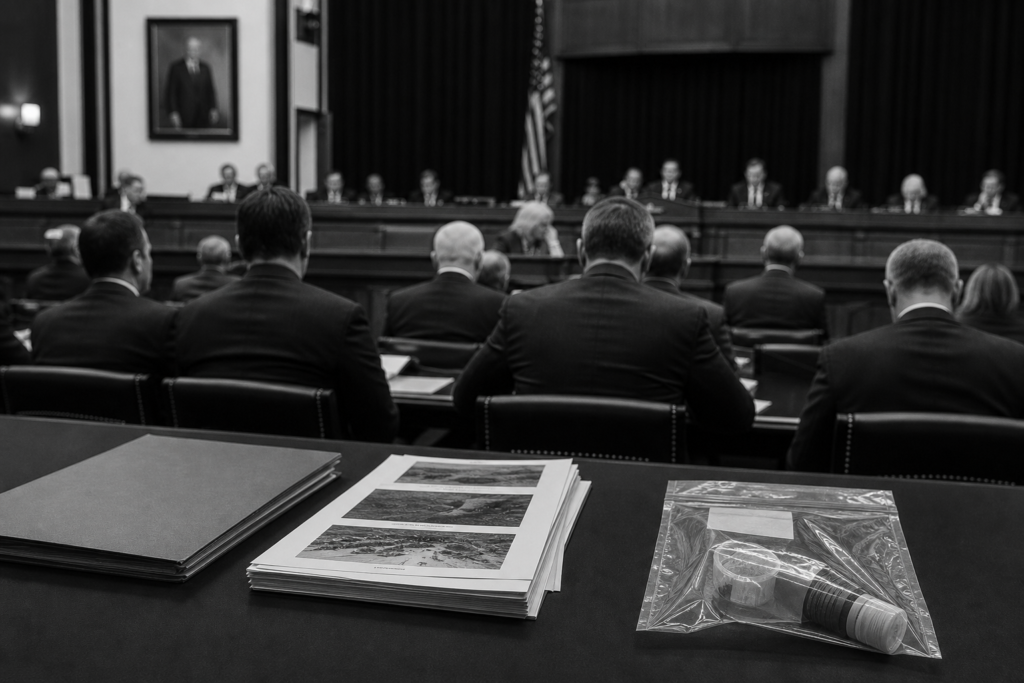
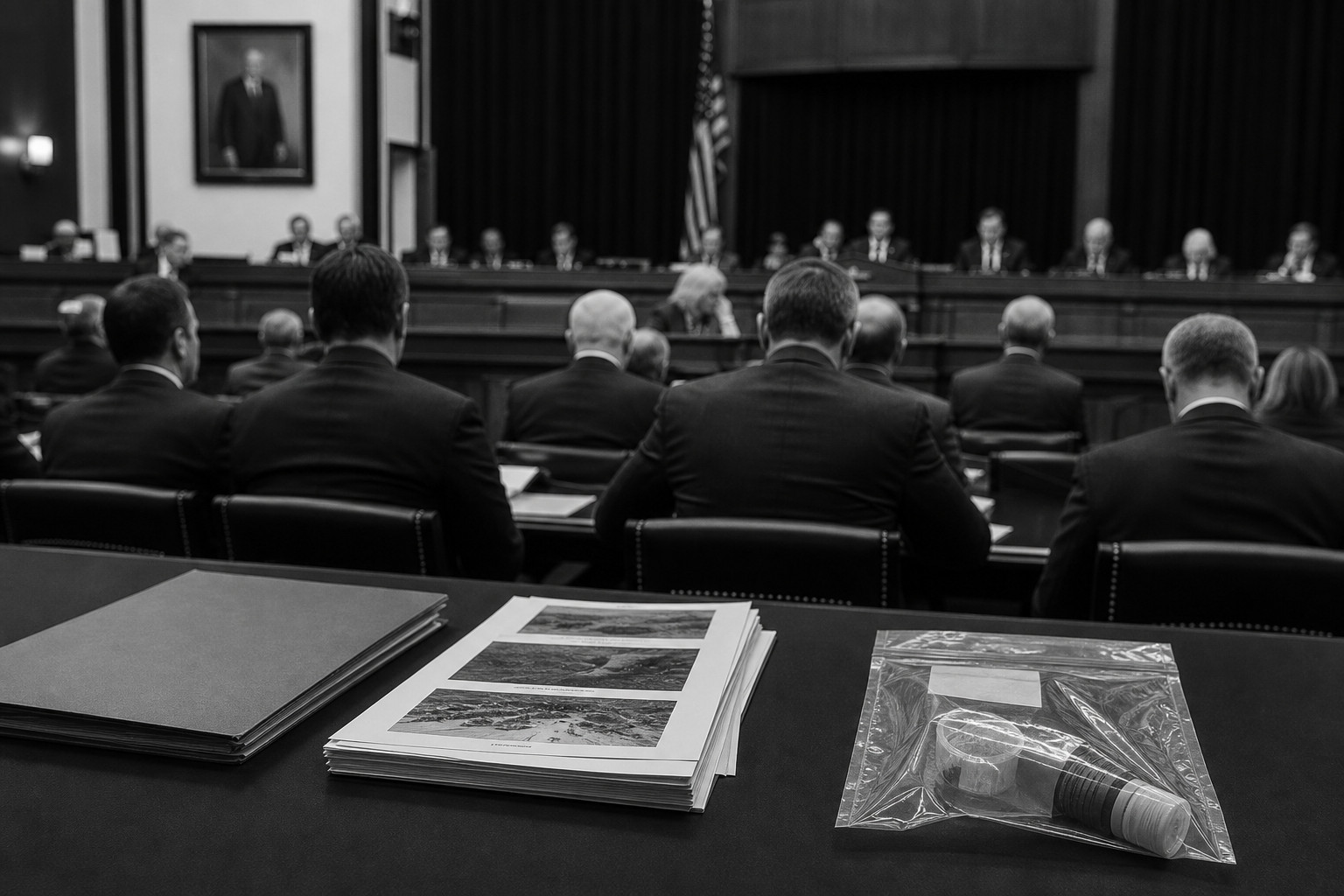
Claims of a UAP crash retrieval program carry extraordinary implications, but the first question is narrower: what has been publicly verified? Publicly available evidence has not established that the United States possesses recovered non-human craft or biologics. That conclusion does not erase the significance of public allegations by former officials, congressional interest, or disputes over access to classified information; it places each in its proper evidentiary category.
This article separates documented government activity from attributed claims and from independently authenticated proof. A sworn witness statement can establish that a person made an allegation under oath; it does not, by itself, establish that the reported event occurred. An official review can report what investigators were able to substantiate within its scope; it is not automatically a complete account of every classified program. And an unusual fragment is not proof of exotic origin unless its provenance, where it came from and who controlled it, is demonstrable.
The practical standard is demanding but clear: credible resolution would require physical material with an unbroken chain of custody, transparent tests that qualified independent laboratories can repeat, methods that exclude contamination and ordinary terrestrial manufacture, corroborating records, and accountable firsthand witnesses whose accounts can be checked. The pages that follow rank the public evidence accordingly: what is documented, what is alleged, what official reviews have found, and what remains unresolved.
The Bottom Line: Serious Claims, No Public Verification Yet
Classification is not a substitute for evidence that outsiders can examine. The Department of Defense and its All-domain Anomaly Resolution Office have not publicly substantiated a program involving recovered non-human technology or biologics. That is an official public finding, not a demonstration that every relevant classified record has been disclosed or that no such program could ever have existed.
Public testimony can be consequential without becoming public proof. In 2023, former intelligence officer David Grusch testified under oath that he had been told of a long-running crash-retrieval effort and of recovered “biologics.” His public account did not provide authenticated material, underlying program records, or a publicly testable firsthand observation. It establishes that a named witness made serious allegations and that Congress heard them; it does not independently establish the allegations themselves.
That gap is why this article uses an evidence ladder. Its lower rungs include reports, rumors, and secondhand assertions; higher rungs include accountable witness testimony and corroborated records; its strongest rung is traceable physical evidence supported by independently repeatable results. A claim can warrant investigation before reaching that standard. It should not be reported as established fact until it does.
In practice, public verification requires evidence available for outside scrutiny: who obtained an item, where it was held, how it was tested, and whether independent investigators can reproduce the result. Classified assertions may raise unresolved oversight questions, but classification cannot itself supply the missing proof. That distinction keeps UAP disclosure focused on evidence rather than inference.
What Public Records and Official Reviews Actually Establish
A public file can show that an institution received reports, opened reviews, preserved records, or briefed oversight bodies. None of those actions identifies the origin of the reported object. A report of unusual performance, an unresolved sensor event, and an authenticated recovered vehicle are different evidentiary categories; treating them as interchangeable is the central analytical error in many crash-retrieval discussions.
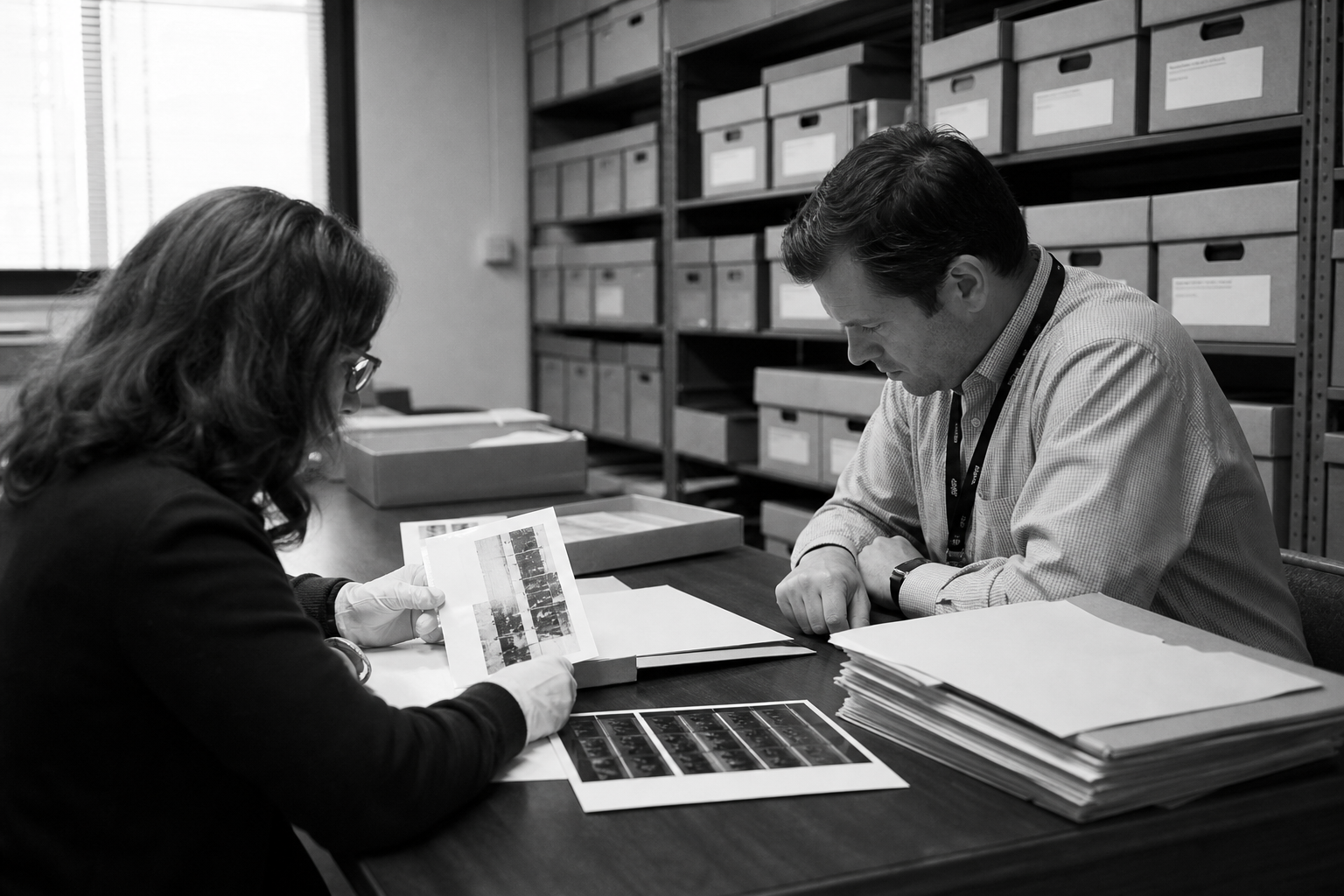
The available institutional record includes Department of Defense UAP reporting processes, AARO reviews, congressional hearing material, and archival activity surrounding UAP-related records. These are documented forms of government attention. They establish that officials have treated some UAP sightings and historical claims as matters requiring collection, assessment, or preservation, not that any reported object was extraordinary in origin.
AARO’s public historical review and finding of no extraterrestrial evidence is best read as an official assessment of the material it reviewed, rather than as a claim to have exhaustively resolved every classified program, lost record, or disputed witness account. Its public conclusions did not substantiate recovered extraterrestrial technology or a secret reverse-engineering program. That scope matters: an institutional finding is stronger than speculation, but it is not a guarantee that every potentially relevant record is public or complete.
Archival requirements likewise change access, not the underlying evidentiary value of an item. A memorandum, photograph, or hearing statement can illuminate what an office recorded or what a witness alleged. It becomes evidence of a recovered non-human craft only if its provenance, authorship, context, and corroboration withstand scrutiny. Public records therefore provide the firmest accessible baseline while leaving clearly defined unresolved questions where records remain unavailable, contested, or insufficiently authenticated.
What Has Been Alleged: Grusch, Other Witnesses, and the Limits of Public Corroboration
David Grusch put the most prominent recent UAP crash-retrieval allegations into a formal congressional setting. In July 2023, he testified under oath that he had been told of a long-running program involving the recovery and analysis of craft of “non-human” origin. His written testimony also alleged that elements of the U.S. government and defense-industrial base possessed recovered material and sought to reverse-engineer it. These are specific UAP crash-retrieval allegations, not public demonstrations that such a program or material exists.
The crucial qualification in David Grusch’s UFO testimony is the basis of knowledge. He told the House Oversight Committee that his claims about recovered vehicles and biologics came from interviews with people he described as having direct knowledge, rather than from his own observation of a recovered craft or body. Sworn testimony creates legal and reputational accountability for the witness, and it gives Congress a basis to investigate. It does not convert reported information into firsthand evidence. A witness who personally handled an identified object, for example, offers a different kind of account from an official relaying what multiple alleged participants told him; both still require records and independently testable corroboration.
Grusch also said he had provided information to the Intelligence Community Inspector General and could supply further details in a classified setting. That distinction matters. Evidence reportedly given to inspectors or congressional members may be relevant to oversight, but readers cannot assess unreleased interviews, documents, or materials for authenticity, context, or alternative explanations. Public reporting on his Inspector General-related complaint establishes that a complaint process existed; it does not publicly disclose underlying evidence or establish the claimed recovery program.
Other former officials have publicly described unusual incidents, alleged hidden information, or urged deeper investigation. Such statements can identify leads and potential witnesses, but they vary sharply in specificity and proximity to the claimed events. The practical question is not how many people repeat a conclusion; it is whether their accounts are independently checkable, firsthand, and matched by contemporaneous records or authenticated material. The public record has not yet supplied that corroborating package for the UAP reverse-engineering claims.
Non-Human Biologics and Recovered Materials: Claims Are Not Authentication
At the hearing, Grusch was asked whether bodies had been recovered. He replied, “Biologics came with some of these recoveries,” and, when asked whether they were human or non-human, said “non-human”, while qualifying that this was the assessment of people with direct knowledge whom he had interviewed. That is an attributed allegation about alleged non-human biologics, not a public presentation of biological specimens, laboratory results, or a firsthand identification by Grusch.
The same distinction applies to purported fragments or engineered materials. An unusual isotope ratio, layered structure, alloy, or manufacturing mark may justify further analysis, but none establishes non-human intelligence by itself. Rare terrestrial materials, industrial processes, sample degradation, instrument error, and contamination can all produce results that initially appear anomalous. “Unusual” describes a finding relative to the comparison material or method used; it does not establish where an object came from or who made it.
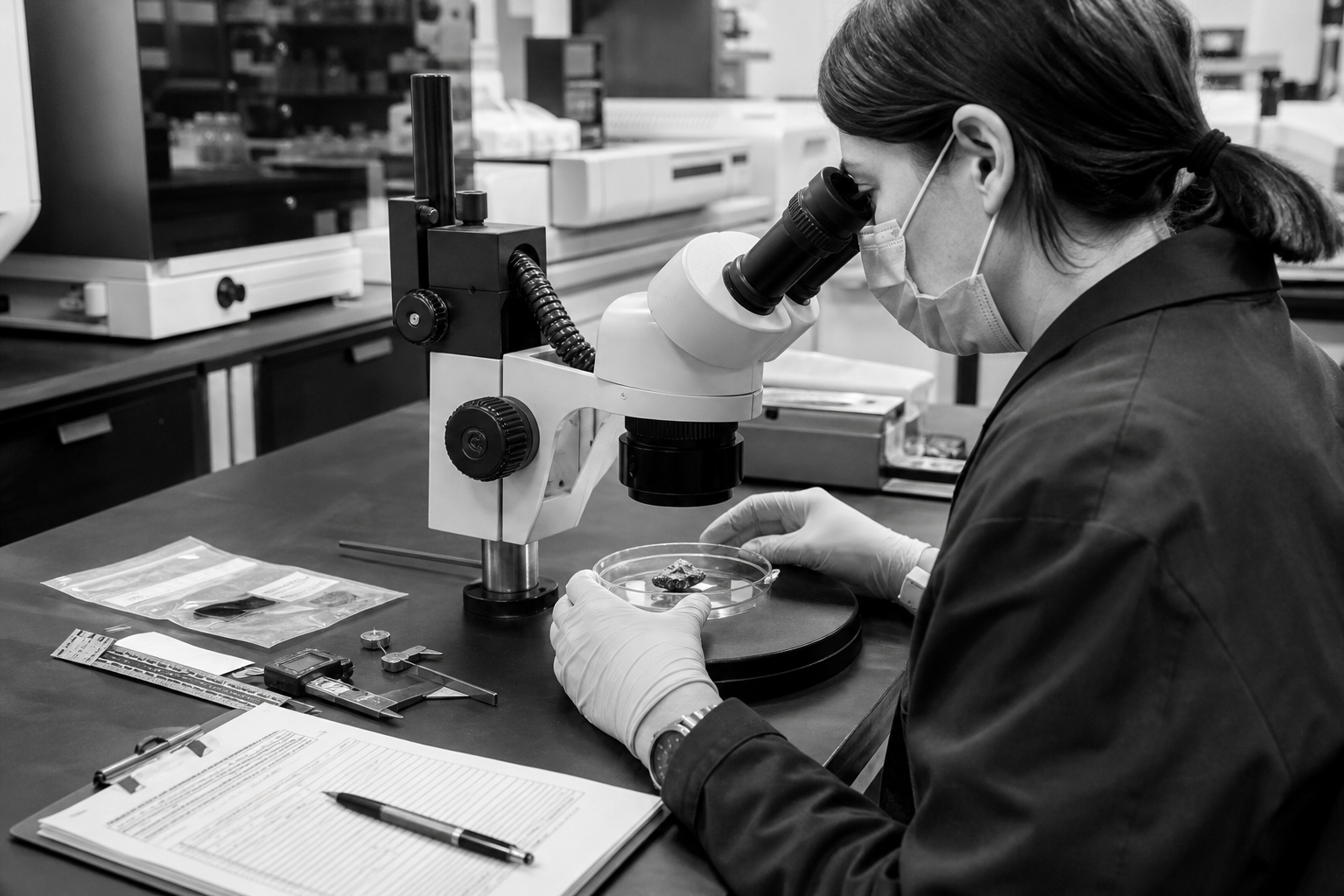
Useful physical evidence begins with provenance: a recorded account of where, when, and by whom a sample was recovered. Its chain of custody must then show each transfer, storage condition, subdivision, and test, so investigators can determine whether the item was substituted, altered, or contaminated. Strong testing would use blinded controls, clean handling, transparent methods, and comparisons against relevant terrestrial materials and manufacturing databases. Multiple qualified laboratories should receive independently sealed portions and reach reproducible results. Without that package, plus records and accountable witnesses that connect the sample to the claimed event, a material’s anomaly remains a lead, not authentication of a recovered non-human craft or organism.
How to Read the Apparent Conflict Between AARO Findings and Whistleblower Claims
The apparent disagreement concerns both conclusions and access to the underlying material. AARO’s published position is an official assessment: in the information it reviewed, it found no verifiable evidence of extraterrestrial activity, off-world technology, or a concealed reverse-engineering program. That finding carries more public evidentiary weight than an unsupported assertion because it identifies an accountable institution’s review outcome; it is not, however, a universal proof that no relevant evidence exists in any compartment.
Whistleblower accounts make the narrower counterclaim that relevant records, witnesses, or materials may sit beyond public view or outside the reviewers’ effective access. In David Grusch’s case, the public record documents allegations based largely on information he said he received from others, not a publicly inspectable craft, specimen, or test result. Classified whistleblower briefings can limit outside assessment, but classified evidence is still a claim until authorized investigators can authenticate and test it. Secrecy alone does not establish a government UFO cover-up.
The unresolved variables are concrete: what offices and programs were accessible; whether compartmented holdings were disclosed; whether witnesses have firsthand, consistent knowledge; whether contemporaneous records corroborate them; and whether any alleged material can be independently examined. A weak signal is a repeated account without records or testable access. A strong signal would be convergent firsthand testimony, authenticated documents, and evidence that qualified investigators can independently scrutinize. Until that transition occurs, the competing positions are not equal: one is a published institutional finding; the other is a serious but unverified allegation about a possible UFO crash retrieval program.
What Congress and Disclosure Proposals Can, and Cannot, Do
Congressional attention can create a path to records and testimony, but it does not convert an allegation into a finding of fact. A hearing is oversight: members can question witnesses and seek briefings, yet testimony remains testimony unless independent evidence corroborates it.
The UAP Disclosure Act proposal refers to a proposed transparency framework, not a blanket declassification order and not a legislative acknowledgment that recovered craft exist. Proposals of this kind can contemplate centralized records, review procedures, deadlines, and controlled release decisions. Their practical effect depends on the precise language that becomes law; provisions left out of final legislation impose no operative requirement.
Records-transfer requirements are narrower than public disclosure. They can require agencies to identify and send relevant material to the National Archives, improving preservation and discoverability. Classification review then determines whether particular records can be released, withheld, or released with redactions. A transferred file may therefore remain nonpublic, and a public file may establish only that an agency created or received it, not that its contents are true.
When a new UAP crash-retrieval headline invokes Congress, use four checkpoints: read the bill or enacted statute itself; distinguish its current enactment status from a proposal; identify the agency action it requires; and examine the records actually released. The strongest development would be inspectable primary material, not a bill’s title, a hearing announcement, or an assertion that disclosure is imminent.
What Evidence Would Credibly Resolve a Crash-Retrieval Claim?
A credible resolution requires evidence that allows outsiders to test the claim rather than rely on an institution’s assurance or a witness’s reputation. No single video establishes provenance, no interview establishes the origin of an object, and no unusual fragment establishes how it was obtained.
- Authenticated primary records: contemporaneous recovery, inventory, transport, security, contracting, and analysis records whose authorship and history can be established. A lone memorandum is weak; records that independently match across offices are far stronger.
- Multiple firsthand witnesses: accountable people who personally handled, observed, or documented the alleged event and can provide dates, locations, names, procedures, and details that records can test. Repeated secondhand accounts do not become firsthand evidence through repetition.
- Corroborated logistics and funding: shipment manifests, facility access logs, procurement records, budget trails, and custody records that align with witness claims. These administrative traces can either support a coherent account or expose mismatches.
- Physical material with provenance: a sample linked through an unbroken chain of custody to its claimed recovery, divided under controlled conditions, and made available to qualified independent laboratories. Blinded replication, transparent methods, contamination controls, and peer-reviewed publication would be essential. An anomalous composition without a known origin remains ambiguous.
A public resolution supporting a UAP crash-retrieval claim would join these lines of evidence and rule out ordinary manufacture, misidentification, substitution, and contamination. A resolution undermining it would be equally informative: authenticated records and repeatable testing could identify conventional sources, while testable witness details could fail against the administrative record. The standard is not certainty by assertion, but evidence capable of independent inspection and correction.
The Evidence Standard Matters More Than the Speculation
The most useful response to a future disclosure is neither instant belief nor reflexive dismissal, but a question: what can independent parties inspect and test? A classified briefing may show that officials are taking a lead seriously, yet it leaves the public unable to assess the underlying claim. A public allegation can identify people, places, and records worth pursuing, but it does not establish that the alleged event occurred.
The present public baseline remains narrow. AARO has reported no verifiable public evidence of a hidden non-human technology program, while whistleblower accounts, including claims concerning materials or biologics, remain unresolved in the public record. That gap can reflect missing access, incomplete evidence, mistaken interpretation, or some combination of those possibilities; it cannot responsibly be filled with inference.
A meaningful disclosure would therefore change the evidentiary picture, not merely add another assertion. Strong authenticated evidence would connect a physical item to a documented recovery, preserve each handoff and storage condition, permit qualified laboratories to test divided samples independently, disclose methods and controls, and produce results others can reproduce. Matching contemporaneous records and accountable firsthand testimony would make that physical finding far more informative. An extraordinary alloy or unexplained observation without provenance would not do the same work.
For readers assessing the next UAP crash-retrieval claim, the decisive distinction is simple: does it provide a testable trail from allegation to material, record, and independently verifiable result? Unanswered questions deserve investigation. Classified claims may justify oversight. Neither warrants being treated as proof until evidence can survive that scrutiny.
Sources
Frequently Asked Questions
-
Is there public evidence of a UAP crash-retrieval program?
No publicly available evidence has established that the United States possesses recovered non-human craft or biologics. The Department of Defense and AARO have not publicly substantiated a recovered non-human technology or secret reverse-engineering program.
-
What did David Grusch say in his UAP testimony?
In July 2023, former intelligence officer David Grusch testified under oath that he had been told of a long-running program recovering and analyzing craft of non-human origin. He said claims about recovered vehicles and biologics came from people he interviewed with alleged direct knowledge, not from his own firsthand observation.
-
What are non-human biologics, and have they been publicly verified?
Non-human biologics refers to alleged biological material associated with purported UAP recoveries. Grusch said this was the assessment of people he interviewed, but no public specimen, laboratory result, or independently authenticated biological evidence has verified the claim.
-
Would an unusual UAP fragment prove non-human intelligence?
No. An unusual isotope ratio, layered structure, alloy, or manufacturing mark can be caused by rare terrestrial materials, industrial processes, contamination, sample degradation, or instrument error, so it does not establish origin by itself.
-
What should I look for before believing a UFO crash-retrieval claim?
Look for a physical sample with an unbroken chain of custody, authenticated recovery and transport records, and multiple accountable firsthand witnesses. Qualified independent laboratories should test sealed sample portions using transparent methods, blinded controls, contamination safeguards, and reproducible results that rule out ordinary terrestrial manufacture.