Corpus Christi Witness Report: Triangle Formation of Lights on January 1, 2020
Examine the Corpus Christi UFO sighting 2020, triangular lights, source evidence, plausible explanations, and what remains unidentified.
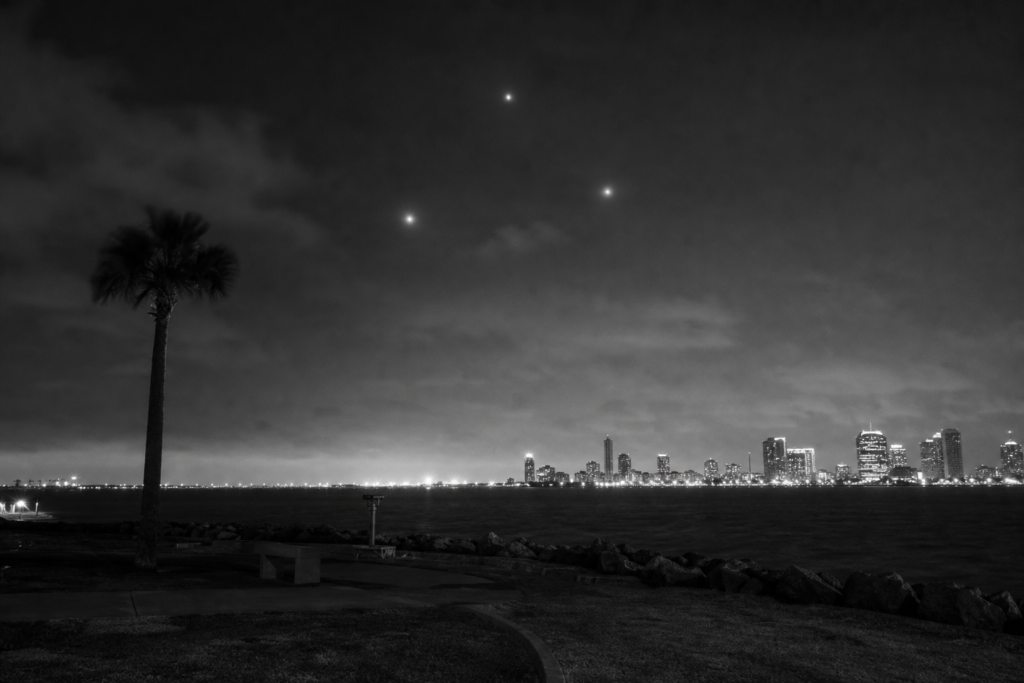
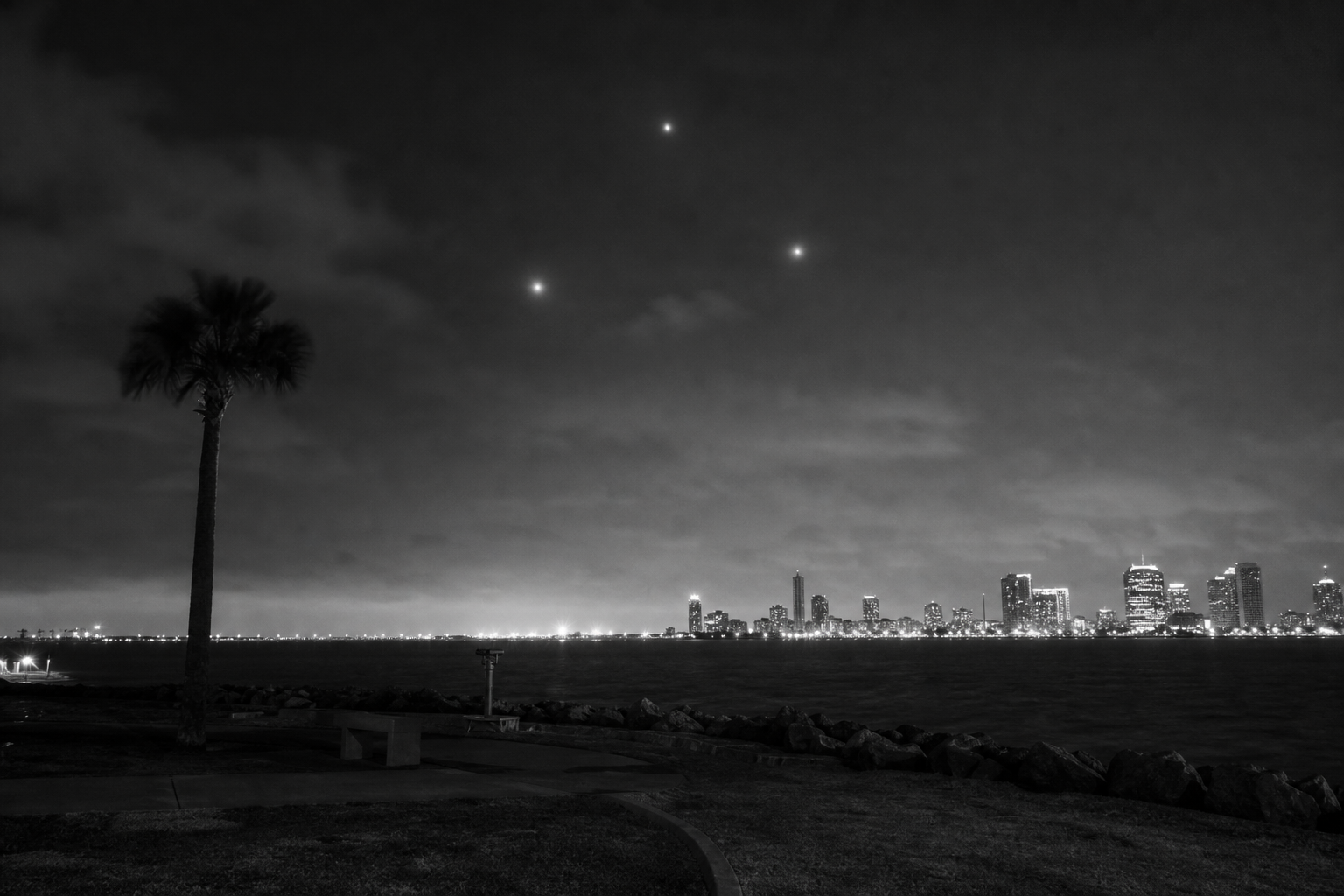
A report of several lights arranged in a triangle and then disappearing into the night over Corpus Christi is naturally arresting. But the description establishes an observation, not a confirmed triangular craft, a UFO, or any particular cause. A triangular-looking pattern can result from separate lights seen at an uncertain distance and angle just as readily as it can suggest a single object; a nighttime account alone cannot settle that distinction.
This examination of the Corpus Christi UFO sighting 2020 begins with the record rather than the label. It will separate attributable original material, if it can be located, from later retellings; identify which details have a time, place, witness, image, or video behind them; and leave unsupported details unclaimed. A low-light recording can preserve brightness and apparent relative position, for example, while still failing to show scale, distance, orientation, or whether the lights shared one physical structure.
The analysis also weighs ordinary possibilities against the reported behavior: aircraft lights, drones, satellites, distant ground lights, and camera effects may each account for some observations but not necessarily all of them. “Disappeared” may mean lights moved behind cloud, turned away, dimmed, or left the observer’s field of view. Where the available information cannot distinguish among those possibilities, that limit is part of the answer, not a reason to supply an extraordinary one.
What Was Reported Over Corpus Christi in 2020
The report at issue describes a nighttime view of multiple lights over Corpus Christi that appeared to occupy the points of a triangle and then ceased to be visible. That is the full observational core to preserve: an apparent pattern, a location, and a reported loss of visibility. It does not establish the lights’ distance, altitude, speed, shared motion, or physical connection.
No earliest attributable witness post, original video, named witness statement, or contemporaneous local report has been supplied in the available case material. As a result, this account cannot yet distinguish whether “2020” refers to the night of observation, the date of an upload, or a date added in later retellings. Nor is there reliable verbatim wording beyond the general description of triangular lights over Corpus Christi.
That gap matters because a formation is an arrangement seen by an observer, whereas a triangular craft would be a conclusion about one solid object. Three separate aircraft, drones, or distant lights can look triangular from one viewpoint; a camera without orientation, scale, metadata, or a wider scene cannot resolve that question. For this Corpus Christi UFO sighting 2020, reported appearance and later interpretation therefore remain separate entries in the case file.
Building the Case File: Time, Place, and Source Record
The usable record begins and ends with a narrow set of fields. “Corpus Christi” identifies the city generally, not a street, neighborhood, shoreline, or other viewing point. Without a viewing position, there is no basis for reconstructing the observer’s horizon, line of sight, nearby lighting, or distance from the lights.
- Date and time: 2020 is the only supplied date reference. No calendar date, clock time, time zone, or platform timestamp has been provided, so the observation cannot be matched to a particular evening.
- Duration and direction: The account gives no duration, compass bearing, travel direction, elevation above the horizon, or description of whether the lights changed spacing. “Disappearing” records the end of visibility, not necessarily a departure.
- Number and behavior: “Multiple” lights and a triangular-looking arrangement are reported, but no reliable count, brightness comparison, color description, flashing pattern, or synchronized movement is available.
- Source record: No original footage, still image, firsthand testimony, named observer, upload link, or independent contemporaneous local coverage is present in the material reviewed here.
That leaves this Corpus Christi UAP sighting 2020 as a lead rather than a developed case file. A firsthand witness report preserves who observed what and when; a repost or summary may preserve only a memorable interpretation. The stronger signal would be an earliest available post with its timestamp and unedited media. A weak signal is a later claim that supplies neither provenance nor observation details. Until either appears, the city, year, nighttime setting, apparent triangular pattern, and loss of visibility are the only defensible entries.
What a Triangular Formation of Lights Does, and Does Not, Establish
Geometry alone cannot supply the missing depth. Three separate points of light can form a triangle on the observer’s two-dimensional field of view even if they are widely separated in distance, moving independently, or positioned at different altitudes. A confirmed triangular object would require additional visual information: a visible body or edges linking the lights, stable spacing during movement, and observations sufficient to show that the lights shared one physical structure. None of those details is available in this record.
Darkness makes apparent spacing especially unreliable. Without landmarks, a viewer cannot judge whether one light is nearby and another far away, and an oblique viewing angle can compress a line or uneven grouping into a triangular-looking pattern. Relative brightness is not a dependable distance measure either; different light types, beam directions, haze, and exposure can make separate sources look comparably bright. The phrase triangular UFO lights therefore describes the reported appearance, not a verified object shape.
If footage were later located, it could preserve the pattern but would not automatically resolve it. Low-light exposure can enlarge bright points, autofocus can shift their apparent sharpness, digital zoom can magnify noise and shake, and lens reflections can introduce light-like artifacts. Useful footage would show a wide view, uninterrupted motion, fixed landmarks, and whether the lights maintained their positions relative to one another.
The reported disappearance is similarly incomplete. It could describe dimming, a change in viewing angle, passage behind cloud or an obstruction, or simply movement beyond the observer’s view. Because the account does not specify how quickly visibility ended or whether all lights vanished together, it does not demonstrate abrupt acceleration, cloaking, or any other extraordinary capability. The careful conclusion is limited: unexplained lights in the sky reportedly presented a triangular formation to an observer, while their physical arrangement remains undetermined.
Testing Possible Explanations for the Lights
Aircraft are the first comparison because separate aircraft can present a stable-looking arrangement from one viewing position, while landing lights can appear as bright, featureless points. That explanation would gain weight if an exact time and viewing direction could be matched to aviation traffic approaching, departing, or crossing the Corpus Christi area. A strong match would also need the recorded tracks to reproduce the apparent spacing and shared period of visibility; merely finding an aircraft somewhere nearby would be weak support.
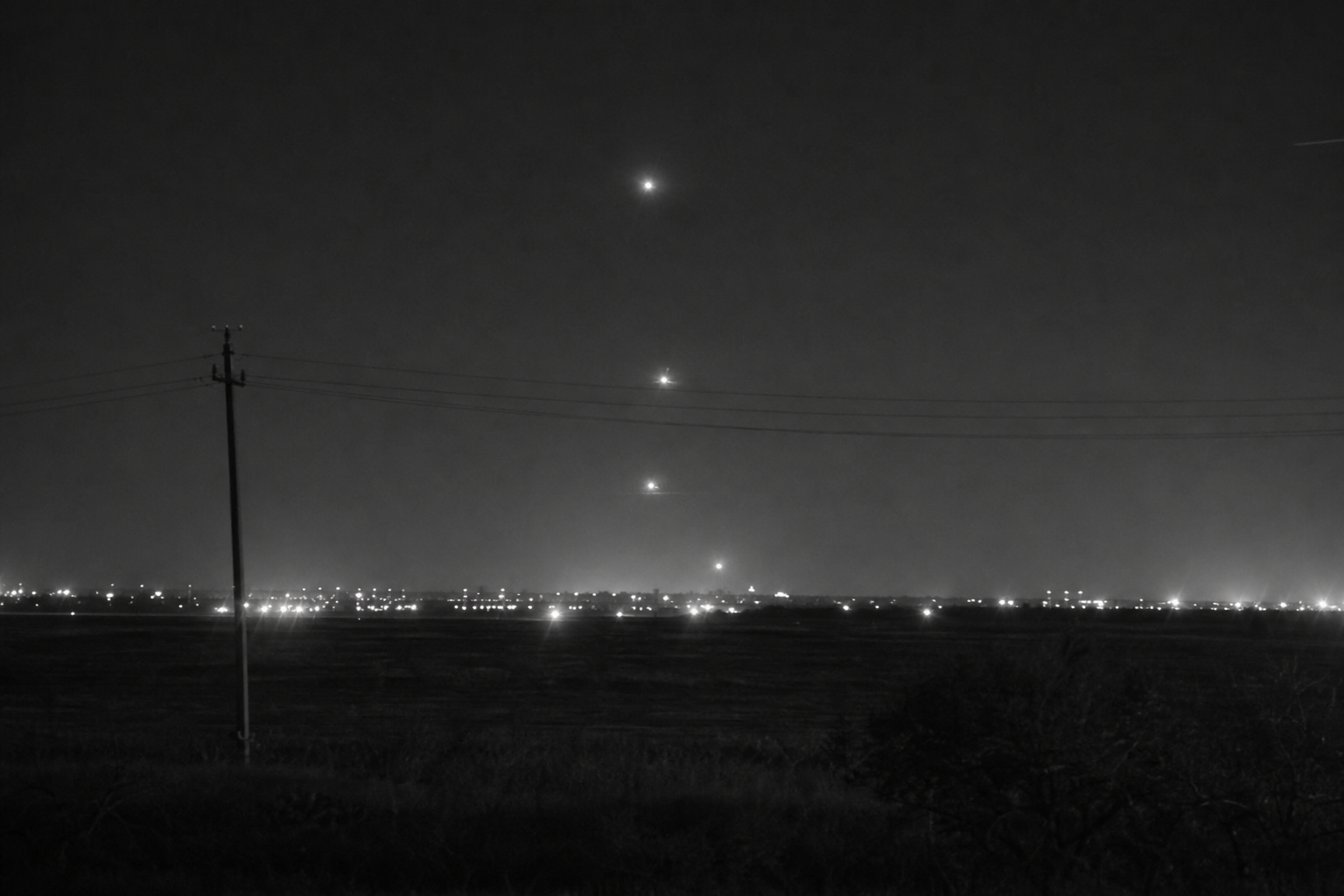
Drones could produce several lights with coordinated spacing, especially if they hovered, turned together, or altered their separation. They become a poorer fit if the lights crossed a large portion of the sky without visible changes in formation, but the present account contains too little motion detail to apply that test. A nearby launch location, audible propellers, close-range brightness, or footage showing coordinated maneuvers would materially strengthen the drone possibility.
Satellites, including a satellite train, require a date-specific comparison rather than a default attribution. Their usual diagnostic value lies in a predictable path and steady progression across the sky; a verified pass would need to align with the observation time, direction, duration, and the reported fading. Fixed astronomical objects fit only if the lights remained stationary relative to landmarks; they do not readily explain a reported formation changing position.
Finally, haze, thin cloud, reflections, autofocus shifts, and exposure changes can alter brightness or make lights disappear without changing the underlying source. This night-sky sighting analysis cannot rank those effects confidently because no original recording, camera orientation, timestamp, or weather conditions are available. Each category remains a testable possibility, not an identification.
Why the Report May Remain Unidentified
“Unidentified” is an evidentiary classification: it means the available material cannot support a responsible identification, not that it supports an extraterrestrial, military, or otherwise extraordinary origin. For this report, the first limiting factor is provenance. A strong report can be traced to a firsthand observer and retains the earliest post or original file; a reposted description, even if widely shared, preserves neither the observer’s identity nor the account’s original wording.
Independent corroboration would change the weight of the case only if separate observers reported matching details without simply repeating one another: the same approximate time and location, viewing direction, number of lights, movement, and manner of disappearance. Likewise, a usable time and location are not minor details. A date alone cannot meaningfully test flight activity, satellite passes, cloud cover, or visibility conditions; comparisons need a narrow time window and a viewing position or direction.
Visual material can help, but only when its limits are clear. An original video with a retained timestamp, location data, unedited sequence, and landmarks offers far more than a compressed clip with digital zoom, no orientation, and featureless points against a dark sky. The current Corpus Christi UFO sighting 2020 record lacks the provenance, corroboration, precision, and original imagery needed to discriminate among the possibilities already considered. The responsible conclusion is therefore narrower than “unexplained”: lights were reportedly seen in a triangular-looking arrangement, but their source and whether they formed one physical object cannot be determined from the documentation available.
What Evidence Would Help Identify a Similar Sighting
A useful report begins before the lights leave view: capture the scene, then record the circumstances while memory is fresh. Note the exact date and local time shown on the device, a map pin or plainly described viewing location, the compass bearing toward the lights, their estimated elevation above the horizon, total duration, number of lights, apparent spacing, brightness changes, and direction of travel. A bearing identifies where the observer looked; direction of travel identifies whether the lights moved toward, away from, across, rose above, or descended toward that point.
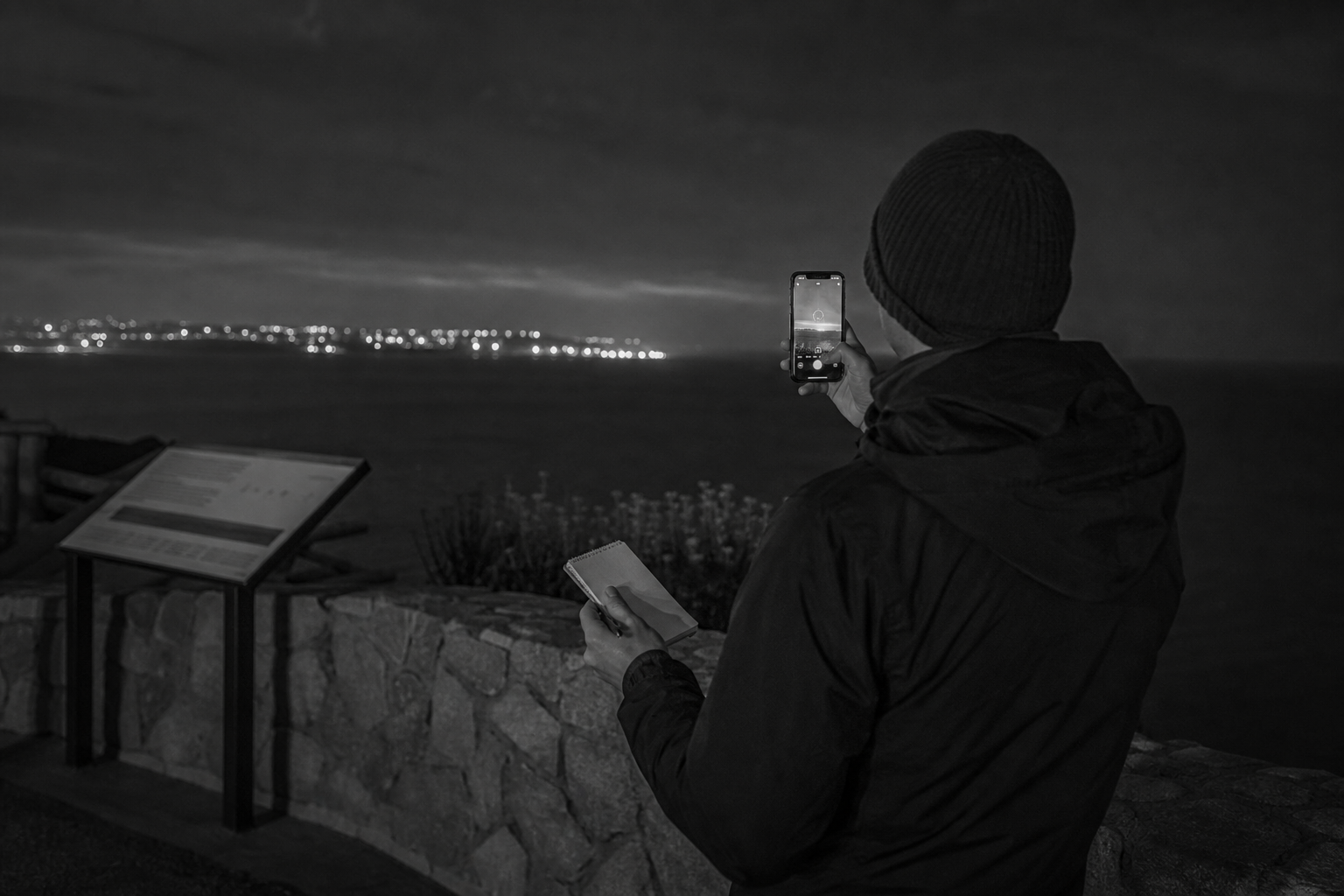
- Include nearby landmarks, shoreline, road, building, tower, or horizon, and whether the view was open or partly blocked.
- Describe motion separately for each light: steady, hovering, blinking, converging, diverging, or changing formation. “They disappeared” is weaker than noting whether they dimmed, passed behind cloud, moved below a roofline, or vanished together.
- Record audible details, if any, without assuming a connection: silence, a distant engine-like sound, its direction, and whether the sound changed with the lights.
- Write down visible weather conditions, including cloud cover, haze, wind, rain, and nearby glare.
Keep the original video and photographs in their native files, along with any unedited wider shot. Reposted clips can discard timestamps, location information, audio, and image detail; digital zoom can also make points of light look larger or less stable. A brief contemporaneous note should identify the device used and whether the displayed clock was believed accurate.
Independent observations are most useful when witnesses make separate notes before comparing accounts. Matching times, bearings, motion, and landmarks create a narrower observational window for later comparisons with aviation tracks, satellite predictions, and local weather. That does not guarantee an identification, but it gives any future assessment something more testable than a remembered triangular pattern.
The Evidence-Based Takeaway on the Corpus Christi Lights
The narrow conclusion is straightforward: the available account supports only a reported nighttime observation of lights that appeared triangular over Corpus Christi in 2020 and later were no longer visible. It does not supply an attributable original post, preserved media file, precise time and viewing position, or independent corroboration sufficient to identify the lights. For that reason, the Corpus Christi UFO sighting 2020 is better treated as an inadequately documented report than as a confirmed craft, a solved event, or a genuinely unexplained anomaly.
An unresolved classification marks a limit in the record; it is not positive evidence for a physical triangular vehicle. Nor does this account support conclusions about alien visitation, non-human intelligence, a secret government program, or UFO disclosure. Those claims would require evidence that establishes what was present and connects it to a specific origin, rather than an interpretation built from a distant pattern of lights. Stronger firsthand material could change the assessment, but the present record does not justify going beyond the reported observation.
Frequently Asked Questions
-
What were the triangular lights seen over Corpus Christi in 2020?
The documented core of the report is that multiple lights appeared in a triangular-looking arrangement over Corpus Christi at night and later were no longer visible. The account does not establish their distance, altitude, speed, physical connection, or source.
-
Was the Corpus Christi triangle-light sighting ever identified?
No identification can be supported from the available record. There is no attributable original witness post, named observer, original video, precise date and time, viewing location, or independent corroboration.
-
Can aircraft, drones, or satellites look like triangular UFO lights at night?
Yes. Three separate aircraft, drones, satellites, or distant lights can form a triangle from one observer’s viewpoint even when they are at different distances or altitudes. Aircraft landing lights, coordinated drones, satellite passes, haze, and camera effects are all possible explanations that require exact time and direction data to test.
-
What evidence would show that triangular lights were one physical object?
Evidence would need to show a visible body or edges connecting the lights, stable spacing while moving, and observations that establish the lights shared one structure. A low-light video of bright points alone cannot reliably show scale, distance, orientation, or physical connection.
-
What should witnesses record to help identify unexplained lights over Texas?
Record the exact local date and time, viewing location or map pin, compass bearing, elevation above the horizon, duration, number of lights, spacing, brightness changes, and travel direction. Keep original unedited photo and video files, include landmarks and weather conditions, and have separate witnesses make notes before comparing accounts.