The Nimitz Encounter: Full Breakdown
Explore the Nimitz Encounter through witness accounts, FLIR1 footage and official records, separating confirmed facts from disputed claims.
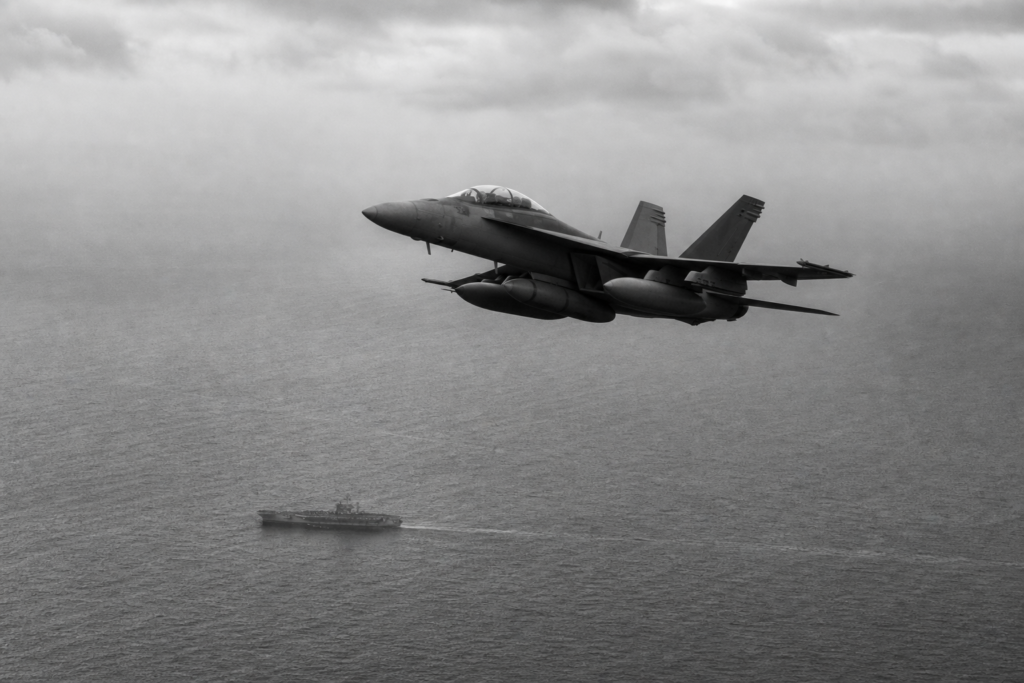
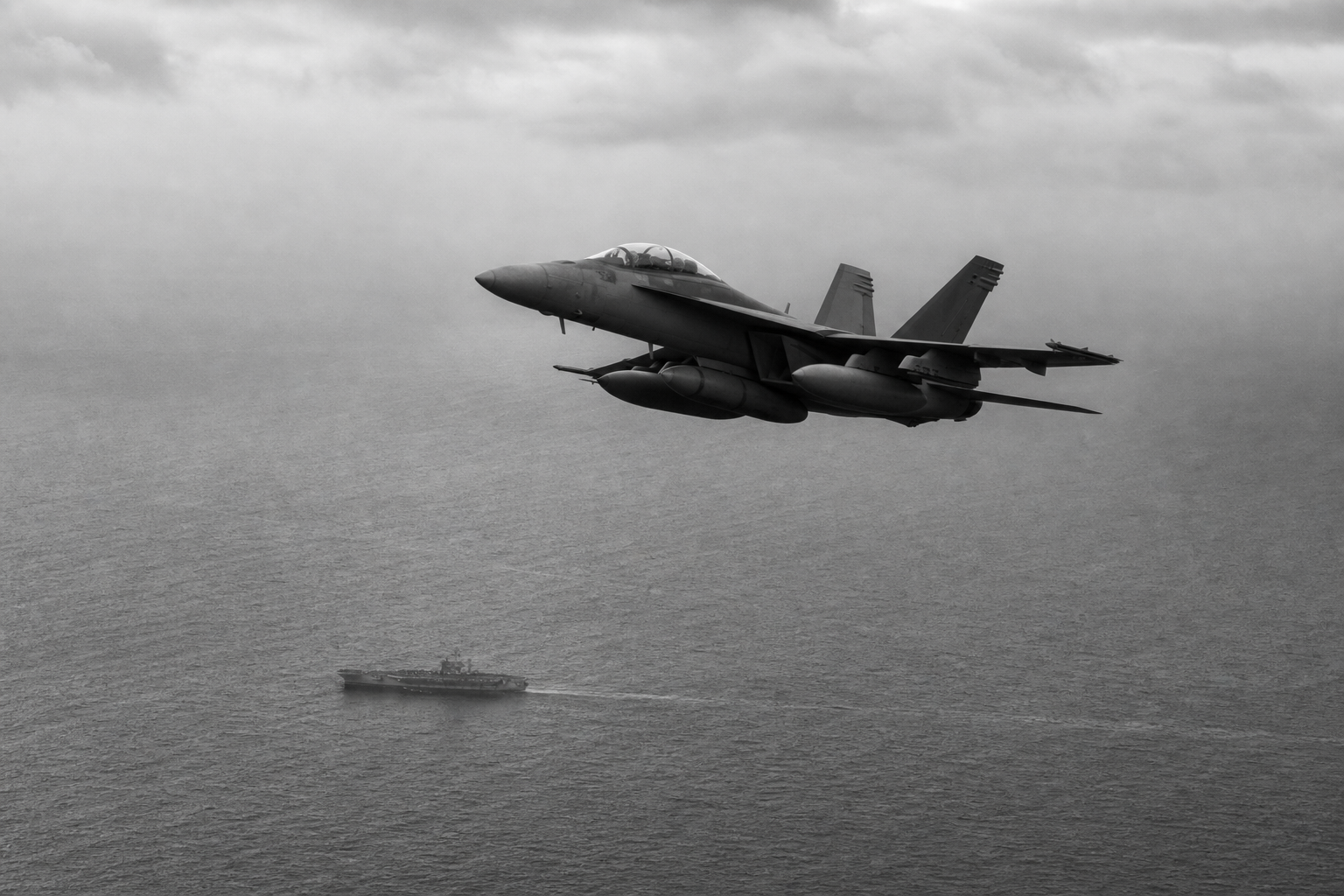
In November 2004, a training period involving USS Nimitz Carrier Strike Group Eleven off Southern California produced a sequence of reports that later became known as the Nimitz Encounter. Its prominence rests on several overlapping accounts, yet the public does not possess a complete sensor record of the events.
That limitation matters because the available material is uneven. Named Navy personnel have described visual observations and radar-related activity; the Pentagon later released the short infrared video commonly called FLIR1; and later official reviews addressed unidentified aerial phenomena. Those categories are not interchangeable. A pilot’s recollection is firsthand testimony, a radar report is a sensor-based account whose underlying track data are not public, and FLIR1 is authentic released footage, but not a direct recording of the earlier visual intercept most often associated with Cmdr. David Fravor and Lt. Cmdr. Alex Dietrich.
This reconstruction follows the timeline while keeping those distinctions visible. It identifies what the released footage shows, what official material establishes, what participants reported, and where the public record has gaps. “Unidentified” means an identification remains unresolved; it does not itself establish extraordinary performance, an extraterrestrial origin, or any final explanation.
What the Nimitz Encounter Was, and What It Was Not
The useful checkpoint is that this was a cluster of observations, not one single sighting. In November 2004 training operations off Southern California, personnel associated with USS Princeton, USS Nimitz, and embarked F/A-18 squadrons reported radar tracks, an airborne visual encounter, and a later infrared recording.
The evidentiary labels matter. Official material can establish that the Pentagon released FLIR1 and that the Navy treated it as authentic military footage; named participants’ accounts establish what those individuals say they observed; later articles and interviews can supply context but do not replace underlying logs or sensor files. Inference begins when those sources are used to calculate speeds, distances, intent, or origin without public raw data.
This is also distinct from the Gimbal and Go Fast videos, which came from separate Navy incidents in 2015. FLIR1 belongs to the Nimitz case, but it records a later F/A-18 crew’s sensor encounter, not the visual event described by David Fravor and Alex Dietrich. The Nimitz Encounter therefore supports a narrow conclusion: military personnel reported unexplained observations. It does not publicly establish extraterrestrial or non-human intelligence.
The USS Princeton Radar Events: The Earliest Reported Activity
Before the airborne intercept, the cruiser USS Princeton was the ship associated with the earliest reported detections. Its SPY-1 radar was an air-search and tracking system: it could build and update tracks from returned radar energy, giving operators a basis for distinguishing persistent contacts from isolated or obviously spurious returns. In later on-record interviews, former Princeton personnel, including radar operator Kevin Day, described seeing unusual tracks during the training period and attempting to assess whether the returns reflected aircraft, environmental effects, or a system issue.
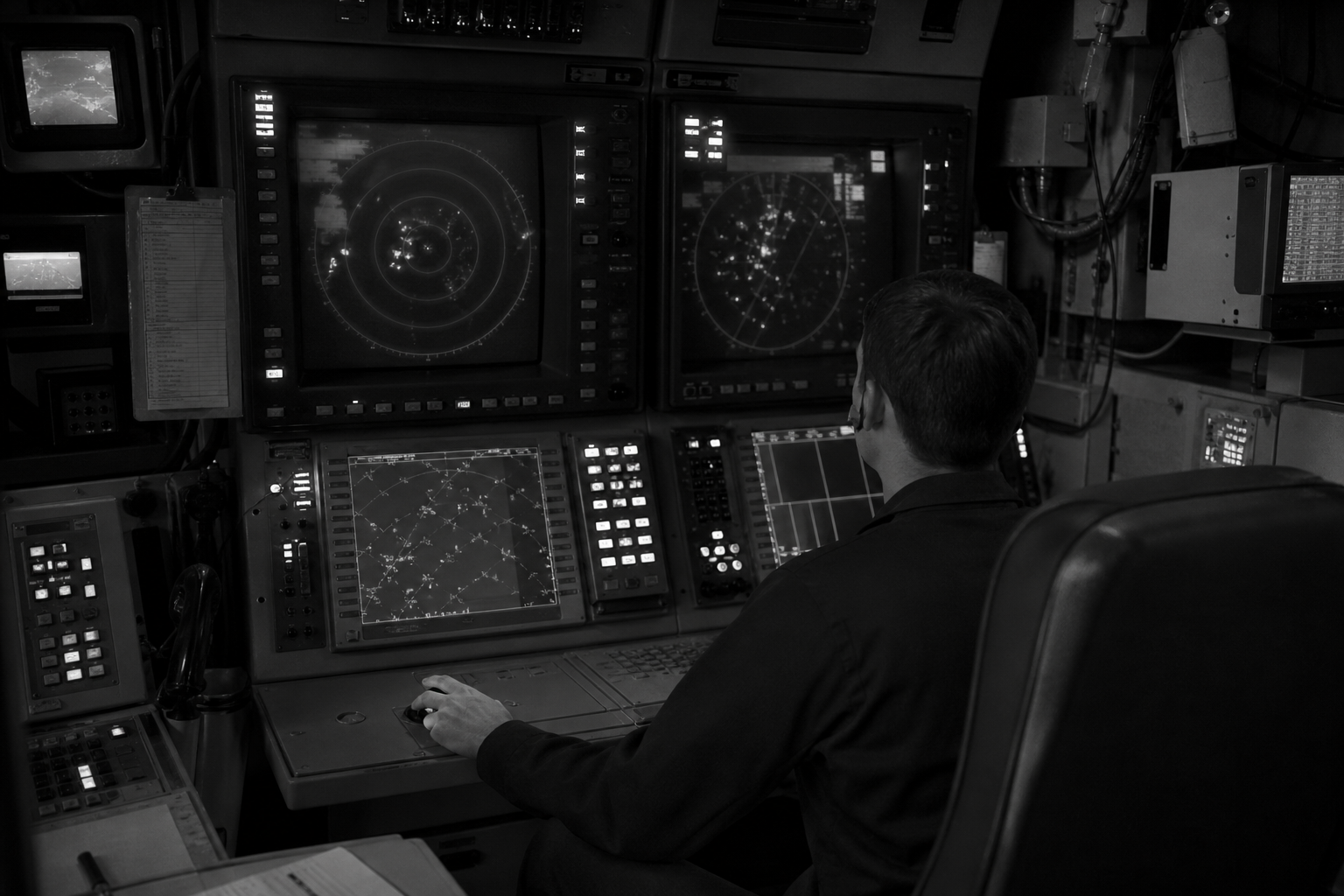
Those accounts describe the USS Princeton radar as showing contacts at varying positions and, in some retellings, behavior operators considered inconsistent with familiar traffic. That is meaningful as witness testimony from people who worked the system, but it is not the same thing as a released technical record. A radar track is a processed representation produced from sensor returns and tracking software; its reliability depends on such matters as signal quality, system settings, identification data, the surrounding operating picture, and whether another sensor corroborates it.
The public cannot independently replay the relevant SPY-1 radar data, inspect its track files, or test the reported measurements against the system’s logs. That missing layer limits claims about exact altitude, speed, descent, or maneuvering. The strongest careful reading is therefore chronological rather than extraordinary: Princeton personnel reported anomalous contacts before fighters were directed toward an area of interest, while the underlying raw radar evidence needed to independently quantify those reports is not publicly available.
The Visual Intercept: What Fravor and Dietrich Reported
The fighters sent toward the area were flown by Cmdr. David Fravor and Lt. Cmdr. Alex Dietrich, each with a wingman in a separate F/A-18. Their later, on-record accounts form the public reconstruction of the visual intercept; they are not a released instrument record capable of independently fixing the object’s size, range, or speed.
Fravor and Dietrich have both described being redirected from a training mission and descending toward a patch of disturbed water. They reported an area of white water or a churning, oval-shaped disturbance below them, with no clearly identified vessel visible at its center. Above it, they described a smooth white, elongated Tic Tac object, apparently without wings, tail surfaces, markings, or visible exhaust. The common features matter because they come from multiple participants, but they remain eyewitness descriptions made during a brief, dynamic flight event.
Fravor’s account supplies much of the best-known maneuver sequence. He has said he descended and turned toward the object as it moved erratically over the disturbance, then attempted to close the distance in a descending turn. In his 2004 Nimitz Tic Tac encounter account, the object appeared to react to his maneuver and then departed from view. That sequence is a reported perception from the cockpit, not a publicly released measurement of acceleration or an independently established flight profile.
Dietrich’s account broadly supports the sighting of the disturbance and the white object, while emphasizing the limits of what could be determined in the moment. Her Alex Dietrich Nimitz encounter recollections describe an unusual visual observation rather than a confident identification. Differences in emphasis between participants are expected: each crew had a different viewing angle, attention demands, and opportunity to judge distance against open water and sky.
That distinction is central to the Nimitz Encounter. A visual intercept can establish that trained personnel reported seeing something they could not identify; it cannot, by itself, establish an object’s origin, precise dimensions, or extraordinary performance. The later infrared footage belongs to a separate flight and must not be treated as a direct recording of this visual event.
The Follow-On Flight and FLIR1 Video: What the Footage Shows
The image most people associate with the case came afterward. The FLIR1 video was recorded on a later F/A-18 flight by a different crew, commonly identified in public accounts with pilot Chad Underwood, rather than by Fravor, Dietrich, or either of their wingmen during the visual intercept.
In 2020, the Department of Defense formally released FLIR1 alongside the later Gimbal and Go Fast clips and confirmed that the videos were recorded by Navy personnel. That authentication establishes the footage’s military provenance and that it depicts an aerial object not identified in the released material; it does not authenticate every claim subsequently made about its motion, capabilities, or origin.
The short black-and-white clip is an infrared targeting-pod recording. Such a pod detects contrast in infrared energy and can track a selected target while displaying aiming, tracking, and sensor-status symbols. In the public Nimitz UAP footage, a small bright object is held near the center of the frame before the tracking view changes and the object leaves the field of view. The recording is therefore evidence of a sensor contact during the follow-on flight, not a cockpit-window recording of the earlier white object over the water.
What looks dramatic on screen is not, by itself, a complete measurement. A targeting-pod image can show relative angular motion and changes in the sensor’s tracking state, but exact size, range, velocity, and acceleration depend on information beyond the visible pixels: calibrated range data, aircraft position and attitude, zoom and field-of-view settings, line-of-sight geometry, and the full mission record. Without that underlying context in the public record, an apparent rapid movement across the display cannot independently establish extraordinary acceleration.
For the Nimitz Encounter, FLIR1 is consequential because it adds a released Navy sensor artifact to a broader sequence of reports. It remains limited evidence: genuine military footage of an unresolved contact, not a standalone determination of what the object was.
What Records Exist, What Is Missing, and How the Case Was Investigated
The public case file is best understood as a layered record rather than a single evidentiary package. Its strongest publicly authenticated item is the released FLIR1 clip; named participants’ interviews, statements, and later testimony supply the account of the visual intercept and reported shipboard radar activity. Journalistic reporting can preserve those accounts and identify participants, but it does not turn recollection into raw sensor measurement.
Official acknowledgment matters for provenance: it distinguishes the Navy-recorded footage from an unattributed online copy. A complete chain of custody would trace a record from collection through storage, handling, and release, allowing reviewers to assess whether it is complete and unaltered. The public release establishes that basic provenance for FLIR1, not for every claimed recording, briefing slide, or supplementary file linked to the event.
Additional material is frequently discussed but is not publicly available in a form that permits independent reconstruction: raw SPY-1 track data, full aircraft telemetry, mission communications, and any E-2 Hawkeye sensor information. Reports that personnel collected tapes or that records were removed, lost, or withheld remain allegations unless supported by released records identifying what was taken, by whom, and under what authority.
Later UAPTF-era references and Pentagon discussion helped place the event within the modern UAP record, but public acknowledgment of an unresolved case is not a finding about the object’s performance or origin. The practical limitation is straightforward: without synchronized, original sensor files and communications logs, outsiders cannot independently test the reported sequence, reconcile every timestamp, or calculate decisive flight characteristics.
What Remains Disputed: Performance Claims, Data Gaps, and Explanations
The sharpest divide is between an observation that remains unidentified and a claim that it demonstrated extraordinary capability. Accounts of abrupt acceleration, descent, disappearance, and a rendezvous at a reported location come principally from participant recollection and reported radar observations. The released FLIR1 clip adds an infrared record of a contact, but its public version does not provide the synchronized range, track, telemetry, and environmental data needed to calculate a decisive speed, acceleration, or flight path.
Several explanation categories remain open, but they do not carry the same evidentiary burden. Misperception could be assessed by reconstructing sight lines, lighting, distance, horizon conditions, and the pilots’ relative motion. Sensor ambiguity, including tracking behavior, viewing angle, or limited infrared context, would require original targeting-pod metadata and full radar returns. Atmospheric or operational factors would require contemporaneous weather, sea-state, aircraft-position, and communications records.
A classified human technology hypothesis would require a demonstrable link to a program, platform, or authorized activity in the area; mere unfamiliarity is not corroboration. A genuinely unresolved identification remains possible when those records cannot discriminate among alternatives. Non-human intelligence is sometimes raised in public discussion, but the Nimitz evidence does not establish it as a conclusion. The essential unanswered question is not whether the reports were meaningful, but which explanation best survives access to the missing measurements.
Why the Nimitz Case Still Matters for UAP Disclosure
Its enduring value is procedural. The Nimitz case shows why anomalous military observations need a durable chain of records: original sensor files, time-synchronized aircraft and ship logs, communications, environmental data, and a clear account of who reviewed each item. Those materials let analysts test competing explanations; short clips and recollections alone cannot do that work.
That is the productive connection to UAP disclosure and the post-2004 record of military UAP intercepts. Meaningful transparency distinguishes release of authenticated material from release of enough context to evaluate it, while protecting genuinely sensitive operational details where necessary. Better reporting channels and retention practices would make future cases more assessable without presuming that every unknown is extraordinary.
The case does not, on the public record, demonstrate a government UFO cover-up, alien technology, or a settled origin. What is documented is a Navy-recorded infrared clip and a set of named military accounts; what remains unresolved is the identity of the observed contact and the missing data needed to narrow it decisively.
The Evidence Supports Questions, Not a Final Answer
The most defensible conclusion is narrower than the case’s cultural reputation. Named aviators and shipboard personnel described events they regarded as unusual, and FLIR1 provides an authenticated military recording of a later infrared contact. Those strands make the Nimitz Encounter a substantial report to examine, but they do not combine into a complete, independently testable measurement of one object’s shape, distance, speed, or origin.
That difference matters. Corroboration means separate observations align on a broad sequence; proof of dramatic performance requires the underlying sensor data, timing, geometry, and calibration needed to rule out alternatives. The public record has the first kind of support more clearly than the second. Neither the absence of a public resolution nor the credibility of the participants fills those technical gaps.
For that reason, the case is best treated as a benchmark for disciplined UAP reporting. A strong future record would preserve original files and their chain of custody, link accounts to synchronized logs, distinguish preliminary observations from final findings, and explain uncertainty plainly. That standard respects military witnesses without asking the evidence to establish more than it can bear. An unresolved contact is a reason for careful investigation, not proof of any particular explanation.
Frequently Asked Questions
-
What happened during the 2004 Nimitz encounter?
During Navy training operations off Southern California in November 2004, personnel associated with USS Nimitz, USS Princeton, and F/A-18 squadrons reported unusual radar contacts, a visual sighting, and a later infrared sensor contact. The public record documents a sequence of reports rather than one single confirmed object track.
-
What did David Fravor and Alex Dietrich say they saw during the Nimitz incident?
Fravor and Dietrich reported seeing disturbed white water over the ocean and a smooth white, elongated object resembling a Tic Tac above it. They described no visible wings, tail surfaces, markings, or exhaust, but their accounts do not establish the object’s exact size, range, speed, or origin.
-
Was the Nimitz Tic Tac captured on video?
The released FLIR1 video recorded a later F/A-18 infrared sensor encounter, not the earlier visual intercept involving Fravor and Dietrich. It shows a small bright infrared target being tracked before it leaves the field of view, but it is not a cockpit recording of the white object seen over the water.
-
Did the Pentagon confirm the Nimitz FLIR1 video?
Yes. In 2020, the Department of Defense formally released FLIR1 alongside the Gimbal and Go Fast videos and confirmed that Navy personnel recorded them. That confirms the footage’s military provenance, but it does not verify claims about extraordinary speed, acceleration, or non-human origin.
-
What evidence should be reviewed before concluding the Nimitz encounter involved extraordinary technology?
A reliable conclusion would require original SPY-1 radar track data, full aircraft telemetry, targeting-pod metadata, mission communications, weather and sea-state records, and synchronized timestamps. Without those records, the available witness accounts and FLIR1 clip support an unresolved observation but cannot decisively establish extraordinary performance or alien technology.