The Wall Street Journal Report on Air Force UFO Hazing
Examine the Wall Street Journal Air Force UFO hazing report, its evidence, AARO context, and what it does not prove about UAPs.
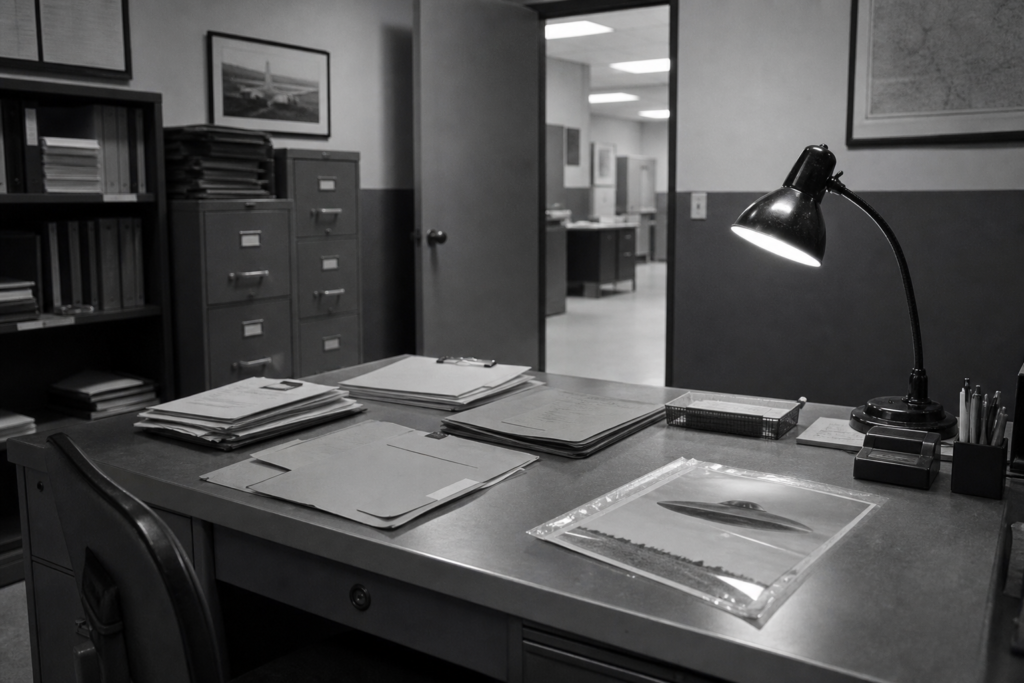
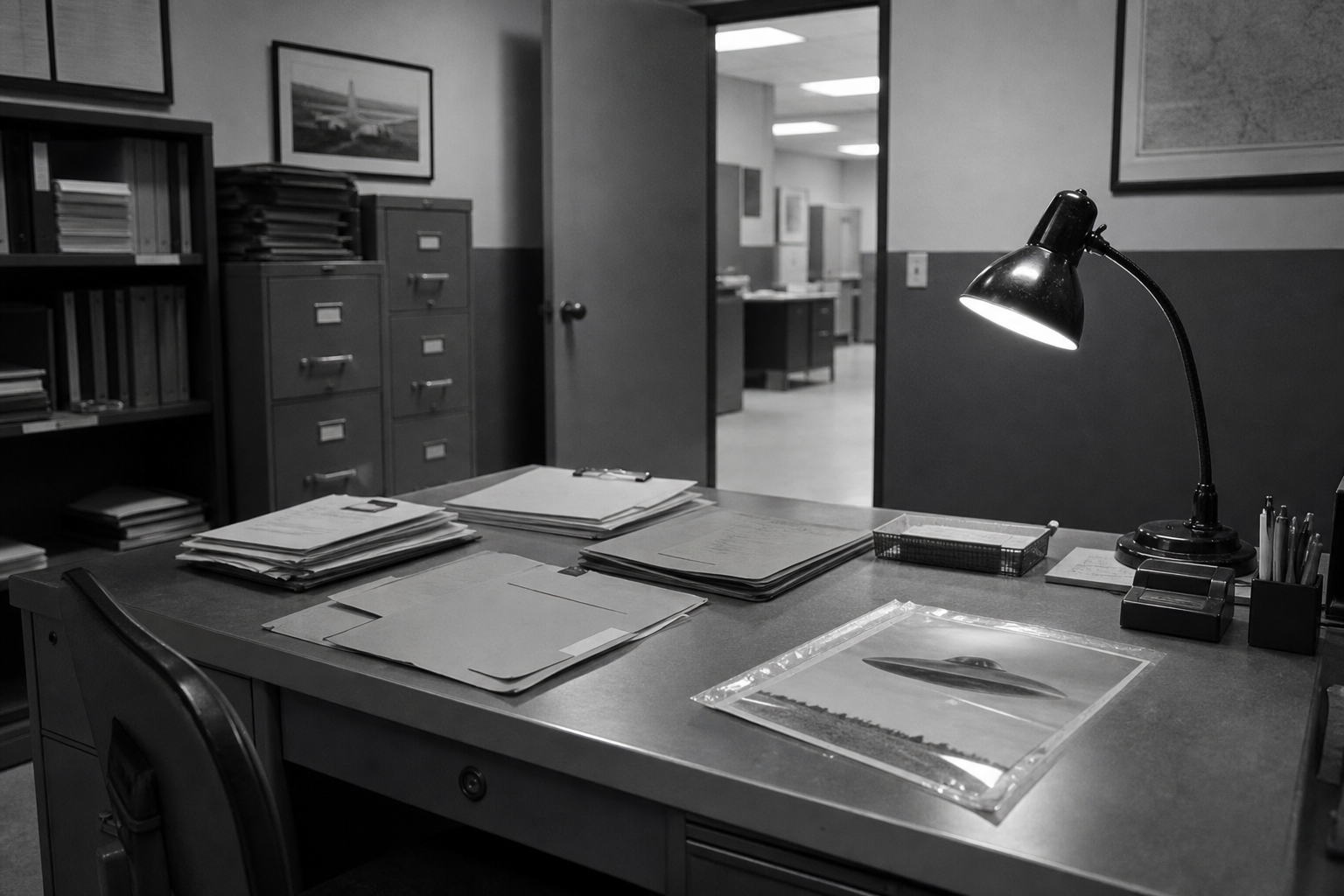
At issue is a specific alleged practice: UFO-themed material may have been used to haze or prank personnel in an Air Force setting. That possibility matters because it offers a concrete route by which some stories or rumors could have been shaped by misconduct rather than by an authentic UAP event.
The reported episode, if substantiated, would be evidence about contamination of particular accounts, not proof that the Air Force ran an authorized disinformation campaign, that every UAP report is fabricated, or that a concealed program involving non-human intelligence exists. Those are distinct propositions with different evidentiary burdens: an informal prank is not an official operation, and either is separate from evidence of a classified program.
This article separates the allegation from the conclusions readers may be tempted to draw from it. It examines what was attributed to witnesses and records; whether the conduct was informal, authorized, or corroborated; and how far its apparent scope can reasonably extend. A contemporaneous record tied to a specific unit is stronger than retrospective rumor, but even a well-supported local incident cannot settle claims about unrelated sightings or alleged secret programs.
The result is neither a debunking shortcut nor a disclosure verdict. It is a test of evidence, institutional credibility, and the limits of inference.
What the Wall Street Journal Reported, and Why Precision Matters
The Wall Street Journal Air Force UFO hazing report narrows the immediate question to a proposed chain of events: UFO-themed material was allegedly used in an Air Force prank or hazing setting, and a participant’s experience may have fed later stories about secret projects. The reported subject is alleged conduct within a military setting, not proof that the purported projects existed.
Four propositions need to remain separate. Hazing is misconduct directed at people in a local setting; a false briefing, prop, or story can give its target a seemingly firsthand account. Rumor generation is the subsequent spread of that account beyond the original audience. Official disinformation would require evidence that authorized personnel directed deception for an institutional purpose. A concealed non-human-intelligence program would require independent evidence that such a program existed.
Scope is the decisive checkpoint. Identifiable participants, a defined Air Force setting, and a demonstrated link between the alleged prank and a later secret-program narrative would strengthen the account of that episode. They would not establish service-wide repetition, official approval, or a common origin for unrelated testimony.
That makes this consequential UFO news without making it a final verdict. The report may identify a concrete route by which particular narratives became contaminated; the origins and evidentiary weight of other UAP claims remain unresolved.
The Alleged Air Force UFO Hazing Episode: What Was Reported
The reported sequence begins with an informal encounter involving Air Force personnel, not with a public UAP investigation or a documented classified-program briefing. The Journal described UFO-themed material being used in what participants or witnesses characterized as an initiation-style prank or military hazing: information presented to a recipient as though it carried special significance, then understood by those involved as a joke or deception.
That account contains two distinct events. The first is the alleged conduct itself, personnel presenting UFO imagery, claims, or lore in a workplace or social setting. The second is the possible afterlife of the encounter: a recipient who did not recognize the prank, or did not understand its full context, could later repeat the experience as evidence of a secret project. That distinction matters because a story’s circulation can show that it reached other people; it does not, on its own, authenticate the purported UFO information.
Who was present is therefore central to the Air Force UFO hazing allegations. A person who took part in or directly witnessed an encounter can describe what was said, shown, and intended. A later listener can establish only that the account was repeated. Contemporaneous material, such as a dated email, photograph, training item, or personnel record, would serve a different function by fixing the setting, time, or identities rather than merely preserving a retrospective memory.
The Journal’s reported account does not, by itself, identify a department-wide custom, a standardized Air Force practice, or authorized deception. It describes alleged localized or individual misconduct using UFO-themed information. That is a narrower proposition than an official disinformation operation, which would require evidence of direction, purpose, and institutional reach beyond the people involved. The alleged episode may illuminate one route by which a particular secret-program narrative developed, while leaving the origins of other UAP accounts unresolved.
How Strong Is the Evidence Behind the Report?
A useful checkpoint is whether a claim fixes the encounter in time or merely recounts it later. The reported allegation is a journalistic finding built from interviews and material assembled for publication, not a public Pentagon adjudication that every detail occurred exactly as described.
- Contemporaneous documentation means records created at or near the event, emails, photographs, calendars, complaints, or memoranda. It is strongest for establishing date, setting, and participants because it does not rely solely on later memory.
- Attributable official statements are on-the-record positions from the Air Force, Pentagon, or AARO. They can establish that an institution acknowledges an inquiry or describes its conclusion, but they prove the underlying conduct only when they disclose the evidence and findings supporting it.
- Corroborated firsthand witness testimony gains weight when separate participants describe the same interaction and agree on independently testable details. It can materially strengthen an account, while remaining different from a record made at the time.
- Anonymous sourcing can surface information unavailable through public channels, but readers cannot independently judge the speaker’s access, memory, motive, or whether relevant context was omitted. It warrants caution, not automatic dismissal.
Inference is the weakest step. Evidence that a prank occurred could support the possibility that a particular UFO narrative was contaminated; it does not establish authorized disinformation, much less a concealed non-human-intelligence program. AARO’s historical work and any Pentagon response matter most when they identify the records reviewed, the precise claim assessed, and the scope of the conclusion. Where public official records do not settle those points, the uncertainty remains unresolved.
The Wall Street Journal Air Force UFO hazing report is therefore significant but bounded: it raises credible questions about the provenance of particular narratives without validating or disposing of broader UAP-disclosure claims.
What the Story Does Not Prove About UAPs or Secret Programs
A contaminated account is not a universal key to the UAP record. Even if the reported Air Force episode influenced one person’s understanding of purported secret work, it would not show that every unexplained sighting was invented, misidentified, or planted. A sighting is an observation that may be assessed through sensor data, contemporaneous reporting, and alternative explanations; its evidentiary value does not rise or fall solely with a separate social encounter.
The same limit applies to UFO whistleblower allegations. Testimony can be weakened when a witness cannot distinguish firsthand knowledge from a rumor, a joke, or material passed through colleagues. But that is a reason to trace the claim’s provenance, not a basis for declaring every witness false. A stronger claim identifies the witness’s access, dates, records, and other people able to corroborate the account. A weaker one relies on an untraceable story whose source, chain of transmission, and underlying evidence cannot be tested.
Nor does an alleged prank establish the opposite proposition: that crash-retrieval claims or concealed non-human technology are true. Those claims require their own evidence, such as authenticated records showing authorization and custody, testimony from people with direct program access that independently converges, and material evidence whose origin and analysis can be scrutinized. Cultural contamination can explain how extraordinary narratives spread; it cannot supply the missing proof for extraordinary claims.
Most importantly, informal misconduct and a coordinated government UFO cover-up are different propositions. The latter would require evidence of institutional direction: an authorized objective, identified officials, a defined target audience, and records or corroborated testimony connecting the activity to policy. The Wall Street Journal account may justify closer scrutiny of how stories enter military culture. It does not, by itself, demonstrate a disinformation program or settle what any separate classified programs contain.
Where AARO’s Historical Findings Fit, and Where They Do Not
AARO’s historical work belongs beside this episode as a separate evidentiary track, not as a retroactive verdict on the Journal’s reporting. The All-domain Anomaly Resolution Office evaluates historical UAP claims through the records, access, provenance, and corroboration available to it. That approach can test whether an alleged sensitive program leaves an institutional trail; it cannot, on its own, recreate every informal encounter, private conversation, or workplace prank described years later.

This distinction matters because the three bodies of material answer different questions. AARO UAP assessments address broad historical allegations and the evidentiary basis for purported hidden activity. The Wall Street Journal’s account addresses whether a particular alleged Air Force practice occurred and may have influenced later narratives. Individual witnesses address what they saw, were told, or understood at a particular time. Agreement among all three would strengthen a conclusion; tension among them identifies a question to investigate, not permission to discard whichever body of evidence is inconvenient.
A strong connection would require more than thematic overlap: identifiable participants, dates that align, records showing authorization or custody, and independent accounts that converge on the same event. A weak connection rests only on the fact that both a historical UAP claim and the reported episode involve UFO language. The practical takeaway is narrow. AARO’s treatment of hidden-program allegations may frame the larger debate, but it neither confirms the alleged hazing nor makes the Journal’s account irrelevant. Each has to carry the weight its own evidence can bear.
Why the Report Matters for UFO Disclosure and Public Trust
The immediate checkpoint is whether a later account can be traced to an observation or instead to material presented in an informal Air Force setting. The reported UFO-themed hazing allegation creates reason to scrutinize the provenance of stories connected to that setting; it does not establish a formal deception program, the invention of every related account, or the absence of a concealed non-human-intelligence program. Those conclusions require different evidence of authorization, purpose, and scope.
For UFO disclosure, the practical risk is narrative contamination. A prank is informal conduct meant to unsettle or impress people. An official disinformation effort would require institutional direction and a defined purpose. Rumor generation may arise without either one, as a striking story is repeated, embellished, and detached from its original context. Failing to separate those paths can lead investigators to treat social lore as operational evidence, while genuine unexplained reports receive undue suspicion simply because they share UFO language with weaker claims.
It is also a public-trust problem. A reporting channel works only when people can describe an observation, briefing, or concern without pressure to convert uncertainty into certainty. Serious review preserves the distinction between an explained case, an unresolved case supported by usable evidence, and an assertion lacking verifiable support. The first can be closed with reasons; the second remains open; the third cannot gain evidentiary weight through repetition.
Transparency therefore has two obligations: investigate unexplained material on its merits and candidly correct false, embellished, or institutionally tolerated stories when they are identified. Neither task amounts to alien disclosure. Together, they are the minimum discipline required for institutional credibility and meaningful oversight.
Bottom Line: A Significant Allegation, Not a Final Answer
Corroboration is the deciding factor: independent accounts and a demonstrable link to later claims would show that military culture or misconduct shaped particular UFO narratives. Similar imagery or language alone would not establish that connection.
That is meaningful evidence about provenance, not a final finding about the objects or events behind UAP sightings. An alleged hazing encounter differs from an authorized deception effort, and both differ from evidence for a concealed non-human-intelligence program. Each requires its own trail of records, witnesses, authorization, and corroboration.
Readers should therefore resist two shortcuts: treating the report as a universal debunking, or treating resistance to that shortcut as proof of extraordinary claims. The broader UAP questions remain unresolved on the evidence relevant to each case.
What the Wall Street Journal Report Changes, and What It Does Not
A practical test follows from that limit: trace a later claim back to the alleged encounter, identify who received the material, and ask whether its distinctive details appear through an independent channel.
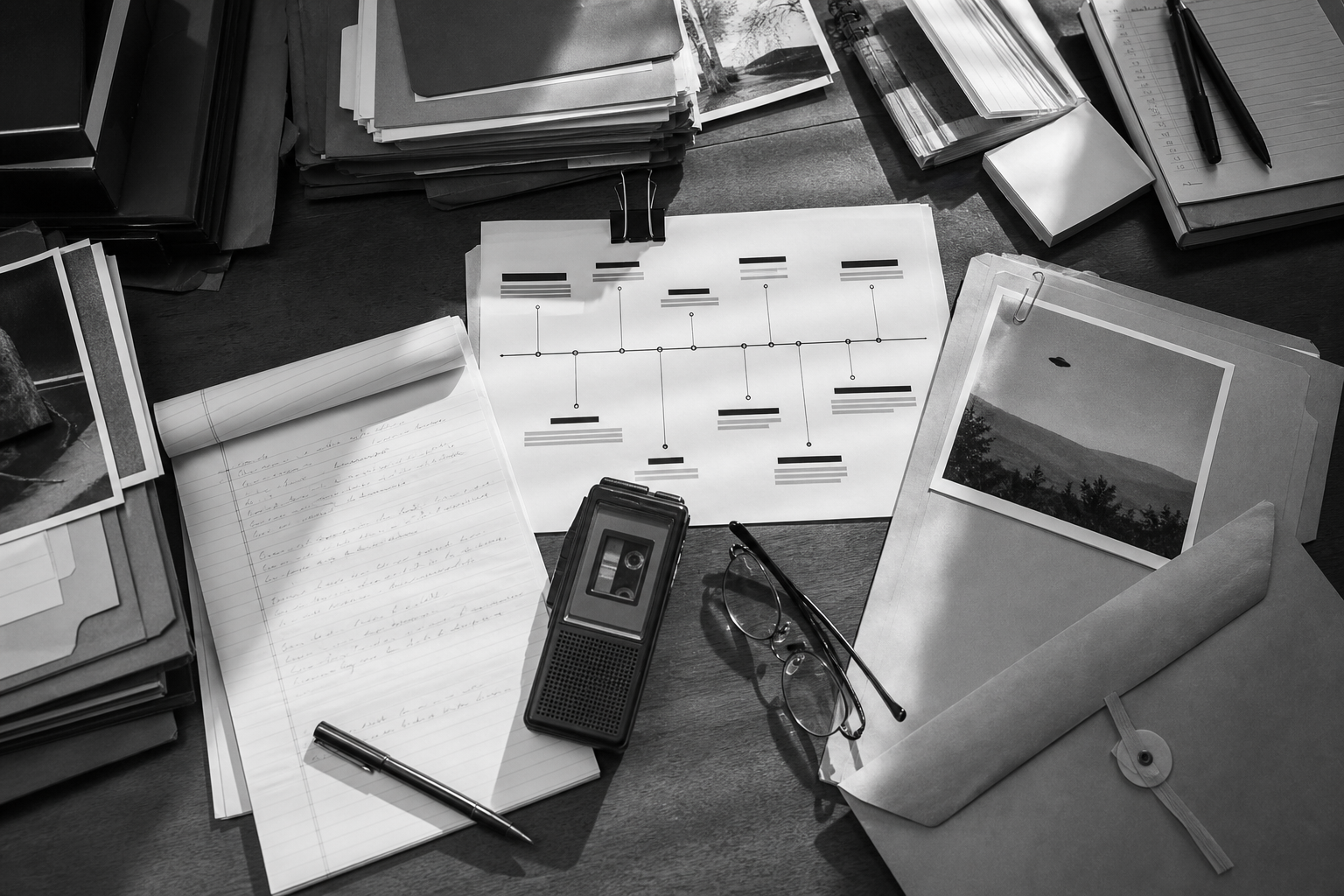
That test distinguishes a supported connection from a dramatic association. A contemporaneous message, briefing record, or convergent firsthand account can tie an alleged prank to a particular narrative. Similar UFO language, service in the same unit, or a retrospective recollection cannot alone establish causation. Nor can one localized episode comprehensively explain sightings, sensor cases, or allegations originating elsewhere.
AARO’s historical assessments remain a separate body of work, constrained by the records and access available to its investigators. The reporting does not replace those assessments or resolve every claim they examined. It does, however, make provenance a necessary question before treating a story as evidence of a secret program.
The appropriate standard is straightforward: give a claim weight in proportion to identifiable sourcing, independent corroboration, contemporaneous records, and a documented link between evidence and conclusion, not in proportion to how consequential or sensational that conclusion would be.
Sources
Frequently Asked Questions
-
What did The Wall Street Journal report about Air Force UFO hazing?
The report described allegations that Air Force personnel used UFO-themed imagery, claims, or lore in an informal prank or hazing setting. The alleged episode could have caused a recipient to later repeat the material as evidence of a secret program.
-
Did the Air Force use UFO stories as an official hazing ritual?
The reported allegation concerns localized, informal misconduct rather than a documented Air Force-wide ritual or authorized practice. Evidence of official direction, purpose, and institutional reach would be required to establish an official deception operation.
-
What evidence supports the Wall Street Journal’s UFO hazing report?
The report is based on interviews and material assembled through journalism, not a public Pentagon finding that verifies every detail. Stronger supporting evidence would include contemporaneous emails, photographs, calendars, complaints, personnel records, and corroborated firsthand testimony.
-
What should investigators look for when tracing a UFO story to an Air Force prank?
Investigators should identify who received the material, establish the date and setting, and determine whether distinctive details later appeared through an independent channel. A dated message, briefing record, or convergent firsthand accounts provides stronger support than similar UFO language or retrospective recollections alone.
-
Does the Air Force UFO hazing report disprove UAP whistleblower claims or prove a government cover-up?
No. A substantiated prank could contaminate particular accounts, but it does not disprove unrelated UAP sightings or all whistleblower allegations. It also does not prove a government cover-up, which would require evidence of authorized objectives, identified officials, target audiences, and institutional records.