Ancient Sky Omens and Modern UAP Claims: What the Surviving Sources Actually Say
Explore the first UFO sighting on record, from ancient sky omens to Roman reports, and learn what surviving sources actually prove.
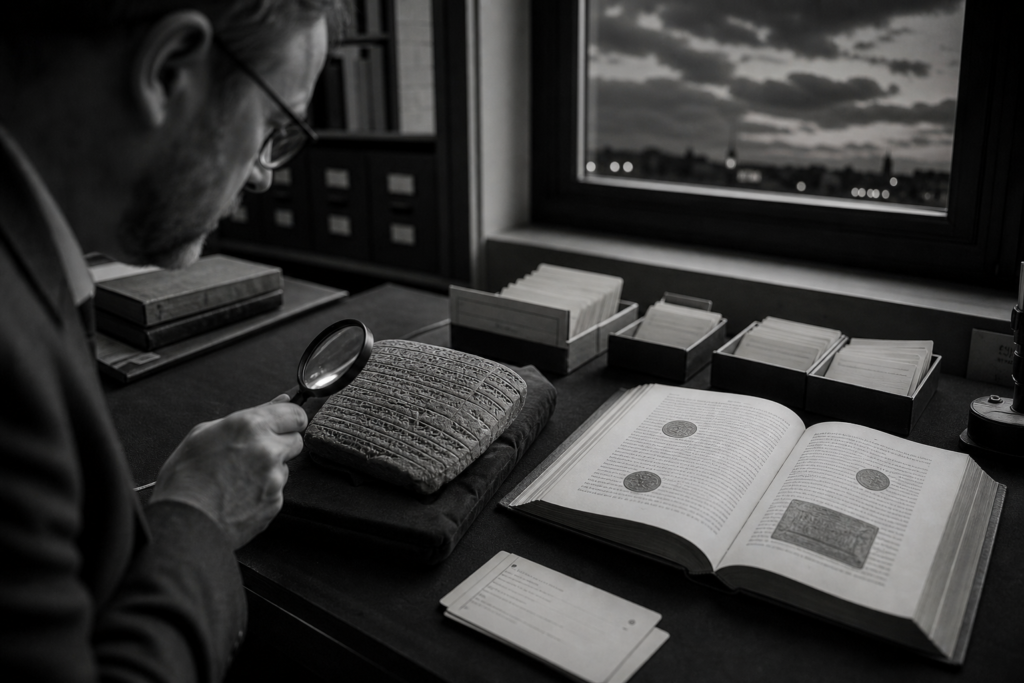
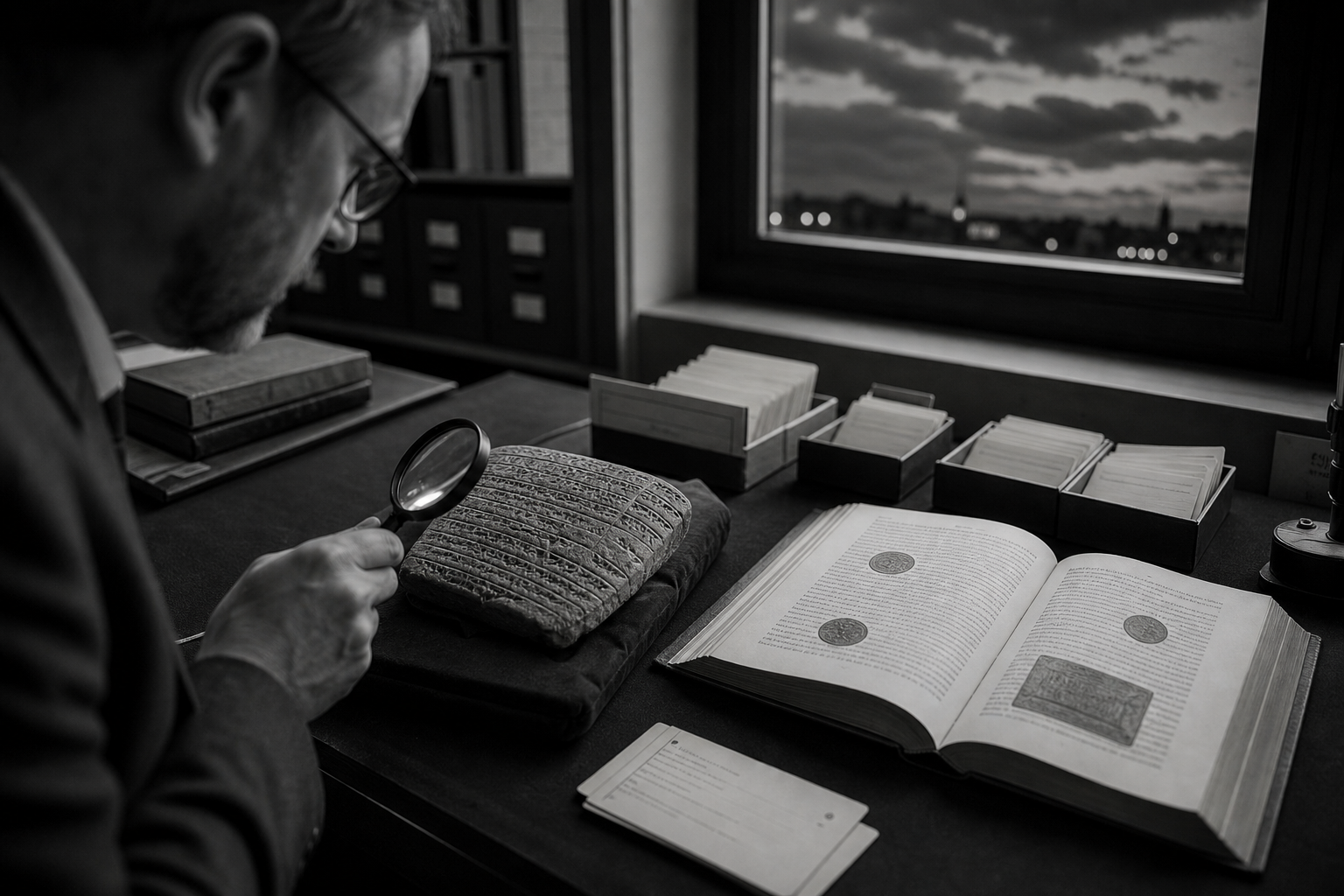
The decisive checkpoint is not how dramatic an ancient description sounds, but what can be traced to a surviving text. A manuscript may preserve a report of something seen in the sky without establishing that the event occurred, or that it was anything like a craft.
That distinction matters because ancient writers often framed unusual appearances as signs, portents, or divine messages, for purposes very different from a contemporary observation report. Later translations and popular retellings can add another layer of uncertainty, especially when vivid imagery is converted into technological language.
This article follows the trail back to the records themselves: the disputed Egyptian “Tulli Papyrus,” Roman prodigy reports of objects likened to shields or chariots, and other frequently repeated claims. For each, the key questions are what actually survives, when it was written, what genre it belongs to, and whether ordinary celestial phenomena fit the wording. Ancient sky omens deserve historical attention; they are not automatically evidence for modern UAP claims, which depend on a different kind of observation, documentation, and corroboration.
Can There Be a ‘First UFO Sighting on Record’?
Modern labels change the category of the claim: “UFO,” a term coined in 1952, and “UAP” classify an observation whose cause has not been identified; neither label establishes a craft, technology, or non-human origin. A Roman prodigy report and the alleged Egyptian Tulli Papyrus account belong to very different textual traditions, yet both are often recast with that modern vocabulary.
A candidate for the oldest UFO sighting would need more than an evocative translation. The underlying text must survive, or have a traceable chain of copying; its date and provenance must be reasonably secure; the original language must support the reading; and its genre must be identifiable. A Roman list of prodigies records signs believed relevant to civic, political, and religious life. That differs from a modern instrument-supported UAP case, which can preserve a time and location alongside imagery, sensor readings, and accounts from more than one observer.
The distinction has three steps. A manuscript can establish that an account was written; it may or may not support the occurrence of the reported phenomenon; neither result identifies the phenomenon as an anomalous craft. Lost originals, uncertain translations, manuscript copying, and later retellings that convert images such as shields or chariots into technological objects prevent a secure chronological ranking.
Ancient records of striking sky phenomena do exist, but no surviving case can responsibly be called the first UFO sighting on record in the modern sense. The narrower historical task is to determine what a text actually says, when it can be dated, and whether its wording survives independently of later embellishment.
Ancient Sky Omens Were Records of Meaning, Not Modern Incident Reports
For the communities that produced them, a striking sky report mattered chiefly because it was thought to bear on events below. Omen literature arranged unusual appearances into systems of interpretation: a sign might warn of military defeat, disorder in a city, failed crops, a ruler’s fate, or the stability of a dynasty. The record therefore joins an observed, or reported, appearance to its anticipated consequence, rather than separating description from interpretation as a modern incident log would.
That purpose does not make ancient sky omens useless. It means their language must be read as genre-specific evidence. A phrase such as “fire in the sky,” a glowing “shield,” or a celestial “army” can preserve that people saw something remarkable, yet it may emphasize color, motion, direction, or symbolic resemblance rather than size, distance, duration, and repeatable physical detail. A good historical reading keeps both elements in view: the text is real evidence of a tradition of reporting signs, but not automatically a precise observation record.
Several familiar natural categories can produce dramatic appearances without fitting one another neatly. Comets can remain visible over successive nights; meteors are brief streaks; halos are rings formed around the Sun or Moon; and parhelia are bright side-images, often called “sun dogs,” produced by ice crystals. Aurorae, unusual clouds, and other atmospheric-optics effects can likewise appear luminous, colored, multiple, or structured. These are case-specific possibilities, not retrospective diagnoses: ancient wording and context may be too limited to choose confidently among them.
The practical consequence is interpretive restraint. Celestial portents tell historians what an audience considered consequential and how it gave unusual sights meaning; they do not, by their evocative vocabulary alone, establish an anomalous vehicle in the sky.
The Tulli Papyrus: Why the Famous Egyptian ‘UFO’ Is Not Secure Evidence
The Tulli Papyrus is often presented as a dramatic Egyptian precursor to modern UAP stories. In the commonly circulated retelling, scribes during the reign of Thutmose III supposedly saw fiery disks or circles in the sky, which multiplied, moved overhead, and were followed by an official response. Those vivid details are the basis of the Tulli Papyrus UFO claim, but they come through a much later, disputed reported text rather than an available ancient artifact.
The crucial distinction is between an allegation that a papyrus was seen and an inspectable papyrus whose writing, material, provenance, and translation can be independently assessed. For the purported Tulli text, no authenticated original is available for examination. Nor is there an accessible archaeological context, museum catalog record, or secure chain of custody that would allow historians to place it among known Egyptian documents.
That absence changes the question completely. A surviving papyrus can be read against its original script, grammar, date, findspot, and parallels in Egyptian literature; disagreements over a translation can then be tested. A text known only through reported copying and translation leaves each of those checkpoints uncertain. In contrast, modern UAP records collections can be inspected through documented archival preservation and access. The dramatic English wording repeated in ancient UFO claims therefore cannot be treated as a stable rendering of ancient Egyptian sky phenomena.
The Tulli story may be historically interesting as an example of how an evocative narrative spread, but it cannot bear the weight often assigned to it. Without an authenticated document to inspect, it is not secure evidence that an Egyptian scribe recorded an event, much less evidence of an anomalous craft.
Roman Prodigy Reports: Chariots, Shields, and Other Signs in the Sky
Rome offers a firmer textual footing than the Tulli story, though not a firmer basis for extraordinary conclusions. Roman prodigy reports survive in identifiable literary works: lists of signs treated as matters for civic and religious response, rather than as neutral eyewitness depositions.
Julius Obsequens, writing in late antiquity, compiled reported portents for the years 249–12 BCE, apparently drawing largely on now-lost portions of Livy. In an entry placed under 98 BCE, the Latin describes a scutum ardens, a “burning” or “shining shield”, seen at sunset moving across the sky from west to east. The comparison is important: scutum names the familiar round shield used as the image for a bright, rounded appearance; it does not identify a constructed object.
Livy’s surviving history supplies the wider setting. His prodigy lists can include heavenly lights, apparent ships in the sky, and other alarming phenomena alongside animal births, rains of stones, and ritual irregularities. Such reports were collected because Rome’s authorities considered them signs requiring expiation and interpretation. Their function was to register disruption in the cosmic and civic order, not to preserve instrumented observations of altitude, distance, speed, or material composition.
The surviving text is therefore a strong signal of something specific: Romans transmitted traditions that a remarkable sky appearance had been reported. It is weaker evidence that the event occurred exactly as narrated, since Obsequens wrote centuries after many of the dated entries and his compilation depends on earlier historical material. Its manuscript transmission also preserves a literary epitome, not an original Republican-era report.
For modern readers interested in UFOs in ancient texts, a bright object likened to a shield might be compatible with a fireball, an atmospheric display, or a description reshaped in retelling. The wording does not settle among those possibilities. What it securely documents is Roman omen language, and that is a considerably different claim from evidence of a spacecraft or non-human intelligence.
Other Early ‘UFO’ Claims: What Survives, What Is Being Interpreted, and What Is Missing
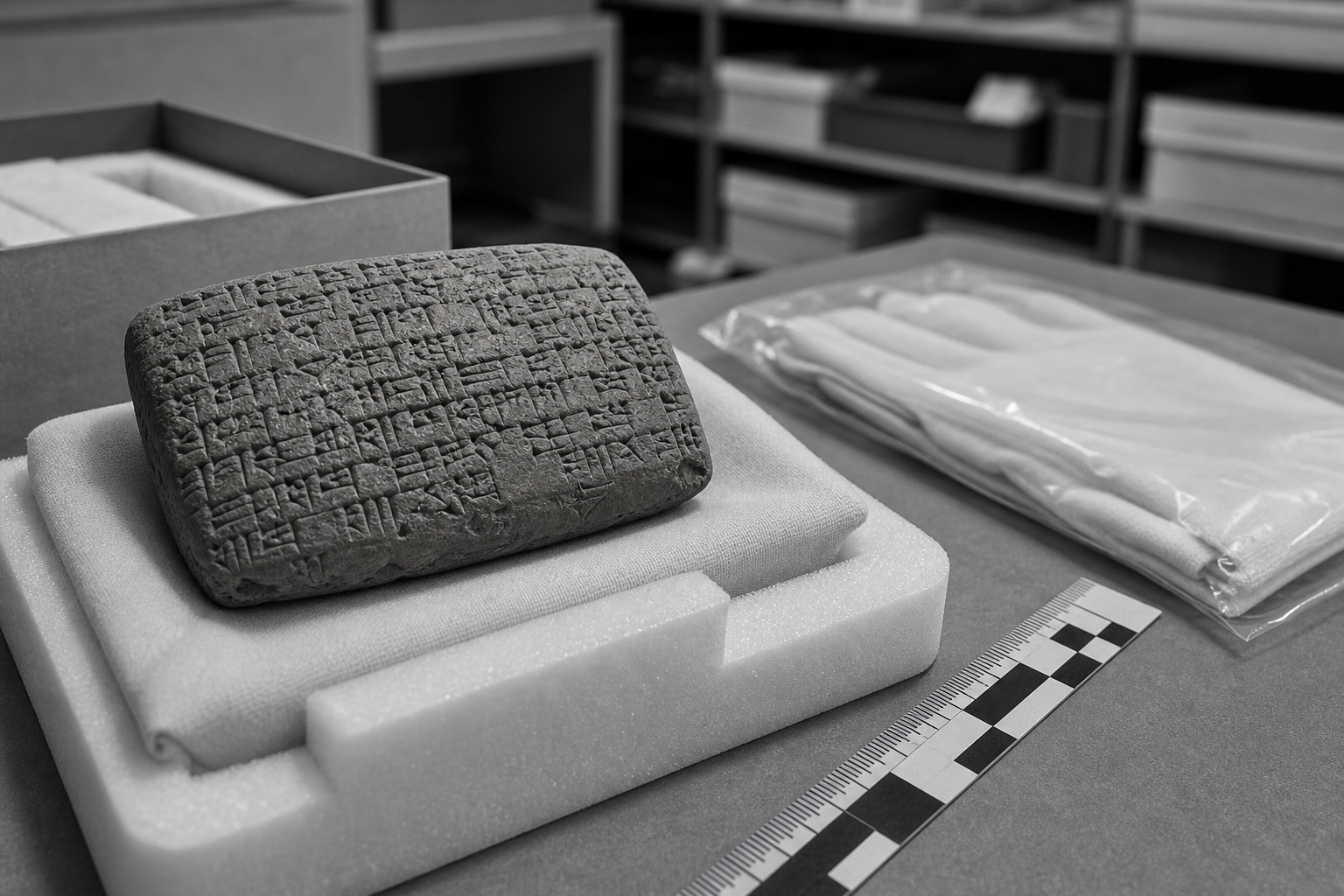
Some of the oldest surviving sky records are valuable precisely because they are less like later UFO stories. Babylonian astronomical diaries, preserved on cuneiform tablets, record recurring celestial phenomena, such as lunar events, planetary positions, and weather-linked observations, in a practical observational tradition. A modern retelling may isolate a striking light or “star,” but the surviving genre is a running astronomical record, not an account of an apparently manufactured object.
The biblical vision in Ezekiel 1 is another frequent candidate in retrospective interpretation. The text survives through a long manuscript tradition and describes wheels, fire, brightness, and living beings in a prophetic vision dated by its narrator to the early sixth century BCE. Those images belong to a religious vision of divine presence and throne imagery. The modern spacecraft reading comes from later commentary, not from a claim within the passage that an unknown vehicle arrived or was examined.
Chinese chronicles likewise preserve reports of “guest stars,” comets, eclipses, and other unusual appearances. Their terms can sound unfamiliar in translation, but their chronicle and astronomical contexts matter: a guest star is a temporary celestial appearance, not an ancient label for a craft. Such entries can preserve useful observations while leaving key modern-UAP questions unanswered, who observed the event directly, what measurements were made, and whether the description indicates anything other than a celestial phenomenon.
The weakest candidates for an earliest recorded UFO sighting are those repeated without an identifiable text, manuscript, date, or reliable translation. A dramatic paraphrase without that trail documents a modern story about antiquity, not an ancient observation.
Why Ancient Omens and Modern UAP Claims Are Not the Same Category
The decisive difference is the kind of material available to test. Ancient omen accounts generally preserve wording copied, compiled, translated, or retold after the reported appearance; they rarely retain observation conditions, independent witness statements, exact timing, or physical traces. A surviving text can show that a report circulated without preserving the information needed to evaluate the sight itself.
A modern UAP case can instead be assessed in separate layers: witness narrative, contemporaneous notes or recordings, corroboration by other observers, imagery, instrument or sensor readings, and a chain of custody showing where a file or object came from and whether it was altered. These layers are not present in every case, and their absence does not prove deception. They do determine what an investigation can test. One pilot’s account is different evidence from a synchronized visual observation, radar return, and authenticated image; even that combination still requires analysis for ordinary causes, error, and uncertainty.
“Unidentified” describes the present limits of the available information, not an answer about origin. In modern usage, unidentified anomalous phenomena are reports not resolved by the evidence at hand; the label does not establish an extraterrestrial, non-human, or technological cause. Relabeling a Roman portent, prophetic vision, or uncertain Egyptian story as a UAP supplies none of the observation controls, sensor data, or traceable materials it lacks.
That distinction sets the proper boundary for UFO disclosure or UAP disclosure. Those modern discussions concern records, imagery, and analyses that may be evaluated under present-day evidentiary standards. Ancient texts remain historically important on their own terms, but unexplained celestial imagery cannot be converted into modern UAP sightings merely by changing its label.
The Defensible Answer: Old Sky Reports, No Proven Ancient UFO Case
What survives sets the limit of the conclusion. An authenticated artifact or text, a transparent translation, and a known literary setting carry more historical weight than a viral paraphrase. Babylonian astronomical diaries on cuneiform tablets and Roman omen traditions may preserve very old reports of unusual celestial appearances, but neither supplies a verifiable first UFO sighting on record in the modern sense.
The contrast between the Tulli Papyrus and Roman prodigy literature makes the point. No inspectable ancient Tulli document is available, whereas Julius Obsequens’s late-antique compilation preserves portents assigned to 249–12 BCE; its shield- and chariot-like imagery belongs to an omen genre. That difference establishes a reported Roman tradition, not a craft’s nature or origin. Even unresolved wording is not proof of extraterrestrial visitation, aliens, or a government UFO cover-up.
For future ancient UFO claims, apply a simple rule: Can I inspect the source, its provenance, its wording, and its historical context? A missing artifact or untraceable translation is a weak signal; a dated text with readable wording is stronger, but still may establish only an omen report or observation rather than what caused it.
What the Historical Record Can, and Cannot, Show
That two-stage question prevents the oldest surviving mention of an unusual light from becoming, by default, the first UFO sighting on record. Age alone measures neither the reliability of a text nor the character of the reported phenomenon. The Tulli narrative fails at the first threshold because no authenticated ancient papyrus is available to evaluate. Roman prodigy material clears that threshold more often: it preserves a traceable literary tradition, but its language records signs interpreted within civic and religious life, not an investigated aerial object.
Ancient sky reports can therefore be historically real records without serving as proof that the described event occurred exactly as transmitted, and both propositions remain separate from proof of a non-human craft. A modern-style UAP case would require a tighter evidence trail: a report close to the event, identifiable observers or records, a traceable source history, and independent corroboration such as additional testimony, imagery, or instrument data.
- Strong signal: an inspectable primary text with a known origin, readable wording, and context that limits what it claims.
- Weak signal: a dramatic translation, an alleged lost artifact, or a modern paraphrase that omits the original language and transmission history.
The defensible conclusion is modest but durable: ancient societies recorded remarkable skies and gave them meaning as omens; no surviving account securely establishes an ancient UAP case under modern evidentiary standards.
Sources
Frequently Asked Questions
-
What is the first UFO sighting on record?
No surviving ancient account securely qualifies as the first UFO sighting in the modern sense. Ancient texts record unusual sky appearances, but they do not provide the traceable observations, corroboration, imagery, or sensor data needed to identify an anomalous craft.
-
Is the Tulli Papyrus authentic evidence of an ancient UFO sighting?
No. No authenticated Tulli Papyrus is available for inspection, and it has no accessible archaeological context, museum catalog record, or secure chain of custody. The widely repeated story of fiery disks comes from a disputed later reported text rather than a verifiable Egyptian artifact.
-
Did ancient Romans record UFOs in the sky?
Roman writers recorded prodigies, including a scutum ardens, or burning and shining shield, reportedly seen at sunset moving west to east in an entry assigned to 98 BCE. Julius Obsequens compiled these reports in late antiquity for events dated from 249 to 12 BCE, but the shield comparison describes an omen-like appearance, not a constructed object.
-
What did ancient sky omens mean to the people who recorded them?
Ancient communities treated unusual sky appearances as signs connected to military defeat, civic disorder, crops, rulers, or dynastic stability. Descriptions such as fire in the sky, shields, and celestial armies emphasized symbolic meaning and visual resemblance rather than measurable details such as altitude, speed, distance, and physical composition.
-
How can you tell whether an ancient UFO claim is credible?
Look for an inspectable primary text, known provenance, readable original wording, a secure date, and identifiable literary context. A dated source can establish that an omen report circulated, while a missing artifact, untraceable translation, or dramatic modern paraphrase is weak evidence and cannot establish a modern-style UAP case.