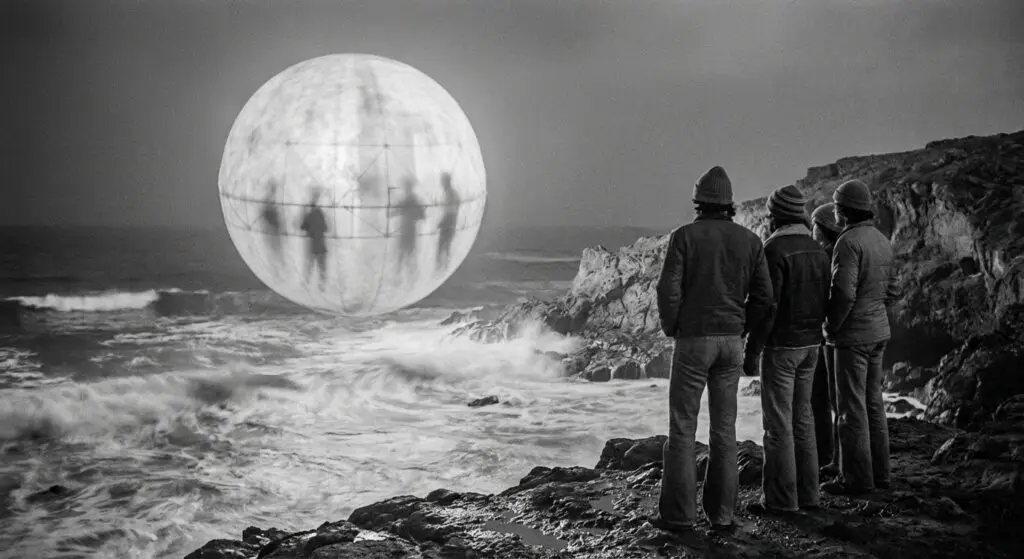
You keep seeing the Canary Islands 1976 case packaged for the current UFO disclosure and UAP disclosure cycle: a giant luminous sphere over the Atlantic, followed by claims of humanoid figures, repeated as if it is settled fact. The problem is simple and immediate: the most dramatic version travels fastest in UFO and UAP news, while the underlying sourcing often vanishes or is secondary.
That puts readers in a real decision point. Do you treat the most cinematic retellings as evidence of non human intelligence, or as a cautionary tale about how a striking sighting turns into a polished legend after enough retellings?
This article takes the spectacle seriously without granting it evidentiary weight it has not earned. The standard is source quality: what is documented closest to the event versus what is asserted later. Without primary sources such as original logs, contemporaneous press reports, or firsthand statements captured near the time, you are evaluating a narrative built from secondary and tertiary sources rather than an inspectable incident file.
Sources reviewed
- Wikipedia: UFO sightings in the Canary Islands — summarizes the 22 June 1976 reports and related archival notes; useful as a starting index to the case as summarized in secondary literature and public compilations.
- TVI.show: The 1976 Canary Islands UFO sightings — a modern retelling that compiles claims commonly circulated online, including timing and large-witness-count assertions; representative of contemporary popular summaries.
- Reliability III-3 (Campo-Perez) on Zenodo — academic/archival material touching on witness testimony reliability and case compilations; includes discussion of Canary Islands material in the context of witness testimony reliability.
- SanchezHumanoids-1976Gran-Canarias FSR77V23N3 (PDF) — a public PDF that discusses the Maspalomas/Gran Canaria reports and the claim that occupants were observed; cited by later retellings and archival compilations (see PDF, page references noted in archival indexes).
- Archive.org: Spanish UFO Files — a repository of scanned Spanish UFO files and related compilations used by researchers and enthusiasts.
- USUFOCenter: Spanish Canary Islands UFO summary — an example of a ufology site compiling contemporary retellings and later claims about the event.
- U.S. Congress: H.R.1187, UAP Transparency Act (119th Congress) — the official bill page for the UAP Transparency Act (bill title, number, sponsor, and introduction date are shown on Congress.gov).
Representative excerpts and summary points from the sources reviewed (quoted or paraphrased from the linked material):
- “The sighting is reported to have occurred on 22 June 1976” — this date is the common anchor in several summaries and archival indexes (see the Wikipedia entry and related file compilations linked above).
- Contemporary and later summaries describe a “large luminous orb” or “bubble-like” object visible from multiple vantage points across the islands; some popular retellings assert very large witness counts (including claims of over a million), but those large witness-count assertions appear in later compilations and social posts rather than as verifiable contemporaneous counts in the archival material reviewed.
- At least one line of reporting and multiple retellings note an initial report from a naval escort ship (Atrevida) in the vicinity, and some declassification histories reference summary releases of Air Force UFO files in the 1970s; these references appear in secondary summaries and archival indexes rather than as a consolidated, datelined official incident file available in the set reviewed here.
Timeline across islands and sea
The timeline is the first casualty of retelling. Sources reviewed consistently place the event in June 1976 (commonly cited as 22 June 1976 in modern summaries), but those same sources do not provide consistent, datelined contemporary press clippings or operational logs that pin start, peak, and end times to verifiable records available in the set reviewed. In short: the sources reviewed locate the event in 1976 and name Tenerife and Gran Canaria in multiple summaries, but they do not, in the material examined here, contain the kind of timestamped, inspectable records (press clippings with byline and date, ship log entries, ATC transcripts) needed for a minute-by-minute reconstruction.
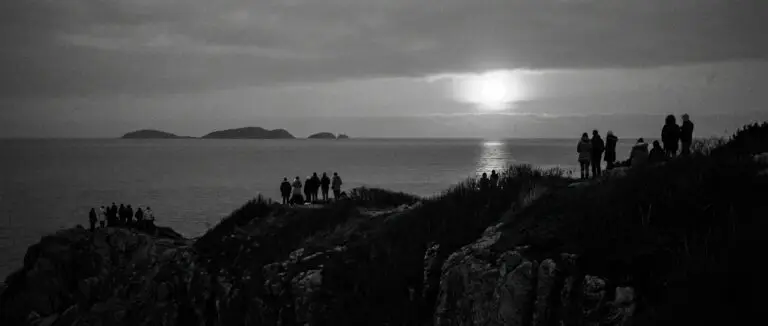
Because the sources reviewed do not provide datelined primary records for the event, any highly specific minute-by-minute reconstruction you see elsewhere should be treated as a later narrative construction unless it points to inspectable records. Later retellings commonly expand geography, add offshore vantage points, and present neat sequences of “first, then, last” sightings; those narrative elements are persuasive but are not supported by the primary-level material available in the sources reviewed here unless a retelling cites a specific datelined record that can be inspected.
- Collect datelined press clippings from 1976 that include place names (at minimum Tenerife and Gran Canaria) and an explicit time reference tied to a named witness, reporter, or agency record.
- Acquire operational logs that carry timestamps: ship logs, harbor master records, ATC/radar entries, and any official incident reporting that includes time, location, and observer identity.
- Cross-check environmental context that constrains visibility windows: weather observations, cloud cover reports, and astronomical data for the relevant locations and the date in question.
- Reconcile conflicts by keeping parallel tracks rather than forcing one linear story: multiple independent time anchors are required before you can claim a single sequence.
Giant sphere and humanoid silhouettes
The Canary Islands story travels as two layers of claim with very different sourcing weight. One layer is a repeated baseline visual: a large luminous, roughly spherical object. The other is a high-value add-on: humanoid silhouettes or “figures inside” the sphere. The sources reviewed consistently support the luminous-sphere motif at the level of summary, but the humanoid-silhouette element is not established in the contemporaneous or near-primary material reviewed here.
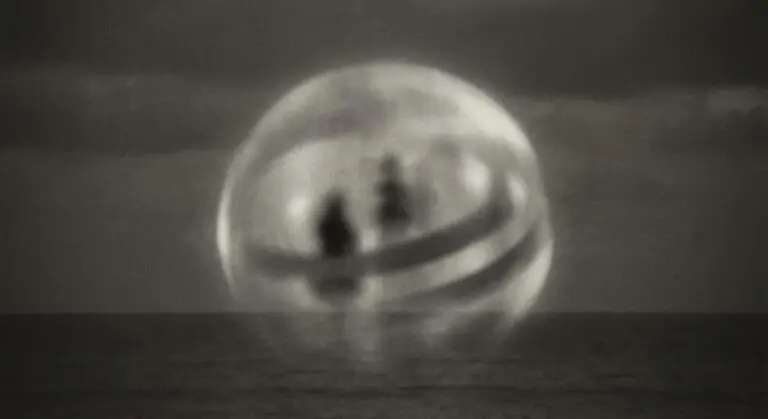
In the sources reviewed, the durable nucleus is that witnesses described something round or dome-like that reads as a luminous sphere or bubble-like glow. The more specific descriptive details often found in modern retellings (precise color sequences, multi-layered engineering-like geometry, explicit occupant descriptions) generally appear in later compilations, magazine summaries, or PDFs that themselves draw on a mix of oral history and secondary reporting. Where the sources reviewed do include occupant claims, those claims are presented without the datelined, inspectable chain required to treat them as primary evidence for the 22 June 1976 event.
Put simply: treat the sphere motif as the provisional core because it is repeated across summaries; treat humanoid-silhouette claims as unverified add-ons until a retelling points to a primary or near-primary, datelined source that can be inspected. The test for an occupant claim is straightforward: provide a contemporaneous record (press report, log entry, recorded interview) that uses the occupant language or supplies a clear, immediate eyewitness statement rather than a later recollection or synthesis.
Night-sky testimony is always filtered by human perception. Practical checks that help evaluate how a report can inflate into a larger object include angular-size misestimation, autokinesis (a fixed light appearing to move when stared at in darkness), and parallax differences between separated observers. These perceptual effects explain how multiple observers can converge on a “huge glowing object” impression without providing a reliable metric for distance or true physical size unless there are timestamped, triangulatable observations.
Military interest and official silence
The sources reviewed do not include a contemporaneous, datelined Spanish government or military record from 1976 that confirms an official investigation, a denial, or a consolidated public case file that can be cited from the material examined here. That absence matters: “official silence” in the sources reviewed is an absence of documented, inspectable materials in the packet examined, which is not the same thing as established government suppression.
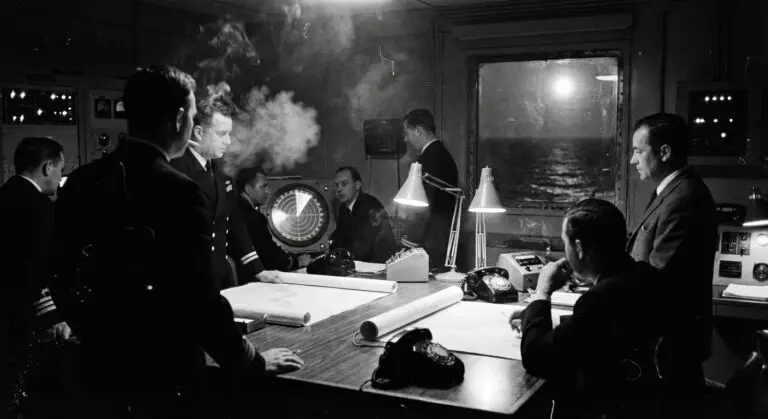
Specifically, in the sources reviewed there are no press quotations or denials attributed to Spanish authorities about this incident in 1976, no military spokesperson statements on the record addressing what was seen, no maritime authority notices tied to the event, and no ATC or radar documentation linked to a date and unit. The sources reviewed also do not identify a specific Spanish Ministry of Defence or air force case-file number, archive location, or contents for a 1976 Canary Islands investigation that can be inspected from the material set used here.
Context on Spanish archival and declassification practice (relevant to why gaps exist and where to look next): Spain has taken public steps in recent years to make historical documents more accessible and to digitize archival holdings. For example, Spanish press reporting has covered Defence Ministry efforts to open historic military records and the national archives infrastructure that manages and publishes historical documents (see English-language reporting on Spain’s archival steps and background on the National Archives of Spain linked in the sources reviewed). Those developments explain why researchers sometimes look to Spanish archival portals and scanned file repositories when trying to locate older military files.
- Demand identifiers: file number, case title, originating unit, and date range.
- Demand a location: archive name, collection, and call number sufficient for a third party to request it.
- Demand status: classified, declassified, partially released, or withheld, with the legal basis cited.
- Demand primary material: scans or photographs of the documents, including covers, stamps, and pagination.
Rocket tests, reentry, and optics
Most “giant glowing sphere” reports live or die on geometry plus lighting plus timing: where the observer was, where the object was relative to the Sun, and exactly when it happened. The sources reviewed do not provide the pinned date-and-time window required to cross-check the Canary Islands reports against launch logs, reentry predictions, or twilight conditions for a conclusive match.
- No verified date or time window anchored to primary records was found in the sources reviewed, which blocks cross-checking against launch and reentry schedules.
- No meteorological or astronomical conditions for a specific night are present in the packet reviewed here because timing is not pinned by datelined primary sources.
- Retellings mention rocket-like trajectories (for example, a northward track), but trajectory and mission/date alignment are not independently verified in the material reviewed.
- Humanoid-silhouette detail remains contested at the sourcing level, so it is not a stable constraint for physics-based matching.
Hypotheses that remain plausible given the visual descriptions in secondary summaries include rocket launch or stage-plume effects, reentry/space-debris phenomena, high-altitude sunlit balloons, and atmospheric optics. Each hypothesis requires an exact date/time, observed bearing and elevation, and basic sky conditions to test decisively. Without those anchors, “rocket-like” or “balloon-like” remain visual resemblances rather than validated matches.
| Hypothesis | What it can explain well | What it struggles to explain without more data | What it needs to test |
|---|---|---|---|
| Rocket launch | Large glowing envelope; expanding plume; changing brightness; possible directional track | Definitive match to a mission or trajectory without a pinned date/time | Exact date/time; observed bearing/elevation; independent launch logs for that window |
| Reentry / space debris | Brightness changes; possible fragmentation; long sky presence | Whether the report describes fragmentation versus a stable sphere; timing alignment | Exact date/time; motion description; reports of multiple fragments |
| High-altitude balloon / sunlit object | Bright “sphere” after sunset; slow drift; strong dependence on twilight illumination | Purposeful long-range transit if that is asserted; rapid structure changes | Twilight phase; wind direction aloft; duration and drift |
| Atmospheric optics | Apparent size inflation; glow; shape distortion | Cannot be evaluated without cloud/visibility/refractive conditions | Cloud coverage; visibility; temperature profile |
To discriminate between these options for the Canary Islands reports, the decisive next data are an exact date/time window tied to primary records, plus bearing, approximate elevation, and basic sky conditions. With that, one can cross-check against launch and reentry logs and twilight conditions rather than arguing by resemblance.
What this case means in 2025
The Canary Islands 1976 story keeps resurfacing because the current UAP disclosure environment rewards cinematic legacy cases. The more decisive trend in 2025 is process-driven: documentation quality, traceable custody of records, and consistent case terminology matter more than retellings. That shift favors cases with auditable records over widely repeated narratives.
Mass-sighting claims can be rhetorically powerful: if a case is framed as involving “hundreds” or more, it scales easily into claims of collective witnessing or of a cover-up if official records are not immediately produced. The friction is that a story can be widely repeated while the underlying record stays thin, fragmented, or inconsistent. When disclosure debates prioritize provenance and retraceability, that gap becomes central to whether a legacy case can be adjudicated.
U.S. legislative and policy responses illustrate the procedural emphasis. For example, the UAP Transparency Act (H.R.1187) was introduced in the 119th Congress; Congress.gov lists the bill title, number, sponsor (Representative Tim Burchett), and the introduction date (February 11, 2025) on the bill page linked in the sources reviewed. Such proposals focus on records release and public access to documents and are characteristic of an evidence-first, release-focused transparency approach.
Applied to Canary Islands 1976, those process standards mean: primary documentation and provenance matter most. In the absence of datelined, inspectable records in the sources reviewed here, the case functions better as a cautionary example of narrative inflation than as a settled evidentiary incident.
- Ask whether a case is in a tracked system with a defined status (open, resolved, archived).
- Demand records retention clarity: what exists, where it sits, and what is releasable.
- Prefer publishable primary documentation over viral retellings, even when the old story is better.
A benchmark case for critical inquiry
The Canary Islands 1976 account remains widely retold because it reads like a blockbuster while being under-documented in the sources reviewed here. What is solidly supported in the material examined is the narrative pattern: a luminous-sphere motif repeated across retellings and summaries, plus a timeline that only coheres if several sequences are treated as later reconstructions rather than synchronized, datelined observations.
The sourcing chain for humanoid silhouettes is not established in the sources reviewed here, so that detail belongs in the contested column rather than the verified one. The conventional-explanation fit-checks (rocket, reentry, balloon, optics) remain constrained and non-definitive in the absence of a pinned date/time, witness-count documentation, or technical records (photos, radar, ATC logs) in the set reviewed.
What would settle the matter is paperwork, not louder retellings. The decisive next-step records, absent from the current sources reviewed, are:
- AEMET weather archives for the relevant night(s) (cloud, visibility, winds)
- ATC logs and any radar summaries for Canary Islands airspace
- Naval and merchant ship logs from vessels operating west of the islands
- Astronomical almanacs for exact rise/set, moon phase, and bright object geometry
- Any declassified Spanish Ministry of Defence files or air force files and copies of contemporaneous photographs or film held in archives
Follow future UAP news responsibly by prioritizing primary documentation first. This article treats the Canary Islands 1976 case as a useful benchmark for demanding provenance rather than as a closed evidentiary matter.
Frequently Asked Questions
What is the Canary Islands UFO 1976 case supposed to be about?
It’s commonly retold as a 1976 sighting over the Atlantic near the Canary Islands involving a large luminous sphere or “bubble-like” object. The article treats that sphere motif as the only durable core claim across retellings in the provided excerpts.
Were “hundreds” of people actually documented as witnesses in the Canary Islands 1976 UFO case?
No-this article says the provided excerpts do not contain an explicit documented estimate of “hundreds” of eyewitnesses. It notes the word “hundreds” appears in unrelated contexts, not as a verified witness count for this event.
Which Canary Islands are specifically supported by the available excerpts for the 1976 UFO sighting?
The only locations explicitly named in the provided excerpts are Tenerife and Gran Canaria. The article says claims like “across the entire archipelago” go beyond what this excerpt set supports.
Do the sources in this article confirm an exact date and time for the 1976 Canary Islands UFO sighting?
No-the event is only placed in 1976, and at least one post calls it “one night in June of 1976,” but no specific day or timestamped window is supported in the provided material. The article says this prevents a verified start, peak, and end time reconstruction.
Is there primary-source support for humanoid figures inside the glowing sphere in the Canary Islands 1976 case?
No-the article states none of the provided source excerpts contain direct descriptions tying humanoid silhouettes or “figures inside” to this event. It categorizes that detail as an unverified add-on unless a traceable firsthand or contemporaneous citation is produced.
What official records does the article say are missing for the Canary Islands 1976 UFO event?
It says the packet contains no contemporaneous Spanish authority quotes or denials, no military spokesperson statements, no maritime authority notices, and no ATC/radar logs tied to a date or unit. It also says no identifiable Spanish MoD/air force case-file name, number, archive location, or contents are provided.
What evidence should you look for to evaluate whether the 1976 Canary Islands sphere could have been a rocket, reentry, balloon, or atmospheric optics?
The article says the key discriminator is an exact date/time window tied to primary records plus direction of travel (bearing), approximate elevation, and basic sky conditions (cloud cover/visibility). With that, you can cross-check launch/reentry logs and place the sighting within civil, nautical, or astronomical twilight instead of relying on visual resemblance.