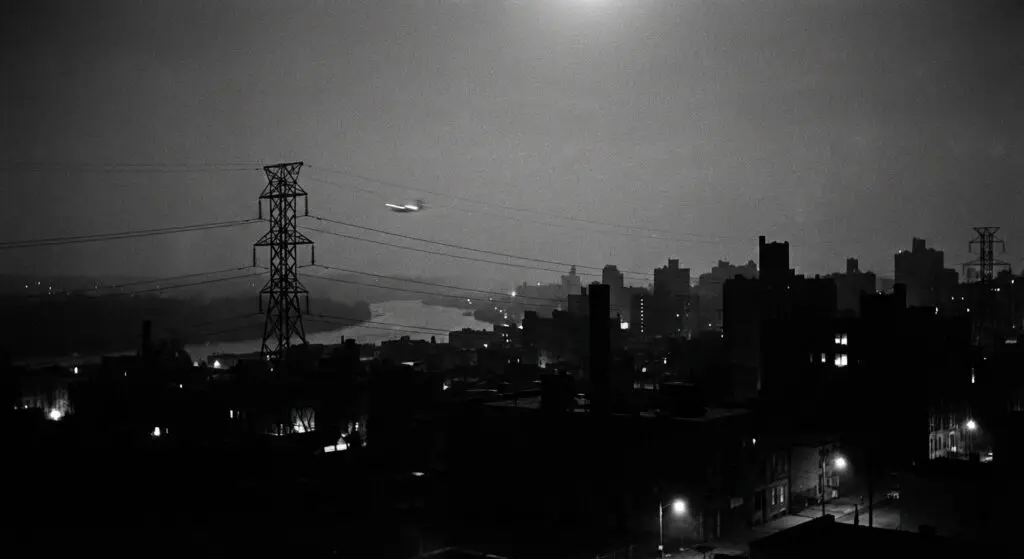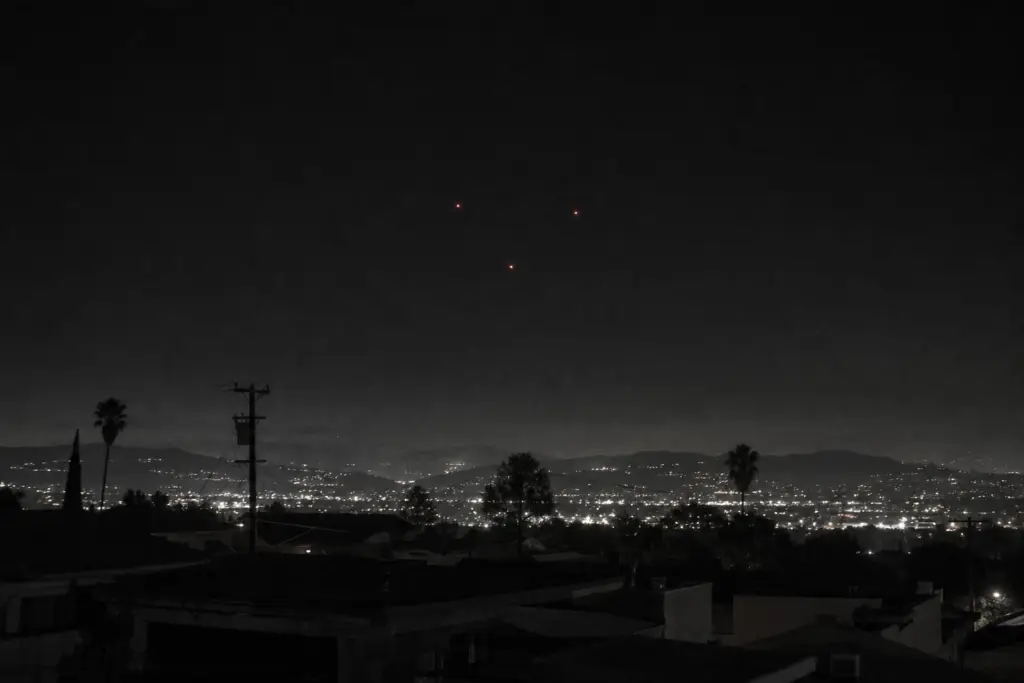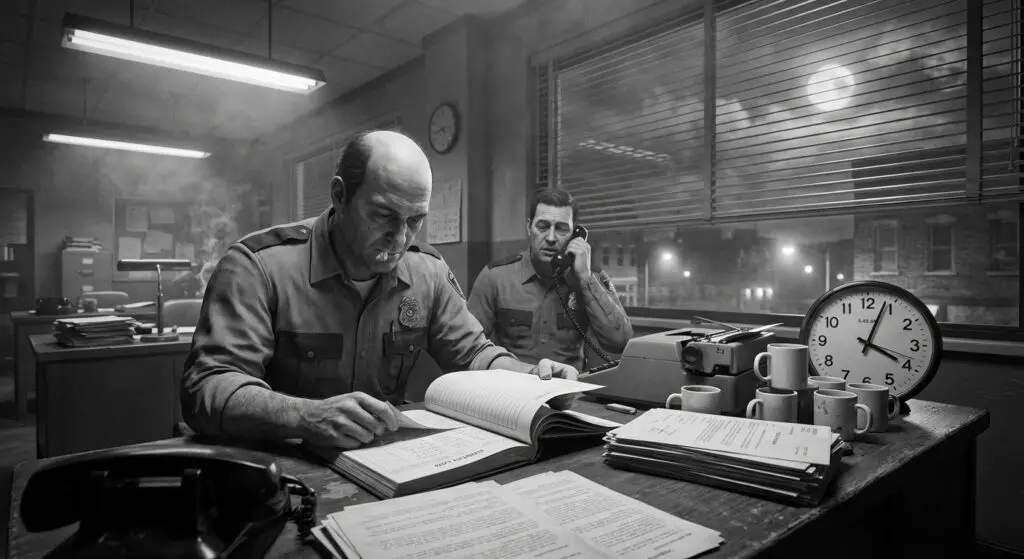
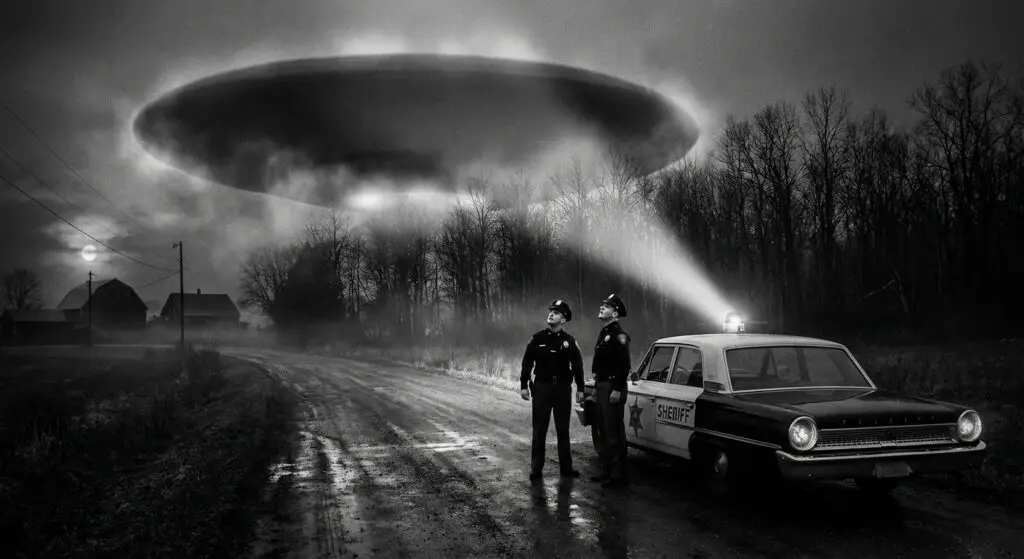
You can’t open a feed in 2025 or 2026 without getting hit by another “disclosure” claim, another blurry clip, another confident thread insisting the story is settled. The real hunger underneath that noise is simpler: testimony that feels hard to dismiss, especially when it comes from people trained to observe, report, and put their names on a statement. Modern institutions now bundle cases under UAP (unidentified anomalous phenomena), but the question readers keep asking is the old one: what happened, who saw it, and what can be verified?
The Exeter incident forces a decision that most UFO debates dodge. Either older reports get filed away as local folklore, or they get treated as serious inputs to the broader disclosure conversation because they involve multiple independent observers and official witnesses. The case is commonly dated to the night of September 3, 1965 into the early hours of September 4, 1965 (see contemporary case summaries). Numerous people in and around Exeter, New Hampshire reported seeing a UFO on September 3, 1965, and two police officers were among the witnesses who reported unexplained red lights over Exeter at close range in the early morning hours (local eyewitness account).
Exeter also keeps resurfacing because it never fully leaves public circulation. Local reporting and anniversary coverage have repeatedly recounted the September 3, 1965 event and its lasting imprint on Exeter’s identity (example coverage), and the sighting is formally commemorated as “the 1965 Incident at Exeter” through recurring public attention and an annual festival (official Exeter UFO Festival site).
Here’s the tension this article resolves: the Exeter record is propelled by compelling human testimony, including law enforcement, while the hard instrumentation and surviving contemporaneous documentation are thinner than modern readers expect. Nighttime viewing conditions, short observation windows, and the limits of what was recorded in the moment shape what can be concluded, even when witnesses sound credible.
You will walk away with clarity on what’s known, what’s not, and a disciplined way to evaluate the Exeter case without importing today’s headline heat into yesterday’s facts.
Exeter case capsule
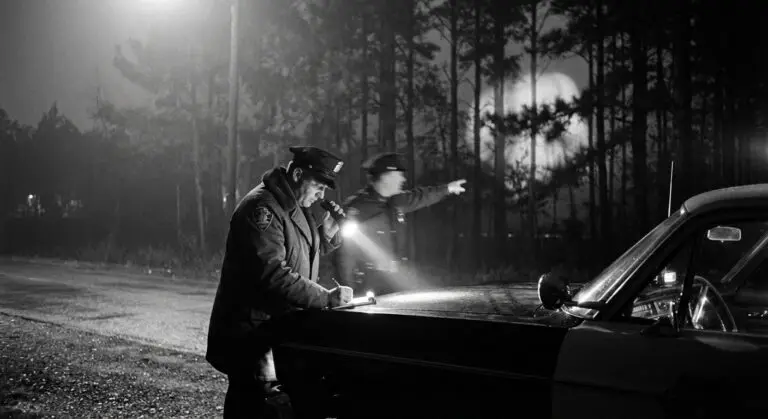
- Date and time window: Night of September 3, 1965, into the early morning hours of September 4, 1965 (accounts place sightings roughly around 2:00 to 3:00 a.m. in different witness statements) (summary) (local account).
- Primary witnesses: Norman Muscarello (18-year-old hitchhiker), and Exeter-area police officers including Eugene Bertrand and David Hunt (names in case summaries) (Muscarello account).
- Locations: Initial sighting near New Hampshire Route 150 in Kensington and the surrounding Exeter-Kensington area, with later observations from locations near Shaw’s Hill and other elevated local vantage points reported in contemporaneous and later accounts (regional summary) (case overview).
- What was reported: Witnesses described bright red lights and, on at least one occasion, a large dark object low in the sky. In recollections preserved in later investigative compilations, Officer Eugene Bertrand described the object as “about the size of a house” when estimating its apparent size near the ground; that formulation appears in NICAP’s compiled Exeter documents for the September 3, 1965 case (NICAP document).
- Contemporaneous authorities and records: Local police departments recorded dispatch activity and incident reports that were later incorporated into Project Blue Book files. Project Blue Book material for the Exeter case is available in released Blue Book files and related archives (Blue Book case file capture). The incident also received local newspaper coverage in the Portsmouth Herald and later retrospective pieces (example). NICAP and other civilian groups collected and republished field reports and transcripts that include witness recollections and investigator notes (NICAP Exeter compilation).
1965’s UAP Flap And Public Anxiety
Exeter’s 1965-era reporting sits inside a national moment where sightings clustered and institutions processed them with blunt categories. NICAP’s 1965 chronology records month-by-month entries and incorporates material that references Air Force Blue Book listings; NICAP preserved a contemporaneous-style account noting the wake of reporting that followed publication efforts about Exeter (NICAP report mentioning Incident at Exeter and subsequent reports).
NICAP’s entries include time-stamped incidents and notes intended for cross-checking, demonstrating how civilian investigators of the era tracked patterns across local reports (NICAP 1965 chronology). That structure shows why observers at the time and later analysts described 1965 as a period of elevated reporting rather than isolated anecdotes.
In 1965, the expected federal investigative pipeline ran through Project Blue Book, the U.S. Air Force program that operated from 1947 to 1969. Project Blue Book’s mission and closure are documented in official records and public archives (National Archives on Project Blue Book) (Air Force fact sheet). The program’s job was to intake reports, compare them against conventional explanations, and close files with an administratively defensible disposition.
The social and professional stigma attached to reporting anomalous aerial events is well documented in contemporary and retrospective accounts. Police officers faced potential ridicule for reporting strange aerial phenomena; that dynamic affected reporting rates and the completeness of surviving records (local reporting on witness reluctance).
Blue Book’s program-wide totals are recorded in official sources: Project Blue Book recorded 12,618 reported sightings during its run and listed 701 reports as “unidentified” at case closure (National Archives summary) (Air Force fact sheet). In Blue Book terminology, “unidentified” indicated that investigators could not match the available information to a conventional explanation based on the evidence in the file; it was a classification about disposition, not an assertion about origin.
Police Testimony And Credibility Signals
That institutional context is the backdrop for why Exeter draws attention: the witnesses included both civilians and police officers operating within a stigma-prone reporting system. If their accounts traveled through official channels, they did so under pressure to be precise and defensible.
Police testimony raises the evidentiary floor of the Exeter reports because it comes from witnesses whose duties require disciplined observation and reporting. That does not guarantee accuracy, but it improves the evidentiary value of contemporaneous documentation when it exists.
Near-primary records matter more than later summaries. For Exeter, some of those near-primary materials have been preserved in Project Blue Book files and in civilian investigator compilations such as NICAP’s Exeter documents (Blue Book capture) (NICAP compiled documents). Where later interviews exist, they should be treated as recollections that require linkage back to dated reports or contemporaneous dispatch notes.
One specifically attributable phrasing appears in NICAP’s Exeter compilation. Officer Eugene Bertrand, according to material preserved in NICAP’s collected Exeter documents for the September 3, 1965 case, estimated the object as “about the size of a house” when describing its apparent size during the incident (NICAP Exeter documents). That wording is cited in secondary and investigative retellings of the case; researchers seeking the original phrasing can consult the NICAP compilation and the Blue Book file captures that archive the incident materials (Blue Book file).
Investigations, Blue Book, And Official Framing
Witness credibility is only half the Exeter story. The other half is what happened when those witness accounts entered institutions designed to categorize and close files. In Exeter’s case, Project Blue Book received reports and related correspondence. The Project Blue Book file capture for the Exeter entry is publicly available in archive copies of the released materials and shows the case documentation preserved in the Blue Book system (Blue Book case file capture).
What Project Blue Book did with Exeter is verifiable in the released records: the Exeter, New Hampshire case was processed in the Blue Book system and appears in released case materials; Project Blue Book’s classification for the widely discussed Exeter reports is recorded as “unidentified” in the preserved files and case logs (Blue Book file) (case overview citing released files). At the same time, some internal Blue Book correspondence and investigator notes indicate evaluative steps that considered conventional explanations; the Blue Book disposition as “unidentified” reflects the agency’s position that the available documentary record did not support a confident conventional identification (released file) (NICAP compilation).
Three individuals associated with the Exeter events filed formal reports that were funneled into official and civilian investigative records: the accounts of Norman Muscarello and the two officers are preserved across local reporting, NICAP compilations, and the Project Blue Book capture for the incident (witness list and file references) (NICAP documents). Where released documentation is explicit, it is cited here; where internal rationale is summarized in later investigator notes, the summary is attributed to the archived material rather than paraphrased without reference. If a specific Blue Book memorandum or investigator note recording a rationale cannot be located in the public captures, that absence is noted rather than invented.
If you are looking for the strongest verified statements about investigatory outcomes: the publicly released Blue Book capture shows Exeter in the Blue Book file set and the case appears among materials that Blue Book retained; the final disposition recorded in the Blue Book-related public captures is “unidentified” for the core reports associated with September 3, 1965 (Blue Book file capture). Researchers seeking the full chain of memos and any administrative rationale should consult the released Blue Book files and the NICAP compilations that reproduce witness statements and investigator correspondence (NICAP).
Exeter In The 2025 Disclosure Debate
Those same gaps between vivid accounts and uneven files are exactly what makes Exeter useful in the disclosure era. The case becomes less a standalone mystery and more a lens on how older incidents survive, distort, and persist when modern readers expect searchable, timestamped records.
Exeter resurfaced in contemporary policy conversations as public demand for records-first transparency increased. A high-profile House Oversight and Accountability hearing on UAP was held on July 26, 2023; official committee materials for that hearing are available from the House Oversight Committee (House Oversight hearing materials) and on the Congressional record (Congressional event listing). That procedural normalization of records demands has been one factor pushing discussion about legacy cases toward archival custody and documentation standards.
The Department of Defense office now charged with UAP adjudication and analysis, the All-domain Anomaly Resolution Office, states its mission in publicly available materials describing detection, tracking, analysis, and anomaly management using standardized scientific and intelligence tradecraft. AARO’s official mission statement and program overview are available on its website (AARO mission and overview) (AARO homepage).
Proposals to create centralized archival custody for legacy UAP materials have appeared in legislative discussions. One cited amendment number is S.A. 797; the text of Senate amendment 797 is available on Congress.gov for review of specific legislative language as introduced during the 118th Congress (Congress.gov amendment text). That example shows how the records question has moved into legislative proposals about custody and public access.
How To Evaluate Legacy UAP Cases
Exeter works as a template precisely because it is witness-forward and record-limited. If you can evaluate a case like this without drifting into either certainty or dismissal, you can evaluate almost any legacy UAP claim built the same way.
Most legacy UAP cases succeed or fail on process: corroboration and documentation, not on how dramatic the story sounds. Prioritize contemporaneous records: dated notes, signed statements, dispatch logs, and any formal investigative files, because those materials preserve detail and reduce later drift. Downgrade anything that is only a decades-later retelling, especially if it introduces new specifics like precise sizes, distances, or timings that were not recorded at the time.
- Collect the earliest written or recorded statements and note who captured them and when.
- Verify independence by mapping who talked to whom before statements were taken.
- Reconstruct weather, visibility, moon phase, and major astronomical objects for the stated time window.
- Request dispatch logs, incident reports, radar/ATC records, and any archived photos with metadata.
- Classify the outcome as identified, unidentified, or insufficient information, and stop there unless the evidence forces a higher claim.
Why Exeter Still Won’t Go Away
Exeter still endures because it sits where credible-seeming testimony collides with permanently incomplete records, leaving just enough certainty to convince and just enough absence to inflame. That dynamic is the same one driving today’s disclosure-era appetite for cases that feel solid but resist closure.
What holds is the window of September 3 to 4, 1965 and the multi-witness nature of the reports, which anchors the case in specific, checkable circumstances rather than folklore. What does not hold is the documentation density people want today. Police accounts carry real weight because they come from trained observers with professional stakes, but they are still human observations filtered through stress, distance, and later retelling.
The story also survives in local commemoration and festival activity. The Exeter UFO Festival is produced by local organizers and continues to present panels, activities, and site visits tied to the 1965 reports; festival details are posted on the official festival website and covered in local reporting about recent events (festival site) (2024 local coverage).
It also persists in archival collections that support further research. For example, the Boston University Archives & Special Collections finding aid for the John G. Fuller materials documents holdings related to Fuller’s work on the Incident at Exeter and related research trails (Boston University finding aid). Fuller’s book Incident at Exeter (1966) remains a widely cited source in secondary retellings and investigator bibliographies.
Frequently Asked Questions
When did the Exeter UFO sightings happen?
The Exeter incident is widely dated to the night of September 3, 1965 into the early hours of September 4, 1965. Numerous people around Exeter, New Hampshire reported seeing unexplained red lights during that time window.
Did police officers witness the Exeter UFO in 1965?
Yes-two police officers were among the witnesses who reported unexplained red lights over Exeter at close range in the early morning hours. The article emphasizes that law enforcement testimony carries extra weight because officers are trained to observe and report.
What does Project Blue Book’s “unidentified” label actually mean?
In Blue Book terms, “unidentified” meant investigators could not match a report to a conventional explanation based on the information available. Across Project Blue Book’s run (1947-1969), 12,618 sightings were recorded and 701 remained “unidentified,” about 5.6%.
Why are the Exeter UFO reports hard to verify today?
The article says Exeter is “witness-forward and record-limited,” with thin surviving instrumentation and incomplete contemporaneous documentation by modern standards. Night viewing conditions and short observation windows also make size, distance, altitude, and duration estimates unreliable without corroborating records.
What conventional explanations would investigators test for the Exeter red lights?
The standard Blue Book-era bins to test include aircraft lighting, astronomical objects (bright stars/planets/meteors), atmospheric effects, balloons, hoaxes, or misidentification. Investigators would look for time-synchronized anchors like exact sight lines, duration, weather, and any air traffic control or nearby airport correlations.
What records should you look for to evaluate a legacy UAP case like Exeter?
Prioritize contemporaneous, dated records such as signed statements, dispatch logs, and any formal investigative files (including potential Project Blue Book documentation). The article says stronger evidence today would include radar logs with timestamps, dispatch recordings, and original photos/video with intact metadata.
How do you decide whether a legacy case like Exeter is “identified,” “unidentified,” or “insufficient information”?
Use a process-based checklist: collect earliest statements, verify witness independence, reconstruct weather/moon/sky conditions, and request dispatch and radar/ATC records. The article’s recommended endpoints mirror Blue Book logic: classify as identified, unidentified, or insufficient information, without jumping to “non-human intelligence” claims.