Belgian Wave (1989–1990): What the Records Say, What the Radar Claims Were, and Where Certainty Ends
Examine the Belgian Wave through police reports, F-16 radar claims and witness evidence, separating documented facts from unresolved questions.
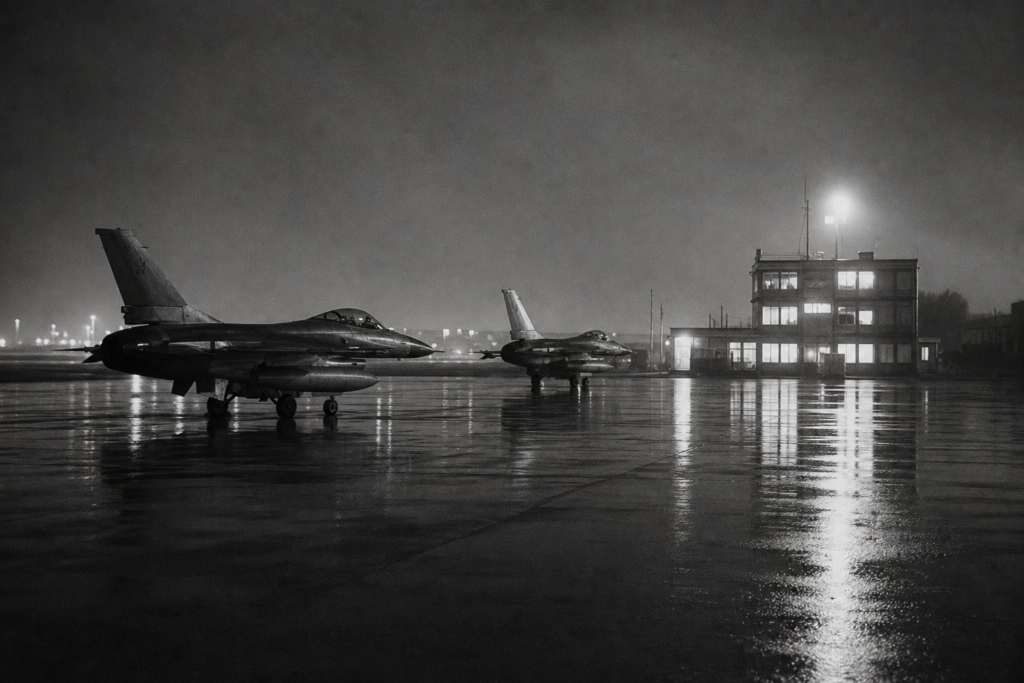
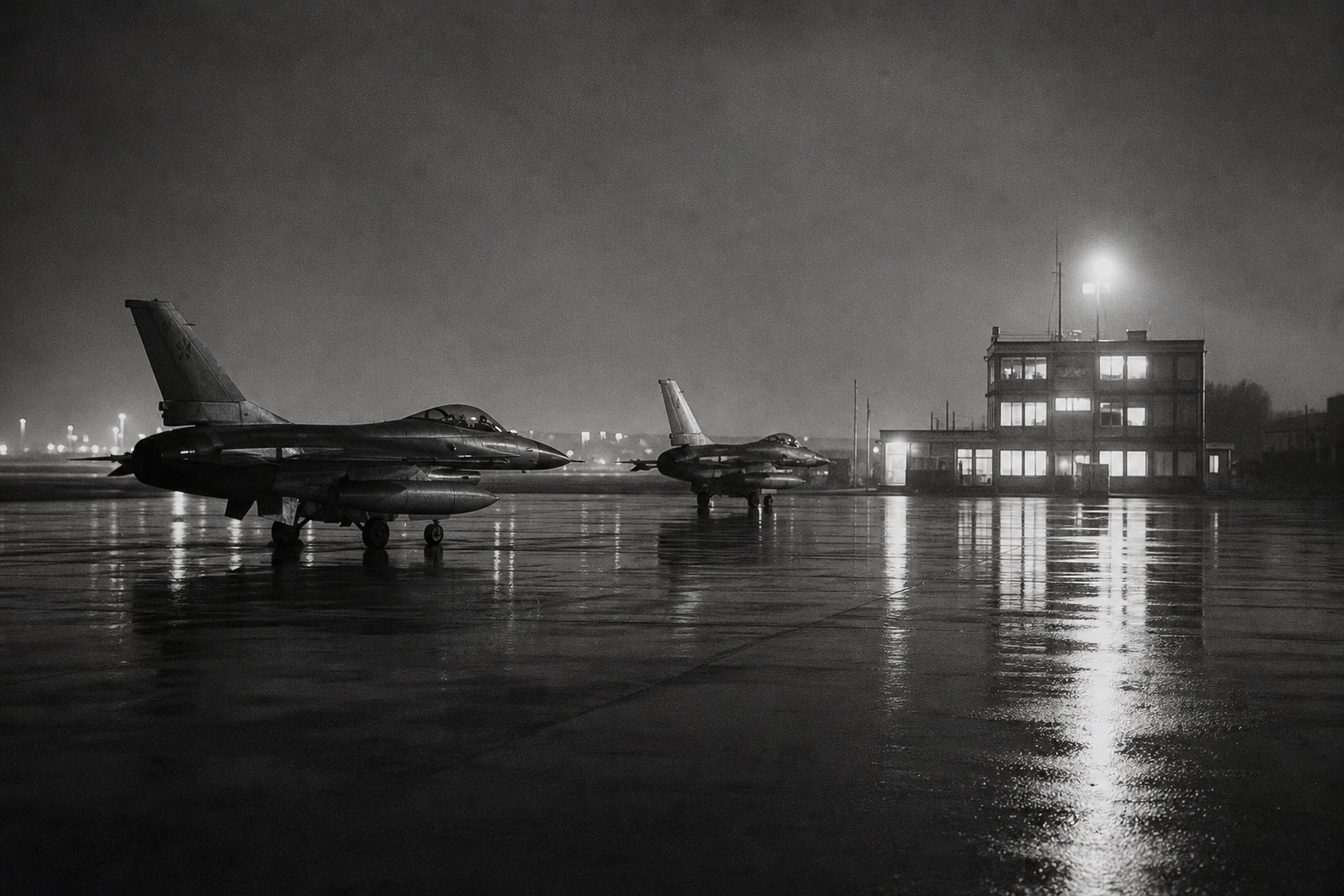
The Belgian Wave is compelling not because it supplies a ready-made answer, but because it left several different kinds of record behind: many public sightings during 1989–1990, police involvement, Belgian Air Force attention, photographs, witness recollections, and a much-retold interception episode. Those materials do not carry equal weight. A report can establish that someone made an observation; it does not, by itself, establish the observed object’s shape, distance, behavior, or origin.
The central radar narrative belongs to a narrower event on the night of March 30–31, 1990, when Belgian F-16s were scrambled after ground reports. Radar claims from that operation are often presented as proof of an extraordinary craft. More cautiously, they describe reported radar contacts and calculated track characteristics whose meaning depends on track persistence, correlation with a visual target, sensor context, and access to underlying data. A radar return is an instrument observation, not an automatic identification of one physical object.
This article therefore separates the historical record from the conclusions layered onto it. It will distinguish contemporaneous police and military actions from later retellings; assess witness accounts, images, and radar accounts by standards suited to each; and address the famous triangle photograph’s later hoax admission without pretending that one fabricated image erases unrelated reports. The question is not whether every account fits a preferred explanation. It is what each piece of evidence can actually support, and where certainty stops.
The Belgian Wave Is a Case Study in Evidence, Not a Verdict on Origin
For the 1989–1990 reports, the first question is not what flew over Belgium but what survives in a form that can be tested. A dated police log, a Belgian Air Force scramble record, or a contemporaneous public statement can establish that an observation was reported and that officials acted on it. None, alone, identifies the cause of a light or triangular silhouette. A witness may accurately describe three lights while lacking measured range, altitude, or scale.
This account ranks the material accordingly. Contemporaneous records are strongest for dates, report intake, and institutional actions; official statements establish what authorities publicly said, but may not preserve the underlying observations. Witness testimony records perception. The March 30–31, 1990 radar narrative records reported contacts during an F-16 interception attempt, whereas independently reviewable raw radar data would allow outside analysts to test whether returns persisted, correlated, and represented one track.
- Established fact: reports were made during 1989–1990, and Belgian authorities responded, including the F-16 scramble on March 30–31, 1990.
- Unresolved interpretation: whether ground observations, airborne radar contacts, and reported track changes described one physical object rather than separate or misassociated events.
- Unsupported conclusion: that the reports establish extraterrestrial craft, non-human intelligence, or a coordinated cover-up.
Reported speed and maneuver figures require particular restraint because they depend on how intermittent returns were associated and interpreted, not on a sustained visual-and-radar identification supported by publicly reviewable raw data. The later admission that the famous Belgian Triangle photograph was fabricated settles the evidentiary status of that image; it does not erase unrelated police reports, witness accounts, or military actions.
What the Records Establish: Reports, Police Involvement, and the Belgian Air Force Response
The chronology begins with reports from the Eupen area on November 29, 1989, followed by civilian calls and police observations through the winter of 1989–1990. Witness descriptions varied: some concerned lights, while others described a dark, triangular-looking form. That variation matters. Police logs and call intake establish that people made reports and that officers gave certain incidents official attention; they do not convert separate accounts into measured observations of one object.
SOBEPS, a civilian Belgian UFO-research group, collected testimony and later assembled much of the case material that shaped public understanding of the Belgian UFO wave. Its archive is useful for tracing who reported what and when. It was not a military sensor operator or state investigative body, however, so its compilations cannot independently authenticate every account or demonstrate a single common cause across locations and dates.
By the night of March 30–31, 1990, fresh ground reports led to an operational Belgian Air Force response, including the scrambling of F-16s. This is the key chronological distinction: Belgian UFO sightings in 1989–1990 were a months-long set of civilian and police reports, while the better-known radar-interception account concerns one specific night and mission.
In later public briefings, then-Colonel Wilfried De Brouwer discussed the interception attempt. Those remarks support that the Air Force acknowledged and publicly described its response. They do not establish a continuous visual-and-sensor identification, or show that every ground report and every radar contact concerned the same physical object.
Report volume, police involvement, and air-defense activity therefore document public concern and an institutional response. They do not determine the physical nature of each sighting, establish extraordinary performance, or support an extraterrestrial conclusion.
The March 30–31, 1990 Incident: What Is Documented About the F-16 Scramble
The operational sequence matters more than the later mythology built around it. On the night of March 30–31, reports from people on the ground led Belgian air-defense authorities to send F-16s to investigate. That is what a scramble means in this context: fighters were launched in response to a live situation, not because the service had already identified a target. The military action documents a response to reports and possible contacts; it does not document a confirmed object intercept.
Belgian Air Force public accounts describe the pilots attempting to acquire radar contacts during the mission. An airborne fire-control radar is designed to help a fighter locate and pursue a return that meets its tracking conditions; a contact is therefore an instrument event, not an identification. To turn a contact into a confirmed aerial target, the record would need a reliable, sustained track tied to a visual observation or another independent sensor. The public narrative does not provide that complete chain.
Pilot recollections and later public presentations have made the Belgian F-16 UFO incident sound like a prolonged chase of one extraordinary craft. The narrower, supportable formulation is that crews attempted an interception after ground reports and reported radar acquisitions during that effort. Attempting to intercept changes the historical significance of the March 1990 Belgian UFO incident: it shows that officials treated the reports seriously enough to deploy aircraft. It does not show that pilots caught, identified, photographed, or visually confirmed a single object.
That distinction also sets the limit on dramatic retellings. A successful chase would require evidence that the same physical target persisted across the ground observations, each radar event, and any pilot sighting. The available public account instead leaves unresolved whether the reported radar contacts represented one target, separate returns, or effects that cannot now be reconstructed from the released material. The reported flight performance belongs to that later interpretive question, rather than to the documented fact of the F-16 scramble itself.
What the Radar Claims Were, and Why the Public Record Cannot Settle Them
A radar screen can make a fleeting event appear more definite than the underlying evidence warrants. A return is a signal the radar has received; a displayed track is the system’s calculated representation of one or more returns over time. A correlated track is stronger: it requires reason to connect the airborne return with another sensor, a known flight, or a visual observation at matching time and position. None of those labels, by itself, identifies a physical object.
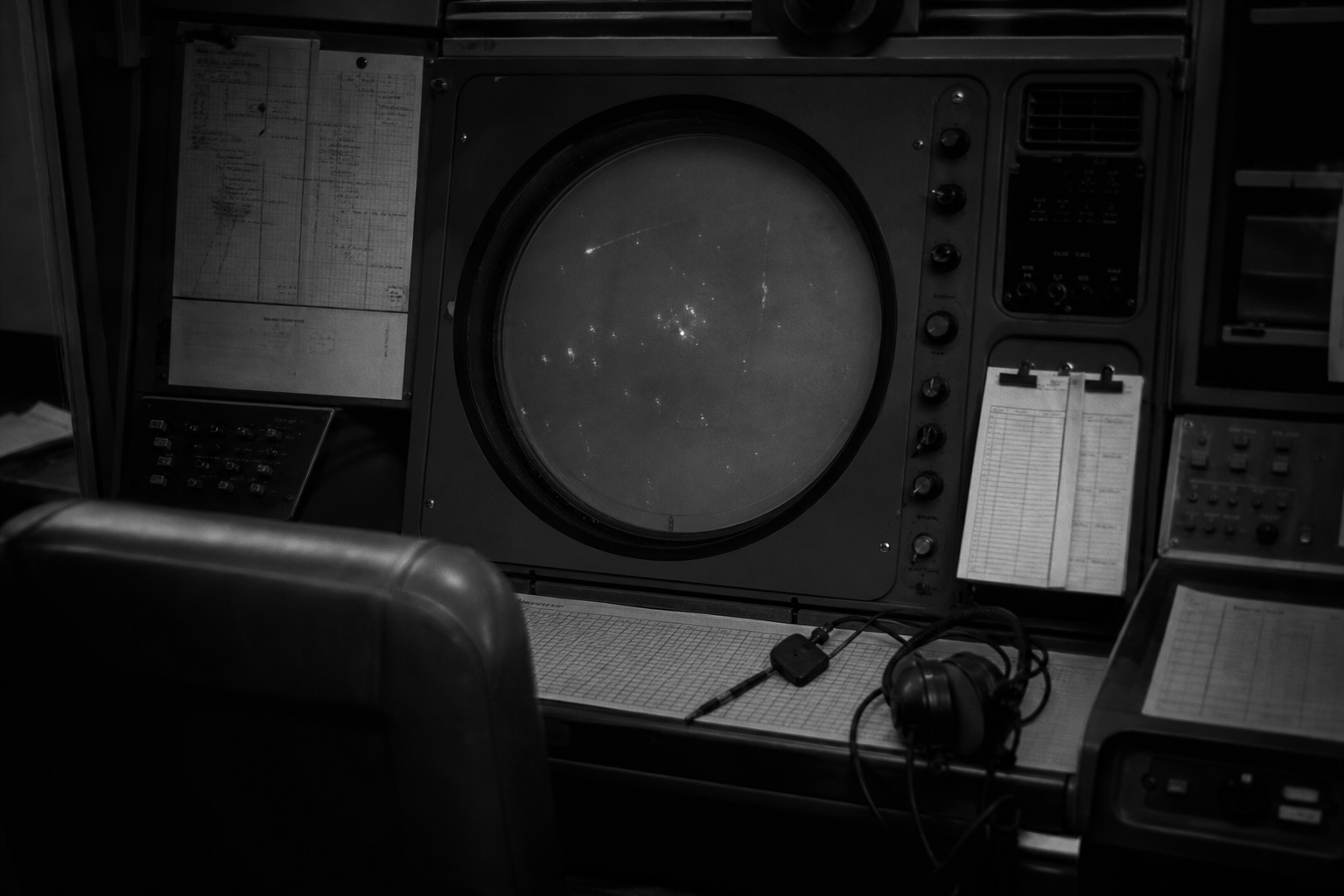
In the March 30–31 episode, the enduring Belgian F-16 radar intercept account rests on reported intermittent fire-control-radar acquisitions and reported changes in the displayed track’s characteristics. Those reports support the narrower proposition that radar events were experienced and discussed during the mission. They do not demonstrate a continuous pursuit of one target. Short or broken contacts leave open whether successive returns came from the same source, separate sources, propagation effects, clutter, or track-processing choices made by the radar system.
This is why frequently repeated numbers for altitude, speed, descent rate, acceleration, or duration of “lock” need more than repetition. A figure derived from a short display sequence depends on the time stamps, range and angle measurements, filtering, assumed continuity between returns, and the distinction between a tentative acquisition and a maintained track. A dramatic calculation may be consistent with one interpretation of the displays, but it is not an independently established measurement unless the underlying sensor record permits that interpretation to be tested.
Visual reports do not automatically supply the missing link. To correlate a ground witness, a pilot, and a radar contact, the record must align their locations, directions of view, times, and uncertainties closely enough to show that they concerned the same event. The public narrative of the Belgian Wave radar incident does not provide a complete, independently preserved release of raw airborne and ground-radar data from which outside analysts can reconstruct that chain. The documented radar claims therefore remain important but unresolved: they show reported contacts during an attempted interception, not a publicly verifiable identification or demonstrated extraordinary performance.
Witness Testimony and the Belgian Triangle Image: Useful Records, Unequal Proof
Witness accounts are most valuable when treated as observations with conditions attached. A report made promptly, with a stated location, direction of view, duration, weather, and comparison to other independently timed reports is stronger than a later recollection stripped of those details. Even consistent accounts can establish only a shared visual observation: without reliable range, angle, and reference points, apparent size, altitude, speed, and physical form remain estimates rather than measurements.
Police participation adds an important but limited kind of record. An officer’s contemporaneous note can preserve who reported an event, when the report was received, and what the observer described; an officer who also saw lights supplies an additional witness account. Neither circumstance is a police verification of an object’s identity. The crucial distinction is between documenting a statement or observation and establishing what caused it. That requires corroboration capable of linking location, timing, and direction across witnesses or instruments.
The celebrated Belgian Triangle UFO photograph should therefore not stand in for the wider reporting period or the March 30–31 radar episode. Its claimed date and provenance circulated inconsistently, and the creator of the widely reproduced image later acknowledged that it was fabricated. That Belgian UFO photograph hoax eliminates the image as visual evidence for an anomalous craft; it does not retrospectively erase unrelated reports, police records, or the military response. Its proper evidentiary lesson is narrower: a dramatic image without secure provenance may be memorable, yet prove nothing about the event it is said to depict.
Where Certainty Ends: Supported Facts, Open Questions, and Claims the Evidence Does Not Support
The most useful final ledger separates historical occurrence from explanatory reach. It prevents two opposite errors: treating an unresolved observation as proof of the ordinary, or treating the absence of an ordinary resolution as proof of the extraordinary.
- Strongly supported: reports were made during 1989–1990; police and other authorities received and recorded some of them; and the Belgian Air Force responded on March 30–31, 1990, including an F-16 scramble. Public accounts also described intermittent radar acquisitions during that operation. These facts establish reporting and response, not an identified craft.
- Unresolved: whether particular ground observations, airborne radar events, and later testimony concerned one physical object; what produced each observation; and whether the reported track changes represented an object’s motion, track interpretation, or another cause. The public record does not preserve enough independently reviewable correlation to decide those questions.
- Unsupported: a confirmed alien vehicle, non-human intelligence, crash retrieval, or a government UFO cover-up. Those conclusions require evidence of origin, possession, or concealment; reports, a scramble, and anomalous-seeming figures on an interpreted track do not supply it.
The fabricated triangle photograph is a useful boundary marker, not a universal rebuttal. It removes that image from the evidentiary ledger while leaving unrelated witness reports and official actions to be assessed on their own merits. Likewise, transparency about an unresolved case is not alien disclosure. The Belgian Wave remains historically documented as a reporting episode and military response, while the identity and cause of its most discussed observations remain open.
Why the Belgian Wave Still Matters for Reading UAP News
For any new UAP news claim, begin with the record rather than the headline. Ask what was captured at the time, a contemporaneous log, original image, sensor output, audio, or merely an account recorded later, and who retained the unedited material. Raw data permits independent review; a selected clip, screenshot, or retold performance figure permits far less.
- Separate detection from identification. A radar contact shows that a system registered something; it does not establish one object’s type, distance, or extraordinary capability without a reliable track and context.
- Look for correlation. A visual report and a sensor event become mutually informative only when their time, location, direction, and uncertainty align closely enough to link them.
- Match the conclusion to the record. Official attention may document a response, while an unresolved observation remains unresolved, not evidence of either mundane certainty or UAP disclosure.
The Belgian Wave therefore remains a valuable historical case: the reporting and response are real; the March 1990 radar narrative is more limited than its legend; and the public record does not bear a definitive claim about what was seen.
The Belgian Wave’s Strongest Lesson Is Evidentiary Discipline
Evidentiary discipline does not make the 1989–1990 Belgian Wave less historically significant; it makes its significance more precise. The contemporaneous reports, police involvement, official attention, and March 30–31 F-16 response establish that people reported unusual observations and that Belgian authorities treated the situation as worth investigating. They do not establish that all reports concerned one craft, or identify any craft’s origin.
The same restraint governs the strongest-sounding details. Reported radar contacts are not equivalent to a continuously verified target, and calculated speed or altitude figures depend on whether the returns belonged to the same object and were tracked reliably. Witness testimony can preserve what observers perceived; the fabricated triangle photograph shows why an image’s provenance must be assessed separately. Neither point erases the other category of record.
A sound reading of extraordinary UAP claims follows a simple order: locate the earliest available record; identify whether it is raw sensor material, an official action record, a contemporaneous account, or a later retelling; then separate its direct observation from the conclusion drawn from it. Strong claims survive that sequence with their limits intact. Weak claims usually rely on missing underlying data, merged events, or certainty added after the fact.
That is where certainty ends in this case: the public record documents reports and a military investigation, but it does not conclusively identify an object, demonstrate extraordinary performance, prove an extraterrestrial origin, or substantiate a cover-up.
Frequently Asked Questions
-
What was the Belgian Wave of 1989 to 1990?
The Belgian Wave was a series of civilian and police reports of unusual lights and triangular-looking forms in Belgium from late 1989 through 1990. The records confirm that reports were made and that authorities responded, but they do not identify a single object or its origin.
-
Did Belgian F-16s really chase a UFO in 1990?
Belgian Air Force F-16s were scrambled on the night of March 30 to 31, 1990, after ground reports of unusual aerial activity. The pilots attempted to acquire radar contacts, but the public record does not show a sustained visual and radar identification of one object.
-
What did the Belgian F-16 radar data actually show?
Public accounts describe intermittent fire-control radar acquisitions and reported changes in displayed track characteristics during the March 1990 mission. No complete, independently reviewable release of raw airborne and ground radar data is available to confirm that the returns were one continuously tracked physical object.
-
Was the famous Belgian Triangle UFO photograph real?
No. The creator of the widely reproduced Belgian Triangle photograph later acknowledged that it was fabricated, so the image is not evidence of an anomalous craft. Its hoax status does not erase unrelated witness reports, police logs, or the March 1990 military response.
-
What should you look for when evaluating Belgian Wave or UAP radar claims?
Look for raw sensor data, sustained track persistence, and correlation between radar contacts, visual observations, times, locations, and directions of view. A radar return or official military response documents a detection or investigation, not confirmation of an extraterrestrial craft or extraordinary performance.