On a September 1961 drive home from Canada, Betty and Barney Hill, an interracial married couple, encountered something over the roads of New Hampshire that they could not readily explain. What began as a reported nighttime 1961 UFO sighting later became the Betty and Barney Hill abduction account: one of the most consequential, and most contested, stories in modern UFO culture.
The distinction between those descriptions matters. The Hills made early reports of an unusual aerial encounter and later spoke of distress, dreams, and a troubling gap in their recollection. The far fuller narrative of being taken aboard a craft emerged during psychiatric hypnosis in 1964. Hypnosis records what a person recalls or constructs in that setting; it does not independently establish that the recalled events occurred.
This account follows the timeline from the Hills’ journey and its aftermath to the therapy sessions, the story’s passage into newspapers and books, and the debate over Betty Hill’s remembered star map. It separates contemporaneous reports from later memories and from interpretations built around them. The result is neither a dismissal of the couple’s experience nor a claim that an extraterrestrial abduction has been proved, but an examination of why their story became a lasting cultural landmark.
Betty and Barney Hill: A Landmark UFO Sighting and Alleged Abduction Story
Its landmark status rests less on a single piece of physical evidence than on the way several kinds of testimony became joined into one enduring story. The reported nighttime encounter on the return drive through New Hampshire in September 1961 is the chronological starting point, not a complete account of an abduction.
The fuller narrative developed afterward: Betty described nightmares, the couple discussed an apparent lapse in their journey, and both later recounted experiences during therapeutic hypnosis. These are different evidentiary categories. An early report can establish what someone said near the time; a hypnotic session preserves later recollection in a clinical setting. Neither, by itself, identifies the cause of the experience.
That distinction helped make the account a template for later alien-abduction stories: an unexplained encounter, emotional aftermath, recovered memories, and competing interpretations all entered its public meaning. The record establishes that the couple reported something disturbing and sought help. It does not independently establish that they were taken by extraterrestrial beings.
What the Hills Reported Seeing on September 19, 1961
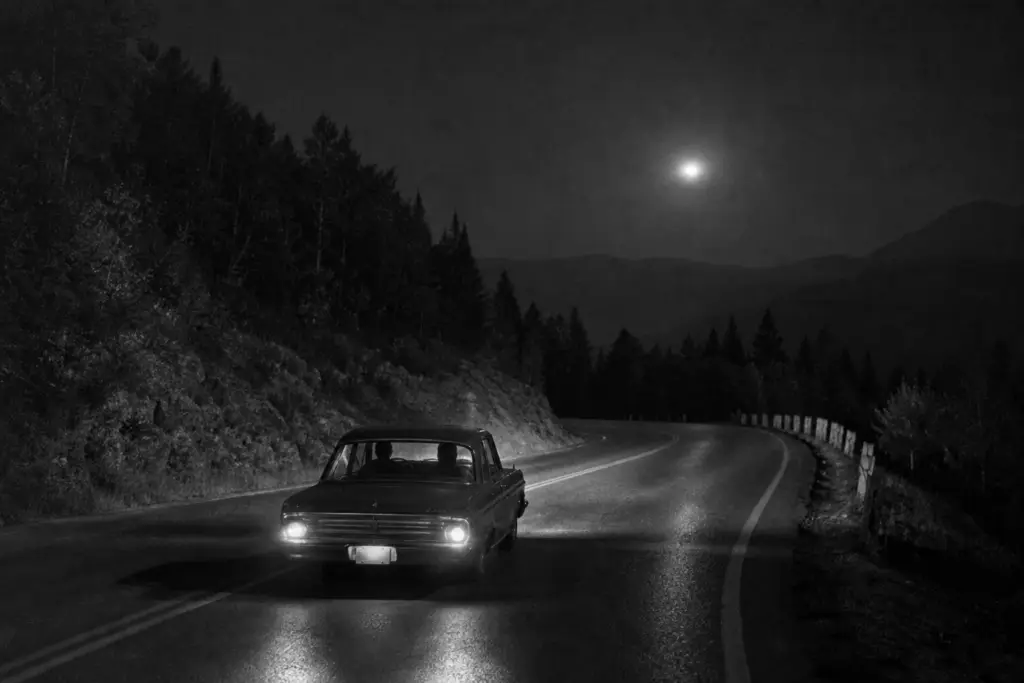
Their account places the encounter late on September 19, as they drove south from Canada through New Hampshire toward Portsmouth. Near the White Mountains, Betty noticed a bright point of light that appeared to move in ways she did not expect from an ordinary star or aircraft. The Hills stopped more than once to watch it, and they later said that the light seemed to grow larger and follow their route.
By the time they were near Indian Head, now part of the Lincoln area, the object had become the focus of their attention. In the basic chronology of the Betty and Barney Hill UFO sighting, this is the important distinction: the couple initially described a light or aerial object at a distance; the more elaborate descriptions came after they had stopped and watched it more closely. They did not identify it as extraterrestrial at the time.
Barney left the car with binoculars during one stop. He later described seeing a large, silent, disk-like craft with a row of illuminated windows or panels, and he believed he could see figures inside. His interpretation shifted from uncertainty to alarm. Convinced that the object might be approaching or pursuing them, he ran back to the car.
The Hills then drove away quickly along the mountain road, with Barney urging Betty not to stop again. This reported sequence, distant light, repeated stops, binocular observation, fear, and a hurried departure, is the documented narrative core of the 1961 UFO sighting in New Hampshire. It establishes what the Hills later said they experienced on the road, while leaving the object’s identity unresolved.
The Aftermath: Missing Time, Distress, Nightmares, and Early Reports
After reaching home, the Hills concluded that the drive had taken longer than they could account for. This is the origin of the case’s “missing time”: an inferred discrepancy between their expected journey time and their recollection of the night, rather than a period independently timed, observed, or recorded by anyone else. It supported their sense that something was wrong, but it did not by itself identify a cause.
Both were unsettled in the days that followed. Betty reported recurring nightmares in which she and Barney were taken from the road by unfamiliar beings; she wrote down elements of those dreams soon afterward. The early dreams matter because they show that the encounter had become emotionally intrusive before the later, more detailed therapeutic accounts. They are not, however, contemporaneous accounts of a confirmed physical abduction: dreams can document distress and the imagery through which a person was processing it without settling what occurred on the highway.
The Hills also sought outside reporting channels. They contacted Pease Air Force Base about the aerial sighting and later communicated with the civilian National Investigations Committee on Aerial Phenomena (NICAP), an organization that collected and investigated UFO reports. Those early contacts preserve a useful baseline: the couple promptly reported an unusual object, fear, and an unsettling gap in their sense of the trip. They do not contain independent corroboration that an abduction occurred. The distinction is central to the Betty and Barney Hill abduction narrative, whose most dramatic elements emerged later rather than in the first reports.
How Hypnosis Shaped the Alleged Abduction Narrative
In 1964, the Hills entered treatment with Boston psychiatrist Dr. Benjamin Simon, seeking help for continuing anxiety and related symptoms rather than to establish that an extraordinary event had occurred. Simon used hypnosis as part of therapy, recording separate sessions with Betty and Barney. This timing is essential: the detailed account emerged more than two years after the New Hampshire drive, after Betty’s earlier nightmares had already supplied imagery of being taken by unfamiliar figures.
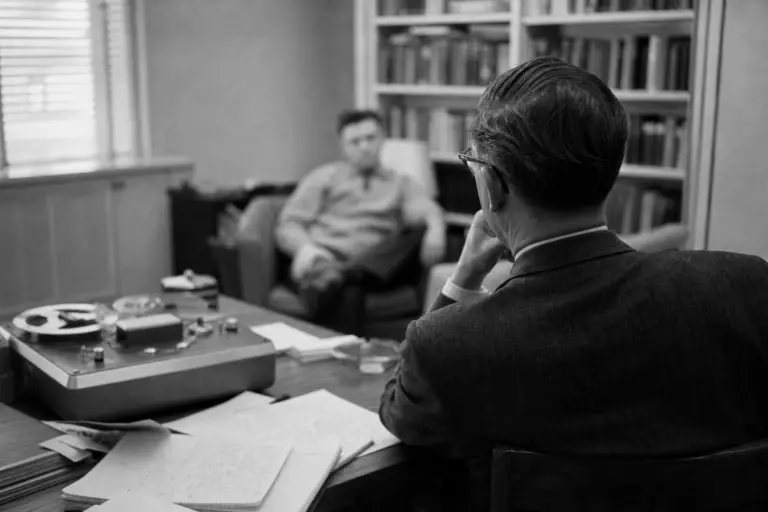
Under hypnosis, each described a sequence that went far beyond their initial UFO report. They recalled being stopped on the road, encountering beings, being brought inside a craft, subjected to medical-style examinations, and eventually returned to their car. Their accounts shared a broad structure but differed in particulars, including aspects of the beings, the examinations, and their reactions. Those separately elicited narratives became the foundation of the Betty and Barney Hill abduction story as it is generally remembered.
Hypnotic regression, however, is not the same thing as a contemporaneous account or independent corroboration. Hypnosis can make recalled scenes feel exceptionally vivid and emotionally persuasive, yet it can also leave memory vulnerable to suggestion, confabulation, and source-memory errors, where material from dreams, expectations, conversations, or later ideas is experienced as a personal memory. Simon’s sessions document that the Hills gave these accounts in treatment; they do not independently establish that a craft, nonhuman beings, or an abduction occurred. The careful historical distinction is therefore between the Hills’ sincere therapeutic recollections and a verified explanation for what happened that night.
How the Hills’ Story Became Famous
The therapeutic material did not remain private for long. Details of the Hills’ sessions leaked into UFO circles and then reached the press, shifting a personal and clinical history into a public controversy. Newspaper coverage gave readers a striking narrative structure: an unexplained roadside encounter, an apparent gap in recollection, and later accounts of being examined by unfamiliar beings.
John G. Fuller turned that material into a national story with The Interrupted Journey in 1966. His book presented the Hills’ experience in a sustained, dramatic narrative and made their names inseparable from the emerging idea of alien abduction. Later television dramatizations, documentaries, and recurring UFO news coverage carried the account to audiences who had never encountered the original reports or hypnosis recordings.
Its cultural impact came partly from a pattern that later accounts could readily adopt: missing time, hypnosis, and claimed medical examinations supplied the mystery, a route to recovered scenes, and unsettling detail. That pattern made the Betty and Barney Hill story a template for later widely publicized accounts, including Whitley Strieber’s Communion account, but cultural influence is not evidentiary confirmation. Repetition in later abduction narratives shows the case’s reach in popular culture; it does not independently establish the extraordinary explanation offered for the Hills’ experience.
Betty Hill’s Star Map, Project Blue Book, and What the Evidence Can Establish
One later detail acquired an importance far beyond its original setting: under hypnosis in 1964, Betty described being shown a diagram of stars by a figure in her recalled narrative and subsequently drew the pattern. The Betty Hill star map was therefore not a chart made during the 1961 drive or an astronomical record recovered from the scene; it was a later rendering of material recalled in therapy.
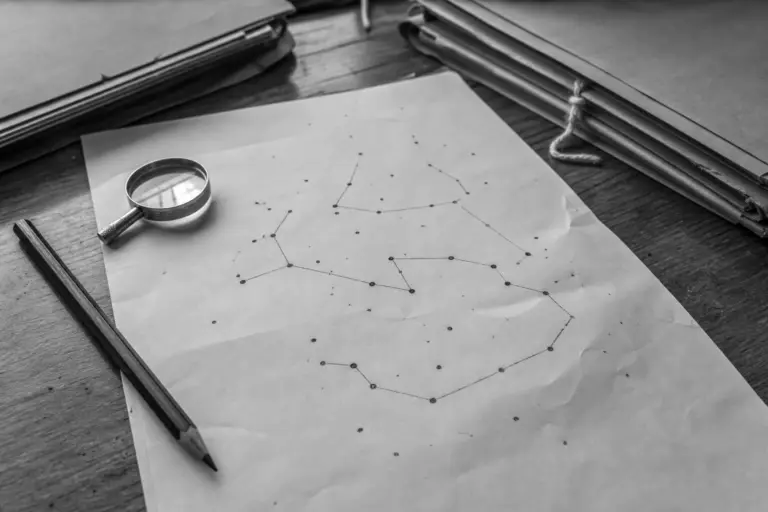
In the late 1960s, amateur astronomer Marjorie Fish built three-dimensional models of nearby stars and argued that Betty’s drawing could depict a view from the Zeta Reticuli system. Supporters treated the proposed match as a striking correspondence. Its limitation is fundamental: sparse dots and connecting lines permit many possible alignments, while the result depends on choices about which stars count, the viewer’s assumed location, and stellar positions at a chosen date. The Zeta Reticuli star map remains an interpretation, not an identified extraterrestrial route.
Project Blue Book presents a separate issue. The Hills’ contact with Pease Air Force Base shows that they sought to report an aerial sighting through official channels. But an Air Force file, referral, or record of a UFO report is not an official finding that an abduction occurred. No available Blue Book material establishes that the program independently investigated or validated the later hypnosis-derived account, and the historical record does not substantiate a government cover-up in this case.
- Established: the Hills reported a disturbing aerial encounter, later entered treatment, and their account became publicly influential.
- Reported: the missing interval, the beings, examination, and star diagram emerged through recollection and testimony, chiefly after the event.
- Not established: a Zeta Reticuli origin, an extraterrestrial craft, or an alien abduction. The surviving record cannot resolve those claims.
Why the Betty and Barney Hill Case Still Matters
The case endures because it teaches a disciplined way to handle an extraordinary claim. The Hills’ 1961 report, their subsequent distress, and the therapy sessions that produced later recollections are all consequential parts of a documented human story. They explain why the account became foundational to alien-abduction culture; they do not independently establish that non-human beings were involved.
That distinction remains useful in discussions of UAP sightings and UFO disclosure. Testimony records what a witness experienced or believed; corroborating evidence can independently test part of that account; interpretation proposes what the evidence means. Treating those categories as interchangeable turns uncertainty into a conclusion. The Betty and Barney Hill abduction narrative remains historically important precisely because its influence is clear while its extraordinary explanation remains unverified.
Frequently Asked Questions
What happened to Betty and Barney Hill in 1961?
On September 19, 1961, Betty and Barney Hill reported seeing a bright aerial object while driving home from Canada through New Hampshire. Barney later described a large, silent, disk-like craft with illuminated windows, and the couple said the trip took longer than they could account for.
Where did the Betty and Barney Hill UFO sighting occur?
The sighting occurred on mountain roads in New Hampshire near the White Mountains, including the Indian Head area, now part of Lincoln. The Hills were driving south toward Portsmouth after returning from Canada.
Was the Betty and Barney Hill abduction ever proven?
No, an extraterrestrial abduction was never independently proven. The detailed claims of beings, examinations, and a craft emerged during psychiatric hypnosis in 1964, more than two years after the September 1961 sighting.
What was Betty Hill’s star map?
Betty Hill’s star map was a drawing she made after recalling a diagram of stars during hypnosis in 1964. Amateur astronomer Marjorie Fish later proposed that it represented the Zeta Reticuli system, but the match remains an interpretation because sparse star patterns can support multiple alignments.
What evidence should you look for when evaluating the Betty and Barney Hill case?
Separate the Hills’ early reports of an aerial object and distress from later hypnosis-derived memories of an abduction. Look for independent contemporaneous evidence, because an Air Force report, Project Blue Book record, missing-time claim, or vivid hypnotic recollection does not verify an extraterrestrial event.